Systemic Lupus Erythematous (SLE)
Jamilah saad Alqahtani
CNS,MSN,BSN,RGN,OR Specialist
SLE
Systemic Lupus Erythematous (SLE)
CASE STUDY
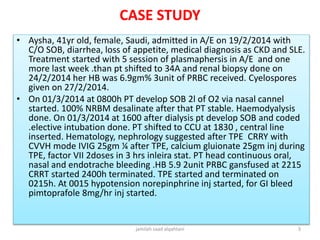
• Aysha, 41yr old, female, Saudi, admitted in A/E on 19/2/2014 with
C/O SOB, diarrhea, loss of appetite, medical diagnosis as CKD and SLE.
Treatment started with 5 session of plasmaphersis in A/E and one
more last week .than pt shifted to 34A and renal biopsy done on
24/2/2014 her HB was 6.9gm% 3unit of PRBC received. Cyelospores
given on 27/2/2014.
• On 01/3/2014 at 0800h PT develop SOB 2l of O2 via nasal cannel
started. 100% NRBM desalinate after that PT stable. Haemodyalysis
done. On 01/3/2014 at 1600 after dialysis pt develop SOB and coded
.elective intubation done. PT shifted to CCU at 1830 , central line
inserted. Hematology, nephrology suggested after TPE CRRY with
CVVH mode IVIG 25gm ¼ after TPE, calcium gluionate 25gm inj during
TPE, factor VII 2doses in 3 hrs inleira stat. PT head continuous oral,
nasal and endotrache bleeding .HB 5.9 2unit PRBC gansfused at 2215
CRRT started 2400h terminated. TPE started and terminated on
0215h. At 0015 hypotension norepinphrine inj started, for GI bleed
pimtoprafole 8mg/hr inj started.
jamilah saad alqahtani 3
• Received from CCU at 15:17hr for future management
plasmaphresis 81hr session done in MICU . on 2/3/14
HB 5.3 3unit PRBC , plasmaphresis 9ih session done in
3/3/2014. Left jugular double lumen inserted.
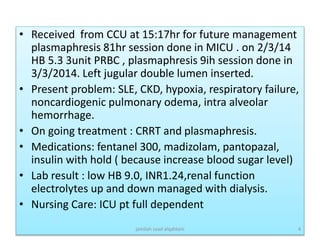
• Present problem: SLE, CKD, hypoxia, respiratory failure,
noncardiogenic pulmonary odema, intra alveolar
hemorrhage.
• On going treatment : CRRT and plasmaphresis.
• Medications: fentanel 300, madizolam, pantopazal,
insulin with hold ( because increase blood sugar level)
• Lab result : low HB 9.0, INR1.24,renal function
electrolytes up and down managed with dialysis.
• Nursing Care: ICU pt full dependent
jamilah saad alqahtani 4
• Introduction
• Definition
• Perceptions
• Pathophyisology
• Signs and symptoms
• Risk factors
• Warning signs of SLE
• Types of SLE
• Diagnostic studies
• Treatment
• Nursing process
• Summary
• References
Out lines
jamilah saad alqahtani 5
Introduction
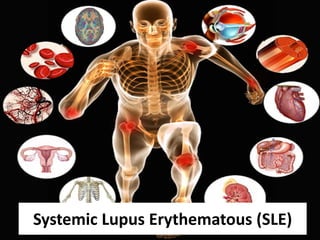
The term ‘lupus’ (Latin for ‘wolf’) was first used
during the Middle Ages to describe erosive skin
lesions evocative of a ‘wolf’s bite’.
Lupus is an autoimmune disease, which means
that the body's natural defense system (immune
system) attacks its own tissues instead of
attacking foreign substances like bacteria and
viruses. This causes inflammation which can
causes swelling, pain, and tissue damage
throughout the body.
Prevalence: Almost 90% of all cases occur in
women. Overall, SLE affects women eight times
more often than men.
jamilah saad alqahtani 6
• SLE is characterized by the
production of unusual antibodies
in the blood.
• The cause(s) of SLE is unknown,
however, heredity, viruses,
ultraviolet light, and drugs all may
play some role.
• Genetic factors increase the
tendency of developing
autoimmune diseases, and
autoimmune diseases such as
lupus, rheumatoid arthritis, and
autoimmune thyroid disorders.jamilah saad alqahtani 7
Pathophysiology of SLE
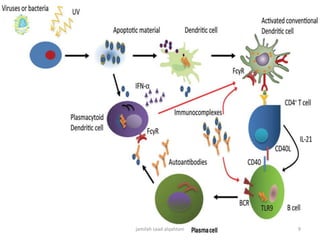
Immune responses against endogenous nuclear
antigens are characteristic of SLE.
Autoantigens released by apoptotic cells are
presented by dendritic cells to T cells leading to
their activation.
Activated T cells in turn help B cells to produce
antibodies to these self-constituents by
secreting cytokines such as interleukin 10
(IL10).
The pathogenesis of SLE involves a multitude of
cells and molecules that participate in
apoptosis, innate and adaptive immune
responses.
jamilah saad alqahtani 8
jamilah saad alqahtani 9
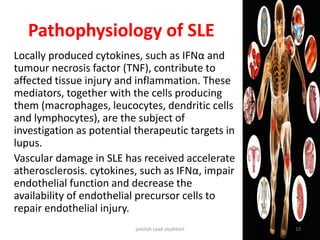
Locally produced cytokines, such as IFNα and
tumour necrosis factor (TNF), contribute to
affected tissue injury and inflammation. These
mediators, together with the cells producing
them (macrophages, leucocytes, dendritic cells
and lymphocytes), are the subject of
investigation as potential therapeutic targets in
lupus.
Vascular damage in SLE has received accelerate
atherosclerosis. cytokines, such as IFNα, impair
endothelial function and decrease the
availability of endothelial precursor cells to
repair endothelial injury.
Pathophysiology of SLE
jamilah saad alqahtani 10
Types of lupus
There are several types of lupus. The
main types are:
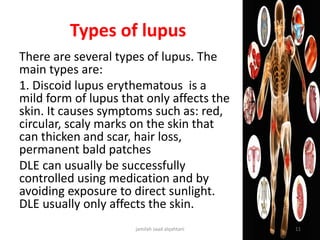
1. Discoid lupus erythematous is a
mild form of lupus that only affects the
skin. It causes symptoms such as: red,
circular, scaly marks on the skin that
can thicken and scar, hair loss,
permanent bald patches
DLE can usually be successfully
controlled using medication and by
avoiding exposure to direct sunlight.
DLE usually only affects the skin.
jamilah saad alqahtani 11
Types of SLE
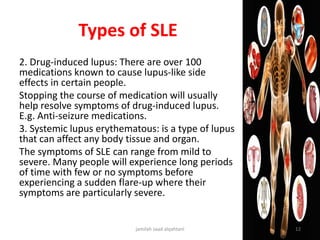
2. Drug-induced lupus: There are over 100
medications known to cause lupus-like side
effects in certain people.
Stopping the course of medication will usually
help resolve symptoms of drug-induced lupus.
E.g. Anti-seizure medications.
3. Systemic lupus erythematous: is a type of lupus
that can affect any body tissue and organ.
The symptoms of SLE can range from mild to
severe. Many people will experience long periods
of time with few or no symptoms before
experiencing a sudden flare-up where their
symptoms are particularly severe.
jamilah saad alqahtani 12
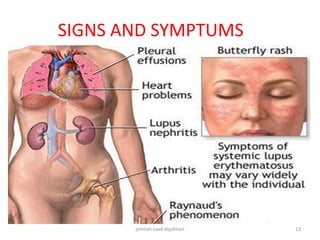
SIGNS AND SYMPTUMS
jamilah saad alqahtani 13
Diagnosis of lupus
The following are 11 criteria used for diagnosing systemic
lupus erythematosus:
1. Malar (over the cheeks of the face) "butterfly" rash
2. Discoid skin rash (patchy redness with
hyperpigmentation and hypopigmentation that can
cause scarring)
3. Photosensitivity (skin rash in reaction to sunlight
[ultraviolet light] exposure)
4. Mucous membrane ulcers (spontaneous sores or ulcers
of the lining of the mouth, nose, or throat)
5. Arthritis (two or more swollen, tender joints of the
extremities)
6. Pleuritis or pericarditis (inflammation of the lining tissue
around the heart or lungs, usually associated with chest
pain upon breathing or changes of body position)
7. Kidney abnormalities (abnormal amounts of urine
protein or clumps of cellular elements called casts
detectable with a urinalysis)
jamilah saad alqahtani 14
Diagnosis of lupus
8. Brain irritation (manifested by seizures
[convulsions] and/or psychosis, referred
to as "lupus cerebritis")
9. Blood-count abnormalities: low (WBC)
or red (RBC), or platelet count on routine
complete blood count testing)
10. Immunologic disorder
11. Antinuclear antibody (positive ANA
antibody testing [antinuclear antibodies
in the blood])
jamilah saad alqahtani 15
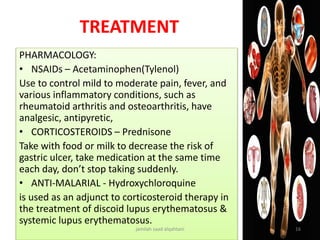
TREATMENT
PHARMACOLOGY:
• NSAIDs – Acetaminophen(Tylenol)
Use to control mild to moderate pain, fever, and
various inflammatory conditions, such as
rheumatoid arthritis and osteoarthritis, have
analgesic, antipyretic,
• CORTICOSTEROIDS – Prednisone
Take with food or milk to decrease the risk of
gastric ulcer, take medication at the same time
each day, don’t stop taking suddenly.
• ANTI-MALARIAL - Hydroxychloroquine
is used as an adjunct to corticosteroid therapy in
the treatment of discoid lupus erythematosus &
systemic lupus erythematosus.
jamilah saad alqahtani 16
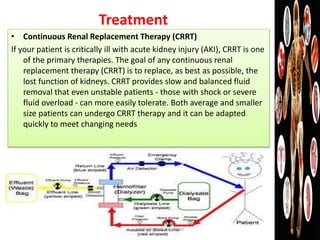
Treatment
• Continuous Renal Replacement Therapy (CRRT)
If your patient is critically ill with acute kidney injury (AKI), CRRT is one
of the primary therapies. The goal of any continuous renal
replacement therapy (CRRT) is to replace, as best as possible, the
lost function of kidneys. CRRT provides slow and balanced fluid
removal that even unstable patients - those with shock or severe
fluid overload - can more easily tolerate. Both average and smaller
size patients can undergo CRRT therapy and it can be adapted
quickly to meet changing needs
jamilah saad alqahtani 17
Treatment
• Plasmaphersis:
Plasmapheresis is a term used to refer to a broad range of procedures in which extracorporeal
separation of blood components results in a filtered plasma product.[1, 2] The filtering of plasma
from whole blood can be accomplished via centrifugation or semipermeable membranes.[3]
Centrifugation takes advantage of the different specific gravities inherent to various blood
products such as red cells, white cells, platelets, and plasma.[4] Membrane plasma separation uses
differences in particle size to filter plasma from the cellular components of blood.[3]
• Traditionally, in the United States, most plasmapheresis takes place using automated centrifuge-
based technology.[5] In certain instances, in particular in patients already undergoing hemodialysis,
plasmapheresis can be carried out using semipermeable membranes to filter plasma.[4]
• In therapeutic plasma exchange, using an automated centrifuge, filtered plasma is discarded and
red blood cells along with replacement colloid such as donor plasma or albumin is returned to the
patient. In membrane plasma filtration, secondary membrane plasma fractionation can selectively
remove undesired macromolecules, which then allows for return of the processed plasma to the
patient instead of donor plasma or albumin. Examples of secondary membrane plasma
fractionation include cascade filtration,[6] thermofiltration, cryofiltration,[7] and low-density
lipoprotein pheresis
jamilah saad alqahtani 18
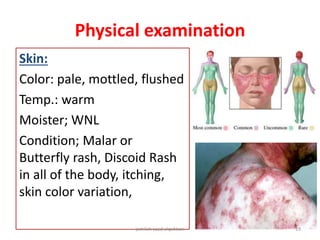
Physical examination
Skin:
Color: pale, mottled, flushed
Temp.: warm
Moister; WNL
Condition; Malar or
Butterfly rash, Discoid Rash
in all of the body, itching,
skin color variation,
jamilah saad alqahtani 19
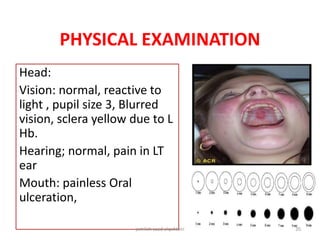
PHYSICAL EXAMINATION
Head:
Vision: normal, reactive to
light , pupil size 3, Blurred
vision, sclera yellow due to L
Hb.
Hearing; normal, pain in LT
ear
Mouth: painless Oral
ulceration,
jamilah saad alqahtani 20
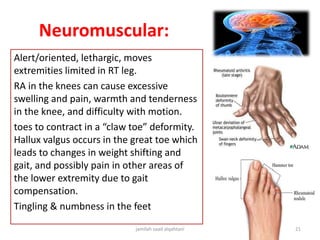
Neuromuscular:
Alert/oriented, lethargic, moves
extremities limited in RT leg.
RA in the knees can cause excessive
swelling and pain, warmth and tenderness
in the knee, and difficulty with motion.
toes to contract in a “claw toe” deformity.
Hallux valgus occurs in the great toe which
leads to changes in weight shifting and
gait, and possibly pain in other areas of
the lower extremity due to gait
compensation.
Tingling & numbness in the feet
jamilah saad alqahtani 21
CRANIAL NERVE (CN) FUNCTION
CN I – olfactory [√ ] intact [ ] impaired [ ] unknown
CN’s II-III-IV-VI– optic, oculomotor, trochlear,
abducens (eye exam)
CN V– trigeminal (facial sensory & jaw motor) [√]
intact [ ] impaired
CN VII - Facial (symmetry in face expressions & taste)
[√] intact [ ] impaired
CN VIII – Acoustic (hearing exam)
CN IX – Glossopharyngeal (taste at back of tongue) [√
] intact [ ] impaired
CN X - Vagus (palate movement, “ah” and vocal motor
[√] intact [ ] impaired
CN XI – Spinal Accessory (head motion & shrug) [√]
intact [ ] impaired
CN XII – Hypoglossal (tongue position & motor) [√ ]
intact [ ] impaired
SENSORY FUNCTION
Touch [√ ] intact [ ] impaired
jamilah saad alqahtani 22
1987 ACR Classification Criteria for Rheumatoid Arthritis
Patients must have four of the seven criteria:
• Morning stiffness lasting at least 1 hour*
• Swelling in three or more joints*
• Swelling in hand joints*
• Symmetric joint swelling*
• Erosions or decalcification on x-ray of hand
• Rheumatoid nodules
• Abnormal serum rheumatoid factor
*must be present at least six weeks
MOTOR FUNCTION
[ ] impaired coordination [√ ] fine motor skills impaired due to deformity in
the metaphalengeal
[ ] balance maintained while standing with eyes closed [√ ] loss of balance
immediate
REFLEXES
patellar reflex: [ ] 0: no response [√] 1+ low (normal with slight contraction
[ ] 2+ normal, visible muscle twitch and extension of lower leg [ ] 3+ brisker
than normal [ ] 4+ hyperactive, very brisk
jamilah saad alqahtani 23
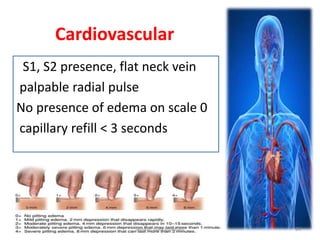
Cardiovascular
S1, S2 presence, flat neck vein
palpable radial pulse
No presence of edema on scale 0
capillary refill < 3 seconds
jamilah saad alqahtani 24
Respiratory
Auscultated breath sounds:
[√] vesicular sounds at periphery
[√] bronchovesicular sounds between
scapulae or 1st – 2nd intercostal space
lateral to sternum
[√] bronchial sounds over trachea
jamilah saad alqahtani 25
Gastrointestinal
[√ ] constipation: enema given
[√ ] distention
Bowel Sounds:
[√ ] Present in all quadrants
[√ ] poor appetite or loss of
appetite
jamilah saad alqahtani 26
1. Chronic pain r/t actual tissue damage
• Assess the pain level on pain scale.
• Assess the patient for pain presence routinely at frequent
intervals, often at the same time as vital signs are taken,
& during activity & rest.
• Assess pain location, characteristics, intensity with every
report of pain.
• Determine the patient current medication use. Obtain an
accurate & complete list of medications are taken.
Accurate medication reconciliation can prevent
withdrawal & errors associated with incorrect medication,
dosages, drug-drug interactions & toxicity. History taken
will understand what medication have been tried & were
its effective or not in treating the patient pain (APS, 2008;
Krenzischek, 2008; The Joint Commission (TJC), 2009).
Nursing diagnosis & intervention
jamilah saad alqahtani 27
1. Chronic pain r/t actual tissue
damage
• Manage persistent or chronic pain using
multimodal approach. The most effective
treatment for all pain is a multimodal &
balanced approach that combines both
pharmacologic & non-pharmacologic
strategies(Gordon et all, 2004).
• Question the patient about any disruption in
sleep. EB. Client with low back pain had
significant loss of sleep(Marin, Cyhan, & Miklos,
2006).
Outcome:
Decrease pain as evidenced by perform necessary
activities at a pain level less than or equal to the
comfort-function goal. jamilah saad alqahtani 28
2. Activity intolerance r/t fatigue.
• Assess severity of fatigue on a scale of 0 to
10, assess frequency(No. of days/week &
time of day), activities & symptoms
associated with increased fatigue(e.g.
pain), interference with social & role
function, times of increase energy, ability to
concentrate, mood, & usual pattern of
activity.
• multidimensional fatigue inventory. EBN:
these measures have shown the ability to
detect changes in fatigue over
time(Whittehead, 2009).
jamilah saad alqahtani 29
• Evaluate adequate nutrition & sleep.
Encourage the patient to get adequate rest,
avoid caffeine in late afternoon or evening,
eat a well-balanced diet with at least 8
glasses of water a day.
• Identify physiological causes of fatigue that
could be treated, such as, anemia, pain,
electrolyte imbalance, hypothyroidism.
Outcome:
Alleviate fatigue as evidenced by performance
of usual routine activity.
2. Activity intolerance r/t fatigue.
jamilah saad alqahtani 30
3. Decrease cardiac output r/t cardiac
dysfunction.
• If chest pain is present, have patient lie down, monitor
cardiac rhythm, give oxygen, check vital signs.
Assessment of the patient with acute coronary
symptoms is critical because the incidence of VF is 15
times greater during the first hour after symptoms of
an acute MI(Newberry, 2003).
• Assess pulse oximetry regularly, using a forehead
sensor if needed. EBN: in a study that compared oxygen
saturation values of arterial blood gases to various
sensors, it was found that the forehead sensor was
significantly better than the digit sensor for accuracy in
patients with low CO, while being easy to use & not
interfering with patient care(Fernandez et al, 2007).
jamilah saad alqahtani 31
• Apply graduate compression stocking as ordered.
Ensure proper fit by measuring accurately. Remove the
stocking at least twice a day, then reapply. Assess the
condition of the extremity frequently. EB: graduate
compression stocking, alone or used in conjunction
with other prevention modalities, help promote
venous return & prevent deep vein thrombosis in
hospitalized patients(Amarigiri & Lees, 2005).
• Observe for chest pain or discomfort, note location,
radiation, severity, quality, duration, associated
manifestations such as nausea, also note precipitating
& relieving factors. Chest pain/ discomfort is generally
indicative of an inadequate blood supply to the heart,
which can compromise CO.
3. Decrease cardiac output r/t cardiac
dysfunction.
jamilah saad alqahtani 32
• Monitor bowel function. Provide stool softeners as
ordered. Caution patient not to strain when defecating.
Decrease activity can cause constipation, as well as pain
medication. Straining when defecating that result in the
valsalva maneuver can lead to dysrhythmia, decrease
cardiac function.
• Have patient use a commode for toileting & avoid bedpan.
Getting out of bed to use a commode doesn't stress the
heart any more than staying in bed to toilet. In addition
getting out of bed minimize complication of immobility
(Winslow, 1992).
• Weigh patient at same time daily(after voiding). EB:
clinical practice guidelines states that weighing at the
same time daily is useful to assess the effect of diuretic
therapy(Jessup et al, 2009). Use the same scale if possible.
Daily weight is a good indicator of fluid balance. Increase
weight & severity of symptoms can signal decrease
cardiac function with retention of fluids.
3. Decrease cardiac output r/t cardiac
dysfunction.
jamilah saad alqahtani 33
3. Decrease cardiac output r/t cardiac dysfunction.
• Serve small, frequent, Na restricted, low cholesterol meals.
Na restricted diet help decrease fluid volume excess. low
cholesterol diet help decrease atherosclerosis, which cause
coronary artery disease. Patient with cardiac disease tolerate
smaller meals better because they require less cardiac output
to digest. EBN: a study that assessed gender differences in
dietary Na restriction found that women were more likely
than men to recognize Na buildup as fluid retention, & had a
better understanding of what to take for a low Na diet & were
more adherent to the restriction(Chung et al, 2006).
• Serve only small amount of coffee or caffeine-contaning
beverages (no more than 4 cups/24h) if no resulting
dysrhythmia. EBN: a review of studies on caffeine & cardiac
arrhythmias conclude that moderate caffeine consumption
dose not increase the frequency or severity of cardiac
arrhythmia(Schneider, 1987; Myers & Harris, 1990; Hogan,
Hornick, & Bouchoux, 2002).
jamilah saad alqahtani 34
4. Impaired skin integrity r/t presence of skin
lesions
• Assess site of skin impairment & determine cause(e.g.
acute or chronic wound, dermatological lesion, pressure
ulcer, skin tear).
• Monitor site of skin impairment at least once a day for
color changes, redness, swelling, warmth, pain, or other
signs of infection. Pay special attention to the high-risk
areas such as bony prominence, skinfolds, the sacrum &
heels. Systemic inspection can identify impeding
problems early(Ayello & Braden, 2002; Ayello,
Baranoski, & Salati, 2006).
• Monitor patient continence status, & minimize exposure
of skin impairment & other areas of moisture from
incontinence, perspiration, or wound drainage. EBN:
moisture from incontinence contributes to pressure
ulcer development by macerating the skin(WOCN, 2003,
2009).
jamilah saad alqahtani 35
• Avoid massaging around the site of skin impairment
& over bony prominences. Researches suggests that
massage may lead to deep-tissue trauma (Panel for
prediction & prevention of pressure ulcers in adult,
1992).
Outcome:
Skin integrity as evidenced by no lesions presence
between skin folds.
4. Impaired skin integrity r/t presence
of skin lesions
jamilah saad alqahtani 36
5. Risk for infection r/t PICC access
• Observe & report signs of infection such as redness,
warmth, discharge, & increase body temp especially
around PICC.
• Note & report laboratory values such as WBC
• Careful wash & pat dry skin, including skinfolds areas. Use
hydration & miniaturization on all at-risk surface.
Dermatitis is a common, chronic skin condition than can
be managed in most clients by prescribing avoidance
measures, good skin care, & conservative topical
medications (Mack, 2004).
• Encourage fluid intake. Help thins secretion & replace
fluid lost during fever (CDC, 2004).
• Follow standard precautions & wear gloves during any
contact with blood, mucus membrane, non-intact skin
jamilah saad alqahtani 37
• Use clean gloves for all high-risk hospitalized
patients. EB: this study demonstrate the
effectiveness of using clean gloves to prevent
cross-contamination of all multi-drug resistance
health care-aquired pathogens (Safdar et al, 2006).
• Ensure appropriate hygienic care with hand
washing, bathing, oral care, & perineal care. Daily
shower or bath can help to reduce the number of
bacteria on the patient skin. The oral cavity is a
common site of infection (Coughlan & Healy,
2008).
Outcome:
Patient will be free from infection as evidenced by
clean wound around PICC, no fever, free from
symptoms of infection.
5. Risk for infection r/t PICC access
jamilah saad alqahtani 38
6. Self-care deficits related to
contractures, or loss of motion
Goal: Achieves self-care independently or with
the use of resources
Intervention:
• Identify self-care deficits and factors that interfere
with ability to perform self-care activities.
• Provide appropriate assistive devices.
• Reinforce correct and safe use of assistive devices.
• Allow patient to control timing of self-care
activities.
• Explore with the patient different ways to perform
difficult tasks.
jamilah saad alqahtani 39
REFERENCES
1. Genta PR, Carneiro L, Genta EN. Streptococcus bovis bacteremia: unusual
complications. South Med J. 1998; 91(12):1167-1168.
2. Pascaretti C, Legrand E, Laporte J, et al. Bacterial endocarditis revealed by
infectious discitis. Rev Rhum Engl Ed. 1996;63(2):119-123.
• G.K.W. Lam, M. Petri. Assessment of systemic lupus erythematosus. Clin
Exp Rheumatol 2005; 23 (Suppl. 39): S120-S132.
• George Bertsias, Ricard Cervera, Dimitrios T Boumpas. Systemic Lupus
Erythematosus: Pathogenesis and Clinical Features. 20_Eular_Fpp.indd
476-505
• Betty J. Ackley, & Gail B. Ladwing.(2011). Nursing diagnosis handbook:
An evidence-Based guide to planning care. Mosby, Inc., an affiliate of
Elsevier Inc. 9th edition
• Whittehead L: the assessment of fatigue in chronic illness: a systematic
review of unidimensional and multidimensional fatigue measures, J Pain
symptom Manage 37(1):107-28, 2009
• Krenzischek DA: Pharmacotherapy for acute pain: implications for
practice pain manag nurs 9(1 suppl):S22-S32, 2008
• Marin R, Cyhan T, & Miklos W: sleep disturbance in patients with
chronic low back pain, Am J Phys Med Rehabil 85(5):430-435, 2006
jamilah saad alqahtani 40
ANY QUASTIONS
jamilah saad alqahtani 41
THANK YOU
jamilah saad alqahtani 42

Systemic Lupus Erythematous (SLE)

  • 1.
    Systemic Lupus Erythematous(SLE) Jamilah saad Alqahtani CNS,MSN,BSN,RGN,OR Specialist
  • 2.
  • 3.
    CASE STUDY • Aysha,41yr old, female, Saudi, admitted in A/E on 19/2/2014 with C/O SOB, diarrhea, loss of appetite, medical diagnosis as CKD and SLE. Treatment started with 5 session of plasmaphersis in A/E and one more last week .than pt shifted to 34A and renal biopsy done on 24/2/2014 her HB was 6.9gm% 3unit of PRBC received. Cyelospores given on 27/2/2014. • On 01/3/2014 at 0800h PT develop SOB 2l of O2 via nasal cannel started. 100% NRBM desalinate after that PT stable. Haemodyalysis done. On 01/3/2014 at 1600 after dialysis pt develop SOB and coded .elective intubation done. PT shifted to CCU at 1830 , central line inserted. Hematology, nephrology suggested after TPE CRRY with CVVH mode IVIG 25gm ¼ after TPE, calcium gluionate 25gm inj during TPE, factor VII 2doses in 3 hrs inleira stat. PT head continuous oral, nasal and endotrache bleeding .HB 5.9 2unit PRBC gansfused at 2215 CRRT started 2400h terminated. TPE started and terminated on 0215h. At 0015 hypotension norepinphrine inj started, for GI bleed pimtoprafole 8mg/hr inj started. jamilah saad alqahtani 3
  • 4.
    • Received fromCCU at 15:17hr for future management plasmaphresis 81hr session done in MICU . on 2/3/14 HB 5.3 3unit PRBC , plasmaphresis 9ih session done in 3/3/2014. Left jugular double lumen inserted. • Present problem: SLE, CKD, hypoxia, respiratory failure, noncardiogenic pulmonary odema, intra alveolar hemorrhage. • On going treatment : CRRT and plasmaphresis. • Medications: fentanel 300, madizolam, pantopazal, insulin with hold ( because increase blood sugar level) • Lab result : low HB 9.0, INR1.24,renal function electrolytes up and down managed with dialysis. • Nursing Care: ICU pt full dependent jamilah saad alqahtani 4
  • 5.
    • Introduction • Definition •Perceptions • Pathophyisology • Signs and symptoms • Risk factors • Warning signs of SLE • Types of SLE • Diagnostic studies • Treatment • Nursing process • Summary • References Out lines jamilah saad alqahtani 5
  • 6.
    Introduction The term ‘lupus’(Latin for ‘wolf’) was first used during the Middle Ages to describe erosive skin lesions evocative of a ‘wolf’s bite’. Lupus is an autoimmune disease, which means that the body's natural defense system (immune system) attacks its own tissues instead of attacking foreign substances like bacteria and viruses. This causes inflammation which can causes swelling, pain, and tissue damage throughout the body. Prevalence: Almost 90% of all cases occur in women. Overall, SLE affects women eight times more often than men. jamilah saad alqahtani 6
  • 7.
    • SLE ischaracterized by the production of unusual antibodies in the blood. • The cause(s) of SLE is unknown, however, heredity, viruses, ultraviolet light, and drugs all may play some role. • Genetic factors increase the tendency of developing autoimmune diseases, and autoimmune diseases such as lupus, rheumatoid arthritis, and autoimmune thyroid disorders.jamilah saad alqahtani 7
  • 8.
    Pathophysiology of SLE Immuneresponses against endogenous nuclear antigens are characteristic of SLE. Autoantigens released by apoptotic cells are presented by dendritic cells to T cells leading to their activation. Activated T cells in turn help B cells to produce antibodies to these self-constituents by secreting cytokines such as interleukin 10 (IL10). The pathogenesis of SLE involves a multitude of cells and molecules that participate in apoptosis, innate and adaptive immune responses. jamilah saad alqahtani 8
  • 9.
  • 10.
    Locally produced cytokines,such as IFNα and tumour necrosis factor (TNF), contribute to affected tissue injury and inflammation. These mediators, together with the cells producing them (macrophages, leucocytes, dendritic cells and lymphocytes), are the subject of investigation as potential therapeutic targets in lupus. Vascular damage in SLE has received accelerate atherosclerosis. cytokines, such as IFNα, impair endothelial function and decrease the availability of endothelial precursor cells to repair endothelial injury. Pathophysiology of SLE jamilah saad alqahtani 10
  • 11.
    Types of lupus Thereare several types of lupus. The main types are: 1. Discoid lupus erythematous is a mild form of lupus that only affects the skin. It causes symptoms such as: red, circular, scaly marks on the skin that can thicken and scar, hair loss, permanent bald patches DLE can usually be successfully controlled using medication and by avoiding exposure to direct sunlight. DLE usually only affects the skin. jamilah saad alqahtani 11
  • 12.
    Types of SLE 2.Drug-induced lupus: There are over 100 medications known to cause lupus-like side effects in certain people. Stopping the course of medication will usually help resolve symptoms of drug-induced lupus. E.g. Anti-seizure medications. 3. Systemic lupus erythematous: is a type of lupus that can affect any body tissue and organ. The symptoms of SLE can range from mild to severe. Many people will experience long periods of time with few or no symptoms before experiencing a sudden flare-up where their symptoms are particularly severe. jamilah saad alqahtani 12
  • 13.
    SIGNS AND SYMPTUMS jamilahsaad alqahtani 13
  • 14.
    Diagnosis of lupus Thefollowing are 11 criteria used for diagnosing systemic lupus erythematosus: 1. Malar (over the cheeks of the face) "butterfly" rash 2. Discoid skin rash (patchy redness with hyperpigmentation and hypopigmentation that can cause scarring) 3. Photosensitivity (skin rash in reaction to sunlight [ultraviolet light] exposure) 4. Mucous membrane ulcers (spontaneous sores or ulcers of the lining of the mouth, nose, or throat) 5. Arthritis (two or more swollen, tender joints of the extremities) 6. Pleuritis or pericarditis (inflammation of the lining tissue around the heart or lungs, usually associated with chest pain upon breathing or changes of body position) 7. Kidney abnormalities (abnormal amounts of urine protein or clumps of cellular elements called casts detectable with a urinalysis) jamilah saad alqahtani 14
  • 15.
    Diagnosis of lupus 8.Brain irritation (manifested by seizures [convulsions] and/or psychosis, referred to as "lupus cerebritis") 9. Blood-count abnormalities: low (WBC) or red (RBC), or platelet count on routine complete blood count testing) 10. Immunologic disorder 11. Antinuclear antibody (positive ANA antibody testing [antinuclear antibodies in the blood]) jamilah saad alqahtani 15
  • 16.
    TREATMENT PHARMACOLOGY: • NSAIDs –Acetaminophen(Tylenol) Use to control mild to moderate pain, fever, and various inflammatory conditions, such as rheumatoid arthritis and osteoarthritis, have analgesic, antipyretic, • CORTICOSTEROIDS – Prednisone Take with food or milk to decrease the risk of gastric ulcer, take medication at the same time each day, don’t stop taking suddenly. • ANTI-MALARIAL - Hydroxychloroquine is used as an adjunct to corticosteroid therapy in the treatment of discoid lupus erythematosus & systemic lupus erythematosus. jamilah saad alqahtani 16
  • 17.
    Treatment • Continuous RenalReplacement Therapy (CRRT) If your patient is critically ill with acute kidney injury (AKI), CRRT is one of the primary therapies. The goal of any continuous renal replacement therapy (CRRT) is to replace, as best as possible, the lost function of kidneys. CRRT provides slow and balanced fluid removal that even unstable patients - those with shock or severe fluid overload - can more easily tolerate. Both average and smaller size patients can undergo CRRT therapy and it can be adapted quickly to meet changing needs jamilah saad alqahtani 17
  • 18.
    Treatment • Plasmaphersis: Plasmapheresis isa term used to refer to a broad range of procedures in which extracorporeal separation of blood components results in a filtered plasma product.[1, 2] The filtering of plasma from whole blood can be accomplished via centrifugation or semipermeable membranes.[3] Centrifugation takes advantage of the different specific gravities inherent to various blood products such as red cells, white cells, platelets, and plasma.[4] Membrane plasma separation uses differences in particle size to filter plasma from the cellular components of blood.[3] • Traditionally, in the United States, most plasmapheresis takes place using automated centrifuge- based technology.[5] In certain instances, in particular in patients already undergoing hemodialysis, plasmapheresis can be carried out using semipermeable membranes to filter plasma.[4] • In therapeutic plasma exchange, using an automated centrifuge, filtered plasma is discarded and red blood cells along with replacement colloid such as donor plasma or albumin is returned to the patient. In membrane plasma filtration, secondary membrane plasma fractionation can selectively remove undesired macromolecules, which then allows for return of the processed plasma to the patient instead of donor plasma or albumin. Examples of secondary membrane plasma fractionation include cascade filtration,[6] thermofiltration, cryofiltration,[7] and low-density lipoprotein pheresis jamilah saad alqahtani 18
  • 19.
    Physical examination Skin: Color: pale,mottled, flushed Temp.: warm Moister; WNL Condition; Malar or Butterfly rash, Discoid Rash in all of the body, itching, skin color variation, jamilah saad alqahtani 19
  • 20.
    PHYSICAL EXAMINATION Head: Vision: normal,reactive to light , pupil size 3, Blurred vision, sclera yellow due to L Hb. Hearing; normal, pain in LT ear Mouth: painless Oral ulceration, jamilah saad alqahtani 20
  • 21.
    Neuromuscular: Alert/oriented, lethargic, moves extremitieslimited in RT leg. RA in the knees can cause excessive swelling and pain, warmth and tenderness in the knee, and difficulty with motion. toes to contract in a “claw toe” deformity. Hallux valgus occurs in the great toe which leads to changes in weight shifting and gait, and possibly pain in other areas of the lower extremity due to gait compensation. Tingling & numbness in the feet jamilah saad alqahtani 21
  • 22.
    CRANIAL NERVE (CN)FUNCTION CN I – olfactory [√ ] intact [ ] impaired [ ] unknown CN’s II-III-IV-VI– optic, oculomotor, trochlear, abducens (eye exam) CN V– trigeminal (facial sensory & jaw motor) [√] intact [ ] impaired CN VII - Facial (symmetry in face expressions & taste) [√] intact [ ] impaired CN VIII – Acoustic (hearing exam) CN IX – Glossopharyngeal (taste at back of tongue) [√ ] intact [ ] impaired CN X - Vagus (palate movement, “ah” and vocal motor [√] intact [ ] impaired CN XI – Spinal Accessory (head motion & shrug) [√] intact [ ] impaired CN XII – Hypoglossal (tongue position & motor) [√ ] intact [ ] impaired SENSORY FUNCTION Touch [√ ] intact [ ] impaired jamilah saad alqahtani 22
  • 23.
    1987 ACR ClassificationCriteria for Rheumatoid Arthritis Patients must have four of the seven criteria: • Morning stiffness lasting at least 1 hour* • Swelling in three or more joints* • Swelling in hand joints* • Symmetric joint swelling* • Erosions or decalcification on x-ray of hand • Rheumatoid nodules • Abnormal serum rheumatoid factor *must be present at least six weeks MOTOR FUNCTION [ ] impaired coordination [√ ] fine motor skills impaired due to deformity in the metaphalengeal [ ] balance maintained while standing with eyes closed [√ ] loss of balance immediate REFLEXES patellar reflex: [ ] 0: no response [√] 1+ low (normal with slight contraction [ ] 2+ normal, visible muscle twitch and extension of lower leg [ ] 3+ brisker than normal [ ] 4+ hyperactive, very brisk jamilah saad alqahtani 23
  • 24.
    Cardiovascular S1, S2 presence,flat neck vein palpable radial pulse No presence of edema on scale 0 capillary refill < 3 seconds jamilah saad alqahtani 24
  • 25.
    Respiratory Auscultated breath sounds: [√]vesicular sounds at periphery [√] bronchovesicular sounds between scapulae or 1st – 2nd intercostal space lateral to sternum [√] bronchial sounds over trachea jamilah saad alqahtani 25
  • 26.
    Gastrointestinal [√ ] constipation:enema given [√ ] distention Bowel Sounds: [√ ] Present in all quadrants [√ ] poor appetite or loss of appetite jamilah saad alqahtani 26
  • 27.
    1. Chronic painr/t actual tissue damage • Assess the pain level on pain scale. • Assess the patient for pain presence routinely at frequent intervals, often at the same time as vital signs are taken, & during activity & rest. • Assess pain location, characteristics, intensity with every report of pain. • Determine the patient current medication use. Obtain an accurate & complete list of medications are taken. Accurate medication reconciliation can prevent withdrawal & errors associated with incorrect medication, dosages, drug-drug interactions & toxicity. History taken will understand what medication have been tried & were its effective or not in treating the patient pain (APS, 2008; Krenzischek, 2008; The Joint Commission (TJC), 2009). Nursing diagnosis & intervention jamilah saad alqahtani 27
  • 28.
    1. Chronic painr/t actual tissue damage • Manage persistent or chronic pain using multimodal approach. The most effective treatment for all pain is a multimodal & balanced approach that combines both pharmacologic & non-pharmacologic strategies(Gordon et all, 2004). • Question the patient about any disruption in sleep. EB. Client with low back pain had significant loss of sleep(Marin, Cyhan, & Miklos, 2006). Outcome: Decrease pain as evidenced by perform necessary activities at a pain level less than or equal to the comfort-function goal. jamilah saad alqahtani 28
  • 29.
    2. Activity intolerancer/t fatigue. • Assess severity of fatigue on a scale of 0 to 10, assess frequency(No. of days/week & time of day), activities & symptoms associated with increased fatigue(e.g. pain), interference with social & role function, times of increase energy, ability to concentrate, mood, & usual pattern of activity. • multidimensional fatigue inventory. EBN: these measures have shown the ability to detect changes in fatigue over time(Whittehead, 2009). jamilah saad alqahtani 29
  • 30.
    • Evaluate adequatenutrition & sleep. Encourage the patient to get adequate rest, avoid caffeine in late afternoon or evening, eat a well-balanced diet with at least 8 glasses of water a day. • Identify physiological causes of fatigue that could be treated, such as, anemia, pain, electrolyte imbalance, hypothyroidism. Outcome: Alleviate fatigue as evidenced by performance of usual routine activity. 2. Activity intolerance r/t fatigue. jamilah saad alqahtani 30
  • 31.
    3. Decrease cardiacoutput r/t cardiac dysfunction. • If chest pain is present, have patient lie down, monitor cardiac rhythm, give oxygen, check vital signs. Assessment of the patient with acute coronary symptoms is critical because the incidence of VF is 15 times greater during the first hour after symptoms of an acute MI(Newberry, 2003). • Assess pulse oximetry regularly, using a forehead sensor if needed. EBN: in a study that compared oxygen saturation values of arterial blood gases to various sensors, it was found that the forehead sensor was significantly better than the digit sensor for accuracy in patients with low CO, while being easy to use & not interfering with patient care(Fernandez et al, 2007). jamilah saad alqahtani 31
  • 32.
    • Apply graduatecompression stocking as ordered. Ensure proper fit by measuring accurately. Remove the stocking at least twice a day, then reapply. Assess the condition of the extremity frequently. EB: graduate compression stocking, alone or used in conjunction with other prevention modalities, help promote venous return & prevent deep vein thrombosis in hospitalized patients(Amarigiri & Lees, 2005). • Observe for chest pain or discomfort, note location, radiation, severity, quality, duration, associated manifestations such as nausea, also note precipitating & relieving factors. Chest pain/ discomfort is generally indicative of an inadequate blood supply to the heart, which can compromise CO. 3. Decrease cardiac output r/t cardiac dysfunction. jamilah saad alqahtani 32
  • 33.
    • Monitor bowelfunction. Provide stool softeners as ordered. Caution patient not to strain when defecating. Decrease activity can cause constipation, as well as pain medication. Straining when defecating that result in the valsalva maneuver can lead to dysrhythmia, decrease cardiac function. • Have patient use a commode for toileting & avoid bedpan. Getting out of bed to use a commode doesn't stress the heart any more than staying in bed to toilet. In addition getting out of bed minimize complication of immobility (Winslow, 1992). • Weigh patient at same time daily(after voiding). EB: clinical practice guidelines states that weighing at the same time daily is useful to assess the effect of diuretic therapy(Jessup et al, 2009). Use the same scale if possible. Daily weight is a good indicator of fluid balance. Increase weight & severity of symptoms can signal decrease cardiac function with retention of fluids. 3. Decrease cardiac output r/t cardiac dysfunction. jamilah saad alqahtani 33
  • 34.
    3. Decrease cardiacoutput r/t cardiac dysfunction. • Serve small, frequent, Na restricted, low cholesterol meals. Na restricted diet help decrease fluid volume excess. low cholesterol diet help decrease atherosclerosis, which cause coronary artery disease. Patient with cardiac disease tolerate smaller meals better because they require less cardiac output to digest. EBN: a study that assessed gender differences in dietary Na restriction found that women were more likely than men to recognize Na buildup as fluid retention, & had a better understanding of what to take for a low Na diet & were more adherent to the restriction(Chung et al, 2006). • Serve only small amount of coffee or caffeine-contaning beverages (no more than 4 cups/24h) if no resulting dysrhythmia. EBN: a review of studies on caffeine & cardiac arrhythmias conclude that moderate caffeine consumption dose not increase the frequency or severity of cardiac arrhythmia(Schneider, 1987; Myers & Harris, 1990; Hogan, Hornick, & Bouchoux, 2002). jamilah saad alqahtani 34
  • 35.
    4. Impaired skinintegrity r/t presence of skin lesions • Assess site of skin impairment & determine cause(e.g. acute or chronic wound, dermatological lesion, pressure ulcer, skin tear). • Monitor site of skin impairment at least once a day for color changes, redness, swelling, warmth, pain, or other signs of infection. Pay special attention to the high-risk areas such as bony prominence, skinfolds, the sacrum & heels. Systemic inspection can identify impeding problems early(Ayello & Braden, 2002; Ayello, Baranoski, & Salati, 2006). • Monitor patient continence status, & minimize exposure of skin impairment & other areas of moisture from incontinence, perspiration, or wound drainage. EBN: moisture from incontinence contributes to pressure ulcer development by macerating the skin(WOCN, 2003, 2009). jamilah saad alqahtani 35
  • 36.
    • Avoid massagingaround the site of skin impairment & over bony prominences. Researches suggests that massage may lead to deep-tissue trauma (Panel for prediction & prevention of pressure ulcers in adult, 1992). Outcome: Skin integrity as evidenced by no lesions presence between skin folds. 4. Impaired skin integrity r/t presence of skin lesions jamilah saad alqahtani 36
  • 37.
    5. Risk forinfection r/t PICC access • Observe & report signs of infection such as redness, warmth, discharge, & increase body temp especially around PICC. • Note & report laboratory values such as WBC • Careful wash & pat dry skin, including skinfolds areas. Use hydration & miniaturization on all at-risk surface. Dermatitis is a common, chronic skin condition than can be managed in most clients by prescribing avoidance measures, good skin care, & conservative topical medications (Mack, 2004). • Encourage fluid intake. Help thins secretion & replace fluid lost during fever (CDC, 2004). • Follow standard precautions & wear gloves during any contact with blood, mucus membrane, non-intact skin jamilah saad alqahtani 37
  • 38.
    • Use cleangloves for all high-risk hospitalized patients. EB: this study demonstrate the effectiveness of using clean gloves to prevent cross-contamination of all multi-drug resistance health care-aquired pathogens (Safdar et al, 2006). • Ensure appropriate hygienic care with hand washing, bathing, oral care, & perineal care. Daily shower or bath can help to reduce the number of bacteria on the patient skin. The oral cavity is a common site of infection (Coughlan & Healy, 2008). Outcome: Patient will be free from infection as evidenced by clean wound around PICC, no fever, free from symptoms of infection. 5. Risk for infection r/t PICC access jamilah saad alqahtani 38
  • 39.
    6. Self-care deficitsrelated to contractures, or loss of motion Goal: Achieves self-care independently or with the use of resources Intervention: • Identify self-care deficits and factors that interfere with ability to perform self-care activities. • Provide appropriate assistive devices. • Reinforce correct and safe use of assistive devices. • Allow patient to control timing of self-care activities. • Explore with the patient different ways to perform difficult tasks. jamilah saad alqahtani 39
  • 40.
    REFERENCES 1. Genta PR,Carneiro L, Genta EN. Streptococcus bovis bacteremia: unusual complications. South Med J. 1998; 91(12):1167-1168. 2. Pascaretti C, Legrand E, Laporte J, et al. Bacterial endocarditis revealed by infectious discitis. Rev Rhum Engl Ed. 1996;63(2):119-123. • G.K.W. Lam, M. Petri. Assessment of systemic lupus erythematosus. Clin Exp Rheumatol 2005; 23 (Suppl. 39): S120-S132. • George Bertsias, Ricard Cervera, Dimitrios T Boumpas. Systemic Lupus Erythematosus: Pathogenesis and Clinical Features. 20_Eular_Fpp.indd 476-505 • Betty J. Ackley, & Gail B. Ladwing.(2011). Nursing diagnosis handbook: An evidence-Based guide to planning care. Mosby, Inc., an affiliate of Elsevier Inc. 9th edition • Whittehead L: the assessment of fatigue in chronic illness: a systematic review of unidimensional and multidimensional fatigue measures, J Pain symptom Manage 37(1):107-28, 2009 • Krenzischek DA: Pharmacotherapy for acute pain: implications for practice pain manag nurs 9(1 suppl):S22-S32, 2008 • Marin R, Cyhan T, & Miklos W: sleep disturbance in patients with chronic low back pain, Am J Phys Med Rehabil 85(5):430-435, 2006 jamilah saad alqahtani 40
  • 41.
  • 42.