


Nursing
pharmacology
part2
Jamilah saad alqahtani
Nurse lecturer,MSN,OR specialist, BSN,RGN,
7/10/2020 Nursing pharmacology 2
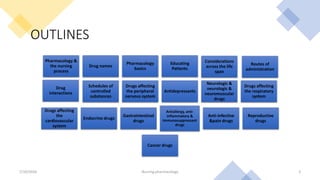
OUTLINES
Pharmacology &
the nursing
process
Drug names
Pharmacology
basics
Educating
Patients
Considerations
across the life
span
Drug
interactions
Routes of
administration
Schedules of
controlled
substances
Drugs affecting
the peripheral
nervous system
Antidepressants
Neurologic &
neurologic &
neuromuscular
drugs
Drugs affecting
the respiratory
system
Drugs affecting
the
cardiovascular
system
Endocrine drugs
Gastrointestinal
drugs
Antiallergy, anti-
inflammatory &
immunosuppressant
drugs
Anti-infective
&pain drugs
Reproductive
drugs
Cancer drugs
we are covering drug classes, prototypes, warnings, indications, administration and
more
Let’s cont’ Our Journey In Nursing
Pharmacology part2
NOTE:
• THE PURPOSE of the following sections is to give a
brief description of many of the major drug classes
that are important to nursing pharmacology; for drug
class, we ‘ll discuss one prototype drug and examine it
for information about warnings, indications,
administration, and more; nurses, however, should
seek out detailed information about individual drugs,
as the prototype cannot be assumed to provide
comprehensive information on other drugs in the same
class; underline=preferred administration route
4
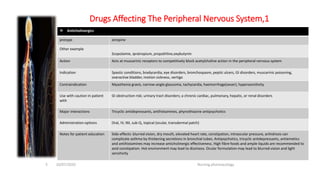
Drugs Affecting The Peripheral Nervous System,1
 Anticholinergics
atropineprotype
Scopolamie, ipratropium, propathline,oxybutynin
Other example
Acts at muscarinic receptors to competitively block acetylcholine action in the peripheral nervous systemAction
Spastic conditions, bradycardia, eye disorders, bronchospasm, peptic ulcers, GI disorders, muscarinic poisoning,
overactive bladder, motion sickness, vertigo
Indication
Myasthenia gravis, narrow-angle glaucoma, tachycardia, haemorrhage(sever), hypersensitivityContraindication
GI obstruction risk; urinary tract disorders; a chronic cardiac, pulmonary, hepatic, or renal disordersUse with caution in patient
with
Tricyclic antidepressants, antihistamines, phynothiazine antipsychoticsMajor interactions
Oral, IV, IM, sub-Q, topical (ocular, transdermal patch)Administration options
Side-effects: blurred vision, dry mouth, elevated heart rate, constipation, intraocular pressure, anhidrosis can
complicate asthma by thickening secretions in bronchial tubes. Antipsychotics, tricyclic antidepressants, antiemetics
and antihistamines may increase anticholinergic effectiveness. High fibre foods and ample liquids are recommended to
avid constipation. Hot environment may lead to dizziness. Ocular formulation may lead to blurred vision and light
sensitivity
Notes for patient education
10/07/2020 Nursing pharmacology5
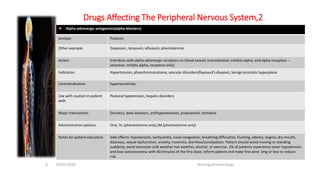
Drugs Affecting The Peripheral Nervous System,2
 Alpha-adrenergic antagonists(alpha-blockers)
Prazosinprotype
Doxazosin, terazosin, alfuzosin, phentolamineOther example
Interferes with alpha-adrenergic receptors on blood vessels (nonselective: inhibits alpha, and alpha receptors –
selective: inhibits alpha, receptors only)
Action
Hypertension, pheochromocytoma, vascular disorders(Raynaud’s disease), benign prostatic hyperplasiaIndication
hypersensitivityContraindication
Postural hypotension, hepatic disordersUse with caution in patient
with
Diuretics, beta-blockers, antihypertensives, propranolol, clonidineMajor interactions
Oral, IV, (phentolamine only),IM (phentolamine only)Administration options
Side effects: hypotension, tachycardia, nasal congestion, breathing difficulties, flushing, edema, angina, dry mouth,
dizziness, sexual dysfunction, anxiety, insomnia, diarrhea/constipation. Patient should avoid moving or standing
suddenly, avoid excessive cold weather hot weather, alcohol, or exercise. 1% of patients experience sever hypotension
and lose consciousness with 60 minutes of the first dose; inform patient and make first dose 1mg or less to reduce
risk.
Notes for patient education
10/07/2020 Nursing pharmacology6
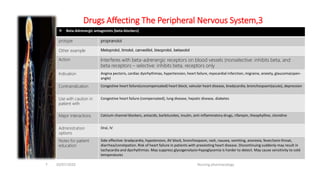
Drugs Affecting The Peripheral Nervous System,3
 Beta-Adrenergic antagonists (beta-blockers)
propranololprotype
Metoprolol, timolol, carvedilol, bisoprolol, betaxololOther example
Interferes with beta-adrenergic receptors on blood vessels (nonselective: inhibits beta, and
beta receptors – selective: inhibits beta, receptors only
Action
Angina pectoris, cardiac dysrhythmias, hypertension, heart failure, myocardial infarction, migraine, anxiety, glaucoma(open-
angle)
Indication
Congestive heart failure(uncompensated) heart block, valvular heart disease, bradycardia, bronchospasm(acute), depressionContraindication
Congestive heart failure (compensated), lung disease, hepatic disease, diabetesUse with caution in
patient with
Calcium channel blockers, antacids, barbiturates, insulin, anti-inflammatory drugs, rifampin, theophylline, clonidineMajor interactions
Oral, IVAdministration
options
Side effective: bradycardia, hypotension, AV block, bronchospasm, rash, nausea, vomiting, anorexia, fever/sore throat,
diarrhea/constipation. Risk of heart failure in patients with preexisting heart disease. Discontinuing suddenly may result in
tachycardia and dysrhythmias. May suppress glycogenolysis=hypoglycemia is harder to detect. May cause sensitivity to cold
temperatures
Notes for patient
education
10/07/2020 Nursing pharmacology7
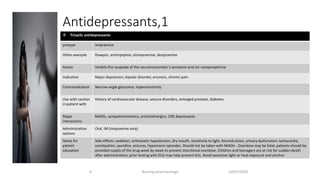
Antidepressants,1
10/07/2020Nursing pharmacology8
 Tricyclic antidepressants
Imipramineprotype
Doxepin, amitriptyline, clomipramine, desipramineOther example
Inhibits the reuptake of the neurotransmitter's serotonin and /or norepinephrineAction
Major depression, bipolar disorder, enuresis, chronic painIndication
Narrow-angle glaucoma, hypersensitivityContraindication
History of cardiovascular disease, seizure disorders, enlarged prostate, diabetesUse with caution
in patient with
MAOIs, sympathomimetics, anticholinergics, CNS depressantsMajor
interactions
Oral, IM (imipramine only)Administration
options
Side effects: sedation, orthostatic hypotension, dry mouth, sensitivity to light, blurred vision, urinary dysfunction, tachycardia,
constipation, jaundice, seizures, hypomanic episodes. Should not be taken with MAOIs . Overdose may be fetal; patients should be
provided supply of the drug week by week to prevent intentional overdose. Children and teenagers are at risk for sudden death
after administration; prior testing with ECG may help prevent this. Avoid excessive light or heat exposure and alcohol.
Notes for
patient
education
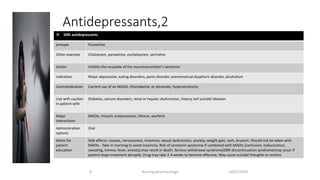
Antidepressants,2
10/07/2020Nursing pharmacology9
 SSRI antidepressants
Fluoxetineprotype
Citalopram, paroxetine, escitalopram, sertralineOther example
Inhibits the reuptake of the neurotransmitter's serotoninAction
Major depression, eating disorders, panic disorder, premenstrual dysphoric disorder, alcoholismIndication
Current use of an MAOIs, thioridazine, or pimozide; hypersensitivityContraindication
Diabetes, seizure disorders, renal or hepatic dysfunction, history oof suicidal ideationUse with caution
in patient with
MAOIs, tricyclic antipressants, lithium, warfarinMajor
interactions
OralAdministration
options
Side effects: nausea, nervousness, insomnia, sexual dysfunction, anxiety, weight gain, rash, bruxism. Should not be taken with
MAOIs . Take in morning to avoid insomnia. Risk of serotonin syndrome if combined with MAOIs (confusion, hallucination,
sweating, tremor, fever, anxiety);may result in death. Serious withdrawal syndrome(SSRI discontinuation syndrome)may occur if
patient stops treatment abruptly. Drug may take 2-4 weeks to become effective. May cause suicidal thoughts or actions
Notes for
patient
education
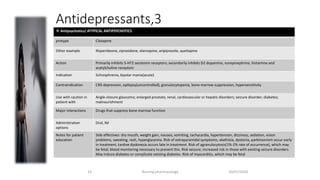
Antidepressants,3
10/07/2020Nursing pharmacology10
 Antipsychotics/ ATYPICAL ANTIPSYCHOTICS
Clozapineprotype
Risperideone, ziprasidone, olanzapine, aripiprazole, quetiapineOther example
Primarily inhibits 5-HT2 serotonin receptors; secondarily inhibits D2 dopamine, norepinephrine, histamine and
acetylcholine receptors
Action
Schizophrenia, bipolar mania(acute)Indication
CNS depression, epilepsy(uncontrolled), granulocytopenia, bone marrow suppression, hypersensitivityContraindication
Angle-closure glaucoma; enlarged prostate; renal, cardiovascular or hepatic disorders; seizure disorder; diabetes;
malnourishment
Use with caution in
patient with
Drugs that suppress bone marrow functionMajor interactions
Oral, IMAdministration
options
Side effectives: dry mouth, weight gain, nausea, vomiting, tachycardia, hypertension, dizziness, sedation, vision
problems, sweating, rash, hyperglycemia. Risk of extrapyramidal symptoms; akathisia, dystonia, parkinsonism occur early
in treatment, tardive dyskinesia occurs late in treatment. Risk of agranulocytosis(1%-2% rate of occurrence), which may
be fetal; blood monitoring necessary to prevent this. Risk seizure; increased risk in those with existing seizure disorders.
May induce diabetes or complicate existing diabetes. Risk of myocarditis, which may be fetal
Notes for patient
education
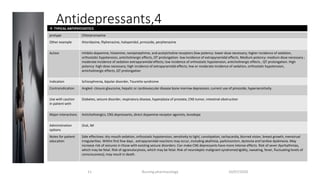
Antidepressants,4
10/07/2020Nursing pharmacology11
 TYPICAL ANTIPSYCHOTICS
Chlorpromazineprotype
thioridazine, fliphenazine, haloperidol, prmozide, perphenazineOther example
Inhibits dopamine, histamine, norepinephrine, and acetylcholine receptors (low potency: lower dose necessary; higher incidence of sedation,
orthostatic hypotension, anticholinergic effects, OT prolongation- low incidence of extrapyramidal effects. Medium potency: medium dose necessary ;
moderate incidence of sedation extrapyramidal effects; low incidence of orthostatic hypotension, anticholinergic effects , QT prolongation. High
potency: high dose necessary; high incidence of extrapyramidal effects; low or moderate incidence of sedation, orthostatic hypotension,
anticholinergic effects, QT prolongation
Action
Schizophrenia, bipolar disorder, Tourette syndromeIndication
Angled- closure glaucoma, hepatic or cardiovascular disease bone marrow depression, current use of pimozide, hypersensitivityContraindication
Diabetes, seizure disorder, respiratory disease, hyperplasia of prostate, CNS tumor, intestinal obstructionUse with caution
in patient with
Anticholinergics, CNS depressants, direct dopamine receptor agonists, levodopaMajor interactions
Oral, IMAdministration
options
Side effectives: dry mouth sedation, orthostatic hypotension, sensitivity to light, constipation, tachycardia, blurred vision, breast growth, menstrual
irregularities. Within first few days , extrapyramidal reactions may occur, including akathisia, parkinsonism, dystonia and tardive dyskinesia. May
increase risk of seizures in those with existing seizure disorders. Can make CNS depressants have more intense effects. Risk of sever dysrhythmias,
which may be fetal. Risk of agranulocytosis, which may be fetal. Risk of neuroleptic malignant syndrome(rigidity, sweating, fever, fluctuating levels of
consciousness); may result in death.
Notes for patient
education
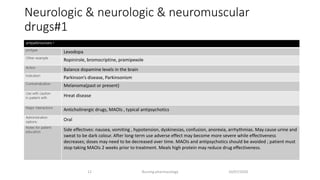
Neurologic & neurologic & neuromuscular
drugs#1
•antiparkinsonians
protype
Levodopa
Other example
Ropinirole, bromocriptine, pramipexole
Action
Balance dopamine levels in the brain
Indication
Parkinson’s disease, Parkinsonism
Contraindication
Melanoma(past or present)
Use with caution
in patient with
Hreat disease
Major interactions
Anticholinergic drugs, MAOIs , typical antipsychotics
Administration
options
Oral
Notes for patient
education
Side effectives: nausea, vomiting , hypotension, dyskinesias, confusion, anorexia, arrhythmias. May cause urine and
sweat to be dark colour. After long-term use adverse effect may become more severe while effectiveness
decreases; doses may need to be decreased over time. MAOIs and antipsychotics should be avoided ; patient must
stop taking MAOIs 2 weeks prior to treatment. Meals high protein may reduce drug effectiveness.
10/07/2020Nursing pharmacology12
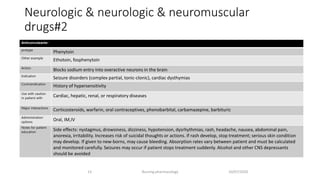
Neurologic & neurologic & neuromuscular
drugs#2
10/07/2020Nursing pharmacology13
•​Anticonvulsants
protype
Phenytoin
Other example
Ethotoin, fosphenytoin
Action
Blocks sodium entry into overactive neurons in the brain
Indication
Seizure disorders (complex partial, tonic-clonic), cardiac dysthymias
Contraindication
History of hypersensitivity
Use with caution
in patient with
Cardiac, hepatic, renal, or respiratory diseases
Major interactions
Corticosteroids, warfarin, oral contraceptives, phenobarbital, carbamazepine, barbituric
Administration
options
Oral, IM,IV
Notes for patient
education
Side effects: nystagmus, drowsiness, dizziness, hypotension, dysrhythmias, rash, headache, nausea, abdominal pain,
anorexia, irritability. Increases risk of suicidal thoughts or actions. If rash develop, stop treatment; serious skin condition
may develop. If given to new-borns, may cause bleeding. Absorption rates vary between patient and must be calculated
and monitored carefully. Seizures may occur if patient stops treatment suddenly. Alcohol and other CNS depressants
should be avoided
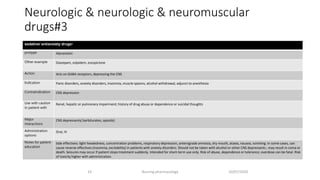
Neurologic & neurologic & neuromuscular
drugs#3
10/07/2020Nursing pharmacology14
•​sedative/ antianxiety drugs
protype Alprazolam
Other example Diazepam, zolpidem, eszopiclone
Action Acts on GABA receptors, depressing the CNS
Indication Panic disorders, anxiety disorders, insomnia, muscle spasms, alcohol withdrawal, adjunct to anesthesia
Contraindication CNS depression
Use with caution
in patient with
Renal, hepatic or pulmonary impairment; history of drug abuse or dependence or suicidal thoughts
Major
interactions
CNS depressants( barbiturates, opioids)
Administration
options
Oral, IV
Notes for patient
education
Side effectives: light headedness, concentration problems, respiratory depression, anterograde amnesia, dry mouth, ataxia, nausea, vomiting. In some cases, can
cause reverse effectives (insomnia, excitability) in patients with anxiety disorders. Should not be taken with alcohol or other CNS depressants ; may result in coma or
death. Seizures may occur if patient stops treatment suddenly. Intended for short-term use only. Risk of abuse, dependence or tolerance; overdose can be fatal. Risk
of toxicity higher with administration.
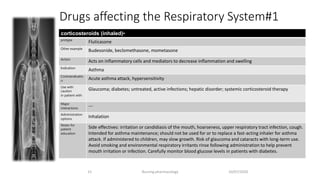
Drugs affecting the Respiratory System#1
10/07/2020Nursing pharmacology15
•​corticosteroids (inhaled)
protype
Fluticasone
Other example
Budesonide, beclomethasone, mometasone
Action
Acts on inflammatory cells and mediators to decrease inflammation and swelling
Indication
Asthma
Contraindicatio
n
Acute asthma attack, hypersensitivity
Use with
caution
in patient with
Glaucoma; diabetes; untreated, active infections; hepatic disorder; systemic corticosteroid therapy
Major
interactions
---
Administration
options
Inhalation
Notes for
patient
education
Side effectives: irritation or candidiasis of the mouth, hoarseness, upper respiratory tract infection, cough.
Intended for asthma maintenance; should not be used for or to replace a fast-acting inhaler for asthma
attack. If administered to children, may slow growth. Risk of glaucoma and cataracts with long-term use.
Avoid smoking and environmental respiratory irritants rinse following administration to help prevent
mouth irritation or infection. Carefully monitor blood glucose levels in patients with diabetes.
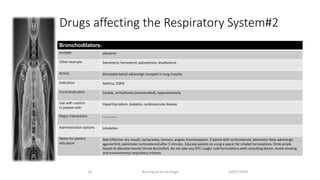
Drugs affecting the Respiratory System#2
10/07/2020Nursing pharmacology16
•Bronchodilators
protype albuterol
Other example Salmeterol, formoterol, epinephrine, levalbuterol
Action Stimulates beta2-adrenergic recepots in lung muscles
Indication Asthma, COPD
Contraindication Cardiac, arrhythmias (uncontrolled), hypersensitivity
Use with caution
in patient with
Hyperthyroidism, diabetes, cardiovascular disease
Major interactions ------------
Administration options Inhalation
Notes for patient
education
Side Effective: dry mouth, tachycardia, tremors, angina, bronchospasm. If paired with corticosteroid, administer beta-adrenergic
agonist first; administer corticosteroid after 5 minutes. Educate patient on using a spacer for inhaled formulations. Drink ample
liquids to alleviate mouth/ throat discomfort. Do not take any OTC cough/ cold formulations with consulting doctor. Avoid smoking
and environmental respiratory irritants.
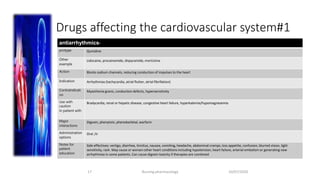
Drugs affecting the cardiovascular system#1
10/07/2020Nursing pharmacology17
•antiarrhythmics
protype Quinidine
Other
example
Lidocaine, procainamide, dispyramide, moricizine
Action Blocks sodium channels, reducing conduction of impulses to the heart
Indication Arrhythmias (tachycardia, atrial flutter, atrial fibrillation)
Contraindicati
on
Myasthenia gravis, conduction defects, hypersensitivity
Use with
caution
in patient with
Bradycardia, renal or hepatic disease, congestive heart failure, hyperkalemia/hypomagnesemia
Major
interactions
Digoxin, phenytoin, phenobarbital, warfarin
Administration
options
Oral ,IV
Notes for
patient
education
Side effectives: vertigo, diarrhea, tinnitus, nausea, vomiting, headache, abdominal cramps, loss appetite, confusion, blurred vision, light
sensitivity, rash. May cause or worsen other heart conditions including hypotension, heart failure, arterial embolism or generating new
arrhythmias in some patients. Can cause digoxin toxicity if therapies are combined
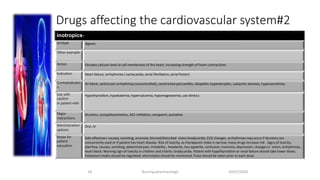
Drugs affecting the cardiovascular system#2
10/07/2020Nursing pharmacology18
•inotropics
protype digoxin
Other example -
Action Elevates calcium level at cell membranes of the heart, increasing strength of heart contractions
Indication Heart failure, arrhythmias ( tachycardia, atrial fibrillation, atrial flutter)
Contraindicatio
n
AV block, ventricular arrhythmias (uncontrolled), constrictive pericarditis, idiopathic hyperatrophic, subaortic stenosis, hypersensitivity
Use with
caution
in patient with
Hypothyroidism, hypokalemia, hypercalcemia, hypomagnesemia, use diretics
Major
interactions
Diuretics, sympathomimetics, ACE inhibitors, verapamil, quinidine
Administration
options
Oral ,IV
Notes for
patient
education
Side effectives: nausea, vomiting, anorexia, blurred/disturbed vision bradycardia, ECG changes. arrhythmias may occur if diuretics are
concurrently used or if patient has heart disease. Risk of toxicity, as therapeutic index is narrow; many drugs increase risk . Signs of toxicity:
diarrhea, nausea, vomiting, abdominal pain, irritability , headache, loss appetite, confusion, insomnia, depression, changes in vision, arrhythmias ,
heart block. Warning sign of toxicity in children and infants: bradycardia. Patient with hypothyroidism or renal failure should take lower doses.
Potassium intake should be regulated; electrolytes should be monitored. Pulse should be taken prior to each dose.
Drugs affecting the cardiovascular system#3
10/07/2020Nursing pharmacology19
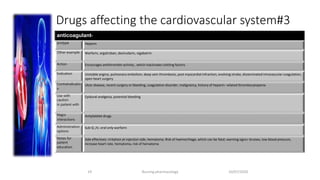
•anticoagulant
protype Heparin
Other example Warfarin, argatroban, desirudarin, vigabatrin
Action Encourages antithrombin activity , which inactivates clotting factors
Indication Unstable angina, pulmonary embolism, deep vein thrombosis, post myocardial infraction, evolving stroke, disseminated intravascular coagulation,
open heart surgery
Contraindicatio
n
Ulcer disease, recent surgery or bleeding, coagulation disorder, malignancy, history of heparin- related thrombocytopenia
Use with
caution
in patient with
Epidural analgesia, potential bleeding
Major
interactions
Antiplatelet drugs
Administration
options
Sub-Q ,IV, oral only warfarin
Notes for
patient
education
Side effectives: irritation at injection side, hematoma. Risk of haemorrhage, which can be fatal; warning signs= bruises, low blood pressure,
increase heart rate, hematoma, risk of hematoma
Drugs affecting the cardiovascular system#4
10/07/2020Nursing pharmacology20
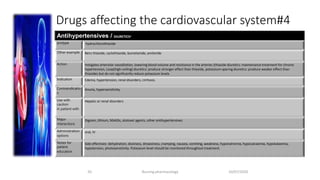
•Antihypertensives / DIURETICS
protype hydrochlorothiazide
Other example Benz thiazide, cyclothiazide, bumetanide, amiloride
Action Instigates arteriolar vasodilation, lowering blood volume and resistance in the arteries (thiazide diuretics: maintenance treatment for chronic
hypertension, Loop(high-ceiling) diuretics: produce stronger effect than thiazide, potassium-sparing diuretics: produce weaker effect than
thiazides but do not significantly reduce potassium levels
Indication Edema, hypertension, renal disorders, cirrhosis.
Contraindicatio
n
Anuria, hypersensitivity
Use with
caution
in patient with
Hepatic or renal disorders
Major
interactions
Digoxin, lithium, NSAIDs, ototoxic agents, other antihypertensives
Administration
options
oral, IV
Notes for
patient
education
Side effectives: dehydration, dizziness, drowsiness, cramping, nausea, vomiting, weakness, hyponatremia, hypocalcaemia, hypokalaemia,
hypotension, photosensitivity. Potassium level should be monitored throughout treatment.
Drugs affecting the cardiovascular system#5
10/07/2020Nursing pharmacology21
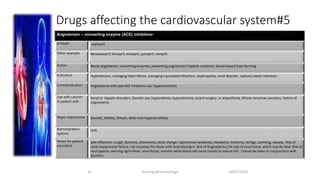
•​Angiotensin – converting enzyme (ACE) inhibitors
protype captopril
Other example Benazepepril, lisinopril, enslapril, quinapril, ramipril.
Action Blocks angiotensin- converting enzymes, preventing angiotensin II (which constricts blood vessel) from forming
Indication Hypertension, managing heart failure, managing myocardial infraction, nephropathy, renal disorder, sodium/ water retention
Contraindication Angioedema with past ACE inhibitors use, hypersensitivity
Use with caution
in patient with
Renal or hepatic disorders. Diuretic use, hypovolemia, hyponatremia, recent surgery or anaesthesia, African American ancestry, history of
angioedema
Major interactions Diuretic, NSAIDs, lithium, other anti-hypersensitivity
Administration
options
oral,
Notes for patient
education
Side effectives: cough, dizziness, drowsiness, teste change, hypotension weakness, headache, insomnia, vertigo, vomiting, nausea,. Risk of
renal impairment/ failure; risk increases for those with renal disorders. Risk of Angioedema (1% rate of occurrence; which may be fatal. Risk of
neutropenia; warning signs=fever, sore throat; monitor white blood cell count closely to reduce risk . Cannot be taken in conjunctions with
diuretics
Endocrine drugs#1
10/07/2020Nursing pharmacology22
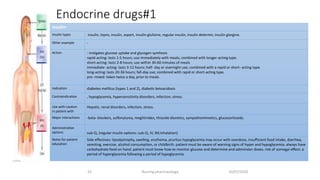
•​insulin
Insulin types​ insulin, lispro, insulin, aspart, insulin glulisine, regular insulin, insulin determir, insulin glargine.
Other example -
Action : instigates glucose uptake and glycogen synthesis
rapid-acting: lasts 1-5 hours; use immediately with meals; combined with longer-acting type.
short-acting: lasts 2-8 hours; use within 30-60 minutes of meals
immediate- acting: lasts 3-12 hours; half- day or overnight use; combined with a rapid or short- acting type.
long-acting: lasts 20-36 hours; fall-day use; combined with rapid or short-acting type.
pre- mixed: taken twice a day, prior to meals.
Indication diabetes mellitus (types 1 and 2), diabetic ketoacidosis
Contraindication , hypoglycemia, hypersensitivity disorders, infection, stress.
Use with caution
in patient with
Hepatic, renal disorders, infection, stress.
Major interactions​ -beta- blockers, sulfonylurea, meglitinides, thiazide diuretics, sympathomimetics, glucocorticoids.
Administration
options sub-Q, (regular insulin options: sub-Q, IV, IM,inhalation)
Notes for patient
education
Side effectives: lipodystrophy, swelling, erythema, pruritus hypoglycemia may occur with overdose, insufficient food intake, diarrhea,
vomiting, exercise, alcohol consumption, or childbirth. patient must be aware of warning signs of hyper and hypoglycemia; always have
carbohydrate food on hand. patient must know how to monitor glucose and determine and administer doses. risk of somogyi effect: a
period of hyperglycemia following a period of hypoglycemia
Endocrine drugs#2
10/07/2020Nursing pharmacology23
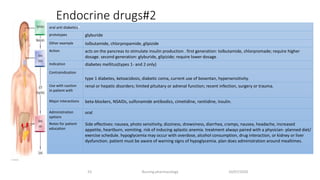
•oral anti diabetics
prototypes​ glyburide
Other example tolbutamide, chlorpropamide, glipizide
Action acts on the pancreas to stimulate insulin production . first generation: tolbutamide, chlorpromade; require higher
dosage. second generation: glyburide, glipizide; require lower dosage .
Indication diabetes mellitus(types 1- and 2 only)
Contraindication
type 1 diabetes, ketoacidosis, diabetic coma, current use of bosentan, hypersensitivity.
Use with caution
in patient with
renal or hepatic disorders; limited pituitary or adrenal function; recent infection, surgery or trauma.
Major interactions​ beta-blockers, NSAIDs, sulfonamide antibodics, cimetidine, ranitidine, insulin.
Administration
options
oral
Notes for patient
education
Side effectives: nausea, photo sensitivity, dizziness, drowsiness, diarrhea, cramps, nausea, headache, increased
appetite, heartburn, vomiting. risk of inducing aplastic anemia. treatment always paired with a physician- planned diet/
exercise schedule. hypoglycemia may occur with overdose, alcohol consumption, drug interaction, or kidney or liver
dysfunction. patient must be aware of warning signs of hypoglycemia. plan does administration around mealtimes.
Endocrine drugs#3
10/07/2020Nursing pharmacology24
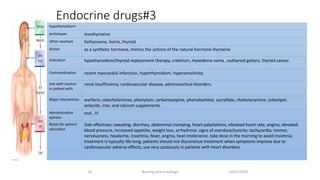
•hypothyroidism
prototypes​ levothyroxine
Other example liothyroxine, liotrix, thyroid
Action as a synthetic hormone, mimics the actions of the natural hormone thyroxine
Indication hypothyroidism/thyroid replacement therapy, cretinism, myxedema coma , euthyroid goiters, thyroid cancer.
Contraindication recent myocardial infarction, hyperthyroidism, hypersensitivity.
Use with caution
in patient with
renal insufficiency, cardiovascular disease, adrenocortical disorders.
Major interactions​ warfarin, catecholamines, phenytoin, carbamazepine, phenobarbital, sucralfate, cholestyramine, colestipol,
antacids, iron, and calcium supplements.
Administration
options
oral , IV
Notes for patient
education
Side effectives: sweating, diarrhea, abdominal cramping, heart palpitations, elevated heart rate, angina, elevated
blood pressure, increased appetite, weight loss, arrhythmia. signs of overdose/toxicity: tachycardia, tremor,
nervousness, headache, insomnia, fever, angina, heat intolerance. take dose in the morning to avoid insomnia.
treatment is typically life-long; patients should not discontinue treatment when symptoms improve due to
cardiovascular adverse effects, use very cautiously in patients with heart disorders.
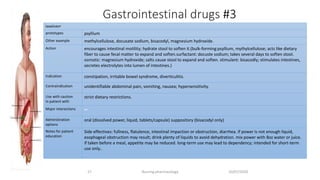
Gastrointestinal drugs #1
10/07/2020Nursing pharmacology25
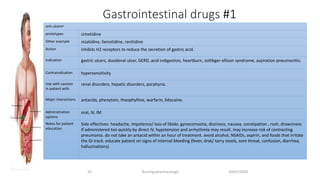
•anti ulcers
prototypes​ cimetidine
Other example nizatidine, famotidine, ranitidine
Action inhibits H2 receptors to reduce the secretion of gastric acid.
Indication gastric ulcers, duodenal ulcer, GERD, acid indigestion, heartburn, zollibger-ellison syndrome, aspiration pneumonitis.
Contraindication hypersensitivity
Use with caution
in patient with
renal disorders, hepatic disorders, porphyria.
Major interactions​ antacids, phenytoin, theophylline, warfarin, lidocaine.
Administration
options
oral, IV, IM
Notes for patient
education
Side effectives: headache, impotence/ loss of libido, gynecomastia, dizziness, nausea, constipation , rash, drowsiness
if administered too quickly by direct IV, hypotension and arrhythmia may result. may increase risk of contracting
pneumonia. do not take an antacid within an hour of treatment. avoid alcohol, NSAIDs, aspirin, and foods that irritate
the GI track. educate patient on signs of internal bleeding (fever, drak/ tarry stools, sore throat, confusion, diarrhea,
hallucinations).
Gastrointestinal drugs #2
10/07/2020Nursing pharmacology26
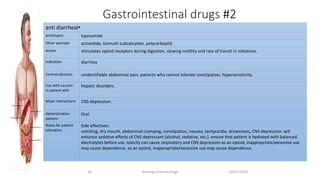
•anti diarrheal
prototypes​ loperamide
Other example octreotide, bismuth subsalicylate, polycarbophil.
Action stimulates opioid receptors during digestion, slowing motility and rate of transit in intestines.
Indication diarrhea
Contraindication unidentifiable abdominal pain, patients who cannot tolerate constipation, hypersensitivity.
Use with caution
in patient with
hepatic disorders.
Major interactions​ CNS depression.
Administration
options
Oral
Notes for patient
education
Side effectives:
vomiting, dry mouth, abdominal cramping, constipation, nausea, tachycardia, drowsiness, CNS depression. will
enhance sedative effects of CNS depressant (alcohol, sedative, etc,). ensure that patient is hydrated with balanced
electrolytes before use. toxicity can cause respiratory and CNS depression as an opioid, inappropriate/excessive use
may cause dependence. as an opioid, inappropriate/excessive use may cause dependence.
Gastrointestinal drugs #3
10/07/2020Nursing pharmacology27
•laxatives
prototypes​ psyllium
Other example methylcellulose, docusate sodium, bisacodyl, magnesium hydroxide.
Action encourages intestinal motility; hydrate stool to soften it.(bulk-forming:psyllium, mythylcellulose; acts like dietary
fiber to cause fecal matter to expand and soften.surfactant: docuste sodium; takes several days to soften stool.
osmotic: magnesium hydroxide; salts cause stool to expand and soften. stimulant: bisacodly; stimulates intestines,
secretes electrolytes into lumen of intestines.)
Indication constipation, irritable bowel syndrome, diverticulitis.
Contraindication unidentifiable abdominal pain, vomiting, nausea; hypersensitivity.
Use with caution
in patient with
strict dietary restrictions.
Major interactions​ --
Administration
options
oral (dissolved power, liquid, tablets/capsule) suppository (bisacodyl only)
Notes for patient
education
Side effectives: fullness, flatulence, intestinal impaction or obstruction, diarrhea. if power is not enough liquid,
esophageal obstruction may result; drink plenty of liquids to avoid dehydration. mix power with 8oz water or juice.
if taken before a meal, appetite may be reduced. long-term use may lead to dependency; intended for short-term
use only..
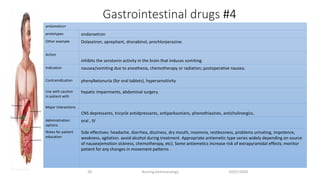
Gastrointestinal drugs #4
10/07/2020Nursing pharmacology28
•antiemetics
prototypes​ ondansetron
Other example Dolasetron, aprepitant, dronabinol, prochlorperazine.
Action
inhibits the serotonin activity in the brain that induces vomiting.
Indication nausea/vomiting due to anesthesia, chemotherapy or radiation; postoperative nausea.
Contraindication phenylketonuria (for oral tablets), hypersensitivity
Use with caution
in patient with
hepatic impairments, abdominal surgery.
Major interactions​
CNS depressants, tricycle antidpressants, antiparksonians, phenothiazines, anticholinergics.
Administration
options
oral , IV
Notes for patient
education
Side effectives: headache, diarrhea, dizziness, dry mouth, insomnia, restlessness, problems urinating, impotence,
weakness, agitation. avoid alcohol during treatment. Appropriate antiemetic type varies widely depending on source
of nausea(emotion sickness, chemotherapy, etc). Some antiemetics increase risk of extrapyramidal effects; monitor
patient for any changes in movement patterns .
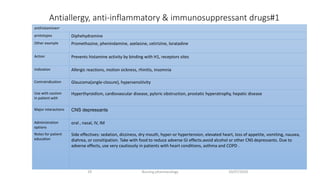
Antiallergy, anti-inflammatory & immunosuppressant drugs#1
10/07/2020Nursing pharmacology29
•antihistamines
prototypes​ Diphehydramine
Other example Promethazine, phenindamine, azelasine, cetirizine, loratadine
Action Prevents histamine activity by binding with H1, receptors sites
Indication Allergic reactions, motion sickness, rhinitis, insomnia
Contraindication Glaucoma(angle-closure), hypersensitivity
Use with caution
in patient with
Hyperthyroidism, cardiovascular disease, pyloric obstruction, prostatic hyperatrophy, hepatic disease
Major interactions​ CNS depressants
Administration
options
oral , nasal, IV, IM
Notes for patient
education
Side effectives: sedation, dizziness, dry mouth, hyper-or hypertension, elevated heart, loss of appetite, vomiting, nausea,
diahrea, or consitipation. Take with food to reduce adverse GI effects.avoid alcohol or other CNS depressants. Due to
adverse effects, use very cautiously in patients with heart conditions, asthma and COPD .
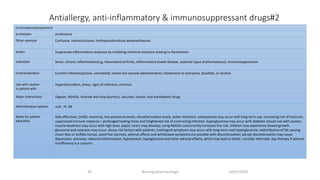
Antiallergy, anti-inflammatory & immunosuppressant drugs#2
10/07/2020Nursing pharmacology30
•Corticosteroids(systemic)
prototypes​ prednisone
Other example Cortisone, hydrocortisone, methylprednisolone,dexamethasone.
Action Suppresses inflammatory response by inhibiting chemical reactions leading to flammation.
Indication Sever, chronic inflammation(e,g, rheumatoid arthritis, inflammatory bowel disease, systemic lupus erythematosus); immunosuppression.
Contraindication Current infections(active, untreated); recent live vaccine administration; intolerance to tartrazine, bisulfate, or alcohol
Use with caution
in patient with
Hyperthyroidism, stress, signs of infection, cirrhosis
Major interactions​ Digoxin, NSAIDs, thiazide and loop diuretics, vaccines, insulin, oral antidiabetic drugs
Administration options oral , IV, IM
Notes for patient
education
Side effectives: (mild): insomnia, low potassium levels, elevated sodium levels, water retention. osteoporosis may occur with long-term use, increasing risk of fractures.
suppressed immune response = prolonged healing times and heightened risk of contracting infection. hyperglycemia may occur with diabetes should use with caution.
muscle weakness may occur with high dose. peptic ulcers may develop; using NSAIDs concurrently increases this risk. children may experience slowed growth.
glaucoma and cataracts may occur; dicuss risk factors with patients. cushingoid symptoms may occur with long-term use( hyperglycemia, redistribution of fat causing
moon face or buffalo hump). avoid live vaccines, adrenal affects and withdrawal symptoms are possible with discontinuation; abrupt discontinuation may cause
depression, anorexia, rebound inflammation, hypotension, hypoglycemia and other adrenal effects, which may lead to death. consider alternate- day therapy if adrenal
insufficiency is a concern.
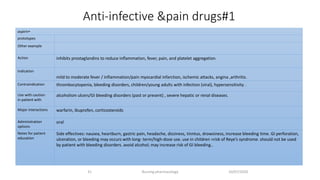
Anti-infective &pain drugs#1
10/07/2020Nursing pharmacology31
•aspirin
prototypes​
Other example
Action inhibits prostaglandins to reduce inflammation, fever, pain, and platelet aggregation.
Indication
mild to moderate fever / inflammation/pain myocardial infarction, ischemic attacks, angina ,arthritis.
Contraindication thrombocytopenia, bleeding disorders, children/young adults with infection (viral), hypersensitivity .
Use with caution
in patient with
alcoholism ulcers/GI bleeding disorders (past or present) , severe hepatic or renal diseases.
Major interactions​ warfarin, ibuprofen, corticosteroids
Administration
options
oral
Notes for patient
education
Side effectives: nausea, heartburn, gastric pain, headache, dizziness, tinntus, drowsiness, increase bleeding time. GI perforation,
ulceration, or bleeding may occurs with long- term/high-dose use. use in children =risk of Reye’s syndrome. should not be used
by patient with bleeding disorders. avoid alcohol; may increase risk of GI bleeding..
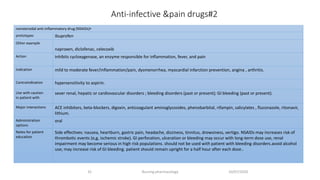
Anti-infective &pain drugs#2
10/07/2020Nursing pharmacology32
•nonsteroidal anti-inflammatory drug (NSAIDs)
prototypes​ ibuprofen
Other example
naproxen, diclofenac, celecoxib
Action inhibits cycloxygenase, an enzyme responsible for inflammation, fever, and pain
Indication mild to moderate fever/inflammation/pain, dysmenorrhea, myocardial infarction prevention, angina , arthritis.
Contraindication hypersensitivity to aspirin.
Use with caution
in patient with
sever renal, hepatic or cardiovascular disorders ; bleeding disorders (past or present); GI bleeding (past or present).
Major interactions​ ACE inhibitors, beta-blockers, digoxin, anticoagulant aminoglycosides, phenobarbital, rifampin, salicylates , fluconazole, ritonavir,
lithium.
Administration
options
oral
Notes for patient
education
Side effectives: nausea, heartburn, gastric pain, headache, dizziness, tinnitus, drowsiness, vertigo. NSAIDs may increases risk of
thrombotic events (e,g, ischemic stroke). GI perforation, ulceration or bleeding may occur with long-term dose use, renal
impairment may become serious in high risk populations. should not be used with patient with bleeding disorders.avoid alcohol
use; may increase risk of GI bleeding. patient should remain upright for a half hour after each dose..
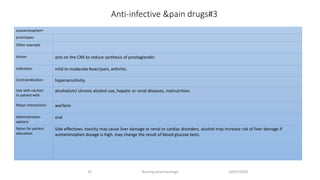
Anti-infective &pain drugs#3
10/07/2020Nursing pharmacology33
•acetaminophen
prototypes​
Other example
Action acts on the CNS to reduce synthesis of prostaglandin.
Indication mild to moderate fever/pain, arthritis.
Contraindication hypersensitivity.
Use with caution
in patient with
alcoholism/ chronic alcohol use, hepatic or renal diseases, malnutrition.
Major interactions​ warfarin
Administration
options
oral
Notes for patient
education
Side effectives: toxicity may cause liver damage or renal or cardiac disorders. alcohol may increase risk of liver damage if
acetaminophen dosage is high. may change the result of blood glucose tests.
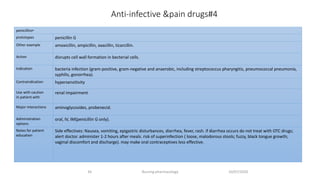
Anti-infective &pain drugs#4
10/07/2020Nursing pharmacology34
•penicillins
prototypes​ penicillin G
Other example amoxicillin, ampicillin, oxacillin, ticarcillin.
Action disrupts cell wall formation in becterial cells.
Indication bacteria infection (gram-positive, gram-negative and anaerobic, including streptococcus pharyngitis, pneumococcal pneumonia,
syphilis, gonorrhea).
Contraindication hypersensitivity
Use with caution
in patient with
renal impairment
Major interactions​ aminoglycosides, probenecid.
Administration
options
oral, IV, IM(penicillin G only).
Notes for patient
education
Side effectives: Nausea, vomiting, epigastric disturbances, diarrhea, fever, rash. if diarrhea occurs do not treat with OTC drugs;
alert doctor. administer 1-2 hours after meals. risk of superinfection ( loose, malodorous stools; fuzzy, black tongue growth;
vaginal discomfort and discharge). may make oral contraceptives less effective.
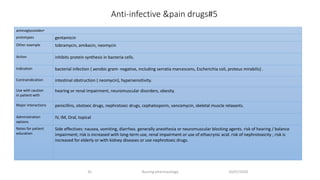
Anti-infective &pain drugs#5
10/07/2020Nursing pharmacology35
•aminoglycosides
prototypes​ gentamicin
Other example tobramycin, amikacin, neomycin
Action inhibits protein synthesis in bacteria cells.
Indication bacterial infection ( aerobic gram- negative, including serratia marcescens, Escherichia coli, proteus mirabilis) .
Contraindication intestinal obstruction ( neomycin), hypersensitivity.
Use with caution
in patient with
hearing or renal impairment, neuromuscular disorders, obesity.
Major interactions​ penicillins, ototoxic drugs, nephrotoxic drugs, cephalosporin, vancomycin, skeletal muscle relaxants.
Administration
options
IV, IM, Oral, topical
Notes for patient
education
Side effectives: nausea, vomiting, diarrhea. generally anesthesia or neuromuscular blocking agents. risk of hearing / balance
impairment; risk is increased with long-term use, renal impairment or use of ethacrynic acid. risk of nephrotoxicity ; risk is
increased for elderly or with kidney diseases or use nephrotoxic drugs.
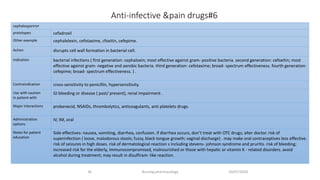
Anti-infective &pain drugs#6
10/07/2020Nursing pharmacology36
•cephalosporins
prototypes​ cefadroxil
Other example cephalelexin, cefotaxime, cfoxitin, cefepime.
Action disrupts cell wall formation in bacterial cell.
Indication bacterial infections ( first generation: cephaloxin; most effective against gram- positive bacteria. second generation: cefoxitin; most
effective against gram- negative and aerobic bacteria. third generation: cefotaxime; broad- spectrum effectiveness. fourth generation:
cefepime; broad- spectrum effectiveness. ) .
Contraindication cross-sensitivity to penicillin, hypersensitivity.
Use with caution
in patient with
GI bleeding or disease ( past/ present), renal impairment .
Major interactions​ probenecid, NSAIDs, thrombolytics, anticoagulants, anti platelets drugs.
Administration
options
IV, IM, oral
Notes for patient
education
Side effectives: nausea, vomiting, diarrhea, confusion. if diarrhea occurs, don’t treat with OTC drugs; alter doctor. risk of
superinfection ( loose, malodorous stools; fuzzy, black tongue growth; vaginal discharge) . may make oral contraceptives less effective.
risk of seizures in high doses. risk of dermatological reaction s including stevens- johnson syndrome and pruritis. risk of bleeding;
increased risk for the elderly, immunocompromised, malnourished or those with hepatic or vitamin K - related disorders. avoid
alcohol during treatment; may result in disulfiram- like reaction.
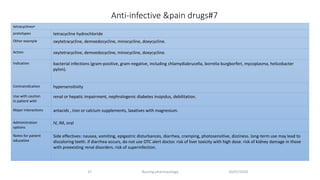
Anti-infective &pain drugs#7
10/07/2020Nursing pharmacology37
•tetracyclines
prototypes​ tetracycline hydrochloride
Other example oxytetracycline, demoedocycline, minocycline, doxycycline.
Action oxytetracycline, demoedocycline, minocycline, doxycycline.
Indication bacterial infections (gram-positive, gram-negative, including chlamydiabrucella, borrelia burgborferi, mycoplasma, helicobacter
pylon).
Contraindication hypersensitivity
Use with caution
in patient with
renal or hepatic impairment, nephrologenic diabetes insipidus, debilitation.
Major interactions​ antacids , iron or calcium supplements, laxatives with magnesium.
Administration
options
IV, IM, oral
Notes for patient
education
Side effectives: nausea, vomiting, epigastric disturbances, diarrhea, cramping, photosensitive, dizziness. long-term use may lead to
discoloring teeth. if diarrhea occurs, do not use OTC alert doctor. risk of liver toxicity with high dose. risk of kidney damage in those
with preexisting renal disorders. risk of superinfection.
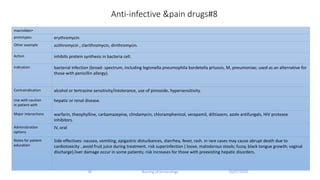
Anti-infective &pain drugs#8
10/07/2020Nursing pharmacology38
•macrolides
prototypes​ erythromycin
Other example azithromycin , clarithromycin, dirithromycin.
Action inhibits protein synthesis in bacteria cell.
Indication bacterial infection (broad- spectrum, including legionella pneumophila bordetella prtussis, M, pneumoniae; used as an alternative for
those with penicillin allergy).
Contraindication alcohol or tertrazine sensitivity/intolerance, use of pimozide, hypersensitivity.
Use with caution
in patient with
hepatic or renal disease.
Major interactions​ warfarin, theophylline, carbamazepine, clindamycin, chloramphenicol, verapamil, dilitiazem, azole antifungals, HIV protease
inhibitors.
Administration
options
IV, oral
Notes for patient
education
Side effectives: nausea, vomiting, epigastric disturbances, diarrhea, fever, rash. in rare cases may cause abrupt death due to
cardiotoxicity . avoid fruit juice during treatment. risk superinfection ( loose, malodorous stools; fuzzy, black tongue growth; vaginal
discharge).liver damage occur in some patients; risk increases for those with preexisting hepatic disorders.
Anti-infective &pain drugs#9
10/07/2020Nursing pharmacology39
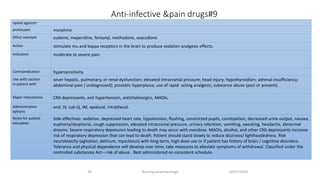
•opioid agonist
prototypes​ morphine
Other example codeine, meperidine, fentanyl, methadone, oxycodone.
Action stimulate mu and kappa receptors in the brain to produce sedation analgesic effects.
Indication moderate to severe pain.
Contraindication hypersensitivity.
Use with caution
in patient with
sever hepatic, pulmonary, or renal dysfunction; elevated intracranial pressure; head injury; hypothyroidism; adrenal insufficiency;
abdominal pain ( undiagnosed); prostatic hyperplasia; use of rapid- acting analgesic; substance abuse (past or present).
Major interactions​ CNS depressants, anti hypertension, anticholinergics, MAOIs.
Administration
options
oral, IV, sub-Q, IM, epidural, intrathecal.
Notes for patient
education
Side effectives: sedation, depressed heart rate, hypotension, flushing, constricted pupils, constipation, decreased urine output, nausea,
euphoria/dysphoria, cough suppression, elevated intracranial pressure, urinary retention, vomiting, sweating, headache, abnormal
dreams. Severe respiratory depression leading to death may occur with overdose. MAOIs, alcohol, and other CNS depressants increase
risk of respiratory depression that can lead to death. Patient should stand slowly to reduce dizziness/ lightheadedness. Risk
neurotoxicity (agitation, delirium, myoclonus) with long-term, high dose use or if patient has history of brain / cognitive disorders.
Tolerance and physical dependence will develop over time; take measures to alleviate symptoms of withdrawal. Classified under the
controlled substances Act—risk of abuse . Best administered on consistent schedule.
Reproductive drugs #1
10/07/2020Nursing pharmacology40
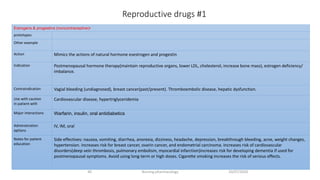
•Estrogens & progestins (noncontraceptive)
prototypes​
Other example
Action Mimics the actions of natural hormone esestrogen and progestin
Indication Postmenopausal hormone therapy(maintain reproductive organs, lower LDL, cholesterol, increase bone mass), estrogen deficiency/
imbalance.
Contraindication Vagial bleeding (undiagnosed), breast cancer(past/present). Thromboembolic disease, hepatic dysfunction.
Use with caution
in patient with
Cardiovascular disease, hypertriglyceridemia
Major interactions​ Warfarin, insulin, oral antidiabetics
Administration
options
IV, IM, oral
Notes for patient
education
Side effectives: nausea, vomiting, diarrhea, anorexia, dizziness, headache, depression, breakthrough bleeding, acne, weight changes,
hypertension. Increases risk for breast cancer, ovarin cancer, and endometrial carcinoma. Increases risk of cardiovascular
disorders(deep vein thrombosis, pulmonary embolism, myocardial infarction)increases risk for developing dementia if used for
postmenopausal symptoms. Avoid using long-term or high doses. Cigarette smoking increases the risk of serious effects.
Reproductive drugs #2
10/07/2020Nursing pharmacology41
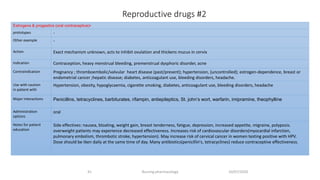
•Estrogens & progestins (oral contraceptive)
prototypes​ -
Other example -
Action Exact mechanism unknown, acts to inhibit ovulation and thickens mucus in cervix
Indication Contraception, heavy menstrual bleeding, premenstrual dysphoric disorder, acne
Contraindication Pregnancy ; thromboembolic/valvular heart disease (past/present); hypertension, (uncontrolled); estrogen-dependence, breast or
endometrial cancer ;hepatic disease; diabetes, anticoagulant use, bleeding disorders, headache.
Use with caution
in patient with
Hypertension, obesity, hypoglycaemia, cigarette smoking, diabetes, anticoagulant use, bleeding disorders, headache
Major interactions​ Penicillins, tetracyclines, barbiturates, rifampin, antiepileptics, St. john’s wort, warfarin, imipramine, theophylline
Administration
options
oral
Notes for patient
education
Side effectives: nausea, bloating, weight gain, breast tenderness, fatigue, depression, increased appetite, migraine, polyposis.
overweight patients may experience decreased effectiveness. Increases risk of cardiovascular disorders(myocardial infarction,
pulmonary embolism, thrombotic stroke, hypertension). May increase risk of cervical cancer in women testing positive with HPV.
Dose should be tken daily at the same time of day. Many antibiotics(penicillin's, tetracyclines) reduce contraceptive effectiveness.
cancer drugs
10/07/2020Nursing pharmacology42
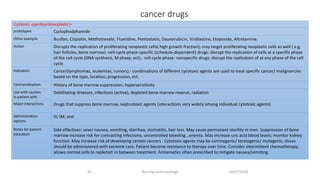
•Cytotoxic agents(antineoplastic)
prototypes​ Cyclophodphamide
Other example Buslfan, Cisplatin, Methotrexate, Fluxridine, Pentostatin, Daunorubicin, Vinblastine, Etoposide, Altretamine.
Action Disrupts the replication of proliferating neoplastic cells( high growth fraction); may target proliferating neoplastic cells as well ( e.g.
hair follicles, bone marrow).-cell-cycle phase-specific (schedule-dependent) drugs: disrupt the replication of cells at a specific phase
of the cell cycle (DNA synthesis, M phase, ect).- cell-cycle phase- nonspecific drugs: disrupt the replication of at any phase of the cell
cycle.
Indication Cancer(lymphomas, leukemias, tumors).- combinations of different cytotoxic agents are used to treat specific cancer/ malignancies
based on the type, location, progression, ect.
Contraindication History of bone marrow suppression, hypersensitivity
Use with caution
in patient with
Debilitating illnesses, infections (active), depleted bone marrow reserve, radiation
Major interactions​ Drugs that suppress bone marrow, nephrotoxic agents (interactions very widely among individual cytotoxic agents)
Administration
options
IV, IM, oral
Notes for patient
education
Side effectives: sever nausea, vomiting, diarrhea, stomatitis, hair loss. May cause permanent sterility in men. Suppression of bone
marrow increase risk for contracting infections, uncontrolled bleeding , anemia. May increase uric acid blood levels; monitor kidney
function. May increase risk of developing certain cancers . Cytotoxic agents may be carcinogenic/ teratogenic/ mutagenic; doses
should be administered with extreme care. Patient become resistance to therapy over time. Consider intermittent chemotherapy;
allows normal cells to replenish in between treatment. Antiemetics often prescribed to mitigate nausea/vomiting.
Summary
• The purpose of the above sections is to give a brief description of
many of the major drug classes that are important to nursing
pharmacology; for drug class, we discussed one prototype drug and
examine it for information about warnings, indications,
administration, and more; nurses, however, should seek out detailed
information about individual drugs, as the prototype cannot be
assumed to provide comprehensive information on other drugs in the
same class; underline=preferred administration rout. Knowing and
understanding drugs actions and indication can give a great help in
both medicine and nursing care and giving patient enough education
about each drugs can save a lot of effort and time.
10/07/2020Nursing pharmacology43
Thank you
and say updated

Nursing pharmacology part2

  • 1.
    Nursing pharmacology part2 Jamilah saad alqahtani Nurselecturer,MSN,OR specialist, BSN,RGN,
  • 2.
    7/10/2020 Nursing pharmacology2 OUTLINES Pharmacology & the nursing process Drug names Pharmacology basics Educating Patients Considerations across the life span Drug interactions Routes of administration Schedules of controlled substances Drugs affecting the peripheral nervous system Antidepressants Neurologic & neurologic & neuromuscular drugs Drugs affecting the respiratory system Drugs affecting the cardiovascular system Endocrine drugs Gastrointestinal drugs Antiallergy, anti- inflammatory & immunosuppressant drugs Anti-infective &pain drugs Reproductive drugs Cancer drugs
  • 3.
    we are coveringdrug classes, prototypes, warnings, indications, administration and more Let’s cont’ Our Journey In Nursing Pharmacology part2
  • 4.
    NOTE: • THE PURPOSEof the following sections is to give a brief description of many of the major drug classes that are important to nursing pharmacology; for drug class, we ‘ll discuss one prototype drug and examine it for information about warnings, indications, administration, and more; nurses, however, should seek out detailed information about individual drugs, as the prototype cannot be assumed to provide comprehensive information on other drugs in the same class; underline=preferred administration route 4
  • 5.
    Drugs Affecting ThePeripheral Nervous System,1  Anticholinergics atropineprotype Scopolamie, ipratropium, propathline,oxybutynin Other example Acts at muscarinic receptors to competitively block acetylcholine action in the peripheral nervous systemAction Spastic conditions, bradycardia, eye disorders, bronchospasm, peptic ulcers, GI disorders, muscarinic poisoning, overactive bladder, motion sickness, vertigo Indication Myasthenia gravis, narrow-angle glaucoma, tachycardia, haemorrhage(sever), hypersensitivityContraindication GI obstruction risk; urinary tract disorders; a chronic cardiac, pulmonary, hepatic, or renal disordersUse with caution in patient with Tricyclic antidepressants, antihistamines, phynothiazine antipsychoticsMajor interactions Oral, IV, IM, sub-Q, topical (ocular, transdermal patch)Administration options Side-effects: blurred vision, dry mouth, elevated heart rate, constipation, intraocular pressure, anhidrosis can complicate asthma by thickening secretions in bronchial tubes. Antipsychotics, tricyclic antidepressants, antiemetics and antihistamines may increase anticholinergic effectiveness. High fibre foods and ample liquids are recommended to avid constipation. Hot environment may lead to dizziness. Ocular formulation may lead to blurred vision and light sensitivity Notes for patient education 10/07/2020 Nursing pharmacology5
  • 6.
    Drugs Affecting ThePeripheral Nervous System,2  Alpha-adrenergic antagonists(alpha-blockers) Prazosinprotype Doxazosin, terazosin, alfuzosin, phentolamineOther example Interferes with alpha-adrenergic receptors on blood vessels (nonselective: inhibits alpha, and alpha receptors – selective: inhibits alpha, receptors only) Action Hypertension, pheochromocytoma, vascular disorders(Raynaud’s disease), benign prostatic hyperplasiaIndication hypersensitivityContraindication Postural hypotension, hepatic disordersUse with caution in patient with Diuretics, beta-blockers, antihypertensives, propranolol, clonidineMajor interactions Oral, IV, (phentolamine only),IM (phentolamine only)Administration options Side effects: hypotension, tachycardia, nasal congestion, breathing difficulties, flushing, edema, angina, dry mouth, dizziness, sexual dysfunction, anxiety, insomnia, diarrhea/constipation. Patient should avoid moving or standing suddenly, avoid excessive cold weather hot weather, alcohol, or exercise. 1% of patients experience sever hypotension and lose consciousness with 60 minutes of the first dose; inform patient and make first dose 1mg or less to reduce risk. Notes for patient education 10/07/2020 Nursing pharmacology6
  • 7.
    Drugs Affecting ThePeripheral Nervous System,3  Beta-Adrenergic antagonists (beta-blockers) propranololprotype Metoprolol, timolol, carvedilol, bisoprolol, betaxololOther example Interferes with beta-adrenergic receptors on blood vessels (nonselective: inhibits beta, and beta receptors – selective: inhibits beta, receptors only Action Angina pectoris, cardiac dysrhythmias, hypertension, heart failure, myocardial infarction, migraine, anxiety, glaucoma(open- angle) Indication Congestive heart failure(uncompensated) heart block, valvular heart disease, bradycardia, bronchospasm(acute), depressionContraindication Congestive heart failure (compensated), lung disease, hepatic disease, diabetesUse with caution in patient with Calcium channel blockers, antacids, barbiturates, insulin, anti-inflammatory drugs, rifampin, theophylline, clonidineMajor interactions Oral, IVAdministration options Side effective: bradycardia, hypotension, AV block, bronchospasm, rash, nausea, vomiting, anorexia, fever/sore throat, diarrhea/constipation. Risk of heart failure in patients with preexisting heart disease. Discontinuing suddenly may result in tachycardia and dysrhythmias. May suppress glycogenolysis=hypoglycemia is harder to detect. May cause sensitivity to cold temperatures Notes for patient education 10/07/2020 Nursing pharmacology7
  • 8.
    Antidepressants,1 10/07/2020Nursing pharmacology8  Tricyclicantidepressants Imipramineprotype Doxepin, amitriptyline, clomipramine, desipramineOther example Inhibits the reuptake of the neurotransmitter's serotonin and /or norepinephrineAction Major depression, bipolar disorder, enuresis, chronic painIndication Narrow-angle glaucoma, hypersensitivityContraindication History of cardiovascular disease, seizure disorders, enlarged prostate, diabetesUse with caution in patient with MAOIs, sympathomimetics, anticholinergics, CNS depressantsMajor interactions Oral, IM (imipramine only)Administration options Side effects: sedation, orthostatic hypotension, dry mouth, sensitivity to light, blurred vision, urinary dysfunction, tachycardia, constipation, jaundice, seizures, hypomanic episodes. Should not be taken with MAOIs . Overdose may be fetal; patients should be provided supply of the drug week by week to prevent intentional overdose. Children and teenagers are at risk for sudden death after administration; prior testing with ECG may help prevent this. Avoid excessive light or heat exposure and alcohol. Notes for patient education
  • 9.
    Antidepressants,2 10/07/2020Nursing pharmacology9  SSRIantidepressants Fluoxetineprotype Citalopram, paroxetine, escitalopram, sertralineOther example Inhibits the reuptake of the neurotransmitter's serotoninAction Major depression, eating disorders, panic disorder, premenstrual dysphoric disorder, alcoholismIndication Current use of an MAOIs, thioridazine, or pimozide; hypersensitivityContraindication Diabetes, seizure disorders, renal or hepatic dysfunction, history oof suicidal ideationUse with caution in patient with MAOIs, tricyclic antipressants, lithium, warfarinMajor interactions OralAdministration options Side effects: nausea, nervousness, insomnia, sexual dysfunction, anxiety, weight gain, rash, bruxism. Should not be taken with MAOIs . Take in morning to avoid insomnia. Risk of serotonin syndrome if combined with MAOIs (confusion, hallucination, sweating, tremor, fever, anxiety);may result in death. Serious withdrawal syndrome(SSRI discontinuation syndrome)may occur if patient stops treatment abruptly. Drug may take 2-4 weeks to become effective. May cause suicidal thoughts or actions Notes for patient education
  • 10.
    Antidepressants,3 10/07/2020Nursing pharmacology10  Antipsychotics/ATYPICAL ANTIPSYCHOTICS Clozapineprotype Risperideone, ziprasidone, olanzapine, aripiprazole, quetiapineOther example Primarily inhibits 5-HT2 serotonin receptors; secondarily inhibits D2 dopamine, norepinephrine, histamine and acetylcholine receptors Action Schizophrenia, bipolar mania(acute)Indication CNS depression, epilepsy(uncontrolled), granulocytopenia, bone marrow suppression, hypersensitivityContraindication Angle-closure glaucoma; enlarged prostate; renal, cardiovascular or hepatic disorders; seizure disorder; diabetes; malnourishment Use with caution in patient with Drugs that suppress bone marrow functionMajor interactions Oral, IMAdministration options Side effectives: dry mouth, weight gain, nausea, vomiting, tachycardia, hypertension, dizziness, sedation, vision problems, sweating, rash, hyperglycemia. Risk of extrapyramidal symptoms; akathisia, dystonia, parkinsonism occur early in treatment, tardive dyskinesia occurs late in treatment. Risk of agranulocytosis(1%-2% rate of occurrence), which may be fetal; blood monitoring necessary to prevent this. Risk seizure; increased risk in those with existing seizure disorders. May induce diabetes or complicate existing diabetes. Risk of myocarditis, which may be fetal Notes for patient education
  • 11.
    Antidepressants,4 10/07/2020Nursing pharmacology11  TYPICALANTIPSYCHOTICS Chlorpromazineprotype thioridazine, fliphenazine, haloperidol, prmozide, perphenazineOther example Inhibits dopamine, histamine, norepinephrine, and acetylcholine receptors (low potency: lower dose necessary; higher incidence of sedation, orthostatic hypotension, anticholinergic effects, OT prolongation- low incidence of extrapyramidal effects. Medium potency: medium dose necessary ; moderate incidence of sedation extrapyramidal effects; low incidence of orthostatic hypotension, anticholinergic effects , QT prolongation. High potency: high dose necessary; high incidence of extrapyramidal effects; low or moderate incidence of sedation, orthostatic hypotension, anticholinergic effects, QT prolongation Action Schizophrenia, bipolar disorder, Tourette syndromeIndication Angled- closure glaucoma, hepatic or cardiovascular disease bone marrow depression, current use of pimozide, hypersensitivityContraindication Diabetes, seizure disorder, respiratory disease, hyperplasia of prostate, CNS tumor, intestinal obstructionUse with caution in patient with Anticholinergics, CNS depressants, direct dopamine receptor agonists, levodopaMajor interactions Oral, IMAdministration options Side effectives: dry mouth sedation, orthostatic hypotension, sensitivity to light, constipation, tachycardia, blurred vision, breast growth, menstrual irregularities. Within first few days , extrapyramidal reactions may occur, including akathisia, parkinsonism, dystonia and tardive dyskinesia. May increase risk of seizures in those with existing seizure disorders. Can make CNS depressants have more intense effects. Risk of sever dysrhythmias, which may be fetal. Risk of agranulocytosis, which may be fetal. Risk of neuroleptic malignant syndrome(rigidity, sweating, fever, fluctuating levels of consciousness); may result in death. Notes for patient education
  • 12.
    Neurologic & neurologic& neuromuscular drugs#1 •antiparkinsonians protype Levodopa Other example Ropinirole, bromocriptine, pramipexole Action Balance dopamine levels in the brain Indication Parkinson’s disease, Parkinsonism Contraindication Melanoma(past or present) Use with caution in patient with Hreat disease Major interactions Anticholinergic drugs, MAOIs , typical antipsychotics Administration options Oral Notes for patient education Side effectives: nausea, vomiting , hypotension, dyskinesias, confusion, anorexia, arrhythmias. May cause urine and sweat to be dark colour. After long-term use adverse effect may become more severe while effectiveness decreases; doses may need to be decreased over time. MAOIs and antipsychotics should be avoided ; patient must stop taking MAOIs 2 weeks prior to treatment. Meals high protein may reduce drug effectiveness. 10/07/2020Nursing pharmacology12
  • 13.
    Neurologic & neurologic& neuromuscular drugs#2 10/07/2020Nursing pharmacology13 •​Anticonvulsants protype Phenytoin Other example Ethotoin, fosphenytoin Action Blocks sodium entry into overactive neurons in the brain Indication Seizure disorders (complex partial, tonic-clonic), cardiac dysthymias Contraindication History of hypersensitivity Use with caution in patient with Cardiac, hepatic, renal, or respiratory diseases Major interactions Corticosteroids, warfarin, oral contraceptives, phenobarbital, carbamazepine, barbituric Administration options Oral, IM,IV Notes for patient education Side effects: nystagmus, drowsiness, dizziness, hypotension, dysrhythmias, rash, headache, nausea, abdominal pain, anorexia, irritability. Increases risk of suicidal thoughts or actions. If rash develop, stop treatment; serious skin condition may develop. If given to new-borns, may cause bleeding. Absorption rates vary between patient and must be calculated and monitored carefully. Seizures may occur if patient stops treatment suddenly. Alcohol and other CNS depressants should be avoided
  • 14.
    Neurologic & neurologic& neuromuscular drugs#3 10/07/2020Nursing pharmacology14 •​sedative/ antianxiety drugs protype Alprazolam Other example Diazepam, zolpidem, eszopiclone Action Acts on GABA receptors, depressing the CNS Indication Panic disorders, anxiety disorders, insomnia, muscle spasms, alcohol withdrawal, adjunct to anesthesia Contraindication CNS depression Use with caution in patient with Renal, hepatic or pulmonary impairment; history of drug abuse or dependence or suicidal thoughts Major interactions CNS depressants( barbiturates, opioids) Administration options Oral, IV Notes for patient education Side effectives: light headedness, concentration problems, respiratory depression, anterograde amnesia, dry mouth, ataxia, nausea, vomiting. In some cases, can cause reverse effectives (insomnia, excitability) in patients with anxiety disorders. Should not be taken with alcohol or other CNS depressants ; may result in coma or death. Seizures may occur if patient stops treatment suddenly. Intended for short-term use only. Risk of abuse, dependence or tolerance; overdose can be fatal. Risk of toxicity higher with administration.
  • 15.
    Drugs affecting theRespiratory System#1 10/07/2020Nursing pharmacology15 •​corticosteroids (inhaled) protype Fluticasone Other example Budesonide, beclomethasone, mometasone Action Acts on inflammatory cells and mediators to decrease inflammation and swelling Indication Asthma Contraindicatio n Acute asthma attack, hypersensitivity Use with caution in patient with Glaucoma; diabetes; untreated, active infections; hepatic disorder; systemic corticosteroid therapy Major interactions --- Administration options Inhalation Notes for patient education Side effectives: irritation or candidiasis of the mouth, hoarseness, upper respiratory tract infection, cough. Intended for asthma maintenance; should not be used for or to replace a fast-acting inhaler for asthma attack. If administered to children, may slow growth. Risk of glaucoma and cataracts with long-term use. Avoid smoking and environmental respiratory irritants rinse following administration to help prevent mouth irritation or infection. Carefully monitor blood glucose levels in patients with diabetes.
  • 16.
    Drugs affecting theRespiratory System#2 10/07/2020Nursing pharmacology16 •Bronchodilators protype albuterol Other example Salmeterol, formoterol, epinephrine, levalbuterol Action Stimulates beta2-adrenergic recepots in lung muscles Indication Asthma, COPD Contraindication Cardiac, arrhythmias (uncontrolled), hypersensitivity Use with caution in patient with Hyperthyroidism, diabetes, cardiovascular disease Major interactions ------------ Administration options Inhalation Notes for patient education Side Effective: dry mouth, tachycardia, tremors, angina, bronchospasm. If paired with corticosteroid, administer beta-adrenergic agonist first; administer corticosteroid after 5 minutes. Educate patient on using a spacer for inhaled formulations. Drink ample liquids to alleviate mouth/ throat discomfort. Do not take any OTC cough/ cold formulations with consulting doctor. Avoid smoking and environmental respiratory irritants.
  • 17.
    Drugs affecting thecardiovascular system#1 10/07/2020Nursing pharmacology17 •antiarrhythmics protype Quinidine Other example Lidocaine, procainamide, dispyramide, moricizine Action Blocks sodium channels, reducing conduction of impulses to the heart Indication Arrhythmias (tachycardia, atrial flutter, atrial fibrillation) Contraindicati on Myasthenia gravis, conduction defects, hypersensitivity Use with caution in patient with Bradycardia, renal or hepatic disease, congestive heart failure, hyperkalemia/hypomagnesemia Major interactions Digoxin, phenytoin, phenobarbital, warfarin Administration options Oral ,IV Notes for patient education Side effectives: vertigo, diarrhea, tinnitus, nausea, vomiting, headache, abdominal cramps, loss appetite, confusion, blurred vision, light sensitivity, rash. May cause or worsen other heart conditions including hypotension, heart failure, arterial embolism or generating new arrhythmias in some patients. Can cause digoxin toxicity if therapies are combined
  • 18.
    Drugs affecting thecardiovascular system#2 10/07/2020Nursing pharmacology18 •inotropics protype digoxin Other example - Action Elevates calcium level at cell membranes of the heart, increasing strength of heart contractions Indication Heart failure, arrhythmias ( tachycardia, atrial fibrillation, atrial flutter) Contraindicatio n AV block, ventricular arrhythmias (uncontrolled), constrictive pericarditis, idiopathic hyperatrophic, subaortic stenosis, hypersensitivity Use with caution in patient with Hypothyroidism, hypokalemia, hypercalcemia, hypomagnesemia, use diretics Major interactions Diuretics, sympathomimetics, ACE inhibitors, verapamil, quinidine Administration options Oral ,IV Notes for patient education Side effectives: nausea, vomiting, anorexia, blurred/disturbed vision bradycardia, ECG changes. arrhythmias may occur if diuretics are concurrently used or if patient has heart disease. Risk of toxicity, as therapeutic index is narrow; many drugs increase risk . Signs of toxicity: diarrhea, nausea, vomiting, abdominal pain, irritability , headache, loss appetite, confusion, insomnia, depression, changes in vision, arrhythmias , heart block. Warning sign of toxicity in children and infants: bradycardia. Patient with hypothyroidism or renal failure should take lower doses. Potassium intake should be regulated; electrolytes should be monitored. Pulse should be taken prior to each dose.
  • 19.
    Drugs affecting thecardiovascular system#3 10/07/2020Nursing pharmacology19 •anticoagulant protype Heparin Other example Warfarin, argatroban, desirudarin, vigabatrin Action Encourages antithrombin activity , which inactivates clotting factors Indication Unstable angina, pulmonary embolism, deep vein thrombosis, post myocardial infraction, evolving stroke, disseminated intravascular coagulation, open heart surgery Contraindicatio n Ulcer disease, recent surgery or bleeding, coagulation disorder, malignancy, history of heparin- related thrombocytopenia Use with caution in patient with Epidural analgesia, potential bleeding Major interactions Antiplatelet drugs Administration options Sub-Q ,IV, oral only warfarin Notes for patient education Side effectives: irritation at injection side, hematoma. Risk of haemorrhage, which can be fatal; warning signs= bruises, low blood pressure, increase heart rate, hematoma, risk of hematoma
  • 20.
    Drugs affecting thecardiovascular system#4 10/07/2020Nursing pharmacology20 •Antihypertensives / DIURETICS protype hydrochlorothiazide Other example Benz thiazide, cyclothiazide, bumetanide, amiloride Action Instigates arteriolar vasodilation, lowering blood volume and resistance in the arteries (thiazide diuretics: maintenance treatment for chronic hypertension, Loop(high-ceiling) diuretics: produce stronger effect than thiazide, potassium-sparing diuretics: produce weaker effect than thiazides but do not significantly reduce potassium levels Indication Edema, hypertension, renal disorders, cirrhosis. Contraindicatio n Anuria, hypersensitivity Use with caution in patient with Hepatic or renal disorders Major interactions Digoxin, lithium, NSAIDs, ototoxic agents, other antihypertensives Administration options oral, IV Notes for patient education Side effectives: dehydration, dizziness, drowsiness, cramping, nausea, vomiting, weakness, hyponatremia, hypocalcaemia, hypokalaemia, hypotension, photosensitivity. Potassium level should be monitored throughout treatment.
  • 21.
    Drugs affecting thecardiovascular system#5 10/07/2020Nursing pharmacology21 •​Angiotensin – converting enzyme (ACE) inhibitors protype captopril Other example Benazepepril, lisinopril, enslapril, quinapril, ramipril. Action Blocks angiotensin- converting enzymes, preventing angiotensin II (which constricts blood vessel) from forming Indication Hypertension, managing heart failure, managing myocardial infraction, nephropathy, renal disorder, sodium/ water retention Contraindication Angioedema with past ACE inhibitors use, hypersensitivity Use with caution in patient with Renal or hepatic disorders. Diuretic use, hypovolemia, hyponatremia, recent surgery or anaesthesia, African American ancestry, history of angioedema Major interactions Diuretic, NSAIDs, lithium, other anti-hypersensitivity Administration options oral, Notes for patient education Side effectives: cough, dizziness, drowsiness, teste change, hypotension weakness, headache, insomnia, vertigo, vomiting, nausea,. Risk of renal impairment/ failure; risk increases for those with renal disorders. Risk of Angioedema (1% rate of occurrence; which may be fatal. Risk of neutropenia; warning signs=fever, sore throat; monitor white blood cell count closely to reduce risk . Cannot be taken in conjunctions with diuretics
  • 22.
    Endocrine drugs#1 10/07/2020Nursing pharmacology22 •​insulin Insulintypes​ insulin, lispro, insulin, aspart, insulin glulisine, regular insulin, insulin determir, insulin glargine. Other example - Action : instigates glucose uptake and glycogen synthesis rapid-acting: lasts 1-5 hours; use immediately with meals; combined with longer-acting type. short-acting: lasts 2-8 hours; use within 30-60 minutes of meals immediate- acting: lasts 3-12 hours; half- day or overnight use; combined with a rapid or short- acting type. long-acting: lasts 20-36 hours; fall-day use; combined with rapid or short-acting type. pre- mixed: taken twice a day, prior to meals. Indication diabetes mellitus (types 1 and 2), diabetic ketoacidosis Contraindication , hypoglycemia, hypersensitivity disorders, infection, stress. Use with caution in patient with Hepatic, renal disorders, infection, stress. Major interactions​ -beta- blockers, sulfonylurea, meglitinides, thiazide diuretics, sympathomimetics, glucocorticoids. Administration options sub-Q, (regular insulin options: sub-Q, IV, IM,inhalation) Notes for patient education Side effectives: lipodystrophy, swelling, erythema, pruritus hypoglycemia may occur with overdose, insufficient food intake, diarrhea, vomiting, exercise, alcohol consumption, or childbirth. patient must be aware of warning signs of hyper and hypoglycemia; always have carbohydrate food on hand. patient must know how to monitor glucose and determine and administer doses. risk of somogyi effect: a period of hyperglycemia following a period of hypoglycemia
  • 23.
    Endocrine drugs#2 10/07/2020Nursing pharmacology23 •oralanti diabetics prototypes​ glyburide Other example tolbutamide, chlorpropamide, glipizide Action acts on the pancreas to stimulate insulin production . first generation: tolbutamide, chlorpromade; require higher dosage. second generation: glyburide, glipizide; require lower dosage . Indication diabetes mellitus(types 1- and 2 only) Contraindication type 1 diabetes, ketoacidosis, diabetic coma, current use of bosentan, hypersensitivity. Use with caution in patient with renal or hepatic disorders; limited pituitary or adrenal function; recent infection, surgery or trauma. Major interactions​ beta-blockers, NSAIDs, sulfonamide antibodics, cimetidine, ranitidine, insulin. Administration options oral Notes for patient education Side effectives: nausea, photo sensitivity, dizziness, drowsiness, diarrhea, cramps, nausea, headache, increased appetite, heartburn, vomiting. risk of inducing aplastic anemia. treatment always paired with a physician- planned diet/ exercise schedule. hypoglycemia may occur with overdose, alcohol consumption, drug interaction, or kidney or liver dysfunction. patient must be aware of warning signs of hypoglycemia. plan does administration around mealtimes.
  • 24.
    Endocrine drugs#3 10/07/2020Nursing pharmacology24 •hypothyroidism prototypes​levothyroxine Other example liothyroxine, liotrix, thyroid Action as a synthetic hormone, mimics the actions of the natural hormone thyroxine Indication hypothyroidism/thyroid replacement therapy, cretinism, myxedema coma , euthyroid goiters, thyroid cancer. Contraindication recent myocardial infarction, hyperthyroidism, hypersensitivity. Use with caution in patient with renal insufficiency, cardiovascular disease, adrenocortical disorders. Major interactions​ warfarin, catecholamines, phenytoin, carbamazepine, phenobarbital, sucralfate, cholestyramine, colestipol, antacids, iron, and calcium supplements. Administration options oral , IV Notes for patient education Side effectives: sweating, diarrhea, abdominal cramping, heart palpitations, elevated heart rate, angina, elevated blood pressure, increased appetite, weight loss, arrhythmia. signs of overdose/toxicity: tachycardia, tremor, nervousness, headache, insomnia, fever, angina, heat intolerance. take dose in the morning to avoid insomnia. treatment is typically life-long; patients should not discontinue treatment when symptoms improve due to cardiovascular adverse effects, use very cautiously in patients with heart disorders.
  • 25.
    Gastrointestinal drugs #1 10/07/2020Nursingpharmacology25 •anti ulcers prototypes​ cimetidine Other example nizatidine, famotidine, ranitidine Action inhibits H2 receptors to reduce the secretion of gastric acid. Indication gastric ulcers, duodenal ulcer, GERD, acid indigestion, heartburn, zollibger-ellison syndrome, aspiration pneumonitis. Contraindication hypersensitivity Use with caution in patient with renal disorders, hepatic disorders, porphyria. Major interactions​ antacids, phenytoin, theophylline, warfarin, lidocaine. Administration options oral, IV, IM Notes for patient education Side effectives: headache, impotence/ loss of libido, gynecomastia, dizziness, nausea, constipation , rash, drowsiness if administered too quickly by direct IV, hypotension and arrhythmia may result. may increase risk of contracting pneumonia. do not take an antacid within an hour of treatment. avoid alcohol, NSAIDs, aspirin, and foods that irritate the GI track. educate patient on signs of internal bleeding (fever, drak/ tarry stools, sore throat, confusion, diarrhea, hallucinations).
  • 26.
    Gastrointestinal drugs #2 10/07/2020Nursingpharmacology26 •anti diarrheal prototypes​ loperamide Other example octreotide, bismuth subsalicylate, polycarbophil. Action stimulates opioid receptors during digestion, slowing motility and rate of transit in intestines. Indication diarrhea Contraindication unidentifiable abdominal pain, patients who cannot tolerate constipation, hypersensitivity. Use with caution in patient with hepatic disorders. Major interactions​ CNS depression. Administration options Oral Notes for patient education Side effectives: vomiting, dry mouth, abdominal cramping, constipation, nausea, tachycardia, drowsiness, CNS depression. will enhance sedative effects of CNS depressant (alcohol, sedative, etc,). ensure that patient is hydrated with balanced electrolytes before use. toxicity can cause respiratory and CNS depression as an opioid, inappropriate/excessive use may cause dependence. as an opioid, inappropriate/excessive use may cause dependence.
  • 27.
    Gastrointestinal drugs #3 10/07/2020Nursingpharmacology27 •laxatives prototypes​ psyllium Other example methylcellulose, docusate sodium, bisacodyl, magnesium hydroxide. Action encourages intestinal motility; hydrate stool to soften it.(bulk-forming:psyllium, mythylcellulose; acts like dietary fiber to cause fecal matter to expand and soften.surfactant: docuste sodium; takes several days to soften stool. osmotic: magnesium hydroxide; salts cause stool to expand and soften. stimulant: bisacodly; stimulates intestines, secretes electrolytes into lumen of intestines.) Indication constipation, irritable bowel syndrome, diverticulitis. Contraindication unidentifiable abdominal pain, vomiting, nausea; hypersensitivity. Use with caution in patient with strict dietary restrictions. Major interactions​ -- Administration options oral (dissolved power, liquid, tablets/capsule) suppository (bisacodyl only) Notes for patient education Side effectives: fullness, flatulence, intestinal impaction or obstruction, diarrhea. if power is not enough liquid, esophageal obstruction may result; drink plenty of liquids to avoid dehydration. mix power with 8oz water or juice. if taken before a meal, appetite may be reduced. long-term use may lead to dependency; intended for short-term use only..
  • 28.
    Gastrointestinal drugs #4 10/07/2020Nursingpharmacology28 •antiemetics prototypes​ ondansetron Other example Dolasetron, aprepitant, dronabinol, prochlorperazine. Action inhibits the serotonin activity in the brain that induces vomiting. Indication nausea/vomiting due to anesthesia, chemotherapy or radiation; postoperative nausea. Contraindication phenylketonuria (for oral tablets), hypersensitivity Use with caution in patient with hepatic impairments, abdominal surgery. Major interactions​ CNS depressants, tricycle antidpressants, antiparksonians, phenothiazines, anticholinergics. Administration options oral , IV Notes for patient education Side effectives: headache, diarrhea, dizziness, dry mouth, insomnia, restlessness, problems urinating, impotence, weakness, agitation. avoid alcohol during treatment. Appropriate antiemetic type varies widely depending on source of nausea(emotion sickness, chemotherapy, etc). Some antiemetics increase risk of extrapyramidal effects; monitor patient for any changes in movement patterns .
  • 29.
    Antiallergy, anti-inflammatory &immunosuppressant drugs#1 10/07/2020Nursing pharmacology29 •antihistamines prototypes​ Diphehydramine Other example Promethazine, phenindamine, azelasine, cetirizine, loratadine Action Prevents histamine activity by binding with H1, receptors sites Indication Allergic reactions, motion sickness, rhinitis, insomnia Contraindication Glaucoma(angle-closure), hypersensitivity Use with caution in patient with Hyperthyroidism, cardiovascular disease, pyloric obstruction, prostatic hyperatrophy, hepatic disease Major interactions​ CNS depressants Administration options oral , nasal, IV, IM Notes for patient education Side effectives: sedation, dizziness, dry mouth, hyper-or hypertension, elevated heart, loss of appetite, vomiting, nausea, diahrea, or consitipation. Take with food to reduce adverse GI effects.avoid alcohol or other CNS depressants. Due to adverse effects, use very cautiously in patients with heart conditions, asthma and COPD .
  • 30.
    Antiallergy, anti-inflammatory &immunosuppressant drugs#2 10/07/2020Nursing pharmacology30 •Corticosteroids(systemic) prototypes​ prednisone Other example Cortisone, hydrocortisone, methylprednisolone,dexamethasone. Action Suppresses inflammatory response by inhibiting chemical reactions leading to flammation. Indication Sever, chronic inflammation(e,g, rheumatoid arthritis, inflammatory bowel disease, systemic lupus erythematosus); immunosuppression. Contraindication Current infections(active, untreated); recent live vaccine administration; intolerance to tartrazine, bisulfate, or alcohol Use with caution in patient with Hyperthyroidism, stress, signs of infection, cirrhosis Major interactions​ Digoxin, NSAIDs, thiazide and loop diuretics, vaccines, insulin, oral antidiabetic drugs Administration options oral , IV, IM Notes for patient education Side effectives: (mild): insomnia, low potassium levels, elevated sodium levels, water retention. osteoporosis may occur with long-term use, increasing risk of fractures. suppressed immune response = prolonged healing times and heightened risk of contracting infection. hyperglycemia may occur with diabetes should use with caution. muscle weakness may occur with high dose. peptic ulcers may develop; using NSAIDs concurrently increases this risk. children may experience slowed growth. glaucoma and cataracts may occur; dicuss risk factors with patients. cushingoid symptoms may occur with long-term use( hyperglycemia, redistribution of fat causing moon face or buffalo hump). avoid live vaccines, adrenal affects and withdrawal symptoms are possible with discontinuation; abrupt discontinuation may cause depression, anorexia, rebound inflammation, hypotension, hypoglycemia and other adrenal effects, which may lead to death. consider alternate- day therapy if adrenal insufficiency is a concern.
  • 31.
    Anti-infective &pain drugs#1 10/07/2020Nursingpharmacology31 •aspirin prototypes​ Other example Action inhibits prostaglandins to reduce inflammation, fever, pain, and platelet aggregation. Indication mild to moderate fever / inflammation/pain myocardial infarction, ischemic attacks, angina ,arthritis. Contraindication thrombocytopenia, bleeding disorders, children/young adults with infection (viral), hypersensitivity . Use with caution in patient with alcoholism ulcers/GI bleeding disorders (past or present) , severe hepatic or renal diseases. Major interactions​ warfarin, ibuprofen, corticosteroids Administration options oral Notes for patient education Side effectives: nausea, heartburn, gastric pain, headache, dizziness, tinntus, drowsiness, increase bleeding time. GI perforation, ulceration, or bleeding may occurs with long- term/high-dose use. use in children =risk of Reye’s syndrome. should not be used by patient with bleeding disorders. avoid alcohol; may increase risk of GI bleeding..
  • 32.
    Anti-infective &pain drugs#2 10/07/2020Nursingpharmacology32 •nonsteroidal anti-inflammatory drug (NSAIDs) prototypes​ ibuprofen Other example naproxen, diclofenac, celecoxib Action inhibits cycloxygenase, an enzyme responsible for inflammation, fever, and pain Indication mild to moderate fever/inflammation/pain, dysmenorrhea, myocardial infarction prevention, angina , arthritis. Contraindication hypersensitivity to aspirin. Use with caution in patient with sever renal, hepatic or cardiovascular disorders ; bleeding disorders (past or present); GI bleeding (past or present). Major interactions​ ACE inhibitors, beta-blockers, digoxin, anticoagulant aminoglycosides, phenobarbital, rifampin, salicylates , fluconazole, ritonavir, lithium. Administration options oral Notes for patient education Side effectives: nausea, heartburn, gastric pain, headache, dizziness, tinnitus, drowsiness, vertigo. NSAIDs may increases risk of thrombotic events (e,g, ischemic stroke). GI perforation, ulceration or bleeding may occur with long-term dose use, renal impairment may become serious in high risk populations. should not be used with patient with bleeding disorders.avoid alcohol use; may increase risk of GI bleeding. patient should remain upright for a half hour after each dose..
  • 33.
    Anti-infective &pain drugs#3 10/07/2020Nursingpharmacology33 •acetaminophen prototypes​ Other example Action acts on the CNS to reduce synthesis of prostaglandin. Indication mild to moderate fever/pain, arthritis. Contraindication hypersensitivity. Use with caution in patient with alcoholism/ chronic alcohol use, hepatic or renal diseases, malnutrition. Major interactions​ warfarin Administration options oral Notes for patient education Side effectives: toxicity may cause liver damage or renal or cardiac disorders. alcohol may increase risk of liver damage if acetaminophen dosage is high. may change the result of blood glucose tests.
  • 34.
    Anti-infective &pain drugs#4 10/07/2020Nursingpharmacology34 •penicillins prototypes​ penicillin G Other example amoxicillin, ampicillin, oxacillin, ticarcillin. Action disrupts cell wall formation in becterial cells. Indication bacteria infection (gram-positive, gram-negative and anaerobic, including streptococcus pharyngitis, pneumococcal pneumonia, syphilis, gonorrhea). Contraindication hypersensitivity Use with caution in patient with renal impairment Major interactions​ aminoglycosides, probenecid. Administration options oral, IV, IM(penicillin G only). Notes for patient education Side effectives: Nausea, vomiting, epigastric disturbances, diarrhea, fever, rash. if diarrhea occurs do not treat with OTC drugs; alert doctor. administer 1-2 hours after meals. risk of superinfection ( loose, malodorous stools; fuzzy, black tongue growth; vaginal discomfort and discharge). may make oral contraceptives less effective.
  • 35.
    Anti-infective &pain drugs#5 10/07/2020Nursingpharmacology35 •aminoglycosides prototypes​ gentamicin Other example tobramycin, amikacin, neomycin Action inhibits protein synthesis in bacteria cells. Indication bacterial infection ( aerobic gram- negative, including serratia marcescens, Escherichia coli, proteus mirabilis) . Contraindication intestinal obstruction ( neomycin), hypersensitivity. Use with caution in patient with hearing or renal impairment, neuromuscular disorders, obesity. Major interactions​ penicillins, ototoxic drugs, nephrotoxic drugs, cephalosporin, vancomycin, skeletal muscle relaxants. Administration options IV, IM, Oral, topical Notes for patient education Side effectives: nausea, vomiting, diarrhea. generally anesthesia or neuromuscular blocking agents. risk of hearing / balance impairment; risk is increased with long-term use, renal impairment or use of ethacrynic acid. risk of nephrotoxicity ; risk is increased for elderly or with kidney diseases or use nephrotoxic drugs.
  • 36.
    Anti-infective &pain drugs#6 10/07/2020Nursingpharmacology36 •cephalosporins prototypes​ cefadroxil Other example cephalelexin, cefotaxime, cfoxitin, cefepime. Action disrupts cell wall formation in bacterial cell. Indication bacterial infections ( first generation: cephaloxin; most effective against gram- positive bacteria. second generation: cefoxitin; most effective against gram- negative and aerobic bacteria. third generation: cefotaxime; broad- spectrum effectiveness. fourth generation: cefepime; broad- spectrum effectiveness. ) . Contraindication cross-sensitivity to penicillin, hypersensitivity. Use with caution in patient with GI bleeding or disease ( past/ present), renal impairment . Major interactions​ probenecid, NSAIDs, thrombolytics, anticoagulants, anti platelets drugs. Administration options IV, IM, oral Notes for patient education Side effectives: nausea, vomiting, diarrhea, confusion. if diarrhea occurs, don’t treat with OTC drugs; alter doctor. risk of superinfection ( loose, malodorous stools; fuzzy, black tongue growth; vaginal discharge) . may make oral contraceptives less effective. risk of seizures in high doses. risk of dermatological reaction s including stevens- johnson syndrome and pruritis. risk of bleeding; increased risk for the elderly, immunocompromised, malnourished or those with hepatic or vitamin K - related disorders. avoid alcohol during treatment; may result in disulfiram- like reaction.
  • 37.
    Anti-infective &pain drugs#7 10/07/2020Nursingpharmacology37 •tetracyclines prototypes​ tetracycline hydrochloride Other example oxytetracycline, demoedocycline, minocycline, doxycycline. Action oxytetracycline, demoedocycline, minocycline, doxycycline. Indication bacterial infections (gram-positive, gram-negative, including chlamydiabrucella, borrelia burgborferi, mycoplasma, helicobacter pylon). Contraindication hypersensitivity Use with caution in patient with renal or hepatic impairment, nephrologenic diabetes insipidus, debilitation. Major interactions​ antacids , iron or calcium supplements, laxatives with magnesium. Administration options IV, IM, oral Notes for patient education Side effectives: nausea, vomiting, epigastric disturbances, diarrhea, cramping, photosensitive, dizziness. long-term use may lead to discoloring teeth. if diarrhea occurs, do not use OTC alert doctor. risk of liver toxicity with high dose. risk of kidney damage in those with preexisting renal disorders. risk of superinfection.
  • 38.
    Anti-infective &pain drugs#8 10/07/2020Nursingpharmacology38 •macrolides prototypes​ erythromycin Other example azithromycin , clarithromycin, dirithromycin. Action inhibits protein synthesis in bacteria cell. Indication bacterial infection (broad- spectrum, including legionella pneumophila bordetella prtussis, M, pneumoniae; used as an alternative for those with penicillin allergy). Contraindication alcohol or tertrazine sensitivity/intolerance, use of pimozide, hypersensitivity. Use with caution in patient with hepatic or renal disease. Major interactions​ warfarin, theophylline, carbamazepine, clindamycin, chloramphenicol, verapamil, dilitiazem, azole antifungals, HIV protease inhibitors. Administration options IV, oral Notes for patient education Side effectives: nausea, vomiting, epigastric disturbances, diarrhea, fever, rash. in rare cases may cause abrupt death due to cardiotoxicity . avoid fruit juice during treatment. risk superinfection ( loose, malodorous stools; fuzzy, black tongue growth; vaginal discharge).liver damage occur in some patients; risk increases for those with preexisting hepatic disorders.
  • 39.
    Anti-infective &pain drugs#9 10/07/2020Nursingpharmacology39 •opioid agonist prototypes​ morphine Other example codeine, meperidine, fentanyl, methadone, oxycodone. Action stimulate mu and kappa receptors in the brain to produce sedation analgesic effects. Indication moderate to severe pain. Contraindication hypersensitivity. Use with caution in patient with sever hepatic, pulmonary, or renal dysfunction; elevated intracranial pressure; head injury; hypothyroidism; adrenal insufficiency; abdominal pain ( undiagnosed); prostatic hyperplasia; use of rapid- acting analgesic; substance abuse (past or present). Major interactions​ CNS depressants, anti hypertension, anticholinergics, MAOIs. Administration options oral, IV, sub-Q, IM, epidural, intrathecal. Notes for patient education Side effectives: sedation, depressed heart rate, hypotension, flushing, constricted pupils, constipation, decreased urine output, nausea, euphoria/dysphoria, cough suppression, elevated intracranial pressure, urinary retention, vomiting, sweating, headache, abnormal dreams. Severe respiratory depression leading to death may occur with overdose. MAOIs, alcohol, and other CNS depressants increase risk of respiratory depression that can lead to death. Patient should stand slowly to reduce dizziness/ lightheadedness. Risk neurotoxicity (agitation, delirium, myoclonus) with long-term, high dose use or if patient has history of brain / cognitive disorders. Tolerance and physical dependence will develop over time; take measures to alleviate symptoms of withdrawal. Classified under the controlled substances Act—risk of abuse . Best administered on consistent schedule.
  • 40.
    Reproductive drugs #1 10/07/2020Nursingpharmacology40 •Estrogens & progestins (noncontraceptive) prototypes​ Other example Action Mimics the actions of natural hormone esestrogen and progestin Indication Postmenopausal hormone therapy(maintain reproductive organs, lower LDL, cholesterol, increase bone mass), estrogen deficiency/ imbalance. Contraindication Vagial bleeding (undiagnosed), breast cancer(past/present). Thromboembolic disease, hepatic dysfunction. Use with caution in patient with Cardiovascular disease, hypertriglyceridemia Major interactions​ Warfarin, insulin, oral antidiabetics Administration options IV, IM, oral Notes for patient education Side effectives: nausea, vomiting, diarrhea, anorexia, dizziness, headache, depression, breakthrough bleeding, acne, weight changes, hypertension. Increases risk for breast cancer, ovarin cancer, and endometrial carcinoma. Increases risk of cardiovascular disorders(deep vein thrombosis, pulmonary embolism, myocardial infarction)increases risk for developing dementia if used for postmenopausal symptoms. Avoid using long-term or high doses. Cigarette smoking increases the risk of serious effects.
  • 41.
    Reproductive drugs #2 10/07/2020Nursingpharmacology41 •Estrogens & progestins (oral contraceptive) prototypes​ - Other example - Action Exact mechanism unknown, acts to inhibit ovulation and thickens mucus in cervix Indication Contraception, heavy menstrual bleeding, premenstrual dysphoric disorder, acne Contraindication Pregnancy ; thromboembolic/valvular heart disease (past/present); hypertension, (uncontrolled); estrogen-dependence, breast or endometrial cancer ;hepatic disease; diabetes, anticoagulant use, bleeding disorders, headache. Use with caution in patient with Hypertension, obesity, hypoglycaemia, cigarette smoking, diabetes, anticoagulant use, bleeding disorders, headache Major interactions​ Penicillins, tetracyclines, barbiturates, rifampin, antiepileptics, St. john’s wort, warfarin, imipramine, theophylline Administration options oral Notes for patient education Side effectives: nausea, bloating, weight gain, breast tenderness, fatigue, depression, increased appetite, migraine, polyposis. overweight patients may experience decreased effectiveness. Increases risk of cardiovascular disorders(myocardial infarction, pulmonary embolism, thrombotic stroke, hypertension). May increase risk of cervical cancer in women testing positive with HPV. Dose should be tken daily at the same time of day. Many antibiotics(penicillin's, tetracyclines) reduce contraceptive effectiveness.
  • 42.
    cancer drugs 10/07/2020Nursing pharmacology42 •Cytotoxicagents(antineoplastic) prototypes​ Cyclophodphamide Other example Buslfan, Cisplatin, Methotrexate, Fluxridine, Pentostatin, Daunorubicin, Vinblastine, Etoposide, Altretamine. Action Disrupts the replication of proliferating neoplastic cells( high growth fraction); may target proliferating neoplastic cells as well ( e.g. hair follicles, bone marrow).-cell-cycle phase-specific (schedule-dependent) drugs: disrupt the replication of cells at a specific phase of the cell cycle (DNA synthesis, M phase, ect).- cell-cycle phase- nonspecific drugs: disrupt the replication of at any phase of the cell cycle. Indication Cancer(lymphomas, leukemias, tumors).- combinations of different cytotoxic agents are used to treat specific cancer/ malignancies based on the type, location, progression, ect. Contraindication History of bone marrow suppression, hypersensitivity Use with caution in patient with Debilitating illnesses, infections (active), depleted bone marrow reserve, radiation Major interactions​ Drugs that suppress bone marrow, nephrotoxic agents (interactions very widely among individual cytotoxic agents) Administration options IV, IM, oral Notes for patient education Side effectives: sever nausea, vomiting, diarrhea, stomatitis, hair loss. May cause permanent sterility in men. Suppression of bone marrow increase risk for contracting infections, uncontrolled bleeding , anemia. May increase uric acid blood levels; monitor kidney function. May increase risk of developing certain cancers . Cytotoxic agents may be carcinogenic/ teratogenic/ mutagenic; doses should be administered with extreme care. Patient become resistance to therapy over time. Consider intermittent chemotherapy; allows normal cells to replenish in between treatment. Antiemetics often prescribed to mitigate nausea/vomiting.
  • 43.
    Summary • The purposeof the above sections is to give a brief description of many of the major drug classes that are important to nursing pharmacology; for drug class, we discussed one prototype drug and examine it for information about warnings, indications, administration, and more; nurses, however, should seek out detailed information about individual drugs, as the prototype cannot be assumed to provide comprehensive information on other drugs in the same class; underline=preferred administration rout. Knowing and understanding drugs actions and indication can give a great help in both medicine and nursing care and giving patient enough education about each drugs can save a lot of effort and time. 10/07/2020Nursing pharmacology43
  • 44.

Editor's Notes

  • #9 Note: MAOIs bupropion, and other drugs are indicated for seizure disorders and have varied therapeutic information; the information here referes only to tricylic antidepressants and SSRIs, the two most prescribed classes of drugs for depression
  • #13 Note: anticholinergics, MAOIs and other drug classes are also indicated for seizure disorders and have varied therapeutic information; the information here refers only to dopamine agonists, the most orescribed class of drugs for parkinsonism .
  • #15 Note barbitures, benzodiazepines and other drug classes are also indicated for seizure disorders and have varied therapeutic information; the information here refers only to hydrantoins, the most prescribed class of drugs for seizure disorder.
  • #18 Note:
  • #19 Note:
  • #20 Note:
  • #21 Note:
  • #22 Note:
  • #26 Note: ( proton - pump inhibitors are also indicated for ulcers and have different therapeutic information; the information here refers only to histamine H2 antagonists, the most prescribed drugs for ulcers).
  • #29 note: cortisoteroids, anticholinergics, dopamine, antagonists and other drug classes are also indicated for nausea and have different therapeutic information here refers only to serotonin antagonists, the preferred class of drugs for chemotherapy/postoperative nausea.
  • #32 anti-infective and pain drugs .
  • #35  antibiotics note: excessive use of antibiotics or stopping a regimen of antibiotics too early, increases the risk that patient’s body will become resistant to the antibiotics in the future, decreasing its effectiveness.