
Systematic Desensitisation
Describe and evaluate this form
of therapy
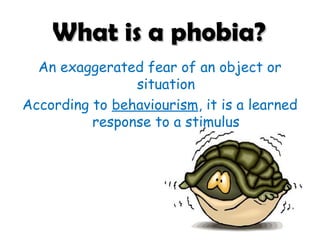
What is a phobia?
An exaggerated fear of an object or
situation
According to behaviourism, it is a learned
response to a stimulus
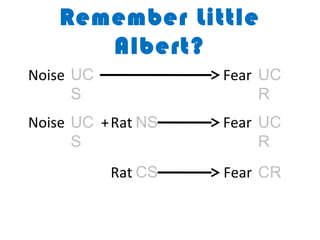
Remember Little
Albert?
Noise UC
S

Fear UC
R

Noise UC + Rat NS
S

Fear UC
R

Rat CS

Fear CR
Phobias
• What do people with phobias do when
they are confronted with their feared
stimulus?
avoidance
• How do you think we can treat this
disorder without using drugs or talking
therapy?
counterconditioning
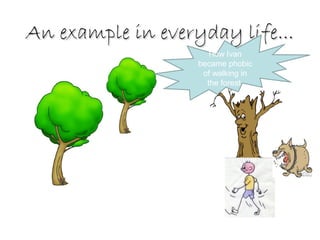
An example in everyday life...
How Ivan
became phobic
of walking in
the forest
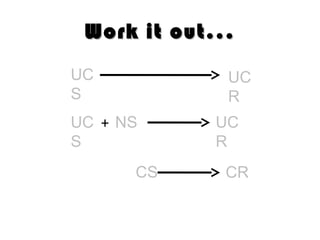
Work it out...
UC
S

UC
R

UC + NS
S
CS

UC
R
CR
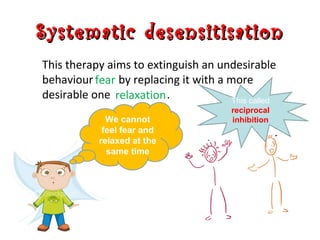
Systematic desensitisation
This therapy aims to extinguish an undesirable
behaviour fear by replacing it with a more
desirable one relaxation .
This called
We cannot
feel fear and
relaxed at the
same time

reciprocal
inhibition
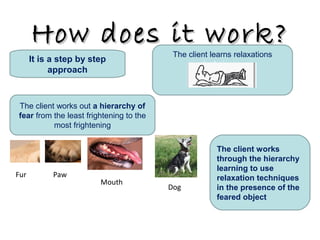
How does it work?

It is a step by step
approach

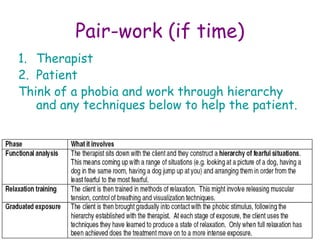
The client learns relaxations
techniques

The client works out a hierarchy of
fear from the least frightening to the
most frightening

Fur

Paw

Mouth

Dog

The client works
through the hierarchy
learning to use
relaxation techniques
in the presence of the
feared object
Systematic desensitisation
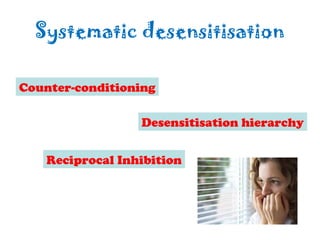
Counter-conditioning
Desensitisation hierarchy
Reciprocal Inhibition
Task
Apply the desensitisation hierarchy to
the following scenario:
Alana has an extremely anxious reaction to
spiders. She completely freezes if a
spider is in the room, no matter what the
size. She even struggles with plastic and
cuddly toy spiders. E
xplain how a
behavioural therapist might use SD to
help Alana with her fear of spiders (6
Pair-work (if time)
1. Therapist
2. Patient
Think of a phobia and work through hierarchy
and any techniques below to help the patient.
Using systematic desensitisation
What difficulties do you think this
therapy has?
e.g. if someone is afraid of flying – what
difficulty will the therapist have?
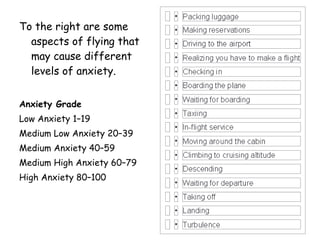
To the right are some
aspects of flying that
may cause different
levels of anxiety.
Anxiety Grade
Low Anxiety 1–19
Medium Low Anxiety 20–39
Medium Anxiety 40–59
Medium High Anxiety 60–79
High Anxiety 80–100
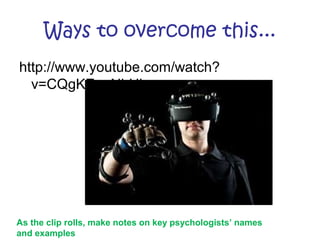
Ways to overcome this...
http://www.youtube.com/watch?
v=CQgKEp_NhHk

As the clip rolls, make notes on key psychologists’ names
and examples
Ideas
Patient needs to be briefed well, so can give informed
consent. High levels of arousal/ distress possible.
Quicker analysis than drug therapy or lengthy psychoanalysis?
Effect might diminish once removed from lab setting and
positive reinforcement from therapist, high chance of
relapse?
Psychotic, as opposed to neurotic, disorders?
Disorders with no clearly identifiable behavioural
component? Genetic/ physiological/neurochemical?
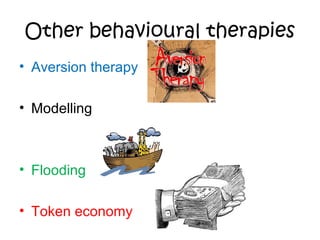
Other behavioural therapies
• Aversion therapy
• Modelling

• Flooding
• Token economy
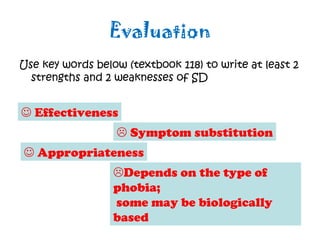
Evaluation
Use key words below (textbook 118) to write at least 2
strengths and 2 weaknesses of SD

 Effectiveness
 Symptom substitution
 Appropriateness
Depends on the type of
phobia;
some may be biologically
based
Phobia workshop – sketch show
• http://www.youtube.com/watch?
v=koNwUeG-iKE&feature=related

Systematic desensitisation Behaviourist treatment AS

  • 1.
    Systematic Desensitisation Describe andevaluate this form of therapy
  • 3.
    What is aphobia? An exaggerated fear of an object or situation According to behaviourism, it is a learned response to a stimulus
  • 4.
    Remember Little Albert? Noise UC S FearUC R Noise UC + Rat NS S Fear UC R Rat CS Fear CR
  • 5.
    Phobias • What dopeople with phobias do when they are confronted with their feared stimulus? avoidance • How do you think we can treat this disorder without using drugs or talking therapy? counterconditioning
  • 6.
    An example ineveryday life... How Ivan became phobic of walking in the forest
  • 7.
    Work it out... UC S UC R UC+ NS S CS UC R CR
  • 8.
    Systematic desensitisation This therapyaims to extinguish an undesirable behaviour fear by replacing it with a more desirable one relaxation . This called We cannot feel fear and relaxed at the same time reciprocal inhibition
  • 9.
    How does itwork? It is a step by step approach The client learns relaxations techniques The client works out a hierarchy of fear from the least frightening to the most frightening Fur Paw Mouth Dog The client works through the hierarchy learning to use relaxation techniques in the presence of the feared object
  • 10.
  • 11.
    Task Apply the desensitisationhierarchy to the following scenario: Alana has an extremely anxious reaction to spiders. She completely freezes if a spider is in the room, no matter what the size. She even struggles with plastic and cuddly toy spiders. E xplain how a behavioural therapist might use SD to help Alana with her fear of spiders (6
  • 12.
    Pair-work (if time) 1.Therapist 2. Patient Think of a phobia and work through hierarchy and any techniques below to help the patient.
  • 13.
    Using systematic desensitisation Whatdifficulties do you think this therapy has? e.g. if someone is afraid of flying – what difficulty will the therapist have?
  • 14.
    To the rightare some aspects of flying that may cause different levels of anxiety. Anxiety Grade Low Anxiety 1–19 Medium Low Anxiety 20–39 Medium Anxiety 40–59 Medium High Anxiety 60–79 High Anxiety 80–100
  • 15.
    Ways to overcomethis... http://www.youtube.com/watch? v=CQgKEp_NhHk As the clip rolls, make notes on key psychologists’ names and examples
  • 16.
    Ideas Patient needs tobe briefed well, so can give informed consent. High levels of arousal/ distress possible. Quicker analysis than drug therapy or lengthy psychoanalysis? Effect might diminish once removed from lab setting and positive reinforcement from therapist, high chance of relapse? Psychotic, as opposed to neurotic, disorders? Disorders with no clearly identifiable behavioural component? Genetic/ physiological/neurochemical?
  • 17.
    Other behavioural therapies •Aversion therapy • Modelling • Flooding • Token economy
  • 18.
    Evaluation Use key wordsbelow (textbook 118) to write at least 2 strengths and 2 weaknesses of SD  Effectiveness  Symptom substitution  Appropriateness Depends on the type of phobia; some may be biologically based
  • 19.
    Phobia workshop –sketch show • http://www.youtube.com/watch? v=koNwUeG-iKE&feature=related