Downloaded 90 times


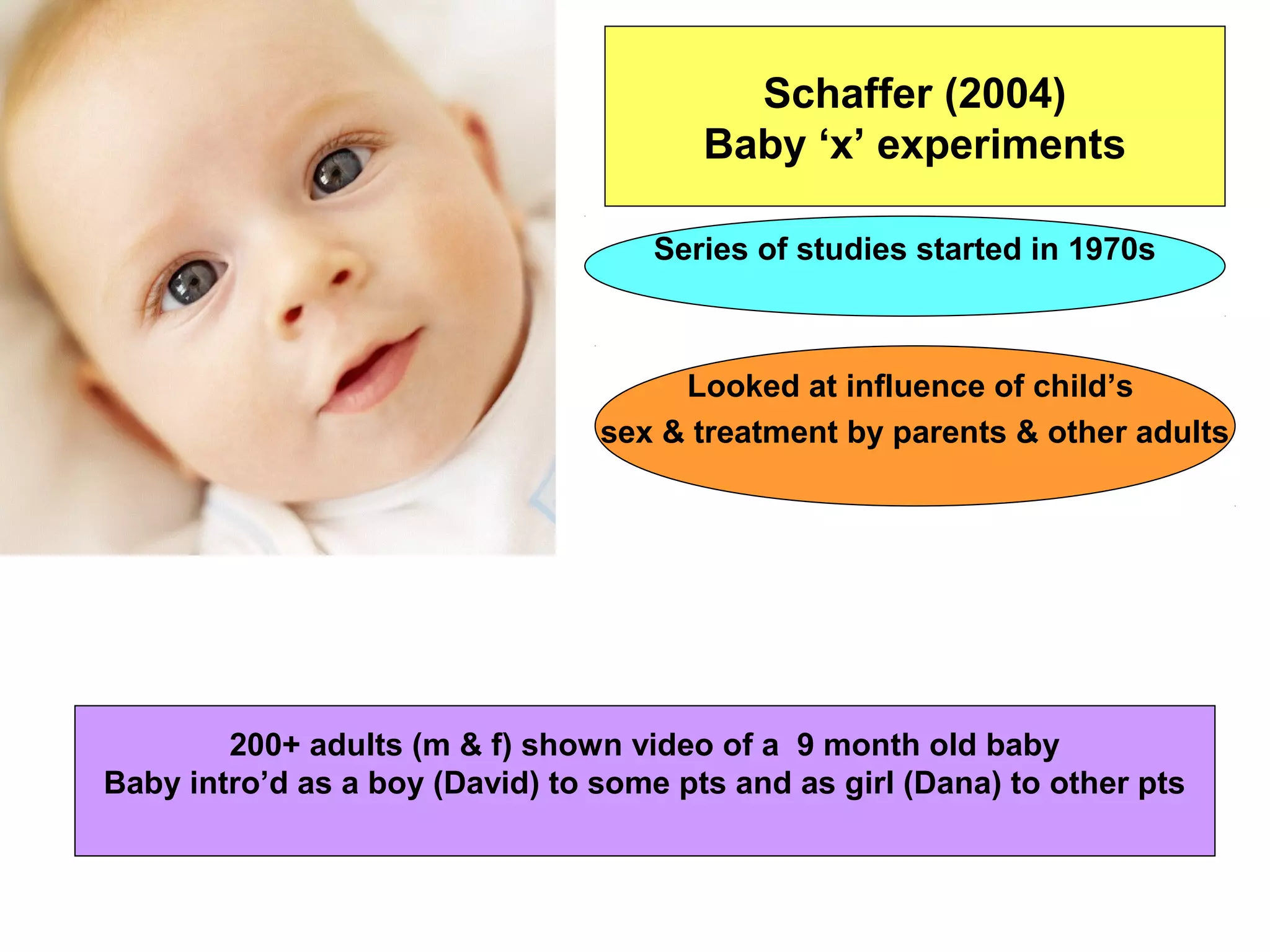

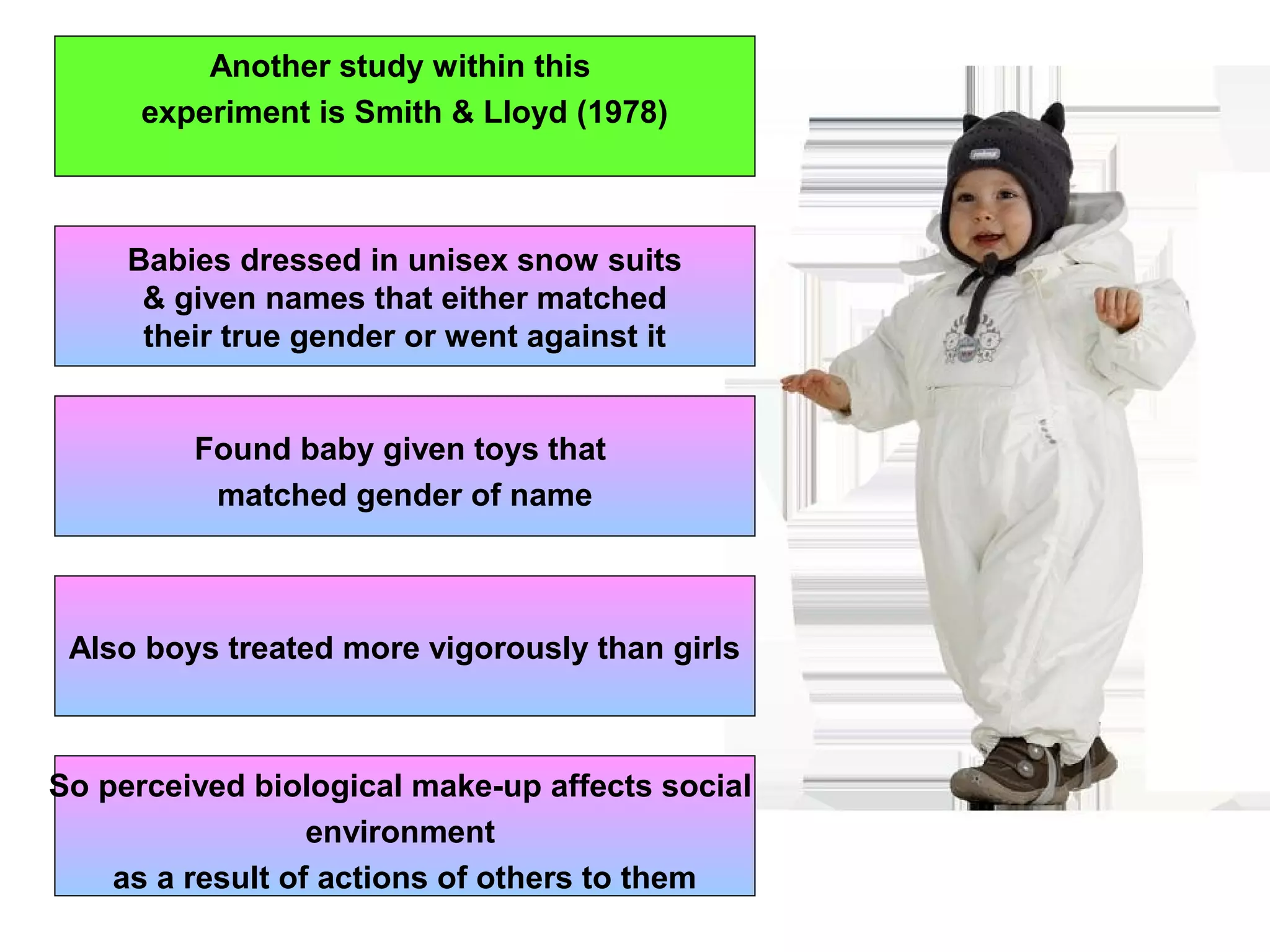


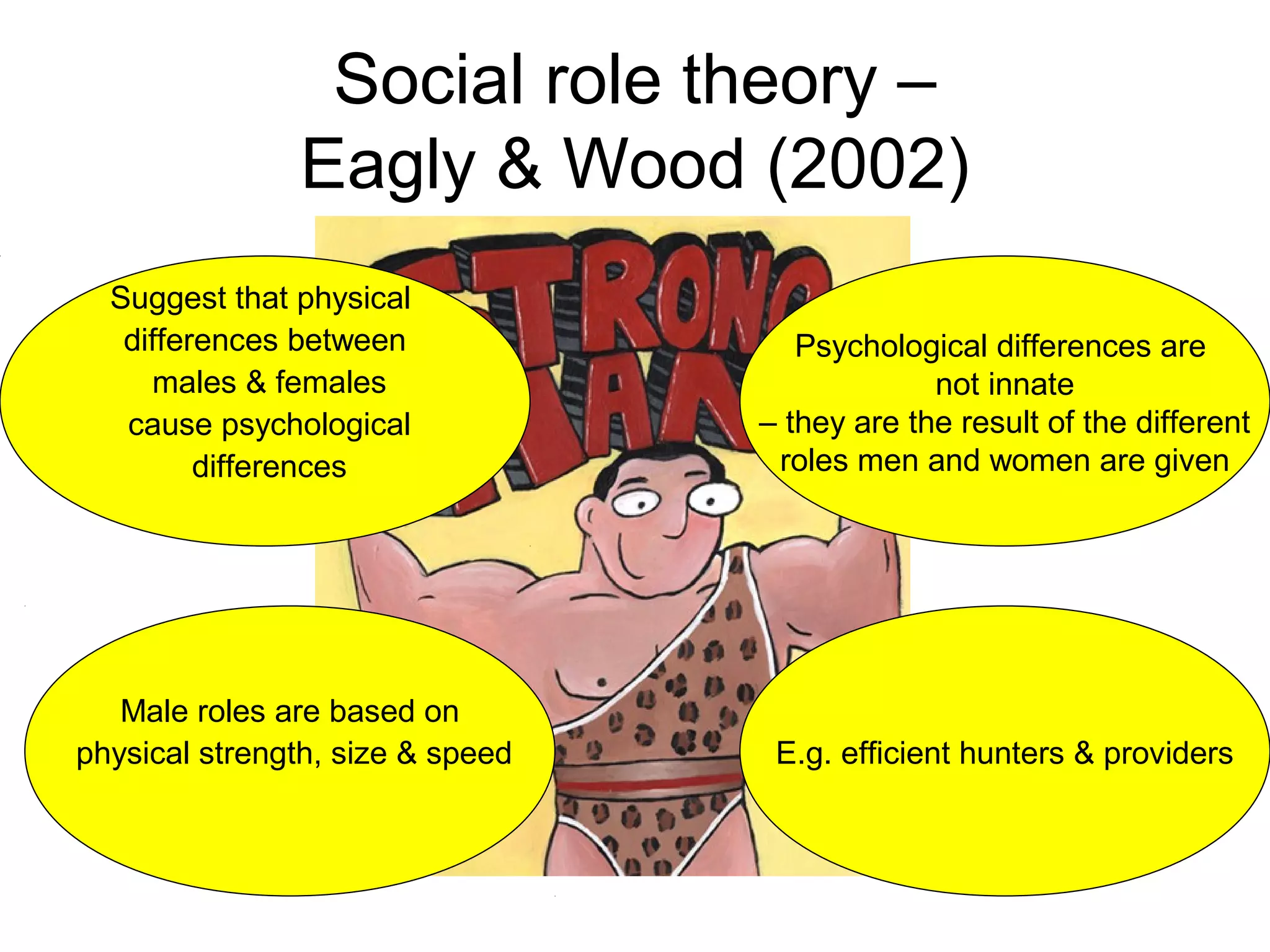




The document discusses the biosocial approach to gender development, which views both biological and social factors as important in determining gender identity and behavior. Specifically: - Gender is determined by an interaction between innate biological factors (such as sex) and environmental/social influences (like differential treatment based on sex). - Perceptions of a child's biological sex influence how they are treated and socialized by parents and others, meaning gender is partly socially constructed. - Studies demonstrate that adults respond differently to infants based on perceptions of their biological sex, and this influences the child's environment.


