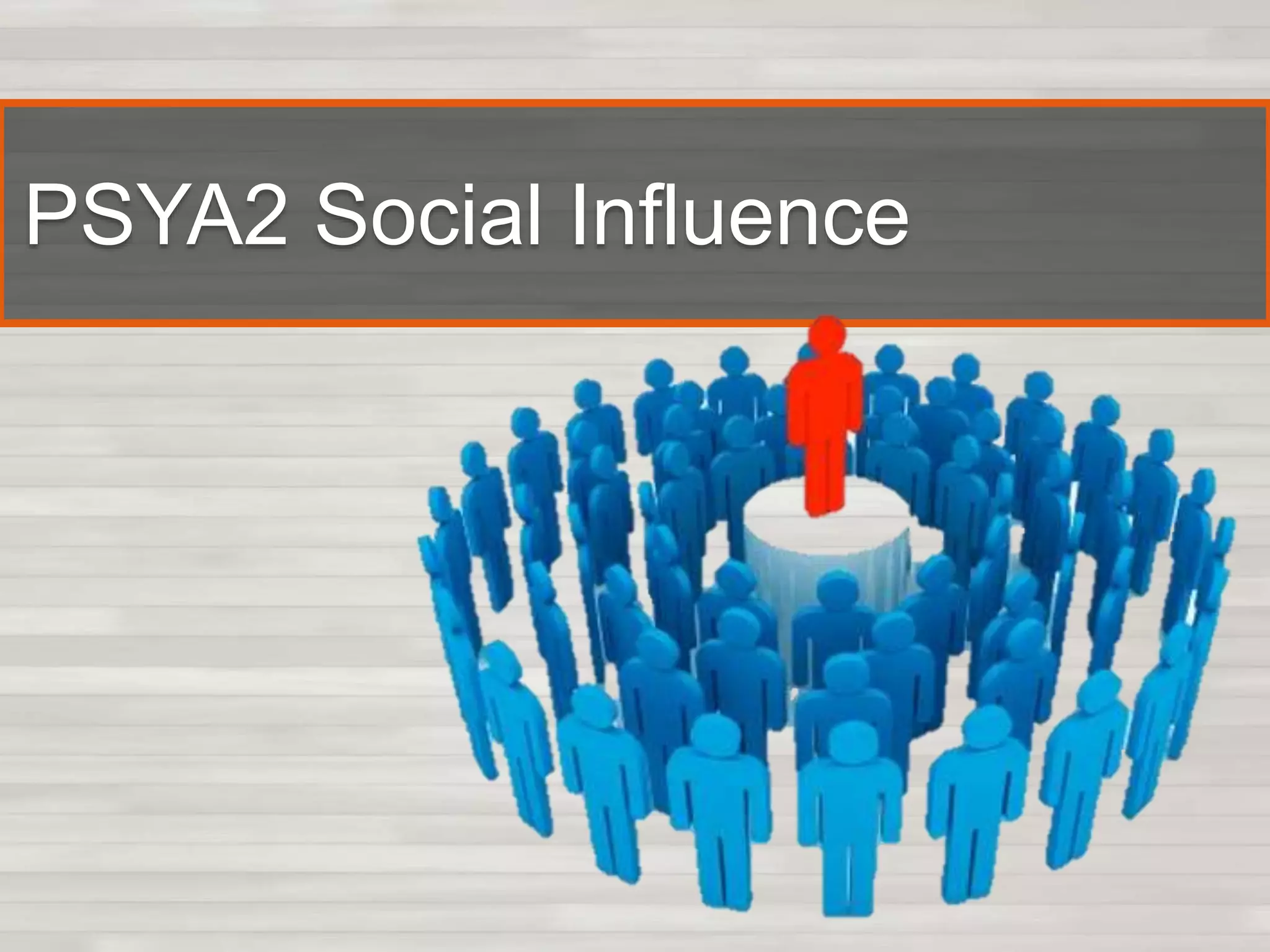


PSYA2 Social Influence
Social Influence 
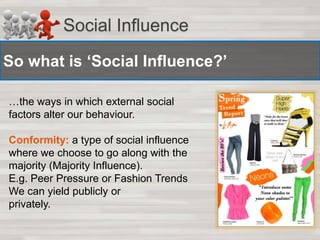
So what is ‘Social Influence?’ 
…the ways in which external social 
factors alter our behaviour. 
Conformity: a type of social influence 
where we choose to go along with the 
majority (Majority Influence). 
E.g. Peer Pressure or Fashion Trends 
We can yield publicly or 
privately.
Social Influence 
Today we will take this further by 
considering… 
• What is conformity? 
• Why do people conform? 
• How does conformity take shape in real life?
Social Influence 
First studied by Sherif (1936) 
Sherif: ‘people use the behaviour of others to 
decide what to do.’ 
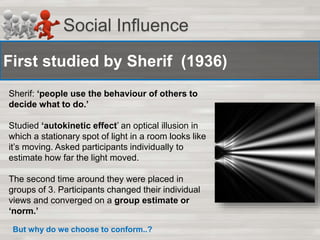
Studied ‘autokinetic effect’ an optical illusion in 
which a stationary spot of light in a room looks like 
it’s moving. Asked participants individually to 
estimate how far the light moved. 
The second time around they were placed in 
groups of 3. Participants changed their individual 
views and converged on a group estimate or 
‘norm.’ 
But why do we choose to conform..?
Social Influence 
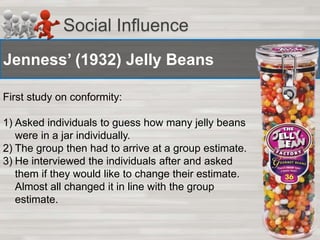
Jenness’ (1932) Jelly Beans 
First study on conformity: 
1) Asked individuals to guess how many jelly beans 
were in a jar individually. 
2) The group then had to arrive at a group estimate. 
3) He interviewed the individuals after and asked 
them if they would like to change their estimate. 
Almost all changed it in line with the group 
estimate.
Social Influence 
Why do we conform? 
Informational influence 
During an uncertain situation, we desire to be correct and look to our 
social group for answers.
Social Influence 
Conforming for informational reasons 
leads to… 
Internalisation 
When an individual is exposed to the views of a 
group, they examine their own beliefs. 
They may convince themselves that they are 
wrong and the group is right. 
This leads to public and private 
acceptance of the group’s beliefs – e.g. 
they internalise these beliefs, producing attitude 
change.
Issues with the previous research 
• Sherif and Jenness both used ambiguous 
situations to investigate conformity. 
• Little was known about conformity in non-ambiguous 
situations (where the answer was 
clear/obvious)
Social Influence 
Why do we conform? 
http://ww 
w.youtube. 
com/watc 
h?v=uuvG 
h_n3I_M
Social Influence 
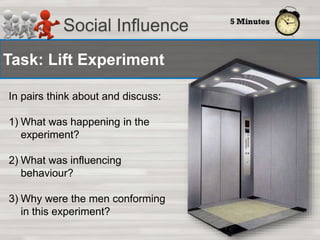
Task: Lift Experiment 
In pairs think about and discuss: 
1) What was happening in the 
experiment? 
2) What was influencing 
behaviour? 
3) Why were the men conforming 
in this experiment?
Social Influence 
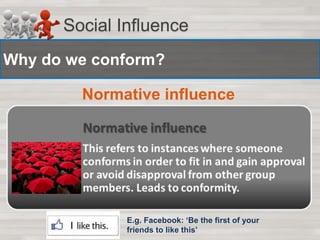
Why do we conform? 
Normative influence 
E.g. Facebook: ‘Be the first of your 
friends to like this’
Social Influence 
Conforming in order to fit in with a group 
(normative influence) leads to… 
Compliance 
Because identifying with a majority is desirable, they change their 
views/actions to fit in with them. They go along with the majority without 
necessarily privately agreeing with their view. 
e.g. Following Social Norms or Social Roles (Unwritten societal rules) – 
Smoking socially with friends even if you don’t smoke, just because they are 
all doing it and you want to fit in. 
This results in Public Compliance, without Private Attitude Change
Social Influence 
To Finish: When have you conformed? 
Think of and write down two times in 
which you have conformed. Make sure 
you write down the situation and what 
you did to conform. 
Pass your sheet to the person on your 
left. 
Think about the points in front of you. 
Why did conformity occur? Was it due 
to normative or informational influence?

AS Social Psychology -Introducing conformity

  • 1.
  • 2.
    Social Influence Sowhat is ‘Social Influence?’ …the ways in which external social factors alter our behaviour. Conformity: a type of social influence where we choose to go along with the majority (Majority Influence). E.g. Peer Pressure or Fashion Trends We can yield publicly or privately.
  • 3.
    Social Influence Todaywe will take this further by considering… • What is conformity? • Why do people conform? • How does conformity take shape in real life?
  • 5.
    Social Influence Firststudied by Sherif (1936) Sherif: ‘people use the behaviour of others to decide what to do.’ Studied ‘autokinetic effect’ an optical illusion in which a stationary spot of light in a room looks like it’s moving. Asked participants individually to estimate how far the light moved. The second time around they were placed in groups of 3. Participants changed their individual views and converged on a group estimate or ‘norm.’ But why do we choose to conform..?
  • 6.
    Social Influence Jenness’(1932) Jelly Beans First study on conformity: 1) Asked individuals to guess how many jelly beans were in a jar individually. 2) The group then had to arrive at a group estimate. 3) He interviewed the individuals after and asked them if they would like to change their estimate. Almost all changed it in line with the group estimate.
  • 7.
    Social Influence Whydo we conform? Informational influence During an uncertain situation, we desire to be correct and look to our social group for answers.
  • 8.
    Social Influence Conformingfor informational reasons leads to… Internalisation When an individual is exposed to the views of a group, they examine their own beliefs. They may convince themselves that they are wrong and the group is right. This leads to public and private acceptance of the group’s beliefs – e.g. they internalise these beliefs, producing attitude change.
  • 9.
    Issues with theprevious research • Sherif and Jenness both used ambiguous situations to investigate conformity. • Little was known about conformity in non-ambiguous situations (where the answer was clear/obvious)
  • 10.
    Social Influence Whydo we conform? http://ww w.youtube. com/watc h?v=uuvG h_n3I_M
  • 11.
    Social Influence Task:Lift Experiment In pairs think about and discuss: 1) What was happening in the experiment? 2) What was influencing behaviour? 3) Why were the men conforming in this experiment?
  • 12.
    Social Influence Whydo we conform? Normative influence E.g. Facebook: ‘Be the first of your friends to like this’
  • 13.
    Social Influence Conformingin order to fit in with a group (normative influence) leads to… Compliance Because identifying with a majority is desirable, they change their views/actions to fit in with them. They go along with the majority without necessarily privately agreeing with their view. e.g. Following Social Norms or Social Roles (Unwritten societal rules) – Smoking socially with friends even if you don’t smoke, just because they are all doing it and you want to fit in. This results in Public Compliance, without Private Attitude Change
  • 14.
    Social Influence ToFinish: When have you conformed? Think of and write down two times in which you have conformed. Make sure you write down the situation and what you did to conform. Pass your sheet to the person on your left. Think about the points in front of you. Why did conformity occur? Was it due to normative or informational influence?