PHOBIAS
A phobia is an unreasonable fear
of a specific object, activity or
situation.
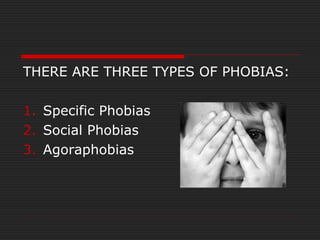
THERE ARE THREE TYPES OF PHOBIAS:
1. Specific Phobias
2. Social Phobias
3. Agoraphobias
SPECIFIC PHOBIA
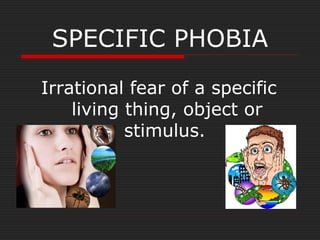
Irrational fear of a specific
living thing, object or
stimulus.
Examples
 Acrophobia-fear of heights
 Hematophobia- blood
 Claustrophobia- closed places
 Gamophobia- marriage
 Insectophobia- insects
 AIDS phobia- AIDS
 Zoophobia- animals
 Algophobia- pain
 Microphobia _ germs
 Thanatophobia_ death
 Ailurophobia: cats
 Algophobia: pain
 Anthophobia: flower
 Anthrophobia: people
 Aquaphobia: water
 Arachnophobia: spider
 Astraphobia: lightning
 Belonephobia: needles
 Brontophobia: thunder
 Cynophobia: dogs
 Dementophobia: insanity
 Equinophobia: horses
 Gamophobia: marriage
 Herpetophobia: lizards
 Murophobia: mice
 Numerophobia: numbers
 Ochophobia: riding a car
 Ophidiophobia: snakes
 Pyrophobia: fire
 Trichophobia: hair
 Thanatophobia: death
 Scoleciphobia: worms
SIGNS AND SYMPTOMS
 Irrational and persistent fear of object or
situation
 Immediate anxiety on contact with feared
object
 Loss of control
 Fainting
 Avoidance of activities involving feared object
 Anxiety when thinking about stimulus
 Impaired social and occupational function
SOCIAL PHOBIAS
 Irrational fear of performing activities
in the presence of other people or
interacting with others
 Patient is afraid of his own actions
being viewed by others critically.
SIGNS AND SYMPTOMS
 Hyperventilation
 Sweating
 Palpitations
 Blushing
 Confusion
 G I symptoms
 Trembling hands and voice
 Urinary urgency
 Muscle tension
AGORAPHOBIA
Irrational fear of being in places away
from familiar setting of home, in
crowds, or in situations that the
patient can not leave easily.
SIGNS AND SYMPTOMS
 Fear of open or public places
 Avoidance of public places and
confinement to home.
CAUSES
PSYCHODYNAMIC THEORY
 Anxiety is usually dealt with
repression
 When repression fails to function
other secondary defense mechanism
come in to action
 In phobia, it is displacement
 By displacement anxiety is
transferred from a dangerous object
to neutral object
LEARNING THEORY
 Direct learning experiences- can begin
following a traumatic experience
 Observational learning experiences- learn
to fear a situation by watching others show
signs of a fear in the same situation
 Informational Learning- learning to fear an
object or situation by hearing or reading
that the situation is dangerous
COGNITIVE THEORY
 Anxiety is a product of faulty
cognition
 Some people engage in negative and
irrational thinking that leads to
anxiety reactions.
ATTENTION AND MEMORY
 People with specific phobias tend to
pay more attention to threatening
information that relates to the fear
BELEIFS AND INTERPRETATIONS
 People with specific phobias tend to
hold beliefs and to interpret situations
in a way that increases anxiety
BIOLOGICAL
 Sometimes a phobia may run in the
family and genetics may play a role
 When exposed to fear biological
changes occur in the body and these
can increase physical symptoms
COURSE
 More common in women
 Onset is sudden with out any cause
 Course is usually chronic
 Spontaneous remission
TREATMENTS
PHARMACOTHERAPY
 Benzodiazepines
Eg; alprazolam
 Antidepressants
Eg; imipramine
BEHAVIOR THERAPY
 SYSTEMATIC DESENSITIZATION
 Technique for assisting individuals to
overcome their fear of a phobic stimulus.
 There is a hierarchy of anxiety producing
events through which the individual
progresses during the therapy.
 As each of these step is attempted , it is
paired with relaxation exercise.
 Relaxation training
 Hierarchy construction
 Desensitization of the stimulus
FLOODING
COGNITIVE THERAPY
 Learning to identify one’s anxious
thoughts and to replace them with
more realistic thoughts
NURSING MANAGEMENT
 Fear related to specific stimulus as
evidenced by behavior directed
towards avoidance of feared object
 Social isolation related to fear of
being in a place from which one is
unable to escape as evidenced by
staying alone.

Phobias

  • 1.
  • 2.
    A phobia isan unreasonable fear of a specific object, activity or situation.
  • 3.
    THERE ARE THREETYPES OF PHOBIAS: 1. Specific Phobias 2. Social Phobias 3. Agoraphobias
  • 4.
    SPECIFIC PHOBIA Irrational fearof a specific living thing, object or stimulus.
  • 7.
    Examples  Acrophobia-fear ofheights  Hematophobia- blood  Claustrophobia- closed places  Gamophobia- marriage  Insectophobia- insects  AIDS phobia- AIDS  Zoophobia- animals  Algophobia- pain  Microphobia _ germs  Thanatophobia_ death
  • 8.
     Ailurophobia: cats Algophobia: pain  Anthophobia: flower  Anthrophobia: people  Aquaphobia: water  Arachnophobia: spider  Astraphobia: lightning  Belonephobia: needles  Brontophobia: thunder
  • 9.
     Cynophobia: dogs Dementophobia: insanity  Equinophobia: horses  Gamophobia: marriage  Herpetophobia: lizards  Murophobia: mice  Numerophobia: numbers  Ochophobia: riding a car  Ophidiophobia: snakes
  • 10.
     Pyrophobia: fire Trichophobia: hair  Thanatophobia: death  Scoleciphobia: worms
  • 11.
    SIGNS AND SYMPTOMS Irrational and persistent fear of object or situation  Immediate anxiety on contact with feared object  Loss of control  Fainting  Avoidance of activities involving feared object  Anxiety when thinking about stimulus  Impaired social and occupational function
  • 12.
  • 13.
     Irrational fearof performing activities in the presence of other people or interacting with others  Patient is afraid of his own actions being viewed by others critically.
  • 14.
    SIGNS AND SYMPTOMS Hyperventilation  Sweating  Palpitations  Blushing  Confusion  G I symptoms  Trembling hands and voice  Urinary urgency  Muscle tension
  • 15.
    AGORAPHOBIA Irrational fear ofbeing in places away from familiar setting of home, in crowds, or in situations that the patient can not leave easily.
  • 16.
    SIGNS AND SYMPTOMS Fear of open or public places  Avoidance of public places and confinement to home.
  • 17.
  • 18.
    PSYCHODYNAMIC THEORY  Anxietyis usually dealt with repression  When repression fails to function other secondary defense mechanism come in to action  In phobia, it is displacement  By displacement anxiety is transferred from a dangerous object to neutral object
  • 19.
    LEARNING THEORY  Directlearning experiences- can begin following a traumatic experience  Observational learning experiences- learn to fear a situation by watching others show signs of a fear in the same situation  Informational Learning- learning to fear an object or situation by hearing or reading that the situation is dangerous
  • 20.
    COGNITIVE THEORY  Anxietyis a product of faulty cognition  Some people engage in negative and irrational thinking that leads to anxiety reactions.
  • 21.
    ATTENTION AND MEMORY People with specific phobias tend to pay more attention to threatening information that relates to the fear
  • 22.
    BELEIFS AND INTERPRETATIONS People with specific phobias tend to hold beliefs and to interpret situations in a way that increases anxiety
  • 23.
    BIOLOGICAL  Sometimes aphobia may run in the family and genetics may play a role  When exposed to fear biological changes occur in the body and these can increase physical symptoms
  • 24.
    COURSE  More commonin women  Onset is sudden with out any cause  Course is usually chronic  Spontaneous remission
  • 25.
  • 26.
  • 27.
    BEHAVIOR THERAPY  SYSTEMATICDESENSITIZATION  Technique for assisting individuals to overcome their fear of a phobic stimulus.  There is a hierarchy of anxiety producing events through which the individual progresses during the therapy.  As each of these step is attempted , it is paired with relaxation exercise.
  • 28.
     Relaxation training Hierarchy construction  Desensitization of the stimulus
  • 30.
  • 31.
    COGNITIVE THERAPY  Learningto identify one’s anxious thoughts and to replace them with more realistic thoughts
  • 32.
    NURSING MANAGEMENT  Fearrelated to specific stimulus as evidenced by behavior directed towards avoidance of feared object  Social isolation related to fear of being in a place from which one is unable to escape as evidenced by staying alone.

Editor's Notes

  • #8 BLOOD-for some people even talking about medical procedures OTHER-clowns, loud noises, choking, ect…
  • #16 Agoraphobia occurs in combination with panic attacks. • People with agoraphobia avoid situations that would contribute to anxiety, however the worse case scenario people stay at home and work very hard to not go outside and have to deal with these problems.This phobia Lasts many years.Also Agoraphobia varies in gender it is more popular in women then men. About twice as many women have agoraphobia then men. People are most likely to develop Agoraphobia in their mid to late 20’s, the median age is 29. about 1.6% of Canada’s population has Agoraphobia Some examples of people with agoraphobia may feel anxious about things such as loss of bladder or bowel control, choking on food in the presence of others. They also might feel anxious about being home alone, leaving home, or being in a crowded place, such as on public transportation or in an elevator, where it might be difficult or embarrassing to find a way out.To avoid the anxiety someone with agoraphobia will avoid these situations all together.
  • #20 DIRECT- a person getting bit by a dog can form a phobia of dogs OBSERVATIONAL- children with parents with a fear of flying can grow up to have the same fear INFORMATIONAL- having a fear of flying after seeing 9/11 incident
  • #22 fear of spiders are first to notice a spider in the room 2. remember a type of animal to be more threatening then it actually was
  • #23 (person with a fear of falling may think they have a greater chance of falling)
  • #24 BIOLOGICAL CHANGES- brain activity, release of hormones PHYSICAL SYMPTOMS- heart rate, blood pressure
  • #27 It’s possible to take up to three months before you begin to notice changes. By taking medications it is possible for you to cause serious damage to physical and mental health.
  • #28 This technique sometimes works in the matter of one session
  • #32 Considered as an inappropriate technique to treat specific phobias