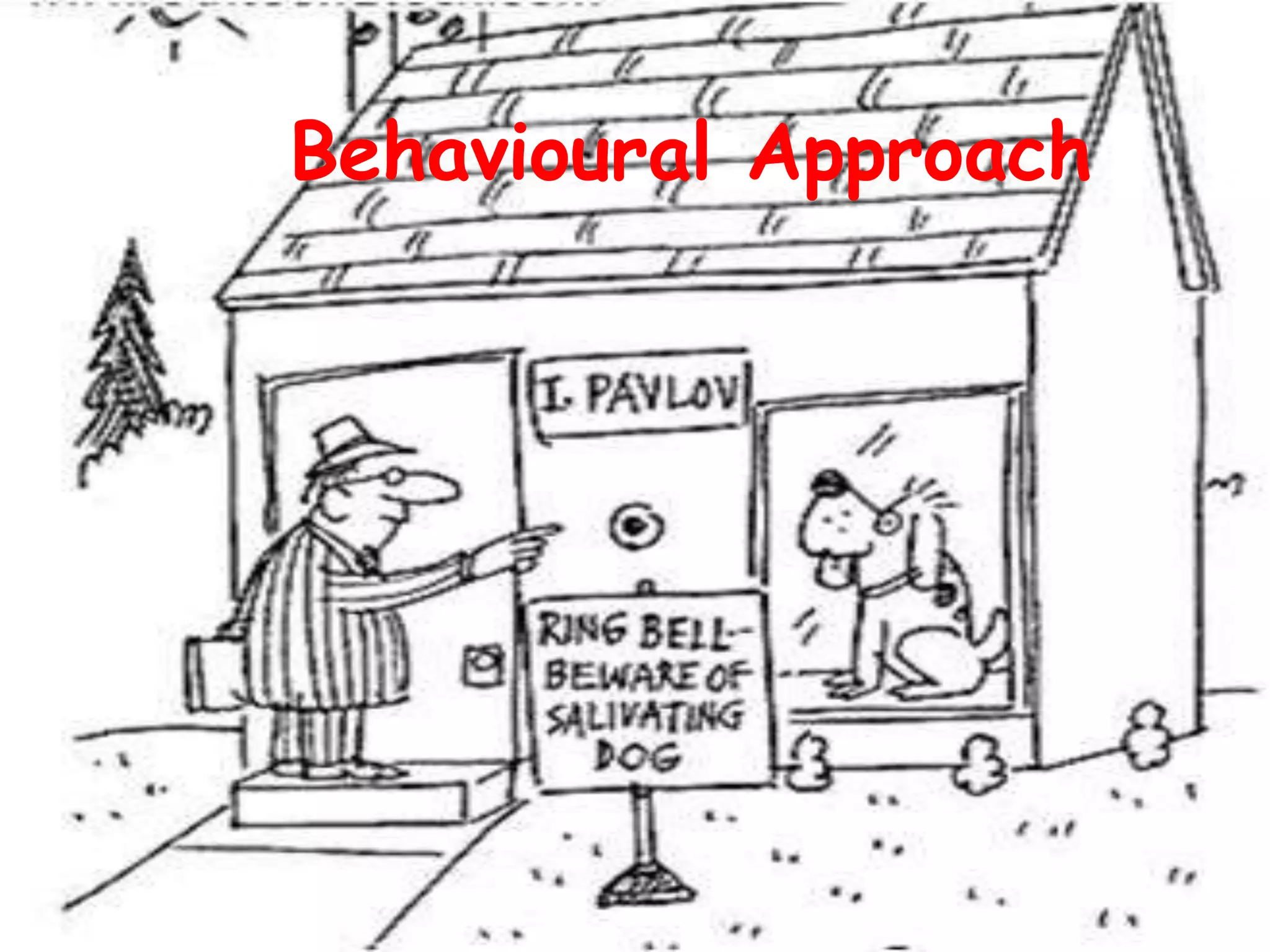
Behavioural Approach
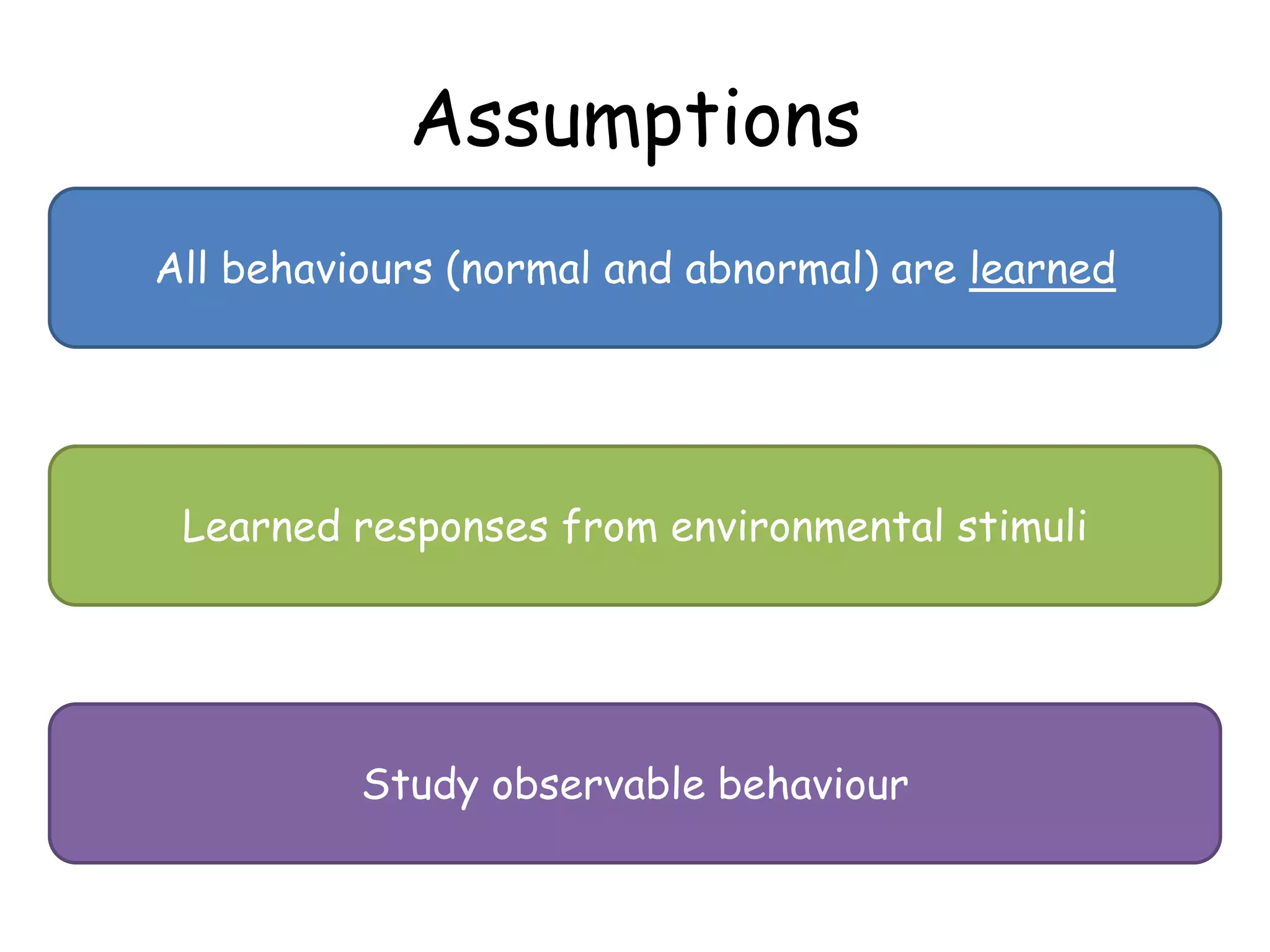
Assumptions
All behaviours (normal and abnormal) are learned


 Learned responses from environmental stimuli


          Study observable behaviour
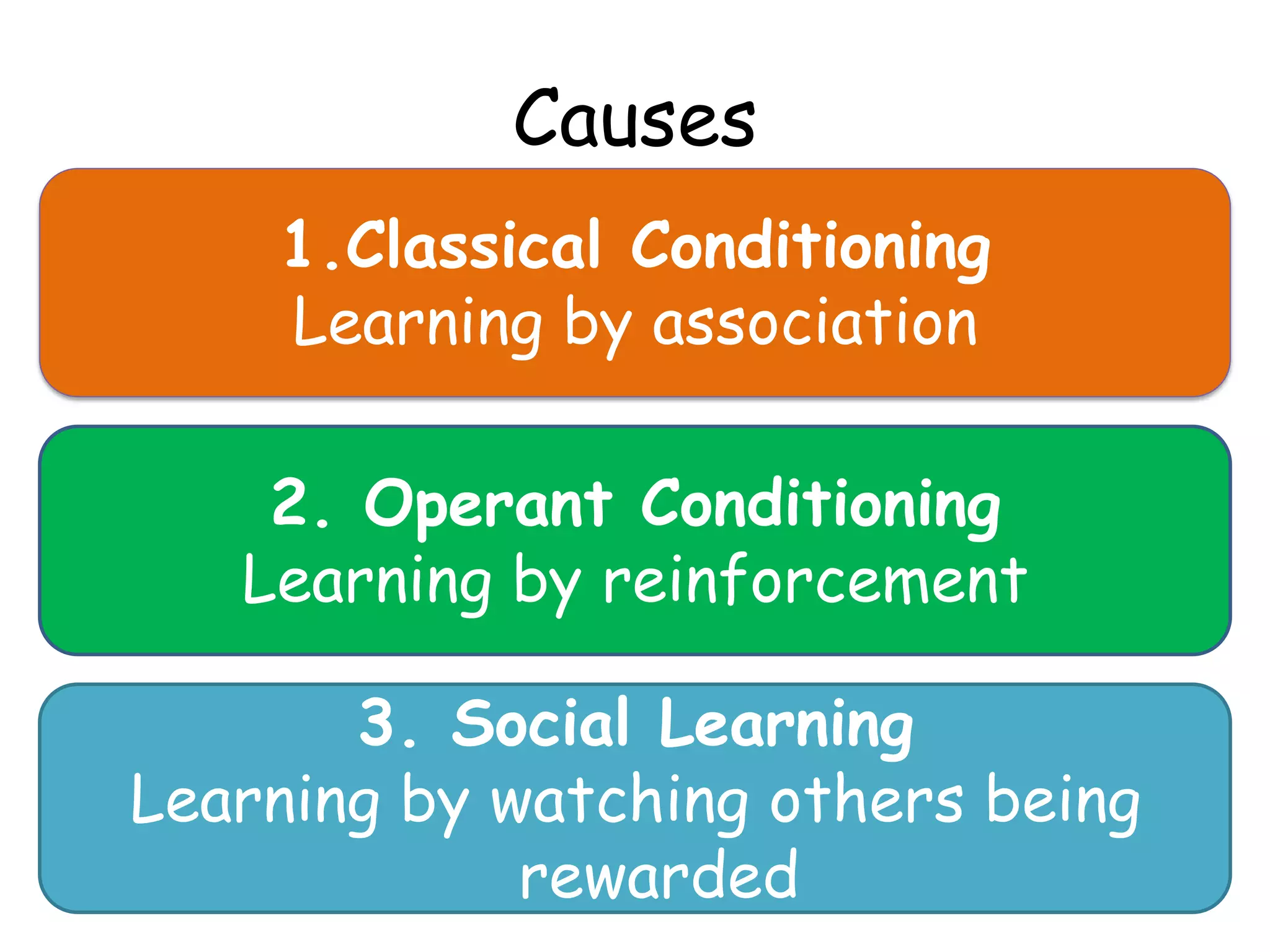
Causes
    1.Classical Conditioning
    Learning by association

    2. Operant Conditioning
   Learning by reinforcement

       3. Social Learning
Learning by watching others being
             rewarded
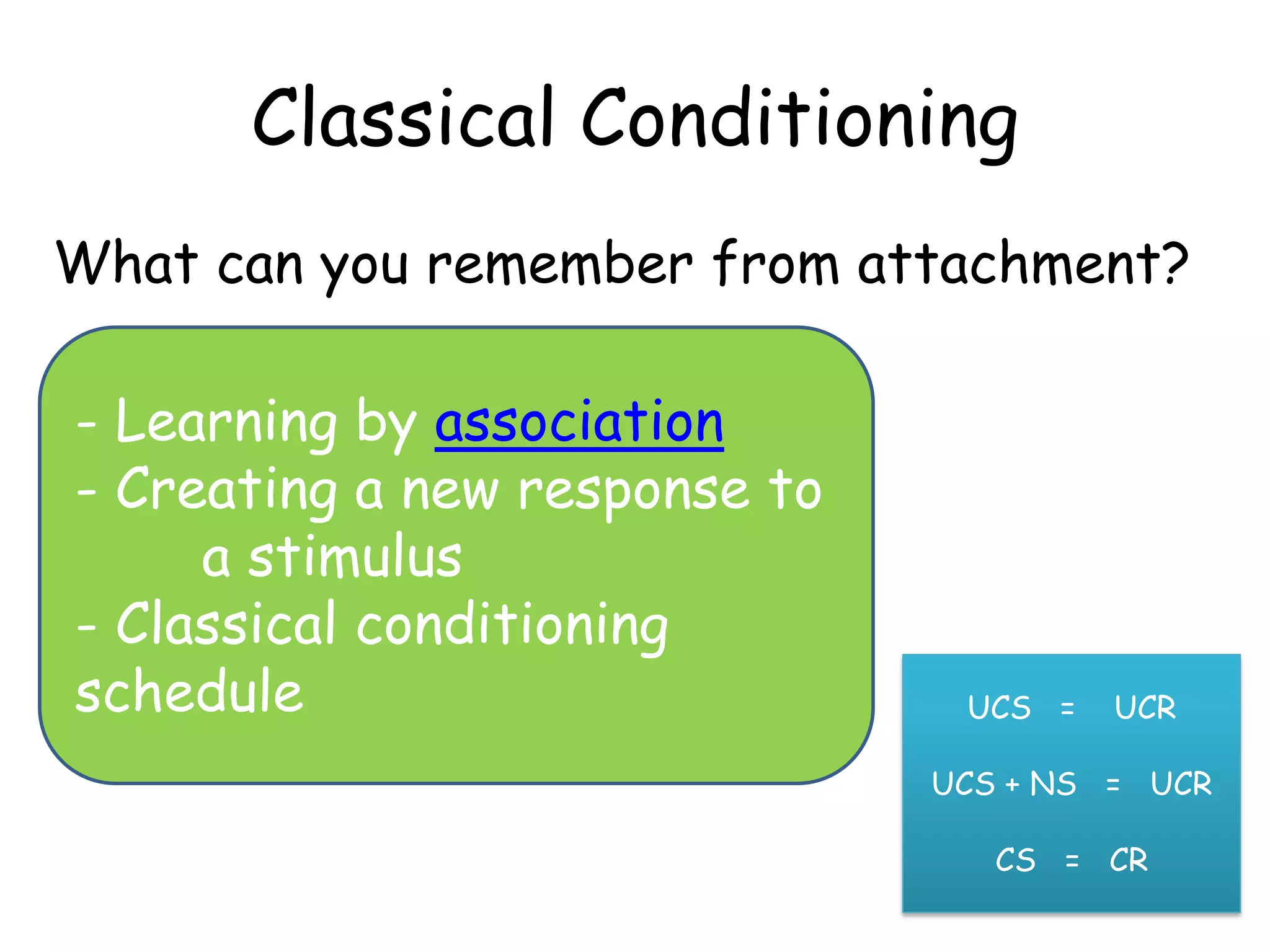
Classical Conditioning
What can you remember from attachment?

- Learning by association
- Creating a new response to
     a stimulus
- Classical conditioning
schedule                        UCS =   UCR

                               UCS + NS = UCR

                                  CS = CR
Operant Conditioning
Learning by reinforcement


    Reward = encourages certain behaviours
  (increases chances of them being repeated)


Punishment = discourages certain behaviours
(decreases chances of them being repeated)
Social Learning Theory
Operant Conditioning from a distance...


        Behaviours can be
   encouraged/discouraged by
      watching others being
  rewarded/punished for them
   – this is known as vicarious
              learning
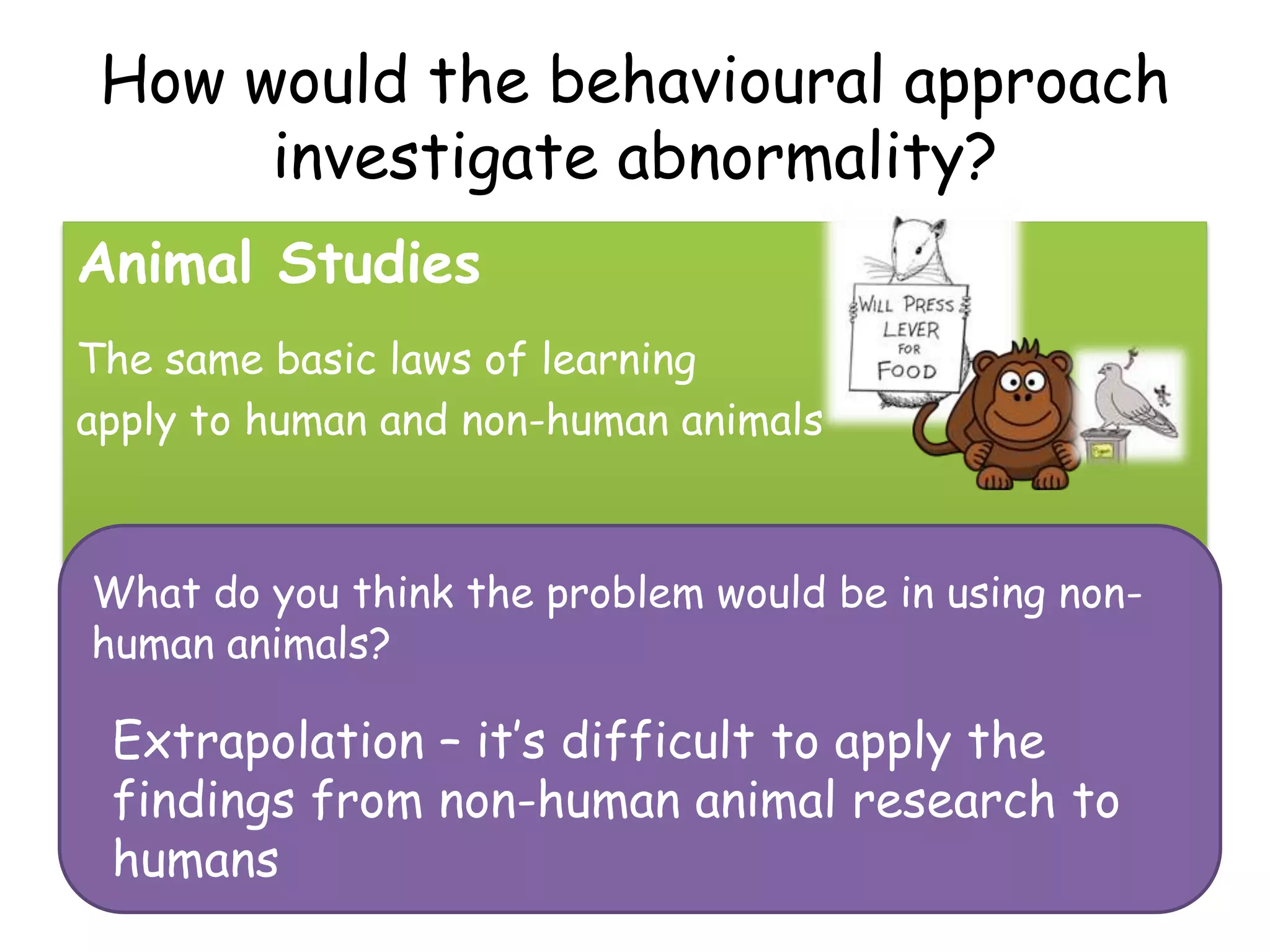
How would the behavioural approach
      investigate abnormality?
Animal Studies
The same basic laws of learning
apply to human and non-human animals


What do you think the problem would be in using non-
human animals?

 Extrapolation – it’s difficult to apply the
 findings from non-human animal research to
 humans
Scientific

 For example, the behavioural approach
   focuses on what is observable and
             measureable

    This is positive because it allows
concepts such as classical conditioning to
be demonstrated scientifically – allowing
  for empirical support for the theory
Deterministic
For example, the approach suggests
 that if we are rewarded for losing
  weight that we will develop and
           eating disorder

This is a weakness because it ignores the
 concept of free will and the idea that
   someone might exercise conscious
       control over their behaviour
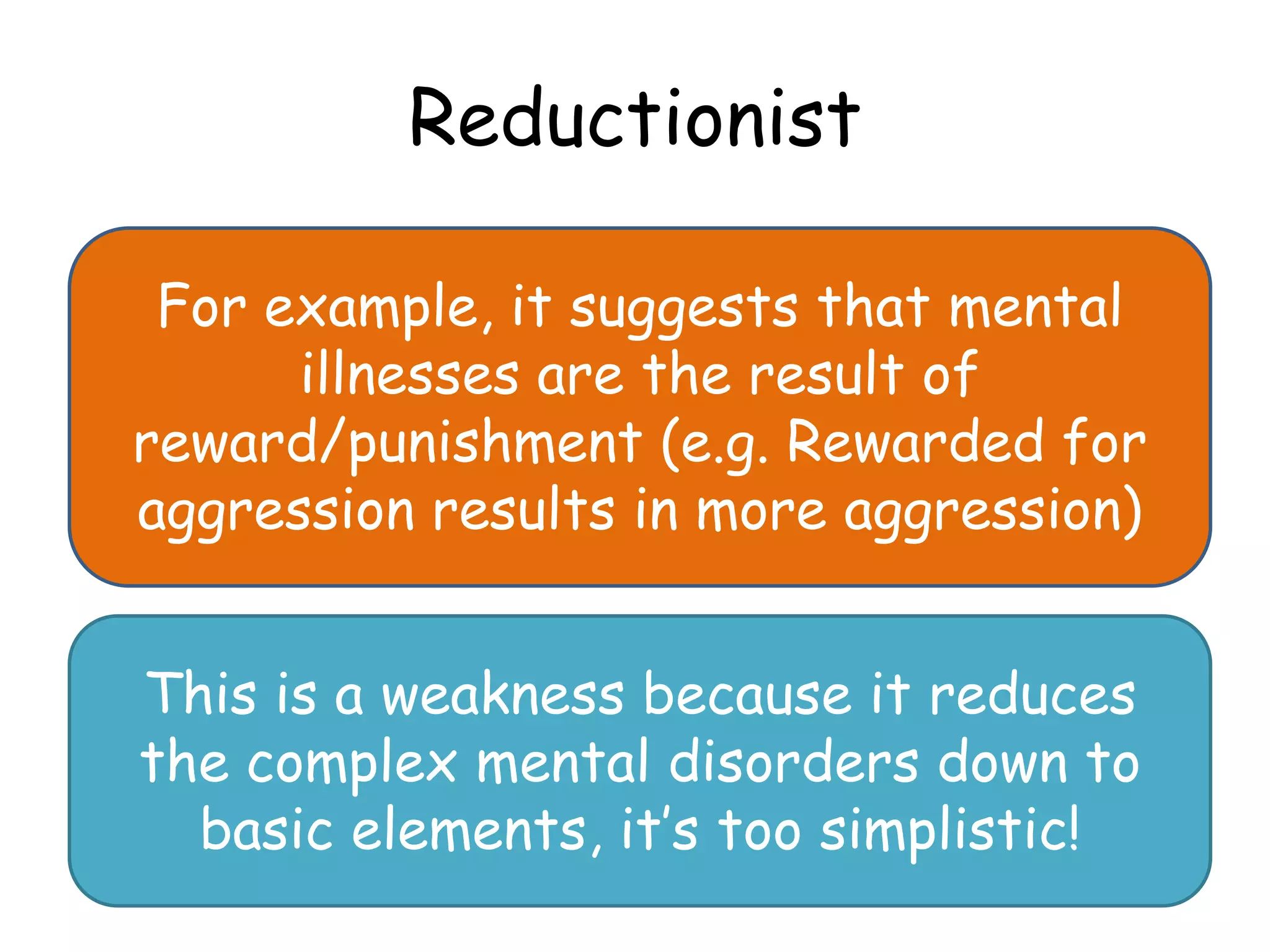
Reductionist

 For example, it suggests that mental
      illnesses are the result of
reward/punishment (e.g. Rewarded for
aggression results in more aggression)


This is a weakness because it reduces
the complex mental disorders down to
  basic elements, it’s too simplistic!
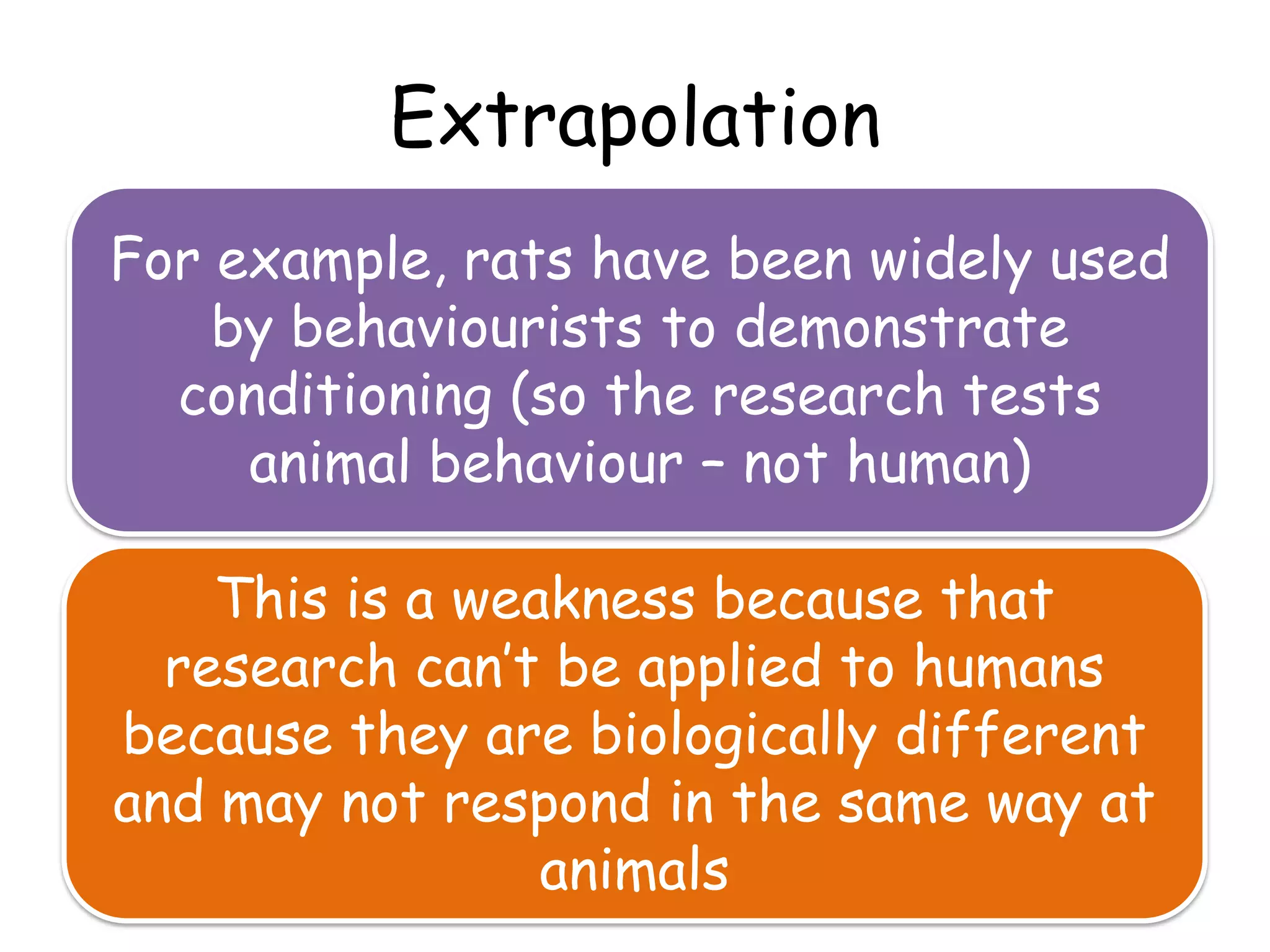
Extrapolation
For example, rats have been widely used
    by behaviourists to demonstrate
  conditioning (so the research tests
     animal behaviour – not human)

    This is a weakness because that
  research can’t be applied to humans
because they are biologically different
and may not respond in the same way at
                 animals
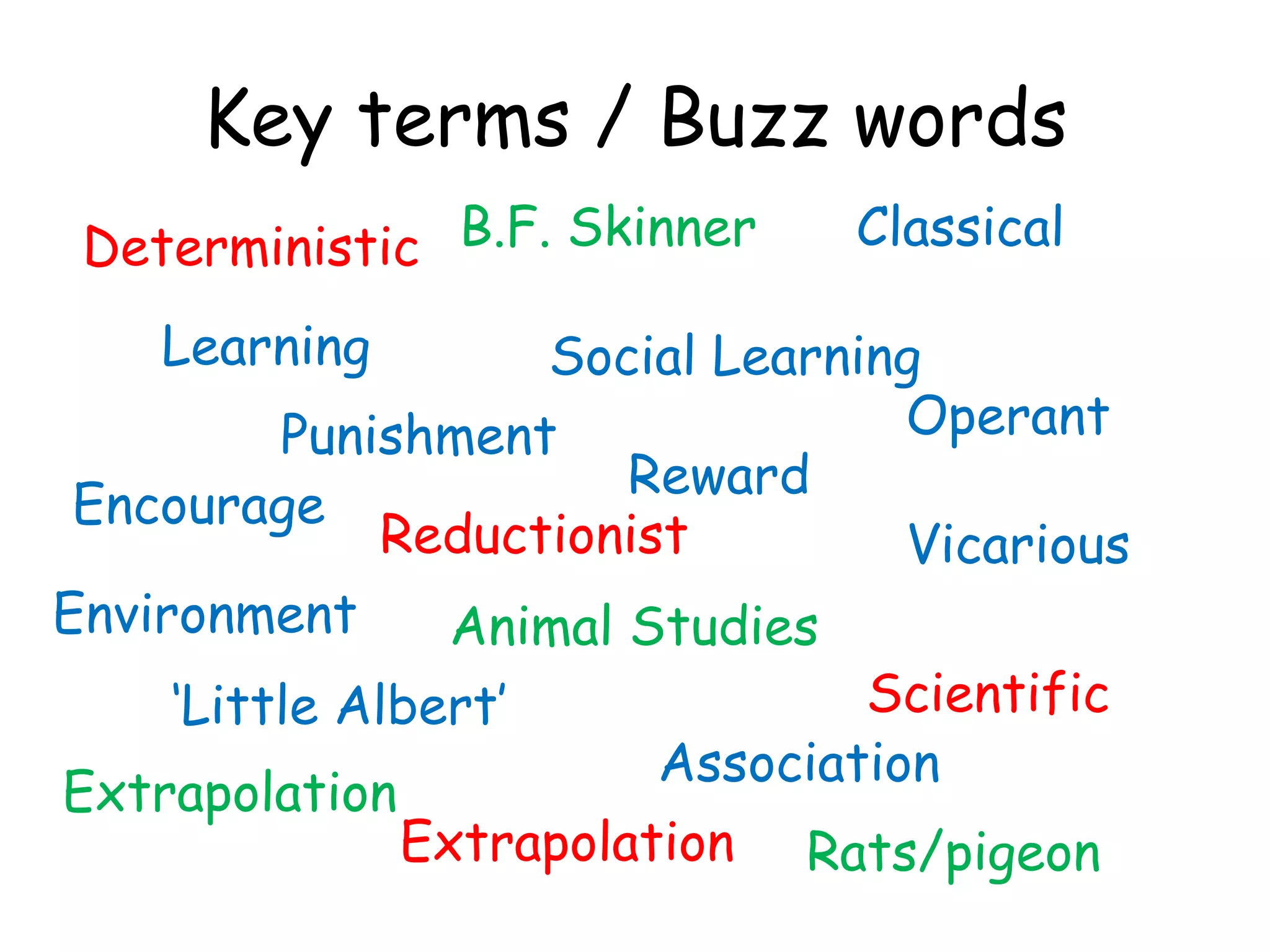
Key terms / Buzz words
 Deterministic B.F. Skinner      Classical

    Learning         Social Learning
          Punishment                Operant
                         Reward
 Encourage
               Reductionist         Vicarious
Environment       Animal Studies
     ‘Little Albert’              Scientific
                          Association
Extrapolation
                Extrapolation Rats/pigeon
Behavioural
Therapies/Treatments

•Systematic Desensitisation
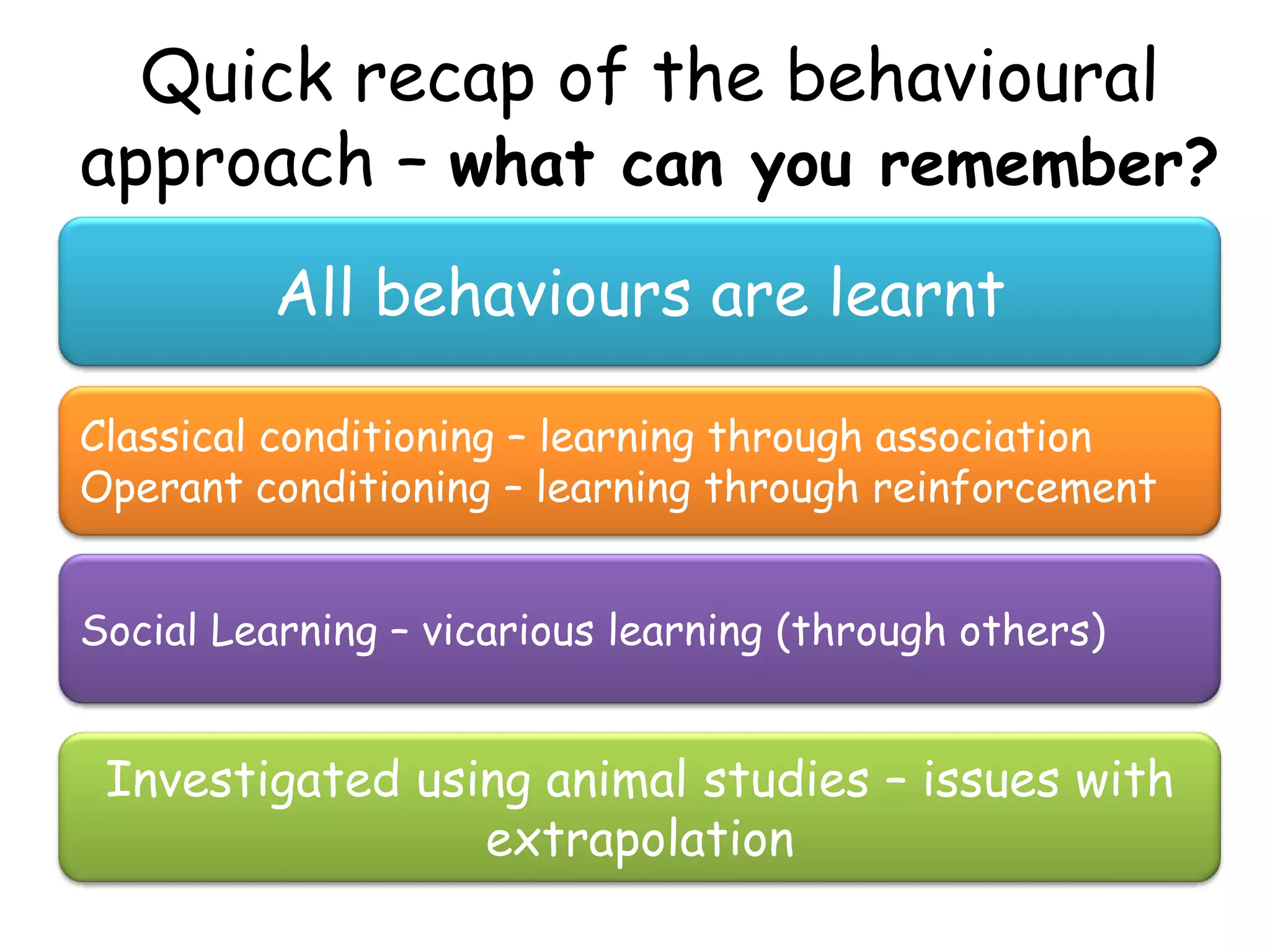
Quick recap of the behavioural
approach – what can you remember?
          All behaviours are learnt

Classical conditioning – learning through association
Operant conditioning – learning through reinforcement


Social Learning – vicarious learning (through others)


 Investigated using animal studies – issues with
                 extrapolation
If the behavioural approach believes that all
 abnormalities are the result of learning – what
treatments do you think the approach would use
              to treat disorders?
   (Or, what would the treatments focus on ?)


               More learning!!!
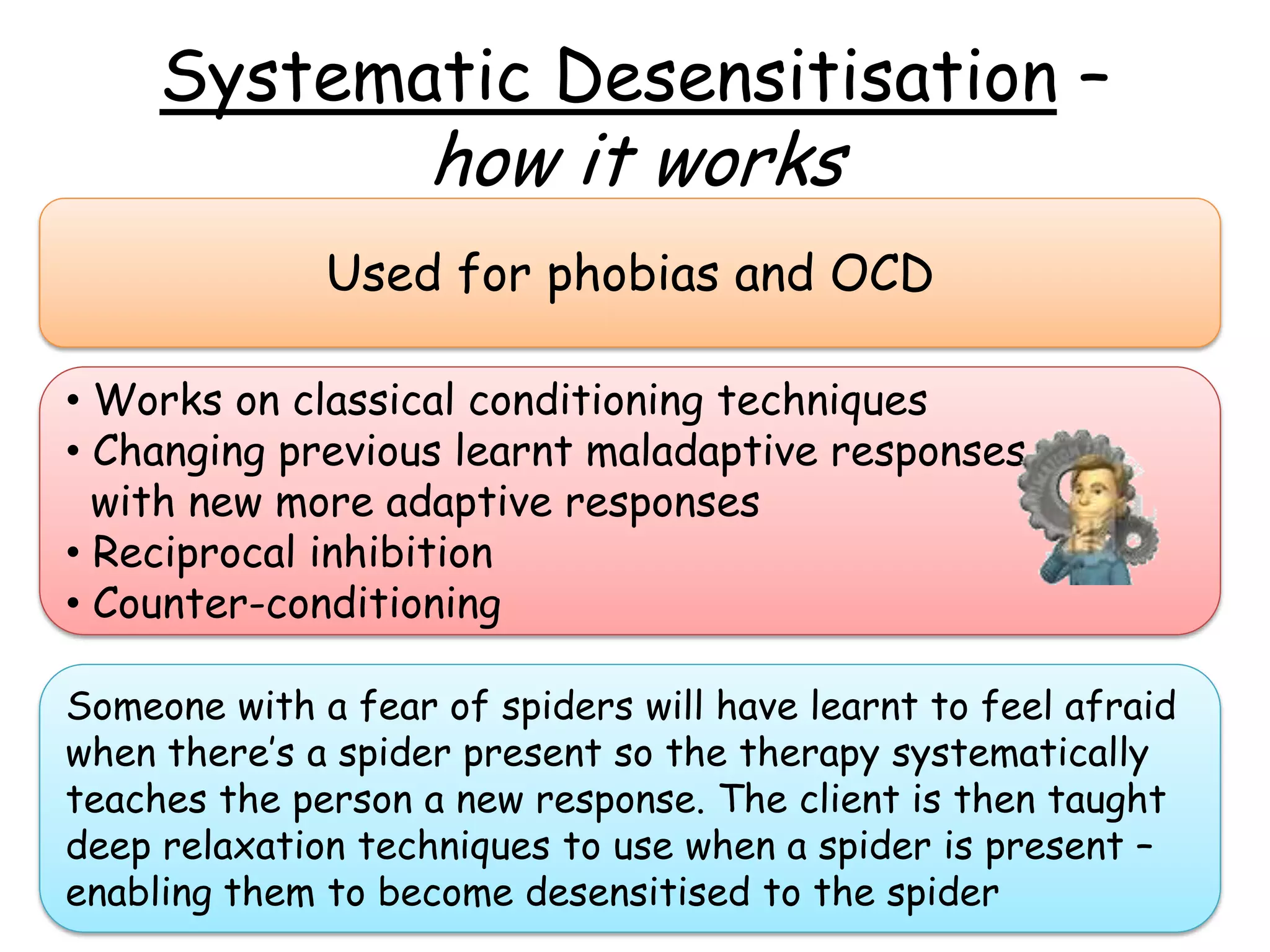
Systematic Desensitisation –
                    how it works
              Used for phobias and OCD

• Works on classical conditioning techniques
• Changing previous learnt maladaptive responses
  with new more adaptive responses
• Reciprocal inhibition
• Counter-conditioning

Someone with a fear of spiders will have learnt to feel afraid
when there’s a spider present so the therapy systematically
teaches the person a new response. The client is then taught
deep relaxation techniques to use when a spider is present –
enabling them to become desensitised to the spider
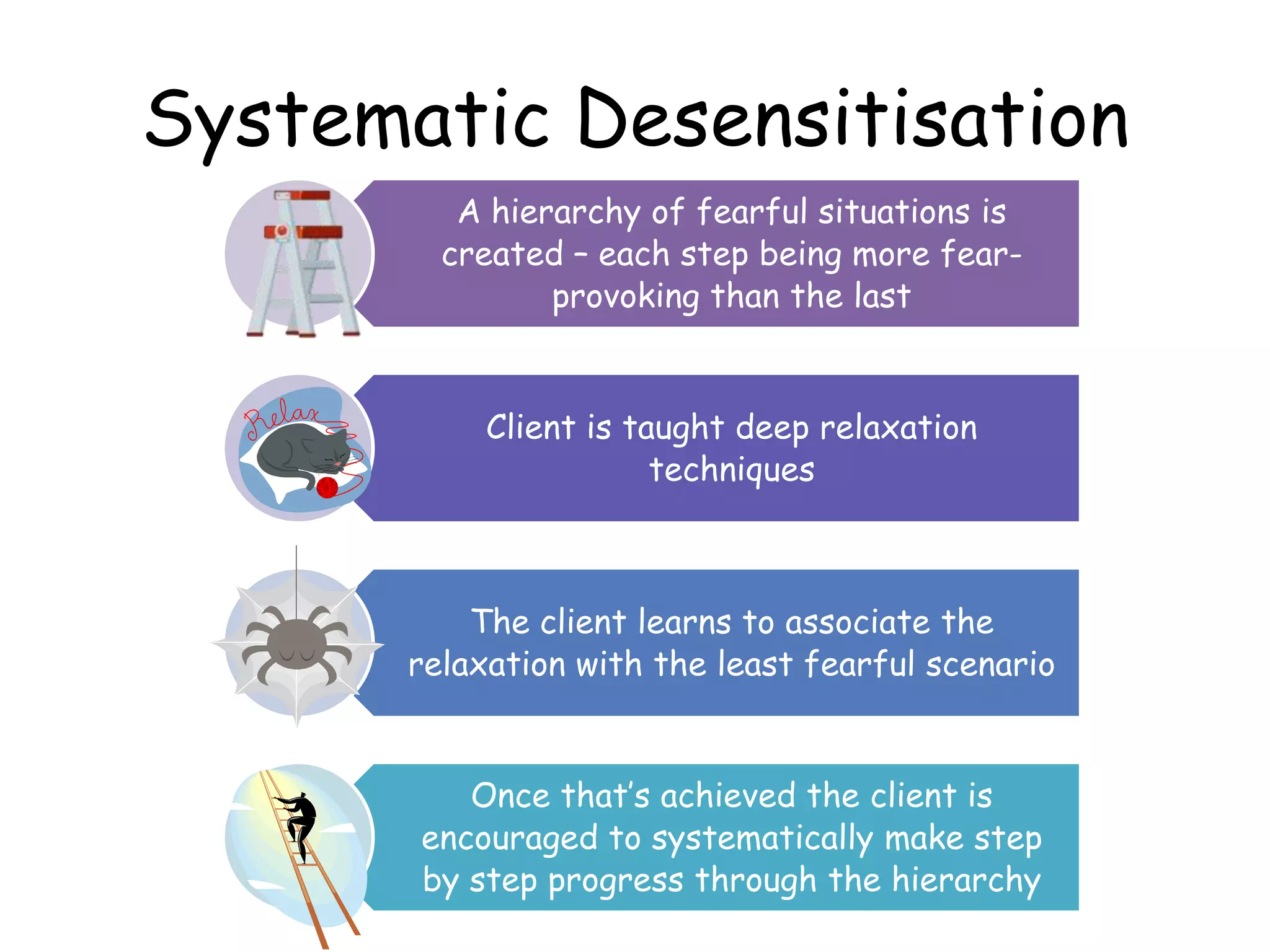
Systematic Desensitisation
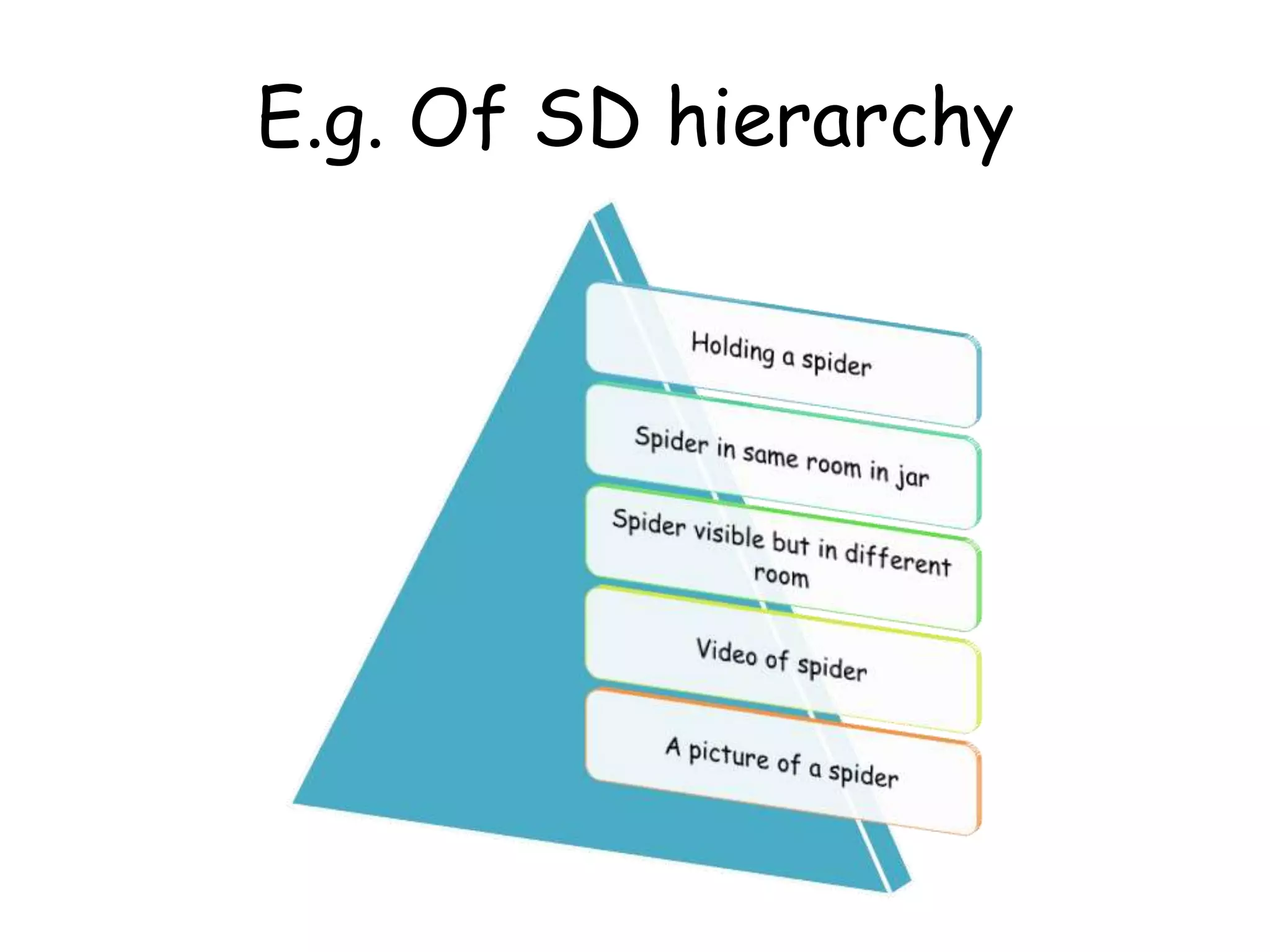
          A hierarchy of fearful situations is
         created – each step being more fear-
                provoking than the last


            Client is taught deep relaxation
                        techniques


           The client learns to associate the
       relaxation with the least fearful scenario


          Once that’s achieved the client is
       encouraged to systematically make step
       by step progress through the hierarchy
E.g. Of SD hierarchy
Systematic Desensitisation– is it
    any good as a treatment?
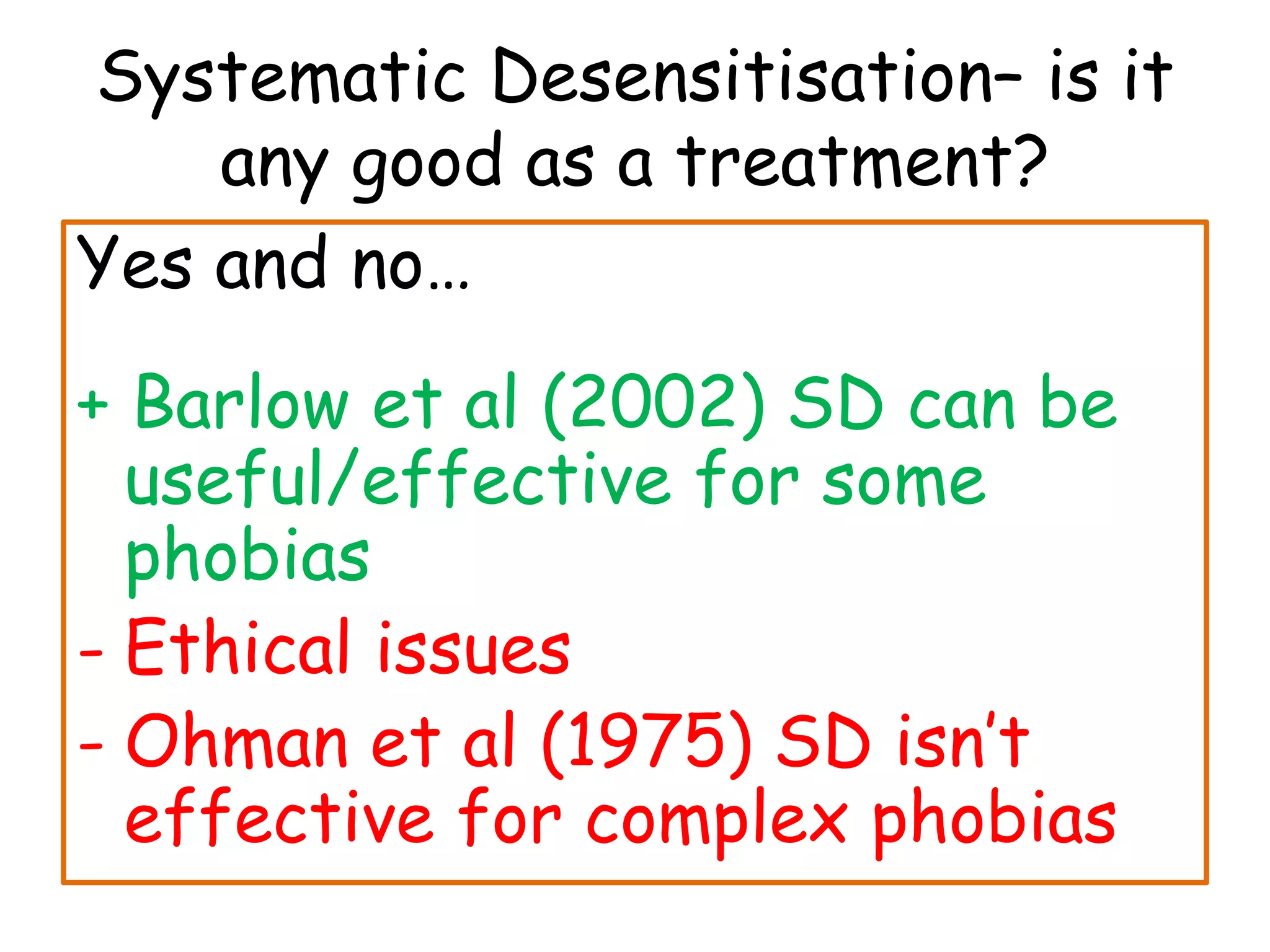
Yes and no…
+ Barlow et al (2002) SD can be
  useful/effective for some
  phobias
- Ethical issues
- Ohman et al (1975) SD isn’t
  effective for complex phobias
SD is effective
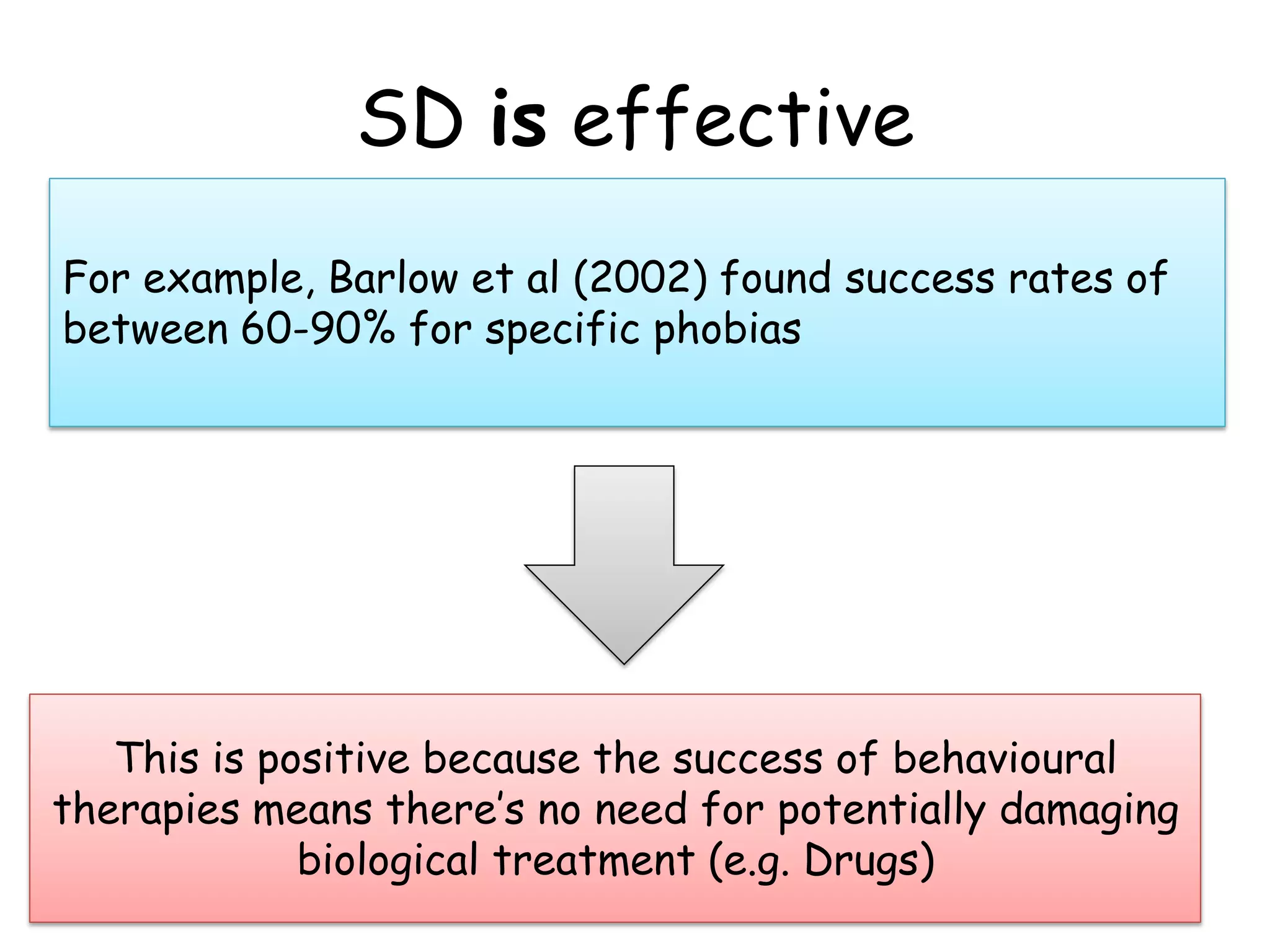
For example, Barlow et al (2002) found success rates of
between 60-90% for specific phobias


   This is positive because the success of behavioural
therapies means there’s no need for potentially damaging
             biological treatment (e.g. Drugs)
Ethical Issues
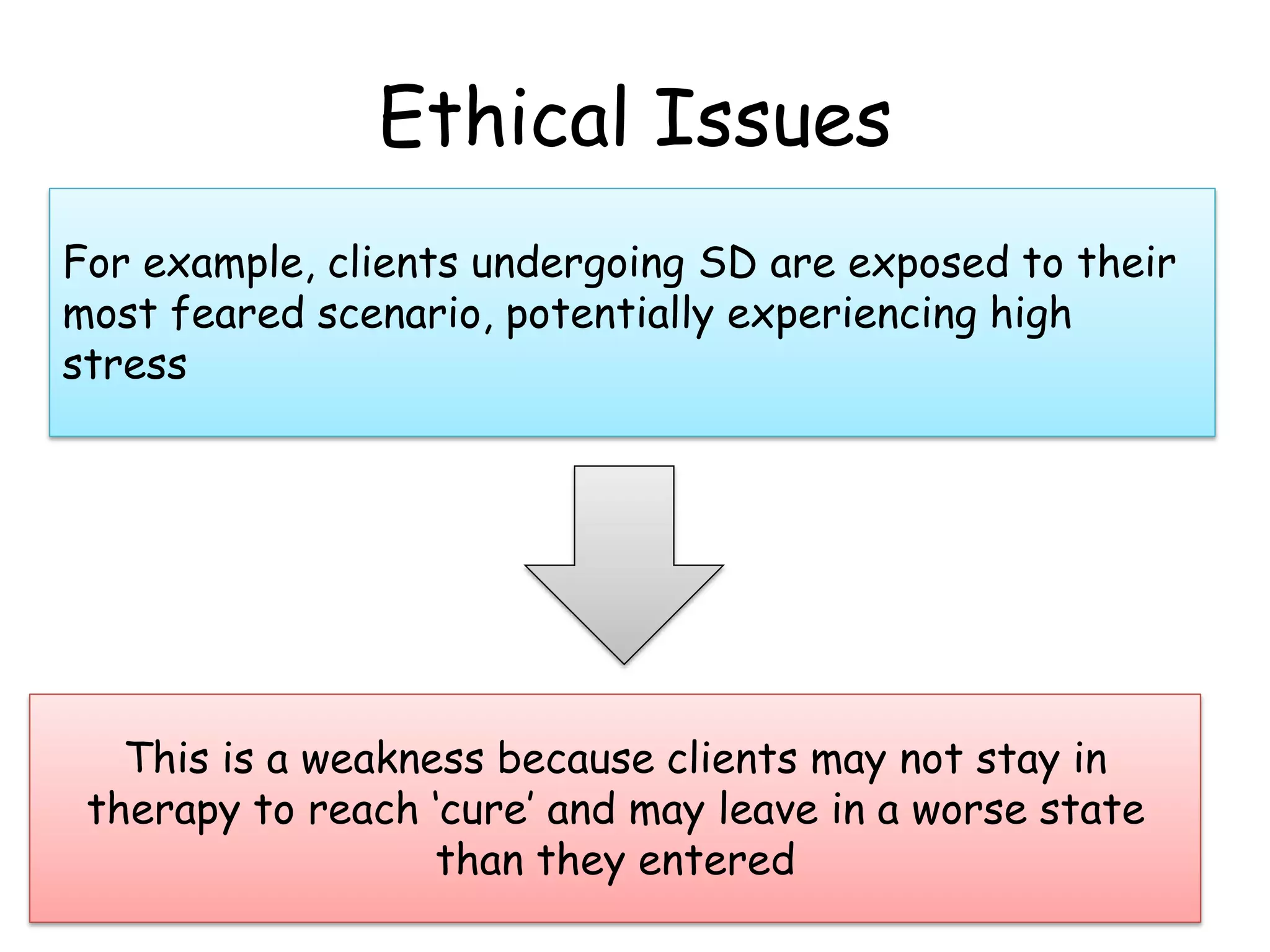
For example, clients undergoing SD are exposed to their
most feared scenario, potentially experiencing high
stress


   This is a weakness because clients may not stay in
 therapy to reach ‘cure’ and may leave in a worse state
                   than they entered
Not effective for complex
               phobias
For example, Ohman et al (1975) suggested that SD isn’t
effective in treating anxieties with an underlying
survival component (e.g. Heights)


    A weakness because SD only focuses on removing
symptoms rather than identifying the underlying cause of
 the disorder – meaning the effects of treatment by only
                      be temporary

Behavioural approach & therapies

  • 1.
  • 2.
    Assumptions All behaviours (normaland abnormal) are learned Learned responses from environmental stimuli Study observable behaviour
  • 3.
    Causes 1.Classical Conditioning Learning by association 2. Operant Conditioning Learning by reinforcement 3. Social Learning Learning by watching others being rewarded
  • 4.
    Classical Conditioning What canyou remember from attachment? - Learning by association - Creating a new response to a stimulus - Classical conditioning schedule UCS = UCR UCS + NS = UCR CS = CR
  • 5.
    Operant Conditioning Learning byreinforcement Reward = encourages certain behaviours (increases chances of them being repeated) Punishment = discourages certain behaviours (decreases chances of them being repeated)
  • 6.
    Social Learning Theory OperantConditioning from a distance... Behaviours can be encouraged/discouraged by watching others being rewarded/punished for them – this is known as vicarious learning
  • 7.
    How would thebehavioural approach investigate abnormality? Animal Studies The same basic laws of learning apply to human and non-human animals What do you think the problem would be in using non- human animals? Extrapolation – it’s difficult to apply the findings from non-human animal research to humans
  • 8.
    Scientific For example,the behavioural approach focuses on what is observable and measureable This is positive because it allows concepts such as classical conditioning to be demonstrated scientifically – allowing for empirical support for the theory
  • 9.
    Deterministic For example, theapproach suggests that if we are rewarded for losing weight that we will develop and eating disorder This is a weakness because it ignores the concept of free will and the idea that someone might exercise conscious control over their behaviour
  • 10.
    Reductionist For example,it suggests that mental illnesses are the result of reward/punishment (e.g. Rewarded for aggression results in more aggression) This is a weakness because it reduces the complex mental disorders down to basic elements, it’s too simplistic!
  • 11.
    Extrapolation For example, ratshave been widely used by behaviourists to demonstrate conditioning (so the research tests animal behaviour – not human) This is a weakness because that research can’t be applied to humans because they are biologically different and may not respond in the same way at animals
  • 12.
    Key terms /Buzz words Deterministic B.F. Skinner Classical Learning Social Learning Punishment Operant Reward Encourage Reductionist Vicarious Environment Animal Studies ‘Little Albert’ Scientific Association Extrapolation Extrapolation Rats/pigeon
  • 13.
  • 14.
    Quick recap ofthe behavioural approach – what can you remember? All behaviours are learnt Classical conditioning – learning through association Operant conditioning – learning through reinforcement Social Learning – vicarious learning (through others) Investigated using animal studies – issues with extrapolation
  • 15.
    If the behaviouralapproach believes that all abnormalities are the result of learning – what treatments do you think the approach would use to treat disorders? (Or, what would the treatments focus on ?) More learning!!!
  • 16.
    Systematic Desensitisation – how it works Used for phobias and OCD • Works on classical conditioning techniques • Changing previous learnt maladaptive responses with new more adaptive responses • Reciprocal inhibition • Counter-conditioning Someone with a fear of spiders will have learnt to feel afraid when there’s a spider present so the therapy systematically teaches the person a new response. The client is then taught deep relaxation techniques to use when a spider is present – enabling them to become desensitised to the spider
  • 17.
    Systematic Desensitisation A hierarchy of fearful situations is created – each step being more fear- provoking than the last Client is taught deep relaxation techniques The client learns to associate the relaxation with the least fearful scenario Once that’s achieved the client is encouraged to systematically make step by step progress through the hierarchy
  • 18.
    E.g. Of SDhierarchy
  • 19.
    Systematic Desensitisation– isit any good as a treatment? Yes and no… + Barlow et al (2002) SD can be useful/effective for some phobias - Ethical issues - Ohman et al (1975) SD isn’t effective for complex phobias
  • 20.
    SD is effective Forexample, Barlow et al (2002) found success rates of between 60-90% for specific phobias This is positive because the success of behavioural therapies means there’s no need for potentially damaging biological treatment (e.g. Drugs)
  • 21.
    Ethical Issues For example,clients undergoing SD are exposed to their most feared scenario, potentially experiencing high stress This is a weakness because clients may not stay in therapy to reach ‘cure’ and may leave in a worse state than they entered
  • 22.
    Not effective forcomplex phobias For example, Ohman et al (1975) suggested that SD isn’t effective in treating anxieties with an underlying survival component (e.g. Heights) A weakness because SD only focuses on removing symptoms rather than identifying the underlying cause of the disorder – meaning the effects of treatment by only be temporary