Symbiotic
Relationships
Symbiotic Relationships
 symbiosis - the relationship between two
different individual species that live together
in a close relationship (living together)
 The word symbiosis can be broken down
into two parts to determine its meaning
 sym means together
 bio means life
Types of Symbiosis
 There are three
types of symbiotic
relationships
 Mutualism (+, +)
 Commensalism (+, 0)
 Parasitism (+, -)
 Each relationship
can be shown using
+ , - , or 0
Mutualism  mutualism - a
relationship where
both organisms
benefit
 A + / + relationship
 Think of a normal
friendship where
both friends gain
something from the
friendship
The acacia galls are homes to stinging
ants and the ants defend acacia from
other insects that would harm tree
leaves.
Mutualism
Flowers and their Pollinators
(Example: Bees and hummingbirds gather nectar and spread pollen.)
Mutualism
The moray eel
gets a clean
mouth and the
cleaner fish gets
a meal.
Mutualism
Birds and mammals eat berries and
fruits while the plant benefits by
the dispersal of it seeds.
The oxbird
gets rid of
the
parasites
on the
antelope
and allows
the oxbird
to have a
meal.
Mutualism
Mutualism
Cleaners eat insect pests from the
skin of animals.
Mutualism
Algae and Fungi (Lichen) - Alga
gets water and nutrients from
the fungus and the fungus gets
food from the algae.
Mutualism
Many herbivores such as cows, sheep,
deer, horses and rabbits depend on
bacteria that live in their stomachs to
break down the plant material.
Mutualism
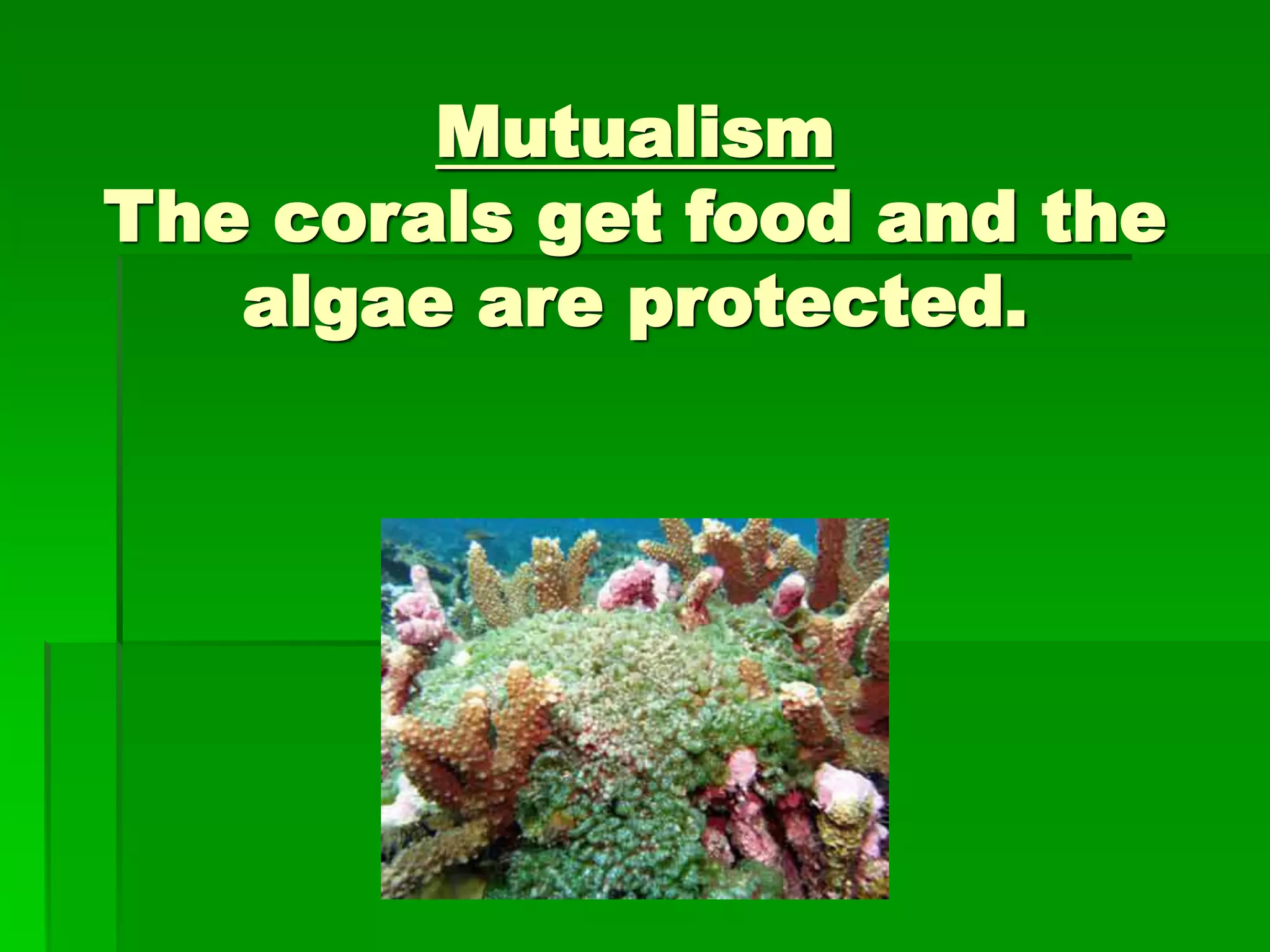
The corals get food and the
algae are protected.
Commensalism
 commensalism – a
relationship where one
species benefits while the
other species remains
unaffected
 A + / 0 relationship
 Think of a friendship
where one of the friends
benefits while the other
doesn’t change
Barnacles adhering to the skin of a
whale
Commensalism
One species uses a second organism
for housing such as small mammals
or birds that lives in holes in trees or
orchids which live in trees.
Orchid in rainforest Venezuela
Cattle stir
up insects
as they eat
grass and
the
egrets
hang
around and
eat insects.
Commensalism
Commensalism
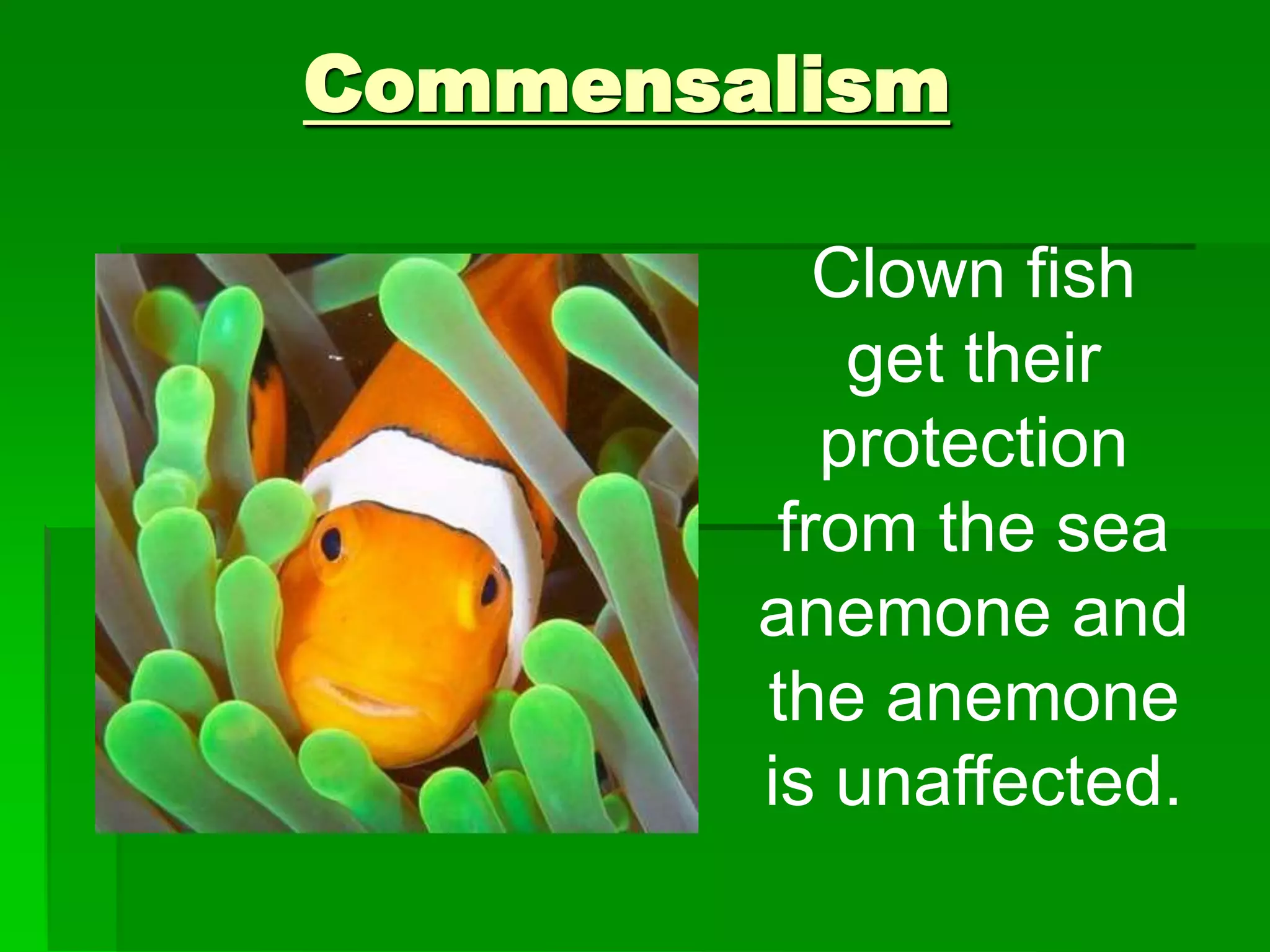
Clown fish
get their
protection
from the sea
anemone and
the anemone
is unaffected.
Commensalism
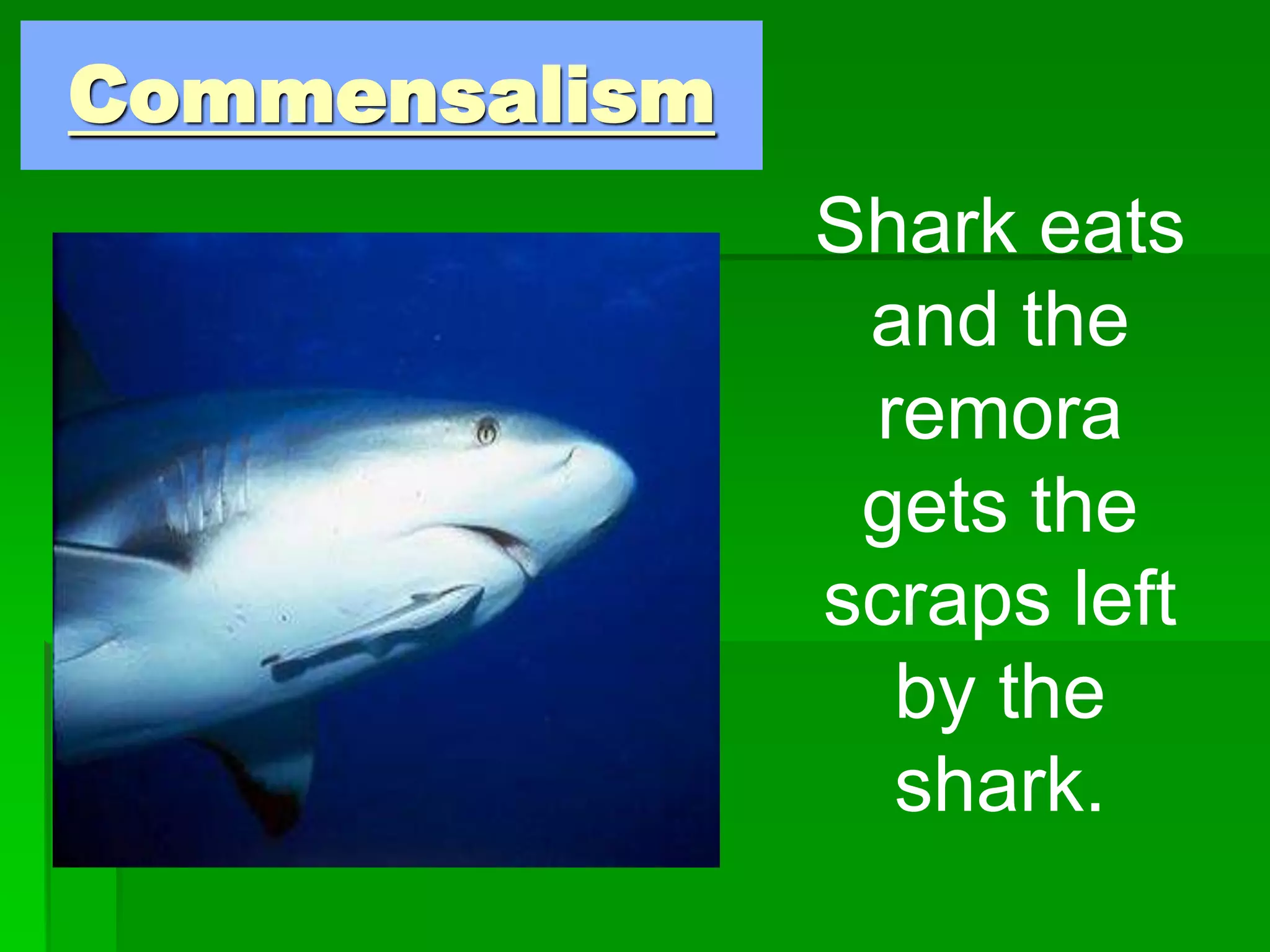
Shark eats
and the
remora
gets the
scraps left
by the
shark.
Parasitism
 parasitism – a relationship
where one organism
benefits (parasite) while the
species it depends on (host)
is harmed
 host – an organism on
which a parasite lives
 A + / - relationship
 Think of a friendship where
you might feel used by your
friend
Parasitic isopod on fish
Parasitism
Ticks and fleas that live in a host
animal's fur bite the animal and
drink its blood are parasites.
Parasitism
Mistletoe takes
moisture and
nutrients from
the plant while
the woody plant
has to support
itself and the
mistletoe.
Parasitism
Insects such as mosquitoes
feeding on a host are parasites.
The tick eats
the blood of
a human
and the
human
receives
Lyme
disease from
the tick.
Parasitism
Parasitism
Vines such as Kudzu growing on Trees
Parasitism
Tomato Hornworm with Wasp Eggs
Parasitism
The
tapeworm
attaches itself
to the
intestines of a
dog and the
tapeworm
takes
nutrients from
the dog.
Parasitism
Tapeworm or Hookworms living in
Host's Gut
LET’S HAVE A RECAP:
WHAT IS SYMBIOSIS?
it means:
Two organisms that live together
Temporarily or for a longer time
At least one of the organisms
benefits from the relationship
What are the different kinds
of symbiosis?
Mutualism Parasitism
Commensalism
both organisms
benefit
one organism
benefits
one organism
benefits
one organism
is unaffected
one organism
is harmed
Mutualism
Organism One Organism Two
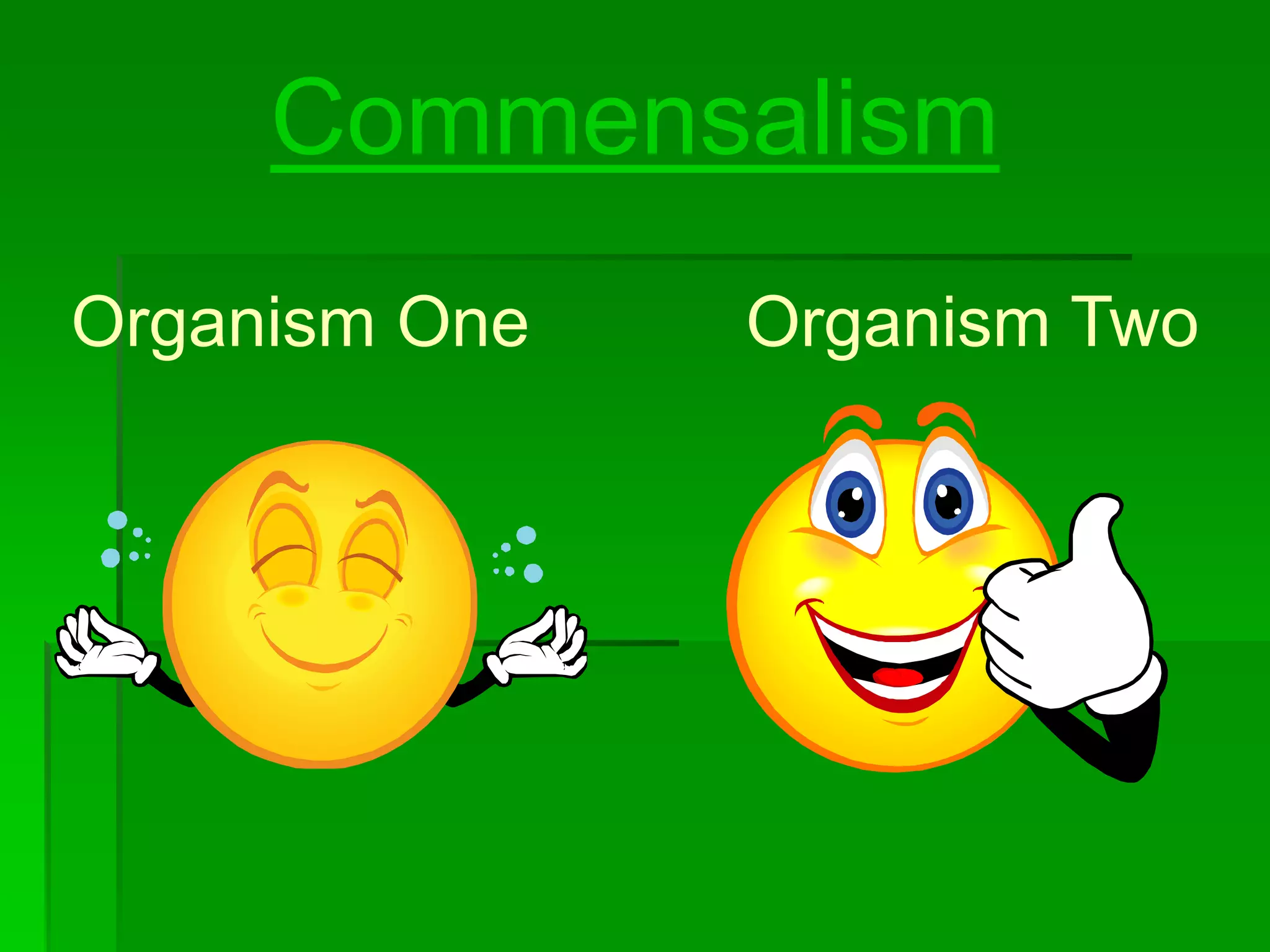
Commensalism
Organism One Organism Two
Parasitism
Organism One Organism Two
Acacia Plant & Ants
The ants lay eggs on
acacia tree so they get
a nice safe place for
their eggs. The acacia
covers the infected
area with brown flesh
(called a gall.) The
plant has to use
valuable resources to
create the gall.
What symbiotic relationship is
this?
parasitism
Anemone & Anemone Fish
mutualism
This fish lives its entire adult life
among the tentacles of a bulb-
tentacle sea anemone. Anemone fish
do not get stung by the anemone as
would most other fish so they get
protection from predators. The fish
often drop food scraps which the
anemones can eat.
What symbiotic relationship is
this?
Boxer Crab & Anemones
This Boxer Crab carries a
pair of stinging anemones
in its claws, which it uses
to defend itself from
predators. The anemones
get to move around which
increases their food
supply.
mutualism
What symbiotic relationship is
this?
The remora attaches itself
to the shark and saves
energy since it doesn’t
have to swim, and it gets to
snack on the sharks kills.
The shark doesn’t get
anything.
Shark & Remora
commensalism
What symbiotic relationship is
this?
This tiny emperor shrimp is
riding along on the back of a
sea cucumber (a long worm-
like starfish relative) while it
crawls along a sandy bottom.
The shrimp gets to travel
around under the protection of
its much larger partner, and
the sea cucumber doesn't
seem to mind.
Emperor Shrimp & Sea Cucumber
commensalism
What symbiotic relationship is
this?
Moray Eel & Cleaner Fish
This moray eel has a small fish
cleaning between its teeth. The
eel gets a clean mouth while the
cleaner fish gets a nice meal.
What symbiotic relationship is
this?
mutualism
Cattle & Cattle Egrets
As these cattle walk
around eating grass they
stir up lots of insects. The
egrets hang around and
get a yummy meal of
insects.
What symbiotic relationship is
this?
commensalism
Clown Fish & Anemone
This clown fish swims in
the anemone and gets
protection, since its
predators will get stung.
The anemone is
unaffected.
What symbiotic relationship is
this?
commensalism
Antelope & Ox Bird
This ox bird
hangs out on the
antelope and gets
a delicious meal
of bugs living on
the antelope. The
antelope gets rid
of parasites.
What symbiotic relationship is
this?
mutualism
Loa Loa Worm & Human
This worm infects
the human blood
stream and gets a
nice warm safe
home there. The
human may go
blind or have other
complications as a
result.
What symbiotic relationship is
this?
parasitism
Goby and Alpheid Shrimp
What symbiotic relationship is
this?
mutualism
This alpheid shrimp (on
the right) uses its
strong claws like a
bulldozer to create a
burrow in the sand.
The shrimp is nearly
blind. It relies upon its
partner, the sharp-eyed
goby, to warn of
danger. When a
potential predator
approaches, both
animals disappear
quickly into the burrow
Wrasse & Batfish
Can you see the two
cleaner wrasses are
removing parasites from a
batfish? One of the wrasses
has entered the gill slit of
the batfish, and may even
enter its
mouth in search of food.
The batfish gets a bath and
the wrasse gets a meal.
What symbiotic relationship is
this?
mutualism
Hummingbird Moth & Flower
This hummingbird moth is
drinking the nectar of a
flower. The flower gets
pollinated (the moth brings
pollen from other flowers)
and the moth gets a tasty
meal.
What symbiotic relationship is
this?
mutualism
SHORT QUIZ
1. What is symbiosis?
2. What are the different kinds of symbiosis?
3. Give one example of each kind of
symbiotic relationship.
Answer each of following questions on a sheet of lined paper.
ASSIGNMENT
Symbiosis.ppt

Symbiosis.ppt

  • 1.
  • 2.
    Symbiotic Relationships  symbiosis- the relationship between two different individual species that live together in a close relationship (living together)  The word symbiosis can be broken down into two parts to determine its meaning  sym means together  bio means life
  • 3.
    Types of Symbiosis There are three types of symbiotic relationships  Mutualism (+, +)  Commensalism (+, 0)  Parasitism (+, -)  Each relationship can be shown using + , - , or 0
  • 4.
    Mutualism  mutualism- a relationship where both organisms benefit  A + / + relationship  Think of a normal friendship where both friends gain something from the friendship The acacia galls are homes to stinging ants and the ants defend acacia from other insects that would harm tree leaves.
  • 5.
    Mutualism Flowers and theirPollinators (Example: Bees and hummingbirds gather nectar and spread pollen.)
  • 6.
    Mutualism The moray eel getsa clean mouth and the cleaner fish gets a meal.
  • 7.
    Mutualism Birds and mammalseat berries and fruits while the plant benefits by the dispersal of it seeds.
  • 8.
    The oxbird gets ridof the parasites on the antelope and allows the oxbird to have a meal. Mutualism
  • 9.
    Mutualism Cleaners eat insectpests from the skin of animals.
  • 10.
    Mutualism Algae and Fungi(Lichen) - Alga gets water and nutrients from the fungus and the fungus gets food from the algae.
  • 11.
    Mutualism Many herbivores suchas cows, sheep, deer, horses and rabbits depend on bacteria that live in their stomachs to break down the plant material.
  • 12.
    Mutualism The corals getfood and the algae are protected.
  • 13.
    Commensalism  commensalism –a relationship where one species benefits while the other species remains unaffected  A + / 0 relationship  Think of a friendship where one of the friends benefits while the other doesn’t change Barnacles adhering to the skin of a whale
  • 14.
    Commensalism One species usesa second organism for housing such as small mammals or birds that lives in holes in trees or orchids which live in trees. Orchid in rainforest Venezuela
  • 15.
    Cattle stir up insects asthey eat grass and the egrets hang around and eat insects. Commensalism
  • 16.
    Commensalism Clown fish get their protection fromthe sea anemone and the anemone is unaffected.
  • 17.
    Commensalism Shark eats and the remora getsthe scraps left by the shark.
  • 18.
    Parasitism  parasitism –a relationship where one organism benefits (parasite) while the species it depends on (host) is harmed  host – an organism on which a parasite lives  A + / - relationship  Think of a friendship where you might feel used by your friend Parasitic isopod on fish
  • 19.
    Parasitism Ticks and fleasthat live in a host animal's fur bite the animal and drink its blood are parasites.
  • 20.
    Parasitism Mistletoe takes moisture and nutrientsfrom the plant while the woody plant has to support itself and the mistletoe.
  • 21.
    Parasitism Insects such asmosquitoes feeding on a host are parasites.
  • 22.
    The tick eats theblood of a human and the human receives Lyme disease from the tick. Parasitism
  • 23.
    Parasitism Vines such asKudzu growing on Trees
  • 24.
  • 25.
    Parasitism The tapeworm attaches itself to the intestinesof a dog and the tapeworm takes nutrients from the dog.
  • 26.
  • 27.
    LET’S HAVE ARECAP: WHAT IS SYMBIOSIS? it means: Two organisms that live together Temporarily or for a longer time At least one of the organisms benefits from the relationship
  • 28.
    What are thedifferent kinds of symbiosis? Mutualism Parasitism Commensalism both organisms benefit one organism benefits one organism benefits one organism is unaffected one organism is harmed
  • 29.
  • 30.
  • 31.
  • 32.
    Acacia Plant &Ants The ants lay eggs on acacia tree so they get a nice safe place for their eggs. The acacia covers the infected area with brown flesh (called a gall.) The plant has to use valuable resources to create the gall. What symbiotic relationship is this? parasitism
  • 33.
    Anemone & AnemoneFish mutualism This fish lives its entire adult life among the tentacles of a bulb- tentacle sea anemone. Anemone fish do not get stung by the anemone as would most other fish so they get protection from predators. The fish often drop food scraps which the anemones can eat. What symbiotic relationship is this?
  • 34.
    Boxer Crab &Anemones This Boxer Crab carries a pair of stinging anemones in its claws, which it uses to defend itself from predators. The anemones get to move around which increases their food supply. mutualism What symbiotic relationship is this?
  • 35.
    The remora attachesitself to the shark and saves energy since it doesn’t have to swim, and it gets to snack on the sharks kills. The shark doesn’t get anything. Shark & Remora commensalism What symbiotic relationship is this?
  • 36.
    This tiny emperorshrimp is riding along on the back of a sea cucumber (a long worm- like starfish relative) while it crawls along a sandy bottom. The shrimp gets to travel around under the protection of its much larger partner, and the sea cucumber doesn't seem to mind. Emperor Shrimp & Sea Cucumber commensalism What symbiotic relationship is this?
  • 37.
    Moray Eel &Cleaner Fish This moray eel has a small fish cleaning between its teeth. The eel gets a clean mouth while the cleaner fish gets a nice meal. What symbiotic relationship is this? mutualism
  • 38.
    Cattle & CattleEgrets As these cattle walk around eating grass they stir up lots of insects. The egrets hang around and get a yummy meal of insects. What symbiotic relationship is this? commensalism
  • 39.
    Clown Fish &Anemone This clown fish swims in the anemone and gets protection, since its predators will get stung. The anemone is unaffected. What symbiotic relationship is this? commensalism
  • 40.
    Antelope & OxBird This ox bird hangs out on the antelope and gets a delicious meal of bugs living on the antelope. The antelope gets rid of parasites. What symbiotic relationship is this? mutualism
  • 41.
    Loa Loa Worm& Human This worm infects the human blood stream and gets a nice warm safe home there. The human may go blind or have other complications as a result. What symbiotic relationship is this? parasitism
  • 42.
    Goby and AlpheidShrimp What symbiotic relationship is this? mutualism This alpheid shrimp (on the right) uses its strong claws like a bulldozer to create a burrow in the sand. The shrimp is nearly blind. It relies upon its partner, the sharp-eyed goby, to warn of danger. When a potential predator approaches, both animals disappear quickly into the burrow
  • 43.
    Wrasse & Batfish Canyou see the two cleaner wrasses are removing parasites from a batfish? One of the wrasses has entered the gill slit of the batfish, and may even enter its mouth in search of food. The batfish gets a bath and the wrasse gets a meal. What symbiotic relationship is this? mutualism
  • 44.
    Hummingbird Moth &Flower This hummingbird moth is drinking the nectar of a flower. The flower gets pollinated (the moth brings pollen from other flowers) and the moth gets a tasty meal. What symbiotic relationship is this? mutualism
  • 45.
    SHORT QUIZ 1. Whatis symbiosis? 2. What are the different kinds of symbiosis? 3. Give one example of each kind of symbiotic relationship. Answer each of following questions on a sheet of lined paper.
  • 46.