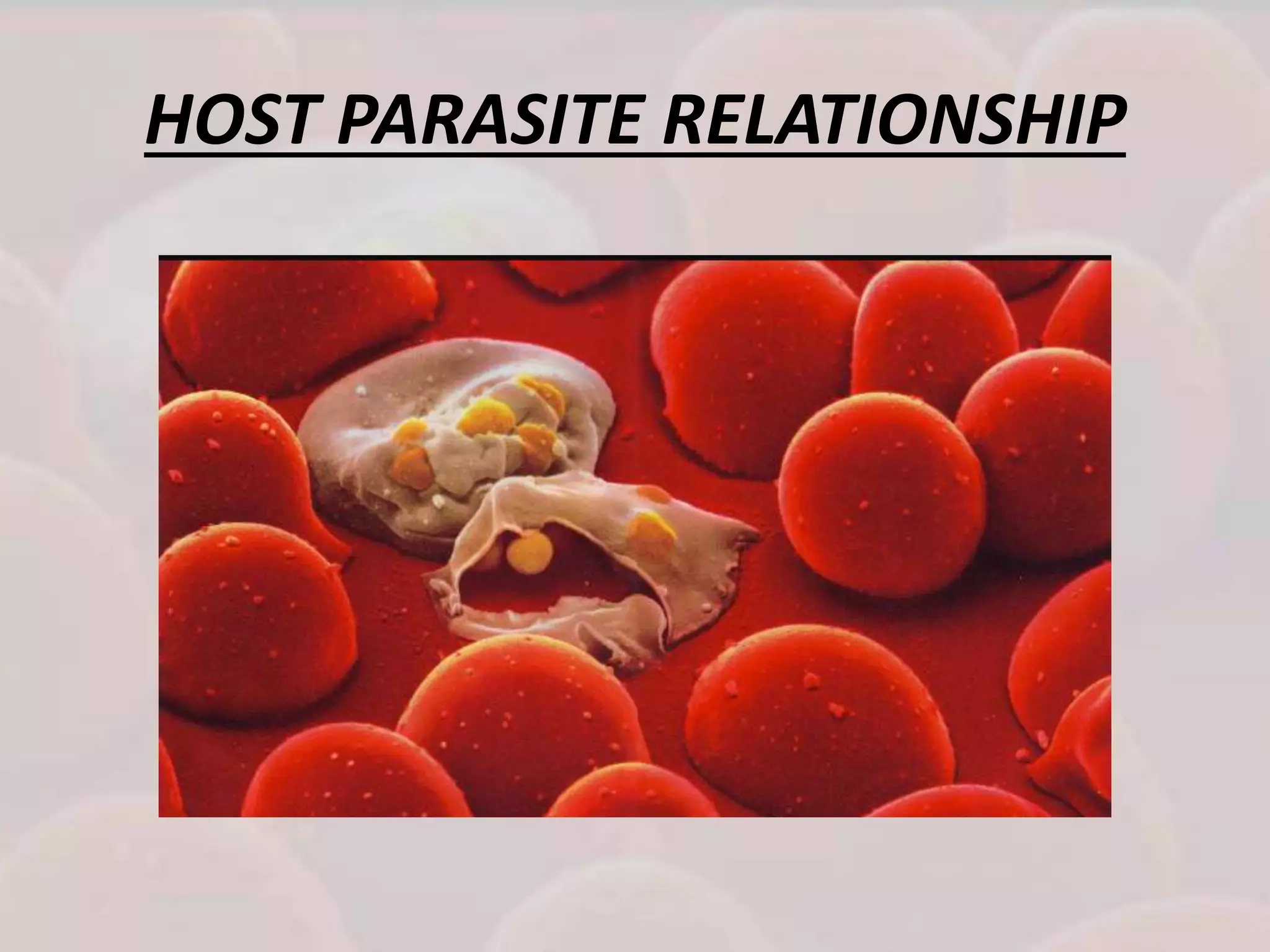
HOST PARASITE RELATIONSHIP
CONTENTS
 HOST PARASITE RELATIONSHIP
• Introduction
• Symbiosis
• Types of symbiosis
 SOME IMPORTANT TERMS
• Host
• Parasite
• Pathogen
• Types of pathogen
• Pathogenicity
• Resservoir
• Virulance
 NORMAL FLORA
 ENTRY OF MICROORGANISM INTO THE HOST
• Skin / mucous membrane
• Mouth cavity
• Respiratory tract
• Intestinal tract
• Genitourinary tract
Host Parasite Relationship
Introduction-
 the relationship between two organism can be very complex.
 The normal flora present in its normal site in human body
provides some benefits to the host they live in the perfect
symbiosis in their natural habitate.
 The host parasite relationship is two types –
1) Beneficial
2) harmful
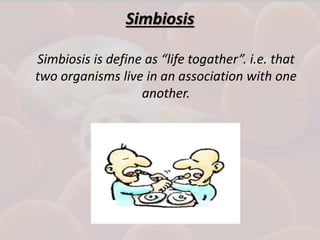
Simbiosis
Simbiosis is define as “life togather”. i.e. that
two organisms live in an association with one
another.
Types of Simbiosis
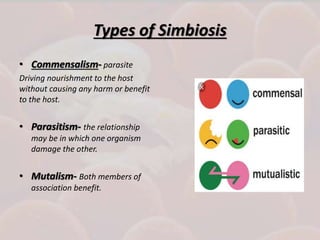
• Commensalism- parasite
Driving nourishment to the host
without causing any harm or benefit
to the host.
• Parasitism- the relationship
may be in which one organism
damage the other.
• Mutalism- Both members of
association benefit.
Some important terms
Host-
Host are the large animal and plant organism
on or in which a parasite can live.
Parasite
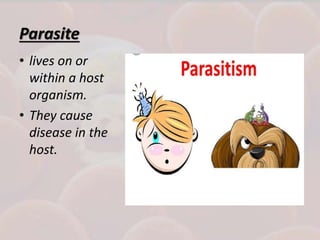
• lives on or
within a host
organism.
• They cause
disease in the
host.
Pathogen
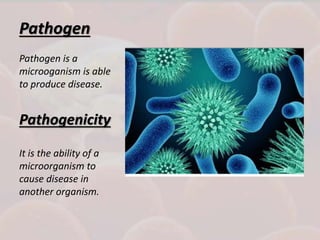
Pathogen is a
microoganism is able
to produce disease.
Pathogenicity
It is the ability of a
microorganism to
cause disease in
another organism.
Resservoir
• Any person, plant, soil and substance in which
an infectious agent normally lives and
multiplies.
virulance
• Degree of pathogenicity of microorganism
agent to cause disease.
• It involves adherence, invasion and
toxigenicity.
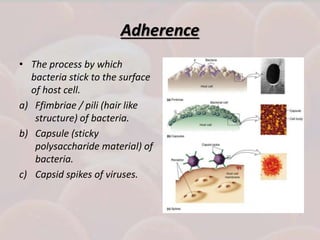
Adherence
• The process by which
bacteria stick to the surface
of host cell.
a) Ffimbriae / pili (hair like
structure) of bacteria.
b) Capsule (sticky
polysaccharide material) of
bacteria.
c) Capsid spikes of viruses.
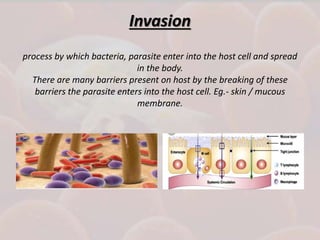
Invasion
process by which bacteria, parasite enter into the host cell and spread
in the body.
There are many barriers present on host by the breaking of these
barriers the parasite enters into the host cell. Eg.- skin / mucous
membrane.
Toxigenecity
The ability of microorganism to produce toxins.
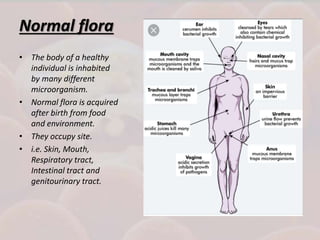
Normal flora
• The body of a healthy
individual is inhabited
by many different
microorganism.
• Normal flora is acquired
after birth from food
and environment.
• They occupy site.
• i.e. Skin, Mouth,
Respiratory tract,
Intestinal tract and
genitourinary tract.
Entry of microorganism into the host
• There are several sites for the entry of Microorganism.
1) Skin / Mucous membrane
2) Nose
3) Eyes
4) Mouth cavity
5) Respiratory tract
6) Intestinal tract
7) Genitourinary tract
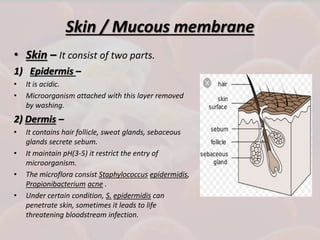
Skin / Mucous membrane
• Skin – It consist of two parts.
1) Epidermis –
• It is acidic.
• Microorganism attached with this layer removed
by washing.
2) Dermis –
• It contains hair follicle, sweat glands, sebaceous
glands secrete sebum.
• It maintain pH(3-5) it restrict the entry of
microorganism.
• The microflora consist Staphylococcus epidermidis,
Propionibacterium acne .
• Under certain condition, S. epidermidis can
penetrate skin, sometimes it leads to life
threatening bloodstream infection.
Mucous Membrane
Mucous membrane of respiratory tract, intestinal tract
and genitourinary tract are barrier to microbial
invasion.
There are two strategy for that i.e.
a) Direct uptake
b) Antigen sampling exploitation process
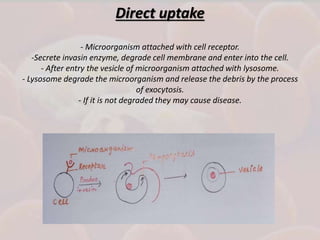
Direct uptake
- Microorganism attached with cell receptor.
-Secrete invasin enzyme, degrade cell membrane and enter into the cell.
- After entry the vesicle of microorganism attached with lysosome.
- Lysosome degrade the microorganism and release the debris by the process
of exocytosis.
- If it is not degraded they may cause disease.
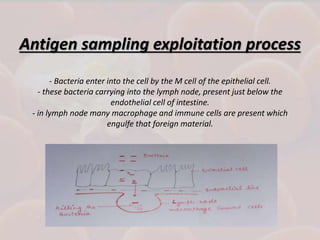
Antigen sampling exploitation process
- Bacteria enter into the cell by the M cell of the epithelial cell.
- these bacteria carrying into the lymph node, present just below the
endothelial cell of intestine.
- in lymph node many macrophage and immune cells are present which
engulfe that foreign material.
Eyes
The eyes are moistend continously with tears ,
which contain an enzyme lysozyme which helps
in the limiting bacteria.
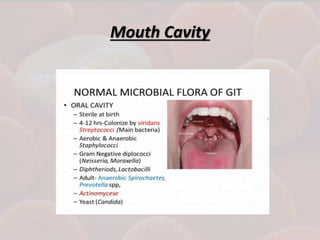
Mouth Cavity
Respiratory tract
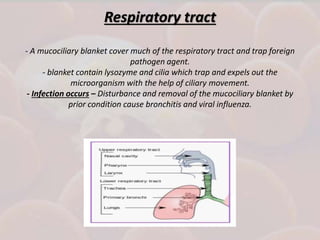
- A mucociliary blanket cover much of the respiratory tract and trap foreign
pathogen agent.
- blanket contain lysozyme and cilia which trap and expels out the
microorganism with the help of ciliary movement.
- Infection occurs – Disturbance and removal of the mucociliary blanket by
prior condition cause bronchitis and viral influenza.
NOSE
Microflora of nose consist of gram positive cocci
found on skin. It is an important site of
Stephylococcus aureus residence.
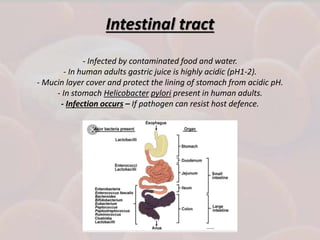
Intestinal tract
- Infected by contaminated food and water.
- In human adults gastric juice is highly acidic (pH1-2).
- Mucin layer cover and protect the lining of stomach from acidic pH.
- In stomach Helicobacter pylori present in human adults.
- Infection occurs – If pathogen can resist host defence.
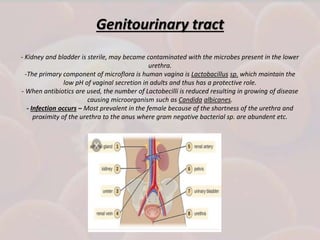
Genitourinary tract
- Kidney and bladder is sterile, may became contaminated with the microbes present in the lower
urethra.
-The primary component of microflora is human vagina is Lactobacillus sp. which maintain the
low pH of vaginal secretion in adults and thus has a protective role.
- When antibiotics are used, the number of Lactobecilli is reduced resulting in growing of disease
causing microorganism such as Candida albicanes.
- Infection occurs – Most prevalent in the female because of the shortness of the urethra and
proximity of the urethra to the anus where gram negative bacterial sp. are abundent etc.
Thank you
Submitted By: Submitted To:
Prashant sharma Dr. Monika Ashtana
Biotechnology Incharge
Department Of Biotechnology

Host parasite relationship

  • 1.
  • 2.
    CONTENTS  HOST PARASITERELATIONSHIP • Introduction • Symbiosis • Types of symbiosis  SOME IMPORTANT TERMS • Host • Parasite • Pathogen • Types of pathogen • Pathogenicity • Resservoir • Virulance  NORMAL FLORA  ENTRY OF MICROORGANISM INTO THE HOST • Skin / mucous membrane • Mouth cavity • Respiratory tract • Intestinal tract • Genitourinary tract
  • 3.
    Host Parasite Relationship Introduction- the relationship between two organism can be very complex.  The normal flora present in its normal site in human body provides some benefits to the host they live in the perfect symbiosis in their natural habitate.  The host parasite relationship is two types – 1) Beneficial 2) harmful
  • 4.
    Simbiosis Simbiosis is defineas “life togather”. i.e. that two organisms live in an association with one another.
  • 5.
    Types of Simbiosis •Commensalism- parasite Driving nourishment to the host without causing any harm or benefit to the host. • Parasitism- the relationship may be in which one organism damage the other. • Mutalism- Both members of association benefit.
  • 6.
    Some important terms Host- Hostare the large animal and plant organism on or in which a parasite can live.
  • 7.
    Parasite • lives onor within a host organism. • They cause disease in the host.
  • 8.
    Pathogen Pathogen is a microoganismis able to produce disease. Pathogenicity It is the ability of a microorganism to cause disease in another organism.
  • 9.
    Resservoir • Any person,plant, soil and substance in which an infectious agent normally lives and multiplies.
  • 10.
    virulance • Degree ofpathogenicity of microorganism agent to cause disease. • It involves adherence, invasion and toxigenicity.
  • 11.
    Adherence • The processby which bacteria stick to the surface of host cell. a) Ffimbriae / pili (hair like structure) of bacteria. b) Capsule (sticky polysaccharide material) of bacteria. c) Capsid spikes of viruses.
  • 12.
    Invasion process by whichbacteria, parasite enter into the host cell and spread in the body. There are many barriers present on host by the breaking of these barriers the parasite enters into the host cell. Eg.- skin / mucous membrane.
  • 13.
    Toxigenecity The ability ofmicroorganism to produce toxins.
  • 14.
    Normal flora • Thebody of a healthy individual is inhabited by many different microorganism. • Normal flora is acquired after birth from food and environment. • They occupy site. • i.e. Skin, Mouth, Respiratory tract, Intestinal tract and genitourinary tract.
  • 15.
    Entry of microorganisminto the host • There are several sites for the entry of Microorganism. 1) Skin / Mucous membrane 2) Nose 3) Eyes 4) Mouth cavity 5) Respiratory tract 6) Intestinal tract 7) Genitourinary tract
  • 16.
    Skin / Mucousmembrane • Skin – It consist of two parts. 1) Epidermis – • It is acidic. • Microorganism attached with this layer removed by washing. 2) Dermis – • It contains hair follicle, sweat glands, sebaceous glands secrete sebum. • It maintain pH(3-5) it restrict the entry of microorganism. • The microflora consist Staphylococcus epidermidis, Propionibacterium acne . • Under certain condition, S. epidermidis can penetrate skin, sometimes it leads to life threatening bloodstream infection.
  • 17.
    Mucous Membrane Mucous membraneof respiratory tract, intestinal tract and genitourinary tract are barrier to microbial invasion. There are two strategy for that i.e. a) Direct uptake b) Antigen sampling exploitation process
  • 18.
    Direct uptake - Microorganismattached with cell receptor. -Secrete invasin enzyme, degrade cell membrane and enter into the cell. - After entry the vesicle of microorganism attached with lysosome. - Lysosome degrade the microorganism and release the debris by the process of exocytosis. - If it is not degraded they may cause disease.
  • 19.
    Antigen sampling exploitationprocess - Bacteria enter into the cell by the M cell of the epithelial cell. - these bacteria carrying into the lymph node, present just below the endothelial cell of intestine. - in lymph node many macrophage and immune cells are present which engulfe that foreign material.
  • 20.
    Eyes The eyes aremoistend continously with tears , which contain an enzyme lysozyme which helps in the limiting bacteria.
  • 21.
  • 22.
    Respiratory tract - Amucociliary blanket cover much of the respiratory tract and trap foreign pathogen agent. - blanket contain lysozyme and cilia which trap and expels out the microorganism with the help of ciliary movement. - Infection occurs – Disturbance and removal of the mucociliary blanket by prior condition cause bronchitis and viral influenza.
  • 23.
    NOSE Microflora of noseconsist of gram positive cocci found on skin. It is an important site of Stephylococcus aureus residence.
  • 24.
    Intestinal tract - Infectedby contaminated food and water. - In human adults gastric juice is highly acidic (pH1-2). - Mucin layer cover and protect the lining of stomach from acidic pH. - In stomach Helicobacter pylori present in human adults. - Infection occurs – If pathogen can resist host defence.
  • 25.
    Genitourinary tract - Kidneyand bladder is sterile, may became contaminated with the microbes present in the lower urethra. -The primary component of microflora is human vagina is Lactobacillus sp. which maintain the low pH of vaginal secretion in adults and thus has a protective role. - When antibiotics are used, the number of Lactobecilli is reduced resulting in growing of disease causing microorganism such as Candida albicanes. - Infection occurs – Most prevalent in the female because of the shortness of the urethra and proximity of the urethra to the anus where gram negative bacterial sp. are abundent etc.
  • 26.
    Thank you Submitted By:Submitted To: Prashant sharma Dr. Monika Ashtana Biotechnology Incharge Department Of Biotechnology