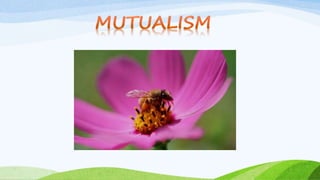
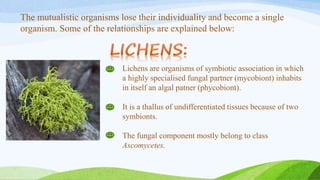
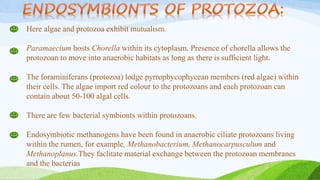
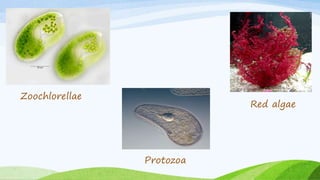
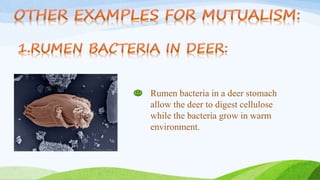
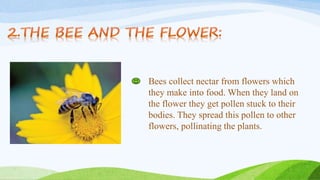
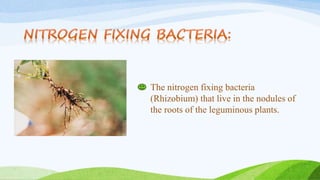
Mutualism is a symbiotic relationship where two populations benefit from each other's existence, often leading to obligatory interactions and the evolution of new organisms. Examples include lichens formed from fungi and algae, bees pollinating flowers while collecting nectar, and nitrogen-fixing bacteria aiding leguminous plants. These interactions illustrate the interconnectedness of species for survival and resource sharing.