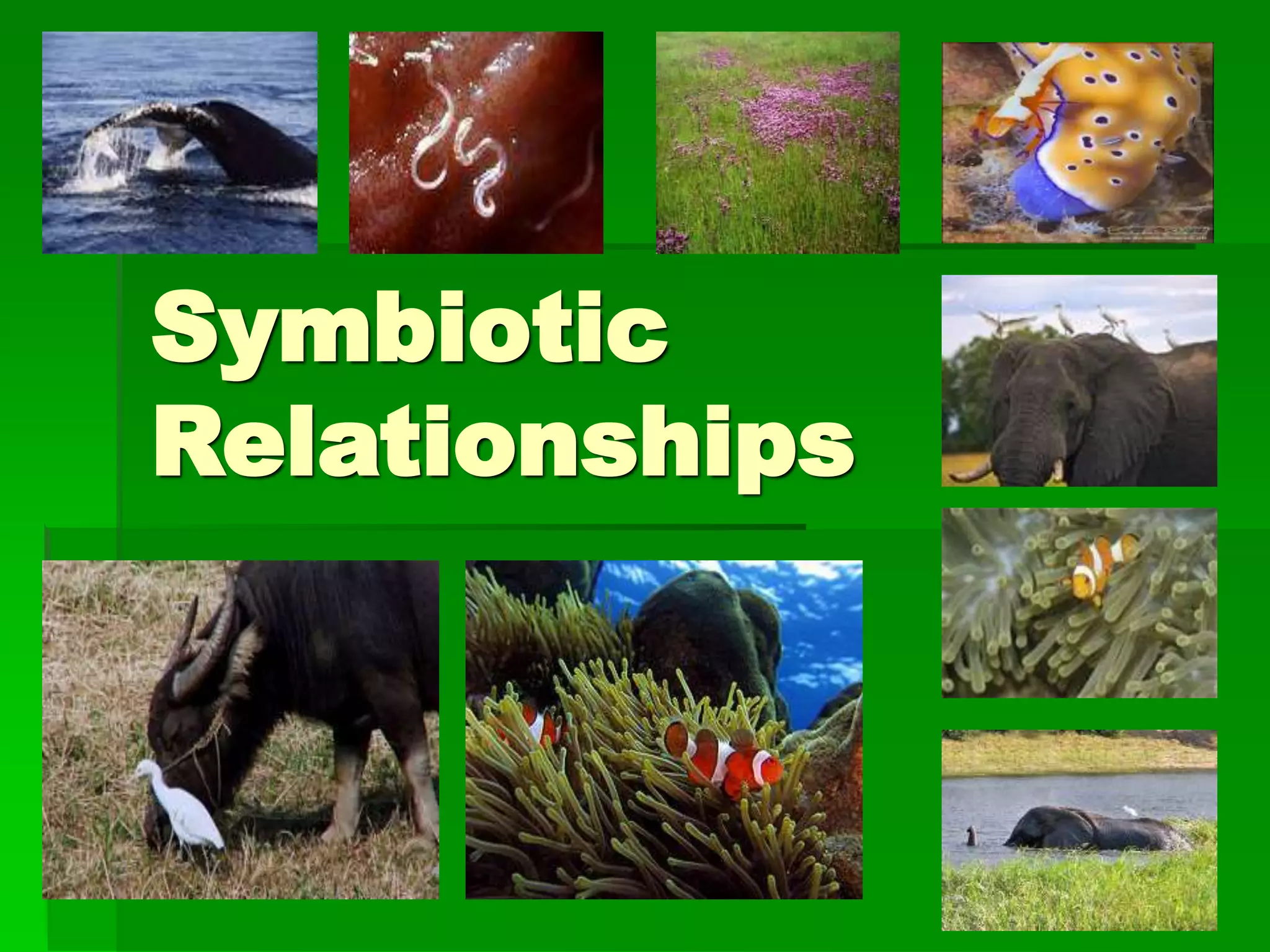
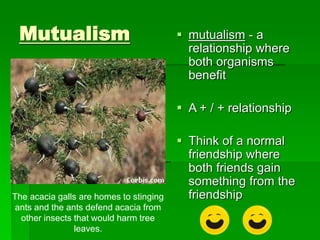
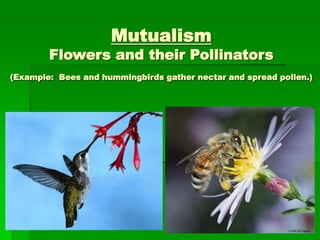
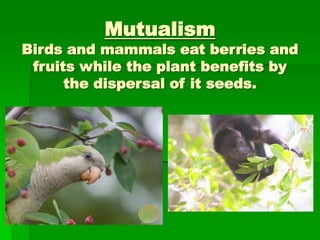
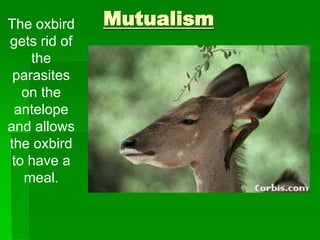
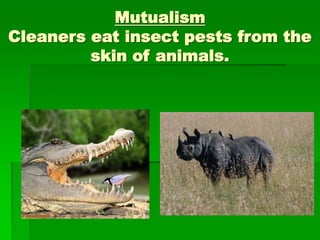
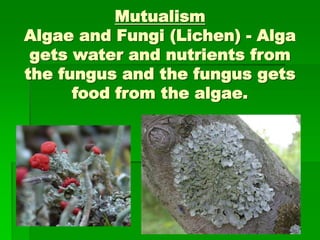
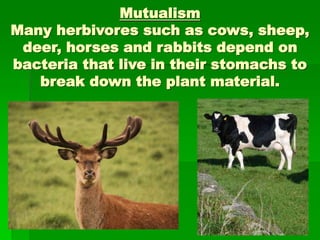
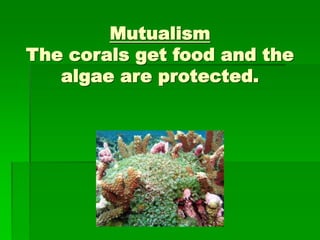
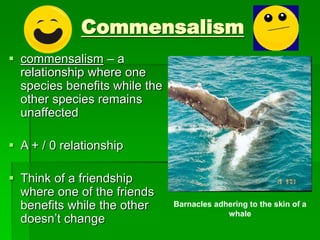
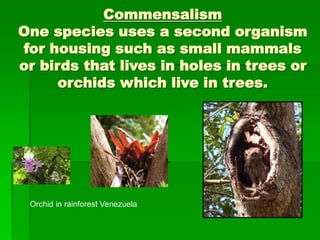
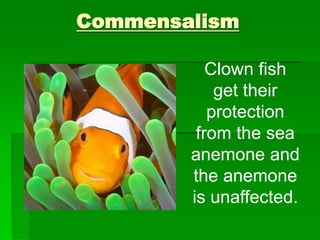
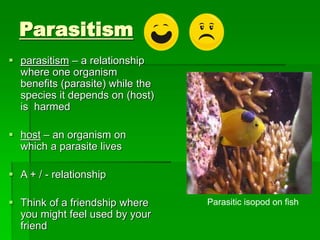
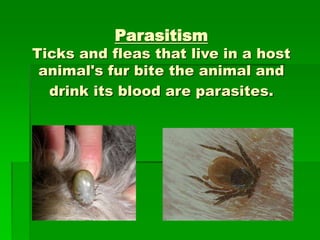
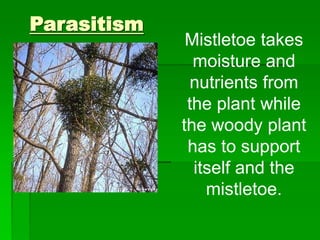
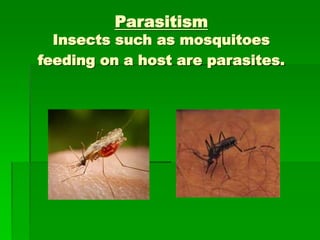
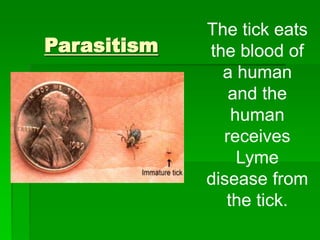
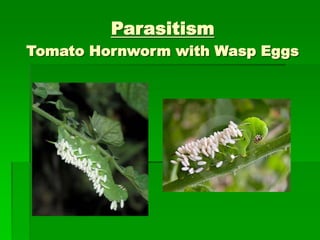
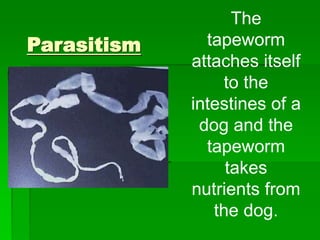
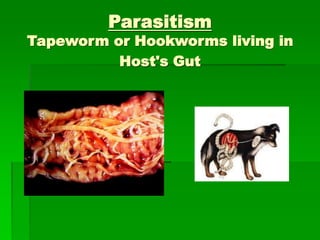
Symbiotic relationships involve two organisms living together in close contact where at least one benefits. There are three main types of symbiotic relationships: mutualism, in which both organisms benefit; commensalism, where one benefits and the other is not affected; and parasitism, where one benefits at the expense of the other. Examples of mutualism include relationships between plants and pollinators, cleaner fish and the fish they clean, and algae and fungi that form lichen. Commensalism includes barnacles attaching to whales and orchids growing in trees. Parasitism includes ticks and mosquitoes feeding on animal hosts and mistletoe growing on trees.







![谷歌留痕技术 [ 𝙩𝙤𝙥 𝟮𝟯𝟯. 𝙘 𝙤𝙢 ]](https://cdn.slidesharecdn.com/ss_thumbnails/top233-260130174328-3833018c-thumbnail.jpg?width=640&height=640&fit=bounds)


