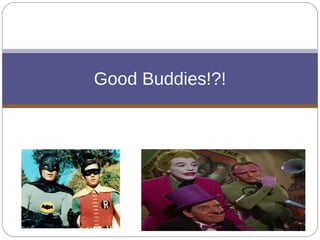
Good Buddies!?!
Symbiosis
The relationship between two
organisms of different species
that benefits one or both
organisms.
3 Types of Symbiosis
Mutualism- a symbiotic relationship that benefits both
organisms involved. ( +,+)
Commensalism- a symbiotic relationship that benefits one
organism and the other is not helped or harmed. (+,0)
Parasitism- a symbiotic relationship that benefits one
organism and the other is harmed. (+,-)
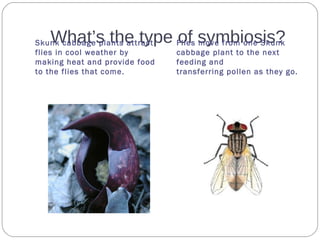
What’s the type of symbiosis?Skunk cabbage plants attract
flies in cool weather by
making heat and provide food
to the flies that come.
Flies move from one Skunk
cabbage plant to the next
feeding and
transferring pollen as they go.
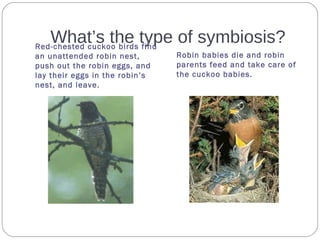
What’s the type of symbiosis?Red-chested cuckoo birds find
an unattended robin nest,
push out the robin eggs, and
lay their eggs in the robin’s
nest, and leave.
Robin babies die and robin
parents feed and take care of
the cuckoo babies.
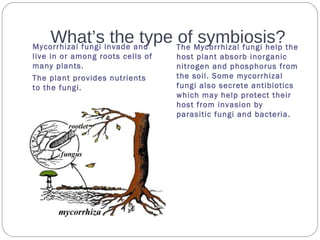
What’s the type of symbiosis?Mycorrhizal fungi invade and
live in or among roots cells of
many plants.
The plant provides nutrients
to the fungi.
The Mycorrhizal fungi help the
host plant absorb inorganic
nitrogen and phosphorus from
the soil. Some mycorrhizal
fungi also secrete antibiotics
which may help protect their
host from invasion by
parasitic fungi and bacteria.
What’s the type of symbiosis?
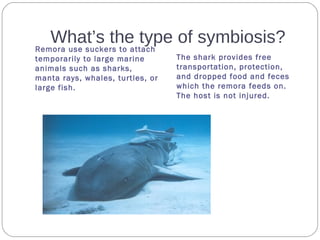
Remora use suckers to attach
temporarily to large marine
animals such as sharks,
manta rays, whales, turtles, or
large fish.
The shark provides free
transportation, protection,
and dropped food and feces
which the remora feeds on.
The host is not injured.
What’s the type of symbiosis?
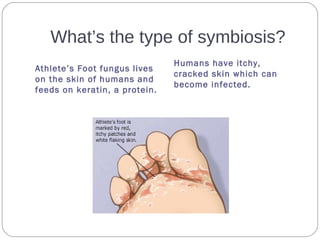
Athlete’s Foot fungus lives
on the skin of humans and
feeds on keratin, a protein.
Humans have itchy,
cracked skin which can
become infected.
What’s the type of symbiosis?
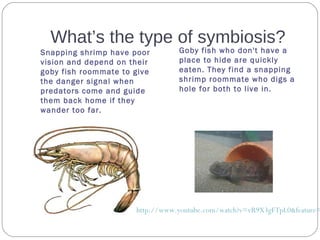
Snapping shrimp have poor
vision and depend on their
goby fish roommate to give
the danger signal when
predators come and guide
them back home if they
wander too far.
Goby fish who don't have a
place to hide are quickly
eaten. They find a snapping
shrimp roommate who digs a
hole for both to live in.
http://www.youtube.com/watch?v=vR9X3gFTpL0&feature=
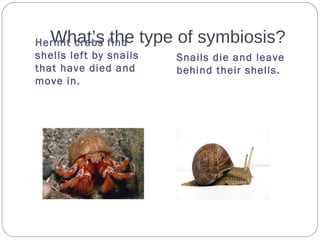
What’s the type of symbiosis?Hermit crabs find
shells left by snails
that have died and
move in.
Snails die and leave
behind their shells.
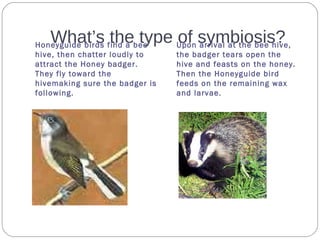
What’s the type of symbiosis?Honeyguide birds find a bee
hive, then chatter loudly to
attract the Honey badger.
They fly toward the
hivemaking sure the badger is
following.
Upon arrival at the bee hive,
the badger tears open the
hive and feasts on the honey.
Then the Honeyguide bird
feeds on the remaining wax
and larvae.
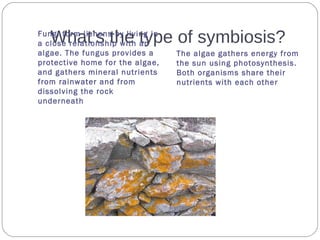
What’s the type of symbiosis?Fungi form lichens by living in
a close relationship with an
algae. The fungus provides a
protective home for the algae,
and gathers mineral nutrients
from rainwater and from
dissolving the rock
underneath
The algae gathers energy from
the sun using photosynthesis.
Both organisms share their
nutrients with each other
What’s the type of symbiosis?
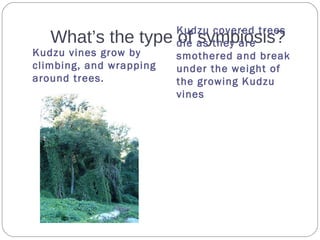
Kudzu vines grow by
climbing, and wrapping
around trees.
Kudzu covered trees
die as they are
smothered and break
under the weight of
the growing Kudzu
vines
What’s the type of symbiosis?
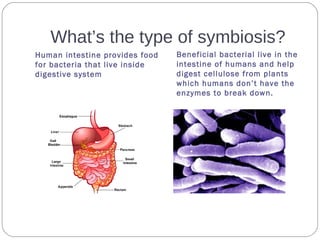
Human intestine provides food
for bacteria that live inside
digestive system
Beneficial bacterial live in the
intestine of humans and help
digest cellulose from plants
which humans don’t have the
enzymes to break down.
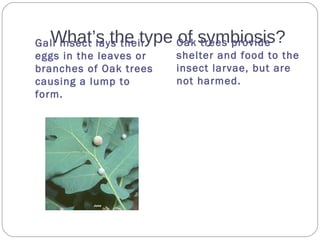
What’s the type of symbiosis?Gall insect lays their
eggs in the leaves or
branches of Oak trees
causing a lump to
form.
Oak trees provide
shelter and food to the
insect larvae, but are
not harmed.
What’s the type of symbiosis?
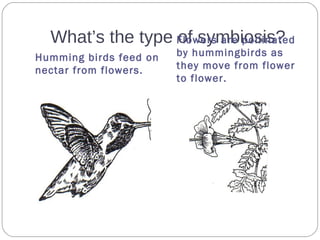
Humming birds feed on
nectar from flowers.
Flowers are pollinated
by hummingbirds as
they move from flower
to flower.
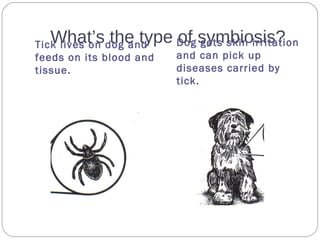
What’s the type of symbiosis?Tick lives on dog and
feeds on its blood and
tissue.
Dog gets skin irritation
and can pick up
diseases carried by
tick.
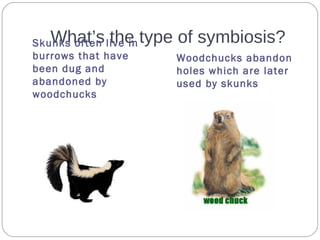
What’s the type of symbiosis?Skunks often live in
burrows that have
been dug and
abandoned by
woodchucks
Woodchucks abandon
holes which are later
used by skunks
Now You Try!

Chapter 3 good buddies! final

  • 1.
  • 2.
    Symbiosis The relationship betweentwo organisms of different species that benefits one or both organisms.
  • 3.
    3 Types ofSymbiosis Mutualism- a symbiotic relationship that benefits both organisms involved. ( +,+) Commensalism- a symbiotic relationship that benefits one organism and the other is not helped or harmed. (+,0) Parasitism- a symbiotic relationship that benefits one organism and the other is harmed. (+,-)
  • 4.
    What’s the typeof symbiosis?Skunk cabbage plants attract flies in cool weather by making heat and provide food to the flies that come. Flies move from one Skunk cabbage plant to the next feeding and transferring pollen as they go.
  • 5.
    What’s the typeof symbiosis?Red-chested cuckoo birds find an unattended robin nest, push out the robin eggs, and lay their eggs in the robin’s nest, and leave. Robin babies die and robin parents feed and take care of the cuckoo babies.
  • 6.
    What’s the typeof symbiosis?Mycorrhizal fungi invade and live in or among roots cells of many plants. The plant provides nutrients to the fungi. The Mycorrhizal fungi help the host plant absorb inorganic nitrogen and phosphorus from the soil. Some mycorrhizal fungi also secrete antibiotics which may help protect their host from invasion by parasitic fungi and bacteria.
  • 7.
    What’s the typeof symbiosis? Remora use suckers to attach temporarily to large marine animals such as sharks, manta rays, whales, turtles, or large fish. The shark provides free transportation, protection, and dropped food and feces which the remora feeds on. The host is not injured.
  • 8.
    What’s the typeof symbiosis? Athlete’s Foot fungus lives on the skin of humans and feeds on keratin, a protein. Humans have itchy, cracked skin which can become infected.
  • 9.
    What’s the typeof symbiosis? Snapping shrimp have poor vision and depend on their goby fish roommate to give the danger signal when predators come and guide them back home if they wander too far. Goby fish who don't have a place to hide are quickly eaten. They find a snapping shrimp roommate who digs a hole for both to live in. http://www.youtube.com/watch?v=vR9X3gFTpL0&feature=
  • 10.
    What’s the typeof symbiosis?Hermit crabs find shells left by snails that have died and move in. Snails die and leave behind their shells.
  • 11.
    What’s the typeof symbiosis?Honeyguide birds find a bee hive, then chatter loudly to attract the Honey badger. They fly toward the hivemaking sure the badger is following. Upon arrival at the bee hive, the badger tears open the hive and feasts on the honey. Then the Honeyguide bird feeds on the remaining wax and larvae.
  • 12.
    What’s the typeof symbiosis?Fungi form lichens by living in a close relationship with an algae. The fungus provides a protective home for the algae, and gathers mineral nutrients from rainwater and from dissolving the rock underneath The algae gathers energy from the sun using photosynthesis. Both organisms share their nutrients with each other
  • 13.
    What’s the typeof symbiosis? Kudzu vines grow by climbing, and wrapping around trees. Kudzu covered trees die as they are smothered and break under the weight of the growing Kudzu vines
  • 14.
    What’s the typeof symbiosis? Human intestine provides food for bacteria that live inside digestive system Beneficial bacterial live in the intestine of humans and help digest cellulose from plants which humans don’t have the enzymes to break down.
  • 15.
    What’s the typeof symbiosis?Gall insect lays their eggs in the leaves or branches of Oak trees causing a lump to form. Oak trees provide shelter and food to the insect larvae, but are not harmed.
  • 16.
    What’s the typeof symbiosis? Humming birds feed on nectar from flowers. Flowers are pollinated by hummingbirds as they move from flower to flower.
  • 17.
    What’s the typeof symbiosis?Tick lives on dog and feeds on its blood and tissue. Dog gets skin irritation and can pick up diseases carried by tick.
  • 18.
    What’s the typeof symbiosis?Skunks often live in burrows that have been dug and abandoned by woodchucks Woodchucks abandon holes which are later used by skunks
  • 19.

Editor's Notes