BIOLOGY
LESSON
Symbiosis
■ It is a relationship between members of different
species, in which they live together for longer or
shorter periods of time.
Parasitism
■ It is a type of symbiosis between members of
different species, in which smaller partner
(parasite) derives food and shelter from the body
of larger partner (host) and, in turn, harms it.
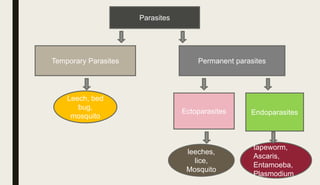
Parasites
Temporary Parasites Permanent parasites
Ectoparasites Endoparasites
Leech, bed
bug,
mosquito
leeches,
lice,
Mosquito
tapeworm,
Ascaris,
Entamoeba,
Plasmodium
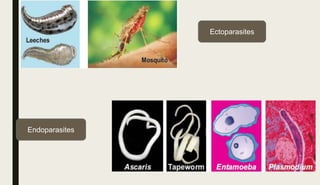
Ectoparasites
Endoparasites
Mutualism
■ In this type of symbiotic interaction, both partners
(of different species) get benefit and neither is
harmed.
For example, Termites eat wood but are not able to
digest it. A protozoan lives in its intestine. It
secretes ‘cellulase’ enzyme to digest the cellulose
of wood. In return, the termite provides food and
shelter to the protozoan
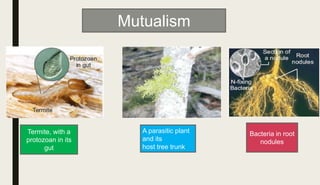
A parasitic plant
and its
host tree trunk
Termite, with a
protozoan in its
gut
Bacteria in root
nodules
Mutualism
Commensalism
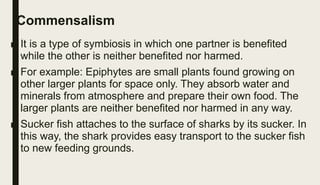
■ It is a type of symbiosis in which one partner is benefited
while the other is neither benefited nor harmed.
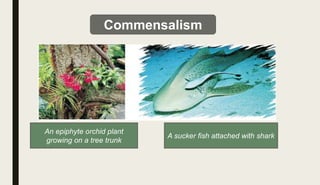
■ For example: Epiphytes are small plants found growing on
other larger plants for space only. They absorb water and
minerals from atmosphere and prepare their own food. The
larger plants are neither benefited nor harmed in any way.
■ Sucker fish attaches to the surface of sharks by its sucker. In
this way, the shark provides easy transport to the sucker fish
to new feeding grounds.
An epiphyte orchid plant
growing on a tree trunk
A sucker fish attached with shark
Commensalism
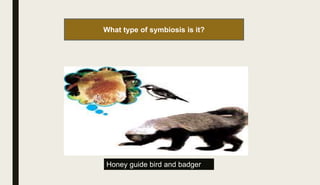
What type of symbiosis is it?
Honey guide bird and badger

Symbosis

  • 1.
  • 2.
    Symbiosis ■ It isa relationship between members of different species, in which they live together for longer or shorter periods of time.
  • 3.
    Parasitism ■ It isa type of symbiosis between members of different species, in which smaller partner (parasite) derives food and shelter from the body of larger partner (host) and, in turn, harms it.
  • 4.
    Parasites Temporary Parasites Permanentparasites Ectoparasites Endoparasites Leech, bed bug, mosquito leeches, lice, Mosquito tapeworm, Ascaris, Entamoeba, Plasmodium
  • 5.
  • 6.
    Mutualism ■ In thistype of symbiotic interaction, both partners (of different species) get benefit and neither is harmed. For example, Termites eat wood but are not able to digest it. A protozoan lives in its intestine. It secretes ‘cellulase’ enzyme to digest the cellulose of wood. In return, the termite provides food and shelter to the protozoan
  • 7.
    A parasitic plant andits host tree trunk Termite, with a protozoan in its gut Bacteria in root nodules Mutualism
  • 8.
    Commensalism ■ It isa type of symbiosis in which one partner is benefited while the other is neither benefited nor harmed. ■ For example: Epiphytes are small plants found growing on other larger plants for space only. They absorb water and minerals from atmosphere and prepare their own food. The larger plants are neither benefited nor harmed in any way. ■ Sucker fish attaches to the surface of sharks by its sucker. In this way, the shark provides easy transport to the sucker fish to new feeding grounds.
  • 9.
    An epiphyte orchidplant growing on a tree trunk A sucker fish attached with shark Commensalism
  • 10.
    What type ofsymbiosis is it? Honey guide bird and badger