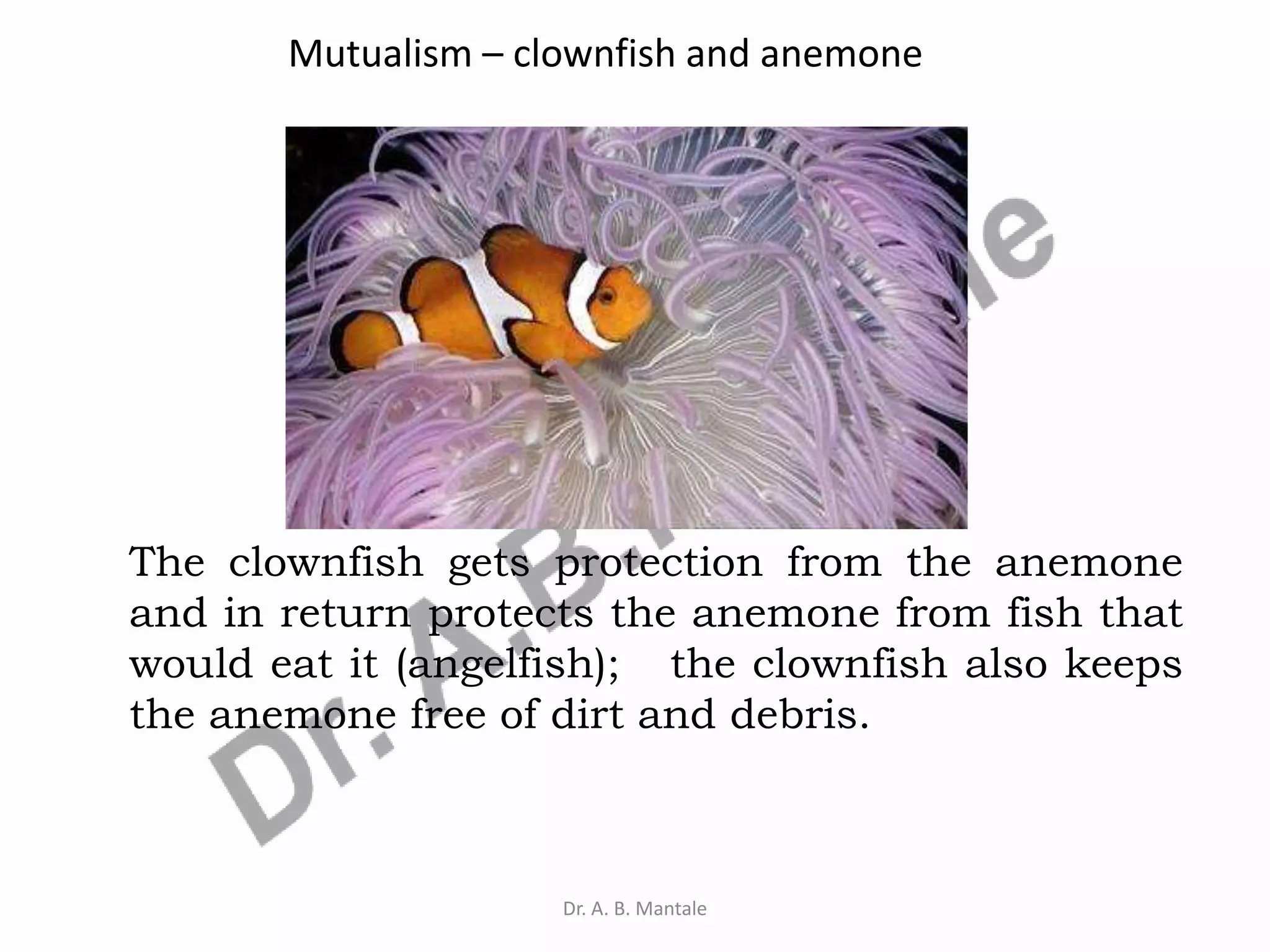
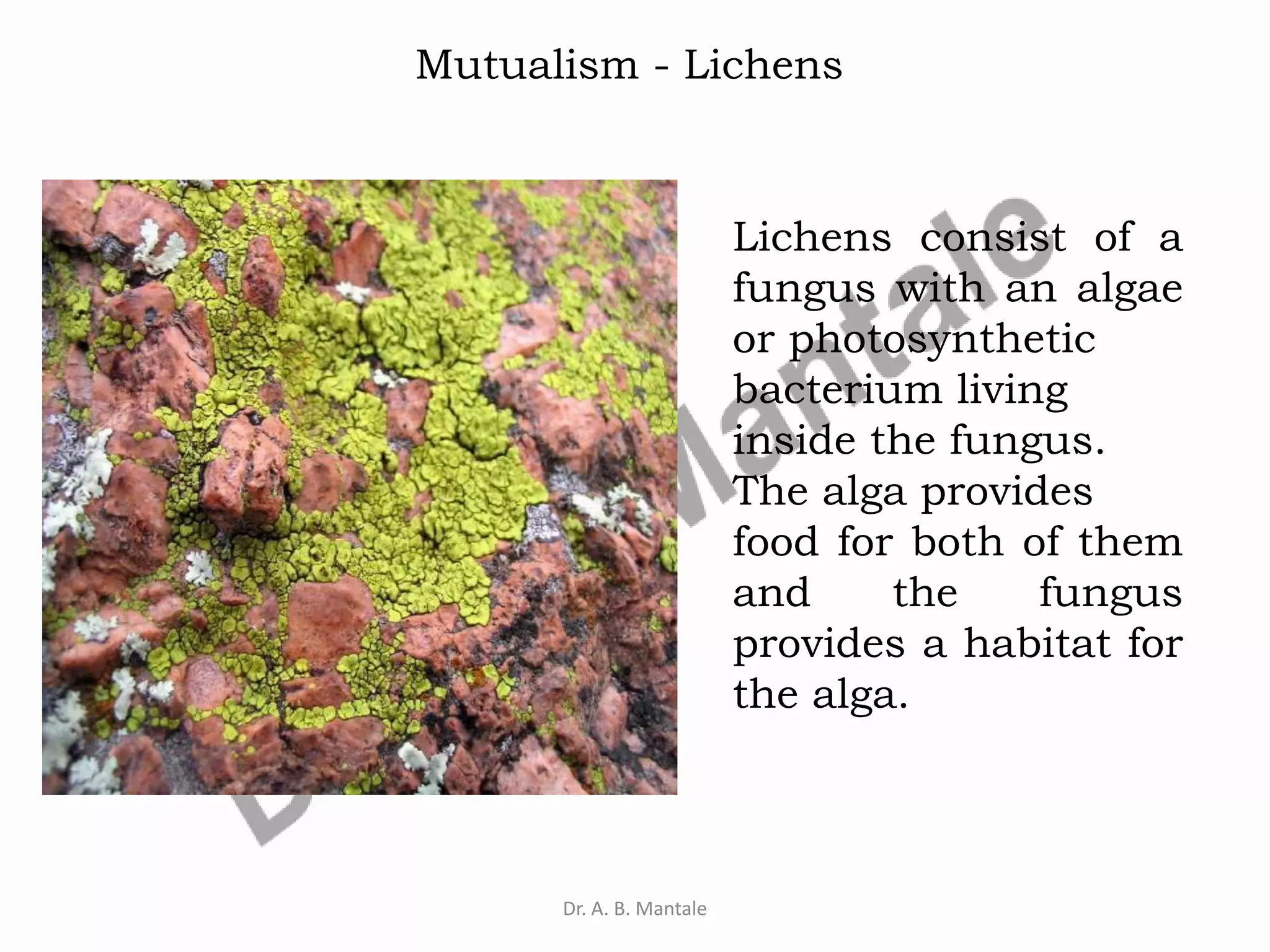
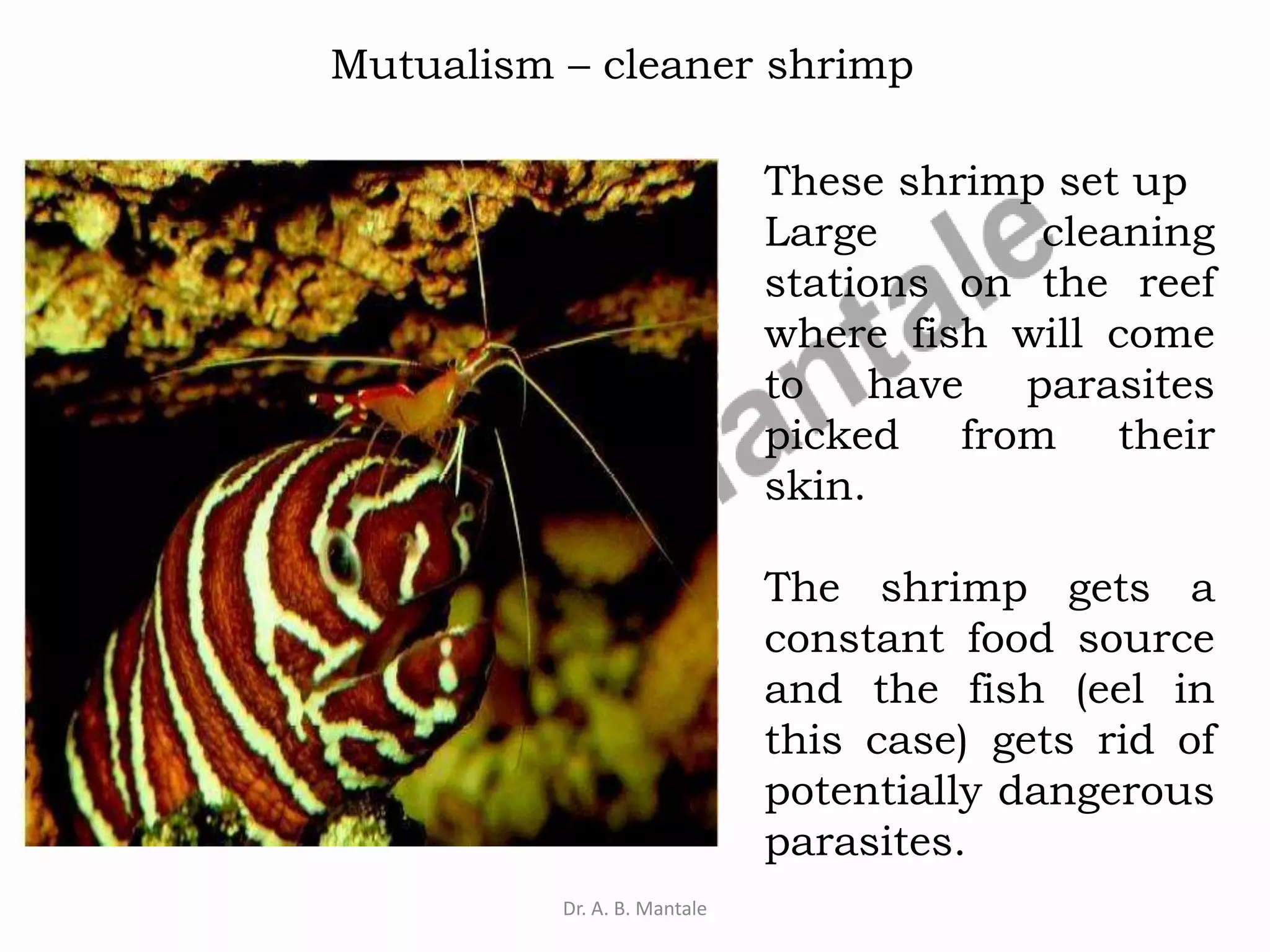
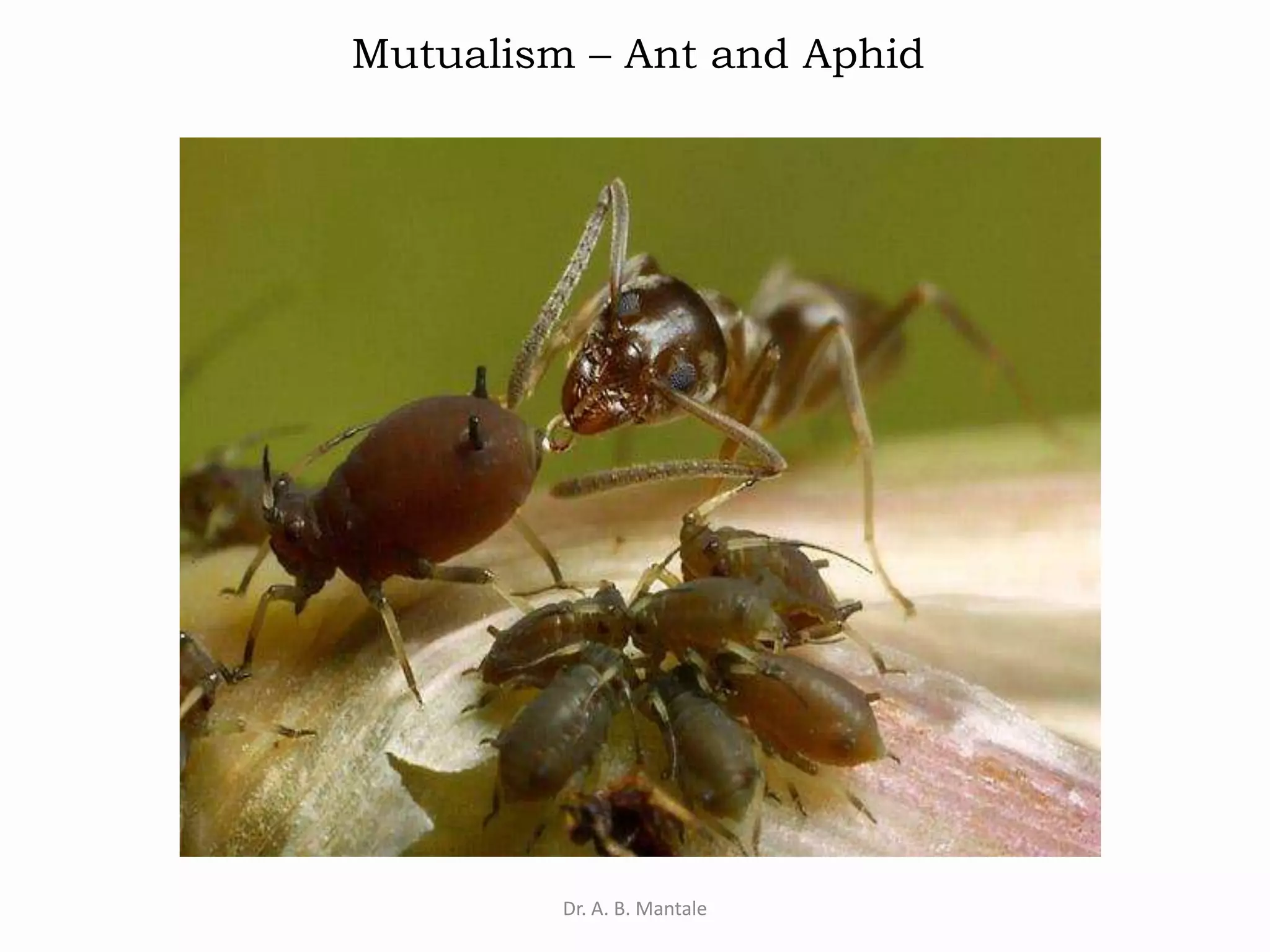
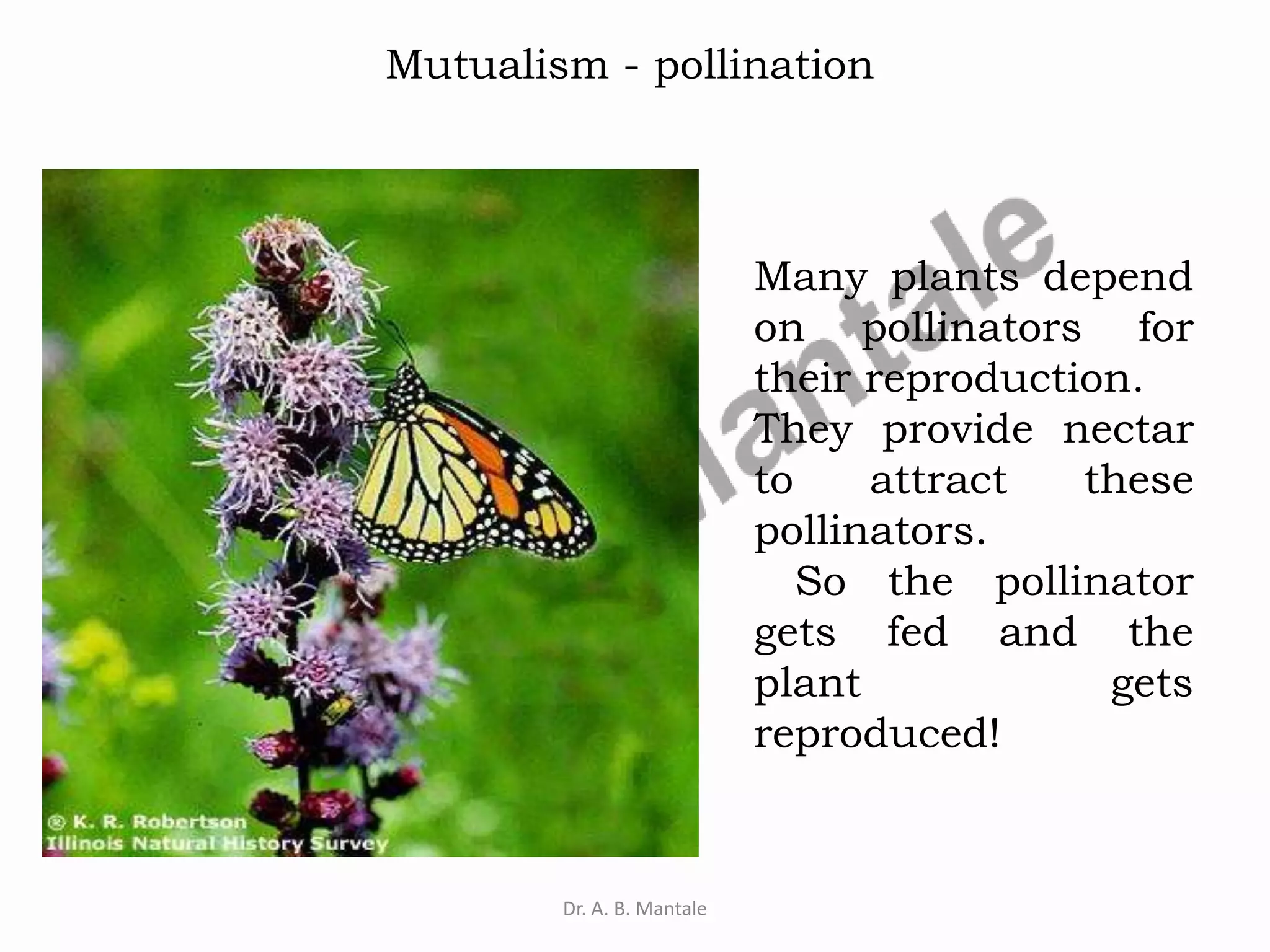
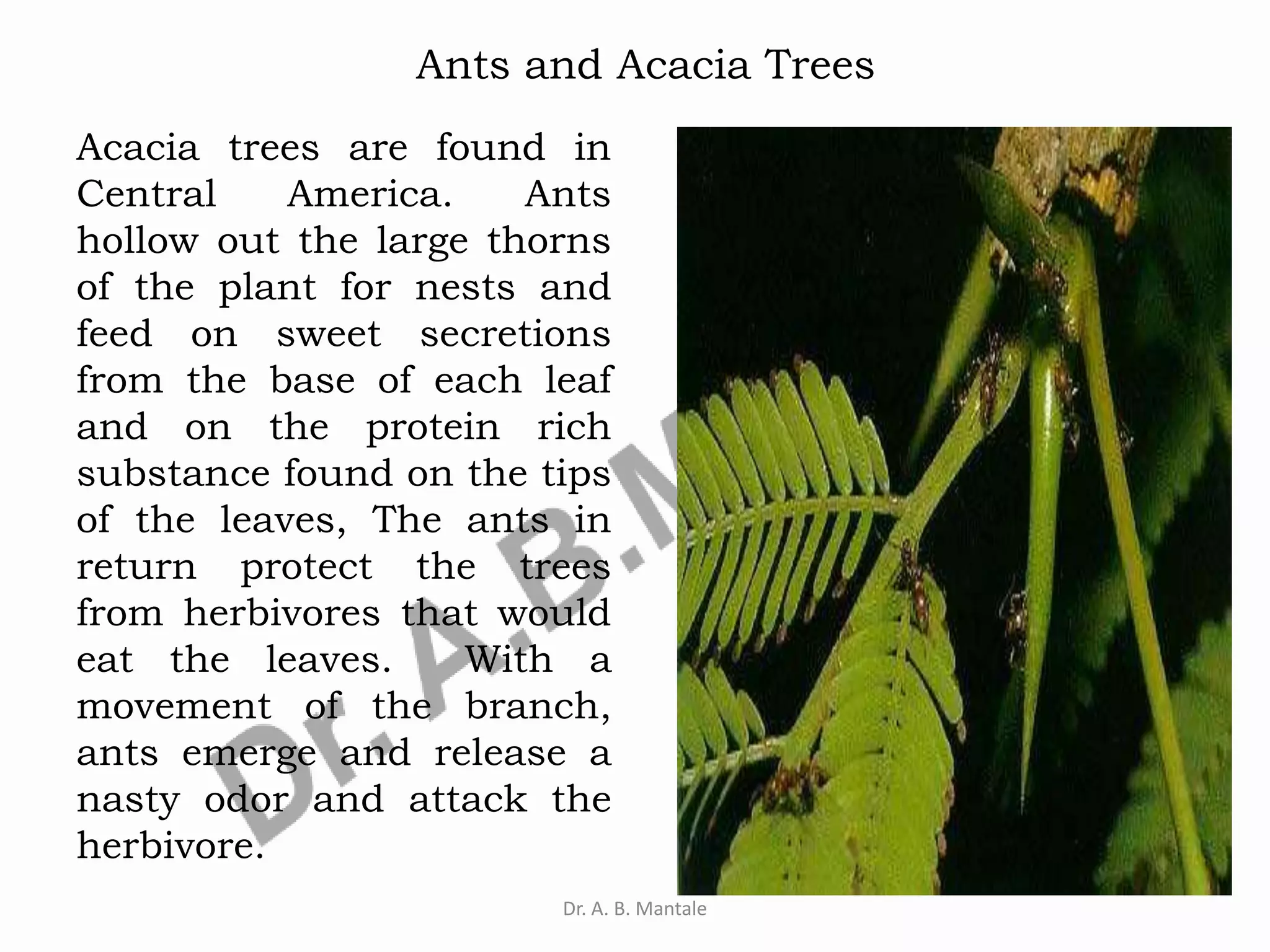
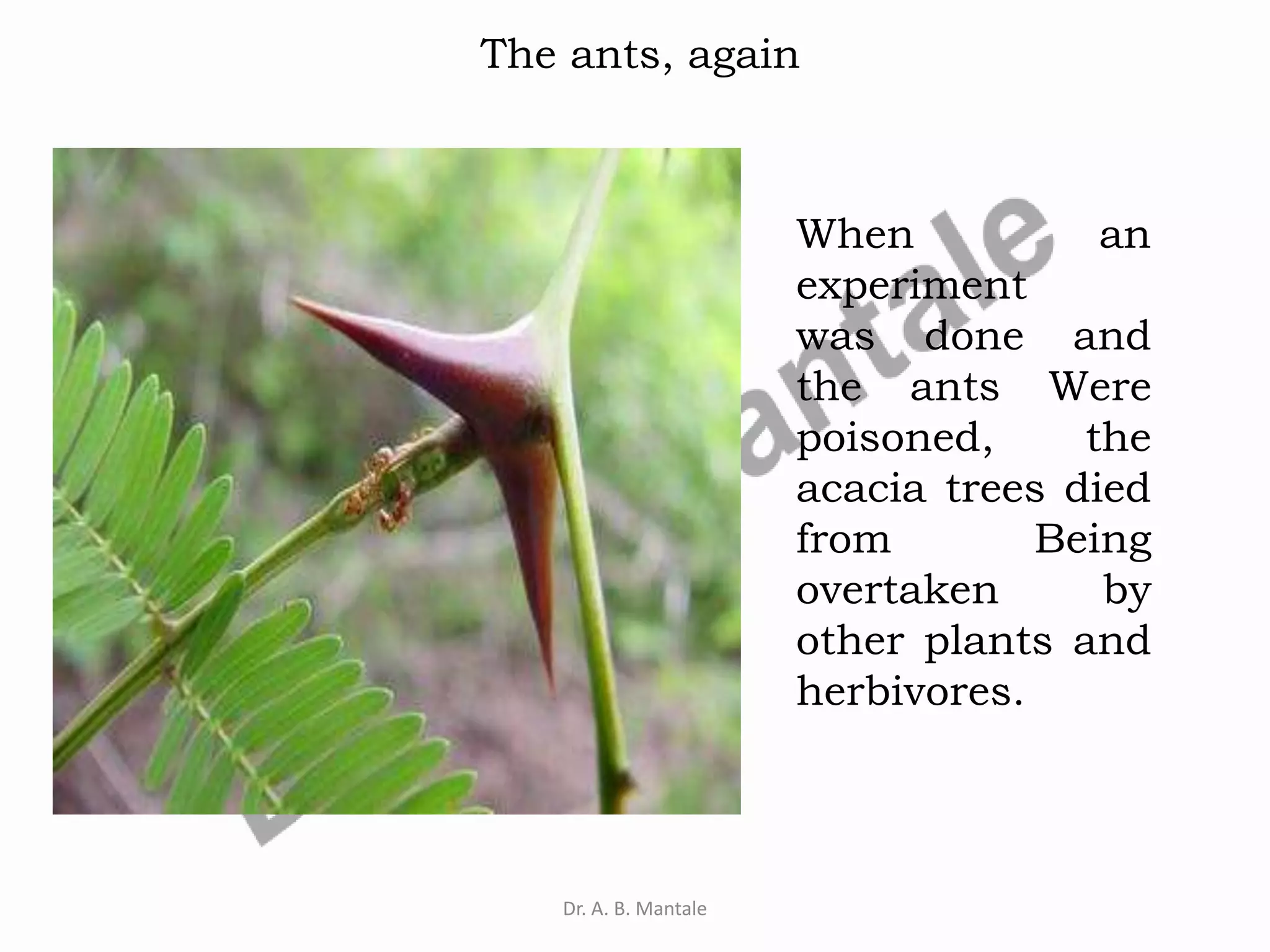
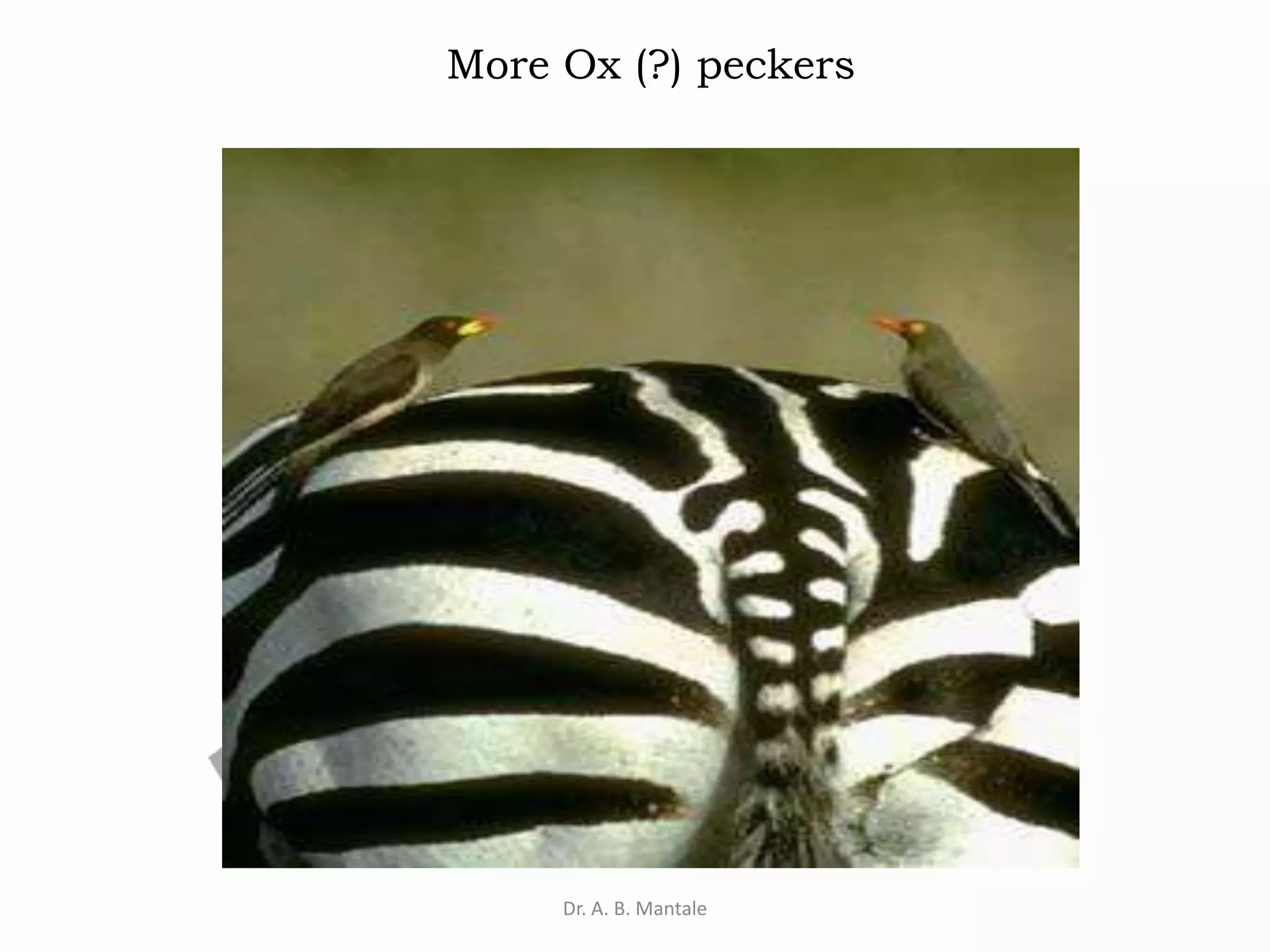
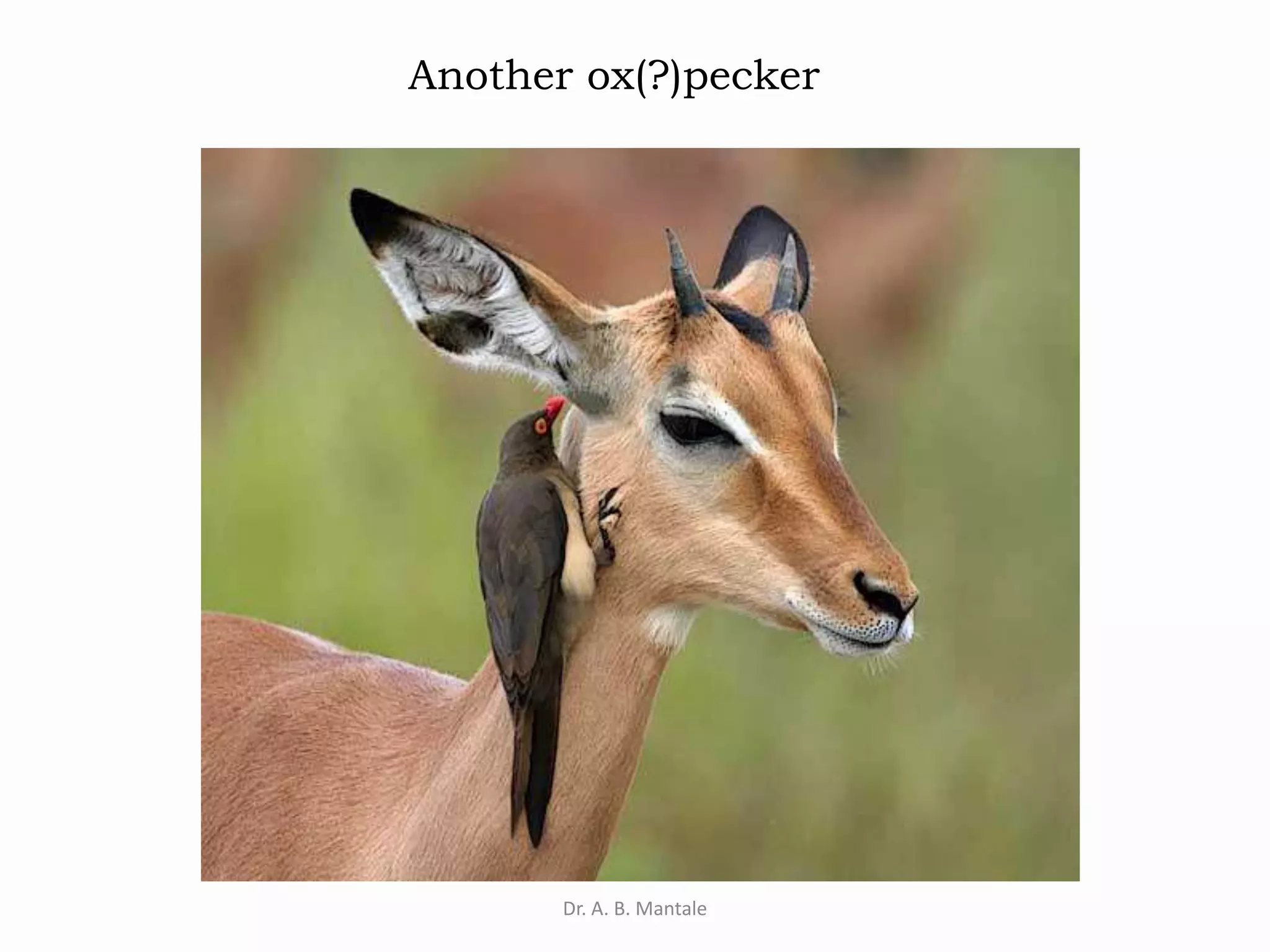
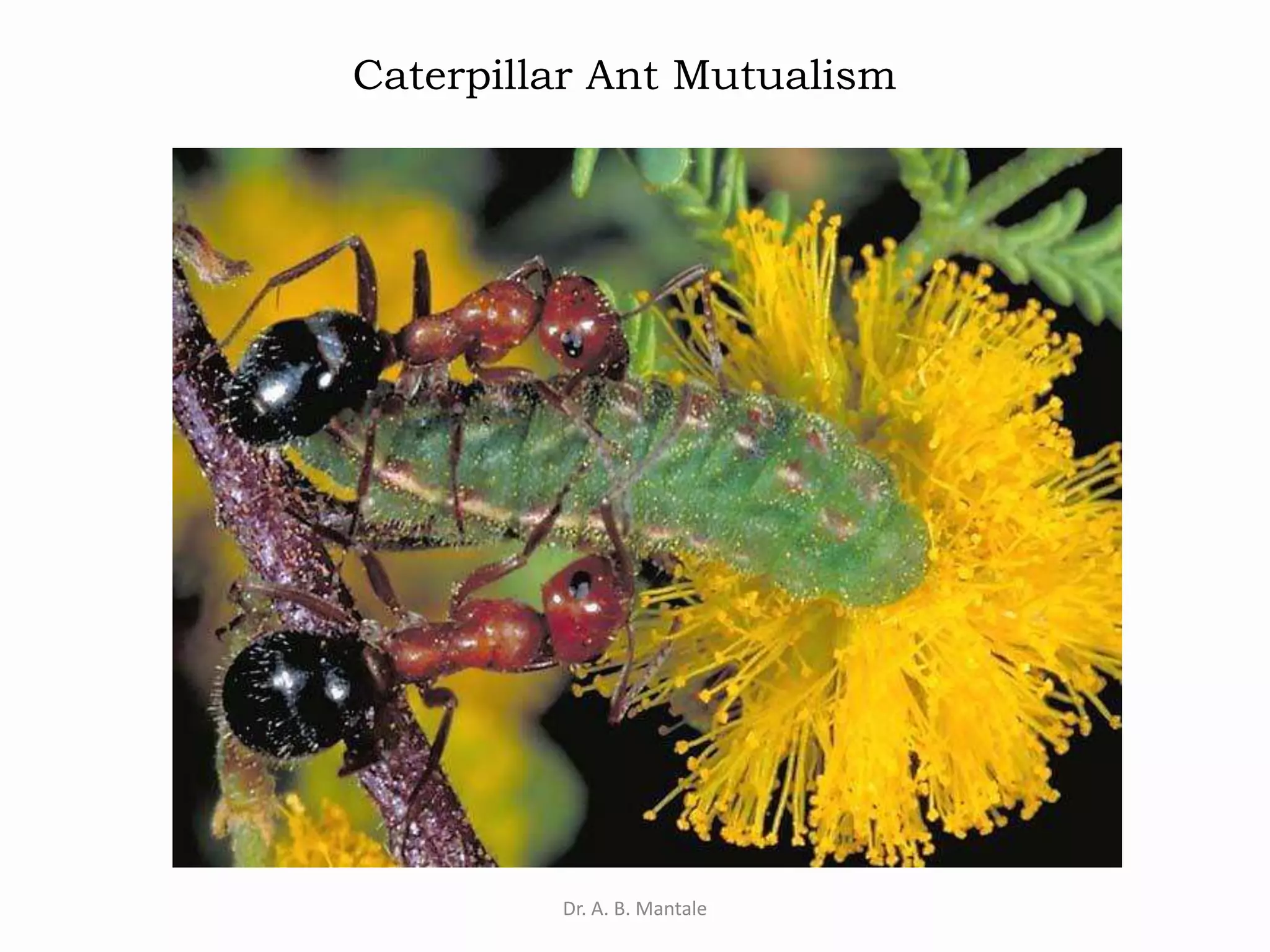
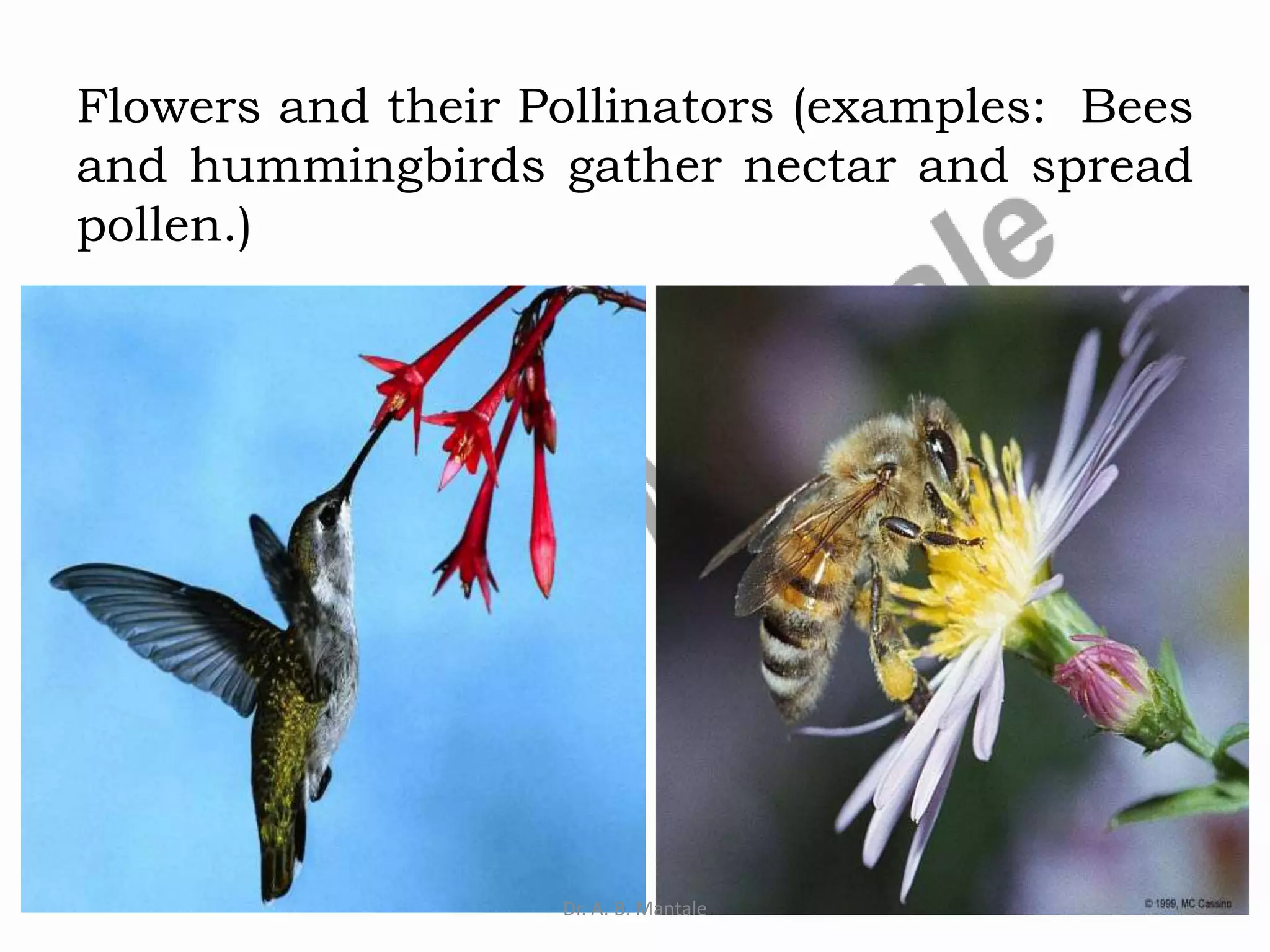
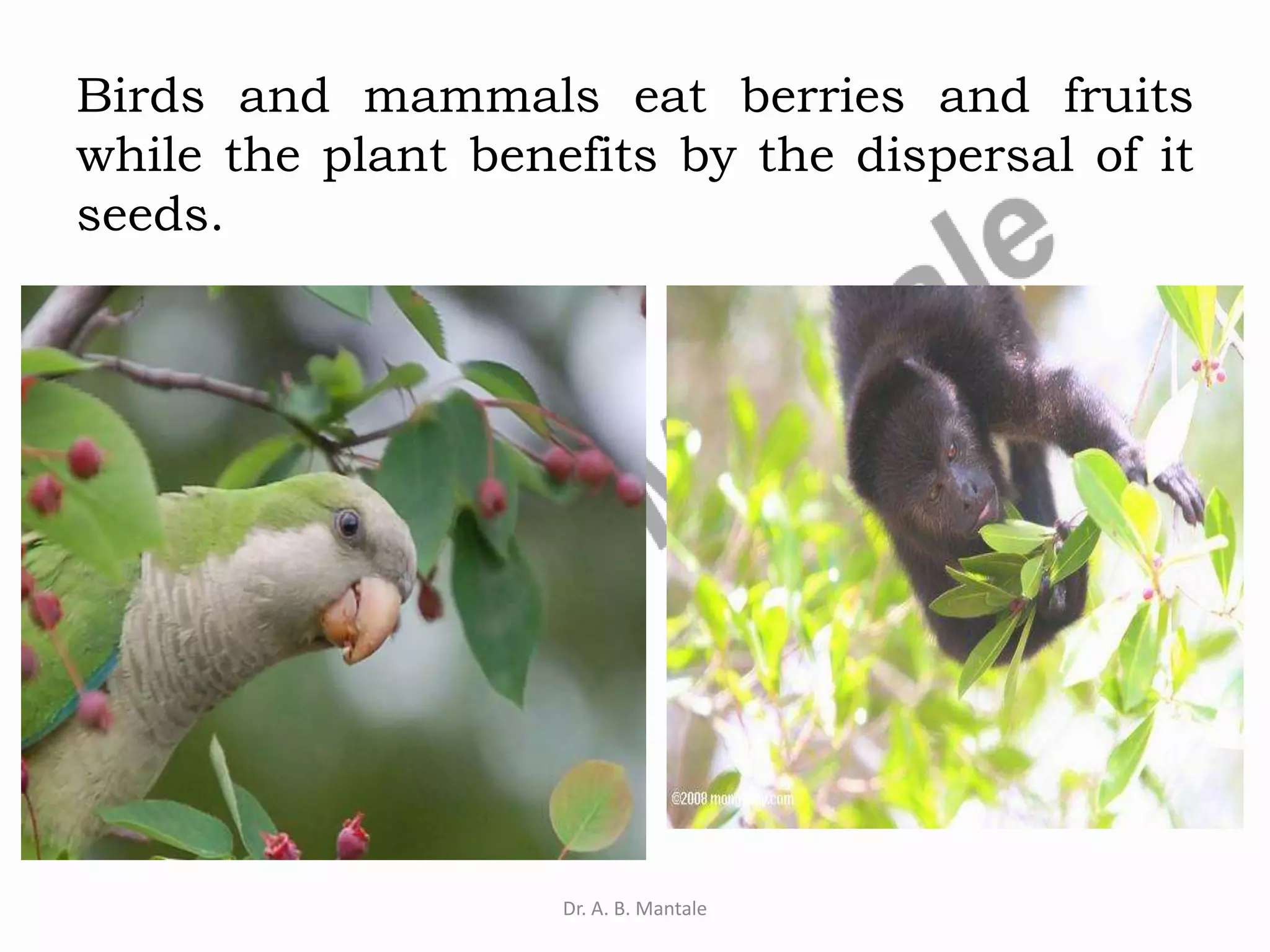
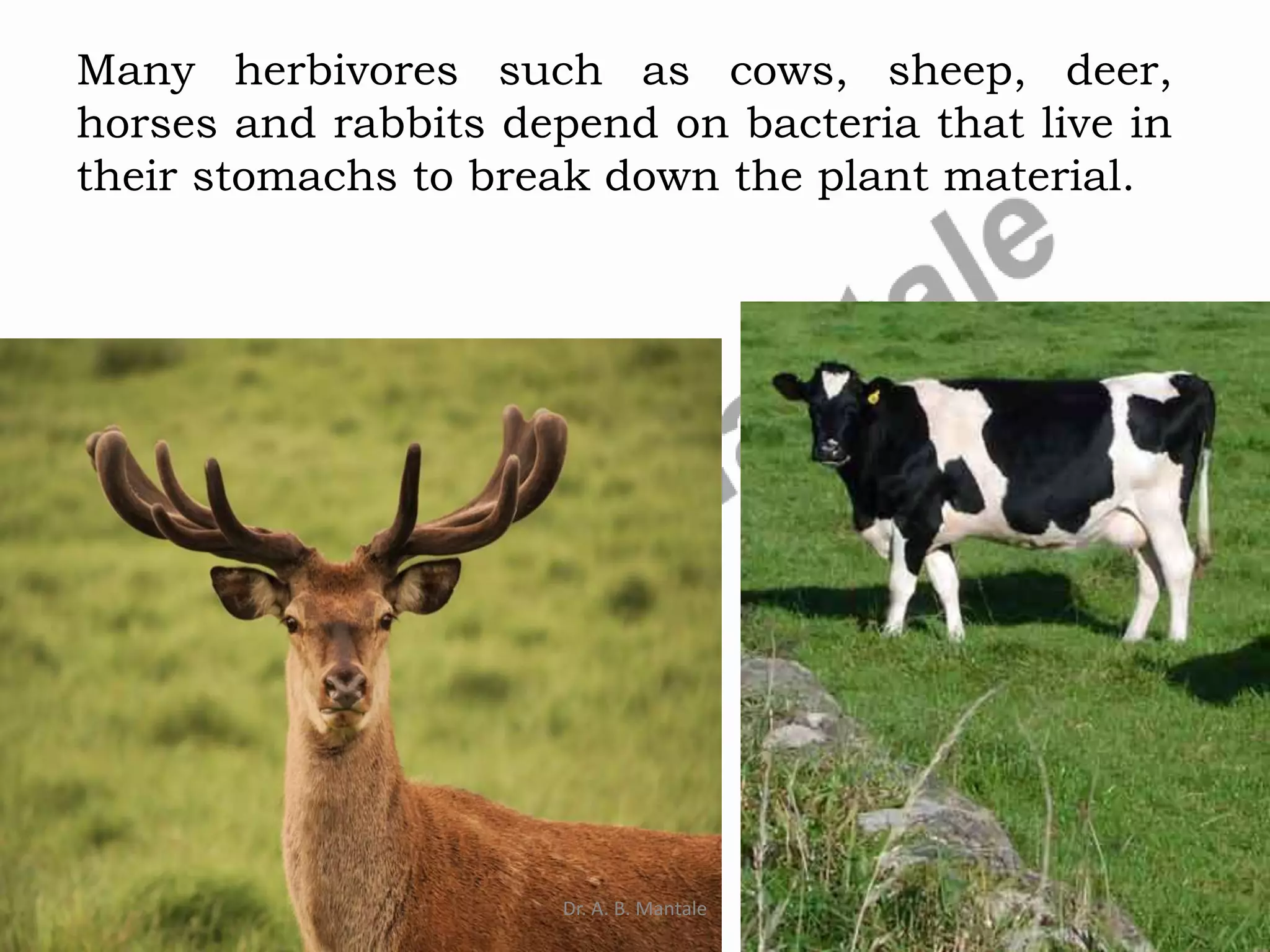
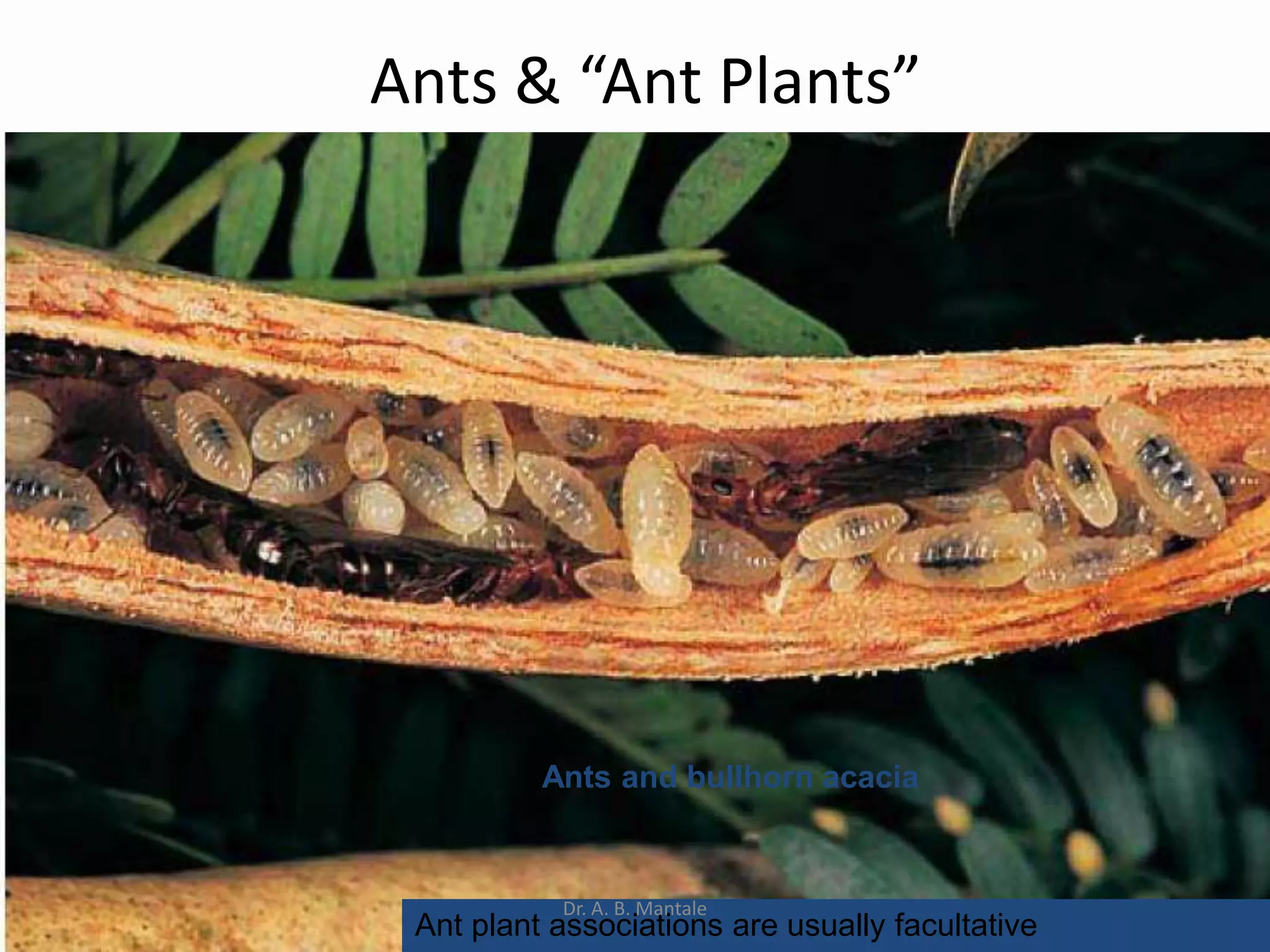
The document discusses various examples of mutualistic relationships in nature. Mutualism is a positive interspecific relationship where both species benefit. Examples provided include plants and their pollinators, lichens consisting of algae and fungi, cleaner shrimp that remove parasites from fish, ants that protect aphids and collect their honeydew, and nitrogen-fixing bacteria within plant nodules. Many mutualisms involve one organism providing a service like nutrition, protection, or dispersal while receiving shelter or nutrients in return. Mutualisms can be facultative, where the relationship is not strictly required for survival, or obligate, where one or both species depend entirely on the other.