Downloaded 45 times
![SYLLABIC CONSONANTS
- are [m], [n], [ŋ], [l], [r]
- usually similar to vowels in duration, and can
carry tone
- we indicate consonant sounds syllabic by
placing a small vertical line beneath the consonant
symbol
- any unmarked consonant sound is assumed to
be non syllabic](https://image.slidesharecdn.com/syllabics-140824030734-phpapp02/75/Syllabics-8-2048.jpg)
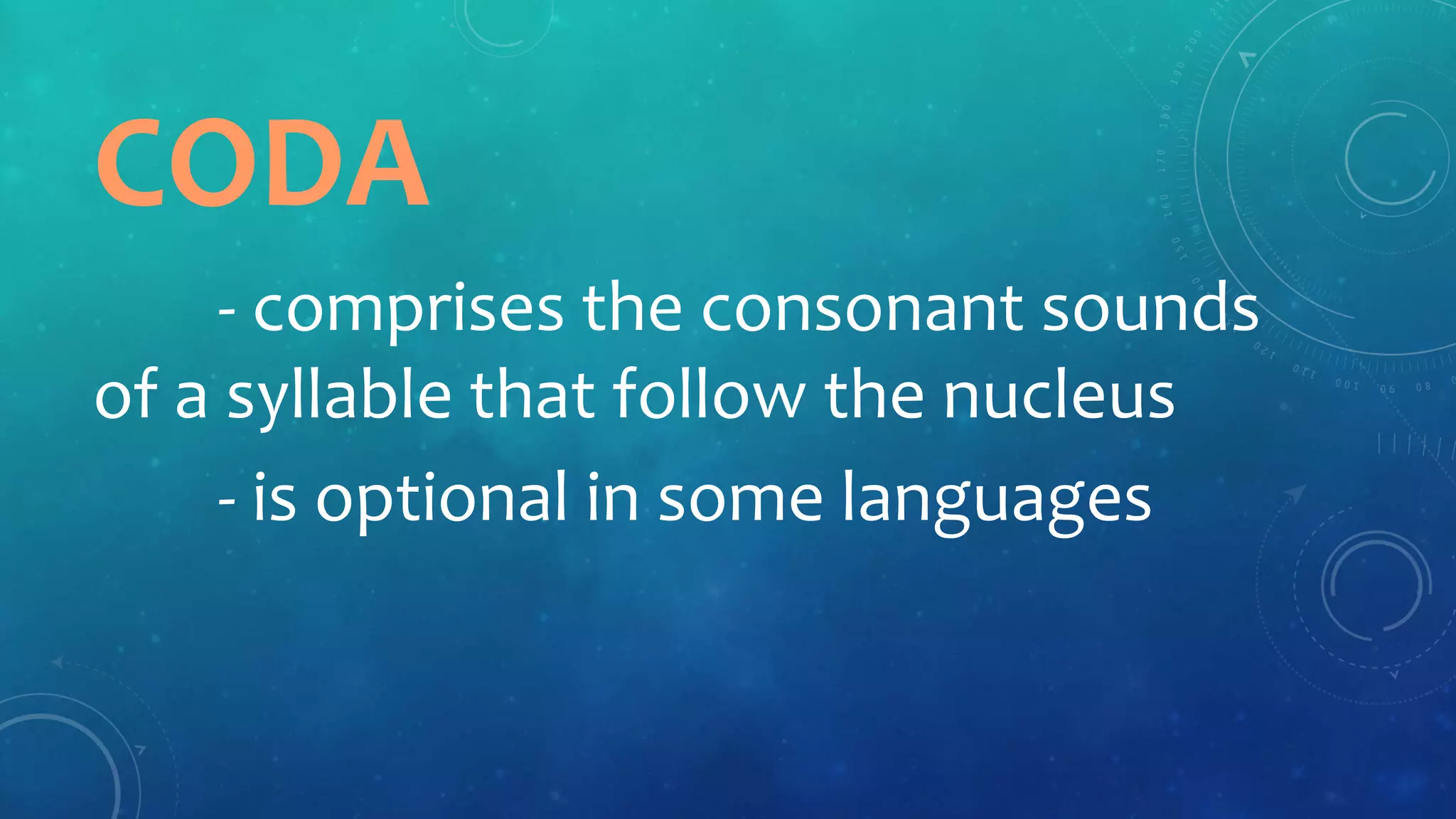

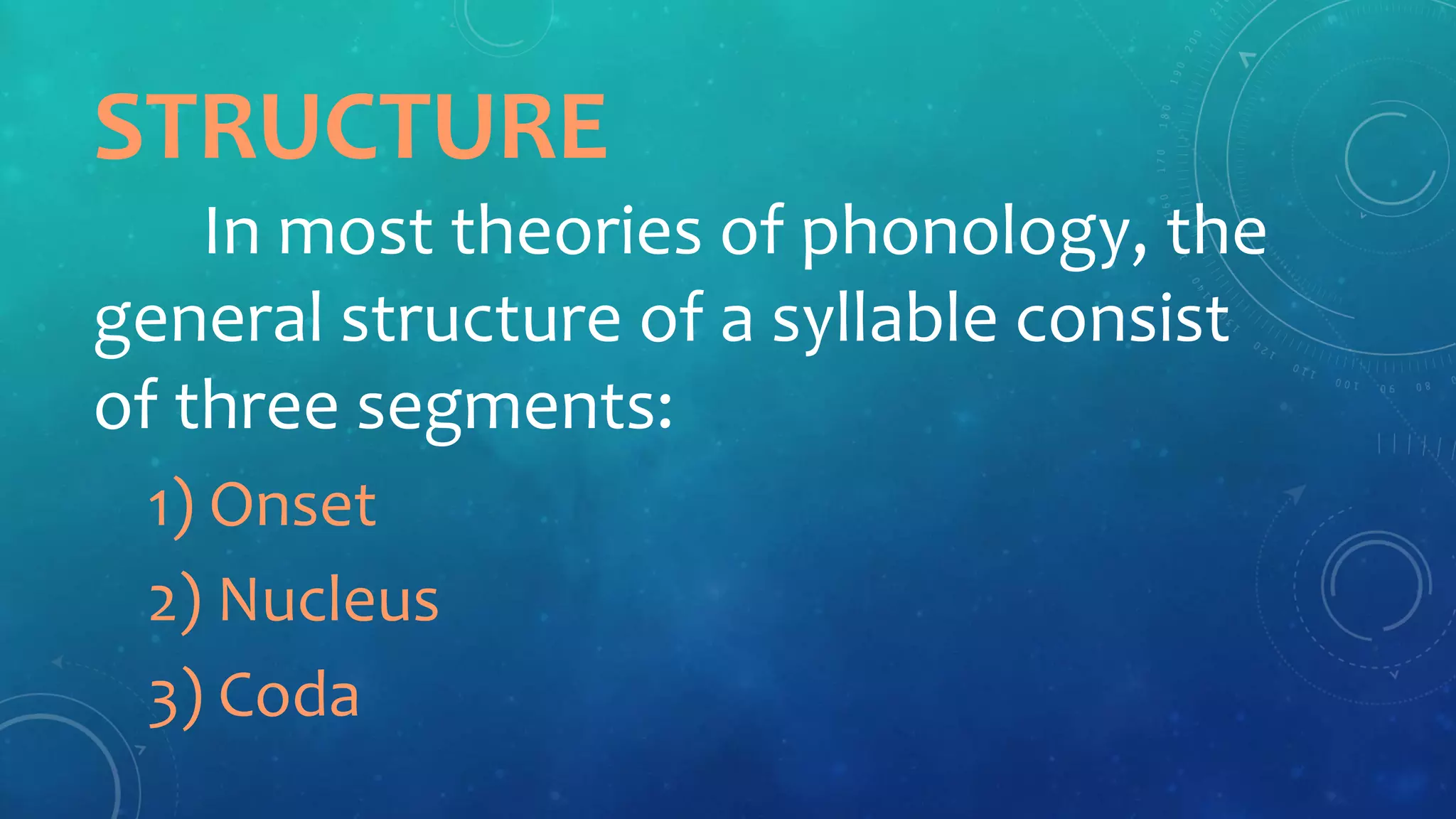
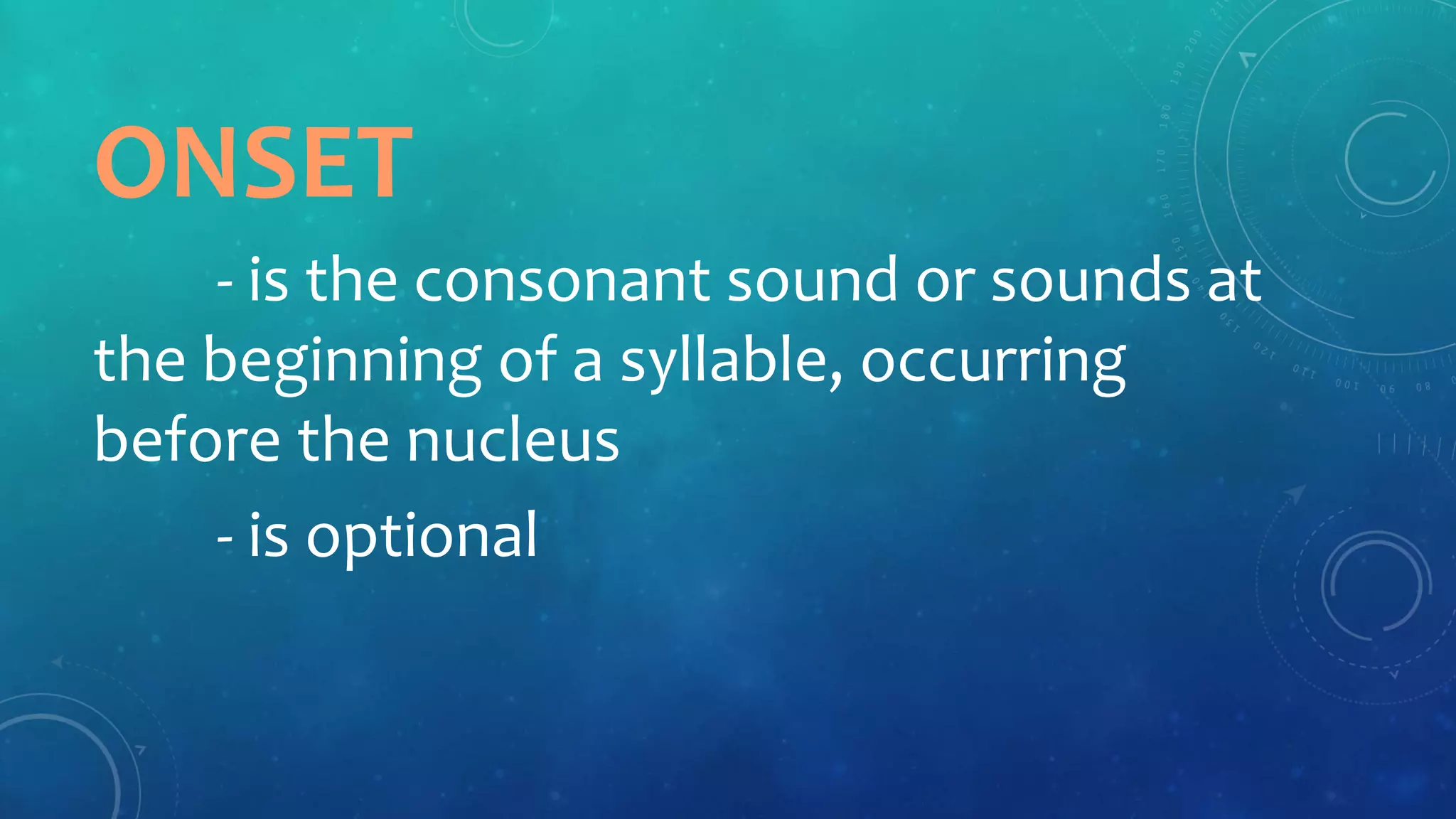
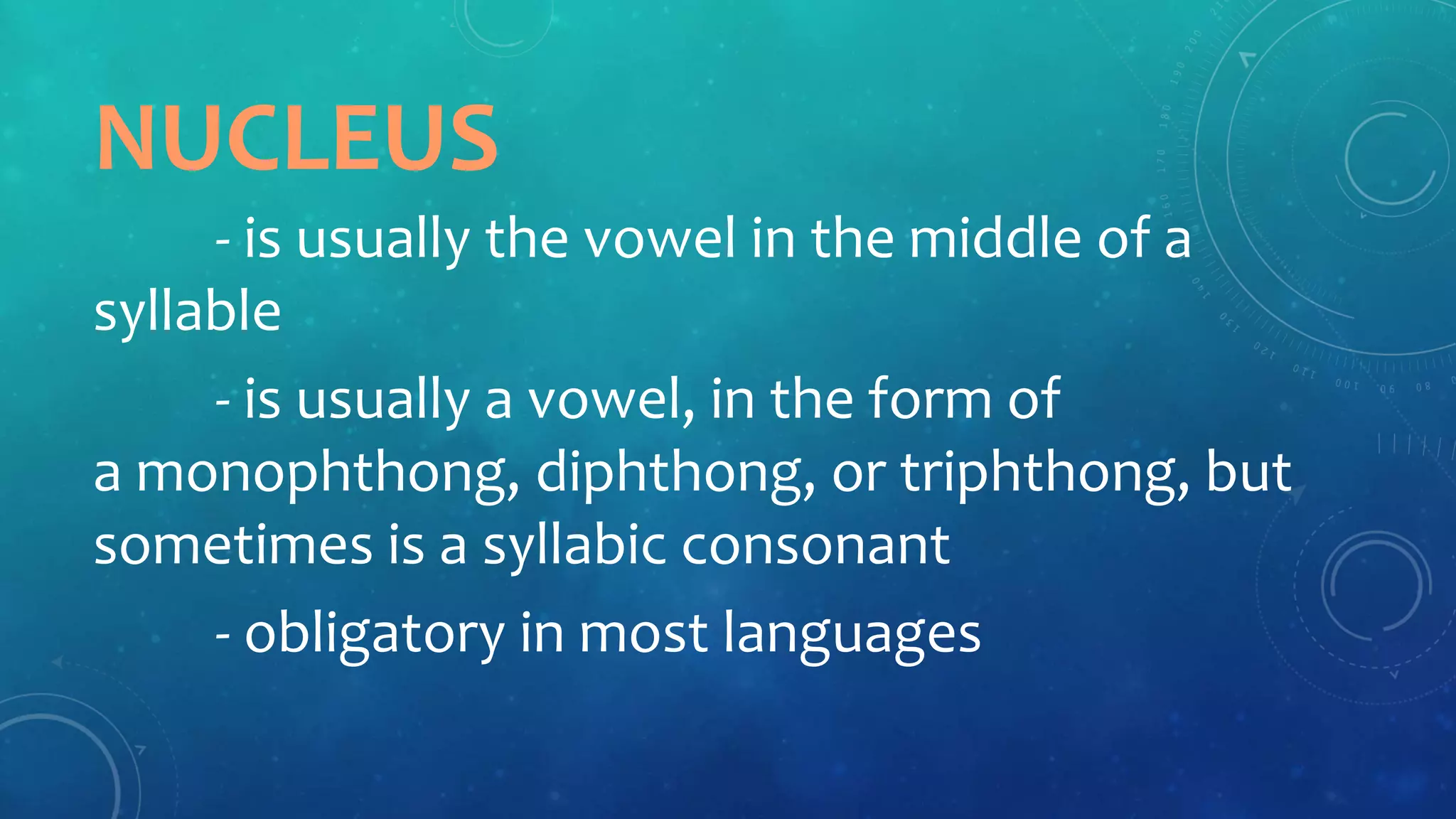
The document discusses the structure of syllables, highlighting components such as the onset, nucleus, and coda. It explains that the nucleus is typically a vowel, while syllabic consonants can also serve as the nucleus. The text outlines the roles of these elements in phonology and categorizes consonants based on their syllabic properties.


