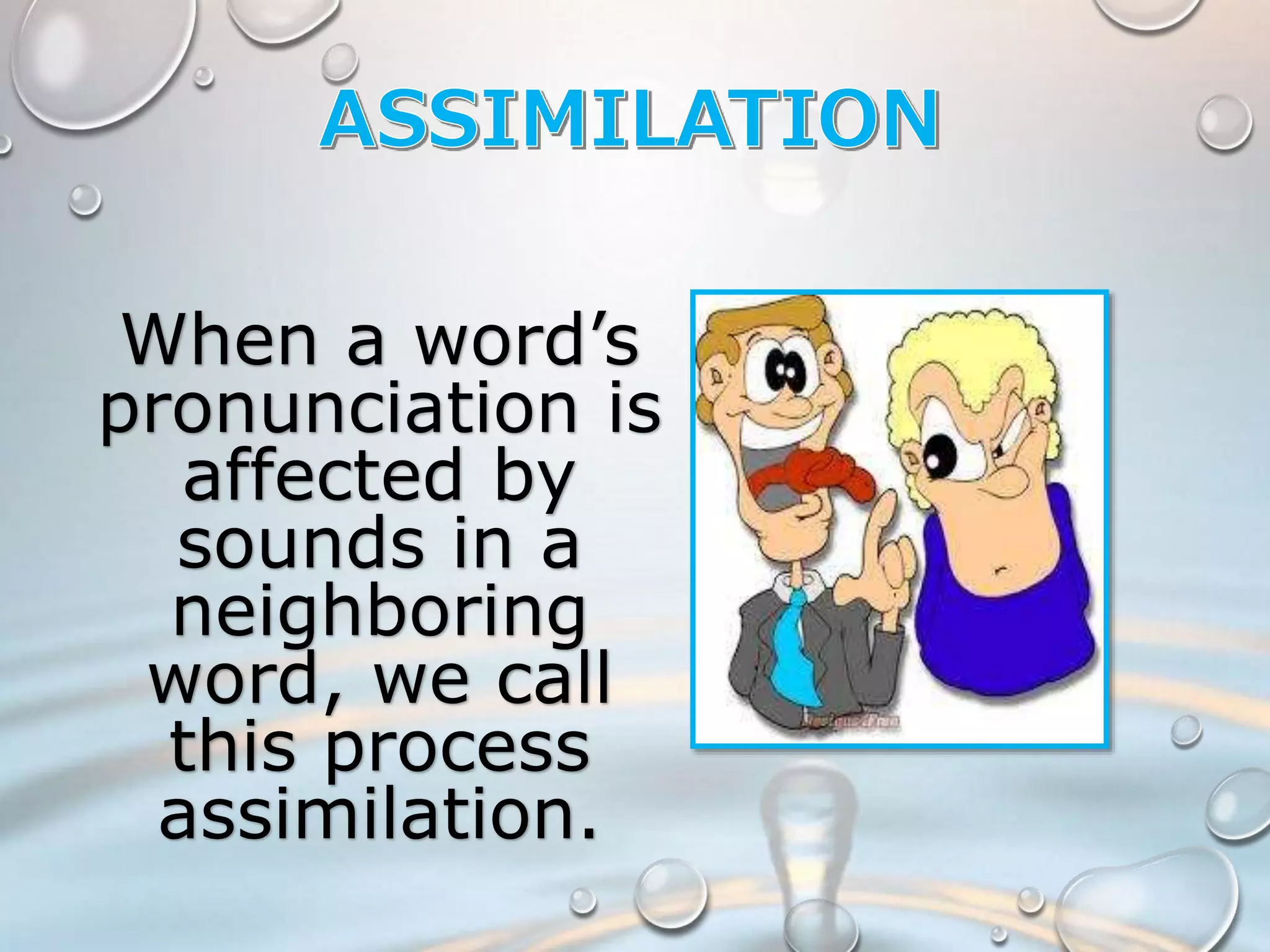
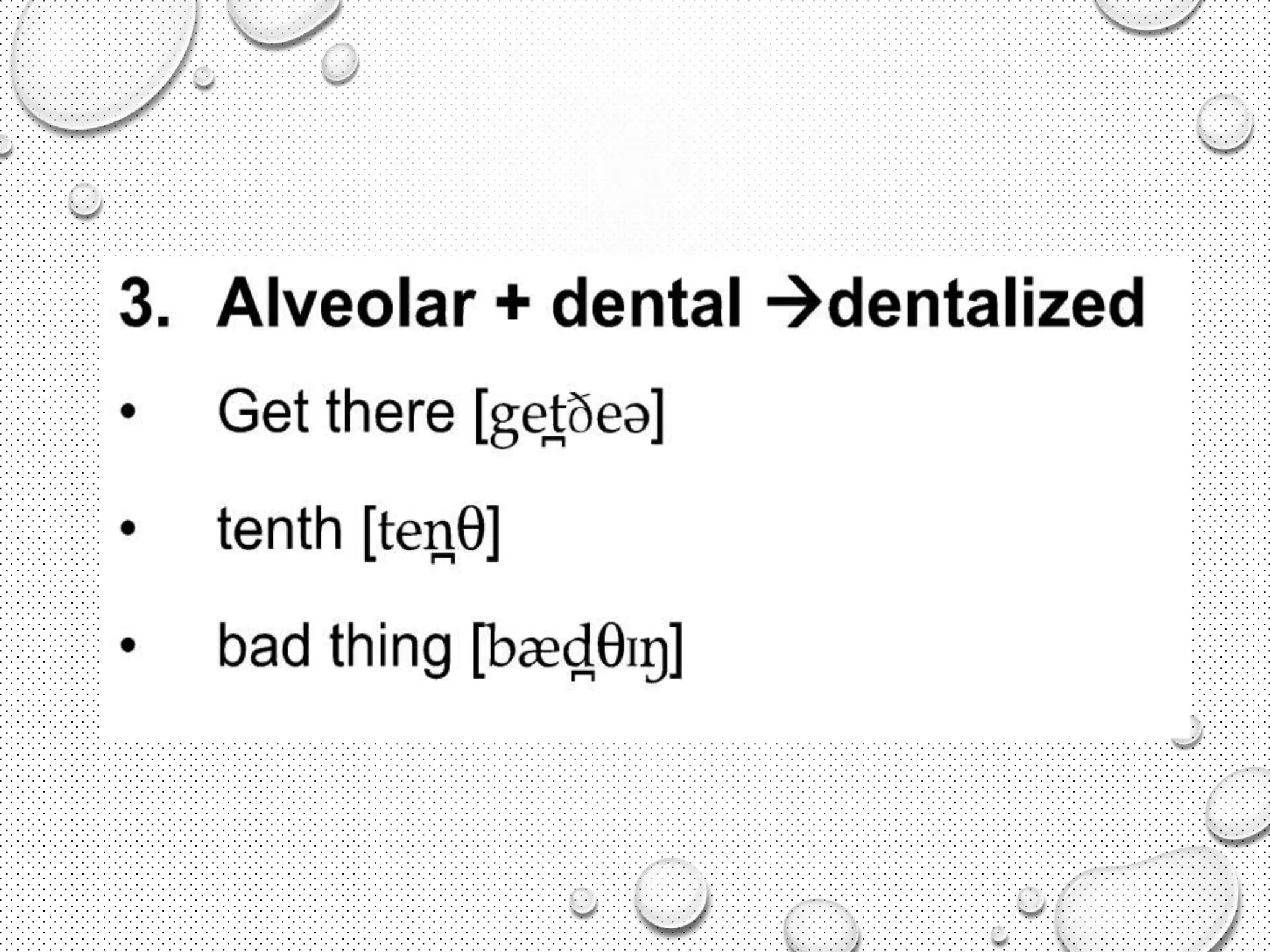
When a word’s 
pronunciation is 
affected by 
sounds in a 
neighboring 
word, we call 
this process 
assimilation.
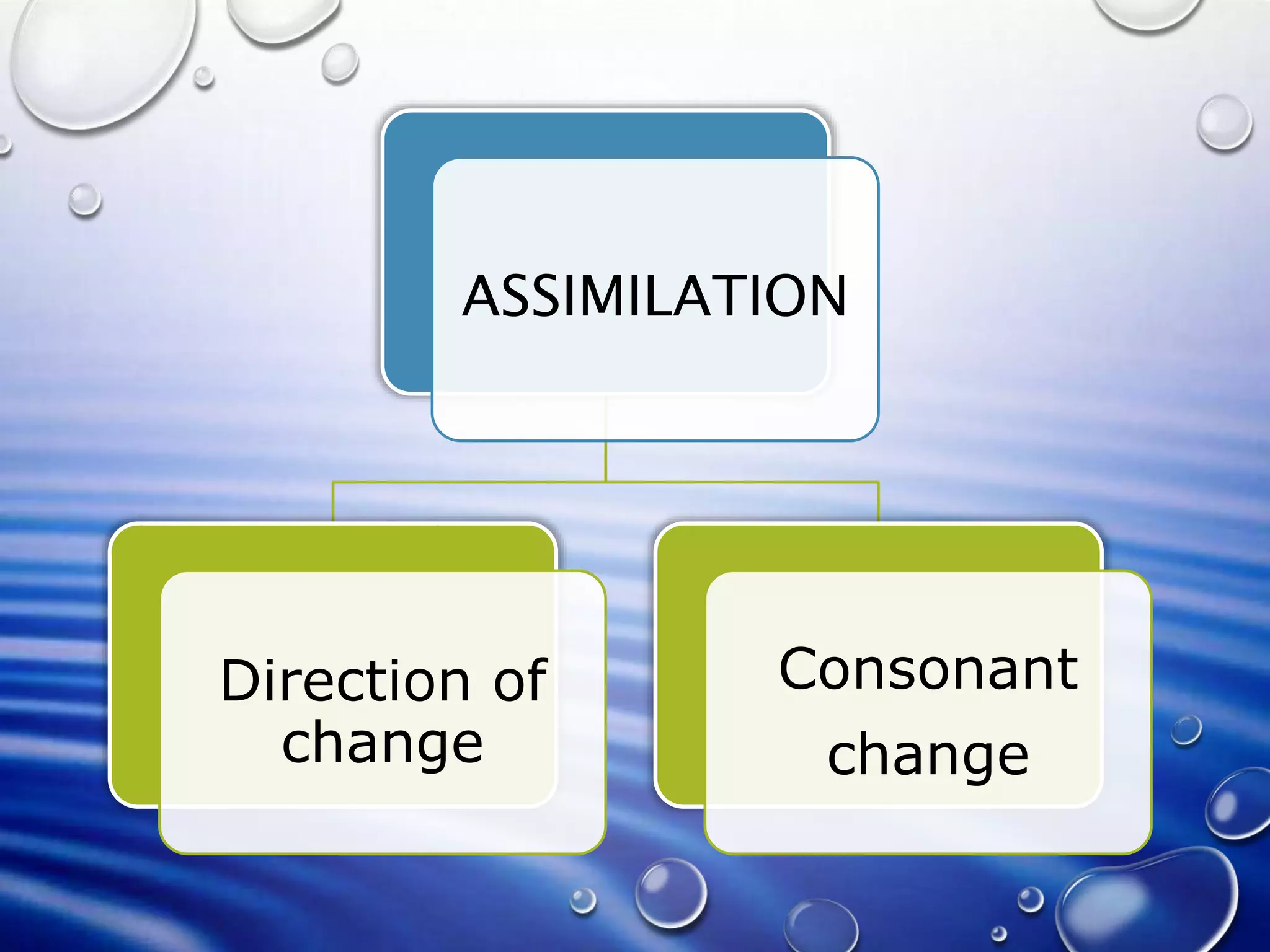
ASSIMILATION 
Direction of 
change 
Consonant 
change
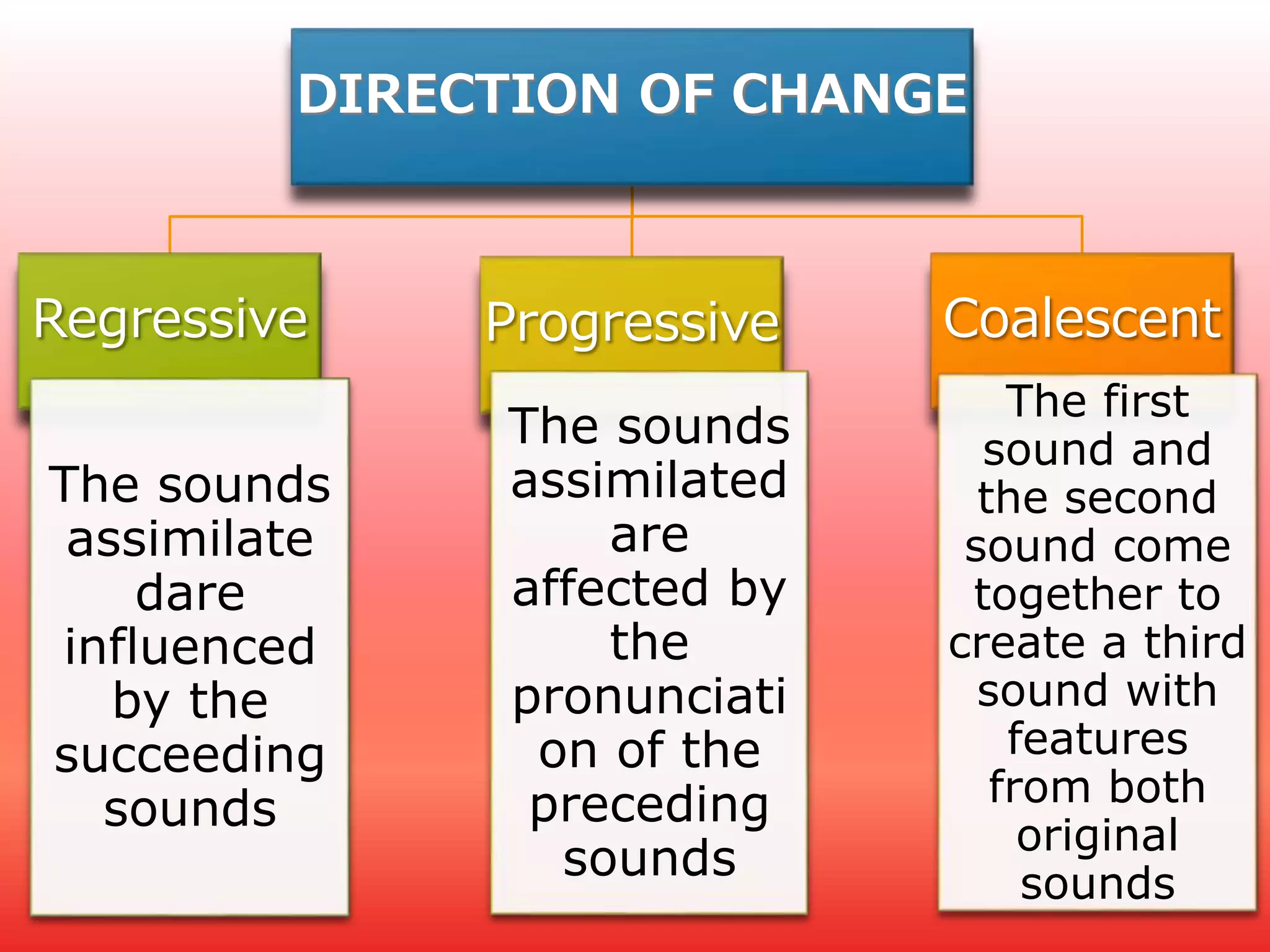
DIRECTION OF CHANGE 
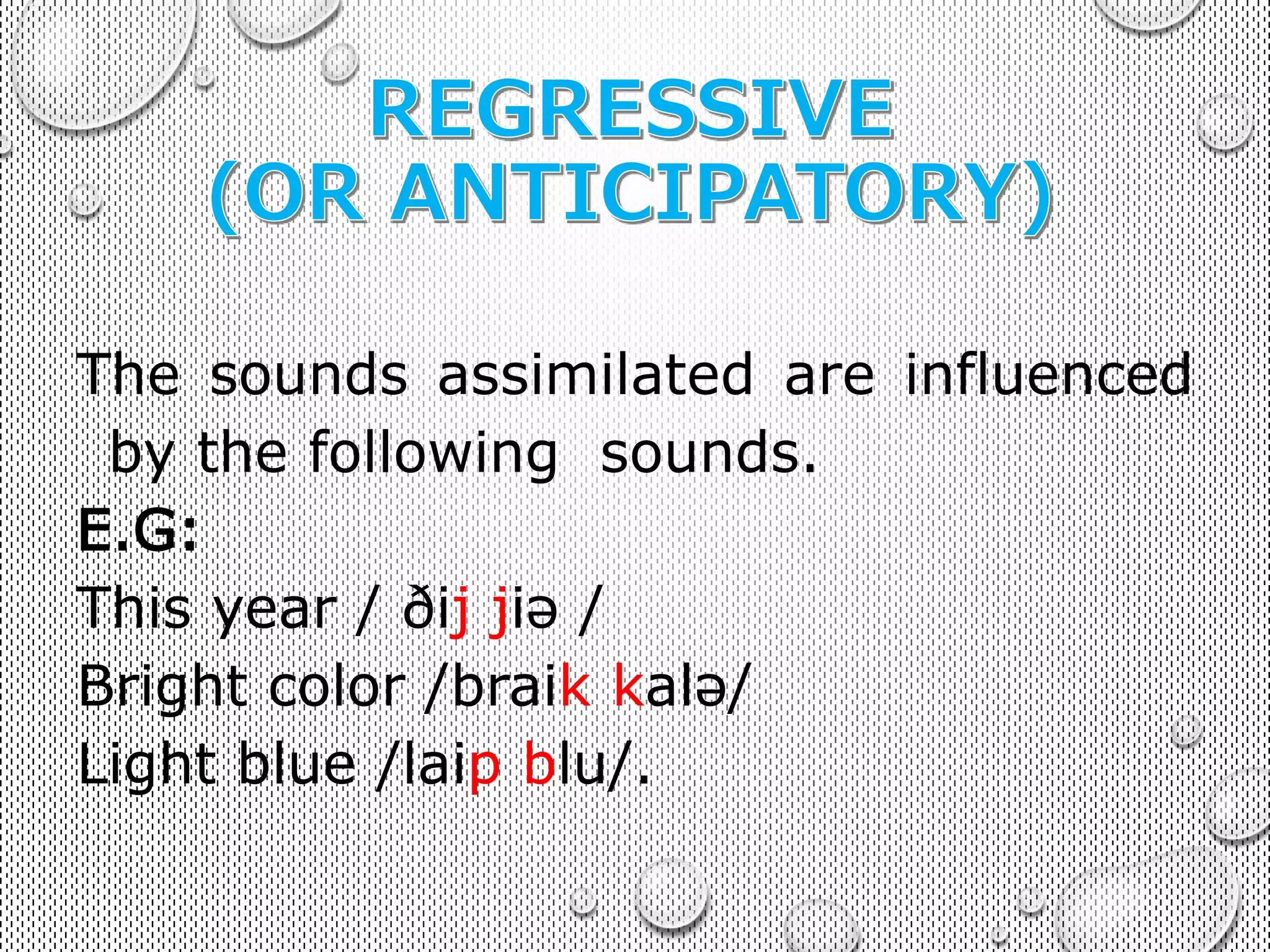
Regressive 
The sounds 
assimilate 
dare 
influenced 
by the 
succeeding 
sounds 
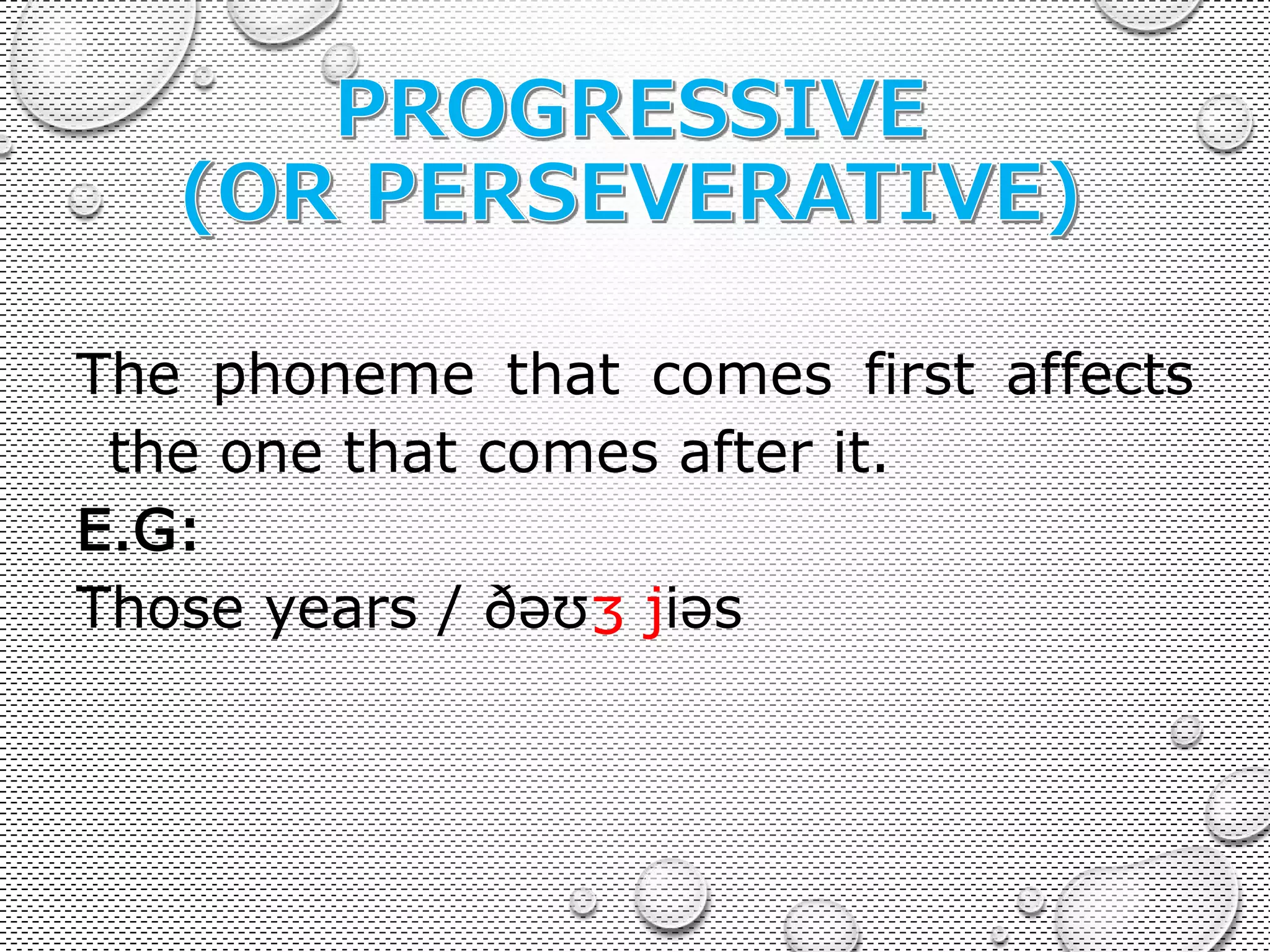
Progressive 
The sounds 
assimilated 
are 
affected by 
the 
pronunciati 
on of the 
preceding 
sounds 
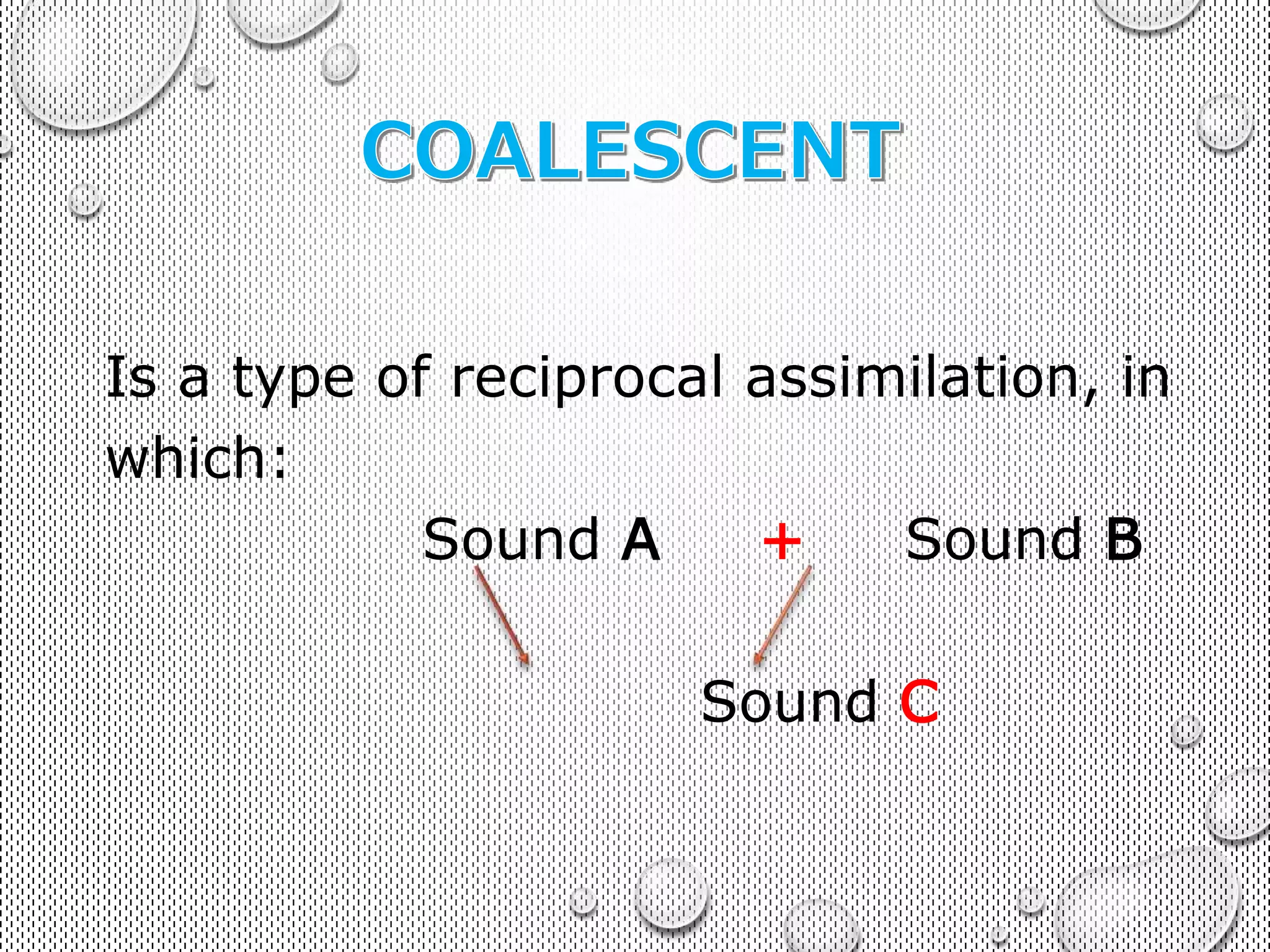
Coalescent 
The first 
sound and 
the second 
sound come 
together to 
create a third 
sound with 
features 
from both 
original 
sounds
The phoneme that comes first affects 
the one that comes after it. 
E.G: 
Those years / ðəʊʒ jiəs
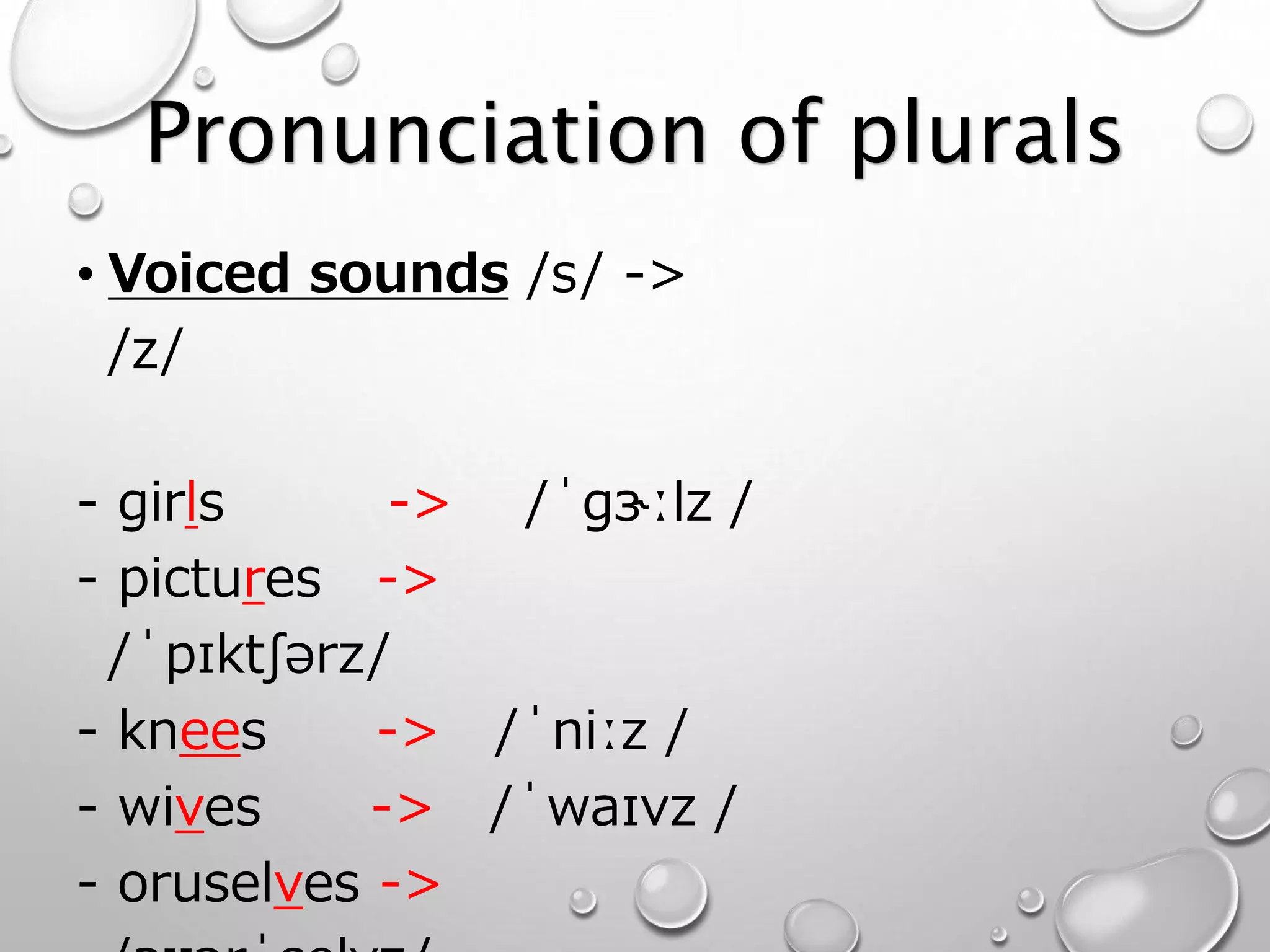
Pronunciation of plurals 
• Voiced sounds /s/ -> 
/z/ 
- girls -> /ˈɡɝːlz / 
- pictures -> 
/ˈpɪktʃərz/ 
- knees -> /ˈniːz / 
- wives -> /ˈwaɪvz / 
- oruselves -> 
/aʊərˈselvz/
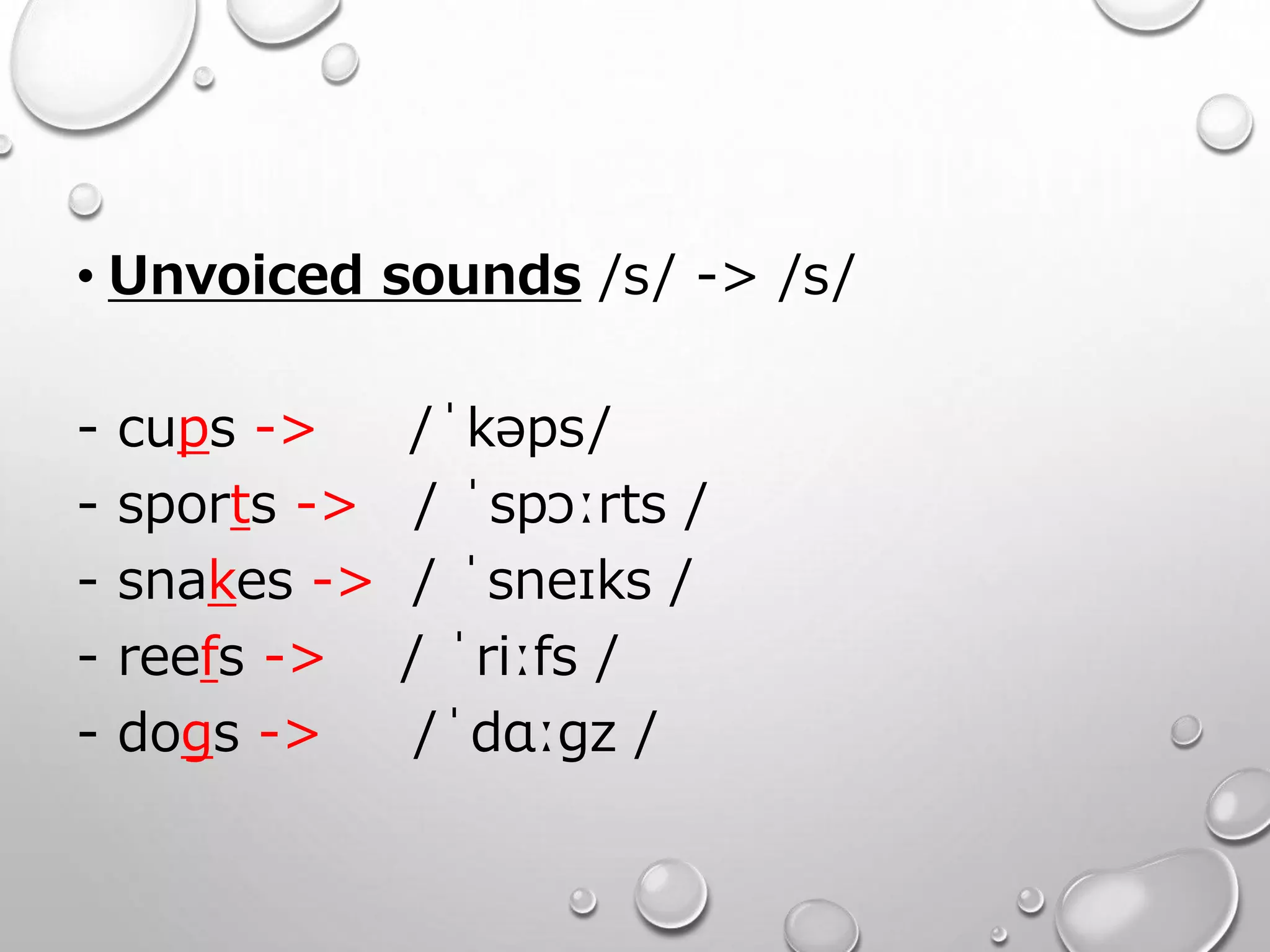
• Unvoiced sounds /s/ -> /s/ 
- cups -> /ˈkəps/ 
- sports -> / ˈspɔːrts / 
- snakes -> / ˈsneɪks / 
- reefs -> / ˈriːfs / 
- dogs -> /ˈdɑːɡz /
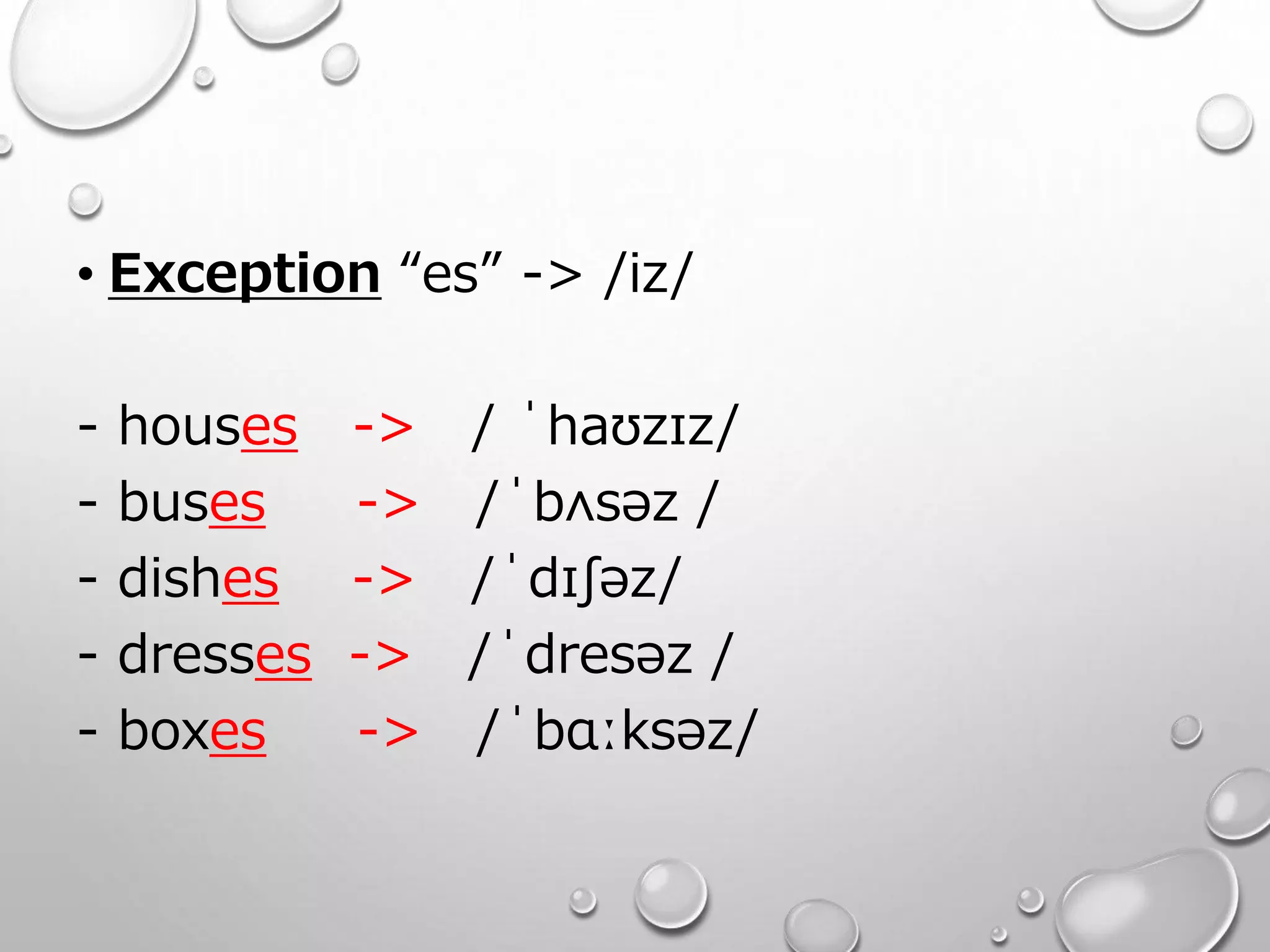
• Exception “es” -> /iz/ 
- houses -> / ˈhaʊzɪz/ 
- buses -> /ˈbʌsəz / 
- dishes -> /ˈdɪʃəz/ 
- dresses -> /ˈdresəz / 
- boxes -> /ˈbɑːksəz/
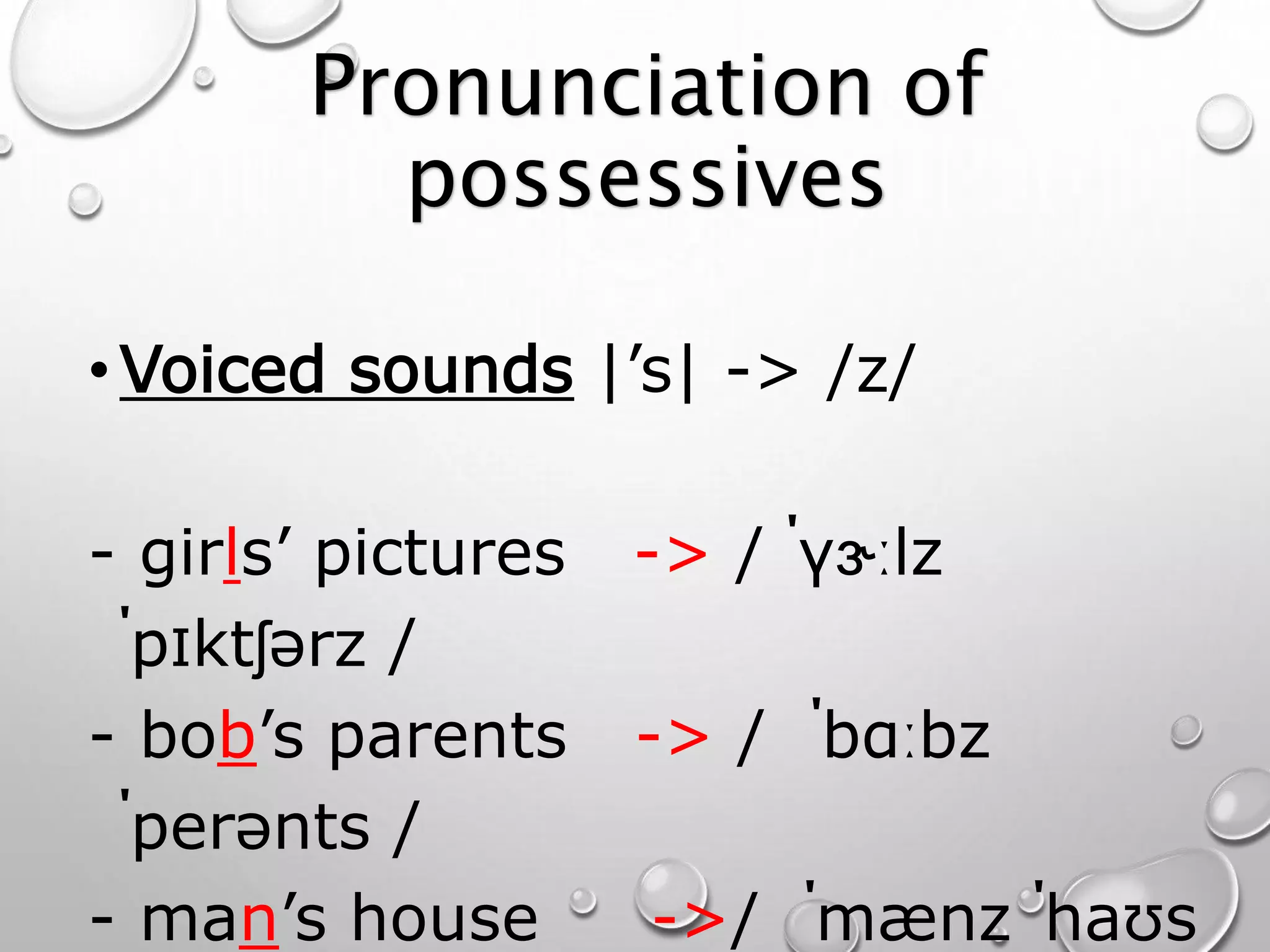
Pronunciation of 
possessives 
•Voiced sounds |’s| -> /z/ 
- girls’ pictures -> / ˈɡɝːlz 
ˈpɪktʃərz / 
- bob’s parents -> / ˈbɑːbz 
ˈperənts / 
- man’s house ->/ ˈmænz ˈhaʊs
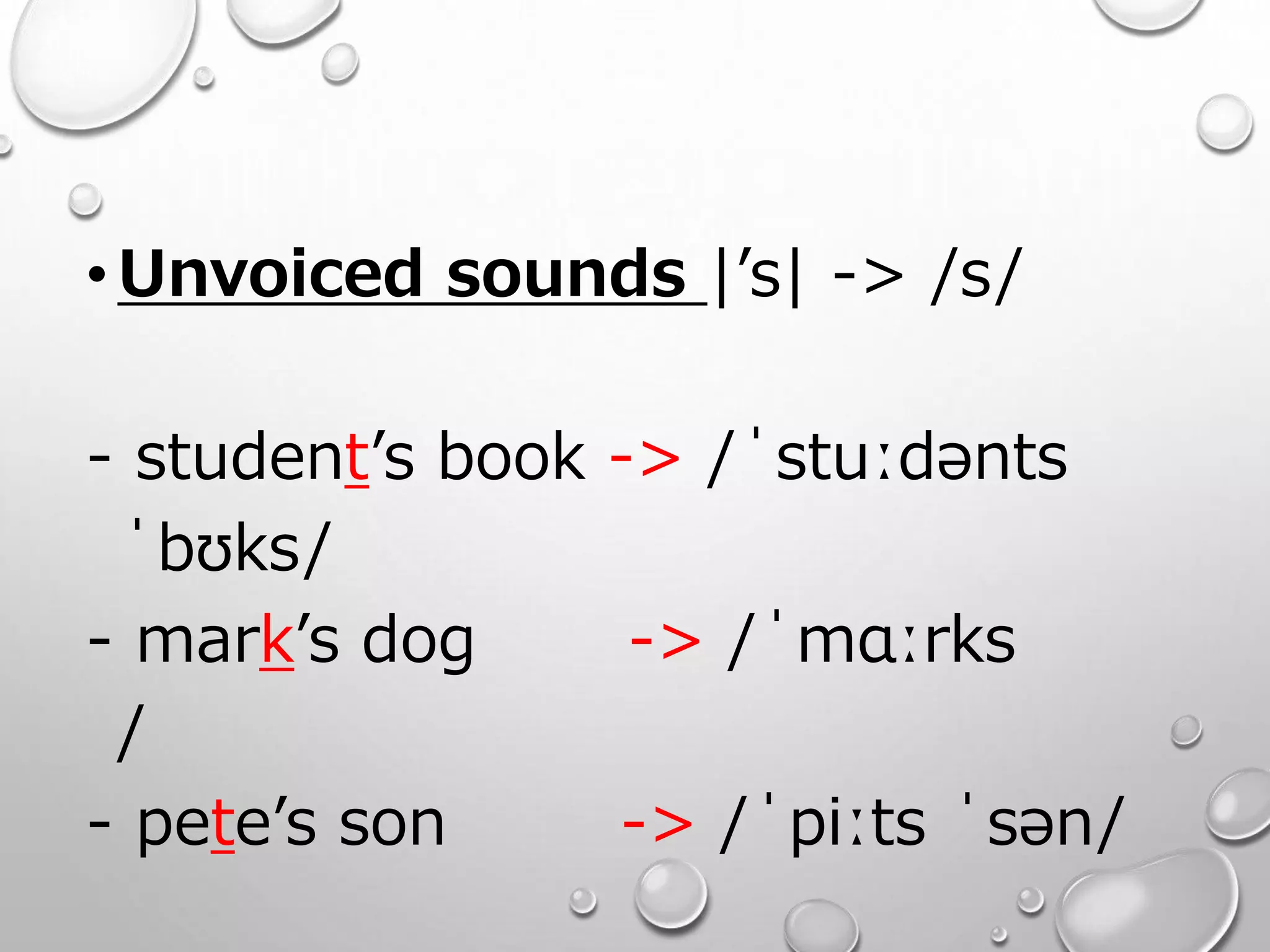
•Unvoiced sounds |’s| -> /s/ 
- student’s book -> /ˈstuːdənts 
ˈbʊks/ 
- mark’s dog -> /ˈmɑːrks 
/ 
- pete’s son -> /ˈpiːts ˈsən/
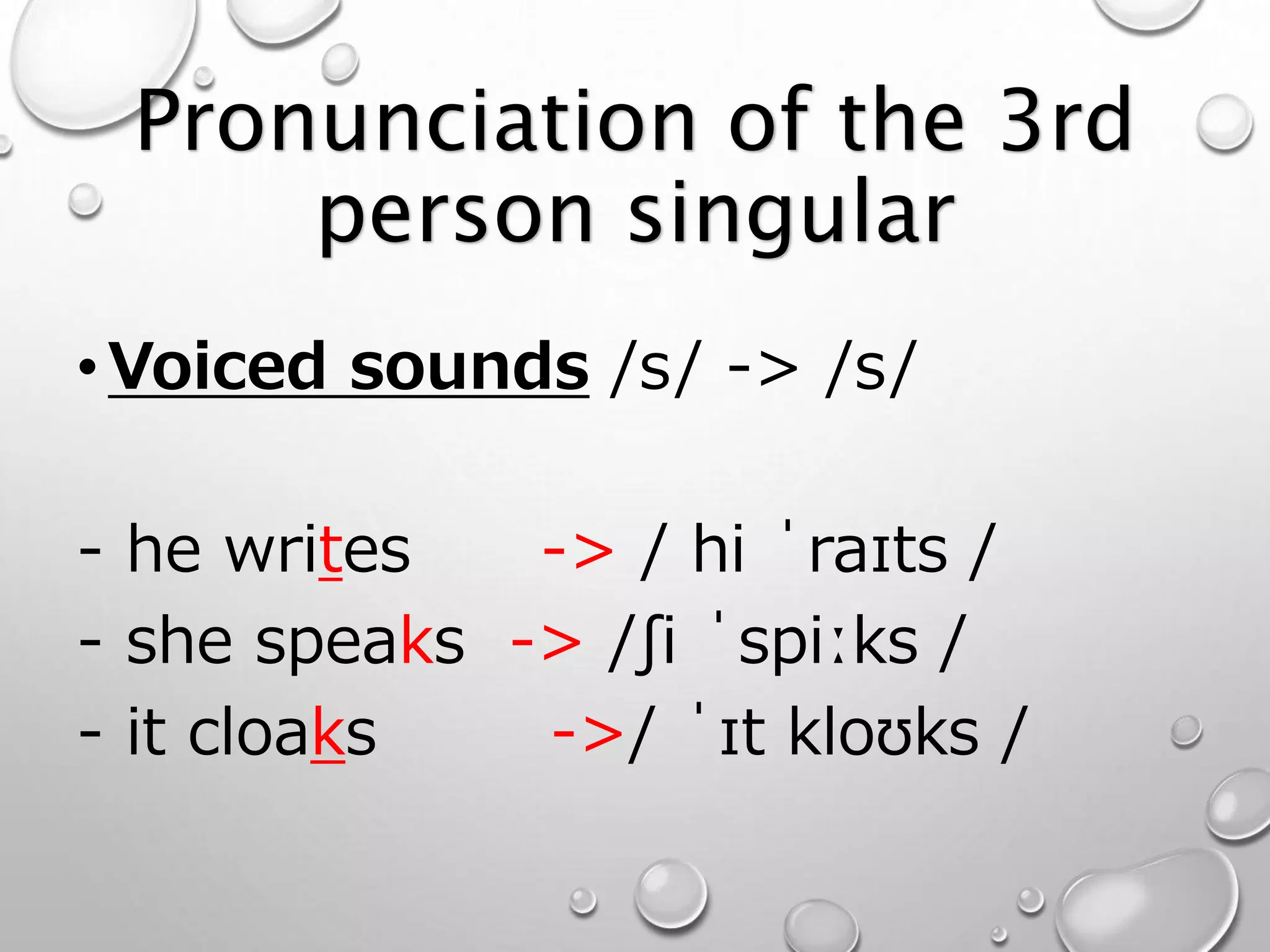
Pronunciation of the 3rd 
person singular 
•Voiced sounds /s/ -> /s/ 
- he writes -> / hi ˈraɪts / 
- she speaks -> /ʃi ˈspiːks / 
- it cloaks ->/ ˈɪt kloʊks /
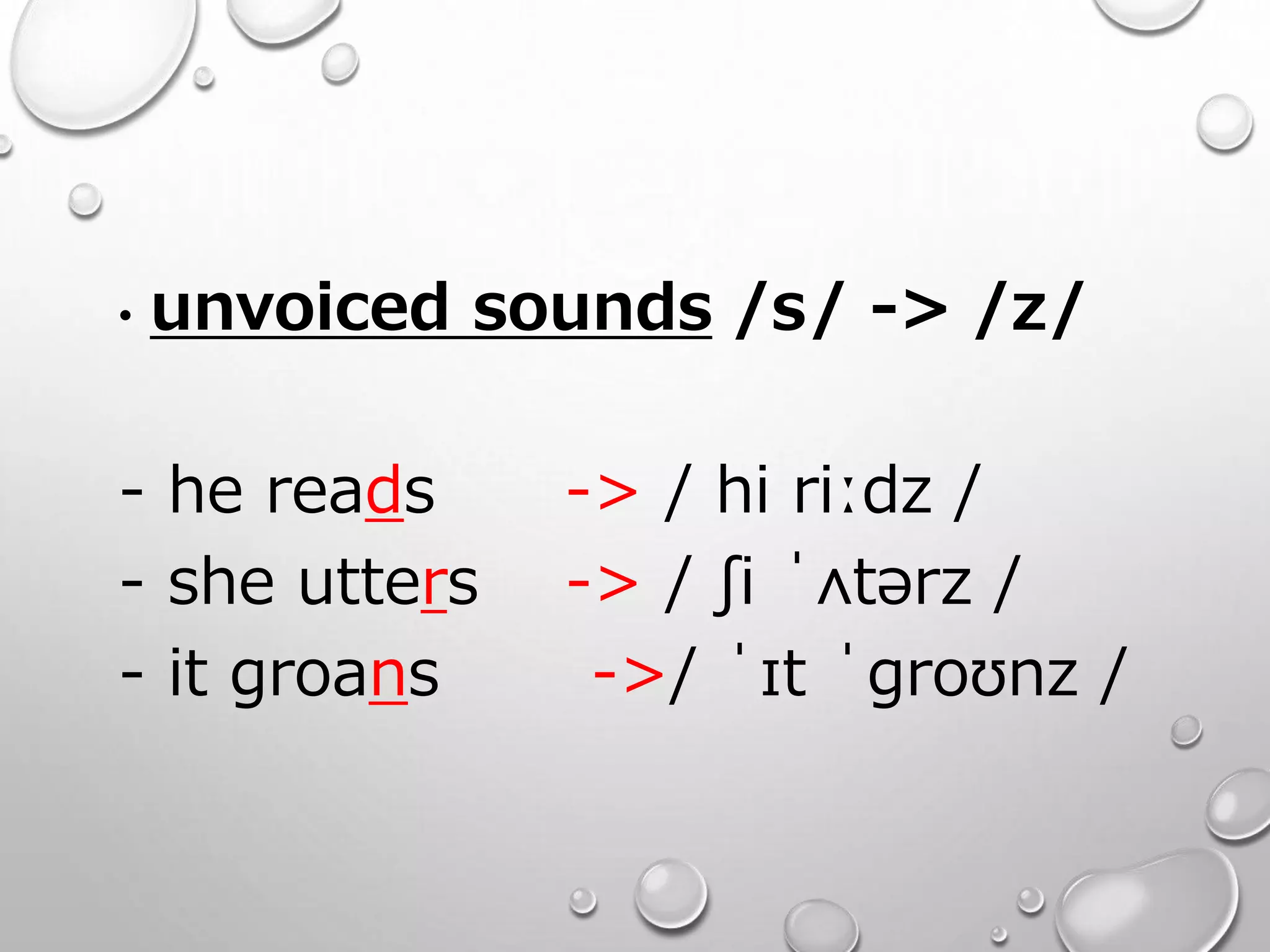
• unvoiced sounds /s/ -> /z/ 
- he reads -> / hi riːdz / 
- she utters -> / ʃi ˈʌtərz / 
- it groans ->/ ˈɪt ˈɡroʊnz /
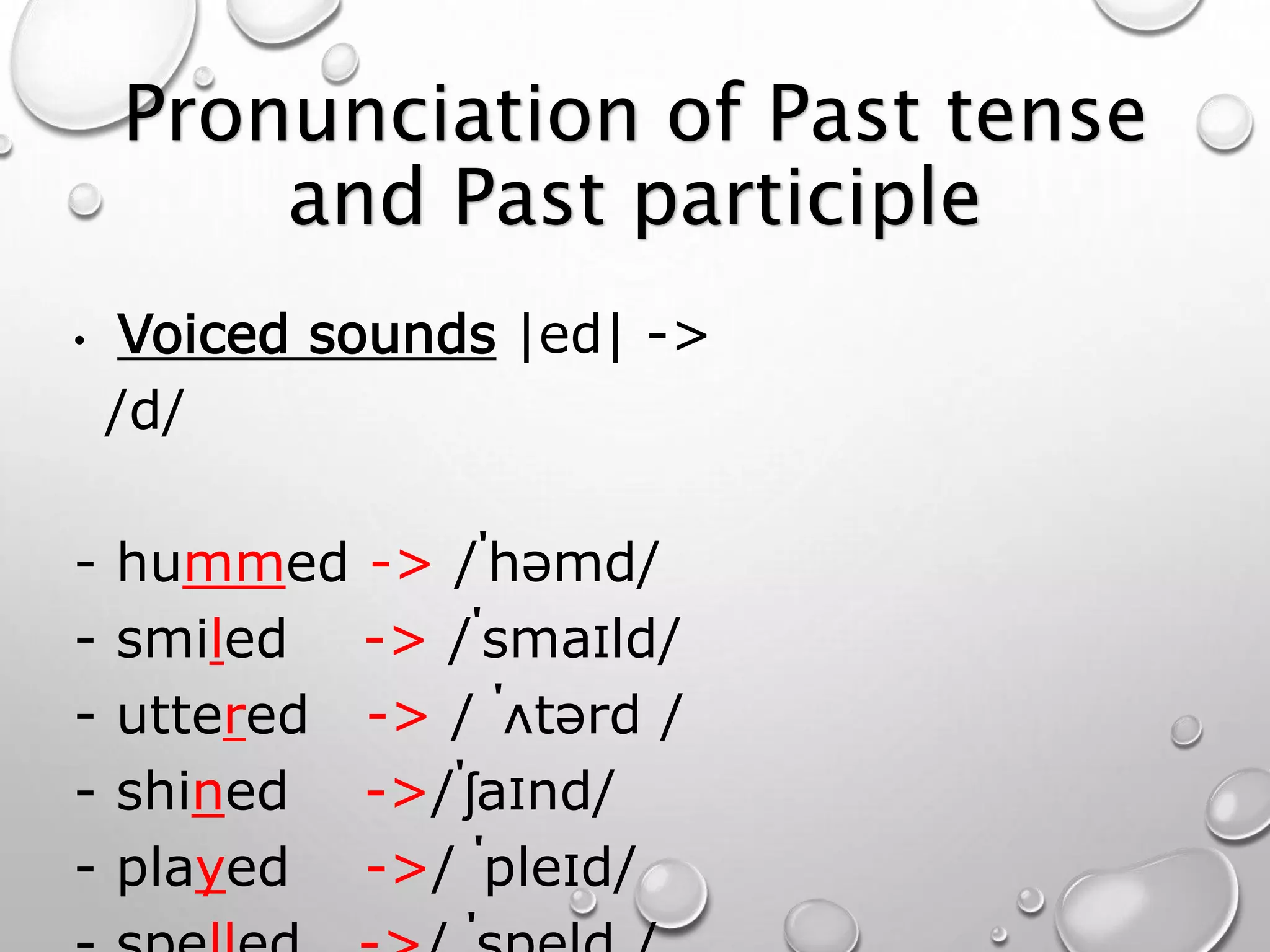
Pronunciation of Past tense 
and Past participle 
• Voiced sounds |ed| -> 
/d/ 
- hummed -> /ˈhəmd/ 
- smiled -> /ˈsmaɪld/ 
- uttered -> / ˈʌtərd / 
- shined ->/ˈʃaɪnd/ 
- played ->/ ˈpleɪd/ 
- spelled ->/ ˈspeld /
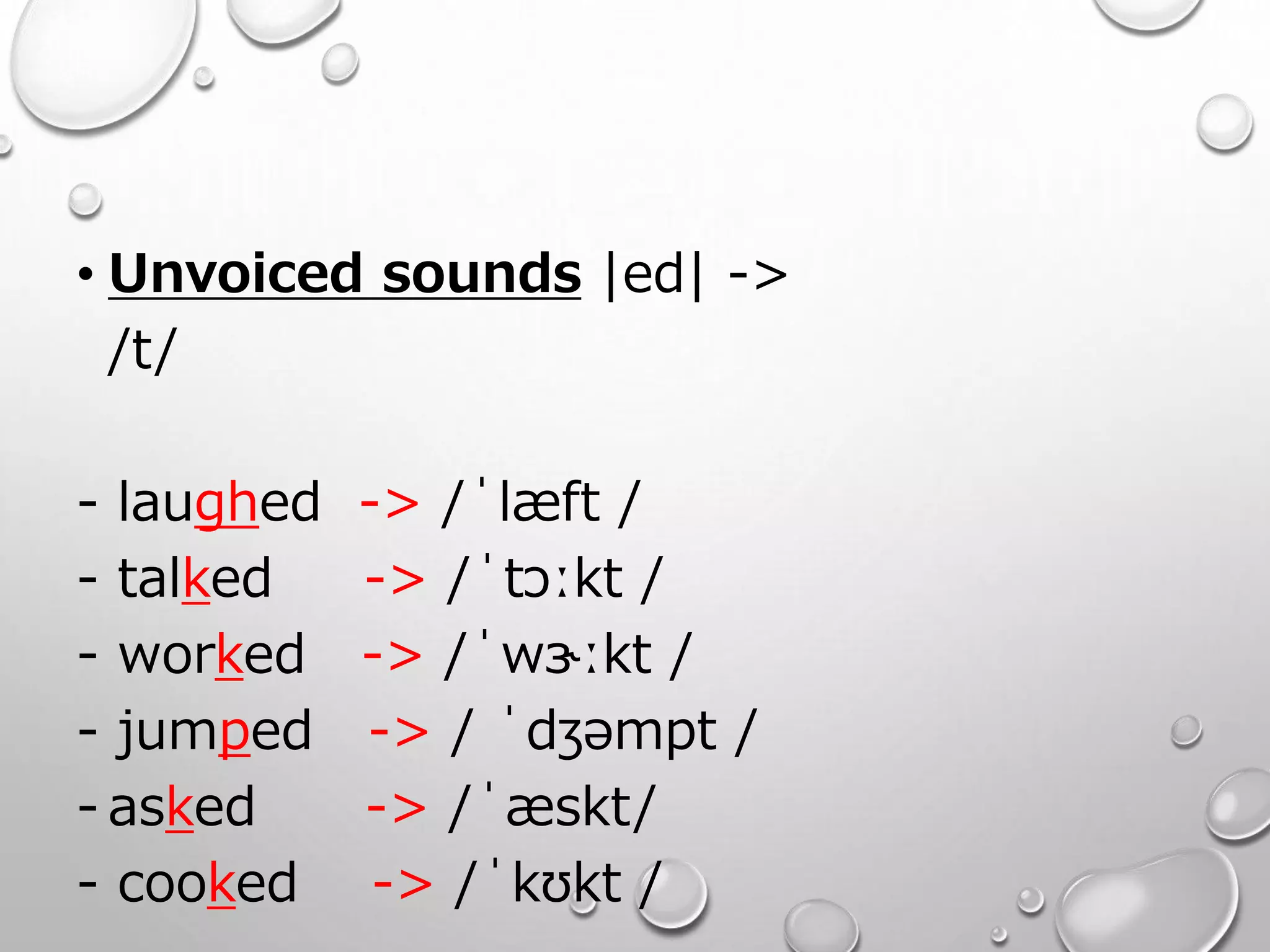
• Unvoiced sounds |ed| -> 
/t/ 
- laughed -> /ˈlæft / 
- talked -> /ˈtɔːkt / 
- worked -> /ˈwɝːkt / 
- jumped -> / ˈdʒəmpt / 
- asked -> /ˈæskt/ 
- cooked -> /ˈkʊkt /
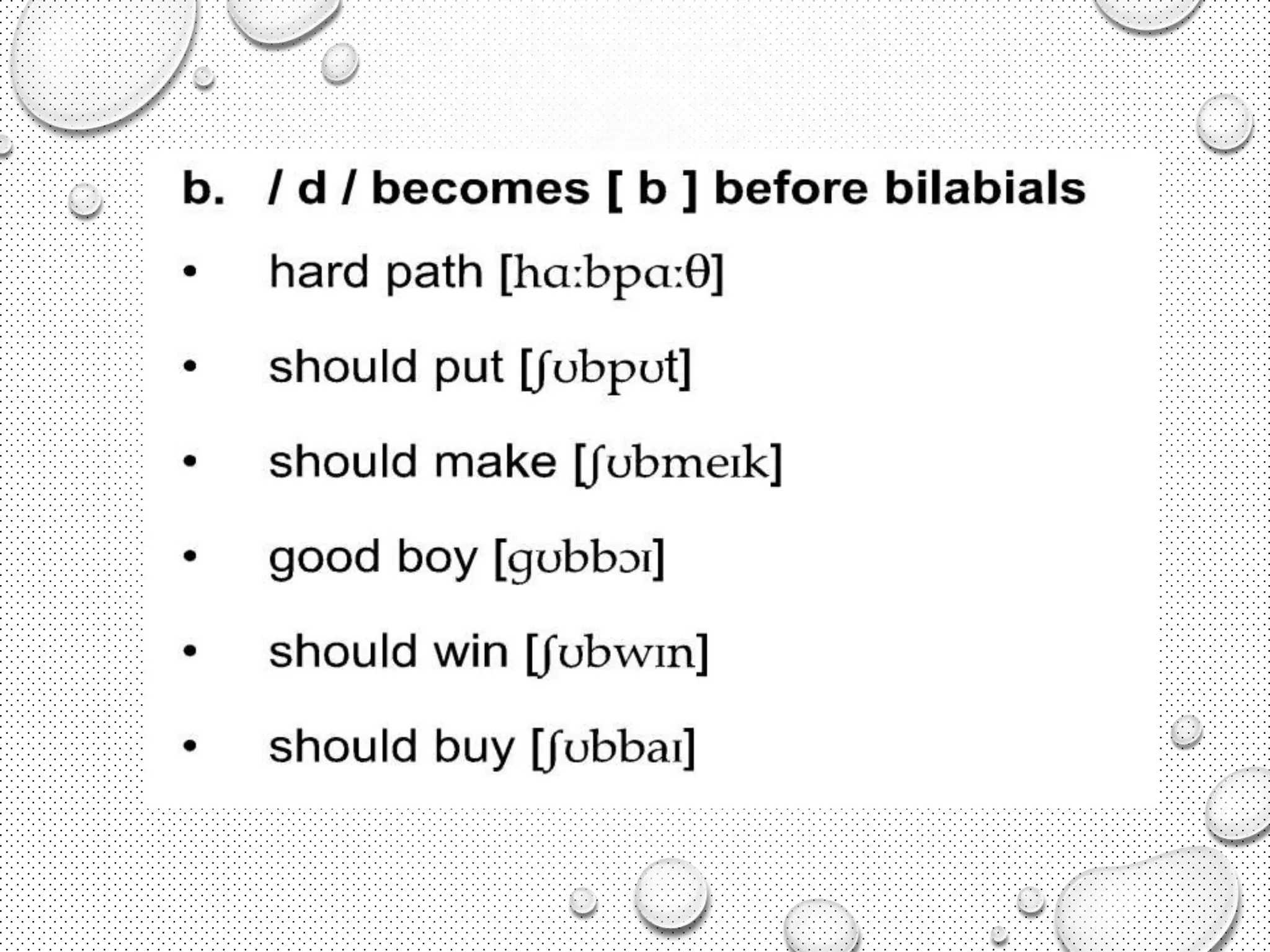
The sounds assimilated are influenced 
by the following sounds. 
E.G: 
This year / ðij jiə / 
Bright color /braik kalə/ 
Light blue /laip blu/.
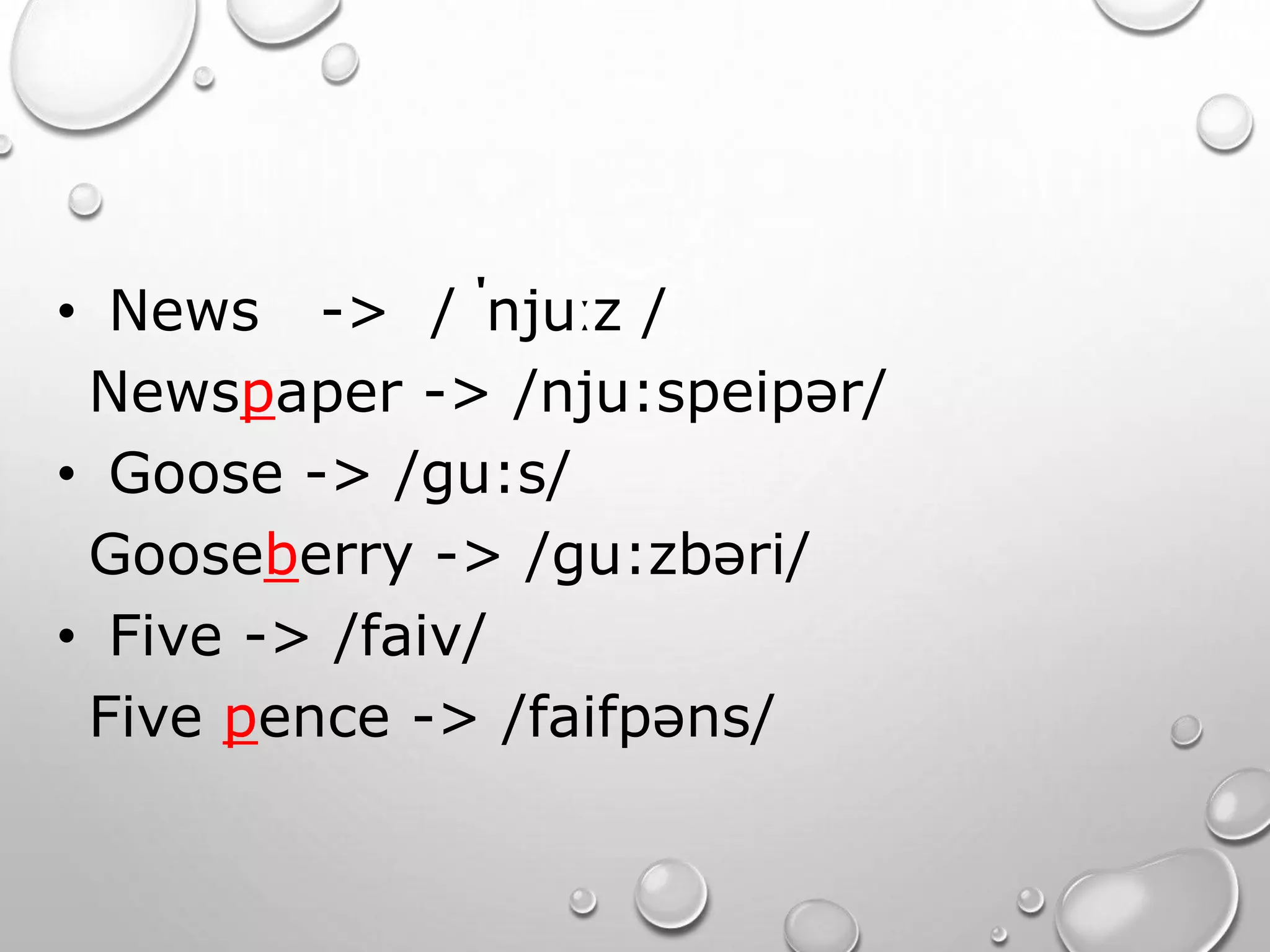
• News -> / ˈnjuːz / 
Newspaper -> /nju:speipər/ 
• Goose -> /gu:s/ 
Gooseberry -> /gu:zbəri/ 
• Five -> /faiv/ 
Five pence -> /faifpəns/
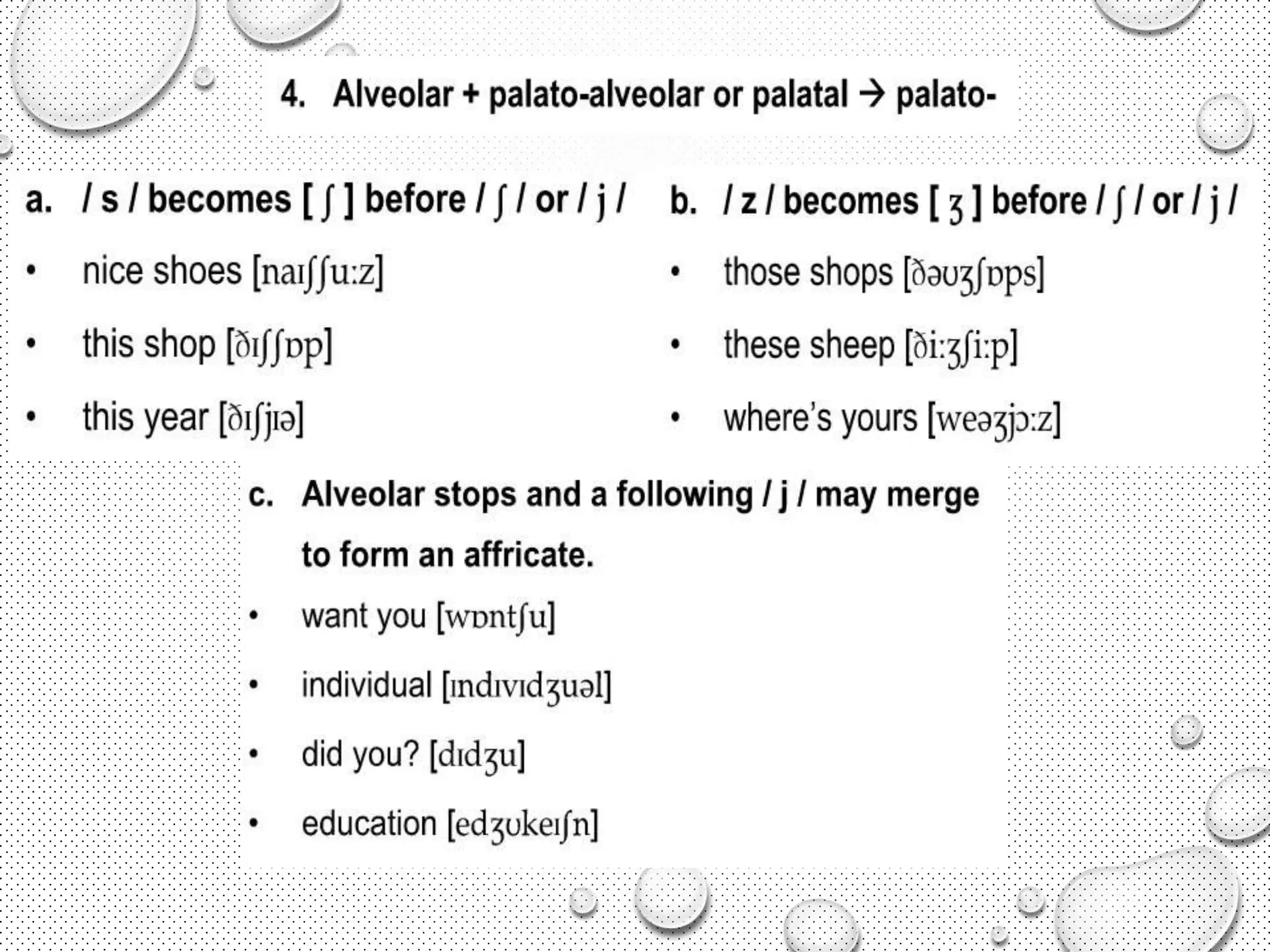
Is a type of reciprocal assimilation, in 
which: 
Sound A + Sound B 
Sound C
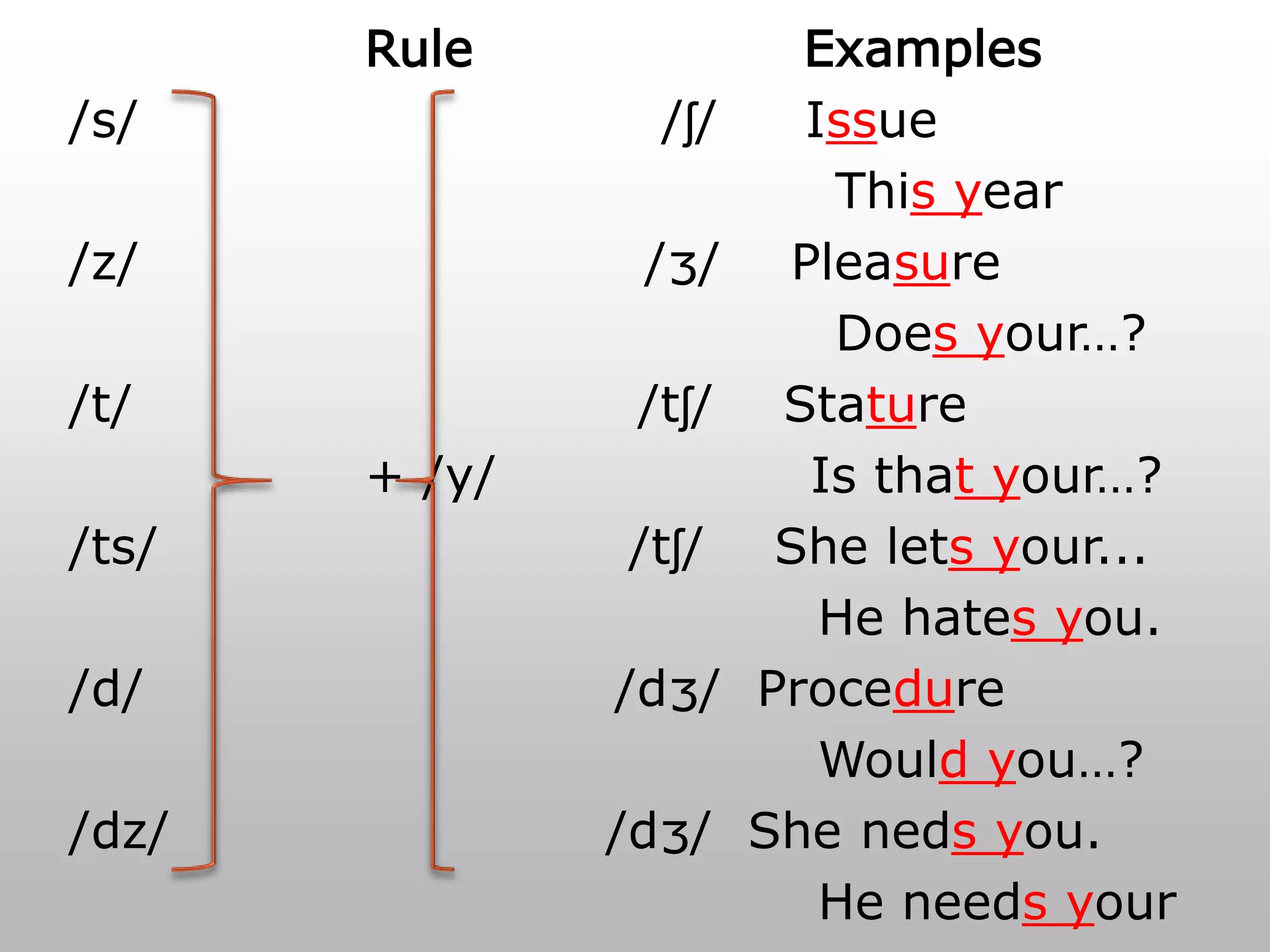
Rule Examples 
/s/ /ʃ/ Issue 
This year 
/z/ /ʒ/ Pleasure 
Does your…? 
/t/ /tʃ/ Stature 
+ /y/ Is that your…? 
/ts/ /tʃ/ She lets your... 
He hates you. 
/d/ /dʒ/ Procedure 
Would you…? 
/dz/ /dʒ/ She neds you. 
He needs your
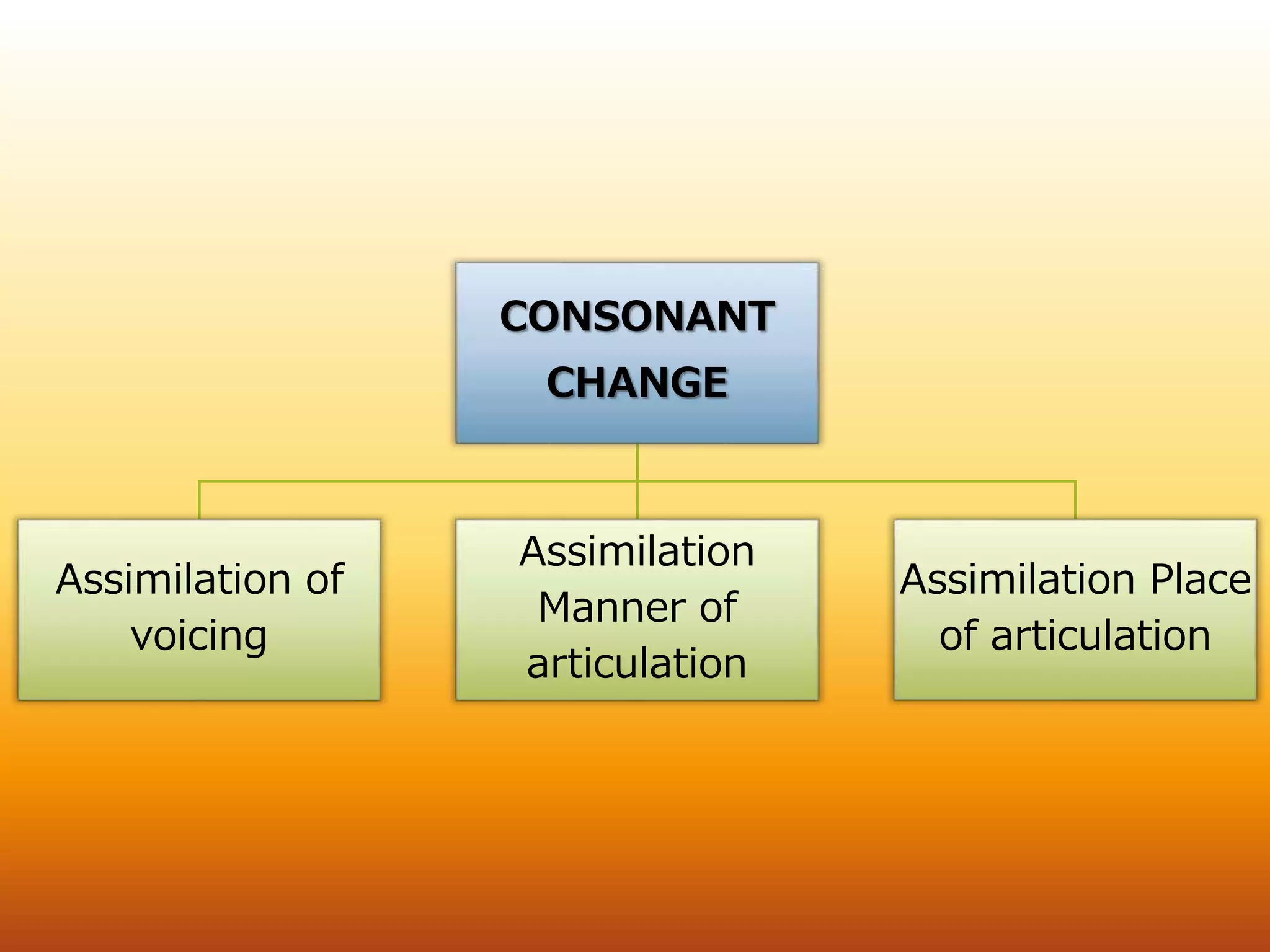
CONSONANT 
CHANGE 
Assimilation Place 
of articulation 
Assimilation 
Manner of 
articulation 
Assimilation of 
voicing
It consists in the 
voicing or 
devoicing of a 
segment
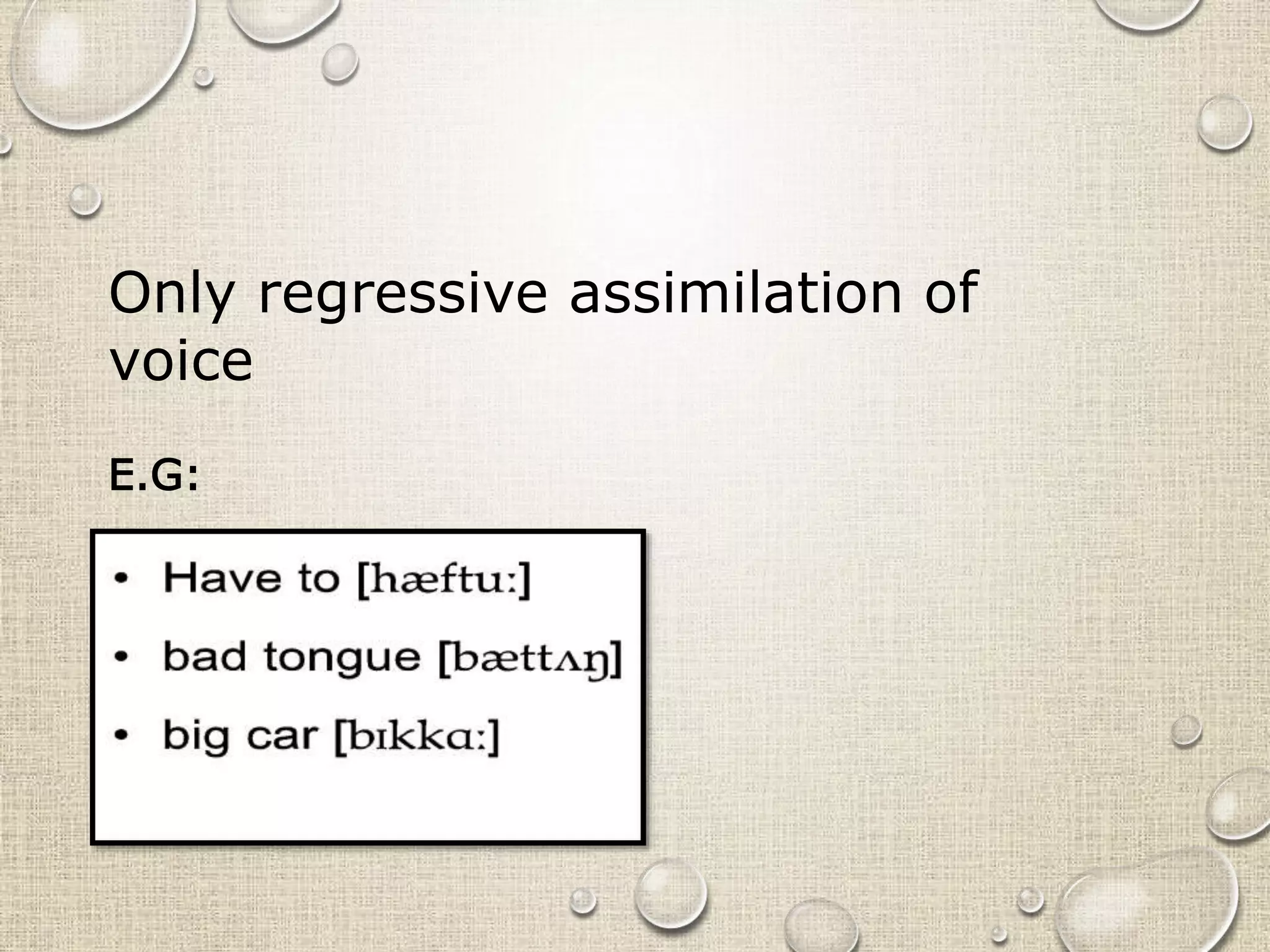
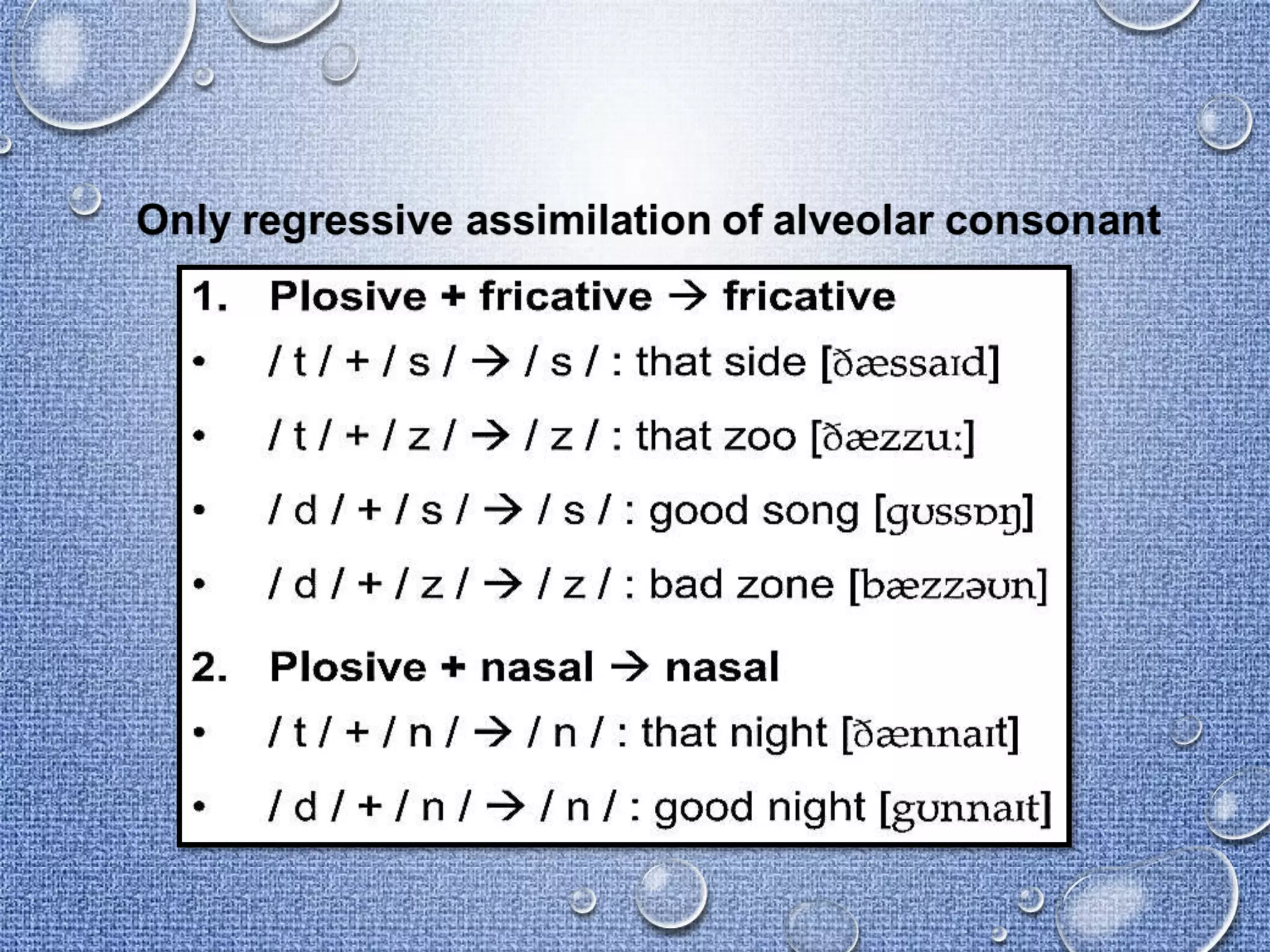
Only regressive assimilation of 
voice 
E.G:
Assimilation of place is 
noticeable in the regressive 
assimilation of alveolar 
consonants.
1. Progressive 
assimilation 
Is relatively uncommon. It may occur when 
a plosive is followed by a syllabic nasal and 
the nasal under goes assimilation to the 
same place of articulation as the preceding 
plosive. 
E.G: 
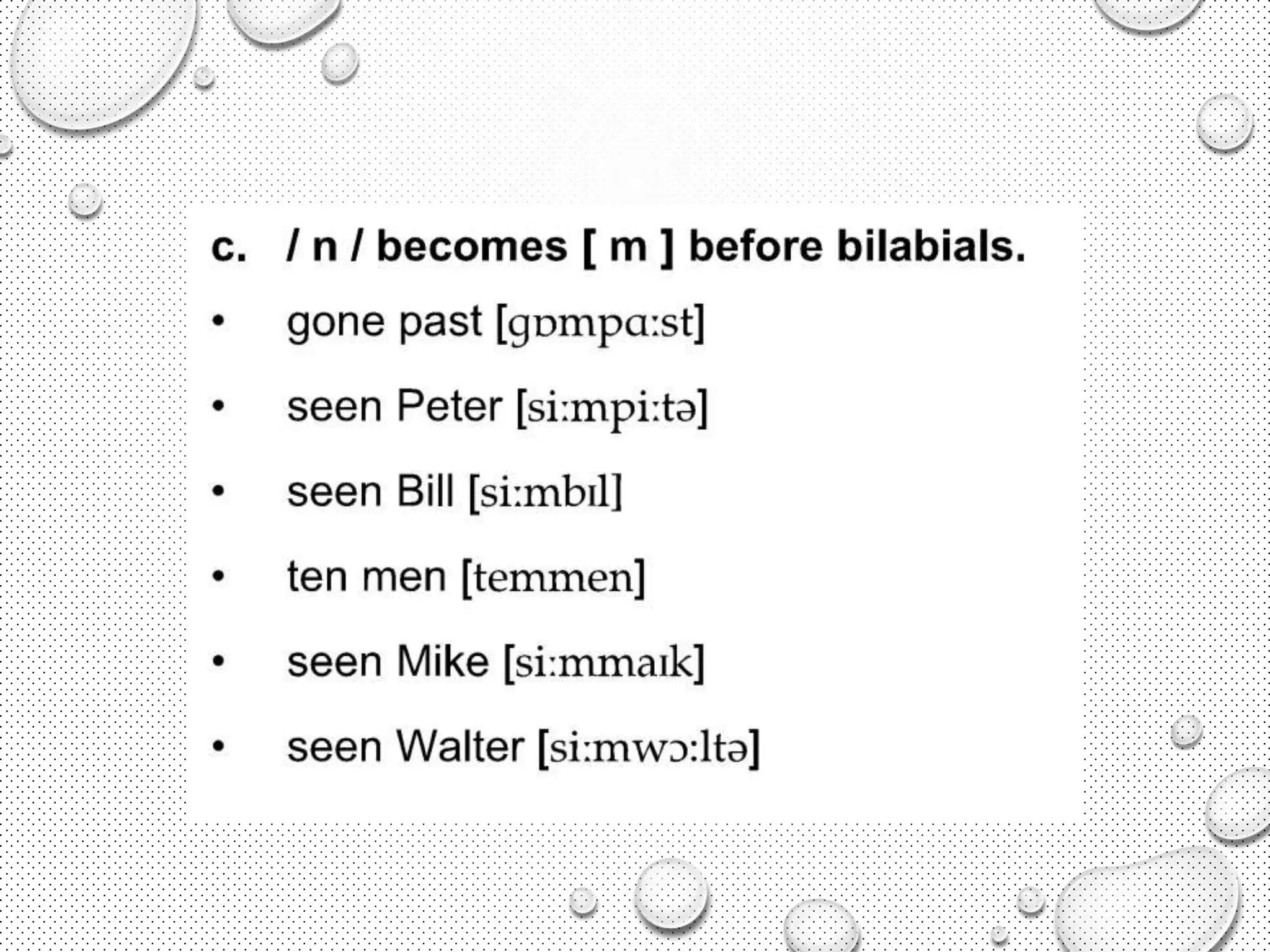
* /n/ → /m/ after /p, b/ 
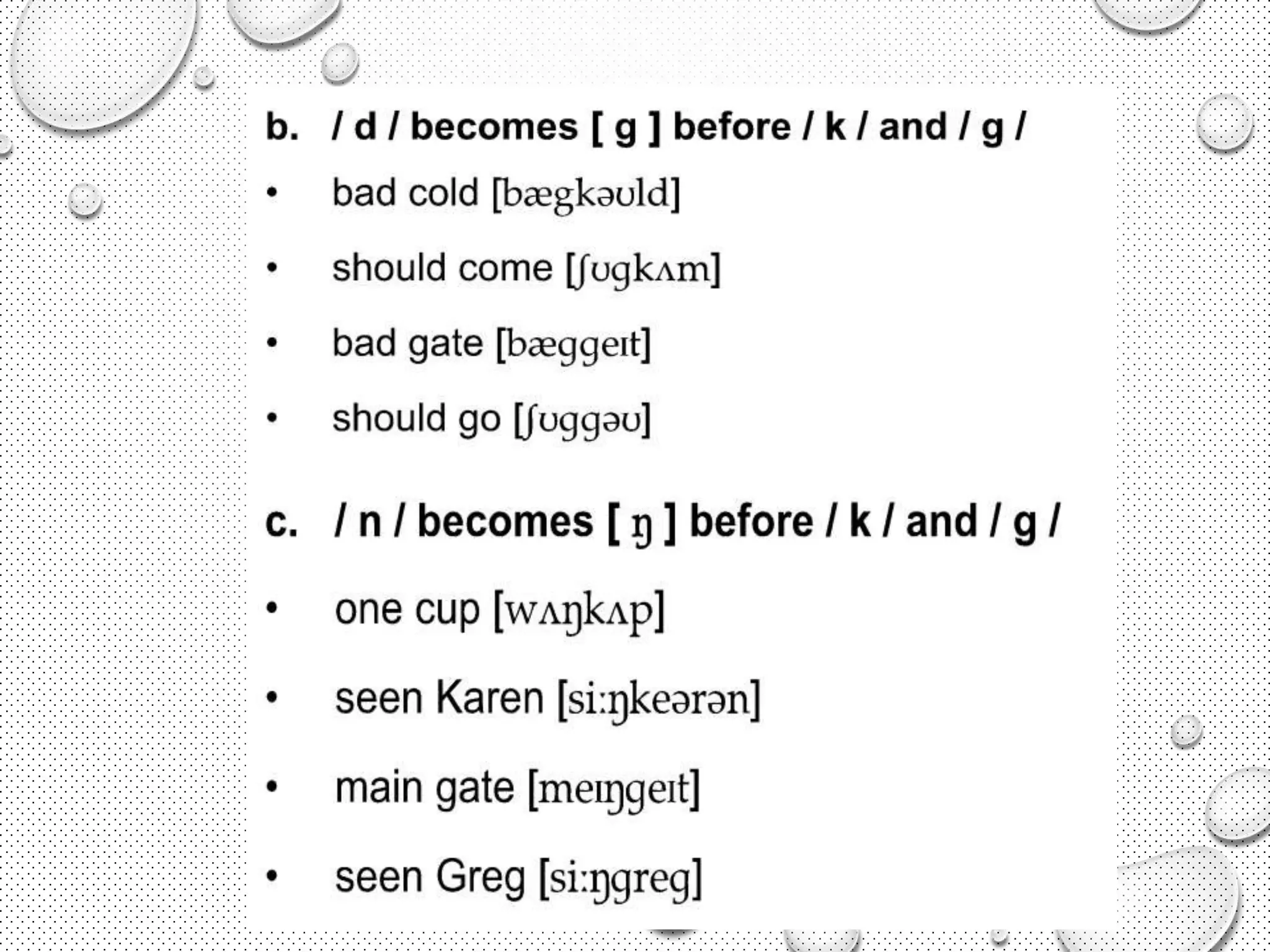
*/ n/ →/ŋ/ after / k, g/
2. Regressive 
assimilation 
Commonly seen in some prefixes, such 
as: 
*in- → indirect, insane, 
*im- → impolite, imbalance, immoral. 
*il- → illegal 
*ir- → irregular
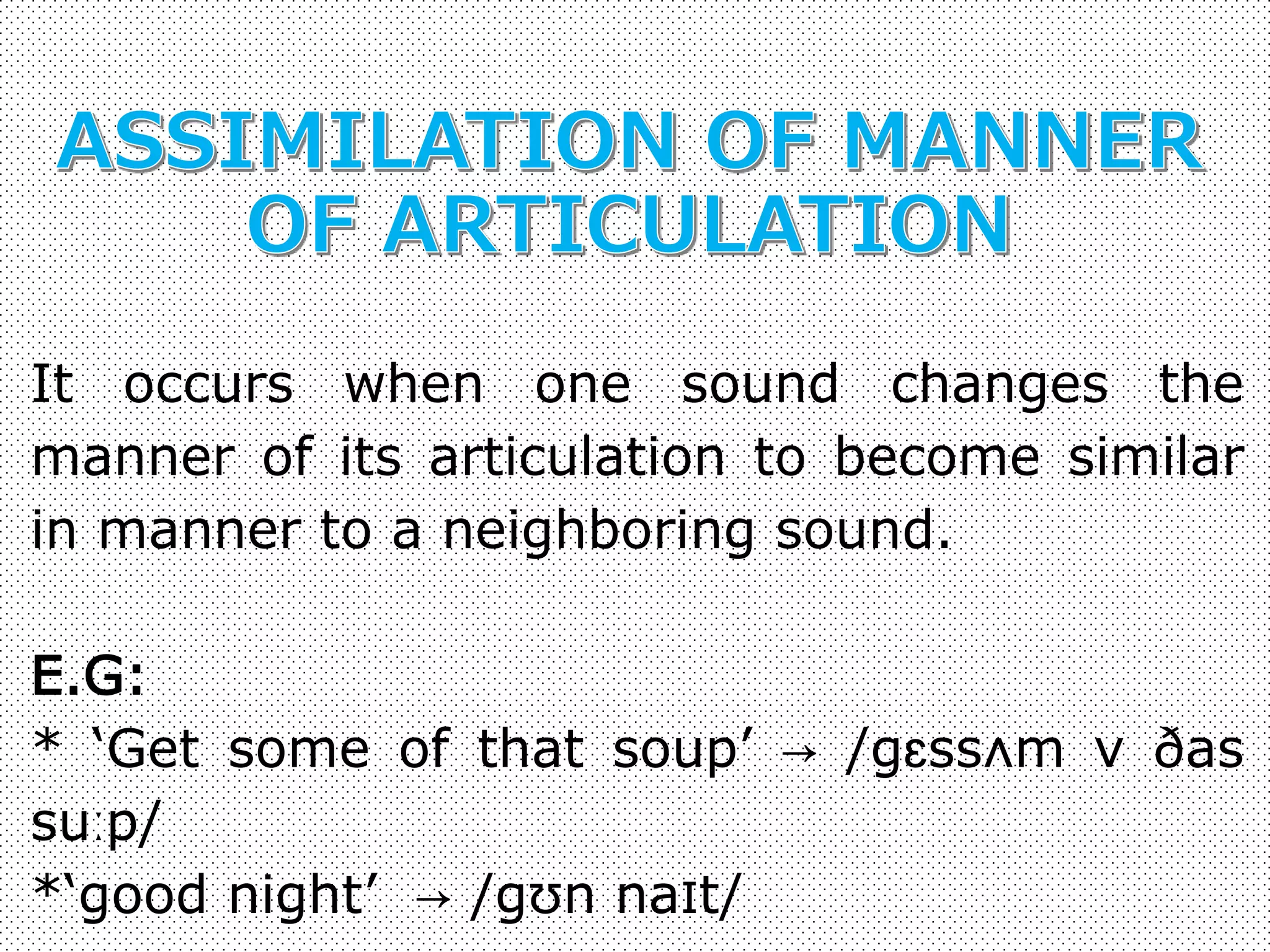
It occurs when one sound changes the 
manner of its articulation to become similar 
in manner to a neighboring sound. 
E.G: 
* ‘Get some of that soup’ → /gɛssʌm v ðas 
suːp/ 
*‘good night’ → /gʊn naɪt/
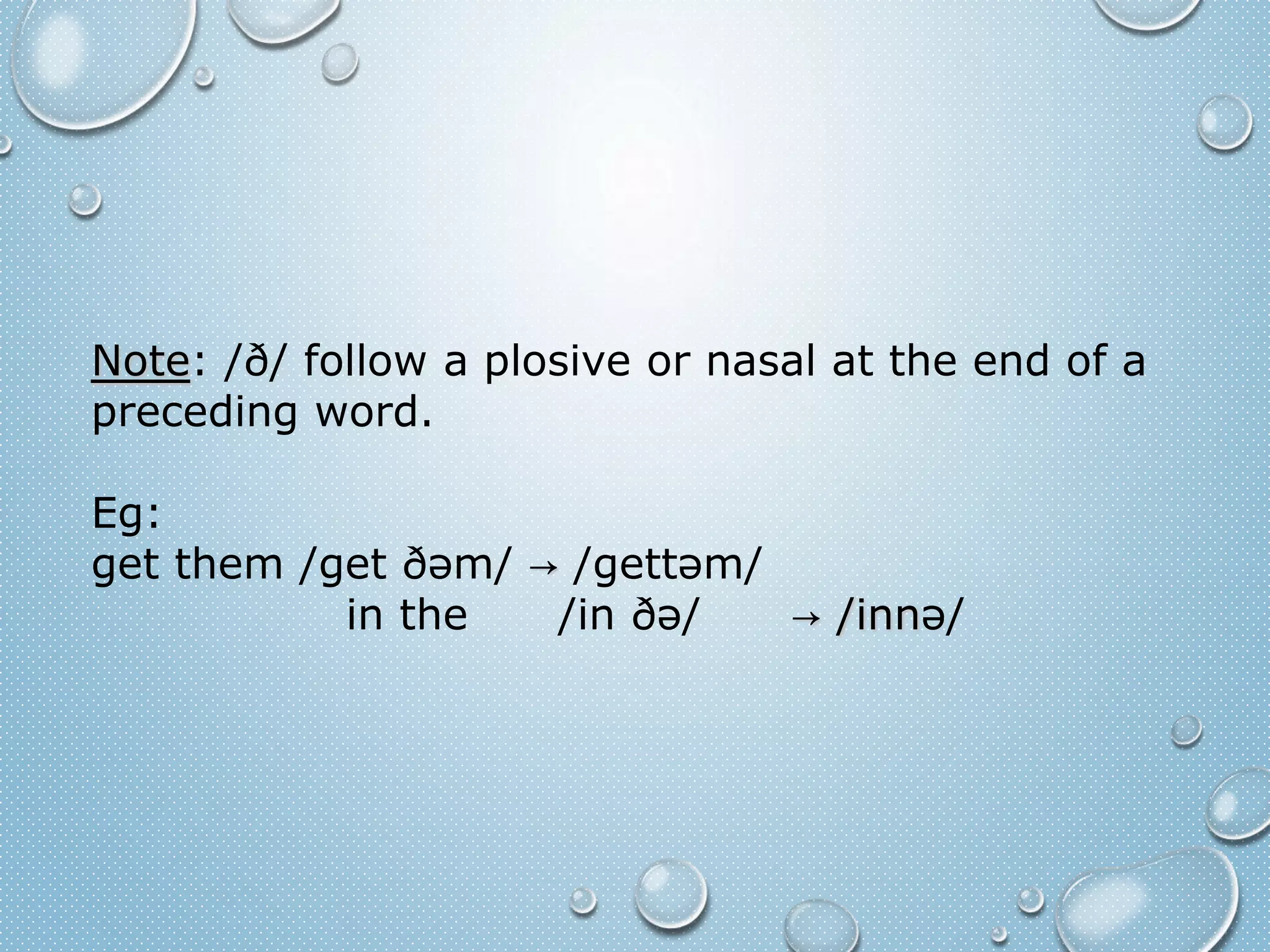
Note: /ð/ follow a plosive or nasal at the end of a 
preceding word. 
Eg: 
get them /get ðəm/ → /gettəm/ 
in the /in ðə/ → /innə/
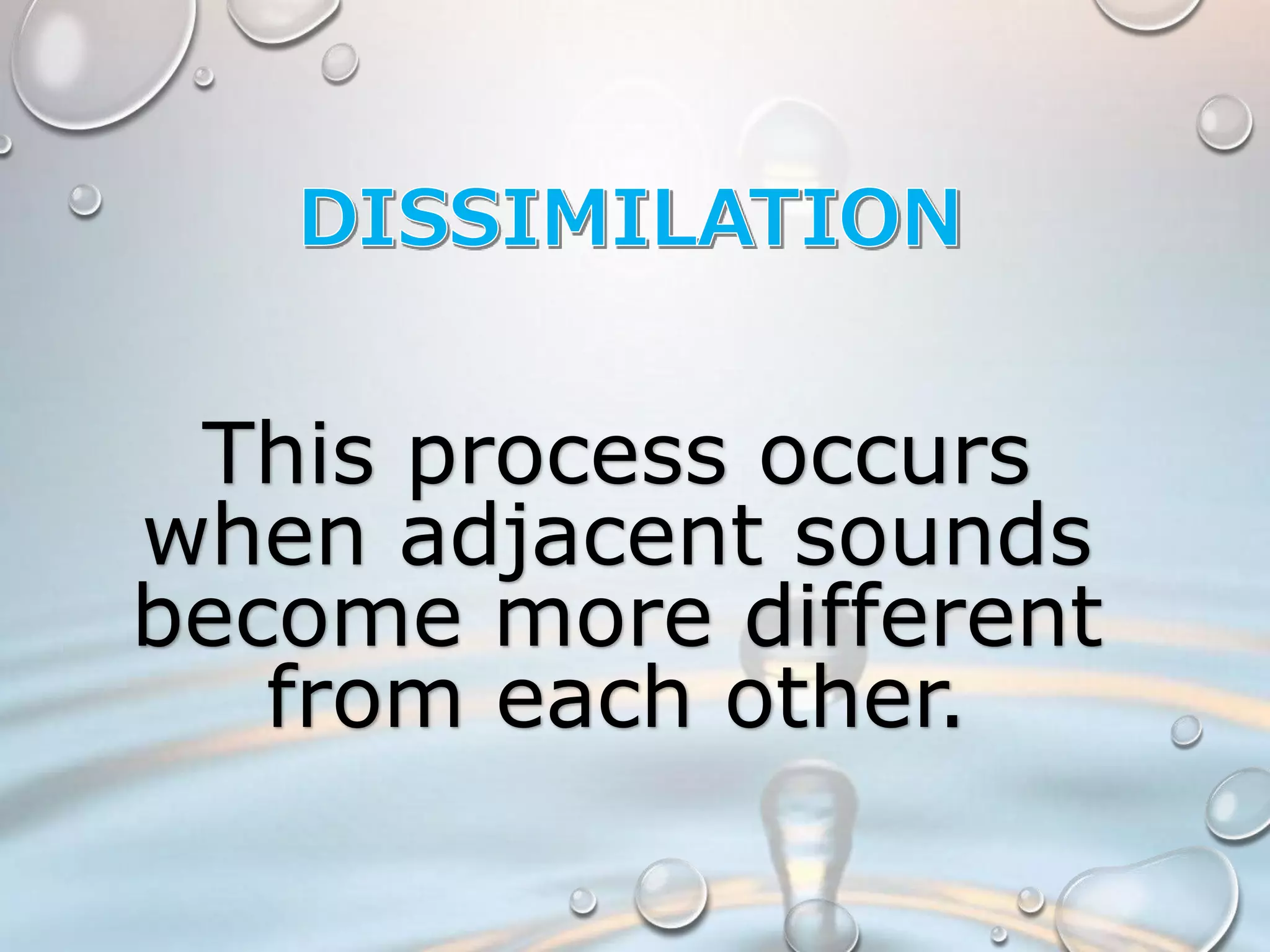
This process occurs 
when adjacent sounds 
become more different 
from each other.
The American English t sound includes 
the following four common allophones: 
• Remain a regularly aspirated t sound. 
• Be pronounced like a quick d (also 
called an alveolar tap). 
• Become a glottal stop. 
• ave no sound at all.
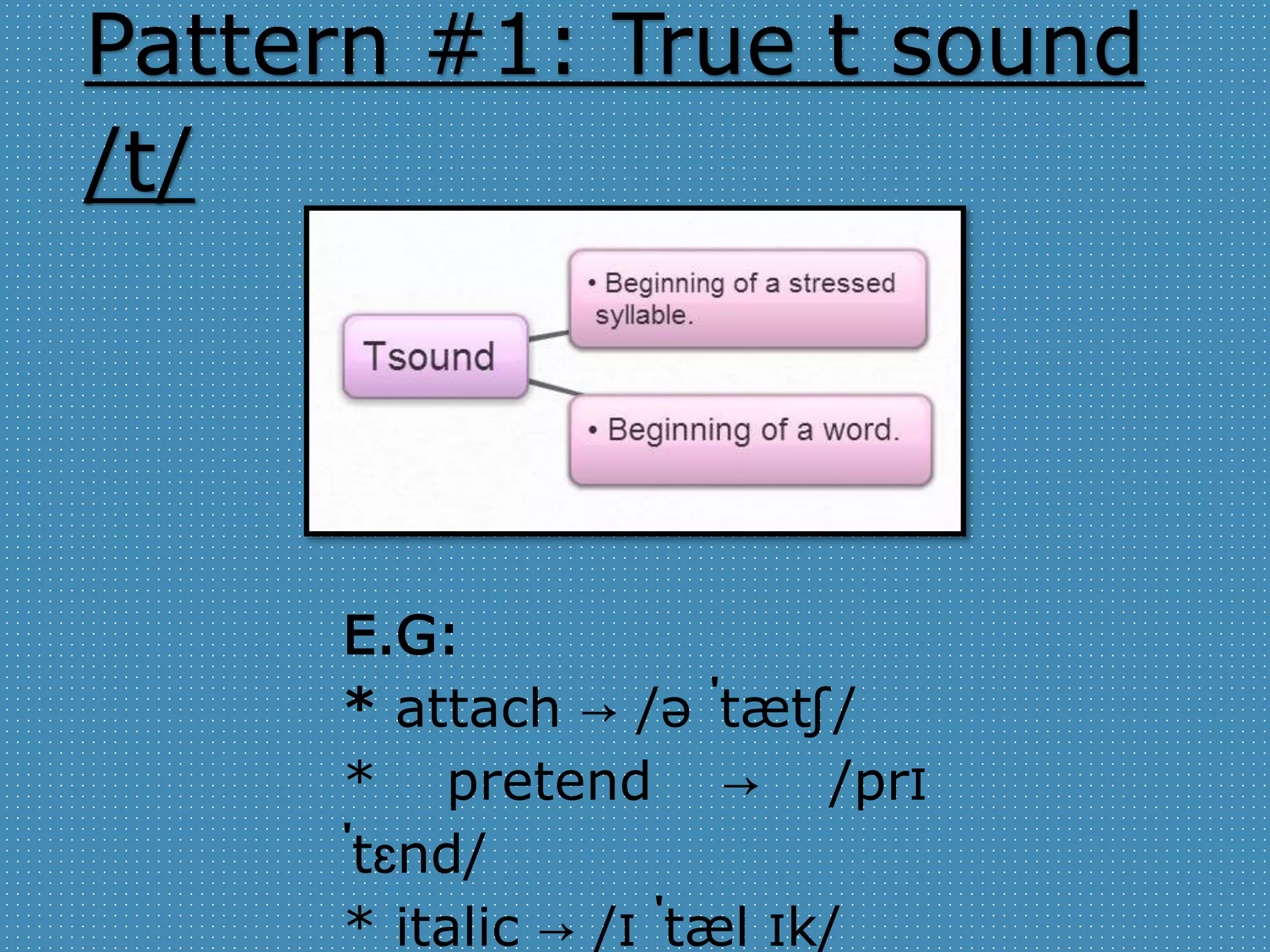
Pattern #1: True t sound 
/t/ 
E.G: 
* attach → /ə ˈtæʧ/ 
* pretend → /prɪ 
ˈtɛnd/ 
* italic → /ɪ ˈtæl ɪk/
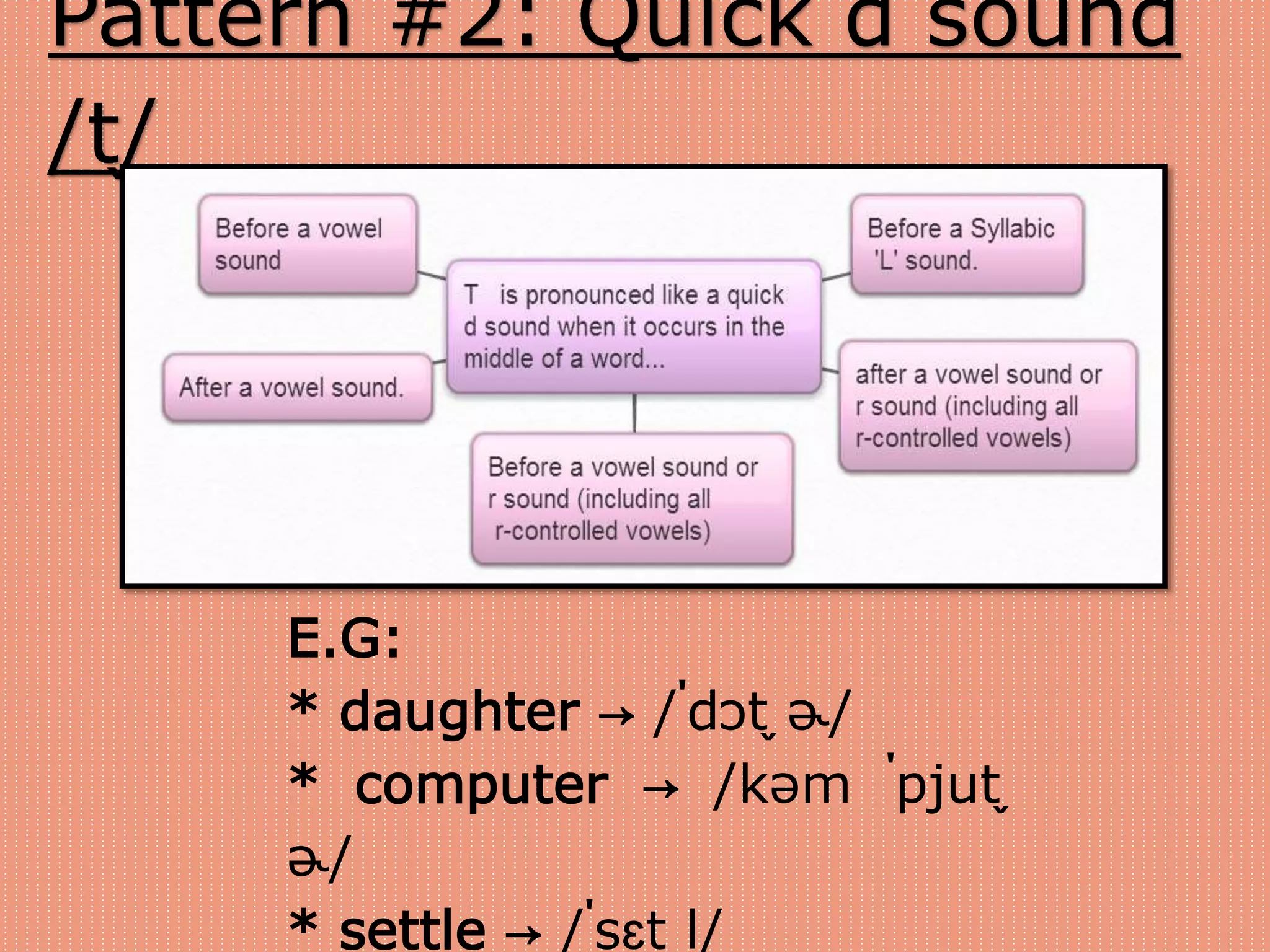
Pattern #2: Quick d sound 
/t̬/ 
E.G: 
* daughter → /ˈdɔt̬ ɚ/ 
* computer → /kəm ˈpjut̬ 
ɚ/ 
* settle → /ˈsɛt̬ l/
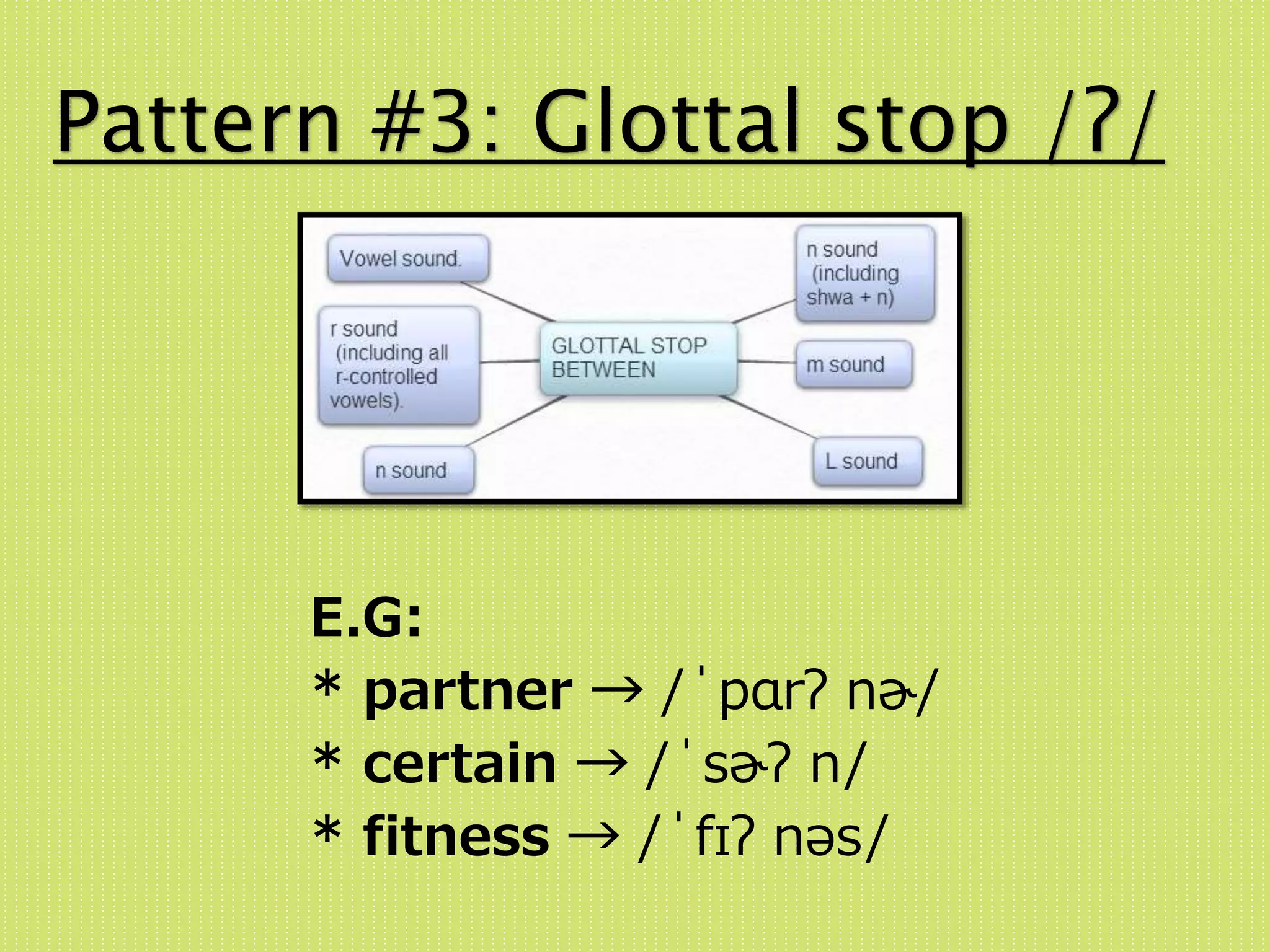
Pattern #3: Glottal stop /ʔ/ 
E.G: 
* partner → /ˈpɑrʔ nɚ/ 
* certain → /ˈsɚʔ n/ 
* fitness → /ˈfɪʔ nəs/
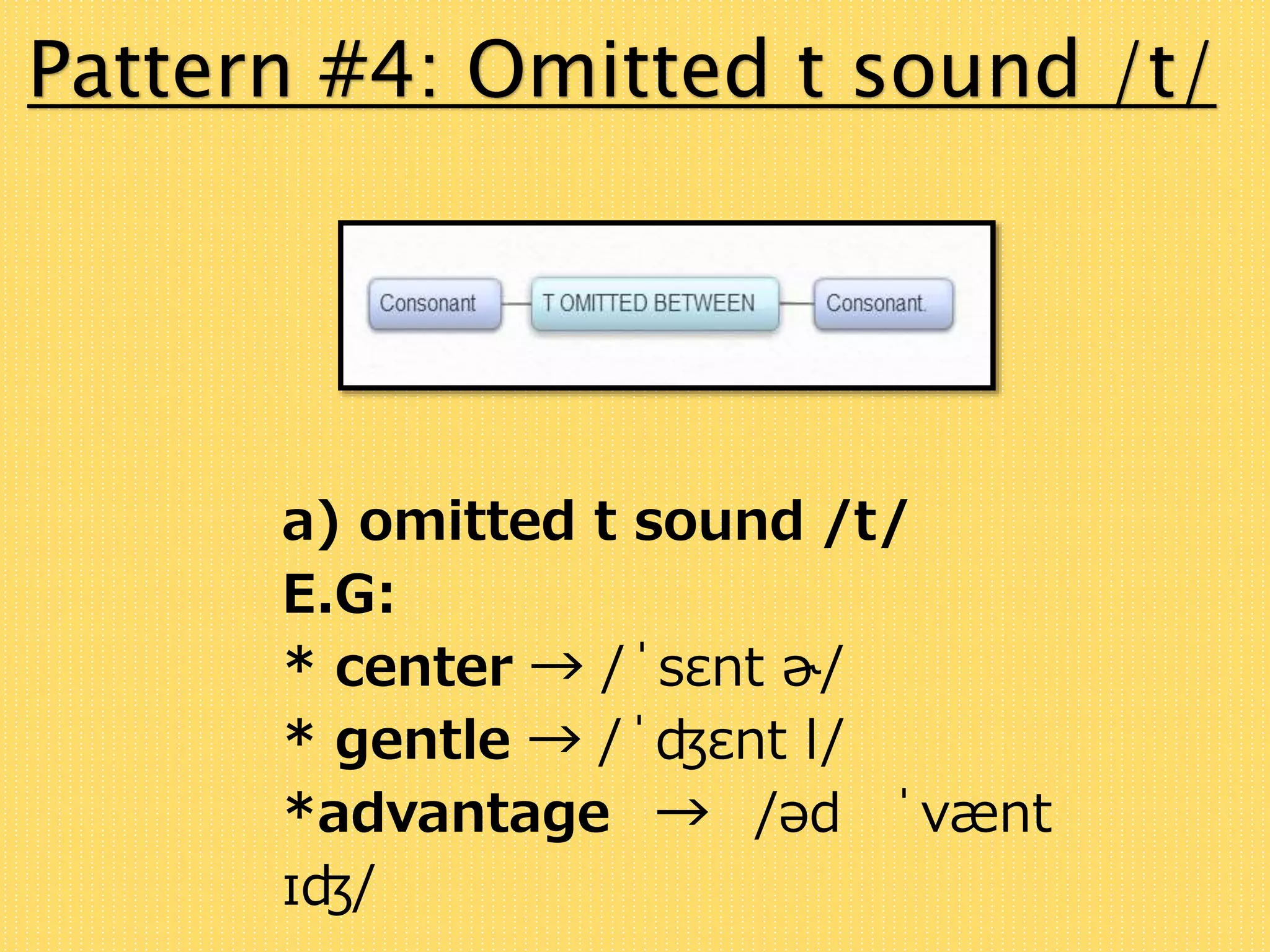
Pattern #4: Omitted t sound /t/ 
a) omitted t sound /t/ 
E.G: 
* center → /ˈsɛnt ɚ/ 
* gentle → /ˈʤɛnt l/ 
*advantage → /əd ˈvænt 
ɪʤ/
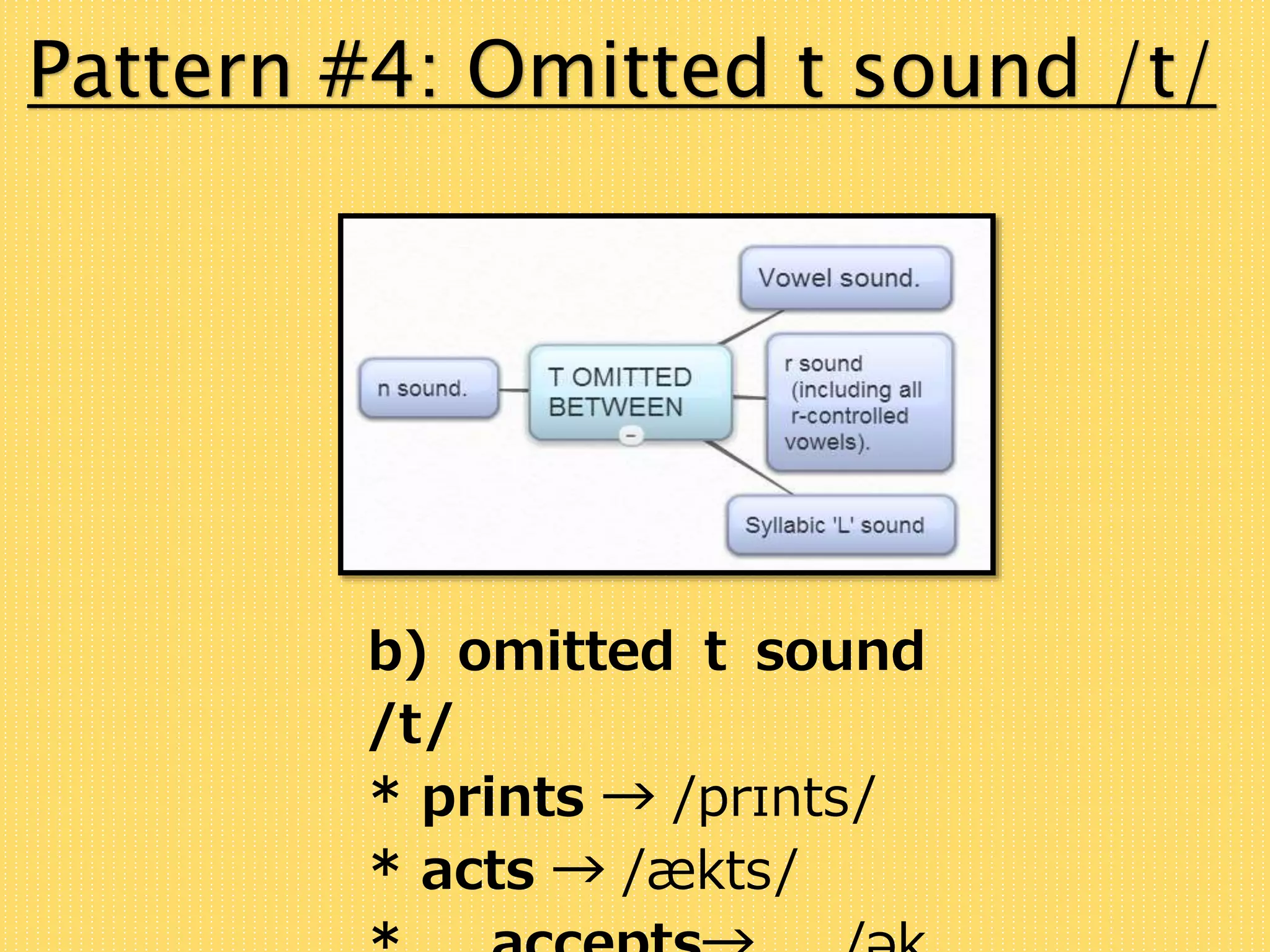
Pattern #4: Omitted t sound /t/ 
b) omitted t sound 
/t/ 
* prints → /prɪnts/ 
* acts → /ækts/ 
* accepts→ /ək
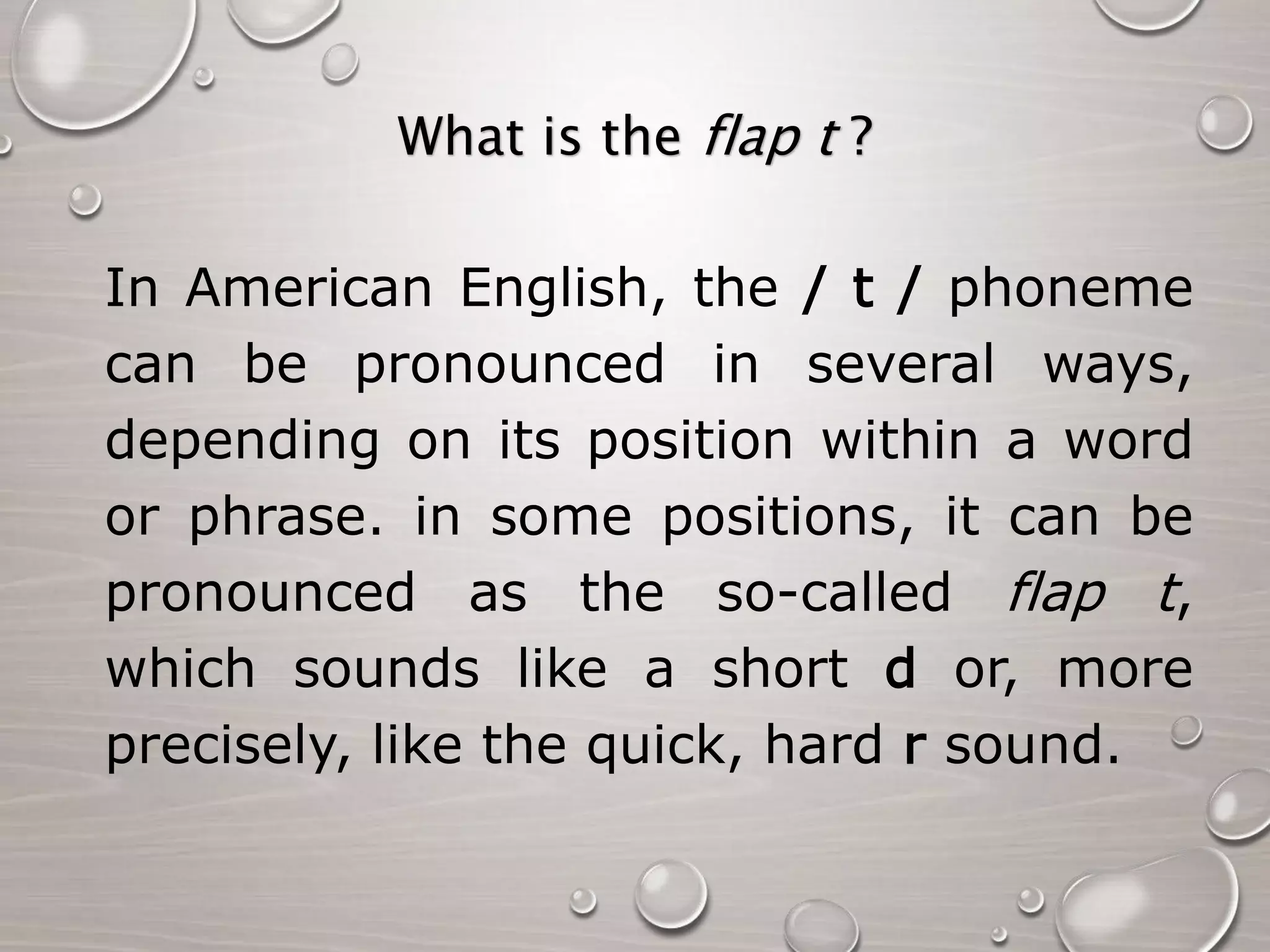
What is the flap t ? 
In American English, the / t / phoneme 
can be pronounced in several ways, 
depending on its position within a word 
or phrase. in some positions, it can be 
pronounced as the so-called flap t, 
which sounds like a short d or, more 
precisely, like the quick, hard r sound.
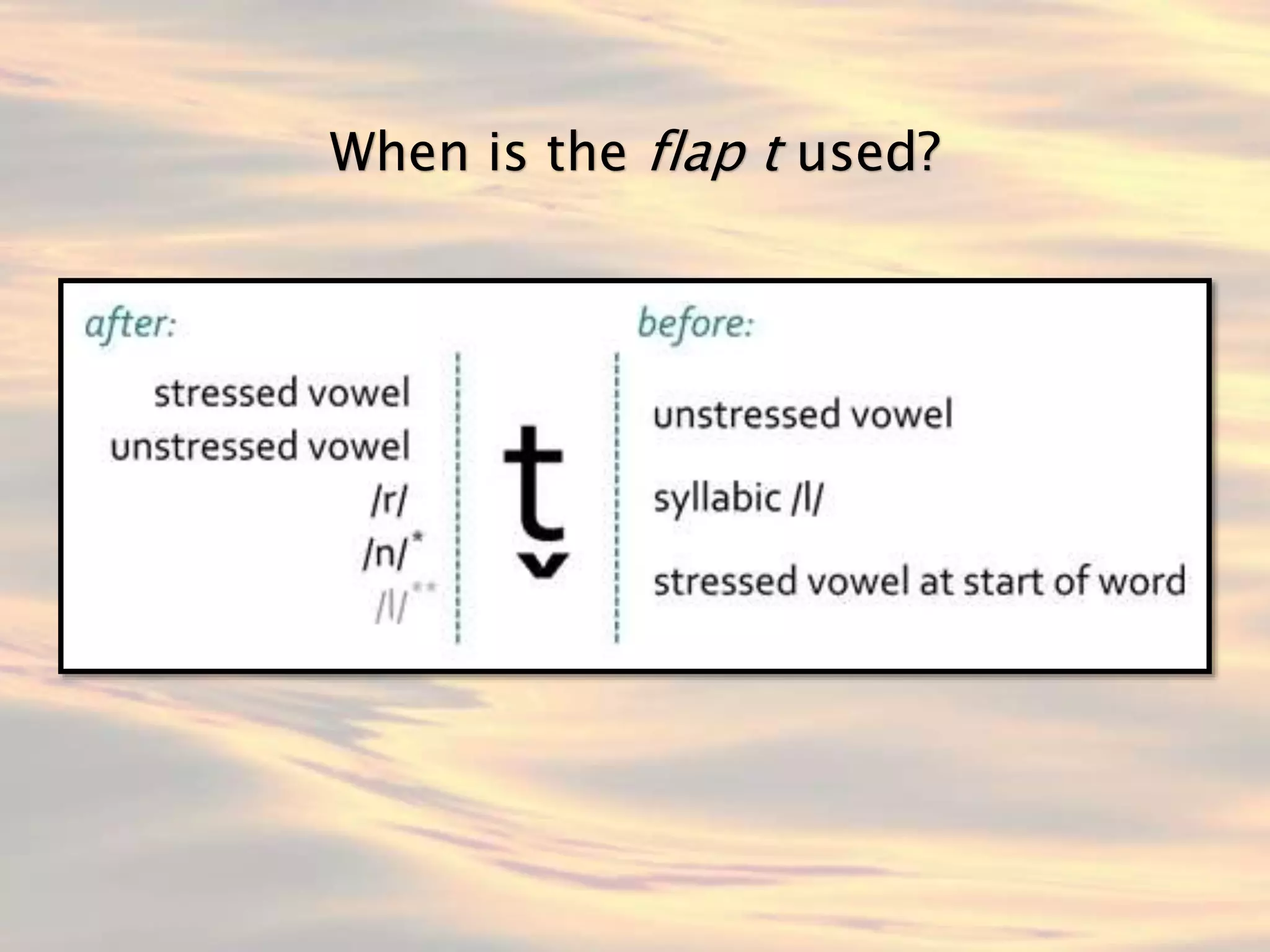
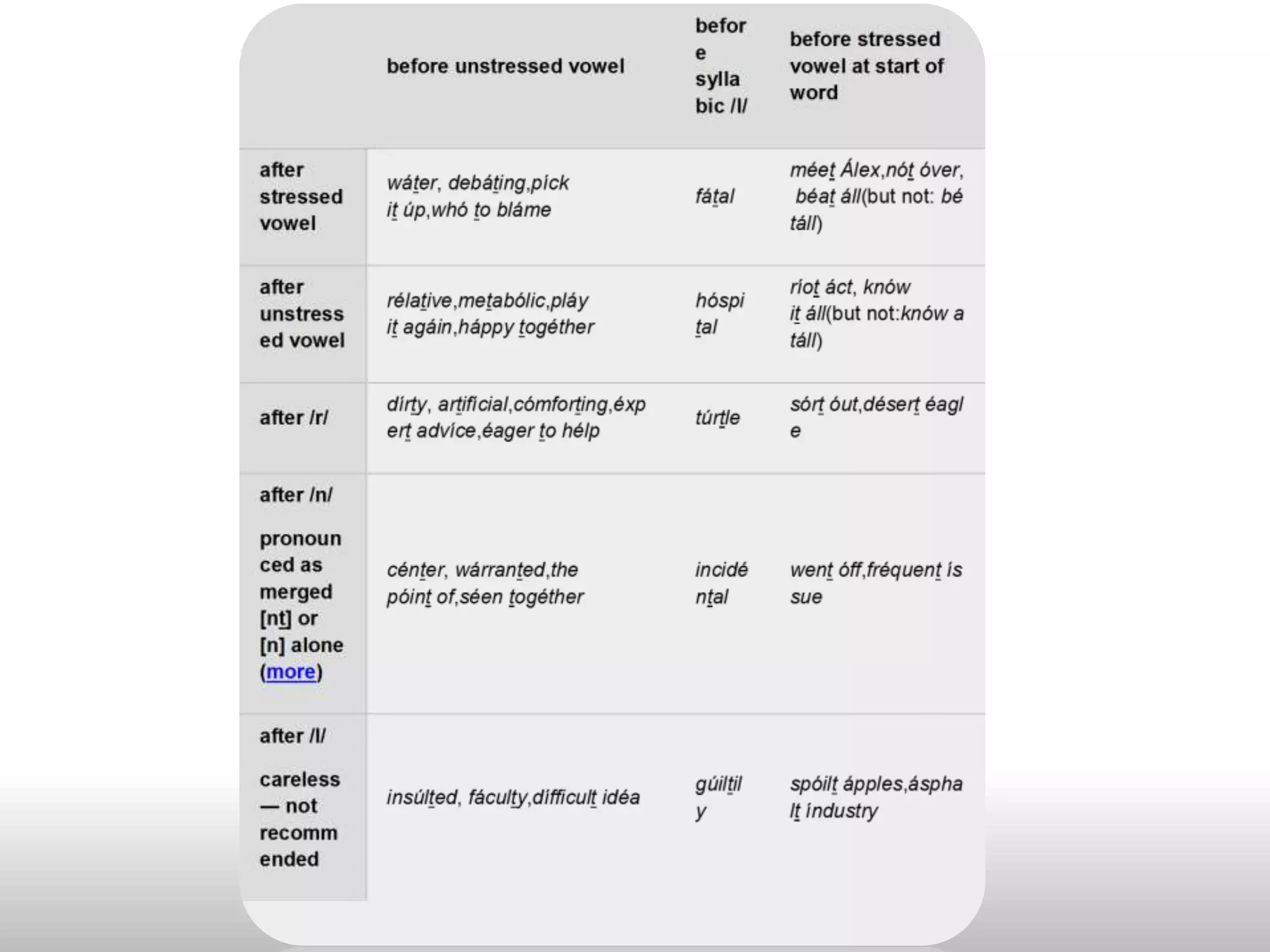
When is the flap t used?
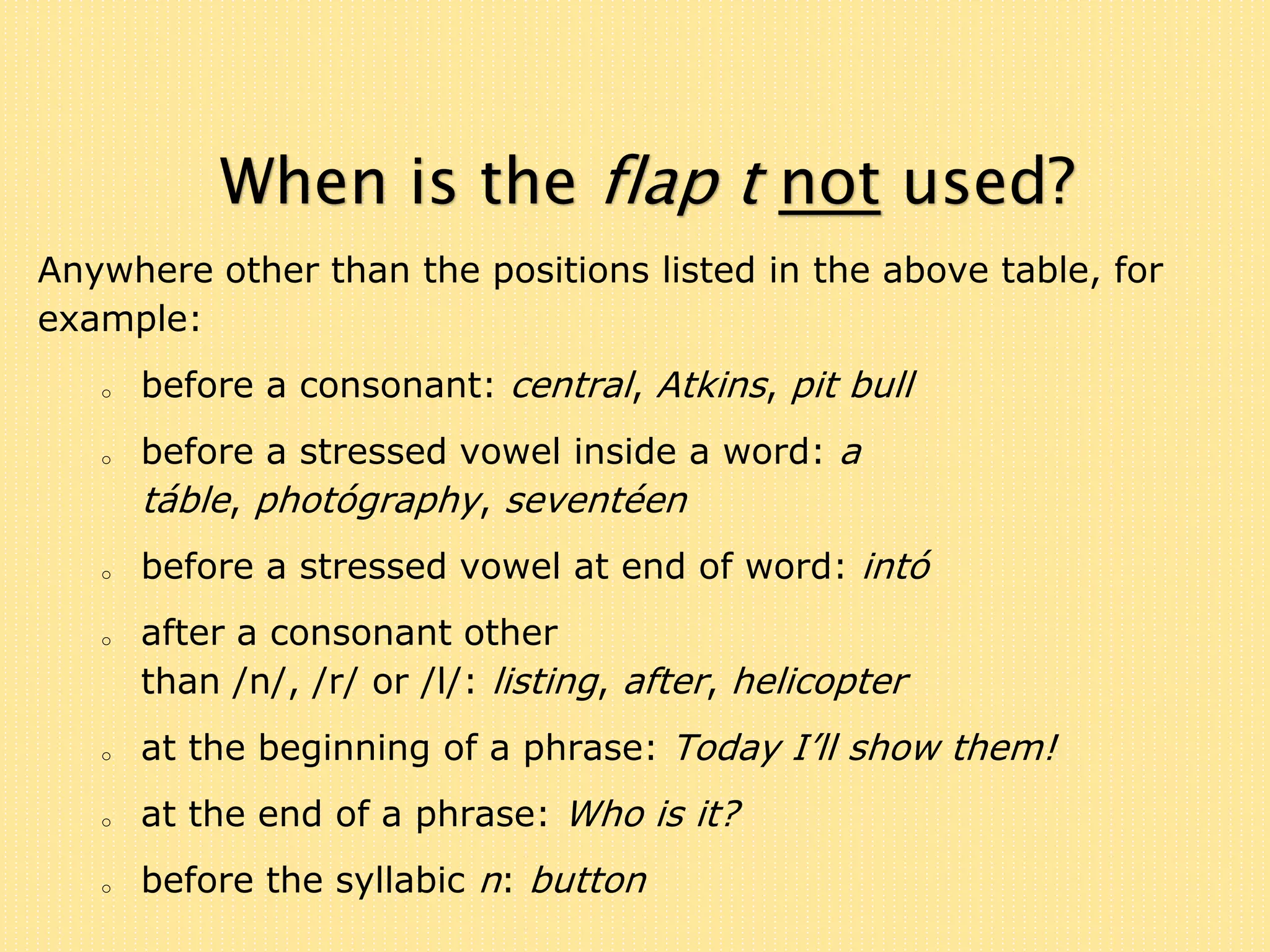
When is the flap t not used? 
Anywhere other than the positions listed in the above table, for 
example: 
o before a consonant: central, Atkins, pit bull 
o before a stressed vowel inside a word: a 
táble, photógraphy, seventéen 
o before a stressed vowel at end of word: intó 
o after a consonant other 
than /n/, /r/ or /l/: listing, after, helicopter 
o at the beginning of a phrase: Today I’ll show them! 
o at the end of a phrase: Who is it? 
o before the syllabic n: button

Assimilation, Dissimilation, T-allophones. Flap T

  • 3.
    When a word’s pronunciation is affected by sounds in a neighboring word, we call this process assimilation.
  • 5.
    ASSIMILATION Direction of change Consonant change
  • 7.
    DIRECTION OF CHANGE Regressive The sounds assimilate dare influenced by the succeeding sounds Progressive The sounds assimilated are affected by the pronunciati on of the preceding sounds Coalescent The first sound and the second sound come together to create a third sound with features from both original sounds
  • 8.
    The phoneme thatcomes first affects the one that comes after it. E.G: Those years / ðəʊʒ jiəs
  • 9.
    Pronunciation of plurals • Voiced sounds /s/ -> /z/ - girls -> /ˈɡɝːlz / - pictures -> /ˈpɪktʃərz/ - knees -> /ˈniːz / - wives -> /ˈwaɪvz / - oruselves -> /aʊərˈselvz/
  • 10.
    • Unvoiced sounds/s/ -> /s/ - cups -> /ˈkəps/ - sports -> / ˈspɔːrts / - snakes -> / ˈsneɪks / - reefs -> / ˈriːfs / - dogs -> /ˈdɑːɡz /
  • 11.
    • Exception “es”-> /iz/ - houses -> / ˈhaʊzɪz/ - buses -> /ˈbʌsəz / - dishes -> /ˈdɪʃəz/ - dresses -> /ˈdresəz / - boxes -> /ˈbɑːksəz/
  • 12.
    Pronunciation of possessives •Voiced sounds |’s| -> /z/ - girls’ pictures -> / ˈɡɝːlz ˈpɪktʃərz / - bob’s parents -> / ˈbɑːbz ˈperənts / - man’s house ->/ ˈmænz ˈhaʊs
  • 13.
    •Unvoiced sounds |’s|-> /s/ - student’s book -> /ˈstuːdənts ˈbʊks/ - mark’s dog -> /ˈmɑːrks / - pete’s son -> /ˈpiːts ˈsən/
  • 14.
    Pronunciation of the3rd person singular •Voiced sounds /s/ -> /s/ - he writes -> / hi ˈraɪts / - she speaks -> /ʃi ˈspiːks / - it cloaks ->/ ˈɪt kloʊks /
  • 15.
    • unvoiced sounds/s/ -> /z/ - he reads -> / hi riːdz / - she utters -> / ʃi ˈʌtərz / - it groans ->/ ˈɪt ˈɡroʊnz /
  • 16.
    Pronunciation of Pasttense and Past participle • Voiced sounds |ed| -> /d/ - hummed -> /ˈhəmd/ - smiled -> /ˈsmaɪld/ - uttered -> / ˈʌtərd / - shined ->/ˈʃaɪnd/ - played ->/ ˈpleɪd/ - spelled ->/ ˈspeld /
  • 17.
    • Unvoiced sounds|ed| -> /t/ - laughed -> /ˈlæft / - talked -> /ˈtɔːkt / - worked -> /ˈwɝːkt / - jumped -> / ˈdʒəmpt / - asked -> /ˈæskt/ - cooked -> /ˈkʊkt /
  • 18.
    The sounds assimilatedare influenced by the following sounds. E.G: This year / ðij jiə / Bright color /braik kalə/ Light blue /laip blu/.
  • 19.
    • News ->/ ˈnjuːz / Newspaper -> /nju:speipər/ • Goose -> /gu:s/ Gooseberry -> /gu:zbəri/ • Five -> /faiv/ Five pence -> /faifpəns/
  • 20.
    Is a typeof reciprocal assimilation, in which: Sound A + Sound B Sound C
  • 21.
    Rule Examples /s//ʃ/ Issue This year /z/ /ʒ/ Pleasure Does your…? /t/ /tʃ/ Stature + /y/ Is that your…? /ts/ /tʃ/ She lets your... He hates you. /d/ /dʒ/ Procedure Would you…? /dz/ /dʒ/ She neds you. He needs your
  • 23.
    CONSONANT CHANGE AssimilationPlace of articulation Assimilation Manner of articulation Assimilation of voicing
  • 24.
    It consists inthe voicing or devoicing of a segment
  • 25.
  • 26.
    Assimilation of placeis noticeable in the regressive assimilation of alveolar consonants.
  • 28.
    1. Progressive assimilation Is relatively uncommon. It may occur when a plosive is followed by a syllabic nasal and the nasal under goes assimilation to the same place of articulation as the preceding plosive. E.G: * /n/ → /m/ after /p, b/ */ n/ →/ŋ/ after / k, g/
  • 29.
    2. Regressive assimilation Commonly seen in some prefixes, such as: *in- → indirect, insane, *im- → impolite, imbalance, immoral. *il- → illegal *ir- → irregular
  • 37.
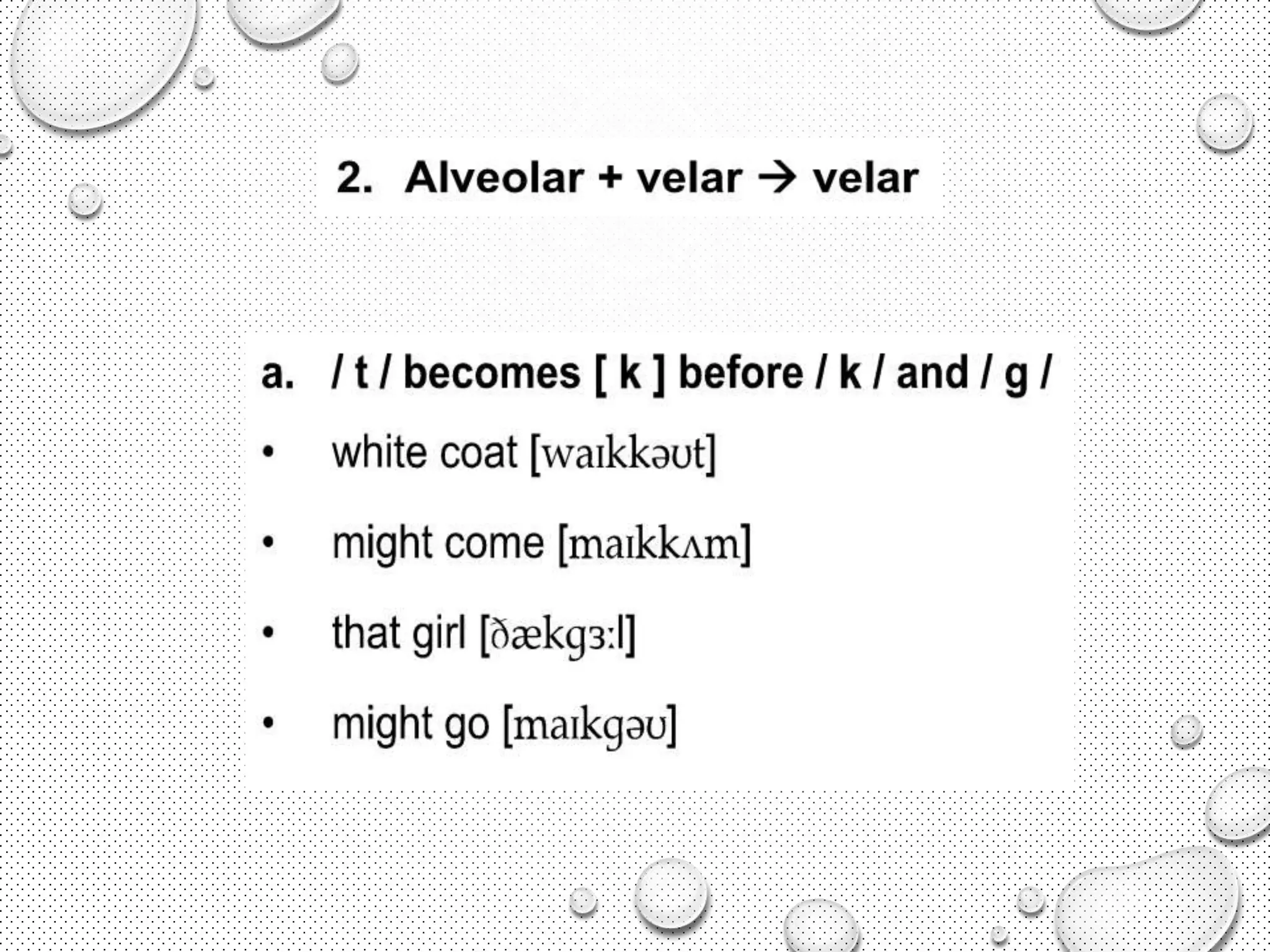
    It occurs whenone sound changes the manner of its articulation to become similar in manner to a neighboring sound. E.G: * ‘Get some of that soup’ → /gɛssʌm v ðas suːp/ *‘good night’ → /gʊn naɪt/
  • 39.
    Note: /ð/ followa plosive or nasal at the end of a preceding word. Eg: get them /get ðəm/ → /gettəm/ in the /in ðə/ → /innə/
  • 41.
    This process occurs when adjacent sounds become more different from each other.
  • 43.
    The American Englisht sound includes the following four common allophones: • Remain a regularly aspirated t sound. • Be pronounced like a quick d (also called an alveolar tap). • Become a glottal stop. • ave no sound at all.
  • 44.
    Pattern #1: Truet sound /t/ E.G: * attach → /ə ˈtæʧ/ * pretend → /prɪ ˈtɛnd/ * italic → /ɪ ˈtæl ɪk/
  • 45.
    Pattern #2: Quickd sound /t̬/ E.G: * daughter → /ˈdɔt̬ ɚ/ * computer → /kəm ˈpjut̬ ɚ/ * settle → /ˈsɛt̬ l/
  • 46.
    Pattern #3: Glottalstop /ʔ/ E.G: * partner → /ˈpɑrʔ nɚ/ * certain → /ˈsɚʔ n/ * fitness → /ˈfɪʔ nəs/
  • 47.
    Pattern #4: Omittedt sound /t/ a) omitted t sound /t/ E.G: * center → /ˈsɛnt ɚ/ * gentle → /ˈʤɛnt l/ *advantage → /əd ˈvænt ɪʤ/
  • 48.
    Pattern #4: Omittedt sound /t/ b) omitted t sound /t/ * prints → /prɪnts/ * acts → /ækts/ * accepts→ /ək
  • 51.
    What is theflap t ? In American English, the / t / phoneme can be pronounced in several ways, depending on its position within a word or phrase. in some positions, it can be pronounced as the so-called flap t, which sounds like a short d or, more precisely, like the quick, hard r sound.
  • 52.
    When is theflap t used?
  • 54.
    When is theflap t not used? Anywhere other than the positions listed in the above table, for example: o before a consonant: central, Atkins, pit bull o before a stressed vowel inside a word: a táble, photógraphy, seventéen o before a stressed vowel at end of word: intó o after a consonant other than /n/, /r/ or /l/: listing, after, helicopter o at the beginning of a phrase: Today I’ll show them! o at the end of a phrase: Who is it? o before the syllabic n: button