
Md. Istiqur Rahman.
ID: 111-29-269.
5th Batch, Section: A.
Definition
A surface active
agent (surfactant) is a substance
which lowers the surface tension
of the medium in which it is
dissolved, and/or the interfacial
tension with other phases.
The term surfactant is also
applied correctly to sparingly
soluble substances, which lower
Example
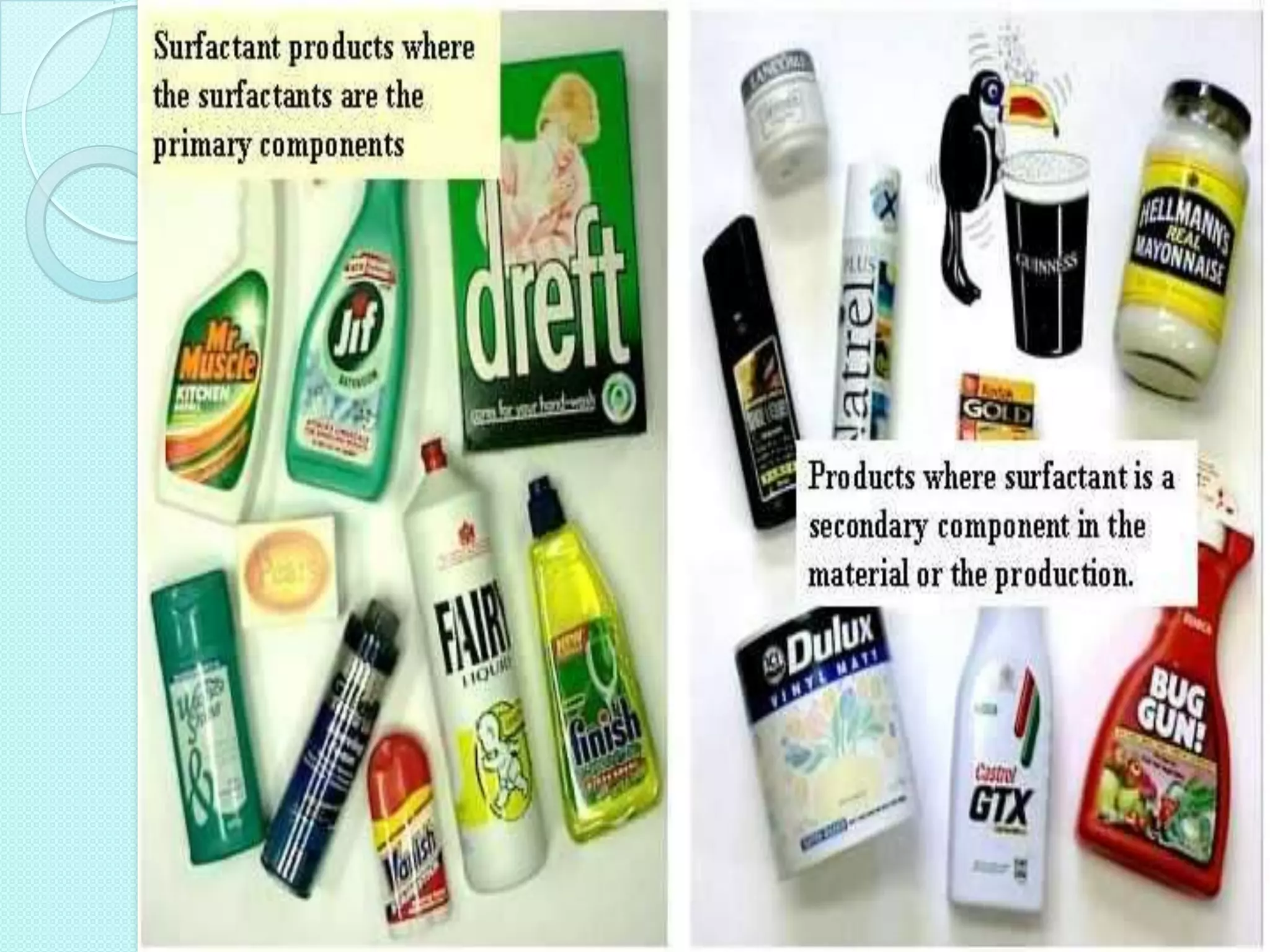
Soap, a salt of a fatty acid
(saturated or unsaturated), is a
surface active agent.
A detergent is a surfactant (or a
mixture containing one or more
surfactants) having cleaning
properties in dilute solution.
An emulsifier is a surfactant which
when present in small amounts
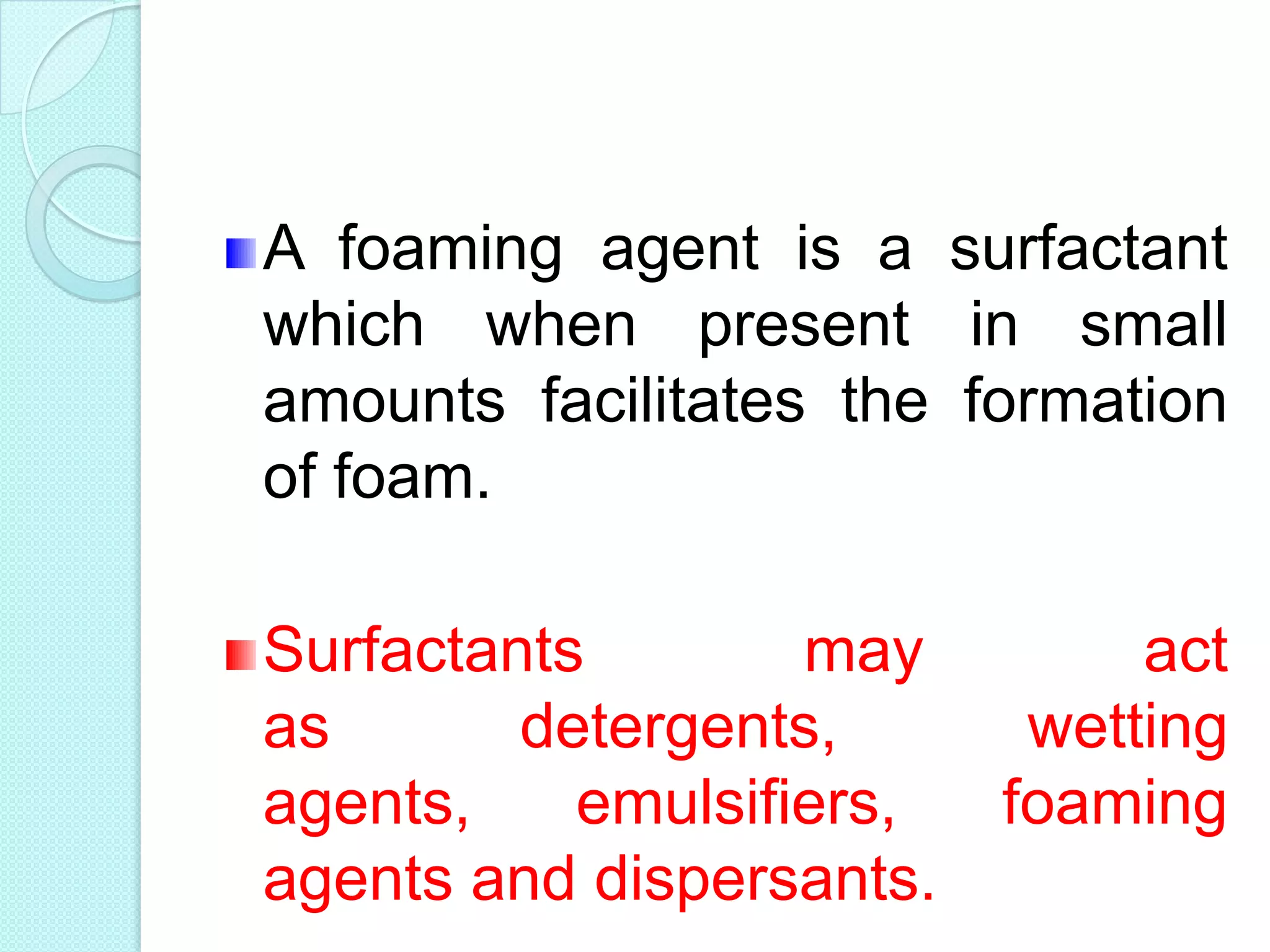
A foaming agent is a surfactant
which when present in small
amounts facilitates the formation
of foam.
Surfactants may act
as detergents, wetting
agents, emulsifiers, foaming
agents and dispersants.
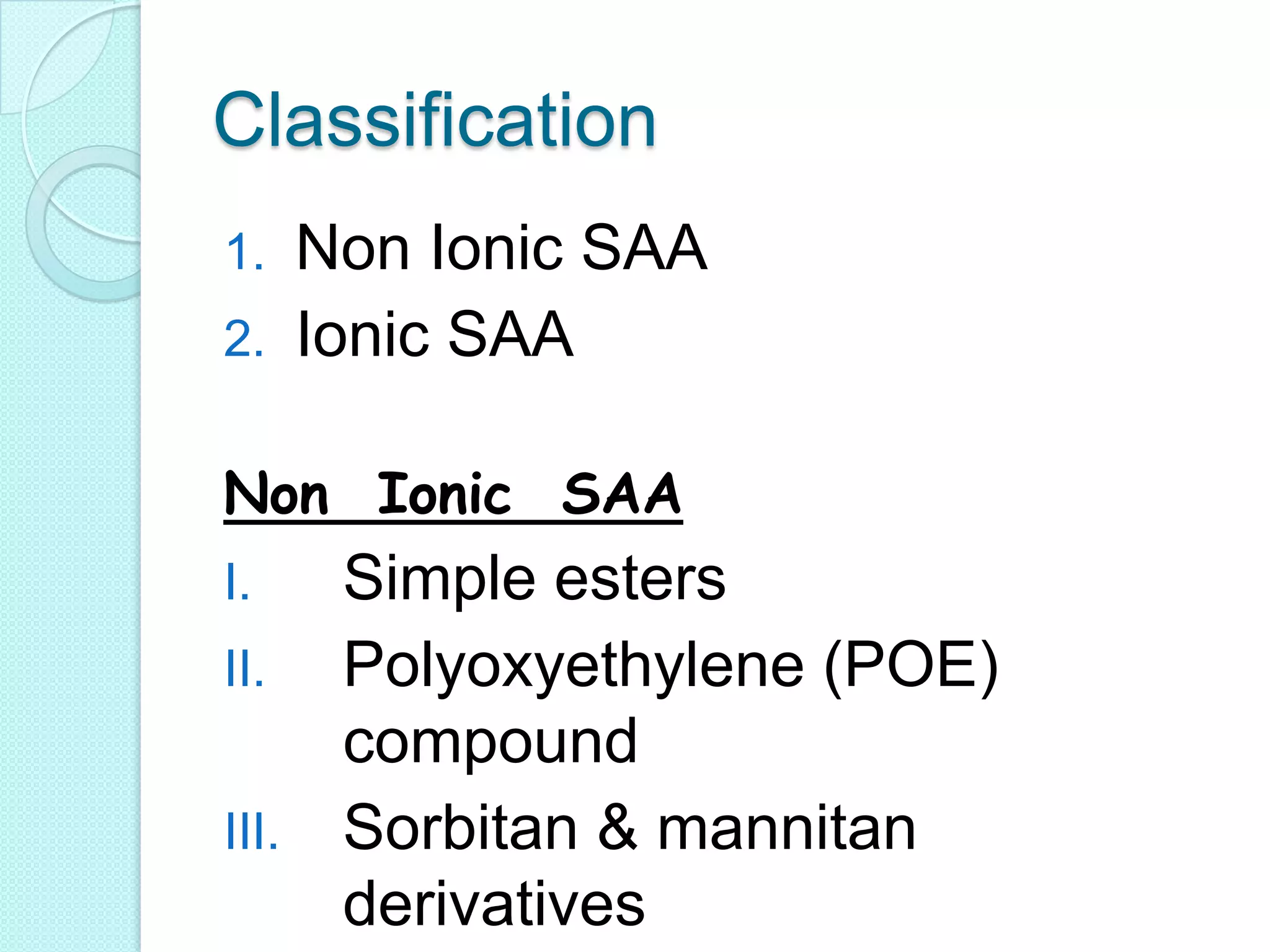
Classification
1. Non Ionic SAA
2. Ionic SAA
Non Ionic SAA
I. Simple esters
II. Polyoxyethylene (POE)
compound
III. Sorbitan & mannitan
derivatives
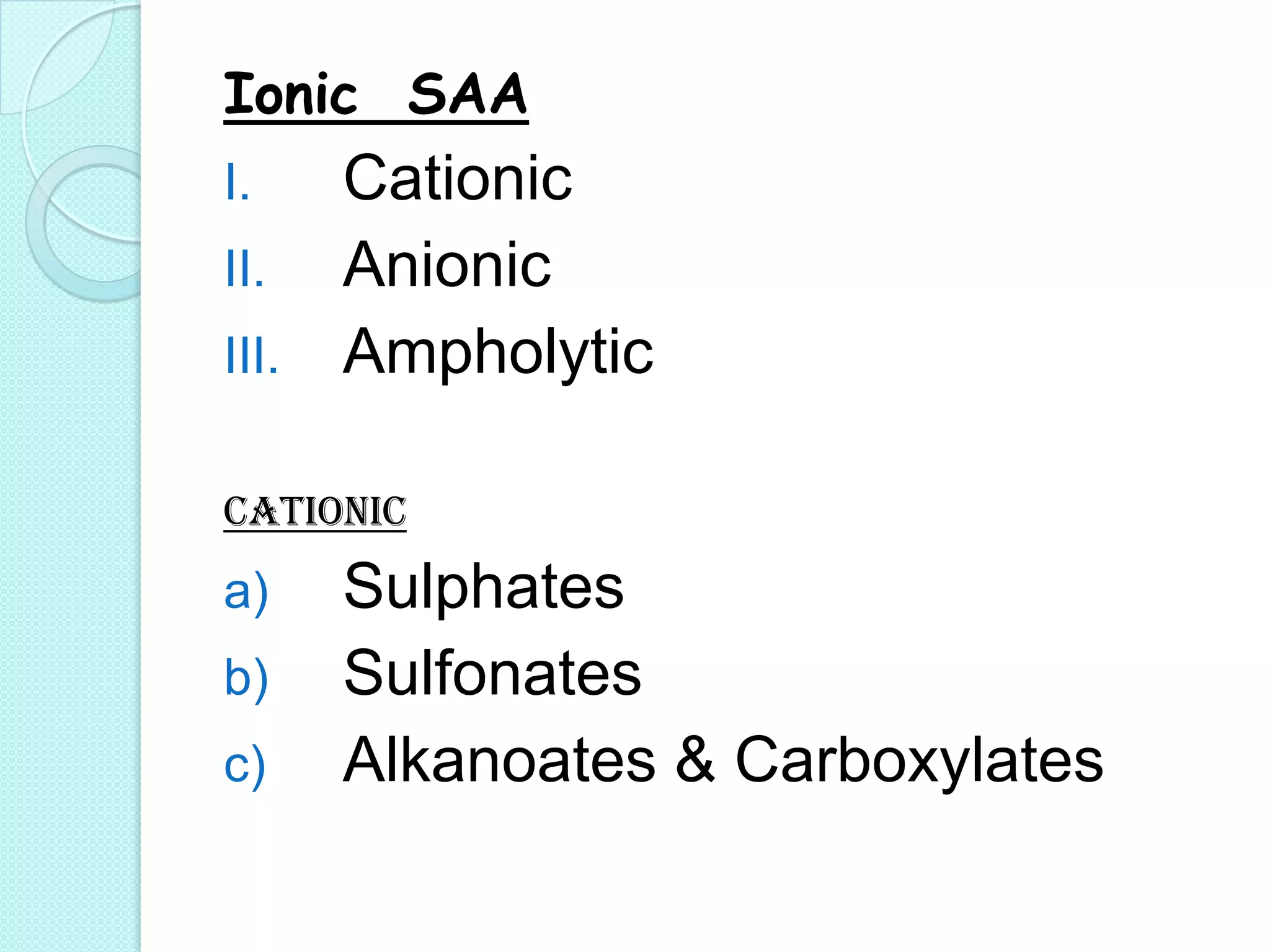
Ionic SAA
I. Cationic
II. Anionic
III. Ampholytic
Cationic
a) Sulphates
b) Sulfonates
c) Alkanoates & Carboxylates
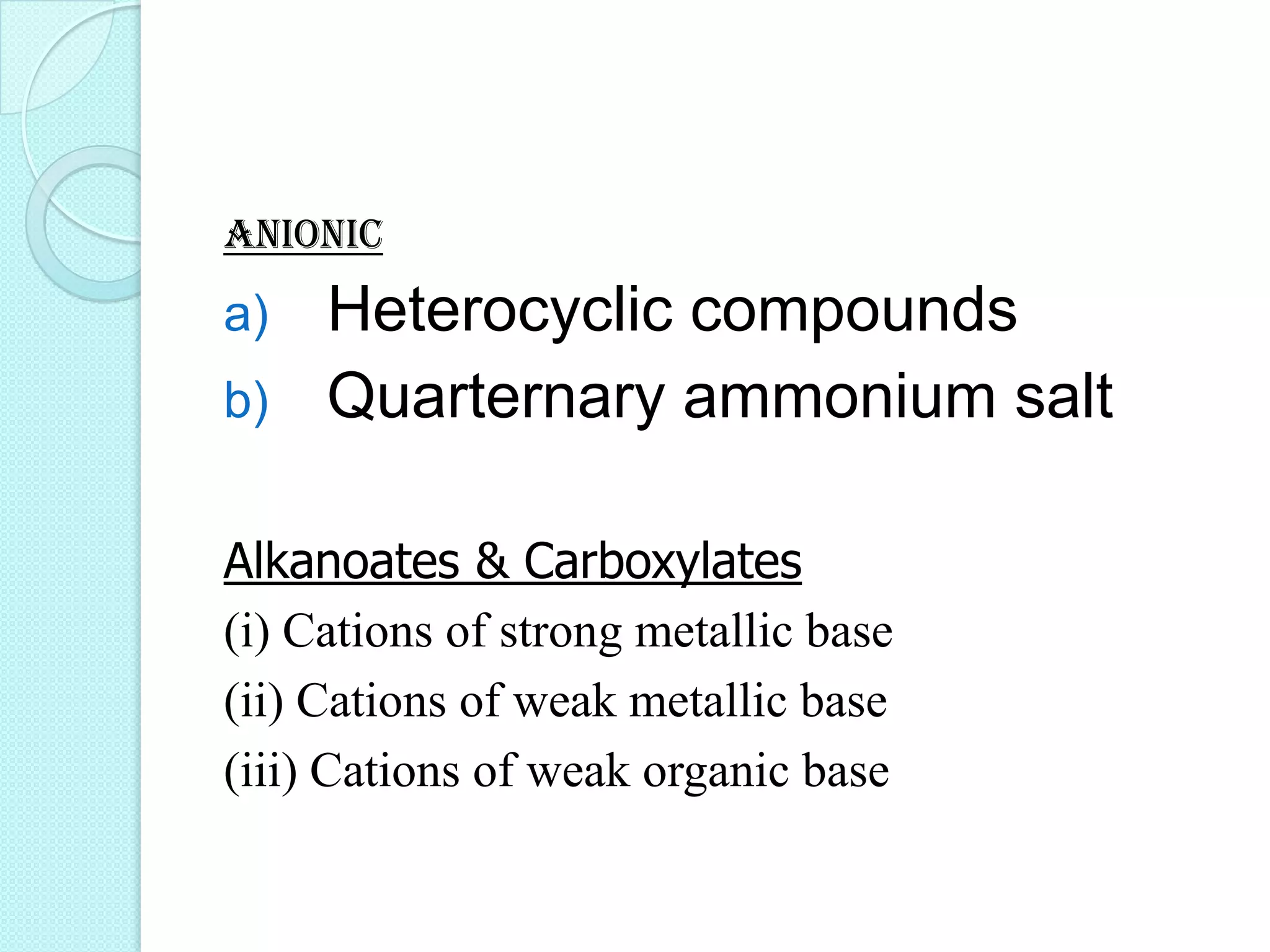
Anionic
a) Heterocyclic compounds
b) Quarternary ammonium salt
Alkanoates & Carboxylates
(i) Cations of strong metallic base
(ii) Cations of weak metallic base
(iii) Cations of weak organic base
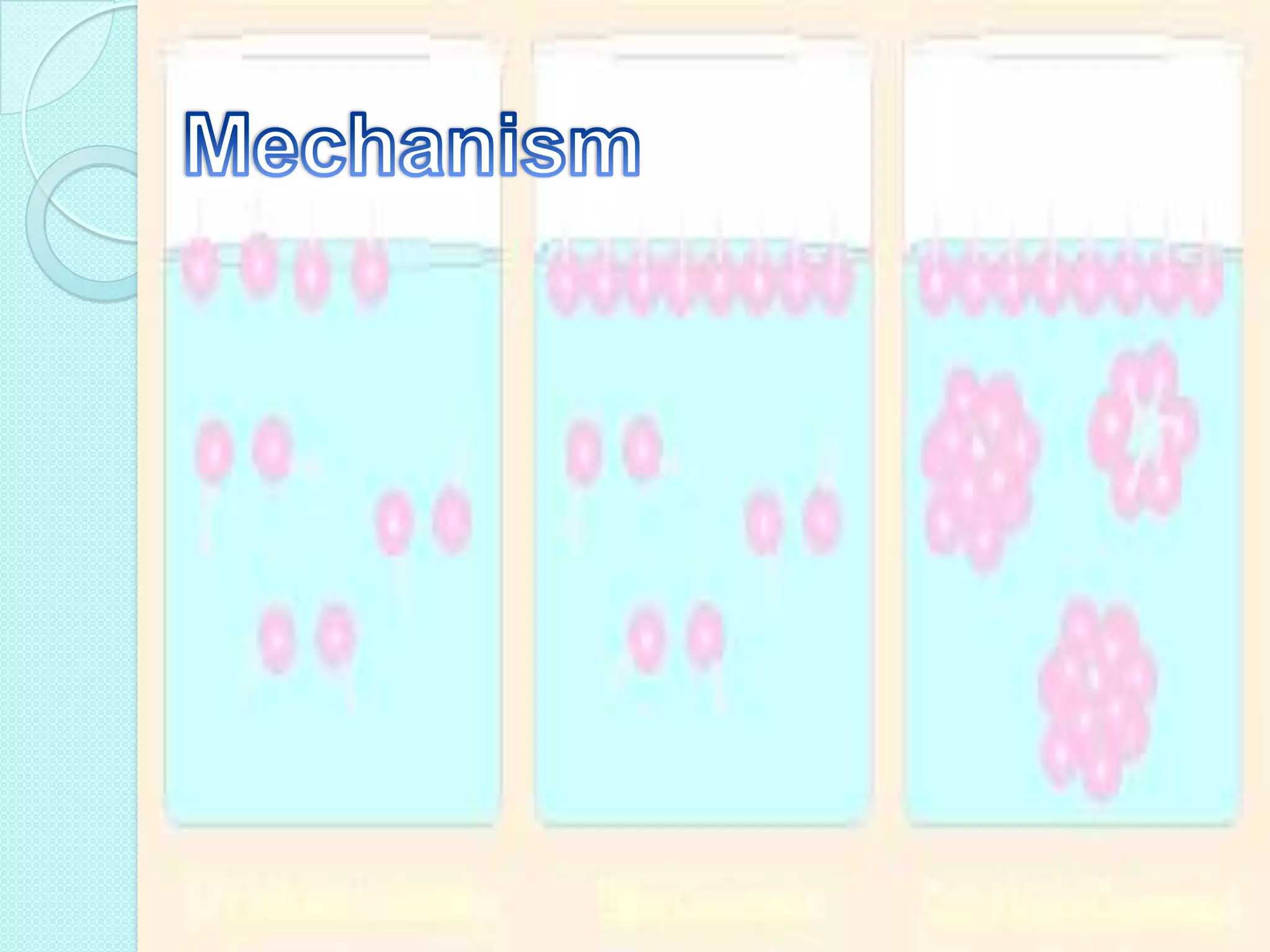
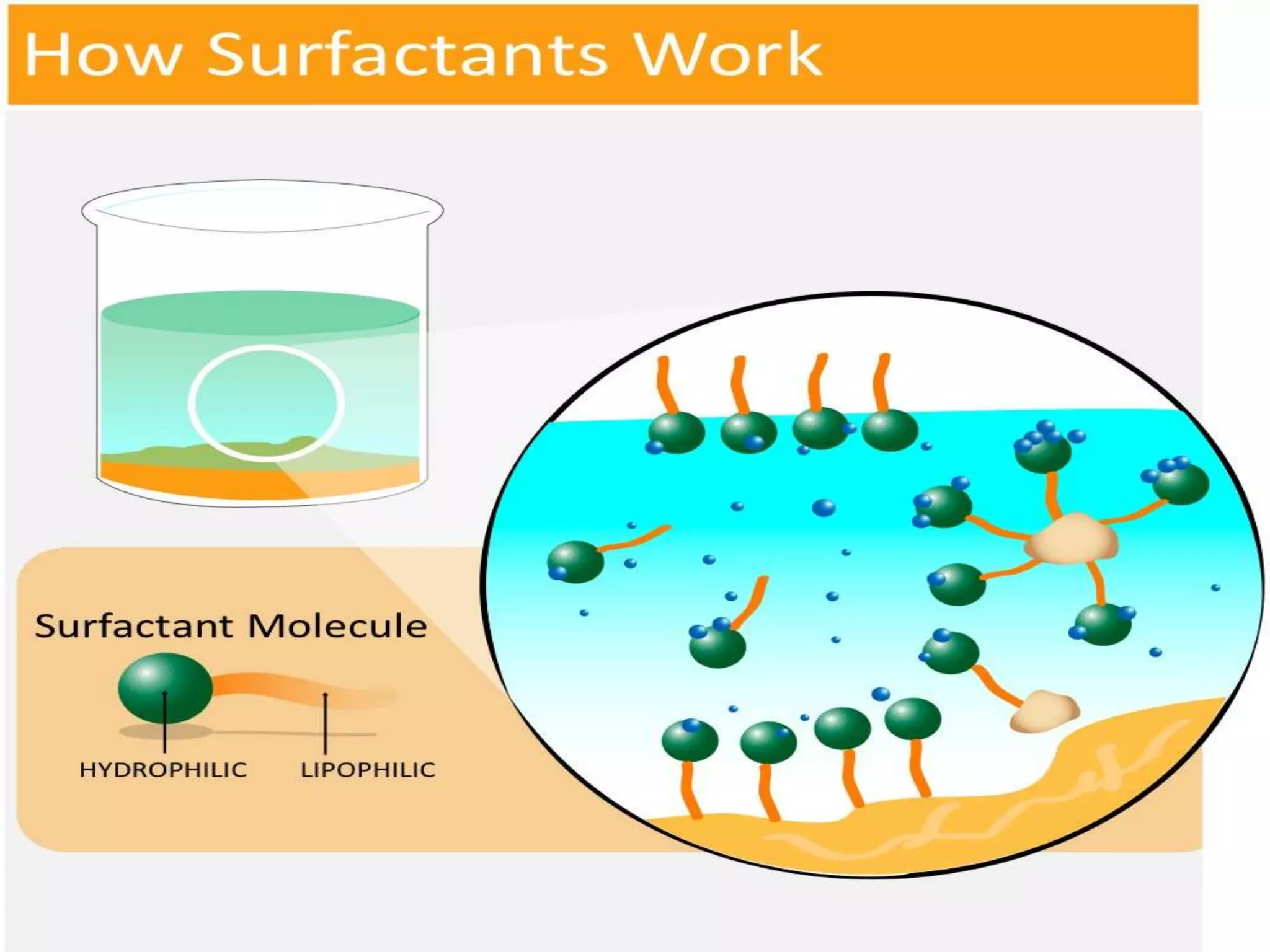
Surfactants are usually organic
compounds that
are amphiphilic, meaning they
contain both hydrophobic groups
(their tails) and hydrophilic groups
(their heads).
A surfactant contains both a water
insoluble (or oil soluble)
component and a water soluble
Surfactants will diffuse in water
and adsorb at interfaces between
air and water or at the interface
between oil and water, in the case
where water is mixed with oil.
The insoluble hydrophobic group
may extend out of the bulk water
phase, into the air or into the oil
phase, while the water soluble
 This alignment of surfactants at
the surface modifies the surface
properties of water at the water/air
or water/oil interface.
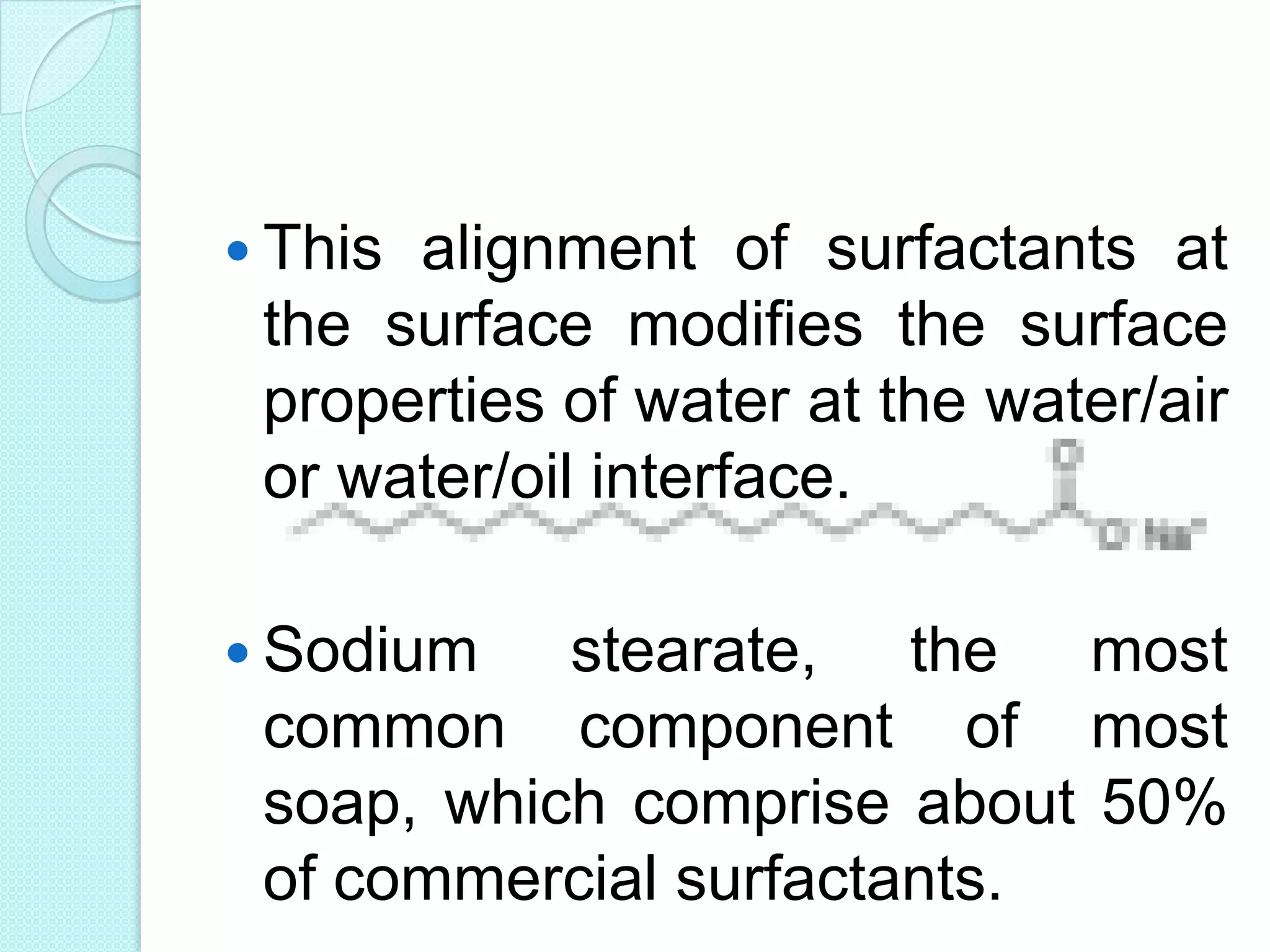
 Sodium stearate, the most
common component of most
soap, which comprise about 50%
of commercial surfactants.
Pharmaceutical Use of
Surfactants
‫۝‬SAA used in emulsions as an emulsifying agent.
‫۝‬SAA used in suspensions as a flocculating
agent.
‫۝‬SAA as a wetting agent.
‫۝‬SAA as a bactericidal agent.
‫۝‬SAA as a solubilizing agent.
‫۝‬To modify the properties of membranes.
‫۝‬Enhancement of percutaneous absorption.
‫۝‬Enhancement of transport across mucosal
membranes (rectal, vaginal, ophthalmic, nasal).
‫۝‬SAA as a foaming agent.
Surface active agent by 269

Surface active agent by 269

  • 1.
    Md. Istiqur Rahman. ID:111-29-269. 5th Batch, Section: A.
  • 2.
    Definition A surface active agent(surfactant) is a substance which lowers the surface tension of the medium in which it is dissolved, and/or the interfacial tension with other phases. The term surfactant is also applied correctly to sparingly soluble substances, which lower
  • 3.
    Example Soap, a saltof a fatty acid (saturated or unsaturated), is a surface active agent. A detergent is a surfactant (or a mixture containing one or more surfactants) having cleaning properties in dilute solution. An emulsifier is a surfactant which when present in small amounts
  • 5.
    A foaming agentis a surfactant which when present in small amounts facilitates the formation of foam. Surfactants may act as detergents, wetting agents, emulsifiers, foaming agents and dispersants.
  • 6.
    Classification 1. Non IonicSAA 2. Ionic SAA Non Ionic SAA I. Simple esters II. Polyoxyethylene (POE) compound III. Sorbitan & mannitan derivatives
  • 7.
    Ionic SAA I. Cationic II.Anionic III. Ampholytic Cationic a) Sulphates b) Sulfonates c) Alkanoates & Carboxylates
  • 8.
    Anionic a) Heterocyclic compounds b)Quarternary ammonium salt Alkanoates & Carboxylates (i) Cations of strong metallic base (ii) Cations of weak metallic base (iii) Cations of weak organic base
  • 10.
    Surfactants are usuallyorganic compounds that are amphiphilic, meaning they contain both hydrophobic groups (their tails) and hydrophilic groups (their heads). A surfactant contains both a water insoluble (or oil soluble) component and a water soluble
  • 11.
    Surfactants will diffusein water and adsorb at interfaces between air and water or at the interface between oil and water, in the case where water is mixed with oil. The insoluble hydrophobic group may extend out of the bulk water phase, into the air or into the oil phase, while the water soluble
  • 13.
     This alignmentof surfactants at the surface modifies the surface properties of water at the water/air or water/oil interface.  Sodium stearate, the most common component of most soap, which comprise about 50% of commercial surfactants.
  • 14.
    Pharmaceutical Use of Surfactants ‫۝‬SAAused in emulsions as an emulsifying agent. ‫۝‬SAA used in suspensions as a flocculating agent. ‫۝‬SAA as a wetting agent. ‫۝‬SAA as a bactericidal agent. ‫۝‬SAA as a solubilizing agent. ‫۝‬To modify the properties of membranes. ‫۝‬Enhancement of percutaneous absorption. ‫۝‬Enhancement of transport across mucosal membranes (rectal, vaginal, ophthalmic, nasal). ‫۝‬SAA as a foaming agent.