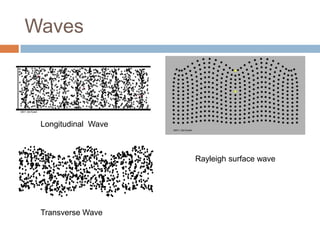
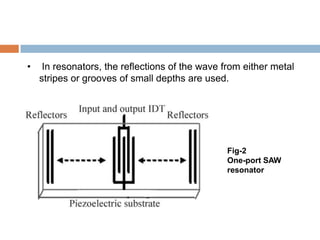
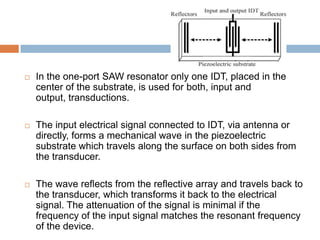
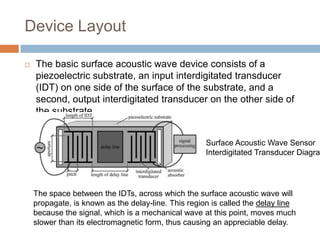
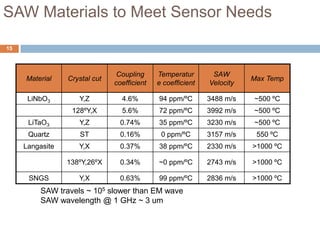
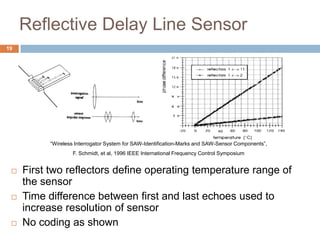
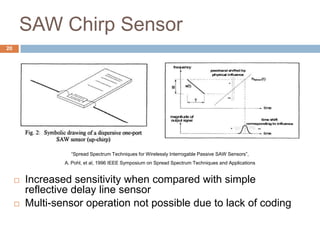
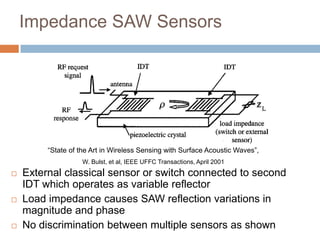
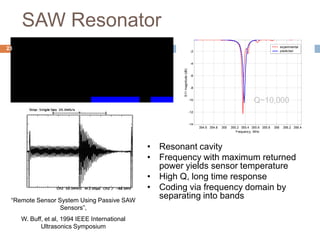
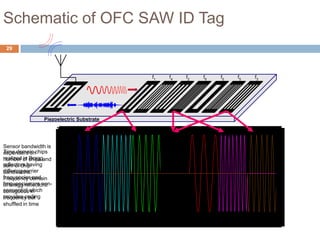
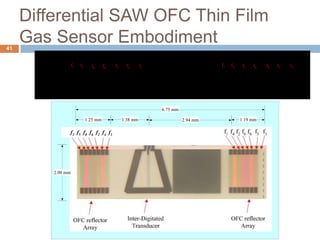
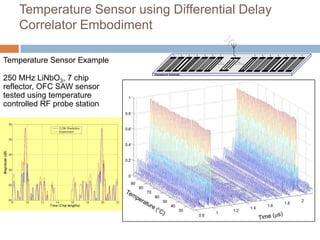
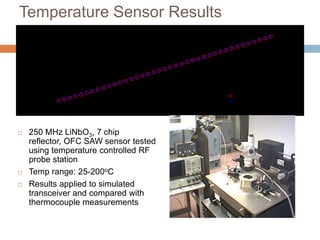
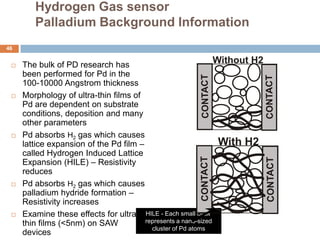
Surface acoustic wave sensors rely on modulating and transducing surface acoustic waves to sense physical phenomena. They have advantages including compact size, high sensitivity, fast response, and ability to operate wirelessly in harsh environments. A basic SAW sensor consists of a piezoelectric substrate with input and output interdigital transducers to launch and receive surface acoustic waves. The transducers convert between electrical and mechanical surface waves, allowing remote sensing by analyzing signal changes induced by external factors interacting with the waves.