Malassizia infection
prepared by: Aras sulaiman A.
supervised by: Dr. Asia A.
Introduction:
• Yeasts of the genus Malassezia (synonym:
Pityrosporum)are obligatory or nonobligatory lipophilic,
normal flora organisms of the skin of warm-blooded
hosts.
• under appropriate conditions, they cause superficial
infections of the skin and associated structures.
• The most commonly described human infection due to a
member of the genus is pityriasis versicolor, a chronic,
superficial disease of the stratum comeum layer of the
epidermis containing the typical hyphal elements and
yeast cells of Malassezia furfur in tissue .
• Malassezia yeasts were first described in the 19th
century as budding yeasts found on the skin of
patients with dandruff.
• They are named after Louis-Charles Malassez, a
French scientist who identified the yeasts in the outer
layer of the epidermis of patients with seborrheic
dermatitis.
• The different Malassezia species are distinguished
based on their morphology, growth characteristics,
enzyme activities, as well as by molecular methods
. Malassezia are dimorphic fungi.
Distribution of Malassezia
on normal skin
• Malassezia are common lipid dependent fungi
that grow on the sebaceous areas of human
skin, including the face, scalp, and upper
trunk.
• Although Malassezia are a part of the normal
human skin flora, they may also cause or
exacerbate several skin diseases, including
tinea versicolor, Pityrosporum folliculitis, and
seborrheic dermatitis…
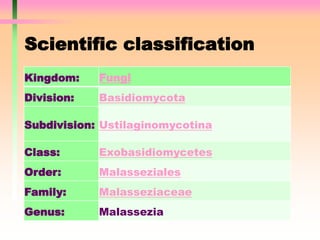
Scientific classification
Kingdom: Fungi
Division: Basidiomycota
Subdivision: Ustilaginomycotina
Class: Exobasidiomycetes
Order: Malasseziales
Family: Malasseziaceae
Genus: Malassezia
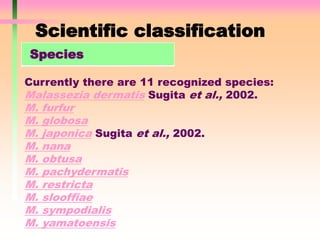
Scientific classification
Currently there are 11 recognized species:
Malassezia dermatis Sugita et al., 2002.
M. furfur
M. globosa
M. japonica Sugita et al., 2002.
M. nana
M. obtusa
M. pachydermatis
M. restricta
M. slooffiae
M. sympodialis
M. yamatoensis
Species
Description of the disease
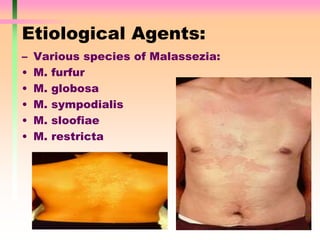
1- Pityriasis versicolor:
• Pityriasis versicolor (PV) This is a chronic, superficial fungal
disease of the skin characterised by well-demarcated white, pink,
beige, or brownish lesions, often combining.
• The colour varies according to the normal pigmentation of the
patient, exposure of the area to sunlight, and the severity of the
disease.
• The mycelial phase of the fungus is predominant in the
lesions. M. globosa is the main species isolated from the
lesions.
Etiological Agents:
– Various species of Malassezia:
• M. furfur
• M. globosa
• M. sympodialis
• M. sloofiae
• M. restricta
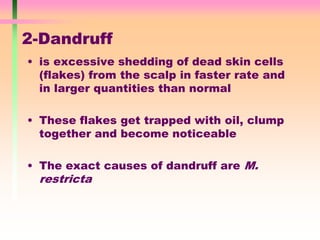
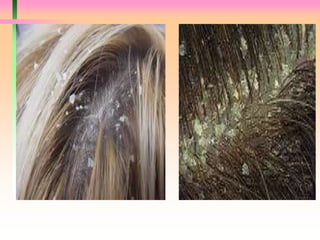
2-Dandruff
• is excessive shedding of dead skin cells
(flakes) from the scalp in faster rate and
in larger quantities than normal
• These flakes get trapped with oil, clump
together and become noticeable
• The exact causes of dandruff are M.
restricta
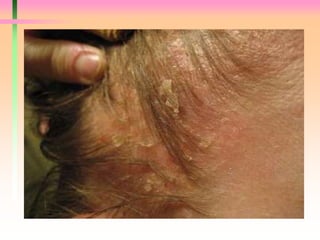
• Seborrheic dermatitis (SD): is a chronic dermatitis
with greasy scales in seborrheic areas in children
and adults.
• M. sympodialis and M. restricta are the Malassezia
species found commonly in SD lesions.
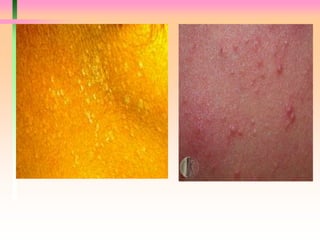
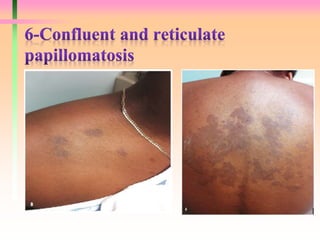
• : This is characterised by follicular papules and
pustules localised to the back, chest and upper
arms, sometimes the neck, and more seldom the
face.
• These are itchy and often appear after sun
exposure. Scrapings or biopsy specimens show
numerous yeasts occluding the mouths of the
infected follicules.
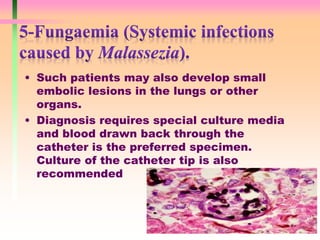
• Such patients may also develop small
embolic lesions in the lungs or other
organs.
• Diagnosis requires special culture media
and blood drawn back through the
catheter is the preferred specimen.
Culture of the catheter tip is also
recommended
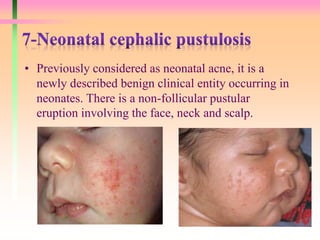
• Previously considered as neonatal acne, it is a
newly described benign clinical entity occurring in
neonates. There is a non-follicular pustular
eruption involving the face, neck and scalp.
 Pregnancy
 Malnutrition
 Immunosuppression (including use of tumor
necrosis factor inhibitors)
 Oral contraception

Excess heat and humidity (heavy clothing with
perspiration)

Age: adolescents and young adults

Skin: more common in people with naturally oily
or excessively sweaty skin
• Ketoconazole
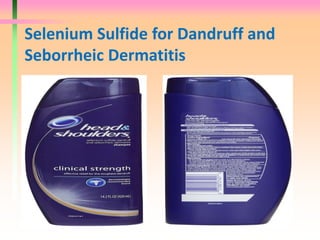
Selenium Sulfide for Dandruff and
Seborrheic Dermatitis
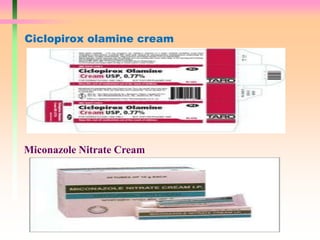
Ciclopirox olamine cream
Miconazole Nitrate Cream
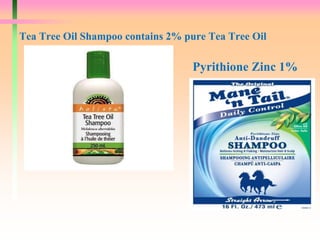
Tea Tree Oil Shampoo contains 2% pure Tea Tree Oil
Pyrithione Zinc 1%
Malassezia infection

Malassezia infection

  • 1.
    Malassizia infection prepared by:Aras sulaiman A. supervised by: Dr. Asia A.
  • 2.
    Introduction: • Yeasts ofthe genus Malassezia (synonym: Pityrosporum)are obligatory or nonobligatory lipophilic, normal flora organisms of the skin of warm-blooded hosts. • under appropriate conditions, they cause superficial infections of the skin and associated structures. • The most commonly described human infection due to a member of the genus is pityriasis versicolor, a chronic, superficial disease of the stratum comeum layer of the epidermis containing the typical hyphal elements and yeast cells of Malassezia furfur in tissue .
  • 3.
    • Malassezia yeastswere first described in the 19th century as budding yeasts found on the skin of patients with dandruff. • They are named after Louis-Charles Malassez, a French scientist who identified the yeasts in the outer layer of the epidermis of patients with seborrheic dermatitis. • The different Malassezia species are distinguished based on their morphology, growth characteristics, enzyme activities, as well as by molecular methods . Malassezia are dimorphic fungi.
  • 4.
    Distribution of Malassezia onnormal skin • Malassezia are common lipid dependent fungi that grow on the sebaceous areas of human skin, including the face, scalp, and upper trunk. • Although Malassezia are a part of the normal human skin flora, they may also cause or exacerbate several skin diseases, including tinea versicolor, Pityrosporum folliculitis, and seborrheic dermatitis…
  • 5.
    Scientific classification Kingdom: Fungi Division:Basidiomycota Subdivision: Ustilaginomycotina Class: Exobasidiomycetes Order: Malasseziales Family: Malasseziaceae Genus: Malassezia
  • 6.
    Scientific classification Currently thereare 11 recognized species: Malassezia dermatis Sugita et al., 2002. M. furfur M. globosa M. japonica Sugita et al., 2002. M. nana M. obtusa M. pachydermatis M. restricta M. slooffiae M. sympodialis M. yamatoensis Species
  • 7.
    Description of thedisease 1- Pityriasis versicolor: • Pityriasis versicolor (PV) This is a chronic, superficial fungal disease of the skin characterised by well-demarcated white, pink, beige, or brownish lesions, often combining. • The colour varies according to the normal pigmentation of the patient, exposure of the area to sunlight, and the severity of the disease. • The mycelial phase of the fungus is predominant in the lesions. M. globosa is the main species isolated from the lesions.
  • 8.
    Etiological Agents: – Variousspecies of Malassezia: • M. furfur • M. globosa • M. sympodialis • M. sloofiae • M. restricta
  • 9.
    2-Dandruff • is excessiveshedding of dead skin cells (flakes) from the scalp in faster rate and in larger quantities than normal • These flakes get trapped with oil, clump together and become noticeable • The exact causes of dandruff are M. restricta
  • 11.
    • Seborrheic dermatitis(SD): is a chronic dermatitis with greasy scales in seborrheic areas in children and adults. • M. sympodialis and M. restricta are the Malassezia species found commonly in SD lesions.
  • 13.
    • : Thisis characterised by follicular papules and pustules localised to the back, chest and upper arms, sometimes the neck, and more seldom the face. • These are itchy and often appear after sun exposure. Scrapings or biopsy specimens show numerous yeasts occluding the mouths of the infected follicules.
  • 15.
    • Such patientsmay also develop small embolic lesions in the lungs or other organs. • Diagnosis requires special culture media and blood drawn back through the catheter is the preferred specimen. Culture of the catheter tip is also recommended
  • 17.
    • Previously consideredas neonatal acne, it is a newly described benign clinical entity occurring in neonates. There is a non-follicular pustular eruption involving the face, neck and scalp.
  • 19.
     Pregnancy  Malnutrition Immunosuppression (including use of tumor necrosis factor inhibitors)  Oral contraception  Excess heat and humidity (heavy clothing with perspiration)  Age: adolescents and young adults  Skin: more common in people with naturally oily or excessively sweaty skin
  • 21.
  • 22.
    Selenium Sulfide forDandruff and Seborrheic Dermatitis
  • 23.
  • 24.
    Tea Tree OilShampoo contains 2% pure Tea Tree Oil Pyrithione Zinc 1%