Soil
www.reflectivelearn.com
Formation of Soil
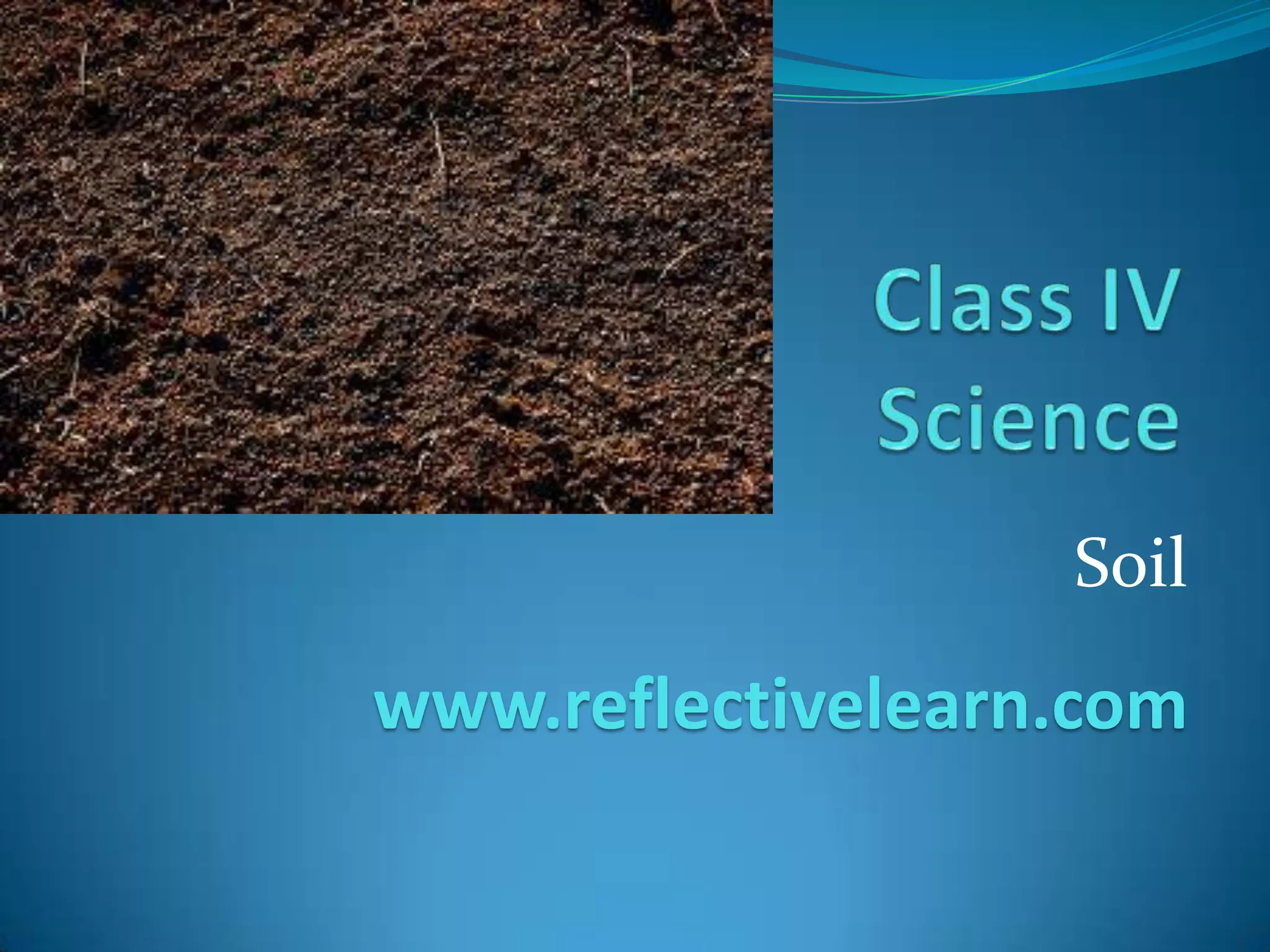
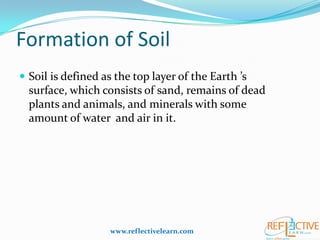
 Soil is defined as the top layer of the Earth ’s
surface, which consists of sand, remains of dead
plants and animals, and minerals with some
amount of water and air in it.
www.reflectivelearn.com
Types of Soil
Three types types of soil, depending on the size, feel, and
colour of the soil particles
1. Gravel consists of tiny stones and does not hold water.
2. Sand is light and dry. Water passes easily through this
kind of soil as particles are rough.
3. Clay particles are extremely fine. Water does not flow
freely through this soil.
Soil that consist s of clay, sand and humus is called loam.
Loamy soil is good for growing plants.
www.reflectivelearn.com
Composition of soil
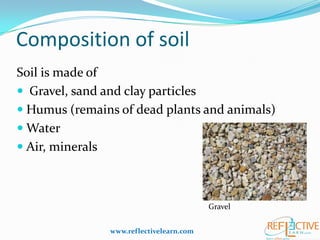
Soil is made of
 Gravel, sand and clay particles
 Humus (remains of dead plants and animals)
 Water
 Air, minerals
www.reflectivelearn.com
Gravel
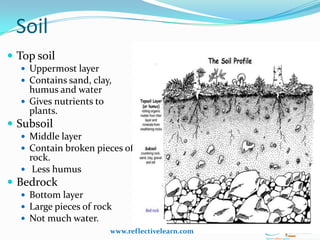
Soil
 Top soil
 Uppermost layer
 Contains sand, clay,
humus and water
 Gives nutrients to
plants.
 Subsoil
 Middle layer
 Contain broken pieces of
rock.
 Less humus
 Bedrock
 Bottom layer
 Large pieces of rock
 Not much water.
www.reflectivelearn.com
Soil Erosion
 The removal of the fertile topsoil by the action of
wind and water is called soil erosion.
 Strong winds, heavy rainfall and cutting down of
trees increase soil erosion.
www.reflectivelearn.com
Soil Conservation
 Protection of soil is known as soil
conservation.
Steps to conserve soil.
 More number of trees should be planted to replace the
ones that are cut down.
 Crop Rotation
 Different types of crops should be grown on a farmland so that the soil gets time
to recover its fertility.
 Trees and bushes should be planted in open land to
prevent wind to blow away topsoil.
 Dams should be built across rivers to prevent floods.
www.reflectivelearn.com

Class IV Science -Soil

  • 1.
  • 2.
    Formation of Soil Soil is defined as the top layer of the Earth ’s surface, which consists of sand, remains of dead plants and animals, and minerals with some amount of water and air in it. www.reflectivelearn.com
  • 3.
    Types of Soil Threetypes types of soil, depending on the size, feel, and colour of the soil particles 1. Gravel consists of tiny stones and does not hold water. 2. Sand is light and dry. Water passes easily through this kind of soil as particles are rough. 3. Clay particles are extremely fine. Water does not flow freely through this soil. Soil that consist s of clay, sand and humus is called loam. Loamy soil is good for growing plants. www.reflectivelearn.com
  • 4.
    Composition of soil Soilis made of  Gravel, sand and clay particles  Humus (remains of dead plants and animals)  Water  Air, minerals www.reflectivelearn.com Gravel
  • 5.
    Soil  Top soil Uppermost layer  Contains sand, clay, humus and water  Gives nutrients to plants.  Subsoil  Middle layer  Contain broken pieces of rock.  Less humus  Bedrock  Bottom layer  Large pieces of rock  Not much water. www.reflectivelearn.com
  • 6.
    Soil Erosion  Theremoval of the fertile topsoil by the action of wind and water is called soil erosion.  Strong winds, heavy rainfall and cutting down of trees increase soil erosion. www.reflectivelearn.com
  • 7.
    Soil Conservation  Protectionof soil is known as soil conservation. Steps to conserve soil.  More number of trees should be planted to replace the ones that are cut down.  Crop Rotation  Different types of crops should be grown on a farmland so that the soil gets time to recover its fertility.  Trees and bushes should be planted in open land to prevent wind to blow away topsoil.  Dams should be built across rivers to prevent floods. www.reflectivelearn.com