CHAPTER - 12
REPRODUCTION IN PLANTS
1) Reproduction :Reproduction :- is the production of new individuals
from their parents.
The vegetative parts of the plant are the roots, stem and
leaves.
The reproductive parts of the plant are the flowers.
In plants there are two main types of reproduction. They
are asexual reproduction and sexual reproduction.

i) Asexual reproduction :In asexual reproduction new plants without the help of
seeds.

ii) Sexual reproduction :In sexual reproduction new plants are produced from
seeds.
2) Asexual reproduction :In plants there are different types of asexual
reproduction. They are vegetative propagation, budding,
fragmentation, spore formation etc.

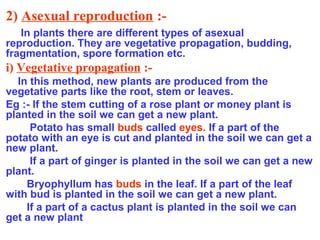
i) Vegetative propagation :In this method, new plants are produced from the
vegetative parts like the root, stem or leaves.
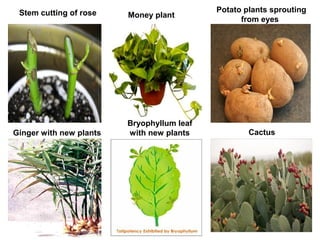
Eg :- If the stem cutting of a rose plant or money plant is
planted in the soil we can get a new plant.
Potato has small buds called eyes. If a part of the
potato with an eye is cut and planted in the soil we can get a
new plant.
If a part of ginger is planted in the soil we can get a new
plant.
Bryophyllum has buds in the leaf. If a part of the leaf
with bud is planted in the soil we can get a new plant.
If a part of a cactus plant is planted in the soil we can
get a new plant
Stem cutting of rose

Ginger with new plants

Money plant

Bryophyllum leaf
with new plants

Potato plants sprouting
from eyes

Cactus
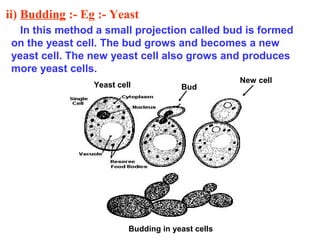
ii) Budding :- Eg :- Yeast
In this method a small projection called bud is formed
on the yeast cell. The bud grows and becomes a new
yeast cell. The new yeast cell also grows and produces
more yeast cells.
Yeast cell

Bud

Budding in yeast cells

New cell
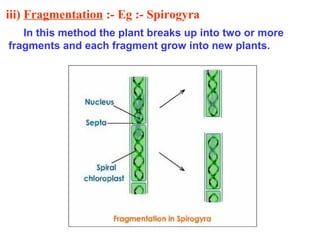
iii) Fragmentation :- Eg :- Spirogyra
In this method the plant breaks up into two or more
fragments and each fragment grow into new plants.
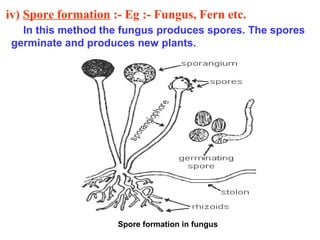
iv) Spore formation :- Eg :- Fungus, Fern etc.
In this method the fungus produces spores. The spores
germinate and produces new plants.

Spore formation in fungus
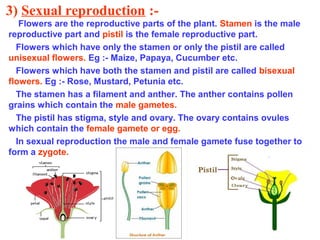
3) Sexual reproduction :Flowers are the reproductive parts of the plant. Stamen is the male
reproductive part and pistil is the female reproductive part.
Flowers which have only the stamen or only the pistil are called
unisexual flowers. Eg :- Maize, Papaya, Cucumber etc.
Flowers which have both the stamen and pistil are called bisexual
flowers. Eg :- Rose, Mustard, Petunia etc.
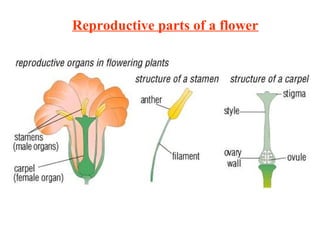
The stamen has a filament and anther. The anther contains pollen
grains which contain the male gametes.
The pistil has stigma, style and ovary. The ovary contains ovules
which contain the female gamete or egg.
In sexual reproduction the male and female gamete fuse together to
form a zygote.
Reproductive parts of a flower
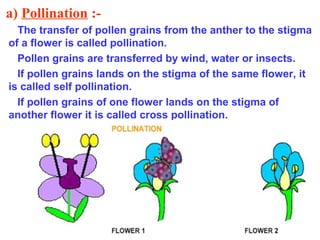
a) Pollination :The transfer of pollen grains from the anther to the stigma
of a flower is called pollination.
Pollen grains are transferred by wind, water or insects.
If pollen grains lands on the stigma of the same flower, it
is called self pollination.
If pollen grains of one flower lands on the stigma of
another flower it is called cross pollination.
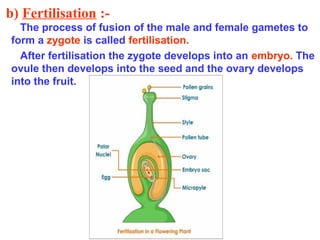
b) Fertilisation :The process of fusion of the male and female gametes to
form a zygote is called fertilisation.
After fertilisation the zygote develops into an embryo. The
ovule then develops into the seed and the ovary develops
into the fruit.
4) Seed dispersal :The carrying away of seeds from one place to another is called
dispersal of seeds.
Seeds are dispersed by wind, water and animals.
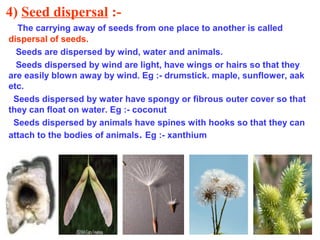
Seeds dispersed by wind are light, have wings or hairs so that they
are easily blown away by wind. Eg :- drumstick. maple, sunflower, aak
etc.
Seeds dispersed by water have spongy or fibrous outer cover so that
they can float on water. Eg :- coconut
Seeds dispersed by animals have spines with hooks so that they can
attach to the bodies of animals. Eg :- xanthium

7. 12. Reproduction in plants - Part 1

  • 1.
  • 2.
    1) Reproduction :Reproduction:- is the production of new individuals from their parents. The vegetative parts of the plant are the roots, stem and leaves. The reproductive parts of the plant are the flowers. In plants there are two main types of reproduction. They are asexual reproduction and sexual reproduction. i) Asexual reproduction :In asexual reproduction new plants without the help of seeds. ii) Sexual reproduction :In sexual reproduction new plants are produced from seeds.
  • 3.
    2) Asexual reproduction:In plants there are different types of asexual reproduction. They are vegetative propagation, budding, fragmentation, spore formation etc. i) Vegetative propagation :In this method, new plants are produced from the vegetative parts like the root, stem or leaves. Eg :- If the stem cutting of a rose plant or money plant is planted in the soil we can get a new plant. Potato has small buds called eyes. If a part of the potato with an eye is cut and planted in the soil we can get a new plant. If a part of ginger is planted in the soil we can get a new plant. Bryophyllum has buds in the leaf. If a part of the leaf with bud is planted in the soil we can get a new plant. If a part of a cactus plant is planted in the soil we can get a new plant
  • 4.
    Stem cutting ofrose Ginger with new plants Money plant Bryophyllum leaf with new plants Potato plants sprouting from eyes Cactus
  • 5.
    ii) Budding :-Eg :- Yeast In this method a small projection called bud is formed on the yeast cell. The bud grows and becomes a new yeast cell. The new yeast cell also grows and produces more yeast cells. Yeast cell Bud Budding in yeast cells New cell
  • 6.
    iii) Fragmentation :-Eg :- Spirogyra In this method the plant breaks up into two or more fragments and each fragment grow into new plants.
  • 7.
    iv) Spore formation:- Eg :- Fungus, Fern etc. In this method the fungus produces spores. The spores germinate and produces new plants. Spore formation in fungus
  • 8.
    3) Sexual reproduction:Flowers are the reproductive parts of the plant. Stamen is the male reproductive part and pistil is the female reproductive part. Flowers which have only the stamen or only the pistil are called unisexual flowers. Eg :- Maize, Papaya, Cucumber etc. Flowers which have both the stamen and pistil are called bisexual flowers. Eg :- Rose, Mustard, Petunia etc. The stamen has a filament and anther. The anther contains pollen grains which contain the male gametes. The pistil has stigma, style and ovary. The ovary contains ovules which contain the female gamete or egg. In sexual reproduction the male and female gamete fuse together to form a zygote.
  • 9.
  • 10.
    a) Pollination :Thetransfer of pollen grains from the anther to the stigma of a flower is called pollination. Pollen grains are transferred by wind, water or insects. If pollen grains lands on the stigma of the same flower, it is called self pollination. If pollen grains of one flower lands on the stigma of another flower it is called cross pollination.
  • 11.
    b) Fertilisation :Theprocess of fusion of the male and female gametes to form a zygote is called fertilisation. After fertilisation the zygote develops into an embryo. The ovule then develops into the seed and the ovary develops into the fruit.
  • 12.
    4) Seed dispersal:The carrying away of seeds from one place to another is called dispersal of seeds. Seeds are dispersed by wind, water and animals. Seeds dispersed by wind are light, have wings or hairs so that they are easily blown away by wind. Eg :- drumstick. maple, sunflower, aak etc. Seeds dispersed by water have spongy or fibrous outer cover so that they can float on water. Eg :- coconut Seeds dispersed by animals have spines with hooks so that they can attach to the bodies of animals. Eg :- xanthium