Electricity & Circuits

www.reflectivelearn.com
Electric Cell
 Power station: Electricity we use at homes, in our
factories, is supplied from a power station.
 Electric cell :
 Electric cell is a source of electricity.

 An electric cell produces a small amount of electricity

from chemicals stored inside it.
 When the chemicals in the electric cells are used up, the

electric cells stop producing electricity.
www.reflectivelearn.com
Electric cell
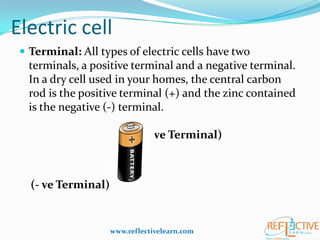
 Terminal: All types of electric cells have two

terminals, a positive terminal and a negative terminal.
In a dry cell used in your homes, the central carbon
rod is the positive terminal (+) and the zinc contained
is the negative (-) terminal.

(+ve Terminal)

(- ve Terminal)

www.reflectivelearn.com
Electric Bulb
 We get a light from a thin tiny wire inside the

glass cover. This is called filament.
 It is supported by two thicker wires. One of
these thick wires is connected to the metal
casing around the base of the bulb. The other is
connected to the metal tip of the base.
 The base of the bulb and the metal tip of the
base are the two terminals of the bulb. These
two terminals are fixed in such a way that they
do not touch each other.

The inside portion of the bulb is filled up
 by inert gases, like argon.
www.reflectivelearn.com
Electric Circuit
 Circuit : The complete path, from one terminal of
the electric cell through the bulb and back to the

other terminal of the electric cell, is called a circuit.
 Open circuit : If there is any gap in the path of a
circuit the bulb does not light up. Such a circuit is
called an open circuit.
 Closed circuit: The bulb lights up only when a
bulb and wire form a complete path, which starts at
one terminal of electric cell and ends at the other
terminal. Such a circuit is called a closed circuit.
www.reflectivelearn.com
Electric Circuit
 Flow of current in a circuit : . The electric current
flows from the positive terminal of the electric cell
to its negative terminal.
In the bulb, current enters through one of its
terminals, flows through the filament inside the
bulb and comes out through the other terminal of

the bulb. When the current flows through the
filament, it starts glowing.
 Fused bulb : If the filament of the bulb is broken,
the circuit is not completed .The bulb with broken
filament is called a fused bulb. When a bulb gets
fused, it does not light up.
www.reflectivelearn.com
Electric Switch
 Electric switch:
 Electric switch is a simple device that either breaks the circuit or

completes it to stop or start the flow of current.
 When the switch completes the circuit, it is called closed switch.
 When the switch breaks the circuit, it is called open switch.

 Conductors
 Materials through which electric current can flow.

 Most metals are conductors.
 Our body is also a good conductor.

 Insulators
 Materials, through which the electric current cannot pass. Rubber

and wood are insulator.

 Conduction of tester : It is a simple device to test whether

a material is a conductor or insulator.
www.reflectivelearn.com
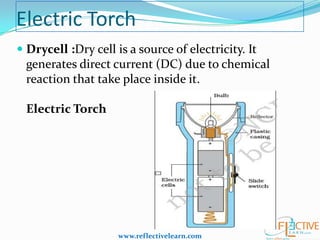
Electric Torch
 Drycell :Dry cell is a source of electricity. It
generates direct current (DC) due to chemical
reaction that take place inside it.

Electric Torch

www.reflectivelearn.com

Summary electricity

  • 1.
  • 2.
    Electric Cell  Powerstation: Electricity we use at homes, in our factories, is supplied from a power station.  Electric cell :  Electric cell is a source of electricity.  An electric cell produces a small amount of electricity from chemicals stored inside it.  When the chemicals in the electric cells are used up, the electric cells stop producing electricity. www.reflectivelearn.com
  • 3.
    Electric cell  Terminal:All types of electric cells have two terminals, a positive terminal and a negative terminal. In a dry cell used in your homes, the central carbon rod is the positive terminal (+) and the zinc contained is the negative (-) terminal. (+ve Terminal) (- ve Terminal) www.reflectivelearn.com
  • 4.
    Electric Bulb  Weget a light from a thin tiny wire inside the glass cover. This is called filament.  It is supported by two thicker wires. One of these thick wires is connected to the metal casing around the base of the bulb. The other is connected to the metal tip of the base.  The base of the bulb and the metal tip of the base are the two terminals of the bulb. These two terminals are fixed in such a way that they do not touch each other. The inside portion of the bulb is filled up  by inert gases, like argon. www.reflectivelearn.com
  • 5.
    Electric Circuit  Circuit: The complete path, from one terminal of the electric cell through the bulb and back to the other terminal of the electric cell, is called a circuit.  Open circuit : If there is any gap in the path of a circuit the bulb does not light up. Such a circuit is called an open circuit.  Closed circuit: The bulb lights up only when a bulb and wire form a complete path, which starts at one terminal of electric cell and ends at the other terminal. Such a circuit is called a closed circuit. www.reflectivelearn.com
  • 6.
    Electric Circuit  Flowof current in a circuit : . The electric current flows from the positive terminal of the electric cell to its negative terminal. In the bulb, current enters through one of its terminals, flows through the filament inside the bulb and comes out through the other terminal of the bulb. When the current flows through the filament, it starts glowing.  Fused bulb : If the filament of the bulb is broken, the circuit is not completed .The bulb with broken filament is called a fused bulb. When a bulb gets fused, it does not light up. www.reflectivelearn.com
  • 7.
    Electric Switch  Electricswitch:  Electric switch is a simple device that either breaks the circuit or completes it to stop or start the flow of current.  When the switch completes the circuit, it is called closed switch.  When the switch breaks the circuit, it is called open switch.  Conductors  Materials through which electric current can flow.  Most metals are conductors.  Our body is also a good conductor.  Insulators  Materials, through which the electric current cannot pass. Rubber and wood are insulator.  Conduction of tester : It is a simple device to test whether a material is a conductor or insulator. www.reflectivelearn.com
  • 8.
    Electric Torch  Drycell:Dry cell is a source of electricity. It generates direct current (DC) due to chemical reaction that take place inside it. Electric Torch www.reflectivelearn.com