Water: A precious resource 
By, 
Jaideep
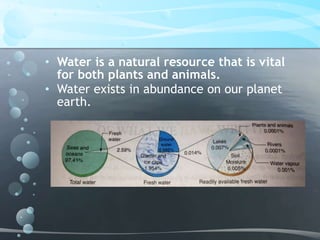
• Water is a natural resource that is vital 
for both plants and animals. 
• Water exists in abundance on our planet 
earth.
Forms of water 
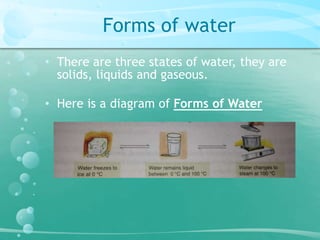
• There are three states of water, they are 
solids, liquids and gaseous. 
• Here is a diagram of Forms of Water
Water cycle 
• What is Water cycle? 
• The continuous circulation of water 
in nature is called water cycle.
• Evaporation- The conversation of 
liquid to vapour is called 
evaporation. 
• Condensation- The conversation of 
vapour to liquid is called 
condensation. 
• Precipitation- The falling down of 
water from clouds is called 
precipitation. 
• Transpiration- The loss of water 
through water vapour is called 
transpiration.
Uses of water 
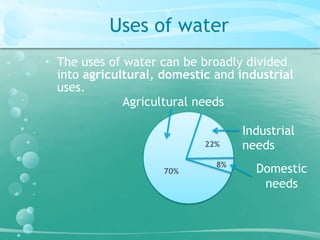
• The uses of water can be broadly divided 
into agricultural, domestic and industrial 
uses. 
Agricultural needs 
Industrial 
22% needs 
70% 
8% Domestic 
needs
Agricultural Use 
• Water is used for irrigating fields 
through canals, pipelines and drip 
irrigation. 
• Nearly 60% of the Indian population 
depends on agriculture for their 
living, and uses nearly 90% of all 
water for irrigation.
Percentage of water 
varies in different 
living organisms. 
Tree:60%, Tomato: 90%, 
Elephant: 80%.
Domestic Use 
• Water is used for cooking, bathing, 
cleaning, etc… 
• Water is supplied by the municipality 
or from wells/bore wells.
Industrial Use 
• Water is used in industries as a raw 
material, solvent, coolant and for making 
electricity. 
Coolant A liquid 
that is used for 
cooling a machine. 
Solvent Any 
substance that can 
dissolve is called 
solvent.
Sources of water 
• Precipitation in the form of rain or snow 
provides fresh water to our planet earth. 
• Most of the fresh water returns to the 
oceans through rivers flowing across the 
globe. 
• The various sources of water can be 
divided into two main categories. 
• Surface water 
• Underground water or subsoil water
Surface water 
• Water present on the surface of 
the earth is called surface water. 
• It can be classified into three, 
• Rain water 
• River and lake water 
• Sea and ocean water
Rain water 
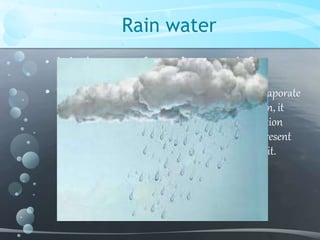
• It is the purest form of water. why? 
• Yes, because as the water from seas and rivers evaporate 
to form of water vapour under the heat of the sun, it 
leaves behind all the impurities. When precipitation 
occurs, the first showers dissolve certain gases present 
in air and also bring suspended impurities with it.
River and lake water 
• The water in these water bodies comes 
either from rainfall or melting of snow 
(glaciers) on the mountains. 
River
Sea and ocean water 
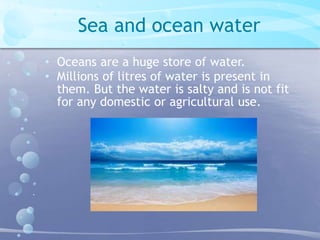
• Oceans are a huge store of water. 
• Millions of litres of water is present in 
them. But the water is salty and is not fit 
for any domestic or agricultural use.
Underground water or subsoil 
water 
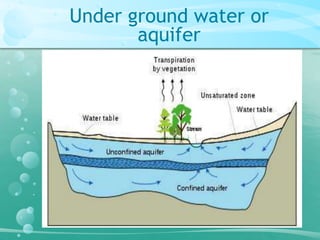
• Ground water is the water under the 
ground where the soil is completely 
filled or saturated with water. 
• Rainwater seeps through topsoil and layers 
of rocks like limestone, sand and gravel 
and gets collected on top of non-porous 
layers. 
• The top level of this underground water is 
called water table. Underground water is 
called and aquifer.
Under ground water or 
aquifer
Dam
Scarcity of water 
• Scarcity of water is defined as a 
situation where there is insufficient 
water to satisfy normal requirements. 
• Though water is a renewable resource, 
the factors of scarcity of water are, 
• Increasing population. 
• Increasing industries. 
• Agricultural activities. 
• Deforestation. 
• Water scarcity will result in insufficient 
plant growth, decreased food production 
and famine.
Some causes of water 
scarcity 
• In India some causes of water scarcity are: 
• Uncontrolled use of bore well 
technology for extracting groundwater. 
• Pollution of freshwater resources. 
• No effective measures for water 
conservation.
Effects of water scarcity on 
plants 
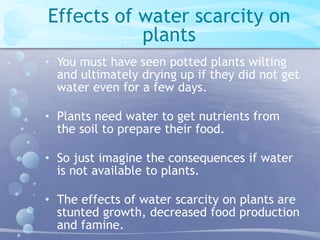
• You must have seen potted plants wilting 
and ultimately drying up if they did not get 
water even for a few days. 
• Plants need water to get nutrients from 
the soil to prepare their food. 
• So just imagine the consequences if water 
is not available to plants. 
• The effects of water scarcity on plants are 
stunted growth, decreased food production 
and famine.
Conservation of water 
• We can save water by, 
• Avoid wastage 
• Repair leaking tap 
• Water the plants by drop and drop
Conservation of water 
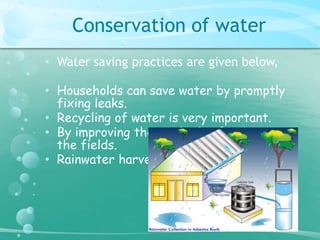
• Water saving practices are given below, 
• Households can save water by promptly 
fixing leaks. 
• Recycling of water is very important. 
• By improving the methods of irrigating 
the fields. 
• Rainwater harvesting.
Fill in the blanks 
• Which is the continuous circulation of 
water on earth (water table, water cycle) 
• Snow and frost are which forms of water 
(solid, liquid) 
• Which water is the purest form of water 
(lake, rain) 
• Most of the water that exists on earth is 
which and which (seas and oceans, ponds 
and rivers)
Water: A precious resource

Water: A precious resource

  • 1.
    Water: A preciousresource By, Jaideep
  • 2.
    • Water isa natural resource that is vital for both plants and animals. • Water exists in abundance on our planet earth.
  • 3.
    Forms of water • There are three states of water, they are solids, liquids and gaseous. • Here is a diagram of Forms of Water
  • 4.
    Water cycle •What is Water cycle? • The continuous circulation of water in nature is called water cycle.
  • 5.
    • Evaporation- Theconversation of liquid to vapour is called evaporation. • Condensation- The conversation of vapour to liquid is called condensation. • Precipitation- The falling down of water from clouds is called precipitation. • Transpiration- The loss of water through water vapour is called transpiration.
  • 6.
    Uses of water • The uses of water can be broadly divided into agricultural, domestic and industrial uses. Agricultural needs Industrial 22% needs 70% 8% Domestic needs
  • 7.
    Agricultural Use •Water is used for irrigating fields through canals, pipelines and drip irrigation. • Nearly 60% of the Indian population depends on agriculture for their living, and uses nearly 90% of all water for irrigation.
  • 8.
    Percentage of water varies in different living organisms. Tree:60%, Tomato: 90%, Elephant: 80%.
  • 9.
    Domestic Use •Water is used for cooking, bathing, cleaning, etc… • Water is supplied by the municipality or from wells/bore wells.
  • 11.
    Industrial Use •Water is used in industries as a raw material, solvent, coolant and for making electricity. Coolant A liquid that is used for cooling a machine. Solvent Any substance that can dissolve is called solvent.
  • 12.
    Sources of water • Precipitation in the form of rain or snow provides fresh water to our planet earth. • Most of the fresh water returns to the oceans through rivers flowing across the globe. • The various sources of water can be divided into two main categories. • Surface water • Underground water or subsoil water
  • 13.
    Surface water •Water present on the surface of the earth is called surface water. • It can be classified into three, • Rain water • River and lake water • Sea and ocean water
  • 14.
    Rain water •It is the purest form of water. why? • Yes, because as the water from seas and rivers evaporate to form of water vapour under the heat of the sun, it leaves behind all the impurities. When precipitation occurs, the first showers dissolve certain gases present in air and also bring suspended impurities with it.
  • 15.
    River and lakewater • The water in these water bodies comes either from rainfall or melting of snow (glaciers) on the mountains. River
  • 16.
    Sea and oceanwater • Oceans are a huge store of water. • Millions of litres of water is present in them. But the water is salty and is not fit for any domestic or agricultural use.
  • 17.
    Underground water orsubsoil water • Ground water is the water under the ground where the soil is completely filled or saturated with water. • Rainwater seeps through topsoil and layers of rocks like limestone, sand and gravel and gets collected on top of non-porous layers. • The top level of this underground water is called water table. Underground water is called and aquifer.
  • 18.
  • 19.
  • 20.
    Scarcity of water • Scarcity of water is defined as a situation where there is insufficient water to satisfy normal requirements. • Though water is a renewable resource, the factors of scarcity of water are, • Increasing population. • Increasing industries. • Agricultural activities. • Deforestation. • Water scarcity will result in insufficient plant growth, decreased food production and famine.
  • 21.
    Some causes ofwater scarcity • In India some causes of water scarcity are: • Uncontrolled use of bore well technology for extracting groundwater. • Pollution of freshwater resources. • No effective measures for water conservation.
  • 22.
    Effects of waterscarcity on plants • You must have seen potted plants wilting and ultimately drying up if they did not get water even for a few days. • Plants need water to get nutrients from the soil to prepare their food. • So just imagine the consequences if water is not available to plants. • The effects of water scarcity on plants are stunted growth, decreased food production and famine.
  • 23.
    Conservation of water • We can save water by, • Avoid wastage • Repair leaking tap • Water the plants by drop and drop
  • 24.
    Conservation of water • Water saving practices are given below, • Households can save water by promptly fixing leaks. • Recycling of water is very important. • By improving the methods of irrigating the fields. • Rainwater harvesting.
  • 25.
    Fill in theblanks • Which is the continuous circulation of water on earth (water table, water cycle) • Snow and frost are which forms of water (solid, liquid) • Which water is the purest form of water (lake, rain) • Most of the water that exists on earth is which and which (seas and oceans, ponds and rivers)

Editor's Notes

  • #2 Click to add notes Note: This video template is optimized for Microsoft PowerPoint 2010. In PowerPoint 2007, video elements will play, but any content overlapping the video bars will be covered by the video when in slideshow mode. In PowerPoint 2003, video will not play, but the poster frame of the videos will remain in place as static images. The video: Plays automatically after each slide transition. Is 15 seconds long. Seamlessly loops for infinite playback. To add slides or change layout: To add a new slide, on the Home tab, in the Slides group, click the arrow under New Slide, then click under Motion Background Theme, then select the desired layout. To change the layout of an existing slide, on the Home tab, in the Slides group, click Layout, then select the desired layout. Other animated elements: Any animated element you insert will begin after the slide transition and the background video has started. Layouts with video effects: The “(Green) Title and Content” and “(Purple) Title and Content” layouts are creating by using a color overlay on the video. With the video selected, under Video Tools, on the Format tab, in the Adjust group, select Color and choose Teal, Accent Color 6 Light (third row, seventh option from left) or Periwinkle, Accent Color 5 Light (third row, sixth option from left).