Parth Rastogi
Science 1A
Mr. Tyrie
Cells are the basic unit of any living creature. So there
are 4 types of cells :Animal Cells
Plant Cells
Bacterial Cells
Specialized Cells
In this presentation I will talk about the animal cell.
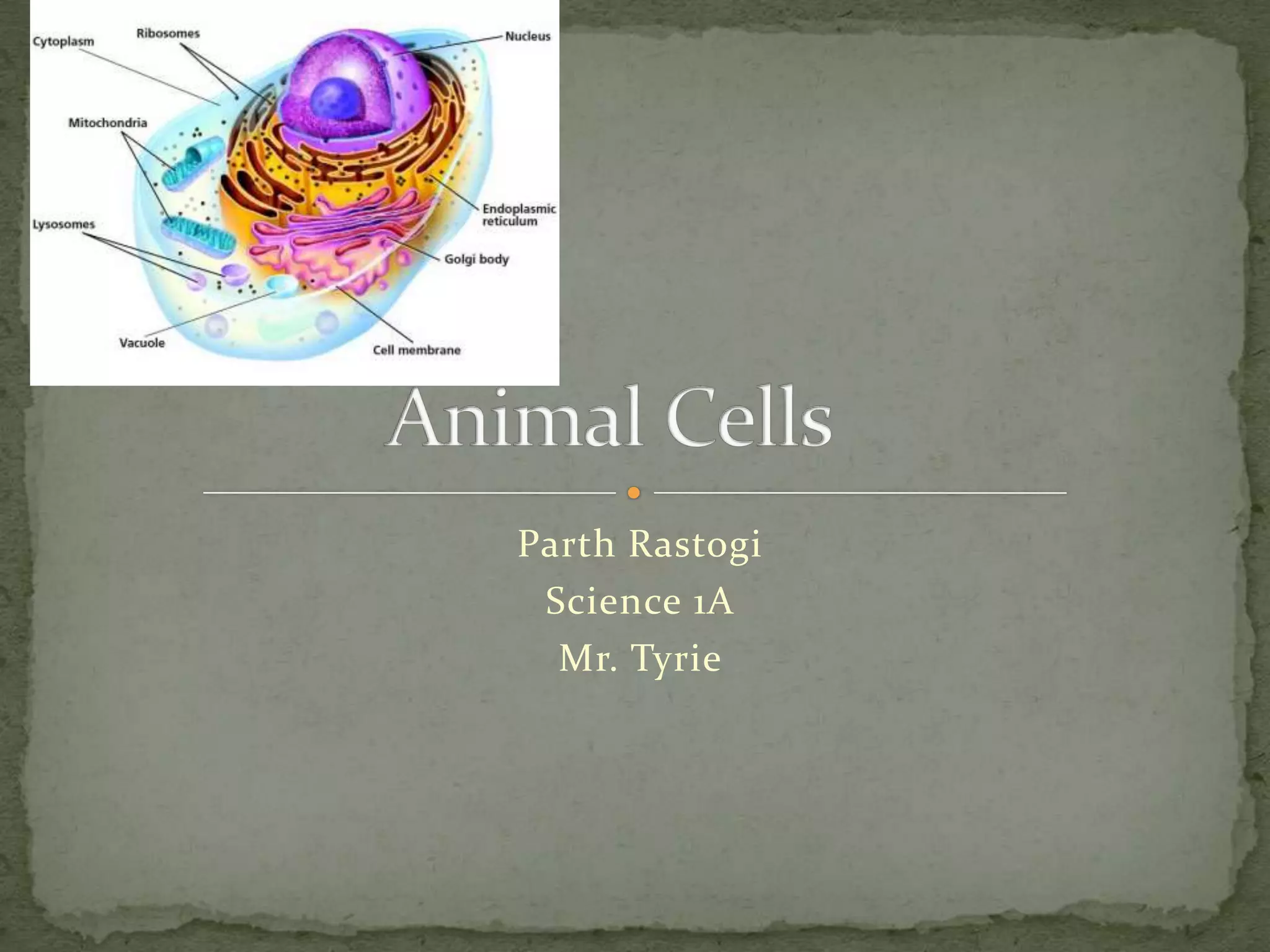
Animal cell is different to all the other cells and also have
different organelles such as :Nucleus
Ribosomes
Endoplasmic Reticulum
Golgi Body
Vacuole
Lysosomes
Cytoplasm
Mitochondria
Cell Membrane
Nucleus – It is the brain of the cell which also controls all the cells
activity, including reproduction. There are three parts to the
nucleus :Nuclear Envelope – Nucleus is surrounded by a membrane called
Nuclear Envelope. Nuclear Envelope has pores that allow to pass in and
out of Nuclear.

Chromatin – A thin strands floating directly ahead in the nucleus.
Nucleolus – Nucleus is a small object floating by. A nucleus is where
ribosomes are made. Ribosomes produce proteins that important
chemical in cells
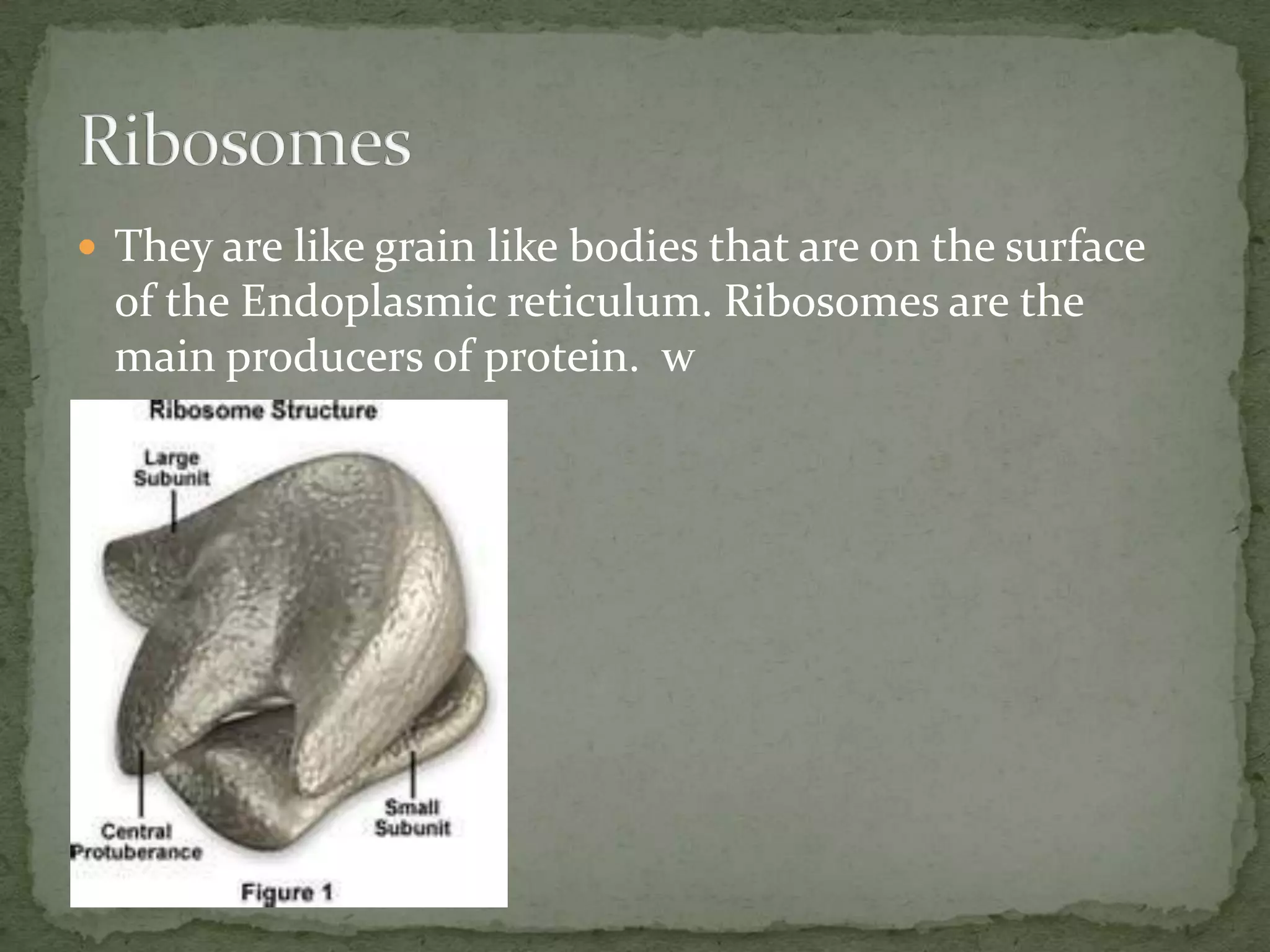
 They are like grain like bodies that are on the surface

of the Endoplasmic reticulum. Ribosomes are the
main producers of protein. w
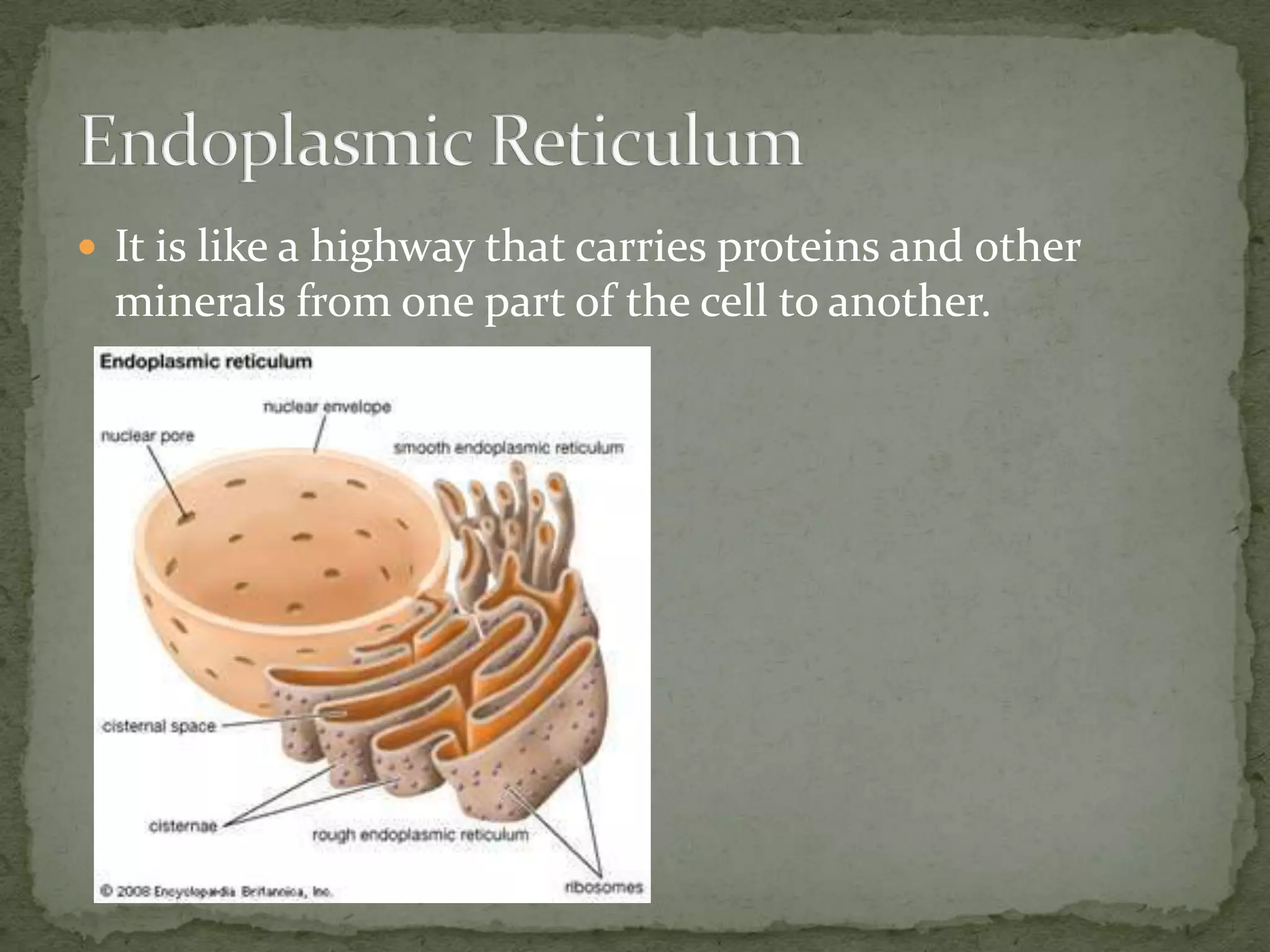
 It is like a highway that carries proteins and other

minerals from one part of the cell to another.
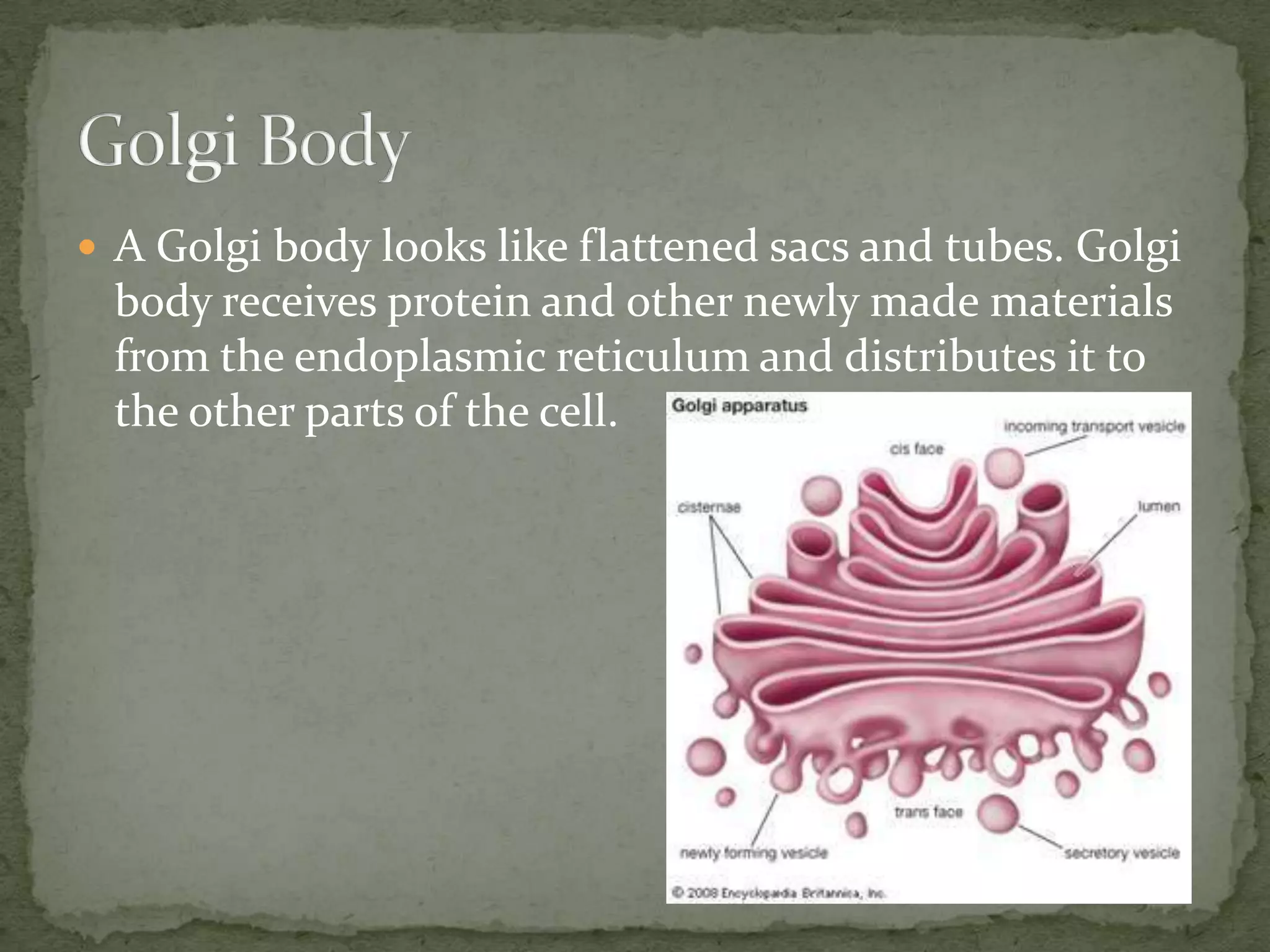
 A Golgi body looks like flattened sacs and tubes. Golgi

body receives protein and other newly made materials
from the endoplasmic reticulum and distributes it to
the other parts of the cell.
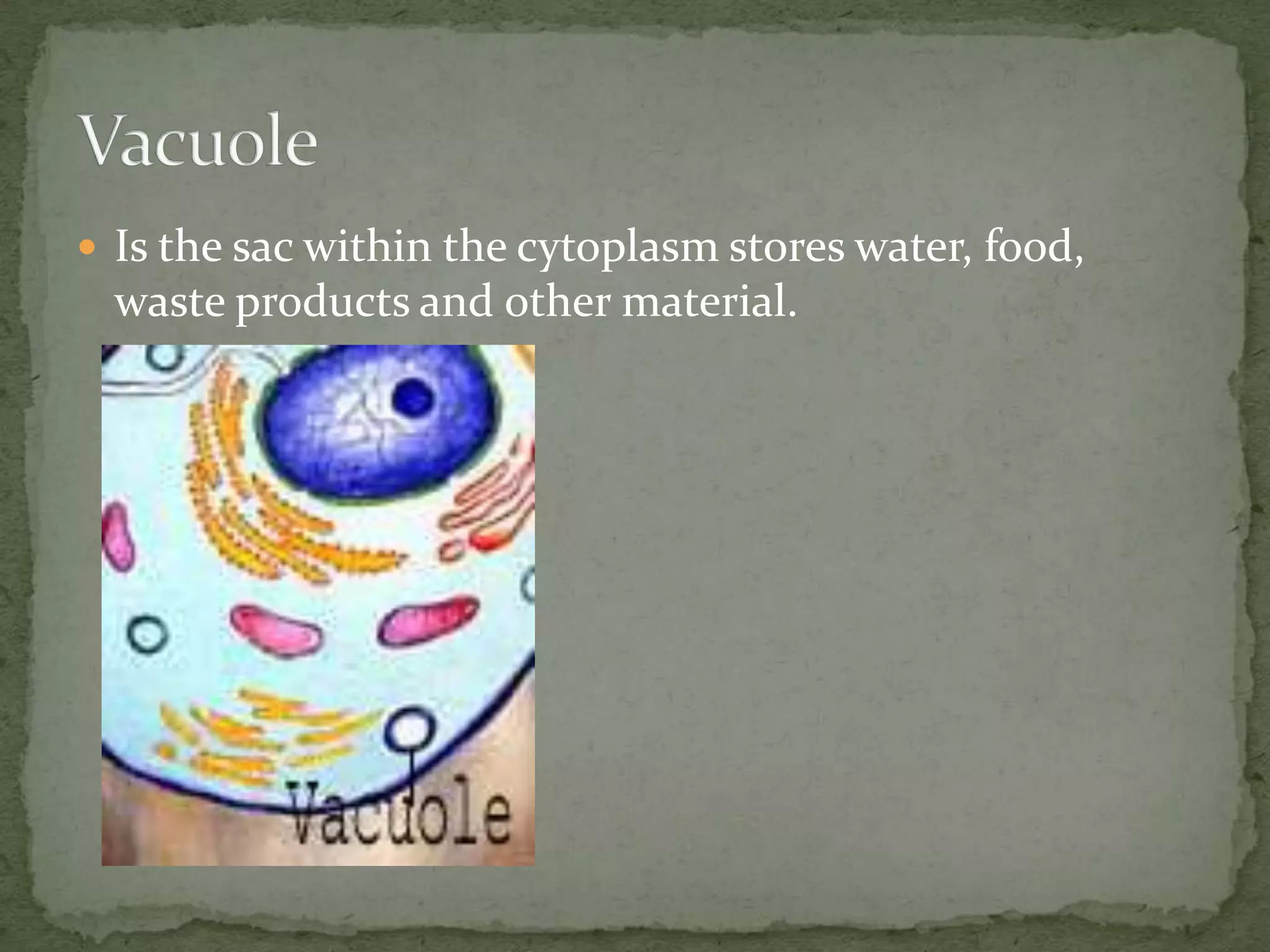
 Is the sac within the cytoplasm stores water, food,

waste products and other material.
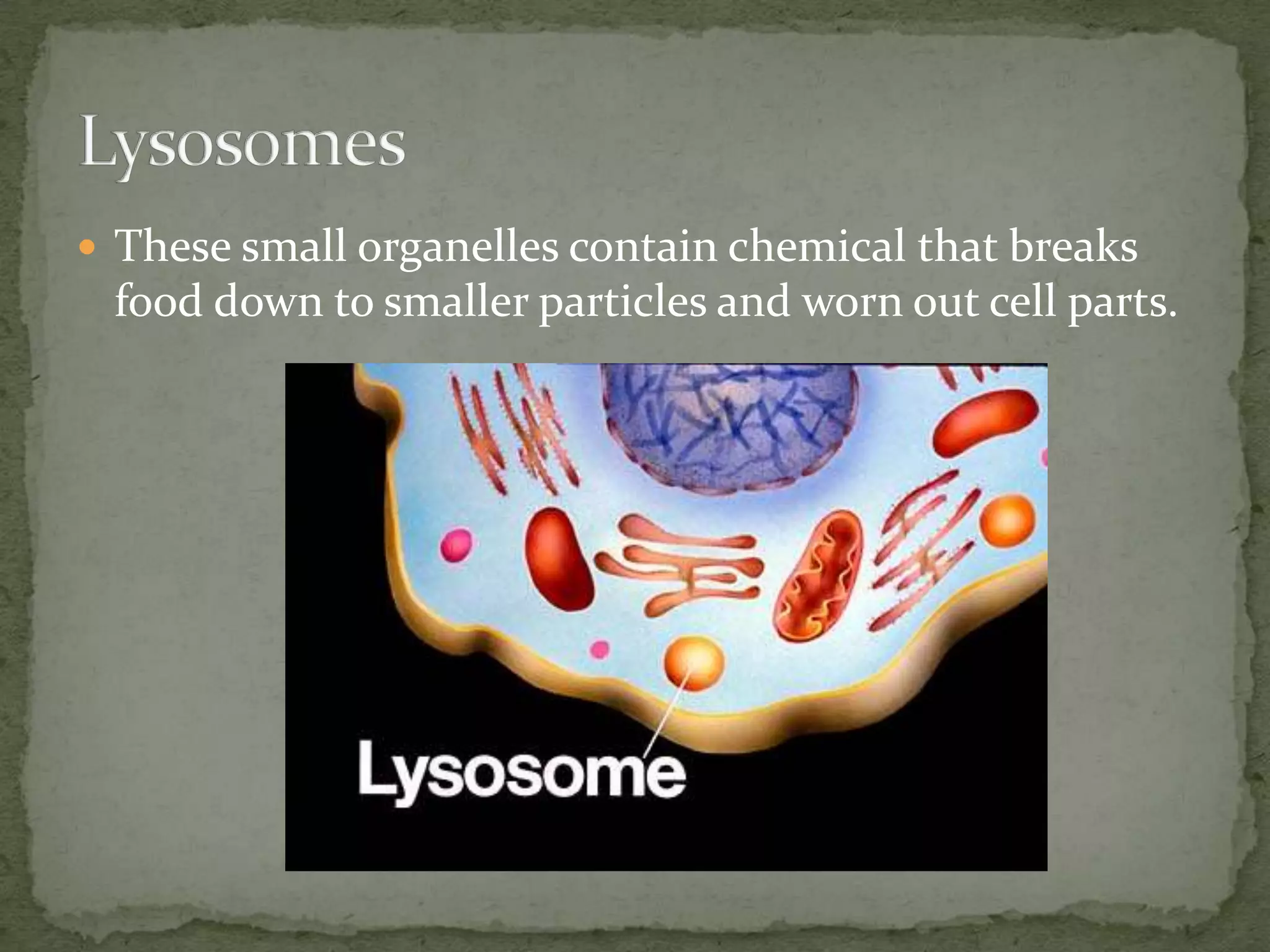
 These small organelles contain chemical that breaks

food down to smaller particles and worn out cell parts.
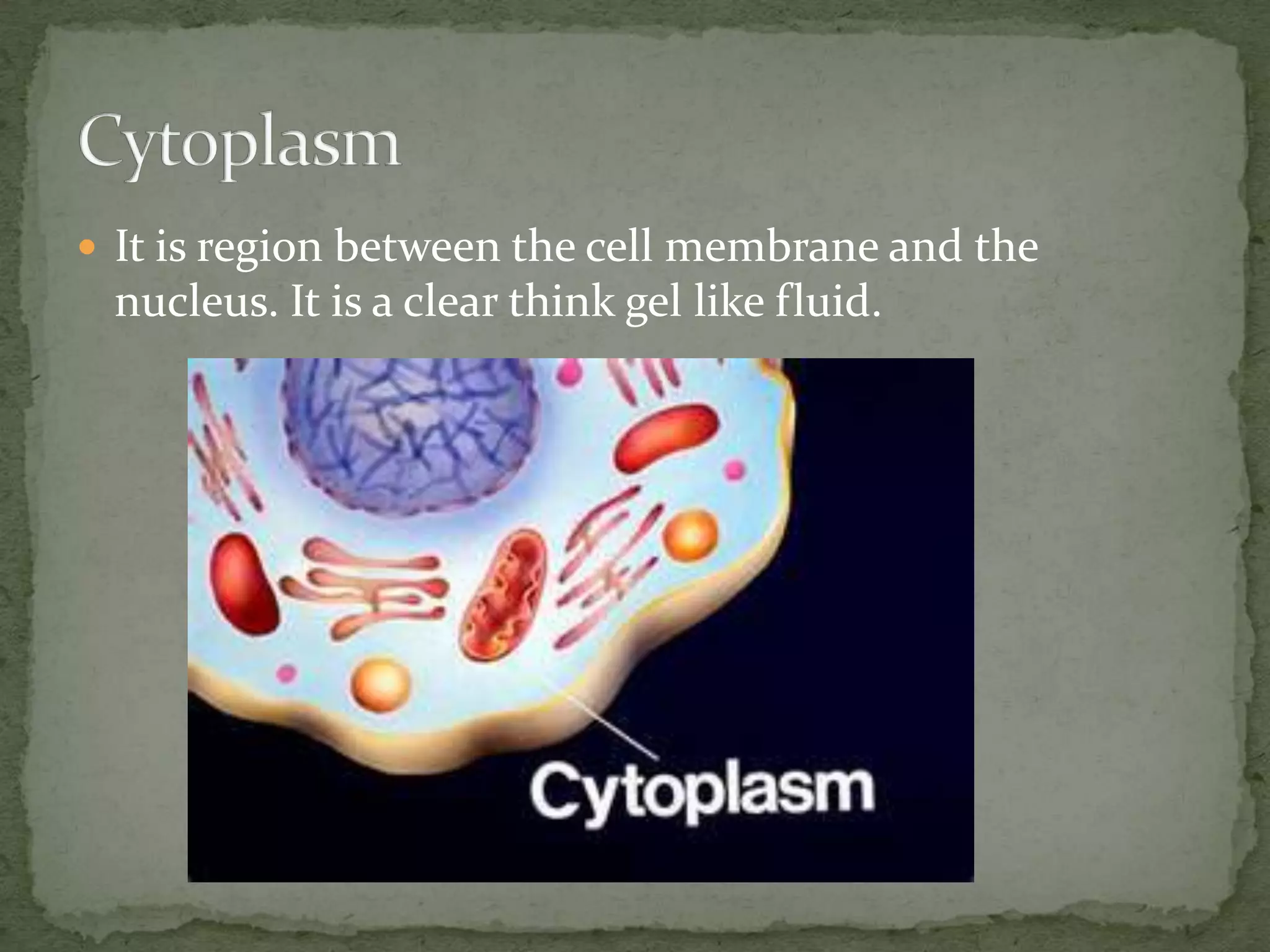
 It is region between the cell membrane and the

nucleus. It is a clear think gel like fluid.
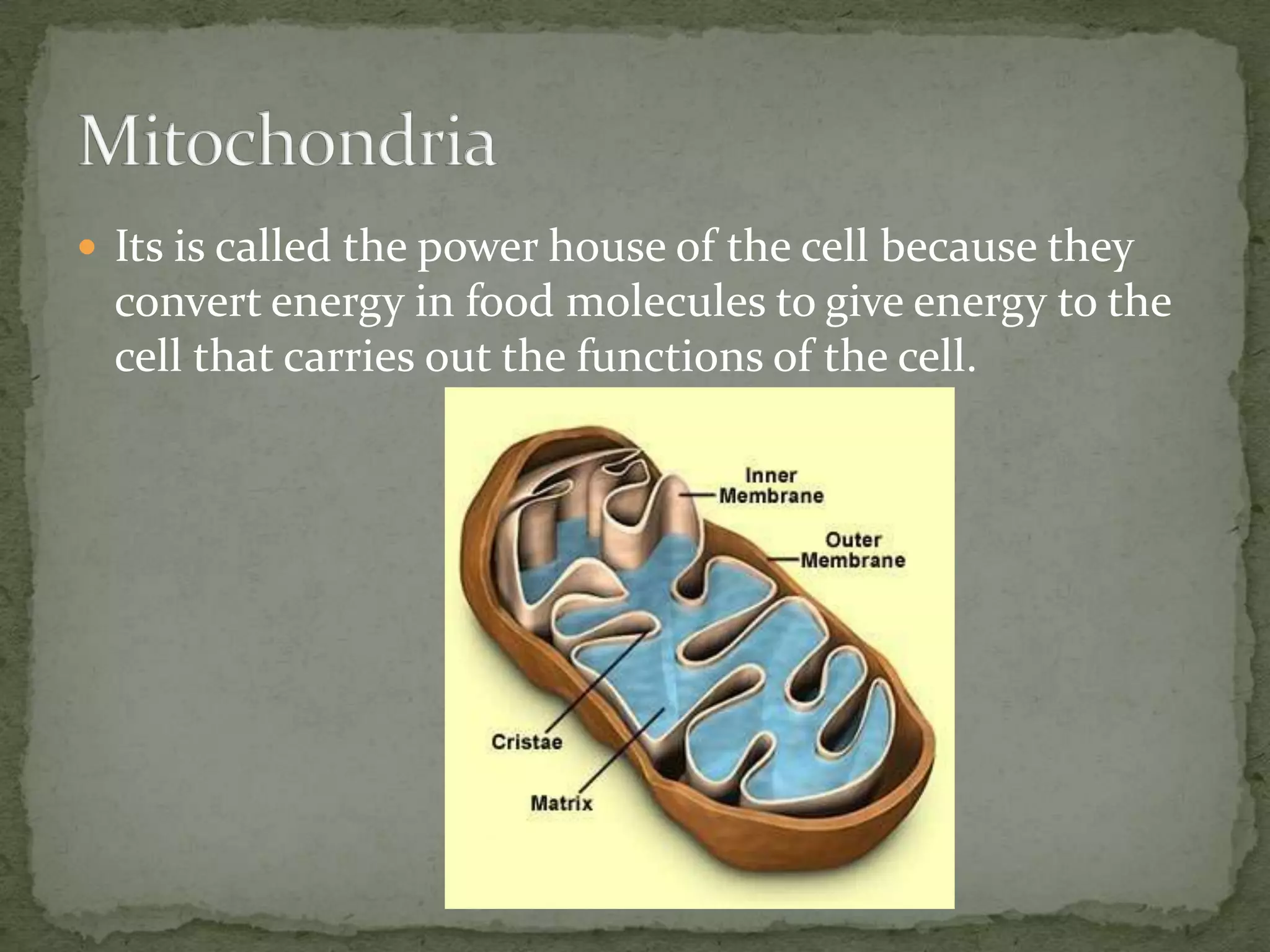
 Its is called the power house of the cell because they

convert energy in food molecules to give energy to the
cell that carries out the functions of the cell.
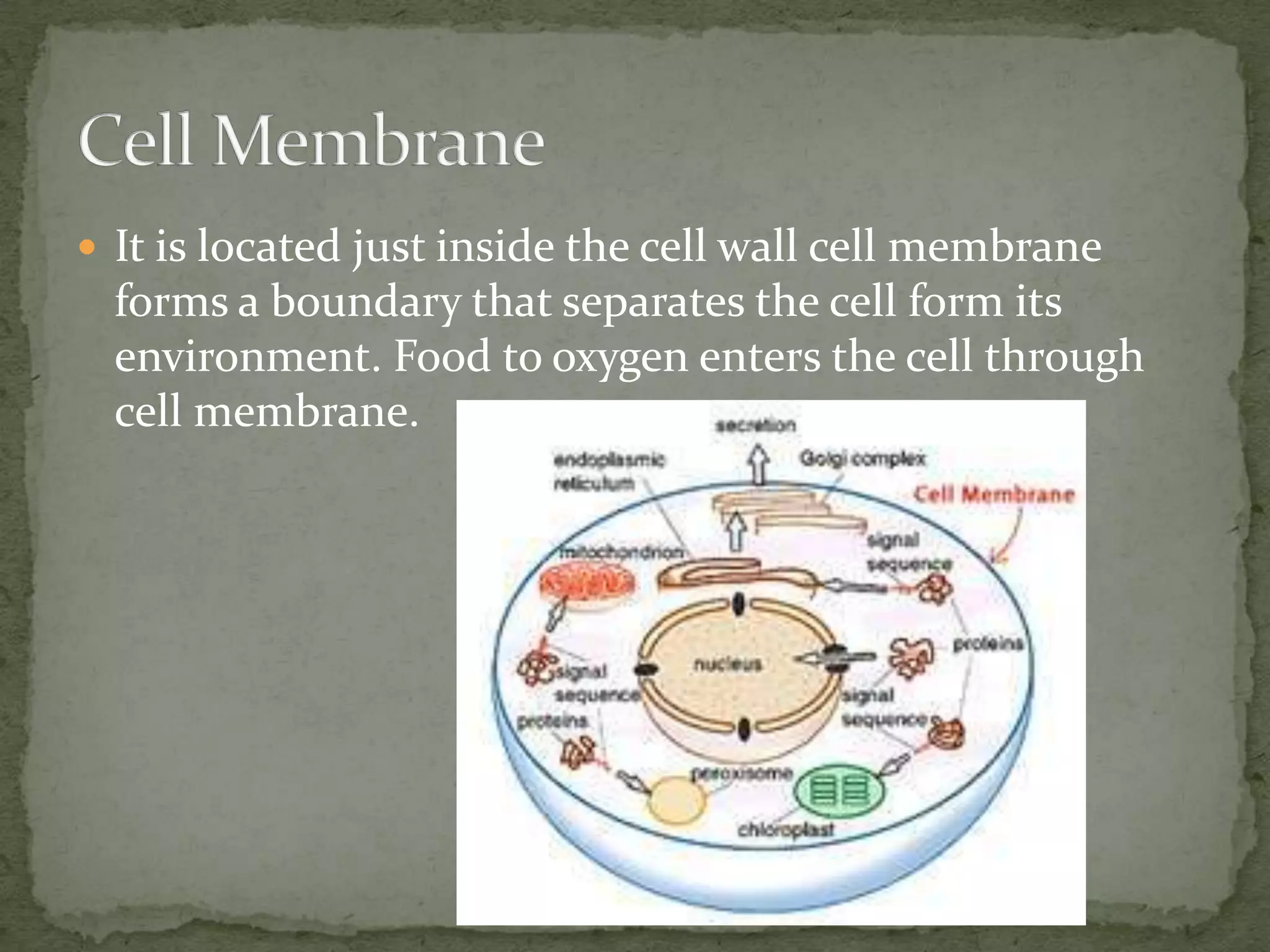
 It is located just inside the cell wall cell membrane

forms a boundary that separates the cell form its
environment. Food to oxygen enters the cell through
cell membrane.

Student example: Animal cell presentation

  • 1.
  • 2.
    Cells are thebasic unit of any living creature. So there are 4 types of cells :Animal Cells Plant Cells Bacterial Cells Specialized Cells In this presentation I will talk about the animal cell.
  • 3.
    Animal cell isdifferent to all the other cells and also have different organelles such as :Nucleus Ribosomes Endoplasmic Reticulum Golgi Body Vacuole Lysosomes Cytoplasm Mitochondria Cell Membrane
  • 4.
    Nucleus – Itis the brain of the cell which also controls all the cells activity, including reproduction. There are three parts to the nucleus :Nuclear Envelope – Nucleus is surrounded by a membrane called Nuclear Envelope. Nuclear Envelope has pores that allow to pass in and out of Nuclear. Chromatin – A thin strands floating directly ahead in the nucleus. Nucleolus – Nucleus is a small object floating by. A nucleus is where ribosomes are made. Ribosomes produce proteins that important chemical in cells
  • 5.
     They arelike grain like bodies that are on the surface of the Endoplasmic reticulum. Ribosomes are the main producers of protein. w
  • 6.
     It islike a highway that carries proteins and other minerals from one part of the cell to another.
  • 7.
     A Golgibody looks like flattened sacs and tubes. Golgi body receives protein and other newly made materials from the endoplasmic reticulum and distributes it to the other parts of the cell.
  • 8.
     Is thesac within the cytoplasm stores water, food, waste products and other material.
  • 9.
     These smallorganelles contain chemical that breaks food down to smaller particles and worn out cell parts.
  • 10.
     It isregion between the cell membrane and the nucleus. It is a clear think gel like fluid.
  • 11.
     Its iscalled the power house of the cell because they convert energy in food molecules to give energy to the cell that carries out the functions of the cell.
  • 12.
     It islocated just inside the cell wall cell membrane forms a boundary that separates the cell form its environment. Food to oxygen enters the cell through cell membrane.