Cells
Common Cell Traits Cells come in different  sizes  and  shapes . All cells have a  cell membrane  which is an outer covering that controls what comes into and out of a cell. All cells have  cytoplasm  which is a  gelatinlike  material.
Only  plants ,  algae ,  fungi , and  bacteria  have cell walls. Cell walls are tough, rigid outer coverings that protect the cell and give it shape.
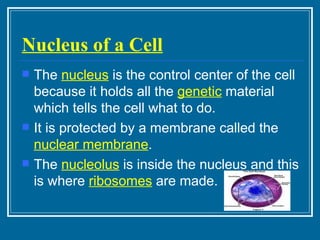
Nucleus of a Cell The  nucleus  is the control center of the cell because it holds all the  genetic  material which tells the cell what to do. It is protected by a membrane called the  nuclear membrane . The  nucleolus  is inside the nucleus and this is where  ribosomes  are made.
Organelles in the Cytoplasm Organelles  are tiny cell structures which carry out specific functions within the cell. Examples include the  Mitochondria,ribosomes ,  endoplasmic reticulum, golgi bodies, chloroplasts, vacuoles, lysosomes.
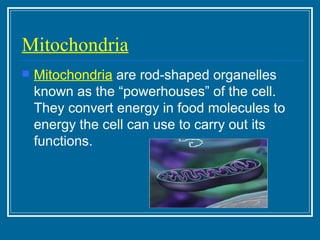
Mitochondria Mitochondria  are rod-shaped organelles known as the “powerhouses” of the cell. They convert energy in food molecules to energy the cell can use to carry out its functions.
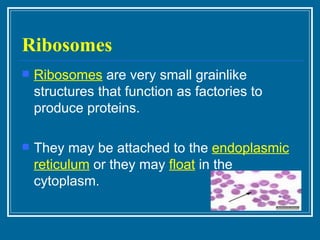
Ribosomes Ribosomes  are very small grainlike structures that function as factories to produce proteins. They may be attached to the  endoplasmic reticulum  or they may  float  in the cytoplasm.
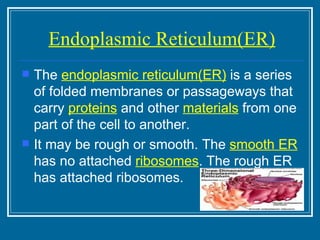
Endoplasmic Reticulum(ER) The  endoplasmic reticulum(ER)  is a series of folded membranes or passageways that carry  proteins  and other  materials  from one part of the cell to another.  It may be rough or smooth. The  smooth ER  has no attached  ribosomes . The rough ER has attached ribosomes.
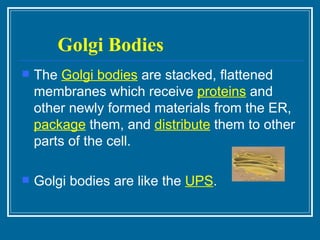
Golgi Bodies The  Golgi bodies  are stacked, flattened membranes which receive  proteins  and other newly formed materials from the ER,  package  them, and  distribute  them to other parts of the cell.  Golgi bodies are like the  UPS .
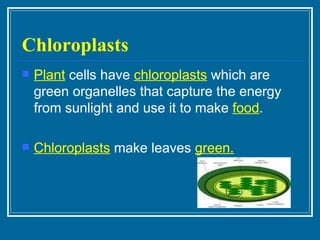
Chloroplasts Plant  cells have  chloroplasts  which are green organelles that capture the energy from sunlight and use it to make  food . Chloroplasts  make leaves  green.
Vacuoles Vacuoles  are the  storage  areas of cells. Most  plants  have  one large  vacuole while animal cells may have one, more than one, or no vacuoles. Vacuoles  stores food and other materials needed by the cell. They also store  waste .
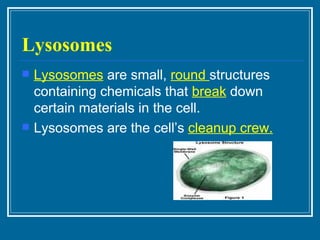
Lysosomes Lysosomes  are small,  round  structures containing chemicals that  break  down certain materials in the cell.  Lysosomes are the cell’s  cleanup crew.
Cytoskeleton Microtubules  and  Microfilament  both make up the cytoskeleton framework. They both support the cell.
Levels of Organization Cells Tissues Organs Systems Organism

Cell Organelles Powr Point

  • 1.
  • 2.
    Common Cell TraitsCells come in different sizes and shapes . All cells have a cell membrane which is an outer covering that controls what comes into and out of a cell. All cells have cytoplasm which is a gelatinlike material.
  • 3.
    Only plants, algae , fungi , and bacteria have cell walls. Cell walls are tough, rigid outer coverings that protect the cell and give it shape.
  • 4.
    Nucleus of aCell The nucleus is the control center of the cell because it holds all the genetic material which tells the cell what to do. It is protected by a membrane called the nuclear membrane . The nucleolus is inside the nucleus and this is where ribosomes are made.
  • 5.
    Organelles in theCytoplasm Organelles are tiny cell structures which carry out specific functions within the cell. Examples include the Mitochondria,ribosomes , endoplasmic reticulum, golgi bodies, chloroplasts, vacuoles, lysosomes.
  • 6.
    Mitochondria Mitochondria are rod-shaped organelles known as the “powerhouses” of the cell. They convert energy in food molecules to energy the cell can use to carry out its functions.
  • 7.
    Ribosomes Ribosomes are very small grainlike structures that function as factories to produce proteins. They may be attached to the endoplasmic reticulum or they may float in the cytoplasm.
  • 8.
    Endoplasmic Reticulum(ER) The endoplasmic reticulum(ER) is a series of folded membranes or passageways that carry proteins and other materials from one part of the cell to another. It may be rough or smooth. The smooth ER has no attached ribosomes . The rough ER has attached ribosomes.
  • 9.
    Golgi Bodies The Golgi bodies are stacked, flattened membranes which receive proteins and other newly formed materials from the ER, package them, and distribute them to other parts of the cell. Golgi bodies are like the UPS .
  • 10.
    Chloroplasts Plant cells have chloroplasts which are green organelles that capture the energy from sunlight and use it to make food . Chloroplasts make leaves green.
  • 11.
    Vacuoles Vacuoles are the storage areas of cells. Most plants have one large vacuole while animal cells may have one, more than one, or no vacuoles. Vacuoles stores food and other materials needed by the cell. They also store waste .
  • 12.
    Lysosomes Lysosomes are small, round structures containing chemicals that break down certain materials in the cell. Lysosomes are the cell’s cleanup crew.
  • 13.
    Cytoskeleton Microtubules and Microfilament both make up the cytoskeleton framework. They both support the cell.
  • 14.
    Levels of OrganizationCells Tissues Organs Systems Organism