Mitochondria, Chloroplasts,
Peroxisomes, & the Cytoskeleton
6.5-6.7
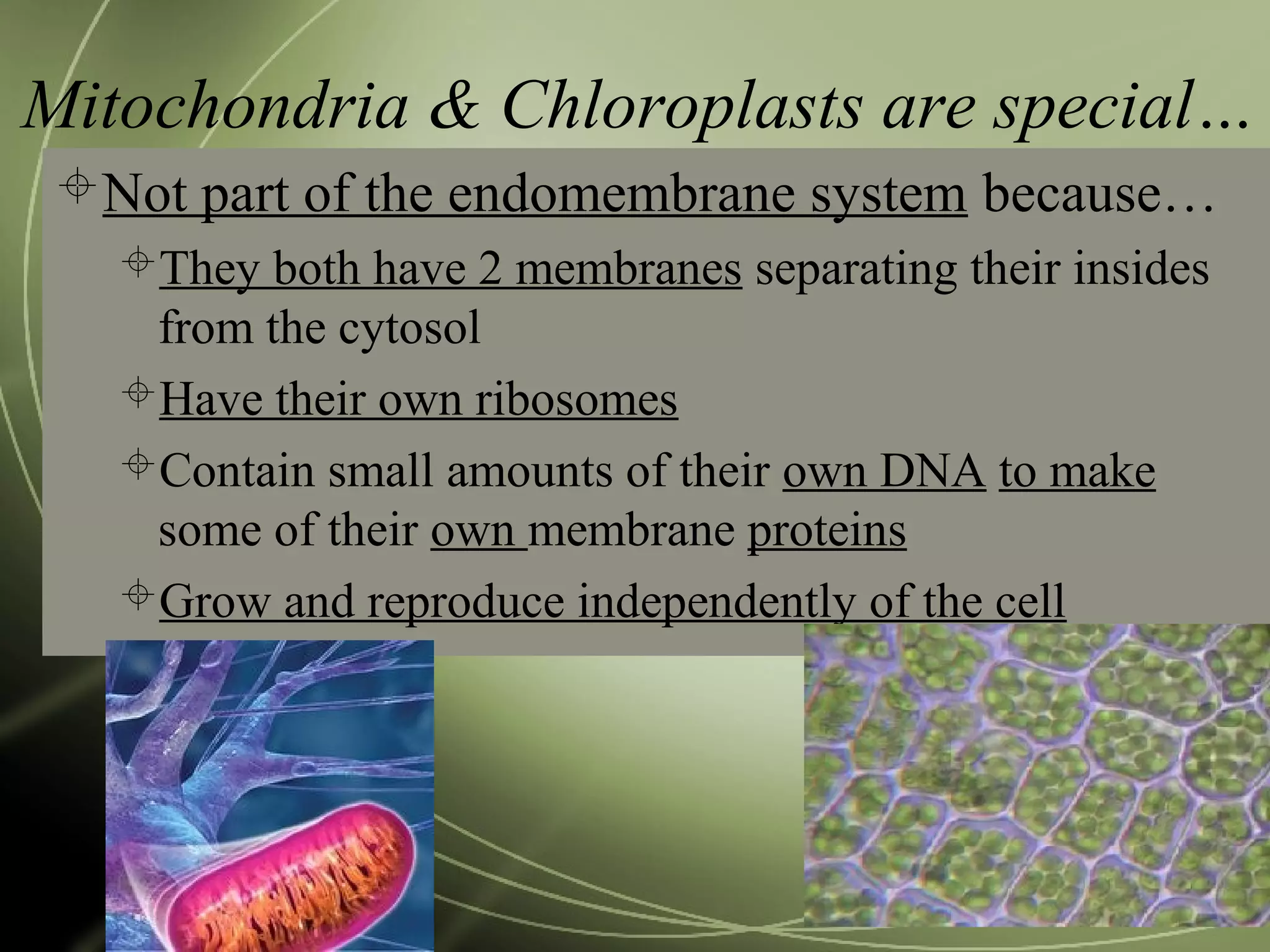
Mitochondria & Chloroplasts are special…
Not part of the endomembrane system because…
They both have 2 membranes separating their insides
from the cytosol
Have their own ribosomes
Contain small amounts of their own DNA to make
some of their own membrane proteins
Grow and reproduce independently of the cell
Mitochondria
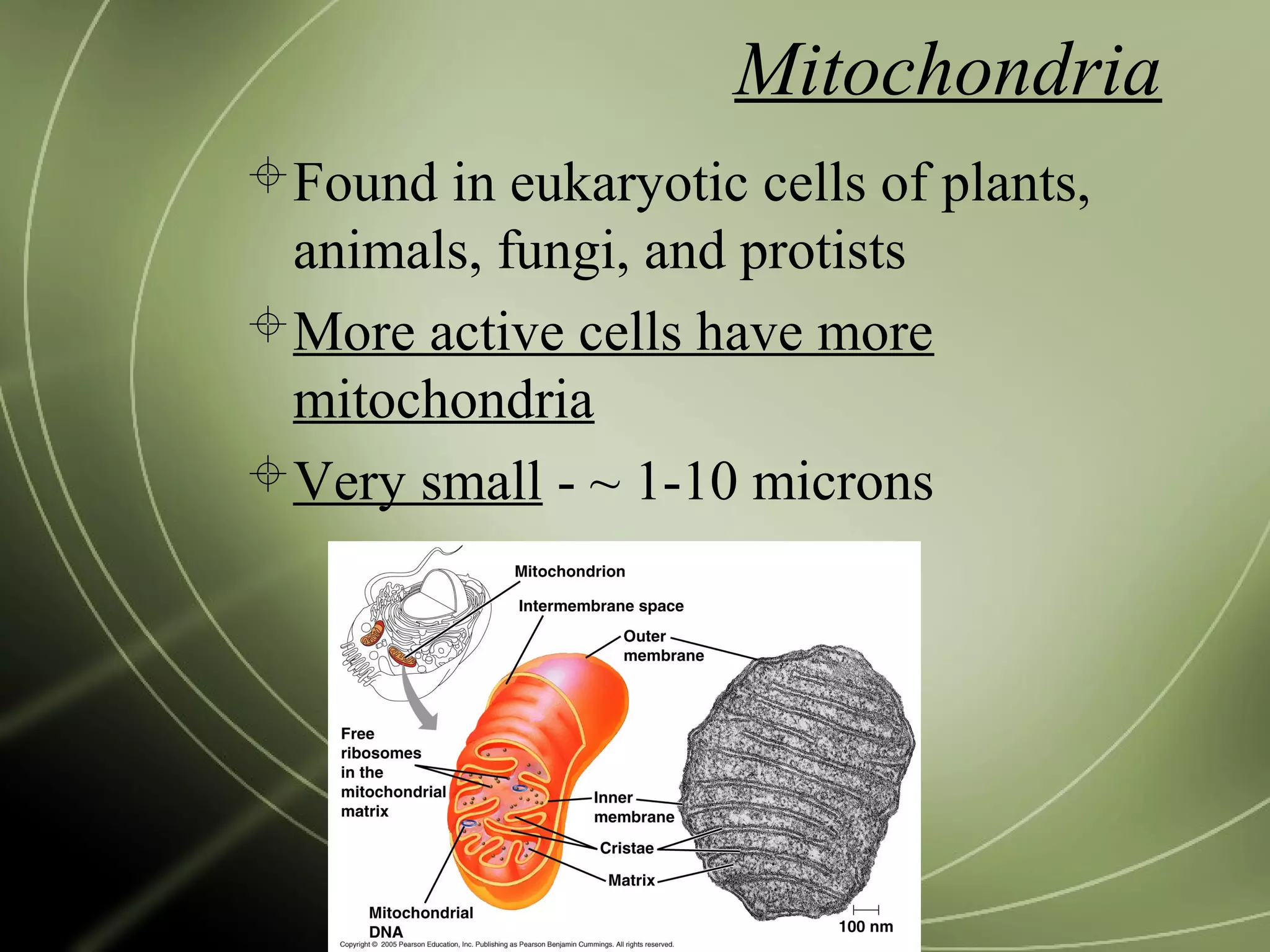
Found in eukaryotic cells of plants,
animals, fungi, and protists
More active cells have more
mitochondria
Very small - ~ 1-10 microns
Structure of Mitochondria
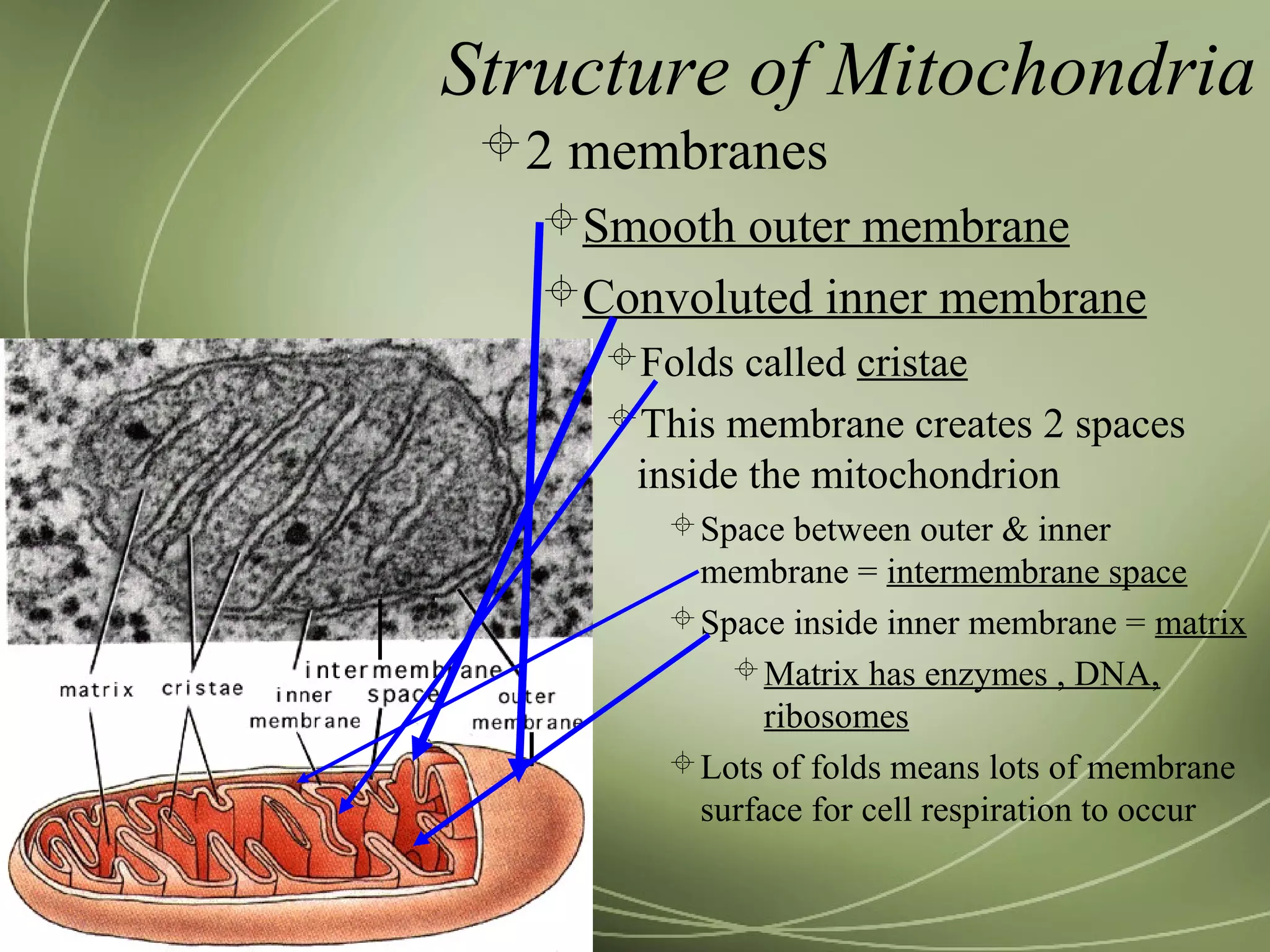
2 membranes
Smooth outer membrane
Convoluted inner membrane
Folds called cristae
This membrane creates 2 spaces
inside the mitochondrion
Space between outer & inner
membrane = intermembrane space
Space inside inner membrane = matrix
Matrix has enzymes , DNA,
ribosomes
Lots of folds means lots of membrane
surface for cell respiration to occur
Chloroplasts
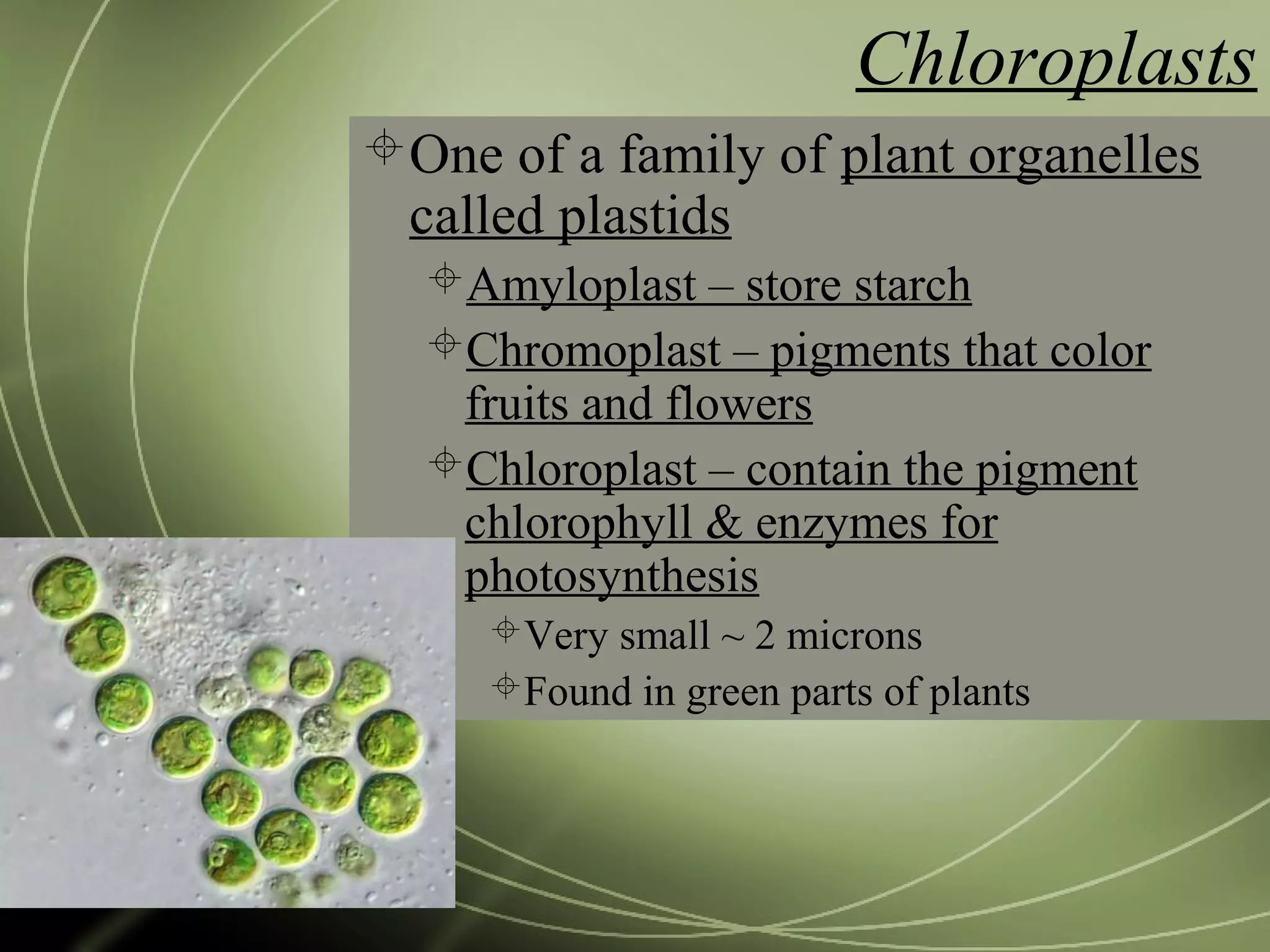
One of a family of plant organelles
called plastids
Amyloplast – store starch
Chromoplast – pigments that color
fruits and flowers
Chloroplast – contain the pigment
chlorophyll & enzymes for
photosynthesis
Very small ~ 2 microns
Found in green parts of plants
Structure of Chloroplasts
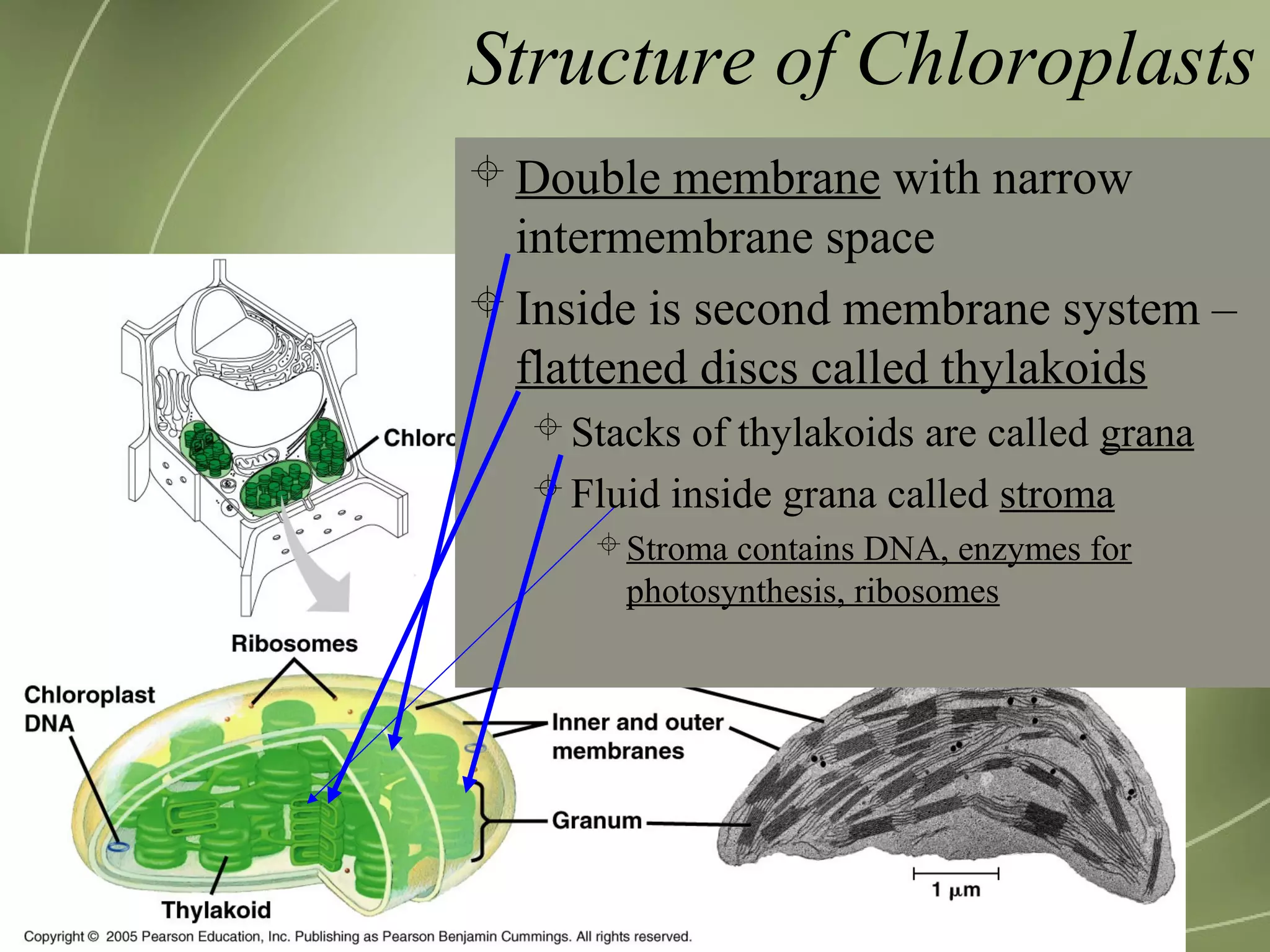
 Double membrane with narrow
intermembrane space
 Inside is second membrane system –
flattened discs called thylakoids
Stacks of thylakoids are called grana
Fluid inside grana called stroma
Stroma contains DNA, enzymes for
photosynthesis, ribosomes
Quick Think
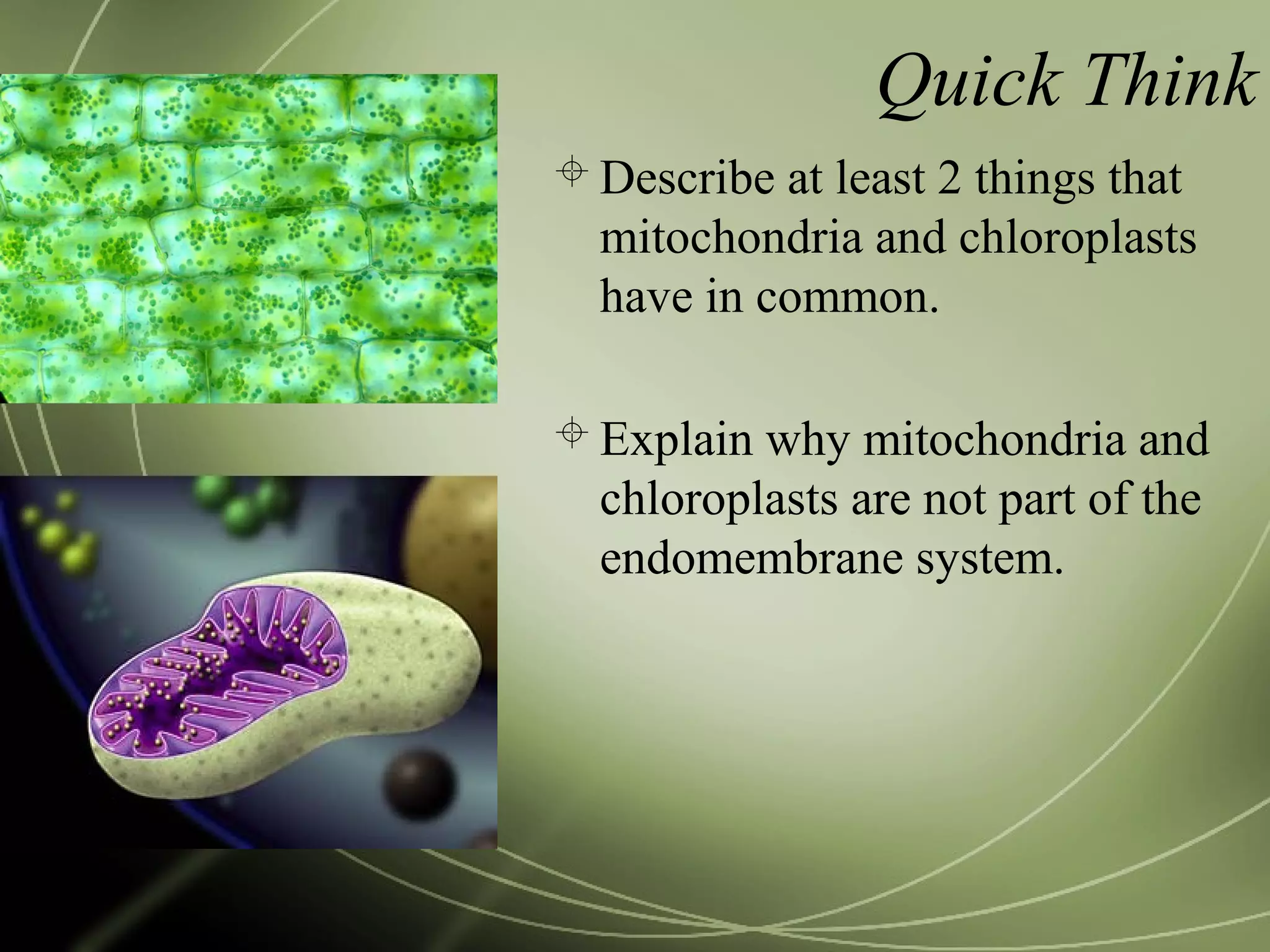
Describe at least 2 things that
mitochondria and chloroplasts
have in common.
Explain why mitochondria and
chloroplasts are not part of the
endomembrane system.
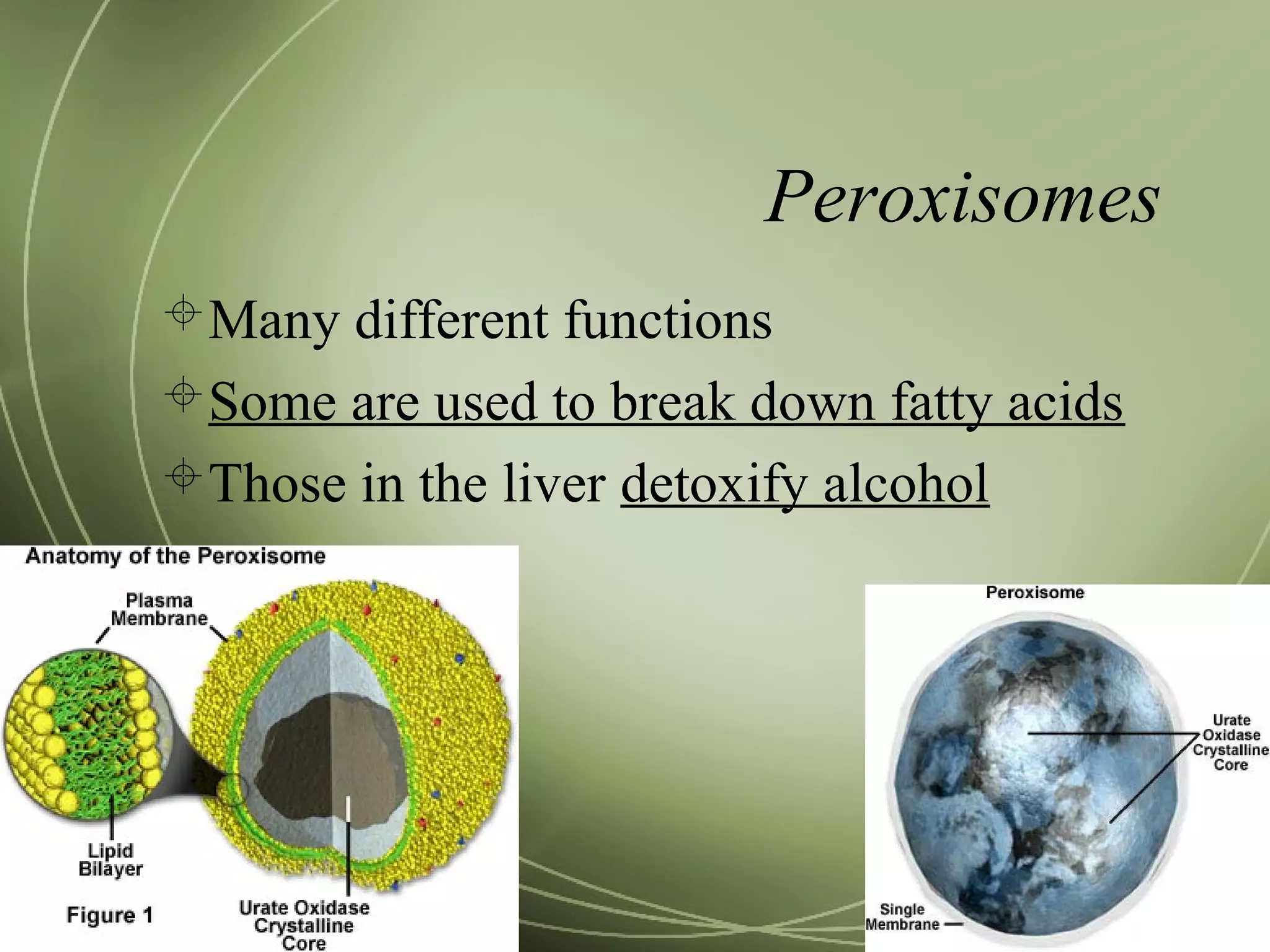
Peroxisomes
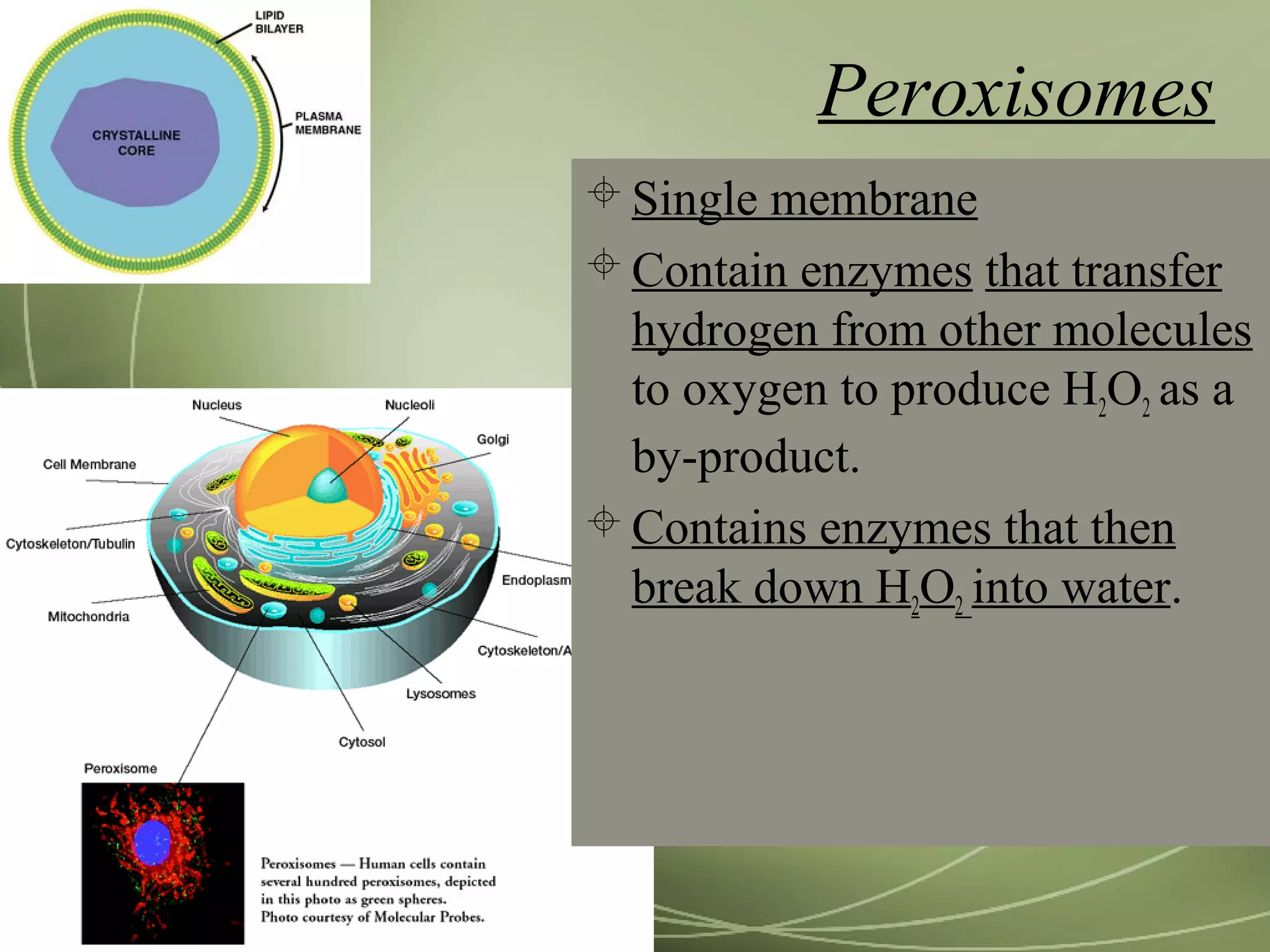
 Single membrane
 Contain enzymes that transfer
hydrogen from other molecules
to oxygen to produce H2O2 as a
by-product.
 Contains enzymes that then
break down H2O2 into water.
Peroxisomes
Many different functions
Some are used to break down fatty acids
Those in the liver detoxify alcohol
The Cytoskeleton
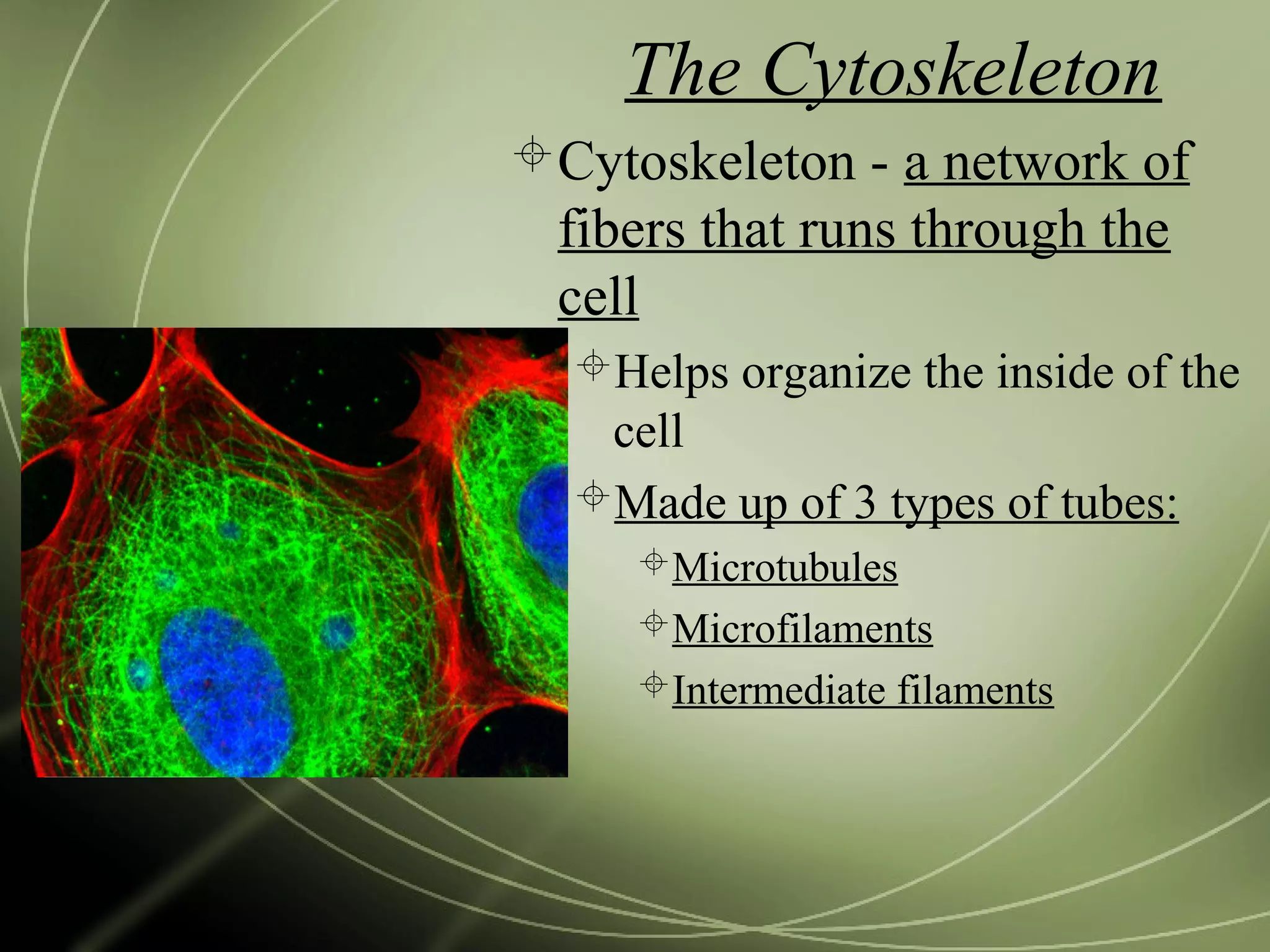
Cytoskeleton - a network of
fibers that runs through the
cell
Helps organize the inside of the
cell
Made up of 3 types of tubes:
Microtubules
Microfilaments
Intermediate filaments
Cytoskeleton Functions
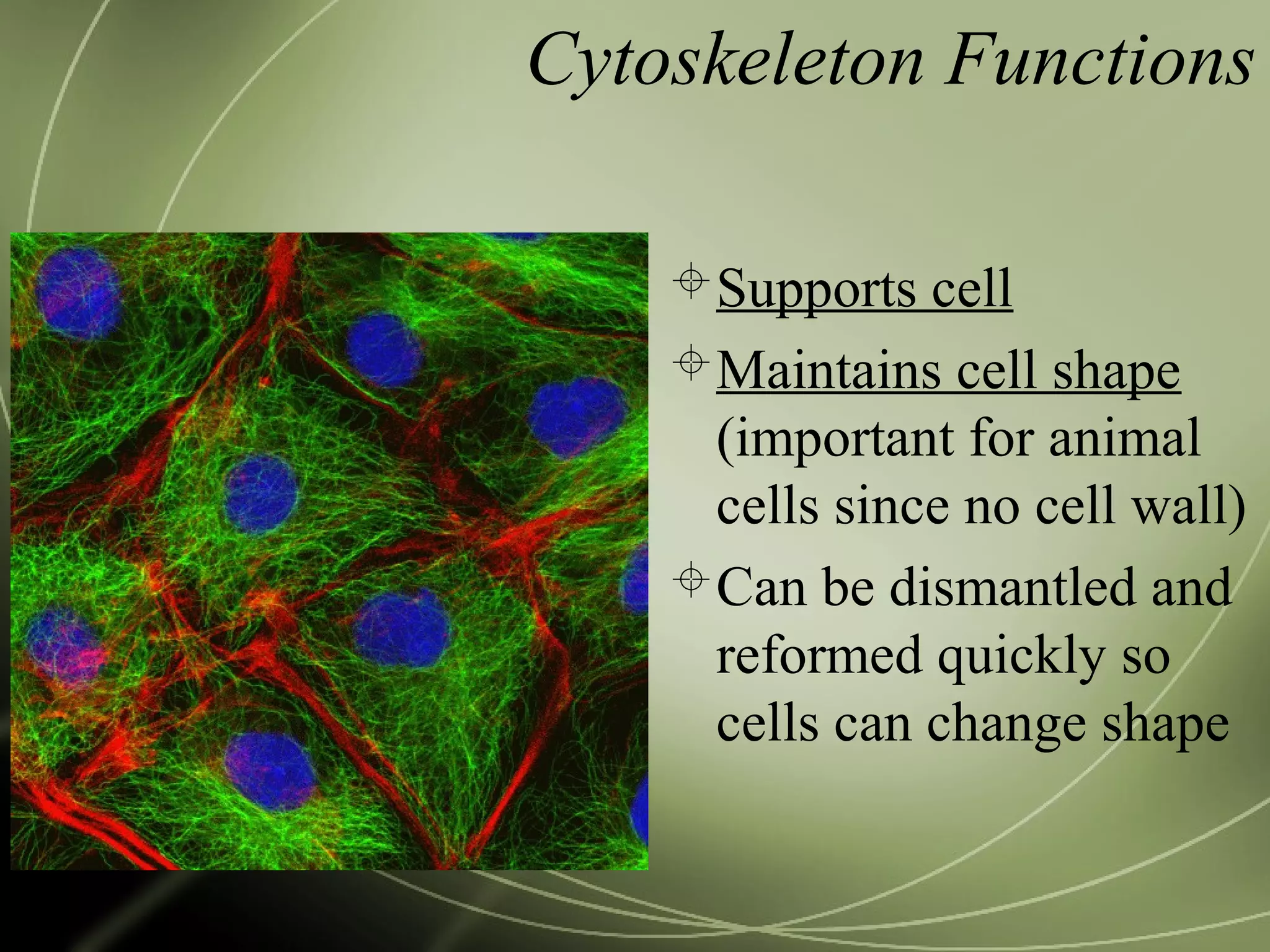
Supports cell
Maintains cell shape
(important for animal
cells since no cell wall)
Can be dismantled and
reformed quickly so
cells can change shape
Cytoskeleton Function
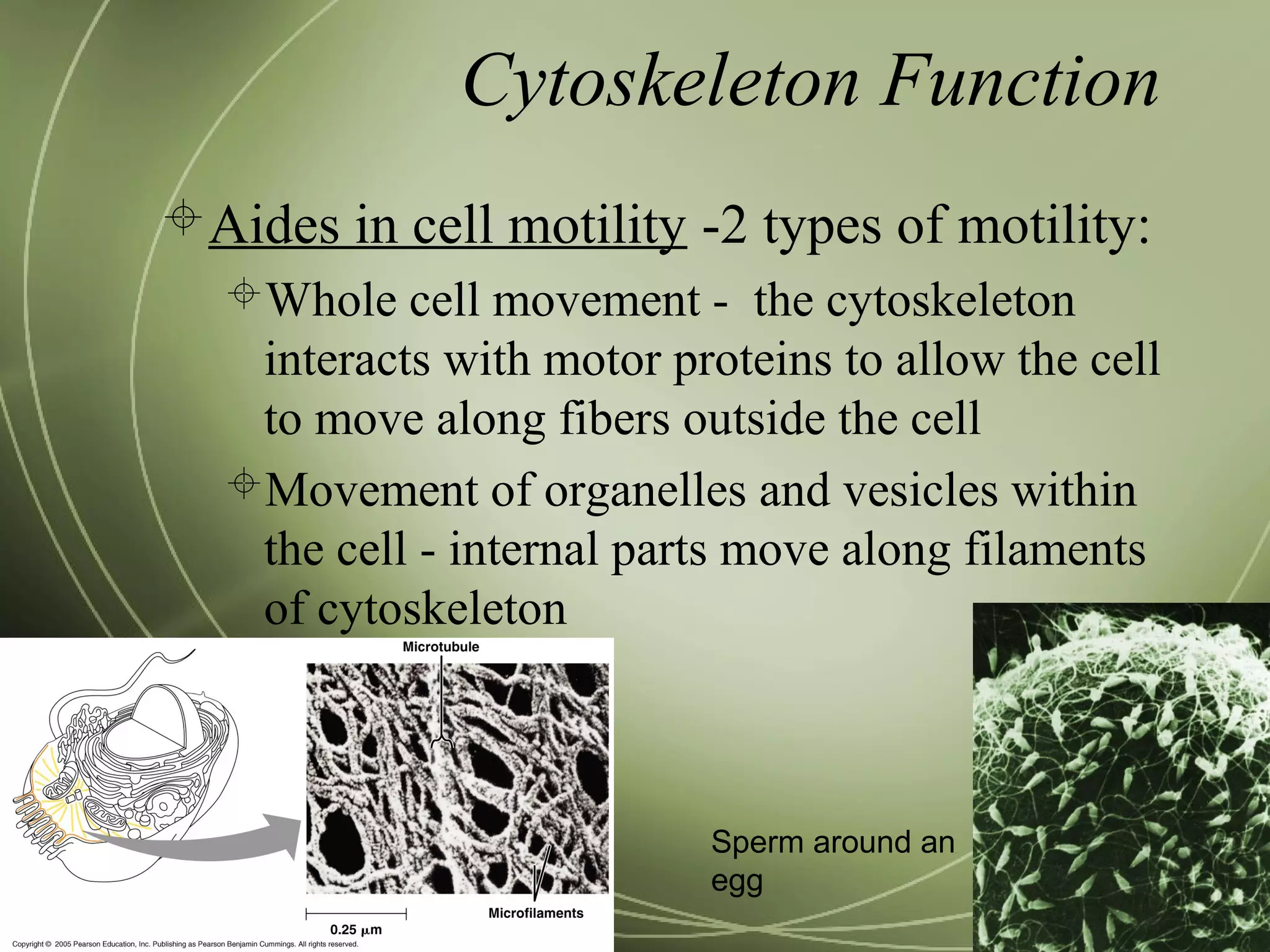
Aides in cell motility -2 types of motility:
Whole cell movement - the cytoskeleton
interacts with motor proteins to allow the cell
to move along fibers outside the cell
Movement of organelles and vesicles within
the cell - internal parts move along filaments
of cytoskeleton
Sperm around an
egg
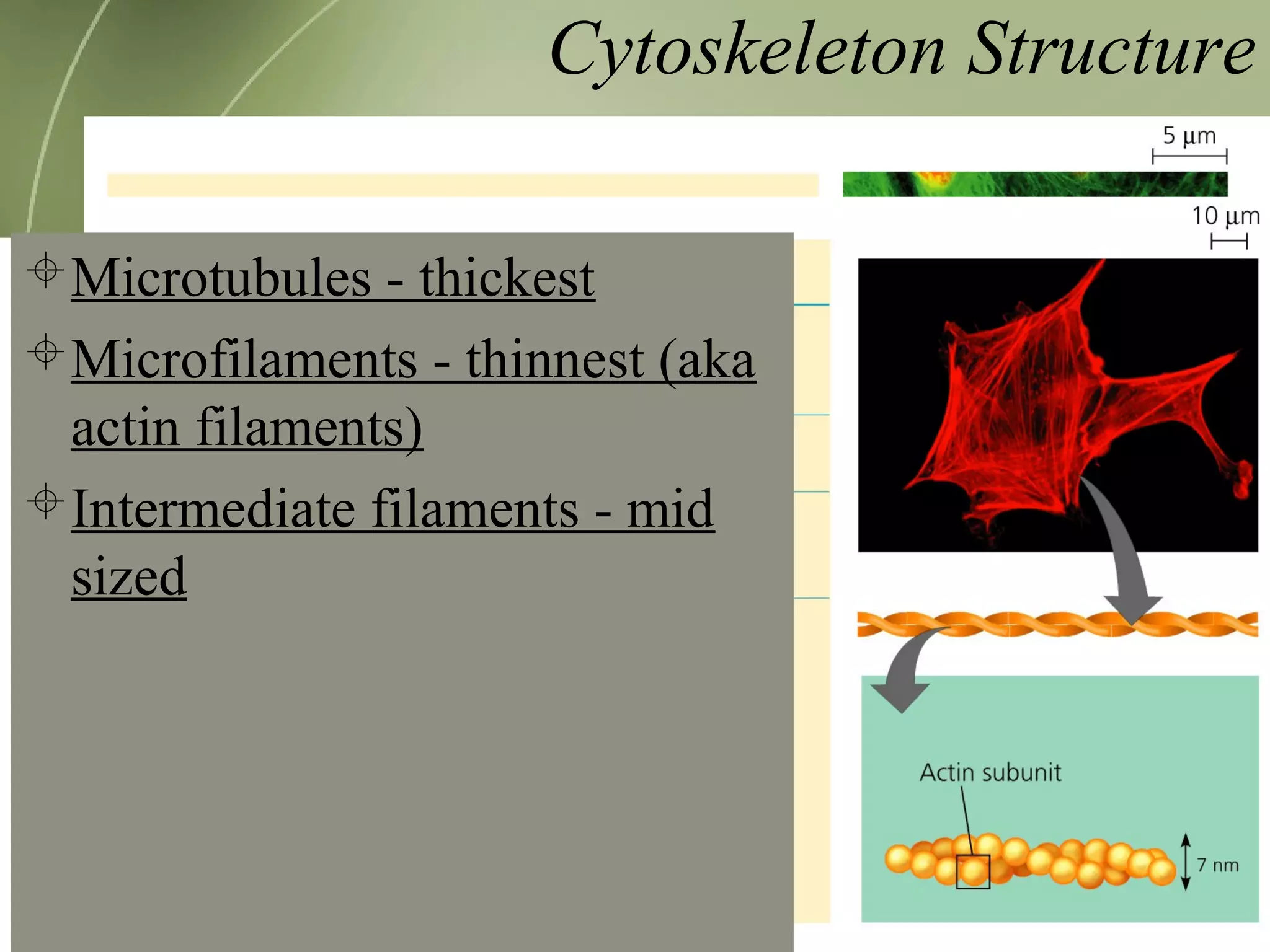
Cytoskeleton Structure
Microtubules - thickest
Microfilaments - thinnest (aka
actin filaments)
Intermediate filaments - mid
sized
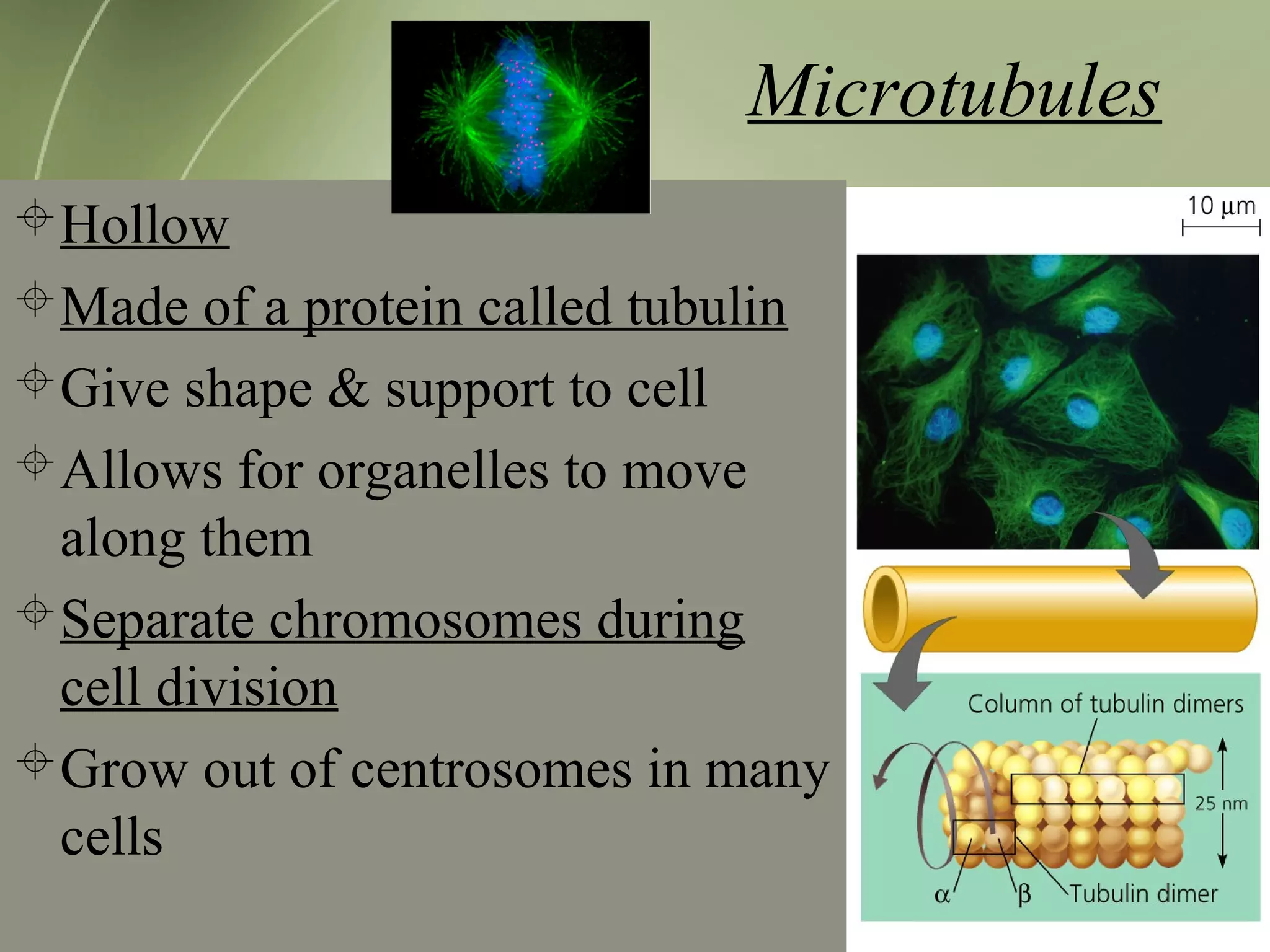
Microtubules
Hollow
Made of a protein called tubulin
Give shape & support to cell
Allows for organelles to move
along them
Separate chromosomes during
cell division
Grow out of centrosomes in many
cells
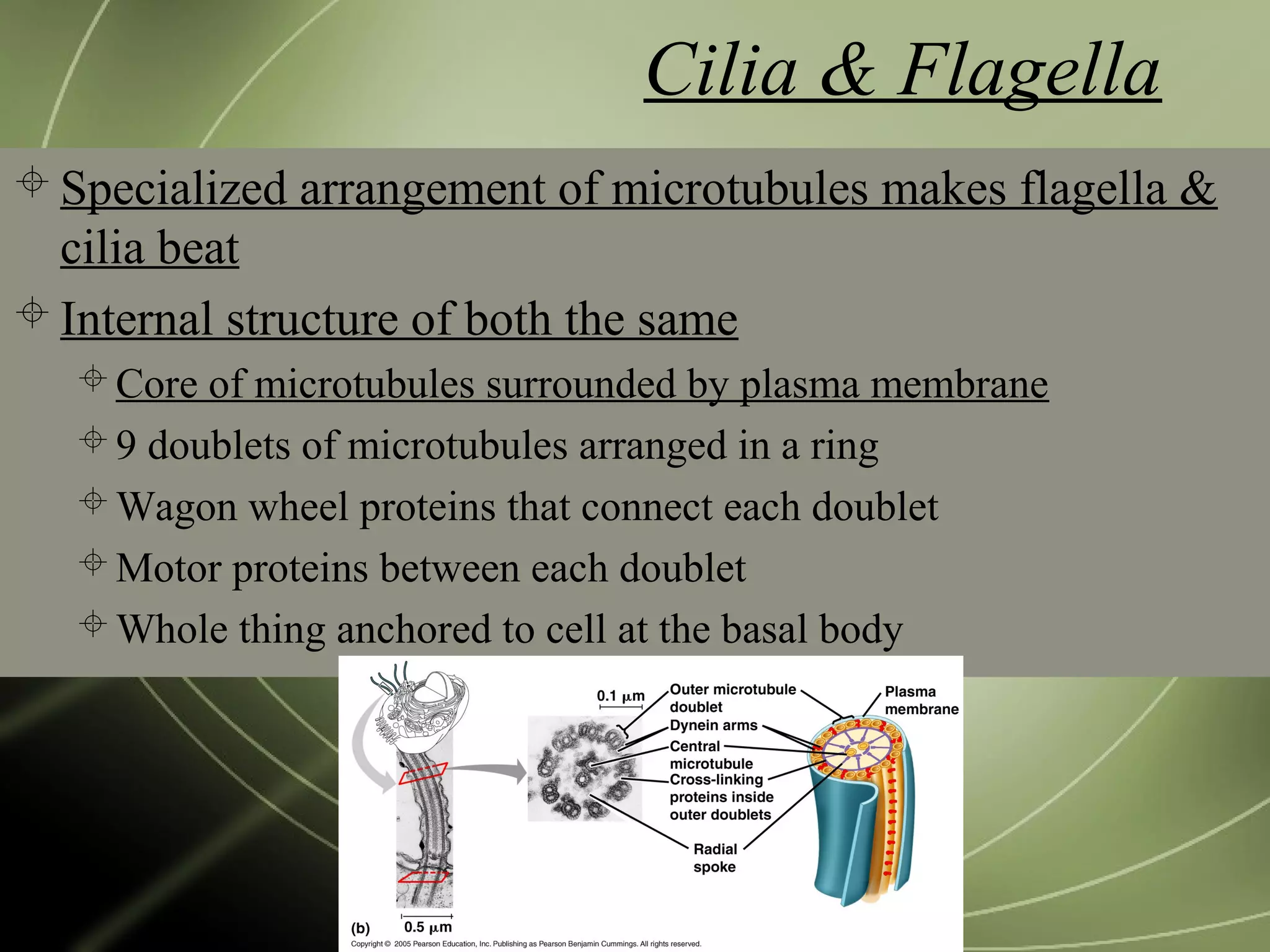
Cilia & Flagella
 Specialized arrangement of microtubules makes flagella &
cilia beat
 Internal structure of both the same
Core of microtubules surrounded by plasma membrane
9 doublets of microtubules arranged in a ring
Wagon wheel proteins that connect each doublet
Motor proteins between each doublet
Whole thing anchored to cell at the basal body
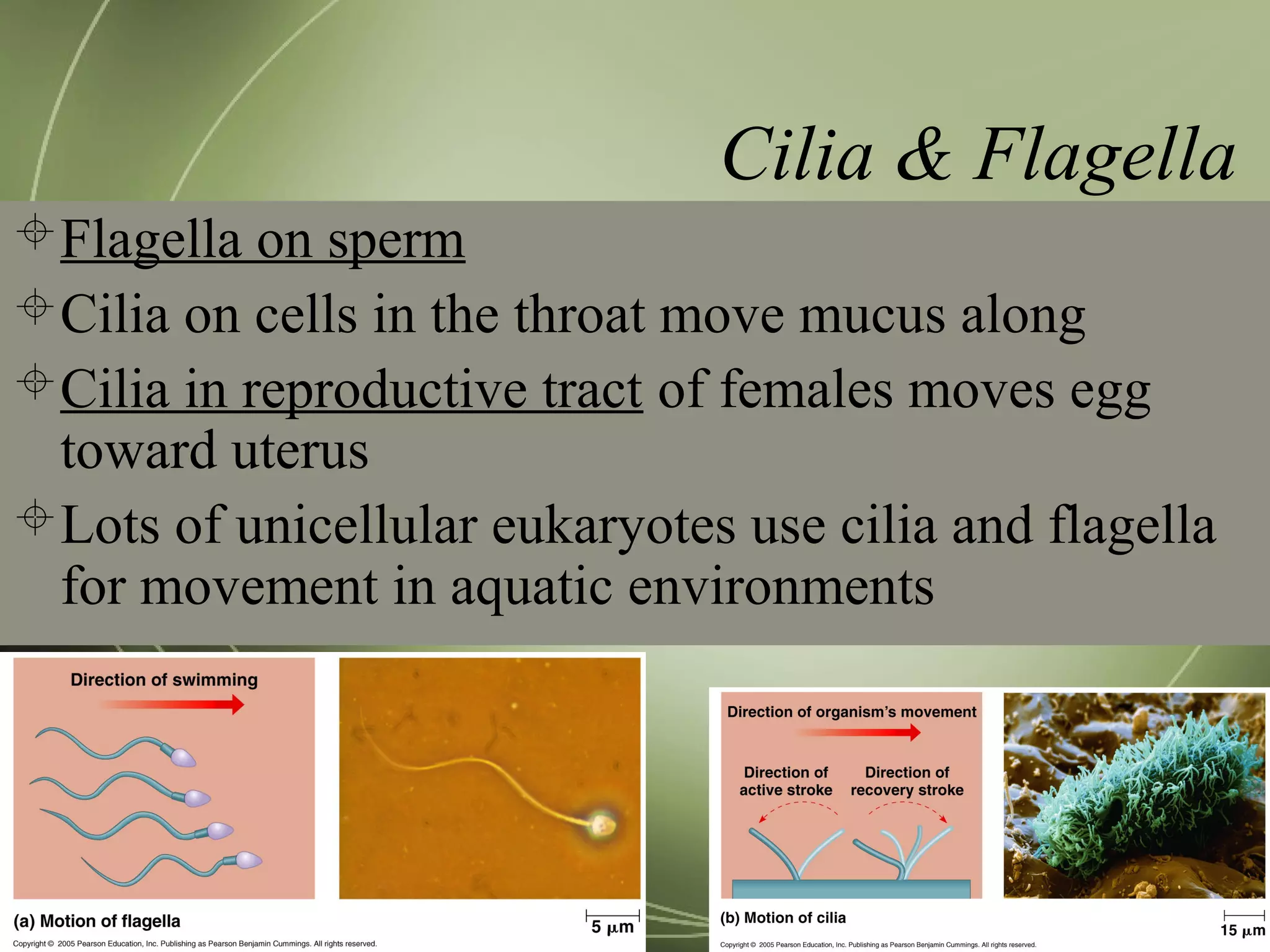
Cilia & Flagella
Flagella on sperm
Cilia on cells in the throat move mucus along
Cilia in reproductive tract of females moves egg
toward uterus
Lots of unicellular eukaryotes use cilia and flagella
for movement in aquatic environments
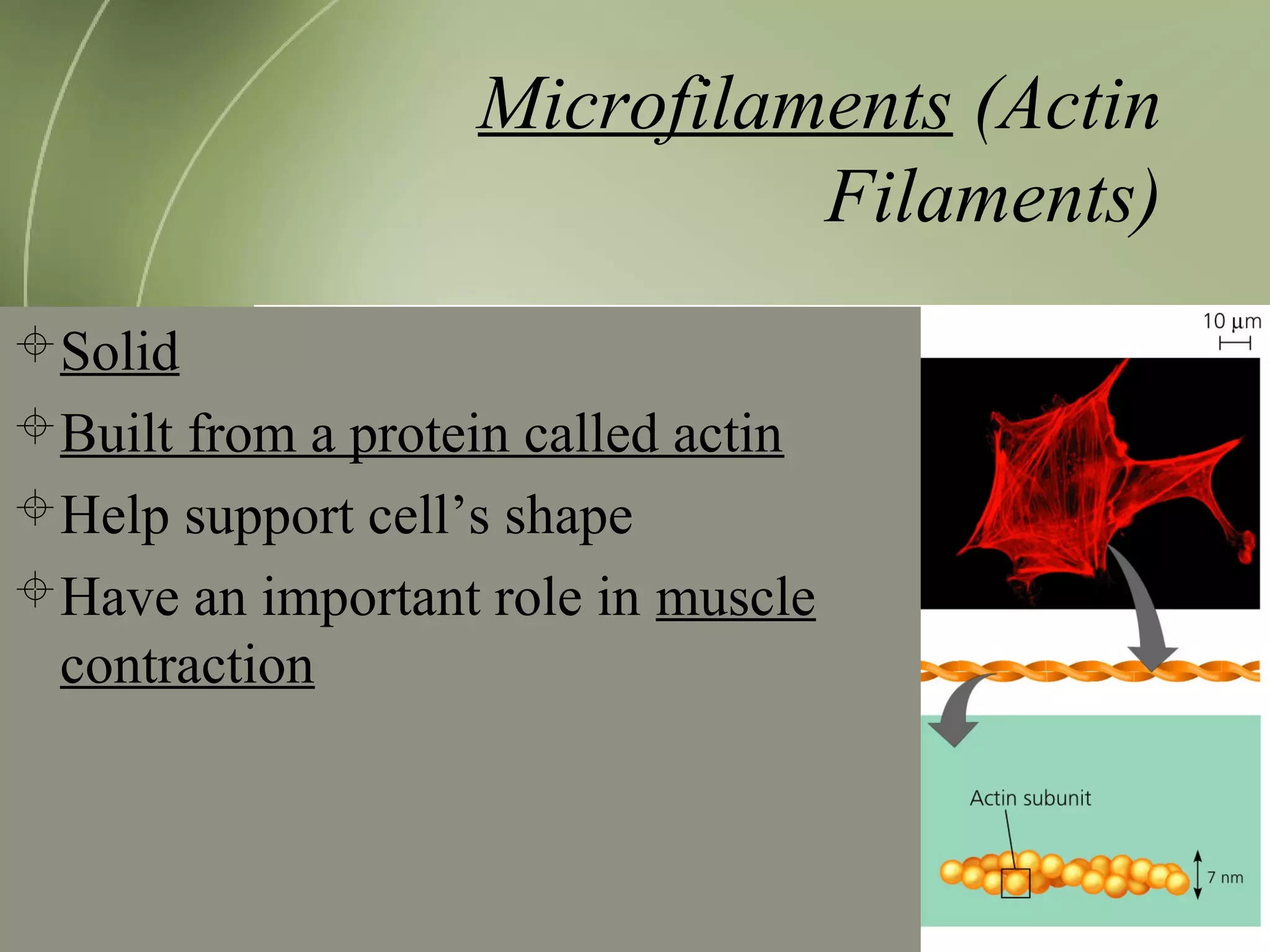
Microfilaments (Actin
Filaments)
Solid
Built from a protein called actin
Help support cell’s shape
Have an important role in muscle
contraction
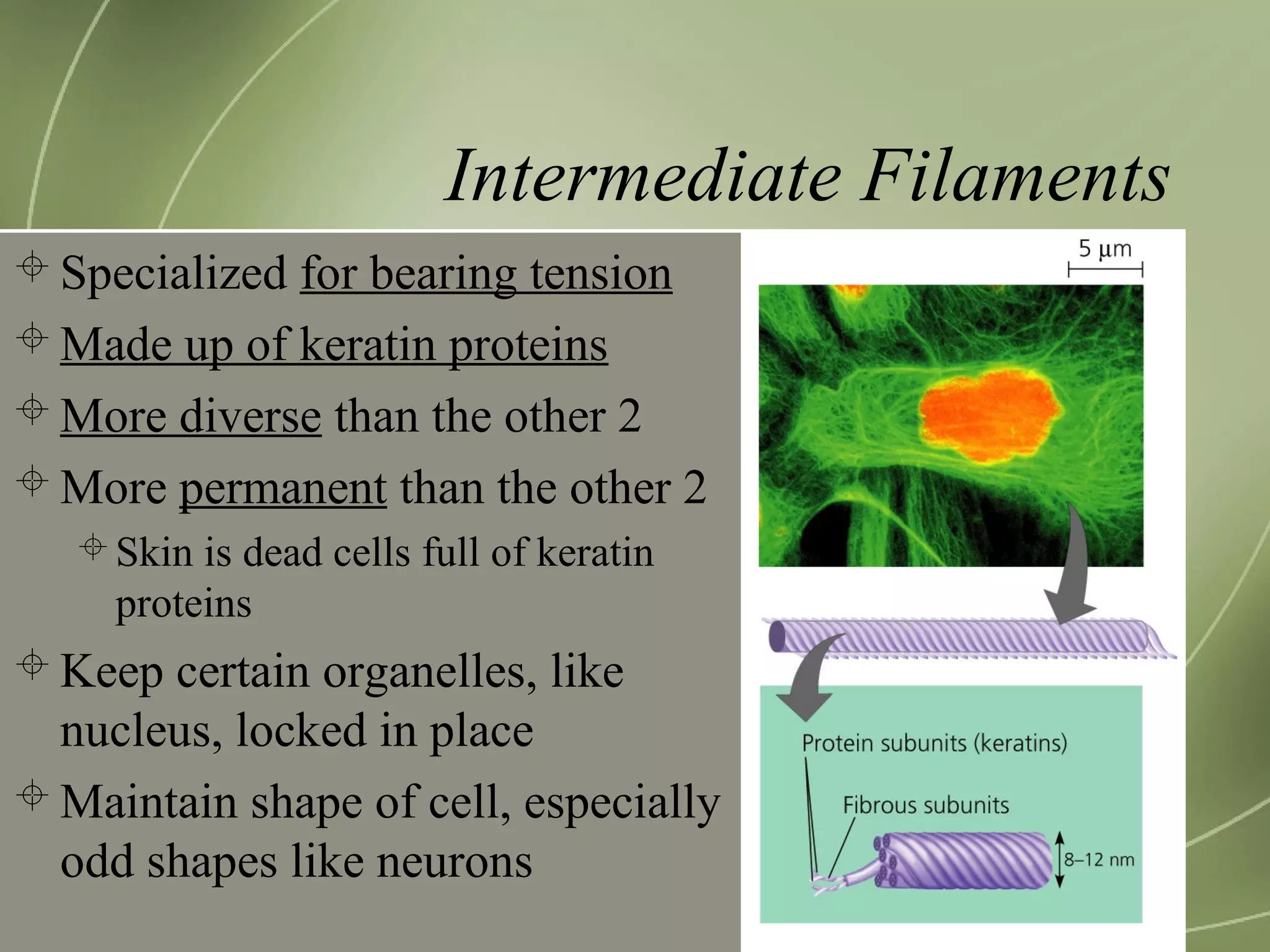
Intermediate Filaments
Specialized for bearing tension
Made up of keratin proteins
More diverse than the other 2
More permanent than the other 2
Skin is dead cells full of keratin
proteins
Keep certain organelles, like
nucleus, locked in place
Maintain shape of cell, especially
odd shapes like neurons
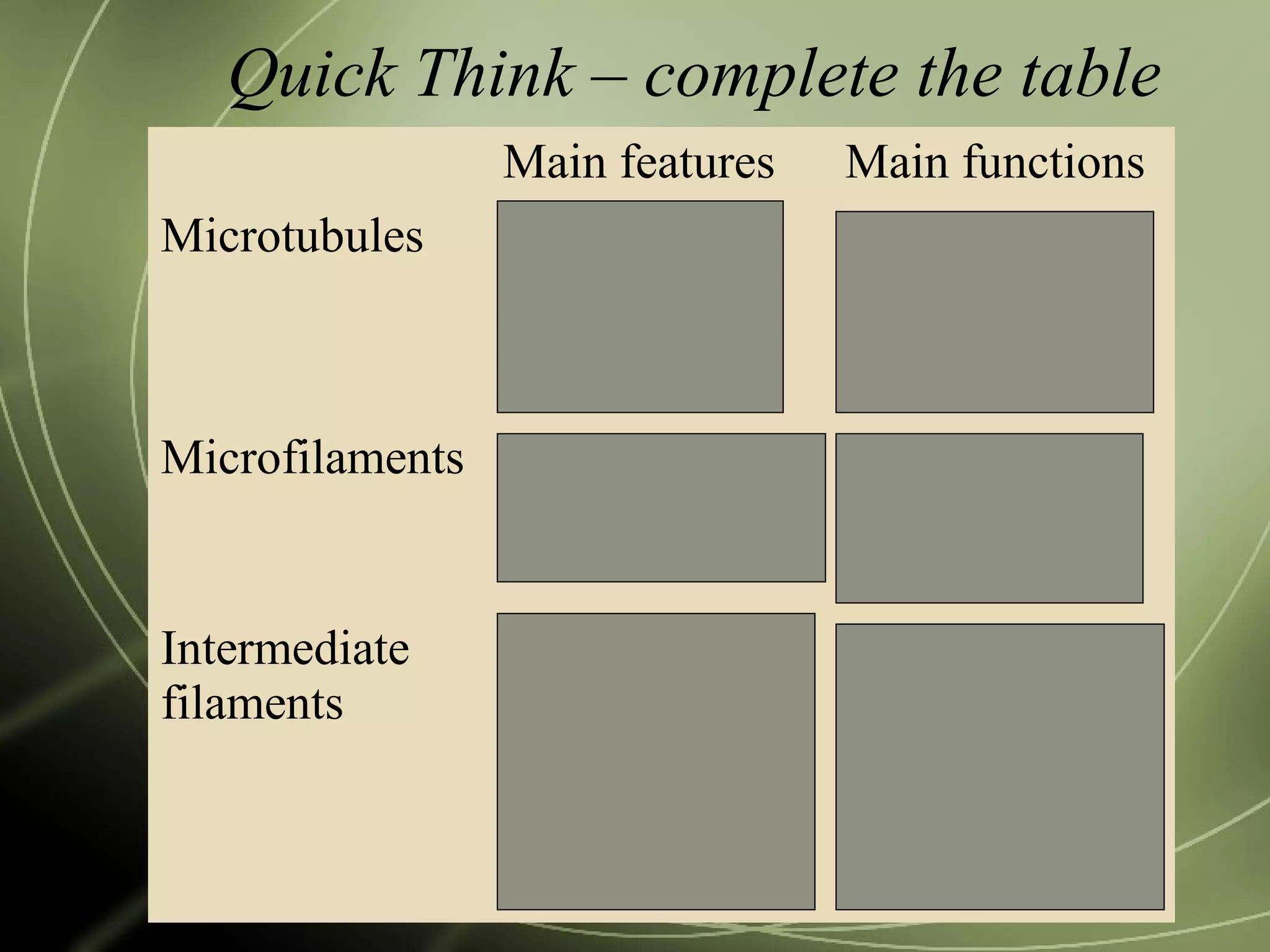
Quick Think – complete the table
Main features Main functions
Microtubules Hollow,
thickest,
tubulin
support for cell,
organelles move
along it’s tracks,
cilia & flagella
Microfilaments Thinnest, solid
actin
Support cell
shape, muscle
contraction
Intermediate
filaments
In between
size, diverse
structure, more
permanent,
keratin
Lock certain
organelles in
place, maintain
irregular cell
shapes
Quick Think
There are many different cell types, even
within the same organism. Cells vary in
size, shape, structure, and function. This
is part of the diversity of life.
Which aspects of cells best reveal their
evolutionary unity?
What are some examples of specialized
cellular modifications?

AP Bio Ch. 6.5 - 6.6

  • 1.
  • 2.
    Mitochondria & Chloroplastsare special… Not part of the endomembrane system because… They both have 2 membranes separating their insides from the cytosol Have their own ribosomes Contain small amounts of their own DNA to make some of their own membrane proteins Grow and reproduce independently of the cell
  • 3.
    Mitochondria Found in eukaryoticcells of plants, animals, fungi, and protists More active cells have more mitochondria Very small - ~ 1-10 microns
  • 4.
    Structure of Mitochondria 2membranes Smooth outer membrane Convoluted inner membrane Folds called cristae This membrane creates 2 spaces inside the mitochondrion Space between outer & inner membrane = intermembrane space Space inside inner membrane = matrix Matrix has enzymes , DNA, ribosomes Lots of folds means lots of membrane surface for cell respiration to occur
  • 5.
    Chloroplasts One of afamily of plant organelles called plastids Amyloplast – store starch Chromoplast – pigments that color fruits and flowers Chloroplast – contain the pigment chlorophyll & enzymes for photosynthesis Very small ~ 2 microns Found in green parts of plants
  • 6.
    Structure of Chloroplasts Double membrane with narrow intermembrane space  Inside is second membrane system – flattened discs called thylakoids Stacks of thylakoids are called grana Fluid inside grana called stroma Stroma contains DNA, enzymes for photosynthesis, ribosomes
  • 7.
    Quick Think Describe atleast 2 things that mitochondria and chloroplasts have in common. Explain why mitochondria and chloroplasts are not part of the endomembrane system.
  • 8.
    Peroxisomes  Single membrane Contain enzymes that transfer hydrogen from other molecules to oxygen to produce H2O2 as a by-product.  Contains enzymes that then break down H2O2 into water.
  • 9.
    Peroxisomes Many different functions Someare used to break down fatty acids Those in the liver detoxify alcohol
  • 10.
    The Cytoskeleton Cytoskeleton -a network of fibers that runs through the cell Helps organize the inside of the cell Made up of 3 types of tubes: Microtubules Microfilaments Intermediate filaments
  • 11.
    Cytoskeleton Functions Supports cell Maintainscell shape (important for animal cells since no cell wall) Can be dismantled and reformed quickly so cells can change shape
  • 12.
    Cytoskeleton Function Aides incell motility -2 types of motility: Whole cell movement - the cytoskeleton interacts with motor proteins to allow the cell to move along fibers outside the cell Movement of organelles and vesicles within the cell - internal parts move along filaments of cytoskeleton Sperm around an egg
  • 13.
    Cytoskeleton Structure Microtubules -thickest Microfilaments - thinnest (aka actin filaments) Intermediate filaments - mid sized
  • 14.
    Microtubules Hollow Made of aprotein called tubulin Give shape & support to cell Allows for organelles to move along them Separate chromosomes during cell division Grow out of centrosomes in many cells
  • 15.
    Cilia & Flagella Specialized arrangement of microtubules makes flagella & cilia beat  Internal structure of both the same Core of microtubules surrounded by plasma membrane 9 doublets of microtubules arranged in a ring Wagon wheel proteins that connect each doublet Motor proteins between each doublet Whole thing anchored to cell at the basal body
  • 16.
    Cilia & Flagella Flagellaon sperm Cilia on cells in the throat move mucus along Cilia in reproductive tract of females moves egg toward uterus Lots of unicellular eukaryotes use cilia and flagella for movement in aquatic environments
  • 17.
    Microfilaments (Actin Filaments) Solid Built froma protein called actin Help support cell’s shape Have an important role in muscle contraction
  • 18.
    Intermediate Filaments Specialized forbearing tension Made up of keratin proteins More diverse than the other 2 More permanent than the other 2 Skin is dead cells full of keratin proteins Keep certain organelles, like nucleus, locked in place Maintain shape of cell, especially odd shapes like neurons
  • 19.
    Quick Think –complete the table Main features Main functions Microtubules Hollow, thickest, tubulin support for cell, organelles move along it’s tracks, cilia & flagella Microfilaments Thinnest, solid actin Support cell shape, muscle contraction Intermediate filaments In between size, diverse structure, more permanent, keratin Lock certain organelles in place, maintain irregular cell shapes
  • 20.
    Quick Think There aremany different cell types, even within the same organism. Cells vary in size, shape, structure, and function. This is part of the diversity of life. Which aspects of cells best reveal their evolutionary unity? What are some examples of specialized cellular modifications?