Tech 507
Nicole Cureton
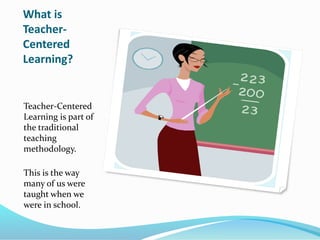
What is
Teacher-
Centered
Learning?
Teacher-Centered
Learning is part of
the traditional
teaching
methodology.
This is the way
many of us were
taught when we
were in school.
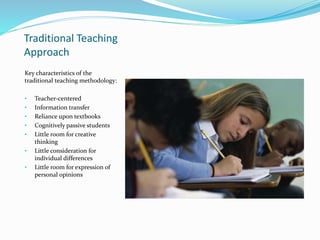
Traditional Teaching
Approach
Key characteristics of the
traditional teaching methodology:
• Teacher-centered
• Information transfer
• Reliance upon textbooks
• Cognitively passive students
• Little room for creative
thinking
• Little consideration for
individual differences
• Little room for expression of
personal opinions
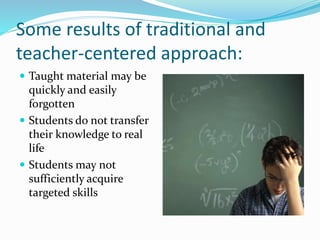
Some results of traditional and
teacher-centered approach:
 Taught material may be
quickly and easily
forgotten
 Students do not transfer
their knowledge to real
life
 Students may not
sufficiently acquire
targeted skills
Let’s try a new approach, one which takes the focus away from
the teacher and places it more onto the student!
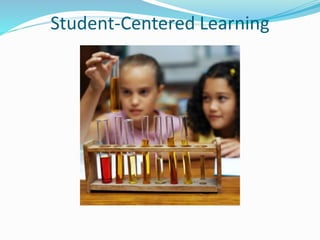
Student-Centered Learning
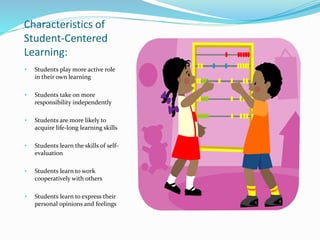
Characteristics of
Student-Centered
Learning:
• Students play more active role
in their own learning
• Students take on more
responsibility independently
• Students are more likely to
acquire life-long learning skills
• Students learn the skills of self-
evaluation
• Students learn to work
cooperatively with others
• Students learn to express their
personal opinions and feelings
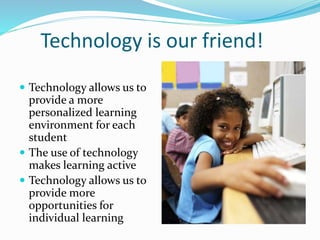
Technology is our friend!
 Technology allows us to
provide a more
personalized learning
environment for each
student
 The use of technology
makes learning active
 Technology allows us to
provide more
opportunities for
individual learning
Imagine the Possibilities!
 Suppose your class is learning about map skills and
distances. In the past, many of us have had students
read the information, complete a few worksheets, and
then take a multiple choice quiz.
 But imagine the level of student engagement when
students learn these concepts and skills with an online
map program! They could plot their own points,
maneuver and manipulate paths and journeys across
the map, and discover ways to track time and distance!
In your classroom, don’t forget to
abide by copyright and fair use
regulations!
 Students are allowed to use copyrighted materials for their
school assignments. However, they may NOT post these
materials in public forums or distribute the materials to
others to use.
 Teachers may use copyrighted materials, in most cases,
without permission provided that the material is used for
the instruction of students and provided that this usage is
not causing the creator to lose income.
 When in doubt, ASK PERMISSION and teach students to
do the same!!!!
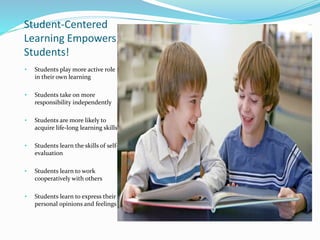
Student-Centered
Learning Empowers
Students!
• Students play more active role
in their own learning
• Students take on more
responsibility independently
• Students are more likely to
acquire life-long learning skills
• Students learn the skills of self-
evaluation
• Students learn to work
cooperatively with others
• Students learn to express their
personal opinions and feelings
Turn & Talk!
 Is your classroom more teacher-centered or student-
centered? How could you make it more student-
centered? How could you use technology to enhance
the student-centered learning environment?
References:
 Ying-Shao H., (2008). Learning about seasons in a technologically enhanced
environment: The impact of teacher-guided and student-centered
instructional approaches on the process of students’ conceptual change.
Wiley Interscience, August 2007, 320-344.
 Cubukcu, Z. (2008). Preferences on internet based learning environments in
student-centered education. Turkish Online Journal of Distance Education,
9, 154-175.
 Demski, J. (2012). This time it’s personal. T.H.E Journal, January 2012, 32-36.

Student centered learning and technology

  • 1.
  • 2.
    What is Teacher- Centered Learning? Teacher-Centered Learning ispart of the traditional teaching methodology. This is the way many of us were taught when we were in school.
  • 3.
    Traditional Teaching Approach Key characteristicsof the traditional teaching methodology: • Teacher-centered • Information transfer • Reliance upon textbooks • Cognitively passive students • Little room for creative thinking • Little consideration for individual differences • Little room for expression of personal opinions
  • 4.
    Some results oftraditional and teacher-centered approach:  Taught material may be quickly and easily forgotten  Students do not transfer their knowledge to real life  Students may not sufficiently acquire targeted skills
  • 5.
    Let’s try anew approach, one which takes the focus away from the teacher and places it more onto the student!
  • 6.
  • 7.
    Characteristics of Student-Centered Learning: • Studentsplay more active role in their own learning • Students take on more responsibility independently • Students are more likely to acquire life-long learning skills • Students learn the skills of self- evaluation • Students learn to work cooperatively with others • Students learn to express their personal opinions and feelings
  • 8.
    Technology is ourfriend!  Technology allows us to provide a more personalized learning environment for each student  The use of technology makes learning active  Technology allows us to provide more opportunities for individual learning
  • 9.
    Imagine the Possibilities! Suppose your class is learning about map skills and distances. In the past, many of us have had students read the information, complete a few worksheets, and then take a multiple choice quiz.  But imagine the level of student engagement when students learn these concepts and skills with an online map program! They could plot their own points, maneuver and manipulate paths and journeys across the map, and discover ways to track time and distance!
  • 10.
    In your classroom,don’t forget to abide by copyright and fair use regulations!  Students are allowed to use copyrighted materials for their school assignments. However, they may NOT post these materials in public forums or distribute the materials to others to use.  Teachers may use copyrighted materials, in most cases, without permission provided that the material is used for the instruction of students and provided that this usage is not causing the creator to lose income.  When in doubt, ASK PERMISSION and teach students to do the same!!!!
  • 11.
    Student-Centered Learning Empowers Students! • Studentsplay more active role in their own learning • Students take on more responsibility independently • Students are more likely to acquire life-long learning skills • Students learn the skills of self- evaluation • Students learn to work cooperatively with others • Students learn to express their personal opinions and feelings
  • 12.
    Turn & Talk! Is your classroom more teacher-centered or student- centered? How could you make it more student- centered? How could you use technology to enhance the student-centered learning environment?
  • 13.
    References:  Ying-Shao H.,(2008). Learning about seasons in a technologically enhanced environment: The impact of teacher-guided and student-centered instructional approaches on the process of students’ conceptual change. Wiley Interscience, August 2007, 320-344.  Cubukcu, Z. (2008). Preferences on internet based learning environments in student-centered education. Turkish Online Journal of Distance Education, 9, 154-175.  Demski, J. (2012). This time it’s personal. T.H.E Journal, January 2012, 32-36.