National workshop on Student Centered
Approaches for Science Education


Introduction to Student Centered Approaches


                             RTTC Kandal, January 2012
Content


What?

Why?

How?
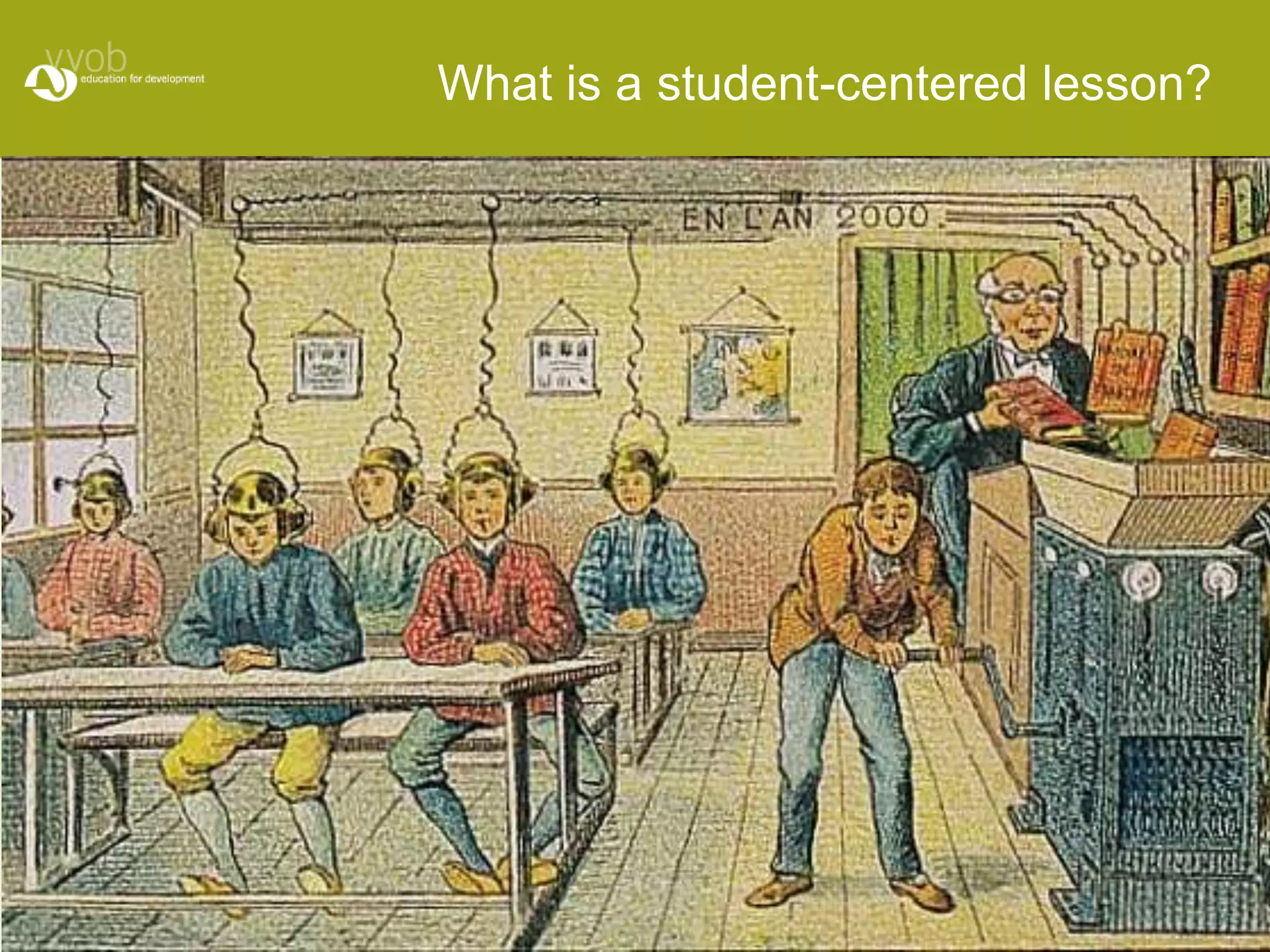
What is a student-centered lesson?
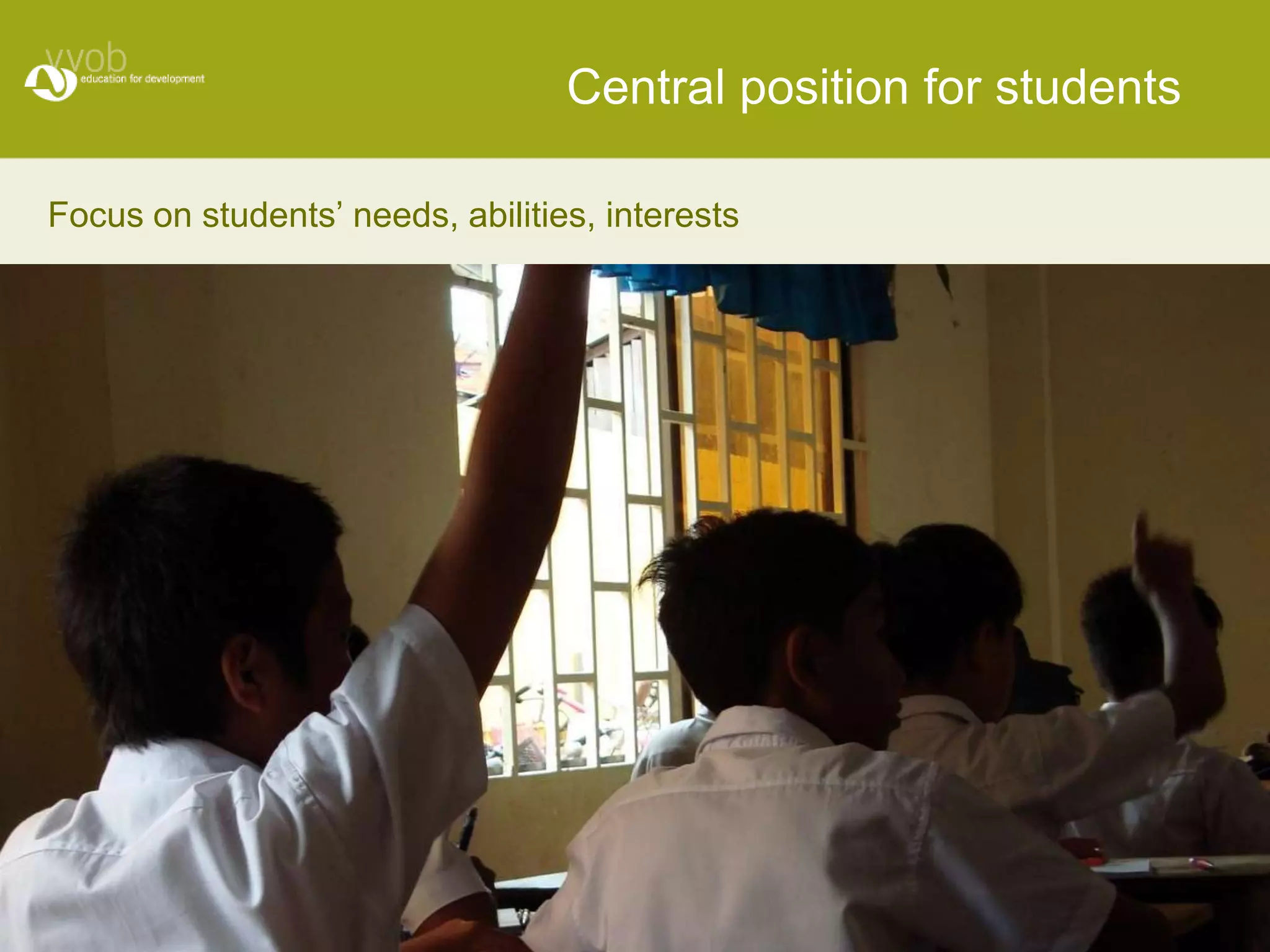
Central position for students

Focus on students’ needs, abilities, interests
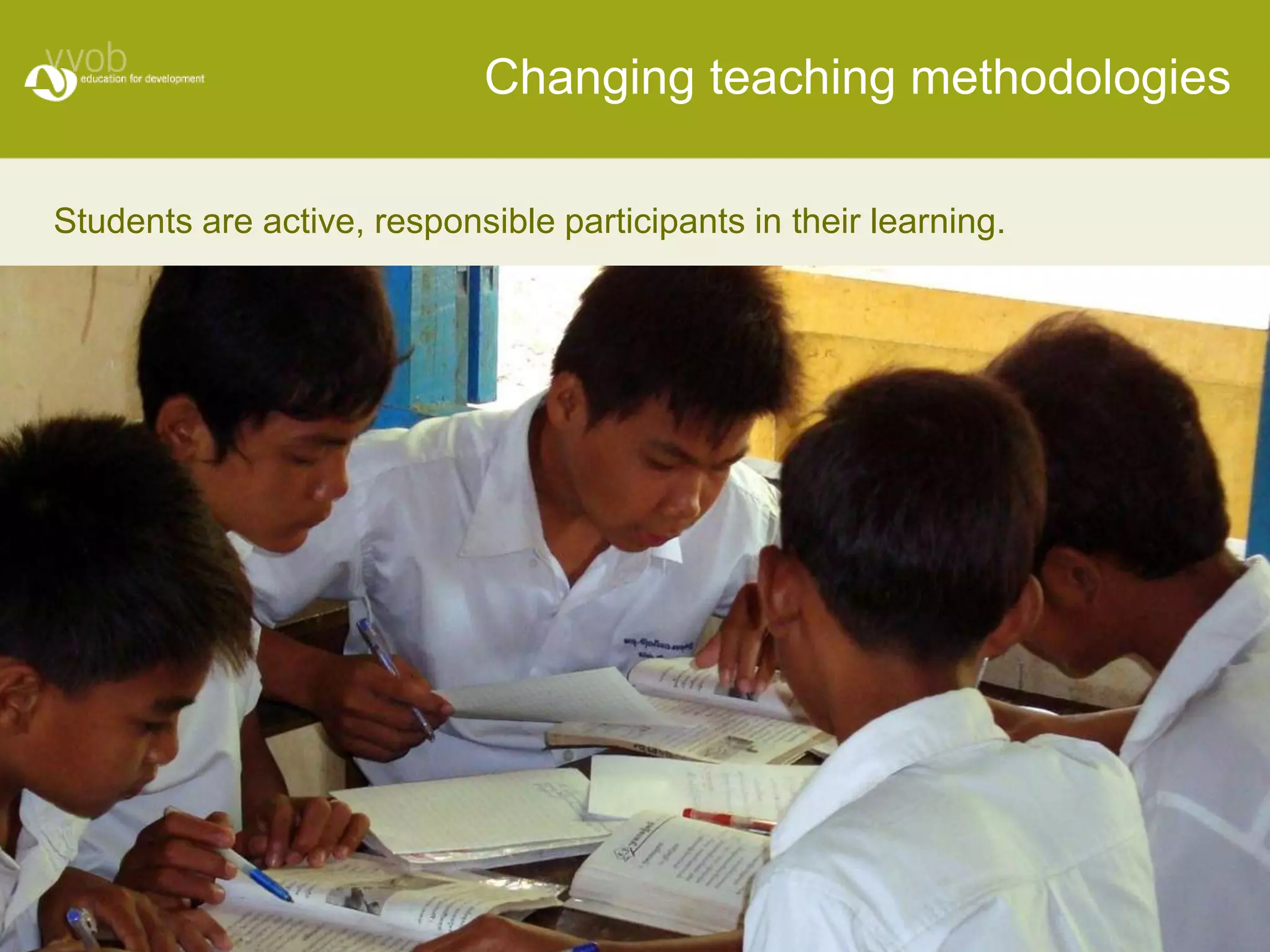
Changing teaching methodologies

Students are active, responsible participants in their learning.
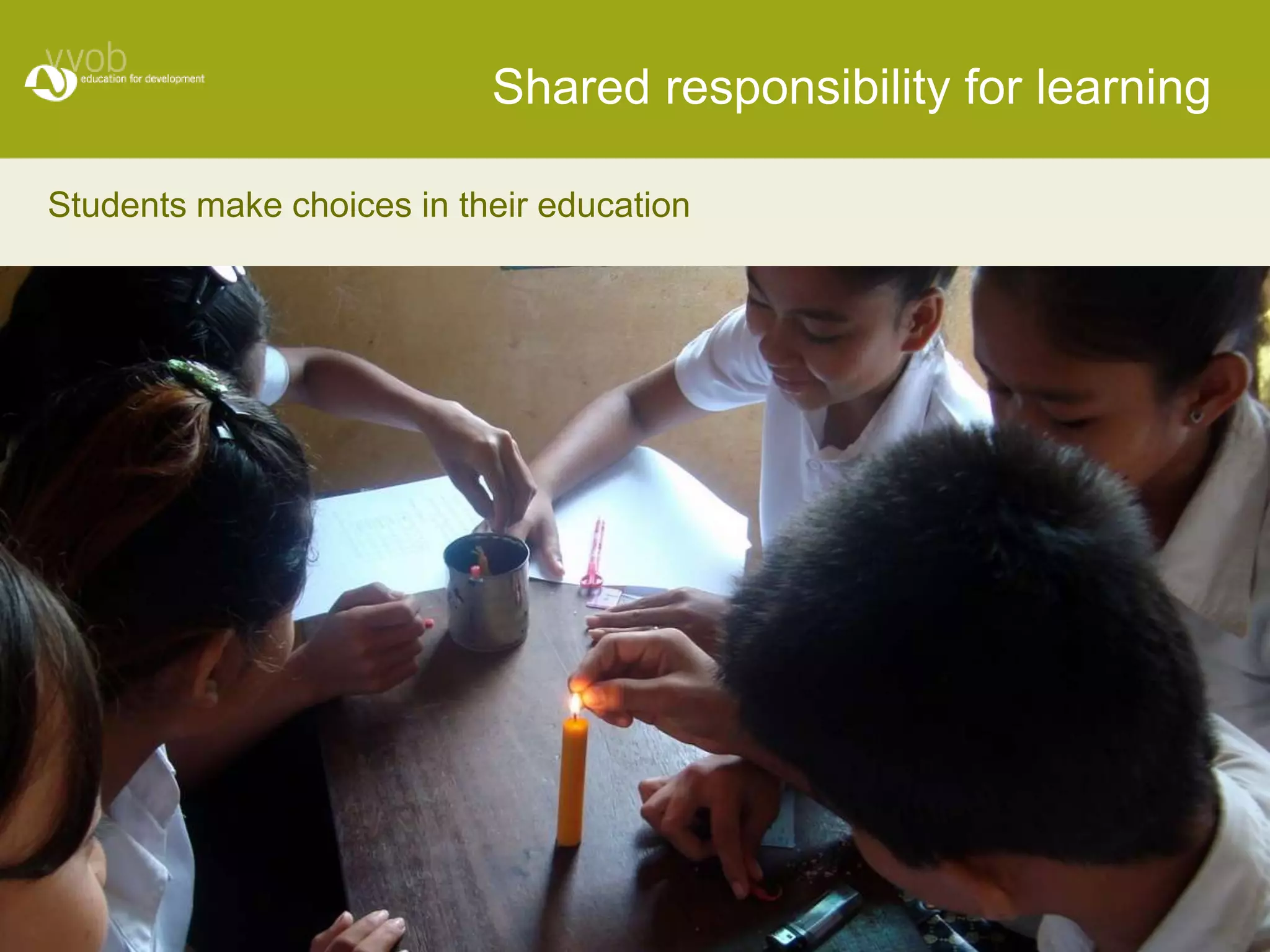
Shared responsibility for learning

Students make choices in their education
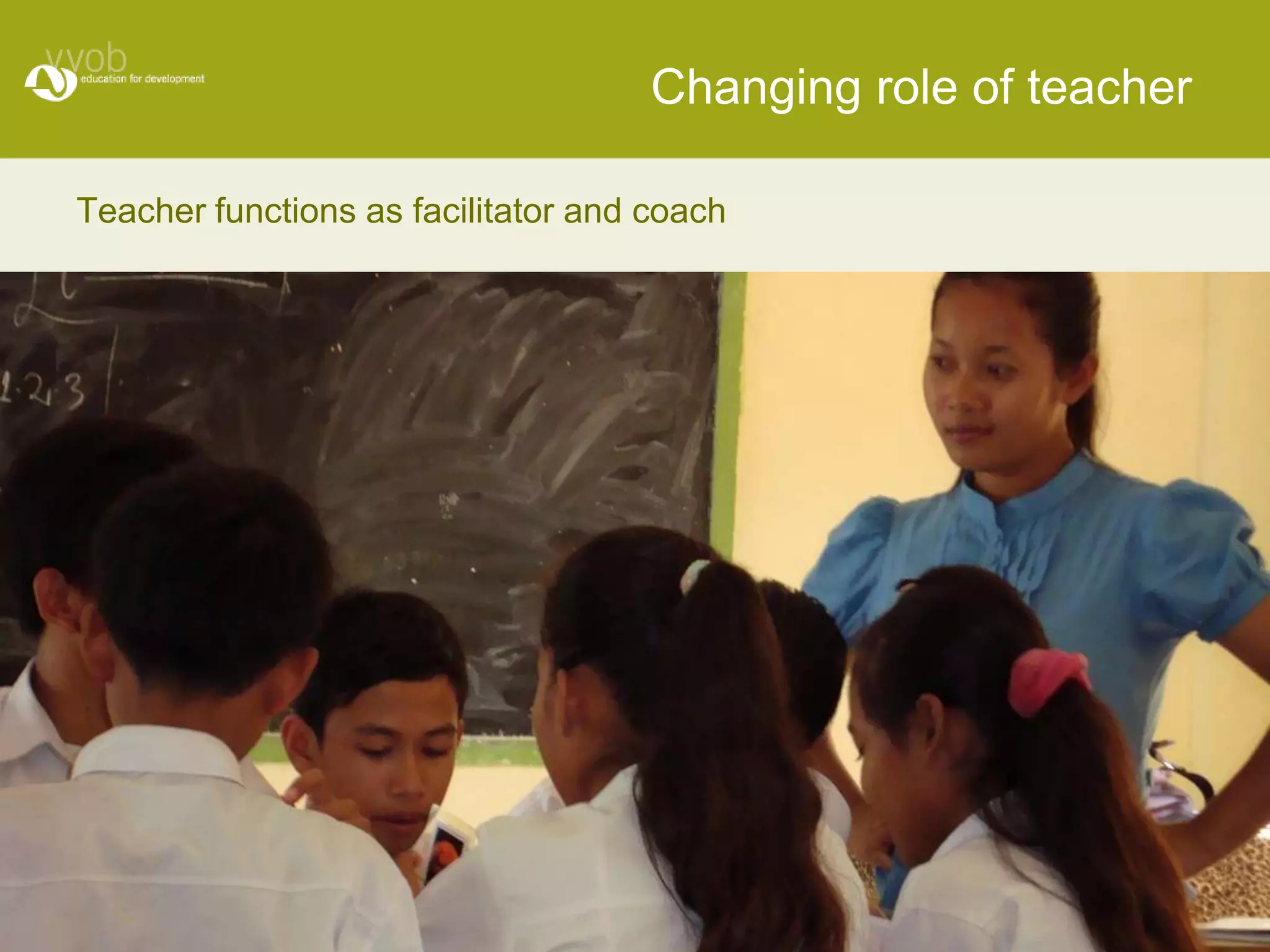
Changing role of teacher

Teacher functions as facilitator and coach
Definition


• Lea et al. (2003:322) characterizes student–centered
  learning as:

1. Reliance on active rather than passive learning,
2. Emphasis on deep learning and understanding,
3. Increased responsibility and accountability on the part of the
   student,
4. An increased sense of autonomy in the learner
5. Interdependence between teacher and learner,
6. Mutual respect within the learner teacher relationship,
7. A reflexive approach to the teaching and learning process on the
   part of both teacher and learner.’
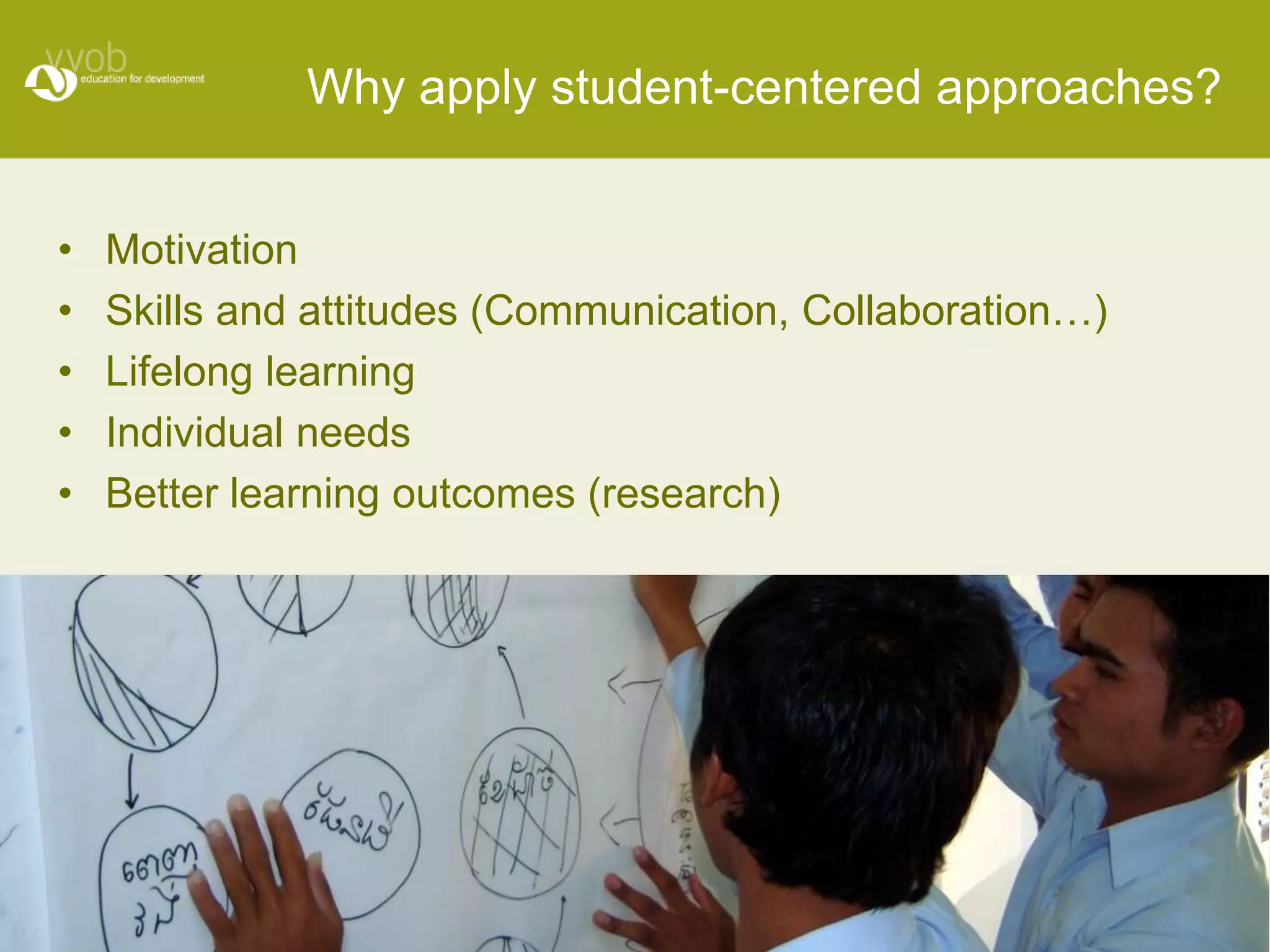
Why apply student-centered approaches?


•   Motivation
•   Skills and attitudes (Communication, Collaboration…)
•   Lifelong learning
•   Individual needs
•   Better learning outcomes (research)
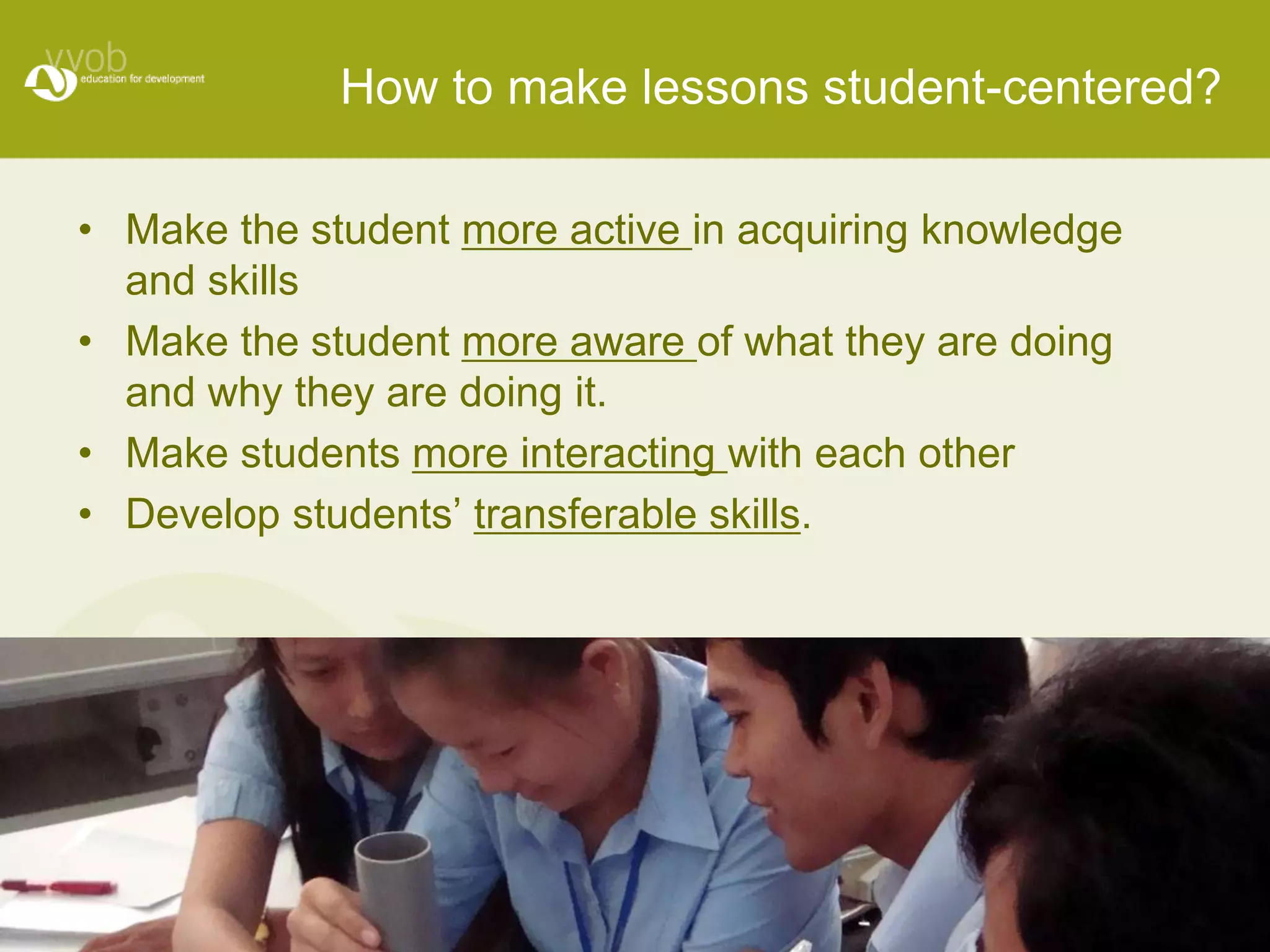
How to make lessons student-centered?

• Make the student more active in acquiring knowledge
  and skills
• Make the student more aware of what they are doing
  and why they are doing it.
• Make students more interacting with each other
• Develop students’ transferable skills.
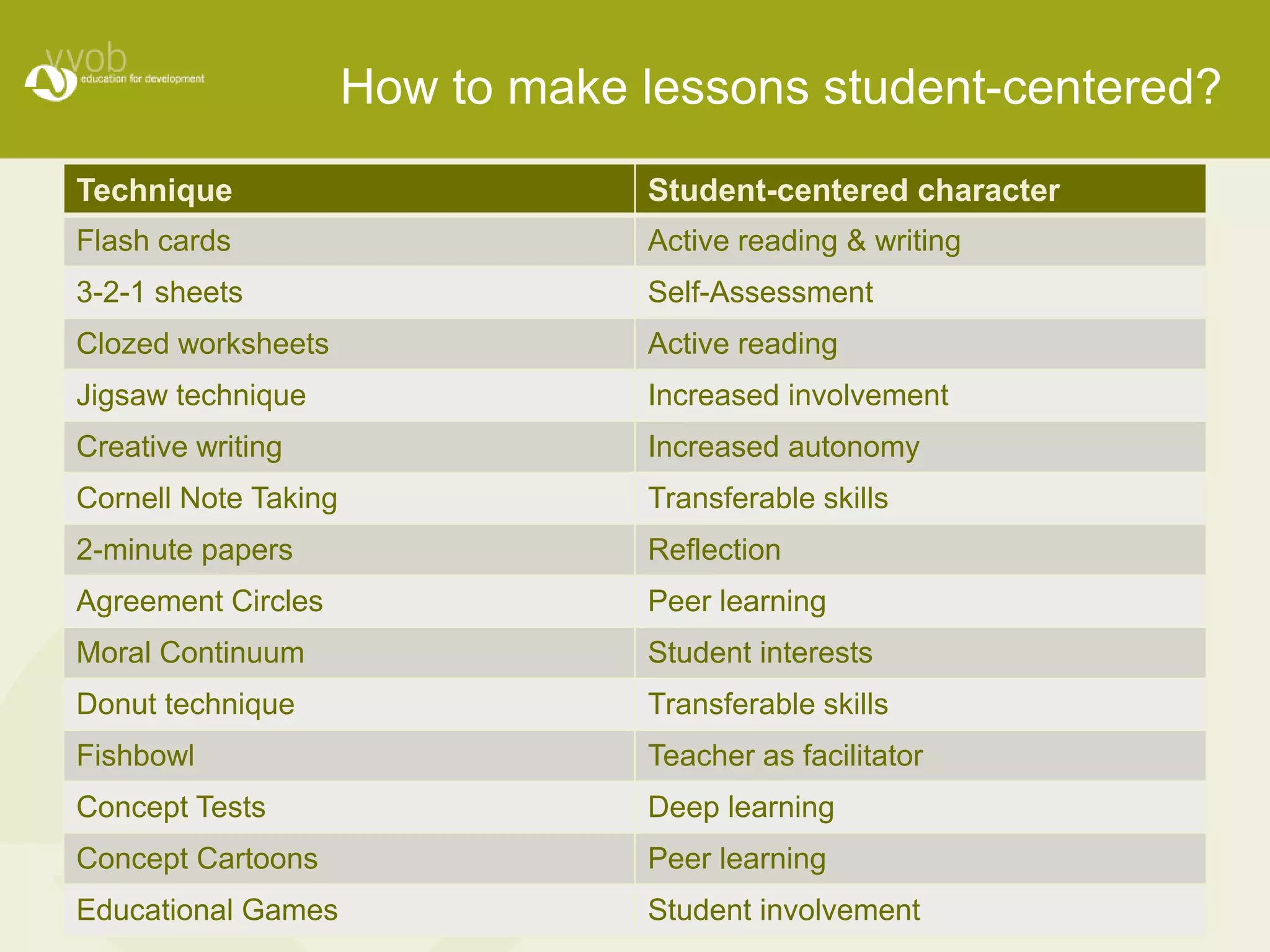
How to make lessons student-centered?
Technique                         Student-centered character
Flash cards                       Active reading & writing
3-2-1 sheets                      Self-Assessment
Clozed worksheets                 Active reading
Jigsaw technique                  Increased involvement
Creative writing                  Increased autonomy
Cornell Note Taking               Transferable skills
2-minute papers                   Reflection
Agreement Circles                 Peer learning
Moral Continuum                   Student interests
Donut technique                   Transferable skills
Fishbowl                          Teacher as facilitator
Concept Tests                     Deep learning
Concept Cartoons                  Peer learning
Educational Games                 Student involvement
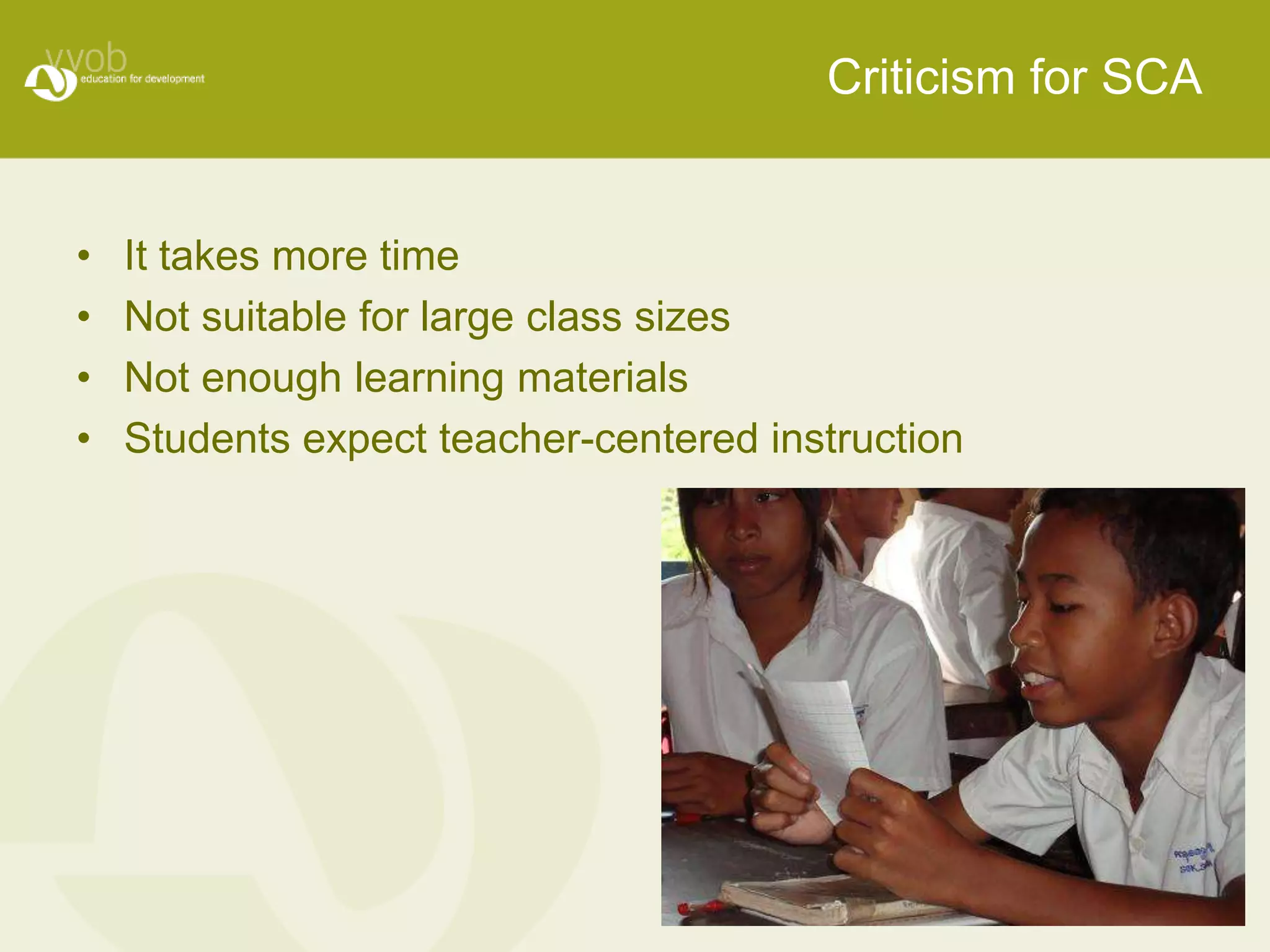
Criticism for SCA


•   It takes more time
•   Not suitable for large class sizes
•   Not enough learning materials
•   Students expect teacher-centered instruction
Workshop programme


•   Active reading & writing skills
•   Reasoning skills
•   Conceptual thinking
•   Group work activities
•   Educational games
•   Low-cost experiments
•   Analogies & Models
•   Scientific Method
•   Use of science posters
•   Integrate life skills in science
Want more?


• Available on request

   – O’Neill, G. and McMahon, T. (2005)
   – Lea, S.J., Stephenson, D. and Troy, J. (2003)

Introduction to student-centred approaches

  • 1.
    National workshop onStudent Centered Approaches for Science Education Introduction to Student Centered Approaches RTTC Kandal, January 2012
  • 2.
  • 3.
    What is astudent-centered lesson?
  • 4.
    Central position forstudents Focus on students’ needs, abilities, interests
  • 5.
    Changing teaching methodologies Studentsare active, responsible participants in their learning.
  • 6.
    Shared responsibility forlearning Students make choices in their education
  • 7.
    Changing role ofteacher Teacher functions as facilitator and coach
  • 8.
    Definition • Lea etal. (2003:322) characterizes student–centered learning as: 1. Reliance on active rather than passive learning, 2. Emphasis on deep learning and understanding, 3. Increased responsibility and accountability on the part of the student, 4. An increased sense of autonomy in the learner 5. Interdependence between teacher and learner, 6. Mutual respect within the learner teacher relationship, 7. A reflexive approach to the teaching and learning process on the part of both teacher and learner.’
  • 9.
    Why apply student-centeredapproaches? • Motivation • Skills and attitudes (Communication, Collaboration…) • Lifelong learning • Individual needs • Better learning outcomes (research)
  • 10.
    How to makelessons student-centered? • Make the student more active in acquiring knowledge and skills • Make the student more aware of what they are doing and why they are doing it. • Make students more interacting with each other • Develop students’ transferable skills.
  • 11.
    How to makelessons student-centered? Technique Student-centered character Flash cards Active reading & writing 3-2-1 sheets Self-Assessment Clozed worksheets Active reading Jigsaw technique Increased involvement Creative writing Increased autonomy Cornell Note Taking Transferable skills 2-minute papers Reflection Agreement Circles Peer learning Moral Continuum Student interests Donut technique Transferable skills Fishbowl Teacher as facilitator Concept Tests Deep learning Concept Cartoons Peer learning Educational Games Student involvement
  • 12.
    Criticism for SCA • It takes more time • Not suitable for large class sizes • Not enough learning materials • Students expect teacher-centered instruction
  • 13.
    Workshop programme • Active reading & writing skills • Reasoning skills • Conceptual thinking • Group work activities • Educational games • Low-cost experiments • Analogies & Models • Scientific Method • Use of science posters • Integrate life skills in science
  • 14.
    Want more? • Availableon request – O’Neill, G. and McMahon, T. (2005) – Lea, S.J., Stephenson, D. and Troy, J. (2003)

Editor's Notes

  • #5 Students take central position in learning process, not teachers or school administrators.students are capable of achieving life-long learning goals, which can further enhance student motivation in the classroom. Relate to daily life increases motivation
  • #7 Problem Based Learning, through the use of problems/issues/triggers, encourages the students to developtheir own learning goals, thereby filling in the gaps in their knowledge or understanding (Boud and Feletti 1997). A growing practice in course design internationally is the writing of learning outcomes/objectives focusing on what the student will be able to do, rather than on the content being covered by the teacher (UCD Centre for Teaching and Learning 2005). This practice is an example of the move towardsstudent–centred learning in the curriculum and helps to shift the emphasis on the learner as opposed to a coverage model by the teacher.
  • #10 Strengthens student motivationPromotes peer communicationTeaching strategies to accommodate individual needsLittle research on effectiveness LCA in developing countries.
  • #11 Active participation in learning processTeacher give students opportunities to apply knowledge/skills/ attitudes through a variety of activities
  • #13 First check for barriers to introduce SCA with participants.Briefly discuss each criticism or (if no time) refer to workshop sessions.Explain that each criticism has its merit, and it’s important to keep them in mind.Student expectations: based on research.- Prosser and Trigwell (2002) highlight different belief systems between teachers and students. Students should also change their views on learning.