STUDENT CENTERED
    APPROACH
        By Fabiola Cabello R.
                           R
BELIEFS ABOUT
      LEARNING


     Students learn in
    different ways
BELIEFS ABOUT
   LEARNING
Learningis an active
dynamic process
BELIEFS ABOUT
      LEARNING

     Students respond
    well when they are
    involved
BELIEFS ABOUT
     LEARNING

Ss learn with
guidance, not
prescriptions
BELIEFS ABOUT
       LEARNING


     Knowledge is
    internal;Ss build it
By the end of this
workshop we will
all be able to
provide the answers
to the questions
previously raised
WORK IN PAIRS:
 Watch the demo classes
 and take notes of the
 characteristics of each
 one.
Discuss the insights with
 your peers
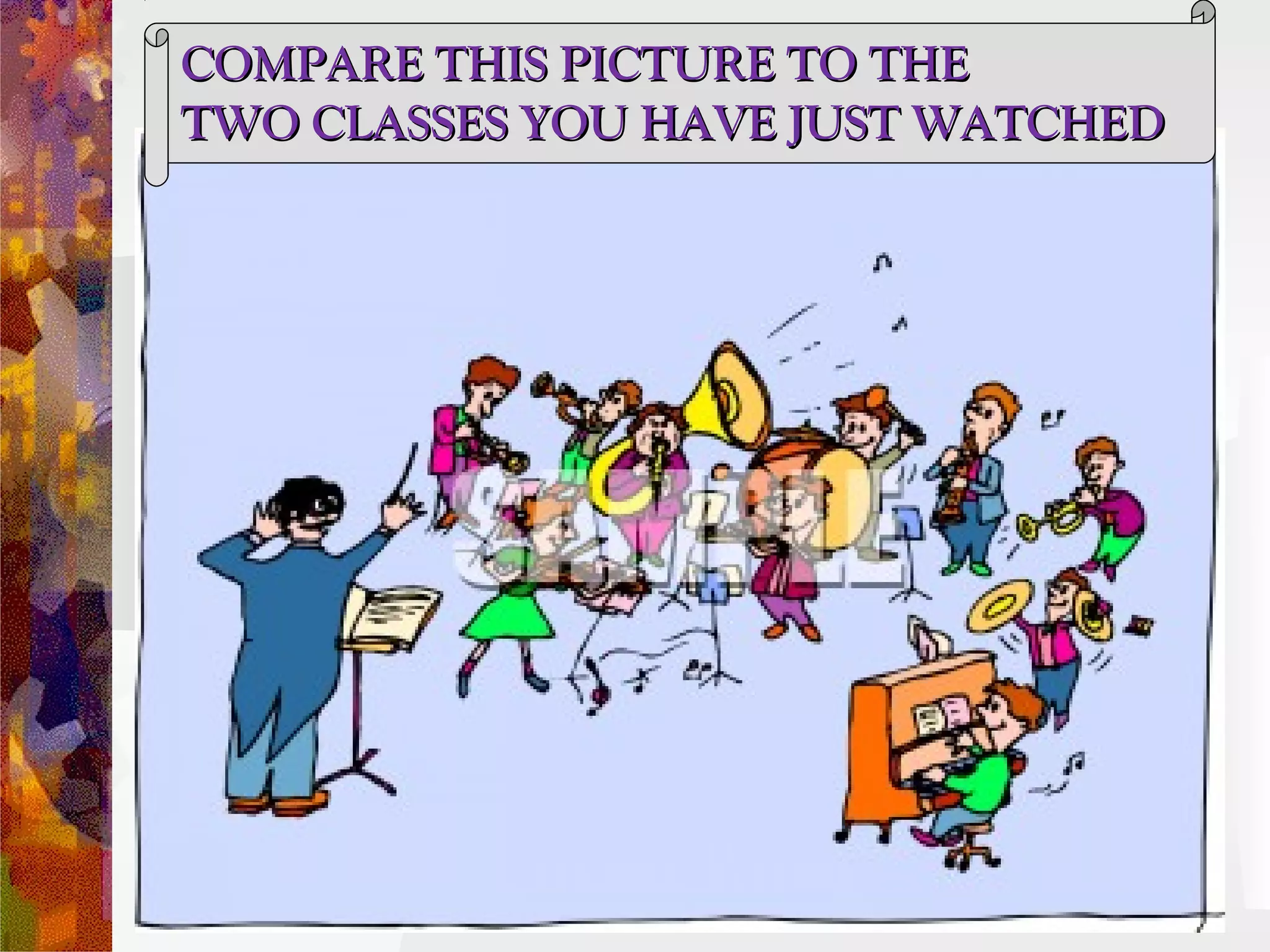
COMPARE THIS PICTURE TO THE
    TWO CLASSES YOU HAVE JUST WATCHED


DISCUSS IN PAIRS:
In your class…

 Who   produces more?

   You, as a teacher or….
   your students?
OLD TRADITIONAL
APPROACH:
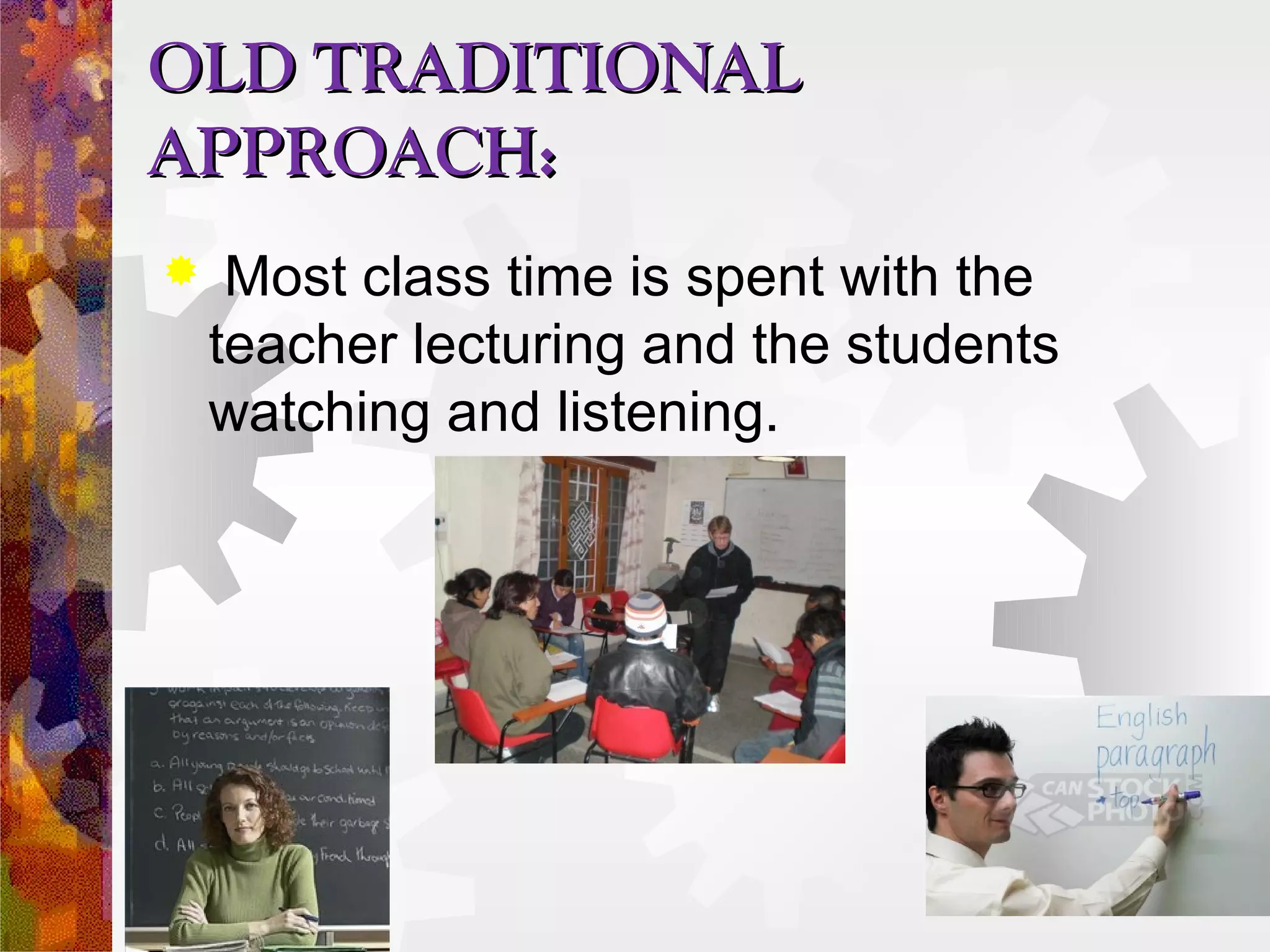
    Most class time is spent with the
    teacher lecturing and the students
    watching and listening.
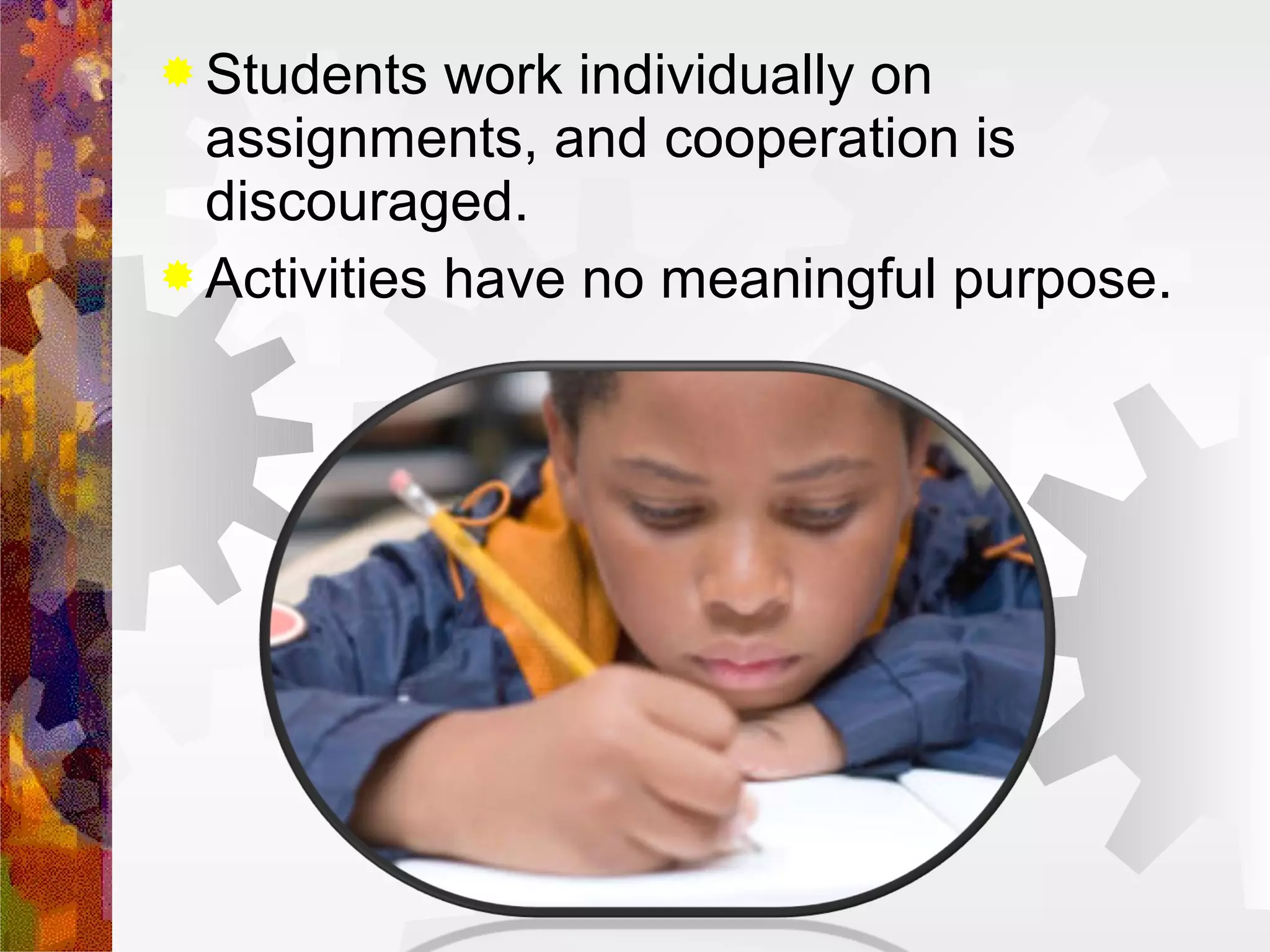
 Students   work individually on
  assignments, and cooperation is
  discouraged.
 Activities have no meaningful purpose.
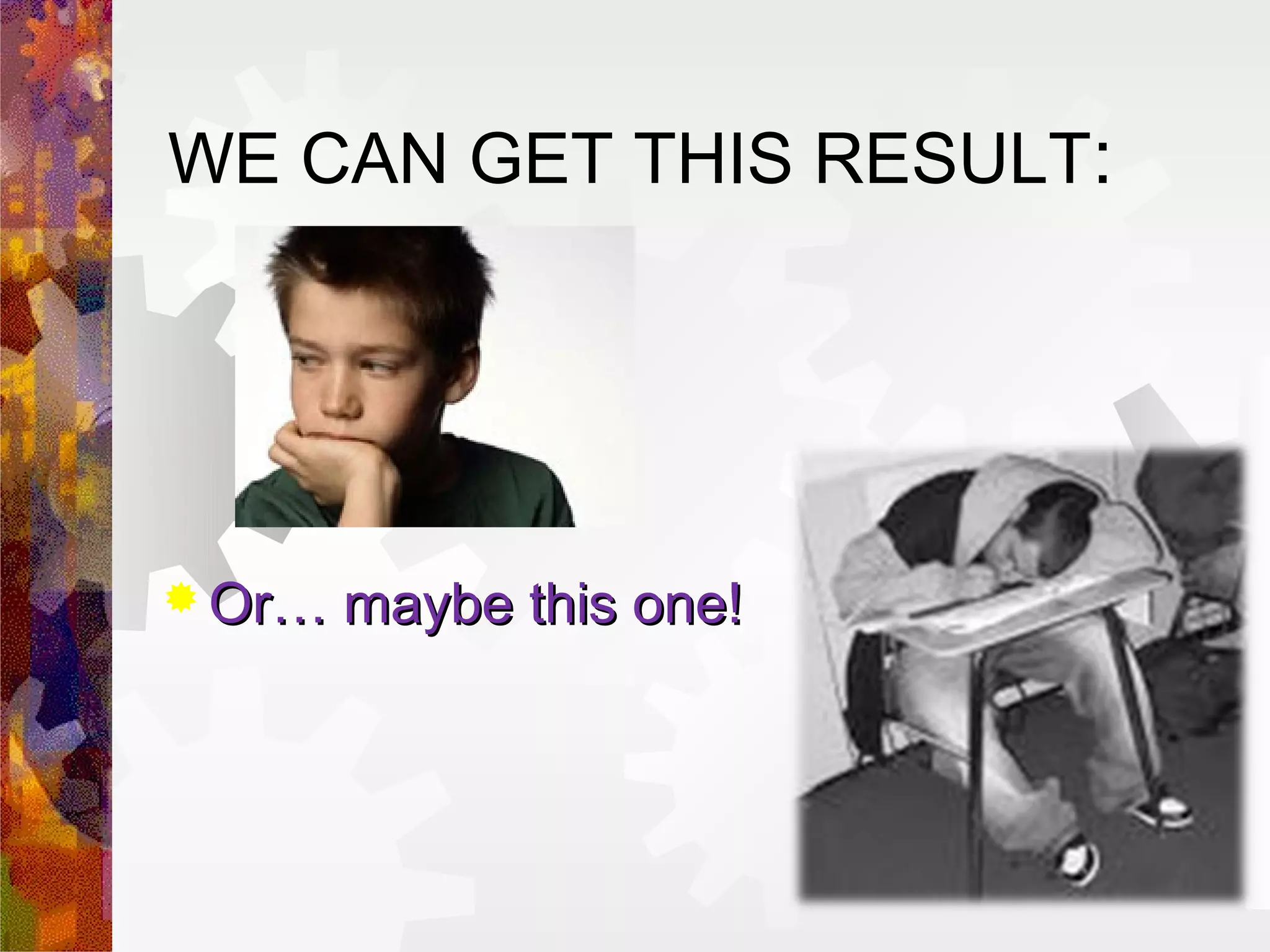
WE CAN GET THIS RESULT:


 Or… maybe this one!
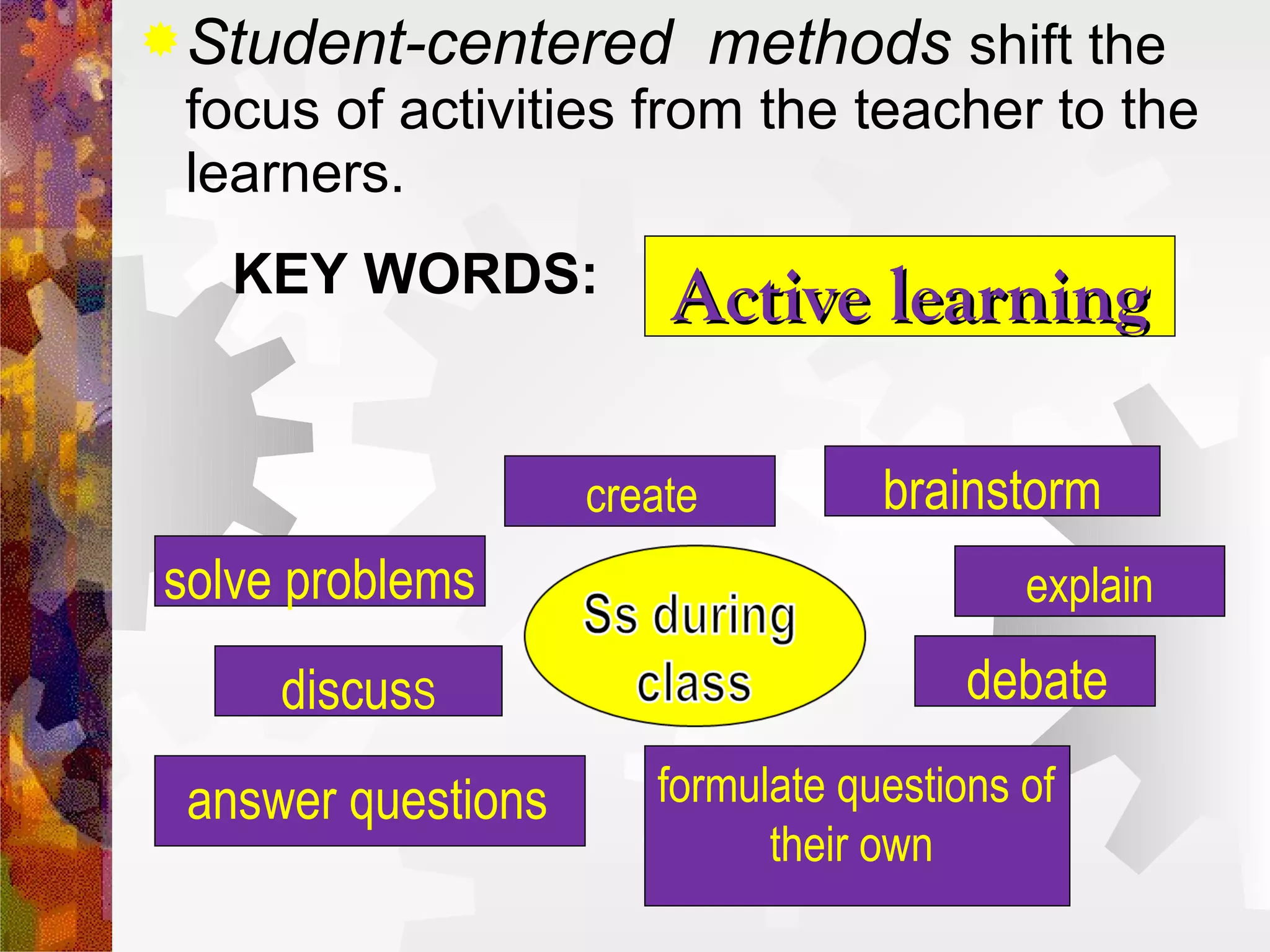
 Student-centered           methods shift the
 focus of activities from the teacher to the
 learners.
   KEY WORDS:           Active learning

                    create         brainstorm
solve problems                             explain

     discusS                            debate

 answer questions      formulate questions of
                             their own
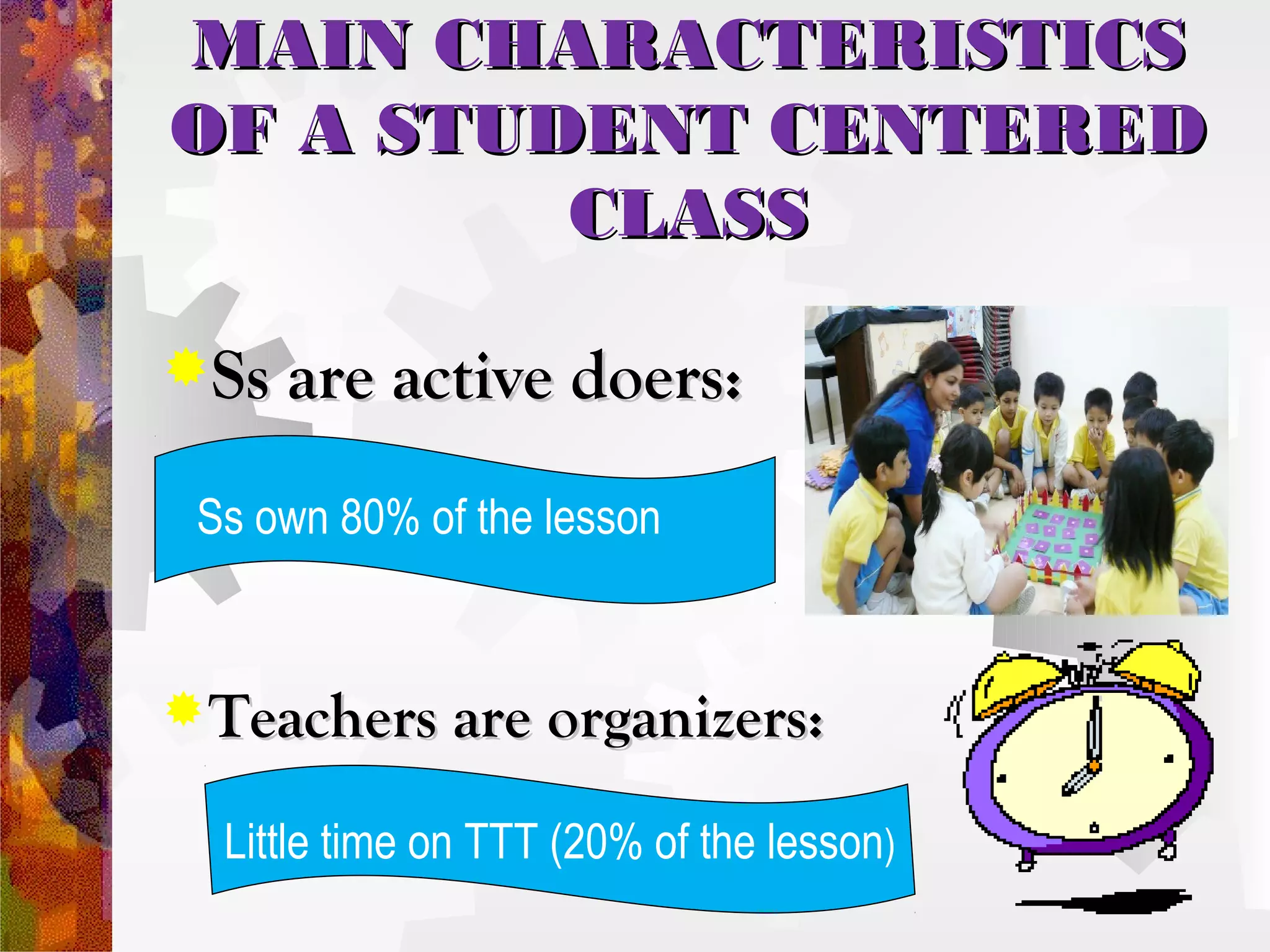
MAIN CHARACTERISTICS
OF A STUDENT CENTERED
         CLASS

Ss are active doers:

 Ss own 80% of the lesson


 Teachers are organizers:

  Little time on TTT (20% of the lesson)
 A Checklist
we should meet in
order to achieve a
       SCL:
 When thinking
 about activities
   and tasks to
  include in our
      LPs…
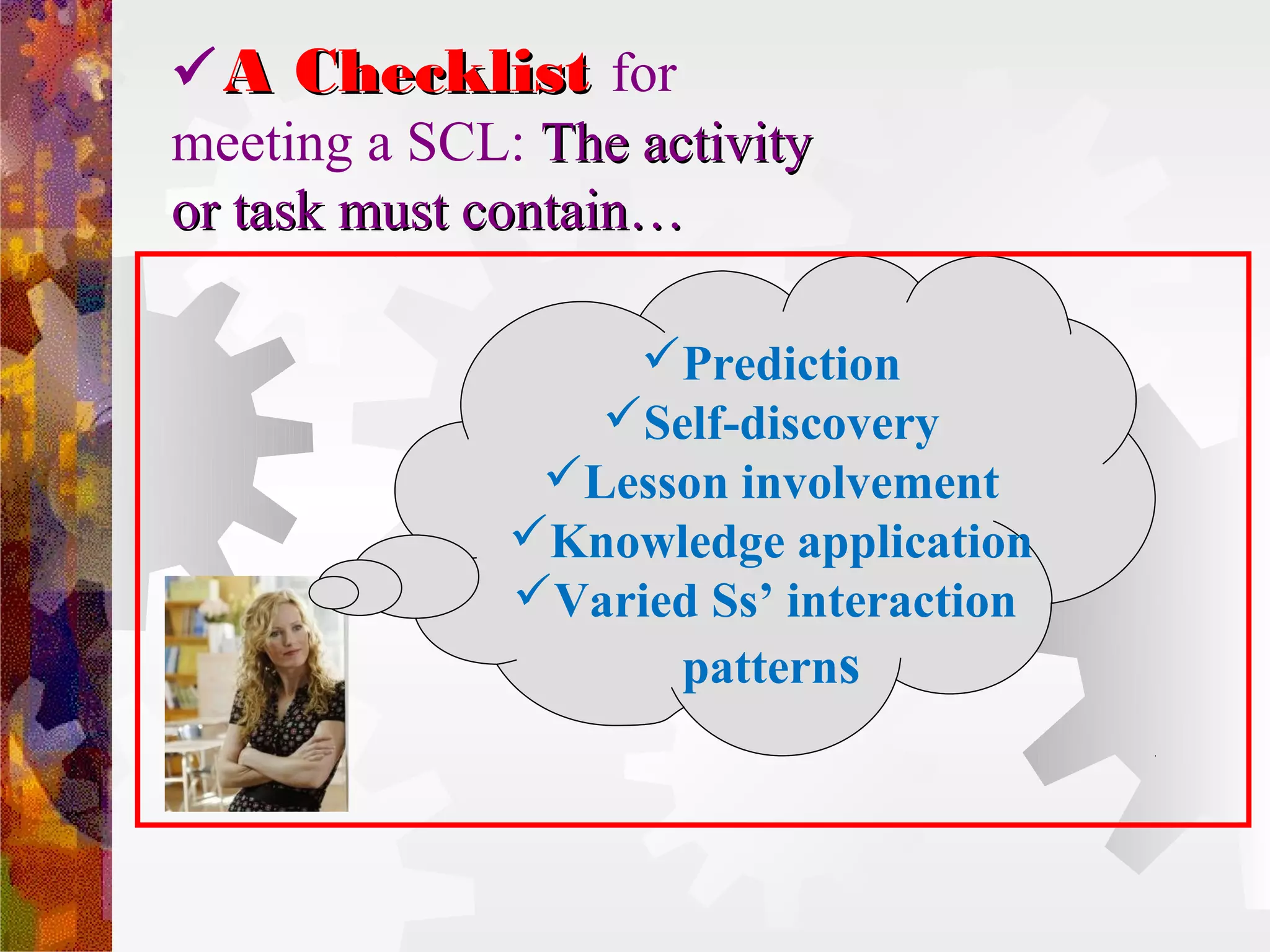
 A Checklist for
    meeting a SCL: The activity
    or task must contain…
 

                      Prediction
                     Self-discovery
                   Lesson involvement
                  Knowledge application
                  Varied Ss’ interaction
                        patterns
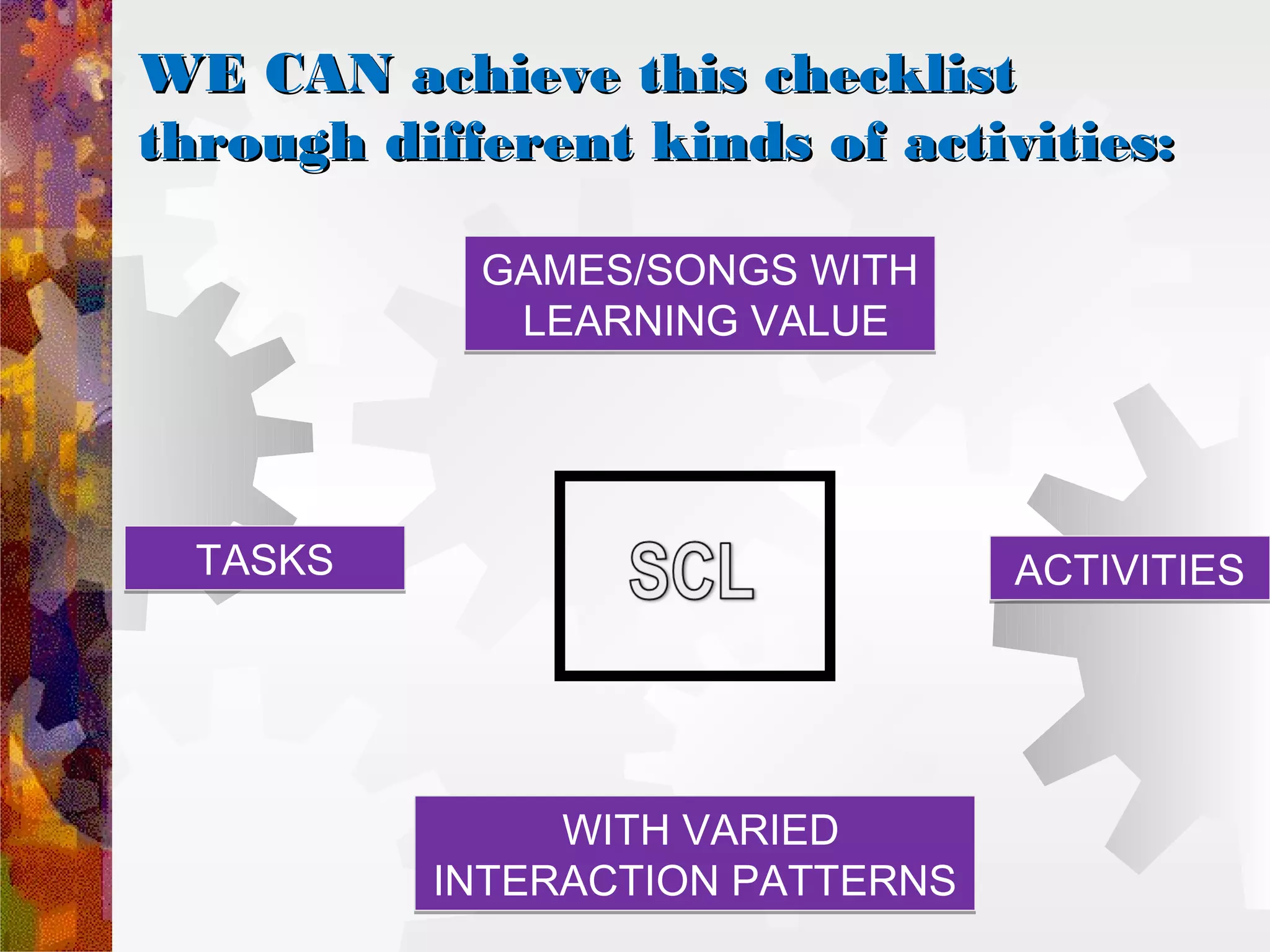
WE CAN achieve this checklist
through different kinds of activities:

            GAMES/SONGS WITH
             LEARNING VALUE


  TASKS                          ACTIVITIES


               WITH VARIED
          INTERACTION PATTERNS
KEEP IN MIND …

 ”All of the tasks and
activities that teachers
prepare must facilitate
     a positive and
   effective learning
     environment.”
     environment.
“
    PRESENT A SC ACTIVITY:
     Using a page of your book demonstrate a SC
      activity.
       Take into consideration the checklist and
                characteristics mentioned:
                     Prediction
                   Self-discovery
               Lesson involvement
            Knowledge application
         Varied Ss’ interaction patterns
NOW WE ARE STUDENTS

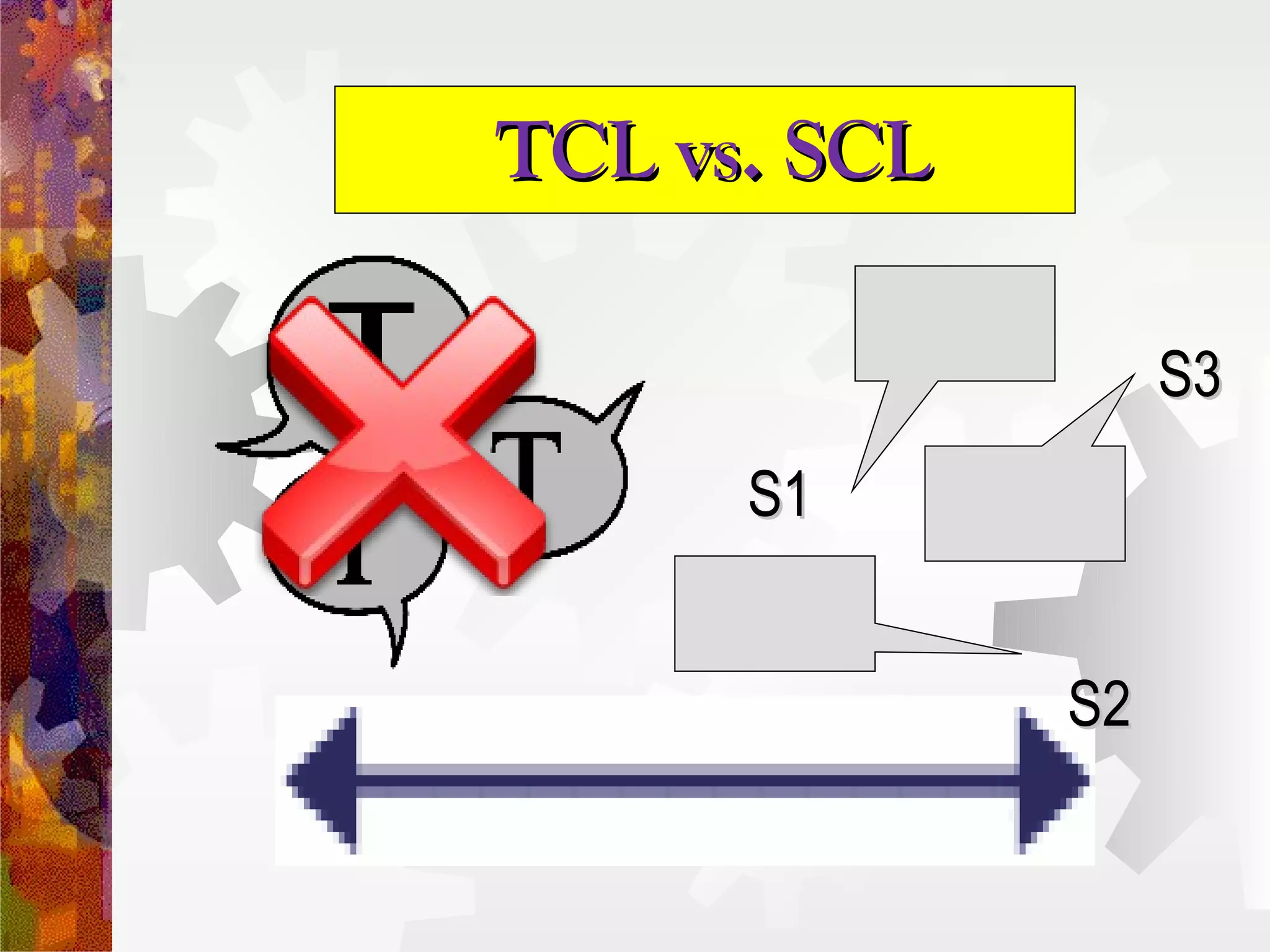
TCL vs. SCL

                   S3
      S1


              S2
ANALYSIS AND REFLECTION:

   Work with your partner and make a list
    of conclusions based on the answer to the
    questions disccussed at the beginning:
     How  can we find out the different ways our
      students learn?
     How can we get our students engage in learning?

     How can we involve SS?

     How can SS be encouraged to try things out and
      discover?
     What’s the teacher’s role?
Benefits of SCL
Students
    can work in small groups, at school / home
    have access to more materials
    are directly involved in what they study
    take ownership of their learning
    are more motivated and committed

Teachers
    act as facilitators / guides
    help ss to work out learning strategies
    develop ss’ research ability
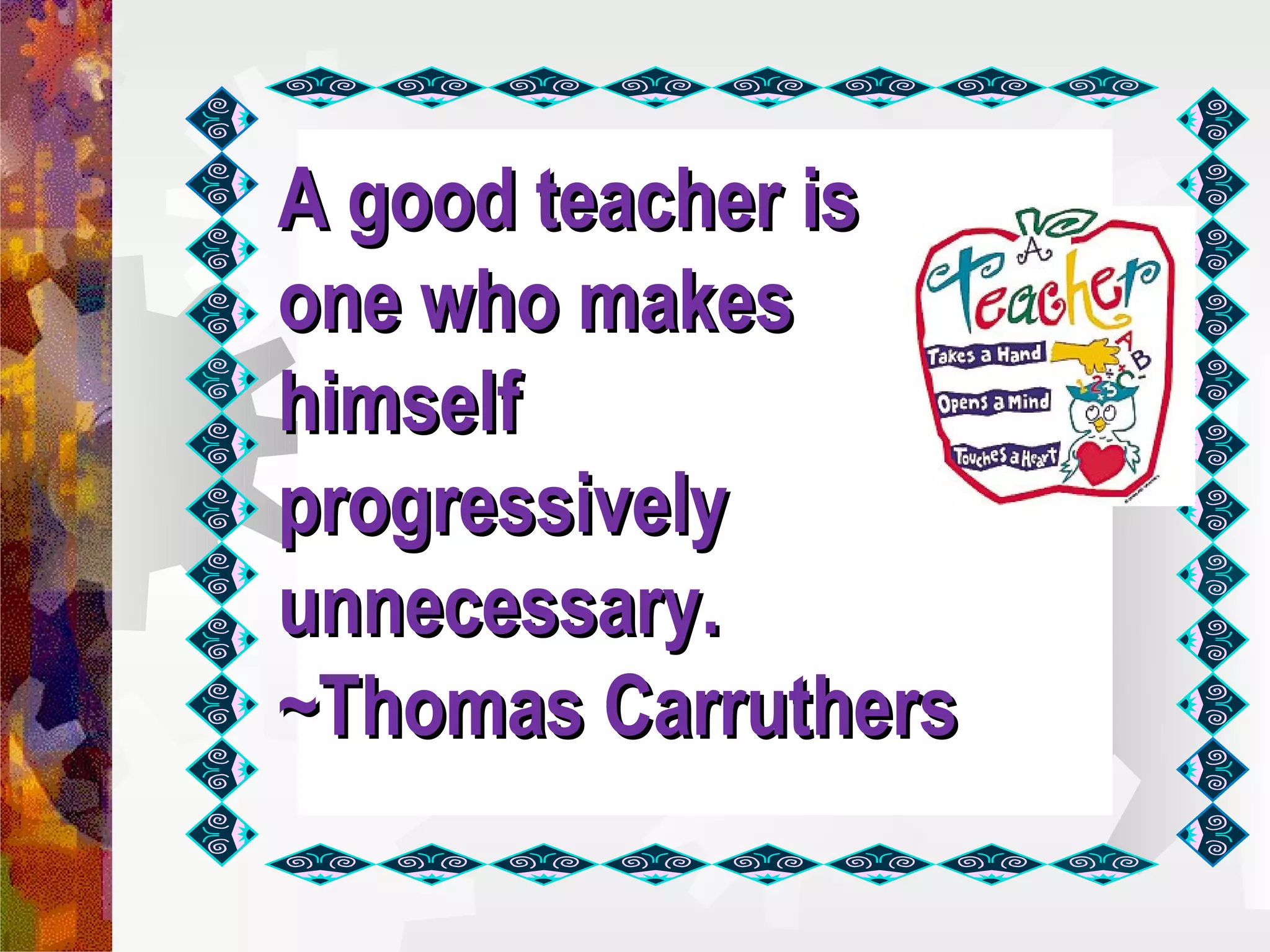
A good teacher is
one who makes
himself
progressively
unnecessary.
~Thomas Carruthers
REFERENCES:
   http://ehlt.fliners.edu.au/education/DLiT/2002/environ
    s/scott/stucteac.htm
   http://shambles.net/pages/staff/EAL_ESL/
   http://www.2vobs.at/methods/communicative
    _language_teaching

Student centered learning

  • 1.
    STUDENT CENTERED APPROACH By Fabiola Cabello R. R
  • 2.
    BELIEFS ABOUT LEARNING  Students learn in different ways
  • 3.
    BELIEFS ABOUT LEARNING Learningis an active dynamic process
  • 4.
    BELIEFS ABOUT LEARNING  Students respond well when they are involved
  • 5.
    BELIEFS ABOUT LEARNING Ss learn with guidance, not prescriptions
  • 6.
    BELIEFS ABOUT LEARNING  Knowledge is internal;Ss build it
  • 7.
    By the endof this workshop we will all be able to provide the answers to the questions previously raised
  • 8.
    WORK IN PAIRS: Watch the demo classes and take notes of the characteristics of each one. Discuss the insights with your peers
  • 9.
    COMPARE THIS PICTURETO THE TWO CLASSES YOU HAVE JUST WATCHED  
  • 10.
    DISCUSS IN PAIRS: Inyour class…  Who produces more?  You, as a teacher or….  your students?
  • 11.
    OLD TRADITIONAL APPROACH:  Most class time is spent with the teacher lecturing and the students watching and listening.
  • 12.
     Students work individually on assignments, and cooperation is discouraged.  Activities have no meaningful purpose.
  • 13.
    WE CAN GETTHIS RESULT:  Or… maybe this one!
  • 14.
     Student-centered methods shift the focus of activities from the teacher to the learners. KEY WORDS: Active learning create brainstorm solve problems explain discusS debate answer questions formulate questions of their own
  • 15.
    MAIN CHARACTERISTICS OF ASTUDENT CENTERED CLASS Ss are active doers: Ss own 80% of the lesson  Teachers are organizers: Little time on TTT (20% of the lesson)
  • 16.
     A Checklist weshould meet in order to achieve a SCL: When thinking about activities and tasks to include in our LPs…
  • 17.
     A Checklistfor meeting a SCL: The activity or task must contain…   Prediction Self-discovery Lesson involvement Knowledge application Varied Ss’ interaction patterns
  • 18.
    WE CAN achievethis checklist through different kinds of activities: GAMES/SONGS WITH LEARNING VALUE TASKS ACTIVITIES WITH VARIED INTERACTION PATTERNS
  • 19.
    KEEP IN MIND… ”All of the tasks and activities that teachers prepare must facilitate a positive and effective learning environment.” environment.
  • 22.
    PRESENT A SC ACTIVITY:  Using a page of your book demonstrate a SC activity.  Take into consideration the checklist and characteristics mentioned:  Prediction  Self-discovery  Lesson involvement  Knowledge application  Varied Ss’ interaction patterns
  • 23.
    NOW WE ARESTUDENTS 
  • 24.
    TCL vs. SCL S3 S1 S2
  • 25.
    ANALYSIS AND REFLECTION:  Work with your partner and make a list of conclusions based on the answer to the questions disccussed at the beginning:  How can we find out the different ways our students learn?  How can we get our students engage in learning?  How can we involve SS?  How can SS be encouraged to try things out and discover?  What’s the teacher’s role?
  • 26.
    Benefits of SCL Students  can work in small groups, at school / home  have access to more materials  are directly involved in what they study  take ownership of their learning  are more motivated and committed Teachers  act as facilitators / guides  help ss to work out learning strategies  develop ss’ research ability
  • 27.
    A good teacheris one who makes himself progressively unnecessary. ~Thomas Carruthers
  • 29.
    REFERENCES:  http://ehlt.fliners.edu.au/education/DLiT/2002/environ s/scott/stucteac.htm  http://shambles.net/pages/staff/EAL_ESL/  http://www.2vobs.at/methods/communicative _language_teaching

Editor's Notes

  • #3 Have Teachers work in pairs and support each of the beliefs regarding ESL with an example
  • #4 Have Teachers work in pairs and support each of the beliefs regarding ESL with an example
  • #5 Have Teachers work in pairs and support each of the beliefs regarding ESL with an example
  • #6 Have Teachers work in pairs and support each of the beliefs regarding ESL with an example
  • #7 Have Teachers work in pairs and support each of the beliefs regarding ESL with an example
  • #10 Metaphore : Ts are to compare this picture to the demo classes. Who’s the director? Who are the musicians? What’s the role of the director of the orchestra? What’s the role of the musicians?
  • #26 Go back to slides 2-3-4-5-