

Structured vs.
unstructured
teaching and
learning
By
Archan Mehta
Charles Afriyie
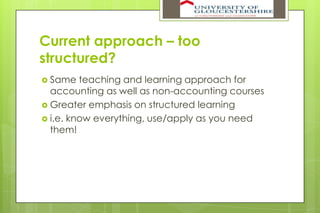
Current approach – too
structured?
 Same teaching and learning approach for
accounting as well as non-accounting courses
 Greater emphasis on structured learning
 i.e. know everything, use/apply as you need
them!
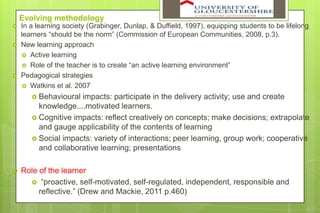
Evolving methodology
 In a learning society (Grabinger, Dunlap, & Duffield, 1997), equipping students to be lifelong
learners “should be the norm” (Commission of European Communities, 2008, p.3).
 New learning approach
 Active learning
 Role of the teacher is to create “an active learning environment”
 Pedagogical strategies
 Watkins et al. 2007
 Behavioural impacts: participate in the delivery activity; use and create
knowledge....motivated learners.
 Cognitive impacts: reflect creatively on concepts; make decisions; extrapolate
and gauge applicability of the contents of learning
 Social impacts: variety of interactions; peer learning, group work; cooperative
and collaborative learning; presentations
 Role of the learner
 “proactive, self-motivated, self-regulated, independent, responsible and
reflective.” (Drew and Mackie, 2011 p.460)
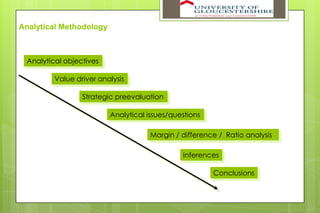
Analytical Methodology
Analytical objectives
Value driver analysis
Strategic preevaluation
Analytical issues/questions
Margin / difference / Ratio analysis
Inferences
Conclusions
Structured vs unstructured teaching and learning - Archan Mehta and Charles Afriyie

Structured vs unstructured teaching and learning - Archan Mehta and Charles Afriyie

  • 1.
  • 2.
    Current approach –too structured?  Same teaching and learning approach for accounting as well as non-accounting courses  Greater emphasis on structured learning  i.e. know everything, use/apply as you need them!
  • 3.
    Evolving methodology  Ina learning society (Grabinger, Dunlap, & Duffield, 1997), equipping students to be lifelong learners “should be the norm” (Commission of European Communities, 2008, p.3).  New learning approach  Active learning  Role of the teacher is to create “an active learning environment”  Pedagogical strategies  Watkins et al. 2007  Behavioural impacts: participate in the delivery activity; use and create knowledge....motivated learners.  Cognitive impacts: reflect creatively on concepts; make decisions; extrapolate and gauge applicability of the contents of learning  Social impacts: variety of interactions; peer learning, group work; cooperative and collaborative learning; presentations  Role of the learner  “proactive, self-motivated, self-regulated, independent, responsible and reflective.” (Drew and Mackie, 2011 p.460)
  • 4.
    Analytical Methodology Analytical objectives Valuedriver analysis Strategic preevaluation Analytical issues/questions Margin / difference / Ratio analysis Inferences Conclusions