METHODS AND FUNCTION OF
EFFECTIVE LEARNING
Presented by:
Aladin M. Awa
What is Learning?
• A process that results in behavioral
changes in the learner that are
considerably permanent.
• However, effective learning requires use of certain
techniques and methods that can be implemented so
as to ensure that the knowledge is properly
assimilated and used in the future.
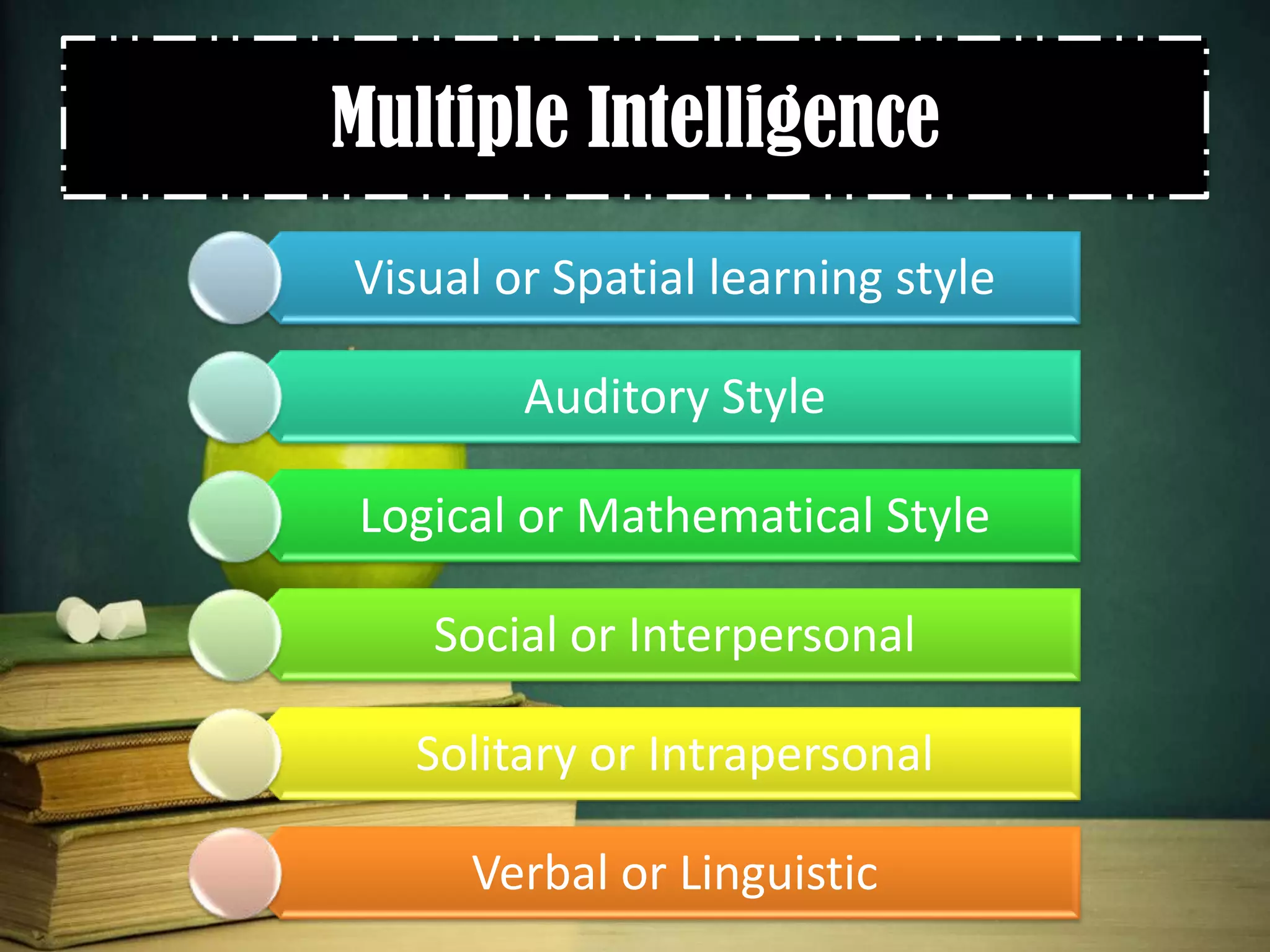
Multiple Intelligence
Visual or Spatial learning style
Auditory Style
Logical or Mathematical Style
Social or Interpersonal
Solitary or Intrapersonal
Verbal or Linguistic
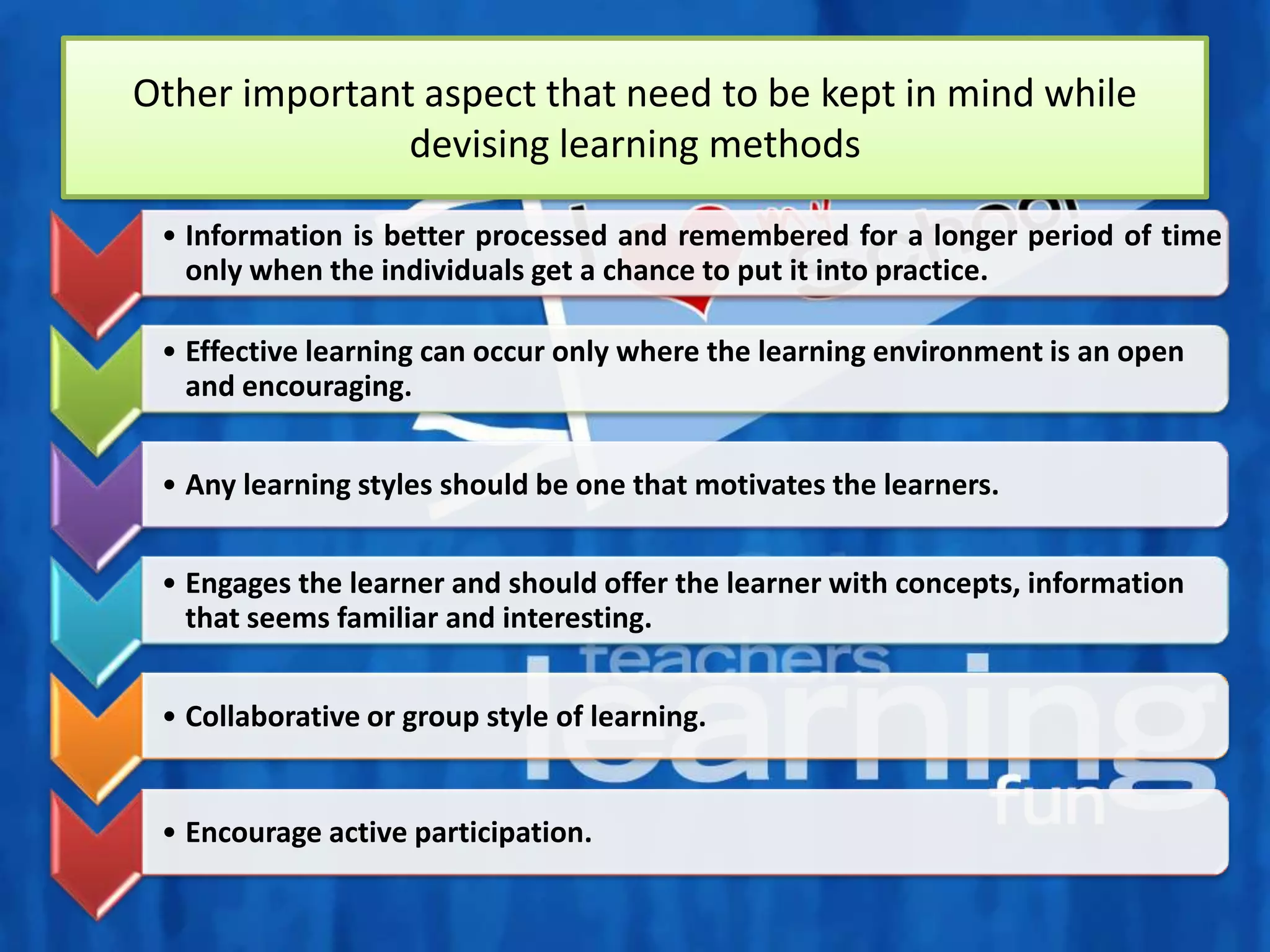
Other important aspect that need to be kept in mind while
devising learning methods
• Information is better processed and remembered for a longer period of time
only when the individuals get a chance to put it into practice.
• Effective learning can occur only where the learning environment is an open
and encouraging.
• Any learning styles should be one that motivates the learners.
• Engages the learner and should offer the learner with concepts, information
that seems familiar and interesting.
• Collaborative or group style of learning.
• Encourage active participation.
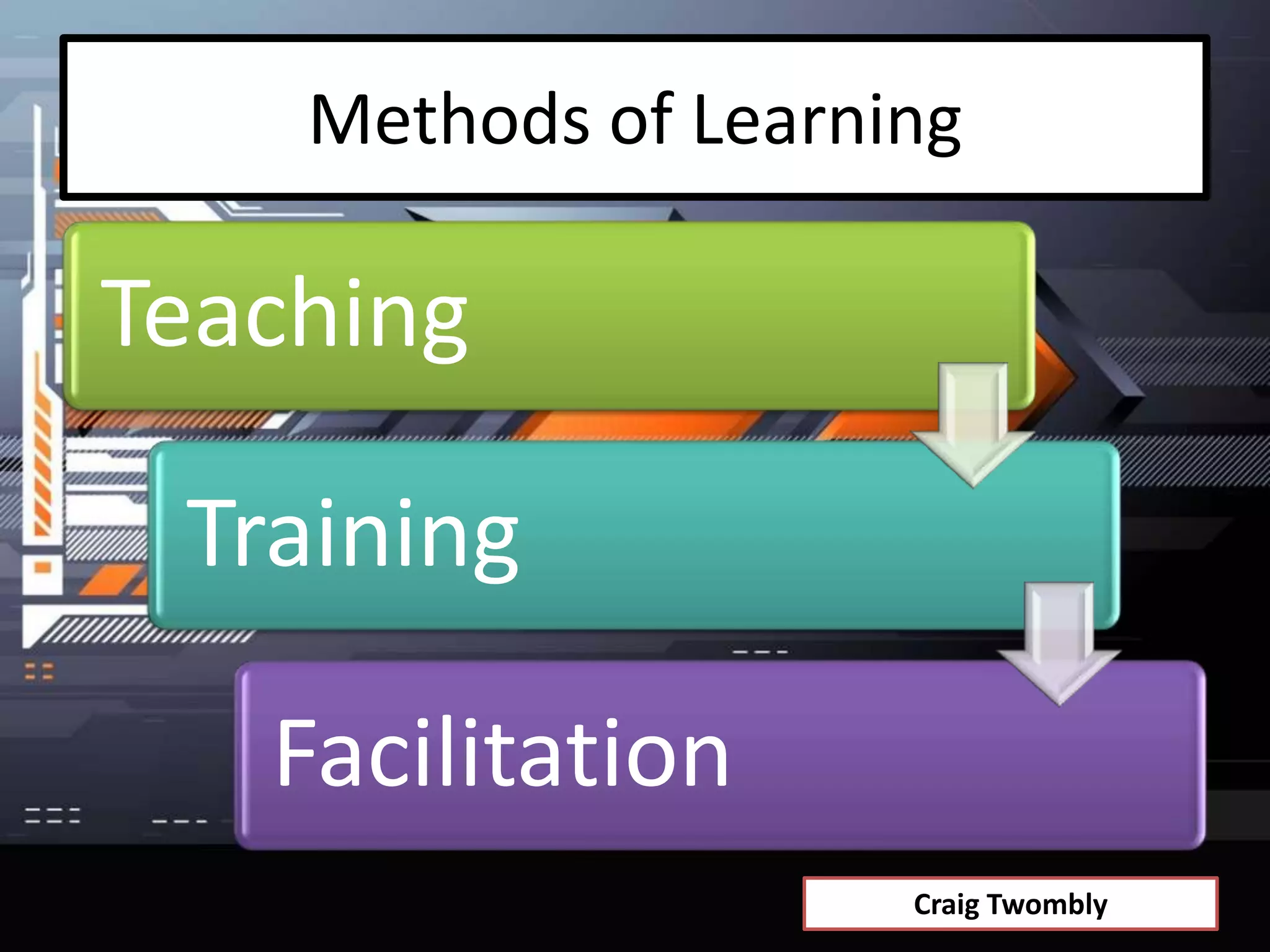
Methods of Learning
Teaching
Training
Facilitation
Craig Twombly
• Teaching is the transfer of knowledge
necessary for completion of a prescribe
curriculum or application.
• Instructor needs to have a lot of knowledge in the subject
matter.
• It is a transfer and based in the knowledge of the instructor
inside the given subject.
• In most situations this is a transfer of knowledge based on the
need of the audience.
• One of the greatest challenges to teaching is the retention
rate of the information.
• In this method 90% of the time is teaching and 10% is
participation.
TRAINING
• Training is a form of teaching. It is a learning
transfer of a specific topic using lecture and
interactive elements like role play, case study,
group discussions or group interactions.
• The instructor needs to have a lot of subject
knowledge and interactive techniques to
engage the group in the process.
• Lead to more conversations and discussions.
• This process uses a 50/50 mix of lecture and
participation.
FACILITATION
• Is a managing and setting up a process to
assure successful execution.
• The facilitation process is a kinesthetic
learning process and gives the best chance for
participants to apply immediately what is
experienced.
• In this facilitation process it is 80%
participation and only 20% facilitation.
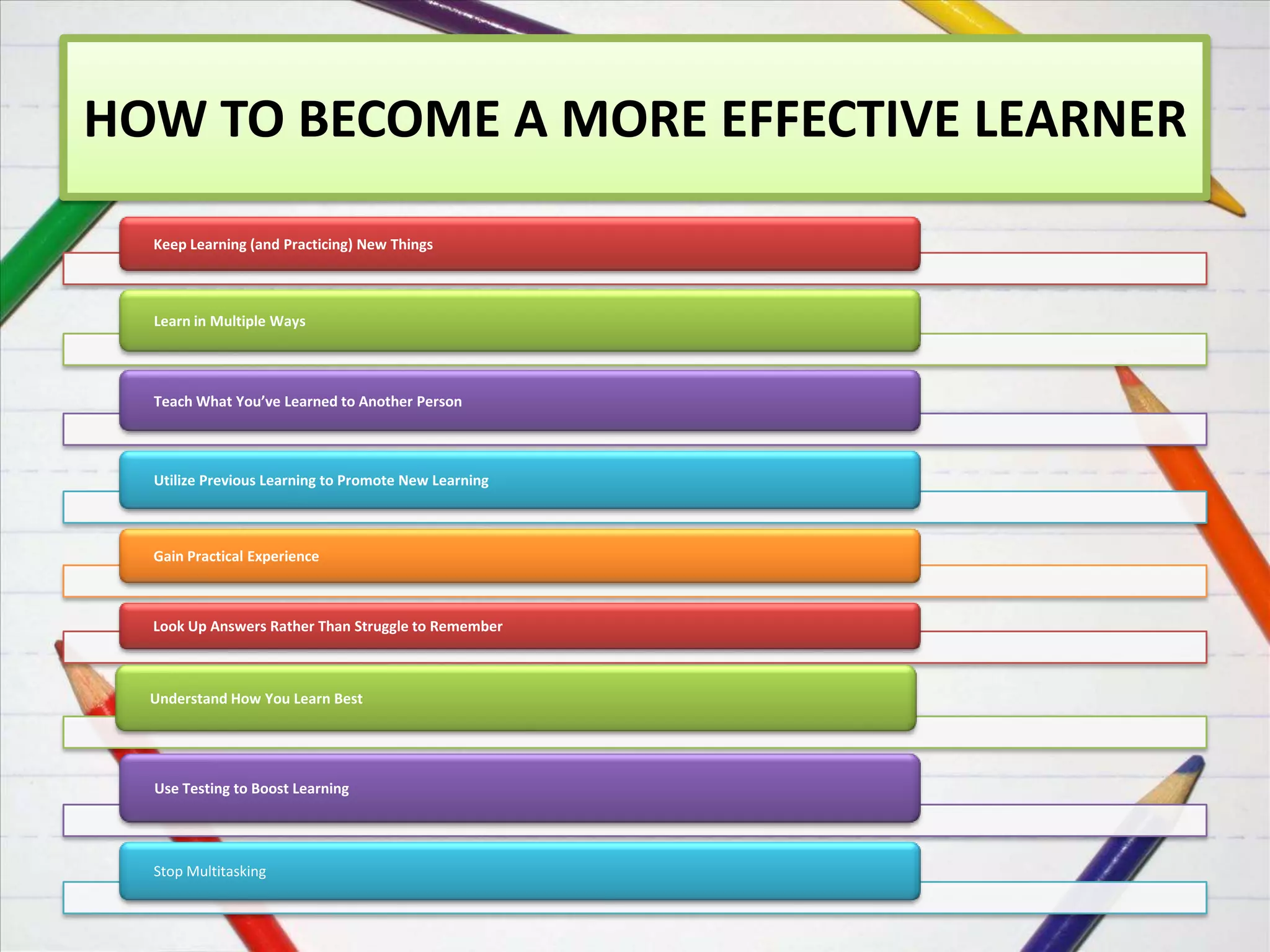
HOW TO BECOME A MORE EFFECTIVE LEARNER
Keep Learning (and Practicing) New Things
Learn in Multiple Ways
Teach What You’ve Learned to Another Person
Utilize Previous Learning to Promote New Learning
Gain Practical Experience
Look Up Answers Rather Than Struggle to Remember
Understand How You Learn Best
Use Testing to Boost Learning
Stop Multitasking
THANK YOU 

Methods and Function of Effective Learning

  • 1.
    METHODS AND FUNCTIONOF EFFECTIVE LEARNING Presented by: Aladin M. Awa
  • 2.
    What is Learning? •A process that results in behavioral changes in the learner that are considerably permanent.
  • 3.
    • However, effectivelearning requires use of certain techniques and methods that can be implemented so as to ensure that the knowledge is properly assimilated and used in the future.
  • 4.
    Multiple Intelligence Visual orSpatial learning style Auditory Style Logical or Mathematical Style Social or Interpersonal Solitary or Intrapersonal Verbal or Linguistic
  • 5.
    Other important aspectthat need to be kept in mind while devising learning methods • Information is better processed and remembered for a longer period of time only when the individuals get a chance to put it into practice. • Effective learning can occur only where the learning environment is an open and encouraging. • Any learning styles should be one that motivates the learners. • Engages the learner and should offer the learner with concepts, information that seems familiar and interesting. • Collaborative or group style of learning. • Encourage active participation.
  • 6.
  • 7.
    • Teaching isthe transfer of knowledge necessary for completion of a prescribe curriculum or application.
  • 8.
    • Instructor needsto have a lot of knowledge in the subject matter. • It is a transfer and based in the knowledge of the instructor inside the given subject. • In most situations this is a transfer of knowledge based on the need of the audience. • One of the greatest challenges to teaching is the retention rate of the information. • In this method 90% of the time is teaching and 10% is participation.
  • 9.
    TRAINING • Training isa form of teaching. It is a learning transfer of a specific topic using lecture and interactive elements like role play, case study, group discussions or group interactions.
  • 10.
    • The instructorneeds to have a lot of subject knowledge and interactive techniques to engage the group in the process. • Lead to more conversations and discussions. • This process uses a 50/50 mix of lecture and participation.
  • 11.
    FACILITATION • Is amanaging and setting up a process to assure successful execution.
  • 12.
    • The facilitationprocess is a kinesthetic learning process and gives the best chance for participants to apply immediately what is experienced. • In this facilitation process it is 80% participation and only 20% facilitation.
  • 13.
    HOW TO BECOMEA MORE EFFECTIVE LEARNER Keep Learning (and Practicing) New Things Learn in Multiple Ways Teach What You’ve Learned to Another Person Utilize Previous Learning to Promote New Learning Gain Practical Experience Look Up Answers Rather Than Struggle to Remember Understand How You Learn Best Use Testing to Boost Learning Stop Multitasking
  • 14.