E-Learning around the World
elearning-seminar .uoc.edu
7 June 2013
Teaching for Understanding:
the role of ICT and E-learning
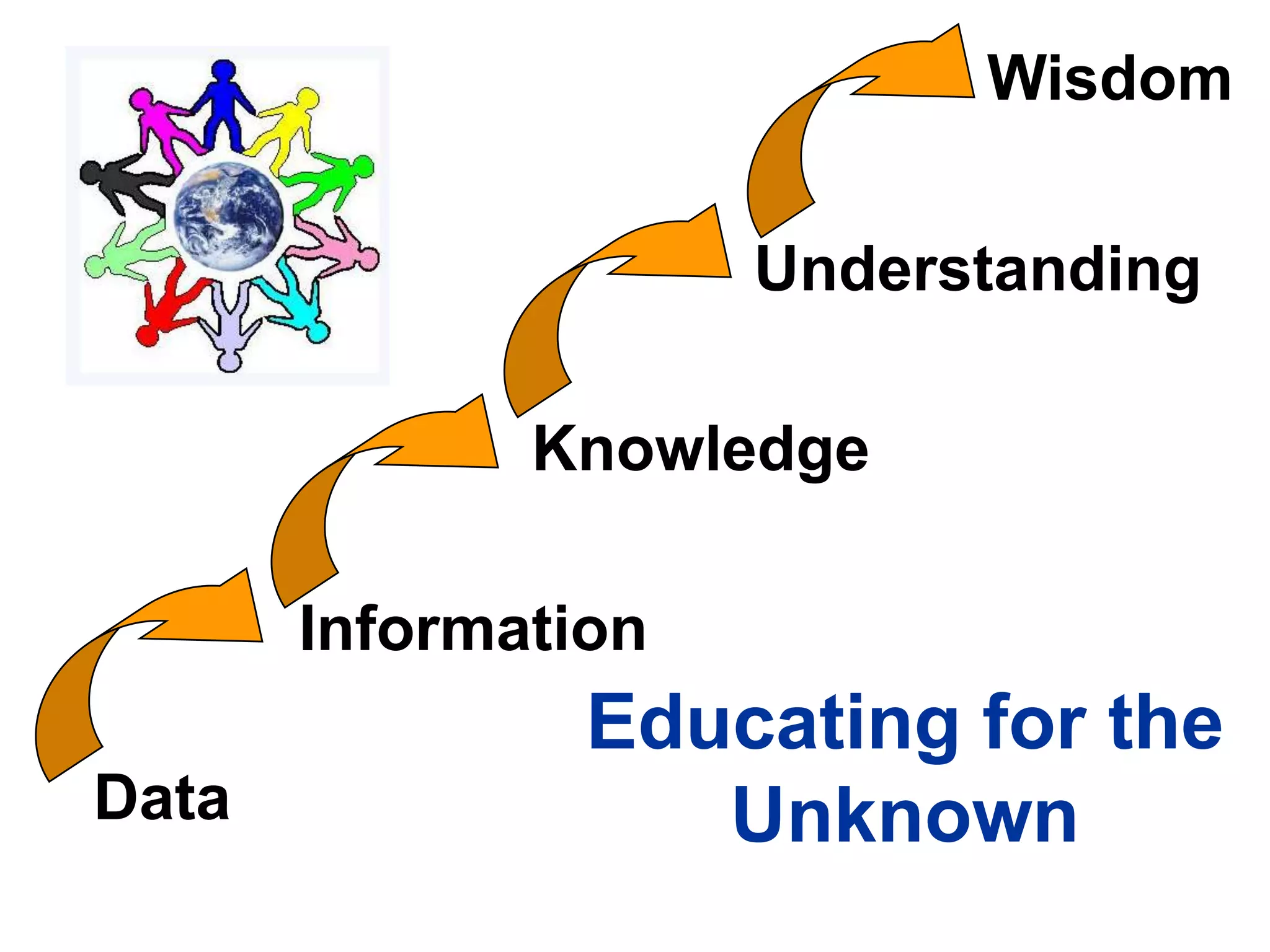
Educating for the
UnknownData
Information
Knowledge
Understanding
Wisdom
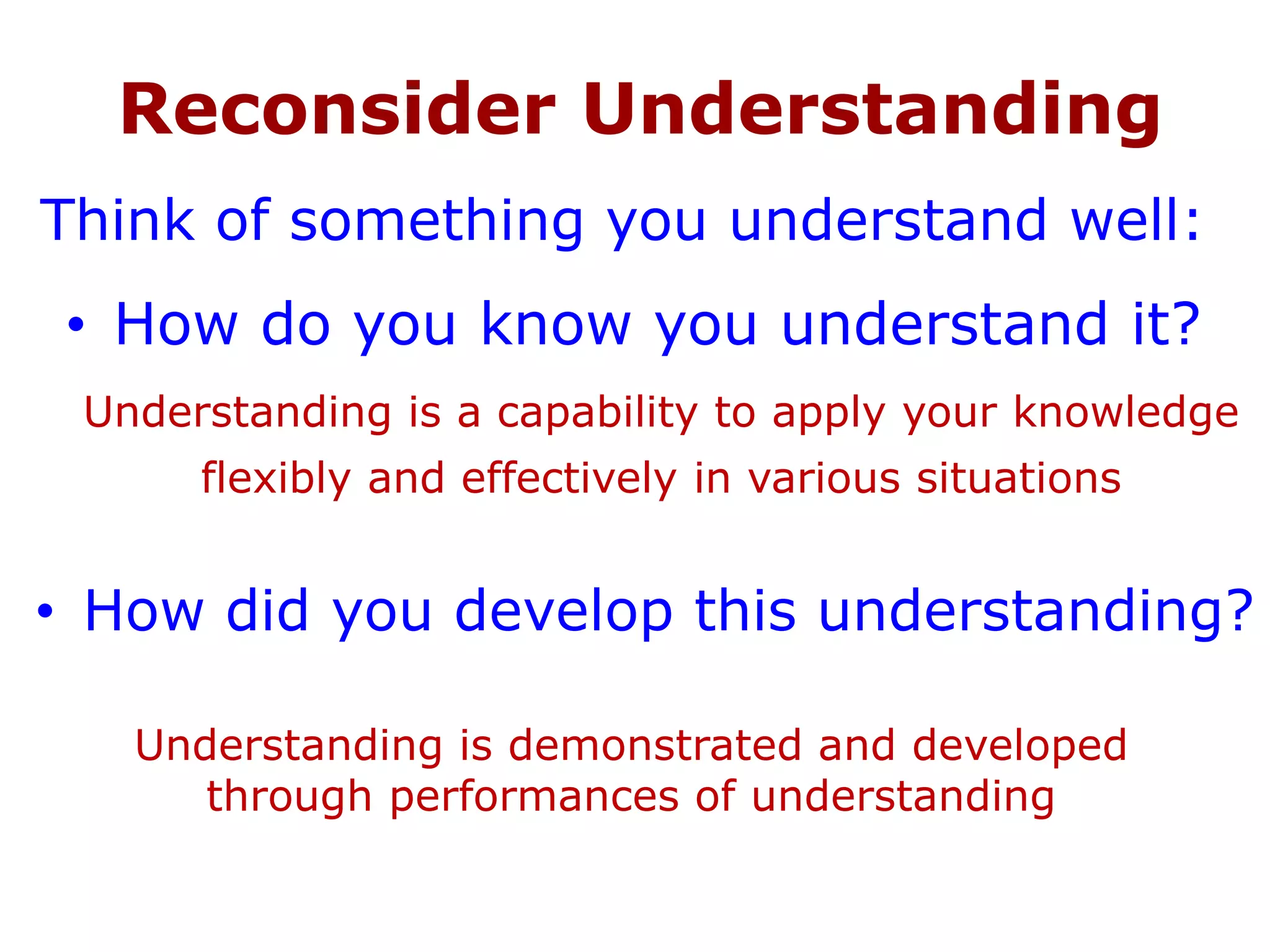
Reconsider Understanding
• How do you know you understand it?
Understanding is a capability to apply your knowledge
flexibly and effectively in various situations
Understanding is demonstrated and developed
through performances of understanding
Think of something you understand well:
• How did you develop this understanding?
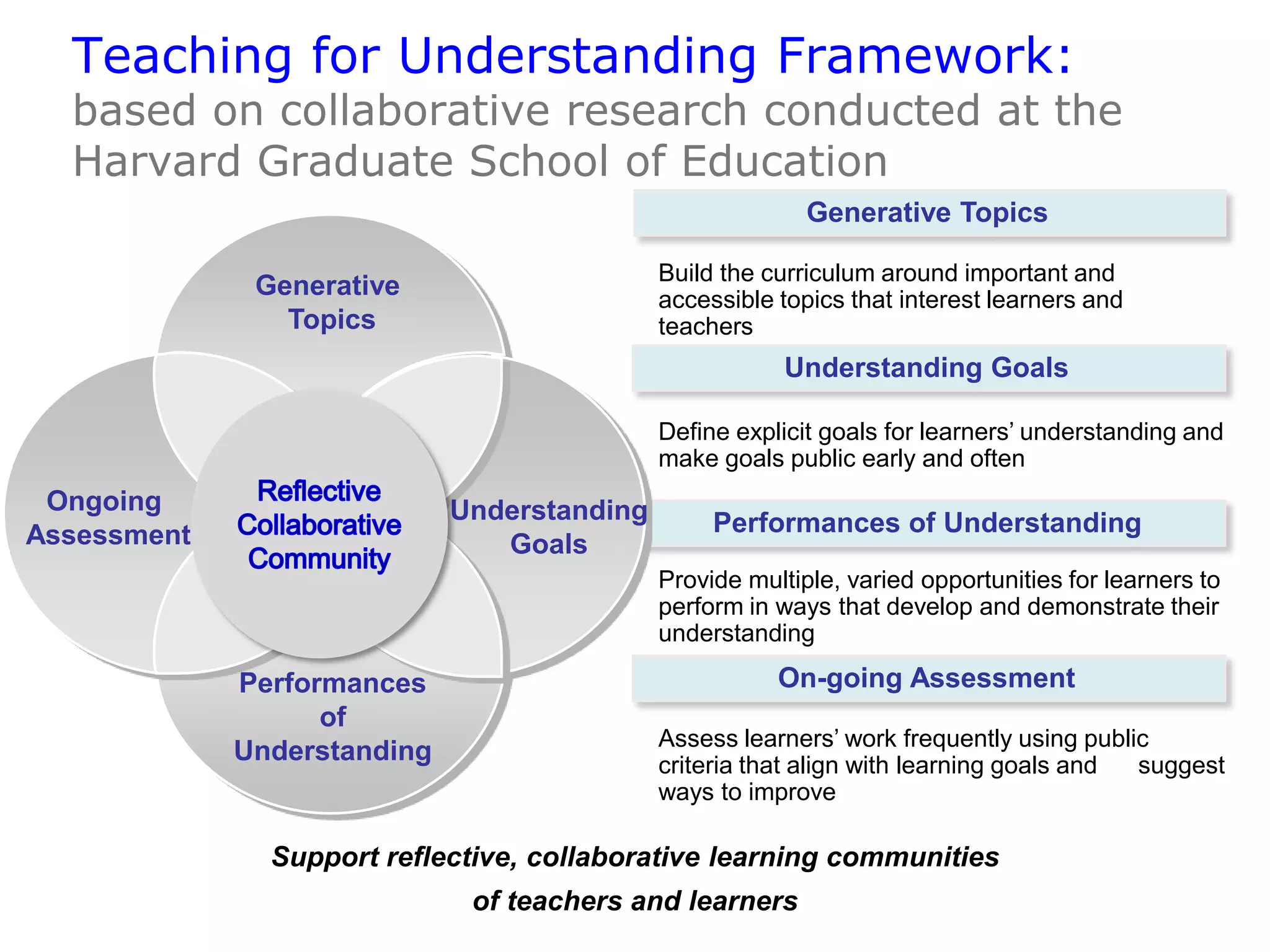
Teaching for Understanding Framework:
based on collaborative research conducted at the
Harvard Graduate School of Education
Generative Topics
Build the curriculum around important and
accessible topics that interest learners and
teachers
Understanding Goals
Define explicit goals for learners’ understanding and
make goals public early and often
Performances of Understanding
On-going Assessment
Provide multiple, varied opportunities for learners to
perform in ways that develop and demonstrate their
understanding
Assess learners’ work frequently using public
criteria that align with learning goals and suggest
ways to improve
Support reflective, collaborative learning communities
of teachers and learners
Generative
Topics
Performances
of
Understanding
Ongoing
Assessment
Understanding
Goals
Too often assessment does not support
understanding
Not helpful feedback
How is teaching for understanding different
from traditional instruction?
• Knowledge is a product
• Teaching is transmission
• Learning is reception
• Students absorb and repeat
• Exams test knowledge acquisition
• Schools are organized to support
instruction, not learning for understanding
Traditional instruction:
How is teaching for understanding different
from traditional instruction?
• Understanding is a process
• Teaching is cultivation
• Learning is constructing
• Students think, apply, create, critique
• Exams assess/promote expertise
• Learning communities share authority and
responsibility among members
• Schools are communities of inquiry
Treaching for Understanding:
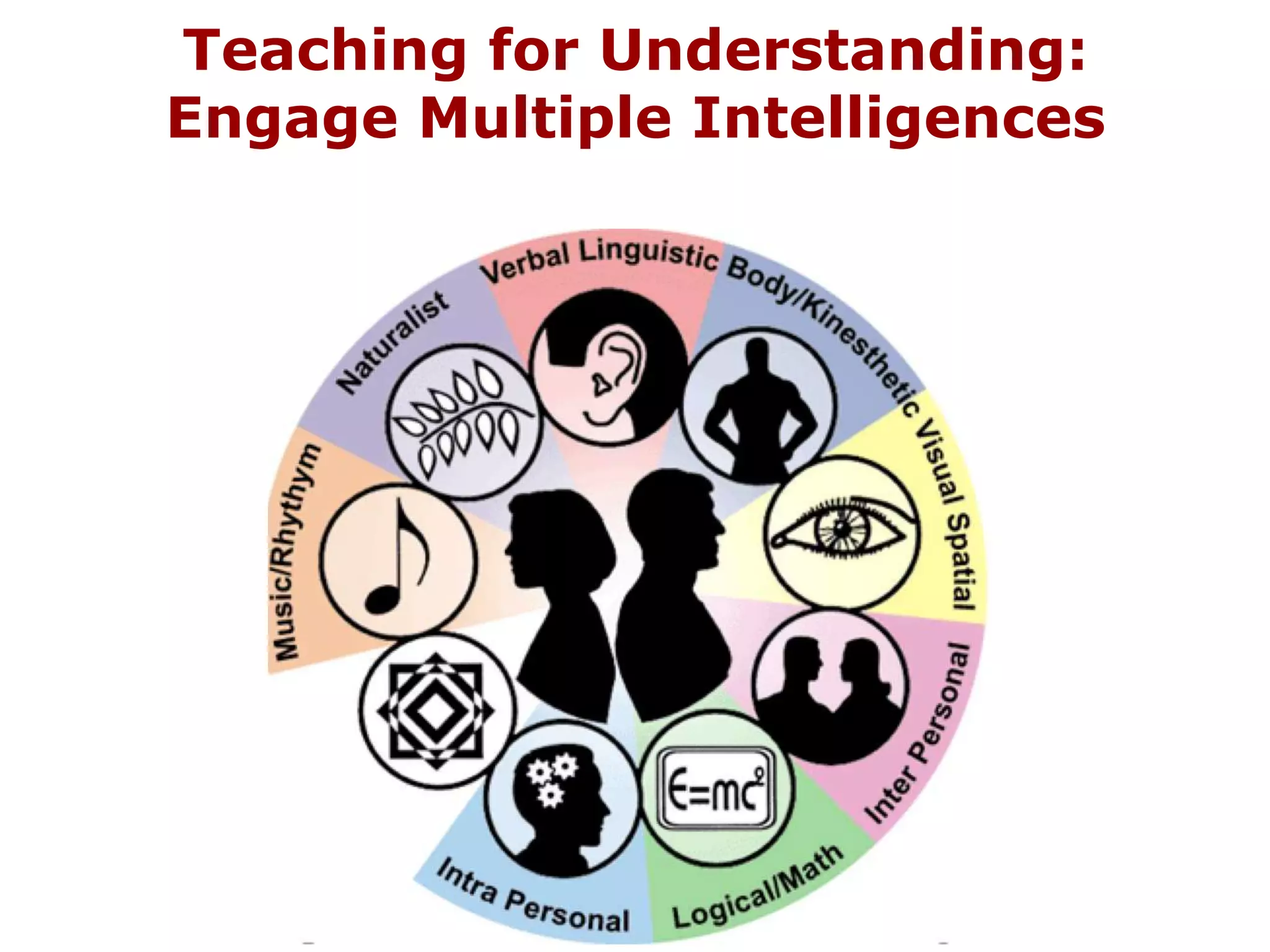
Teaching for Understanding:
Engage Multiple Intelligences
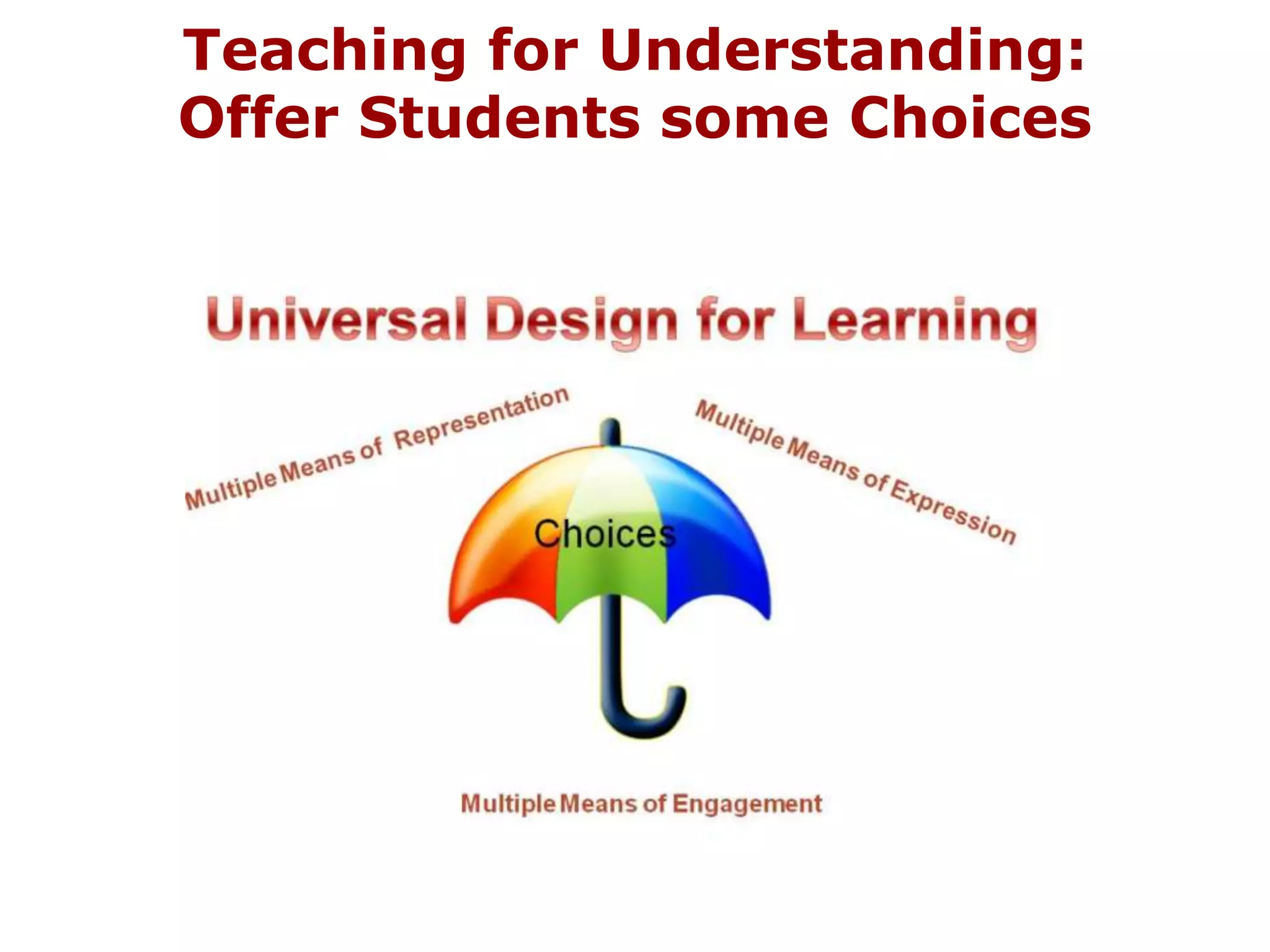
Teaching for Understanding:
Offer Students some Choices
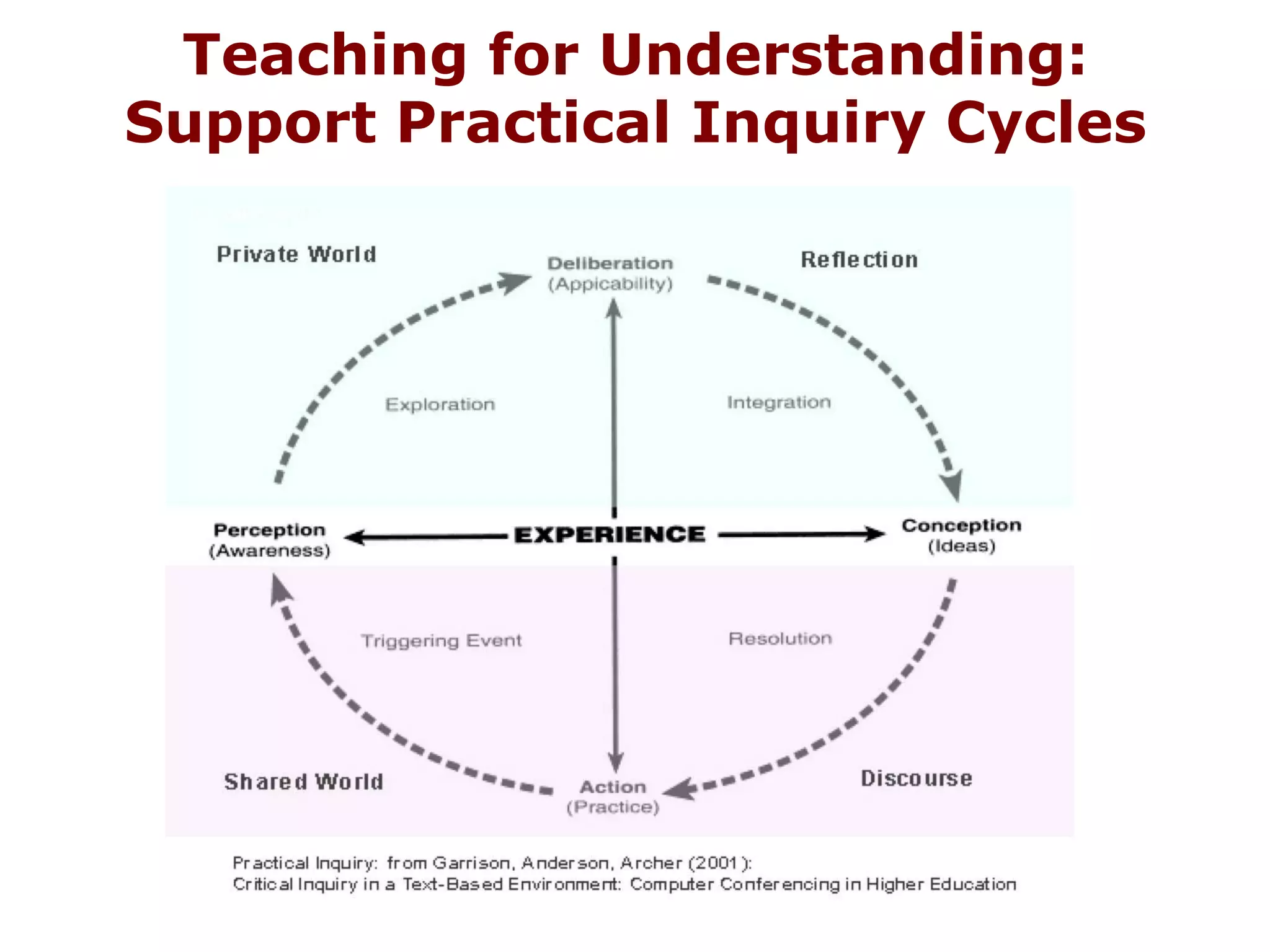
Teaching for Understanding:
Support Practical Inquiry Cycles
http://www.visiblethinkingpz.org/VisibleThinking_html_files/03_ThinkingRoutines/03d_UnderstandingRoutines/Con
nectExtendChallenge/ConnectExtend_Routine.html
Teaching for Understanding:
Make Thinking Visible and
Help Students Learn from One
Another
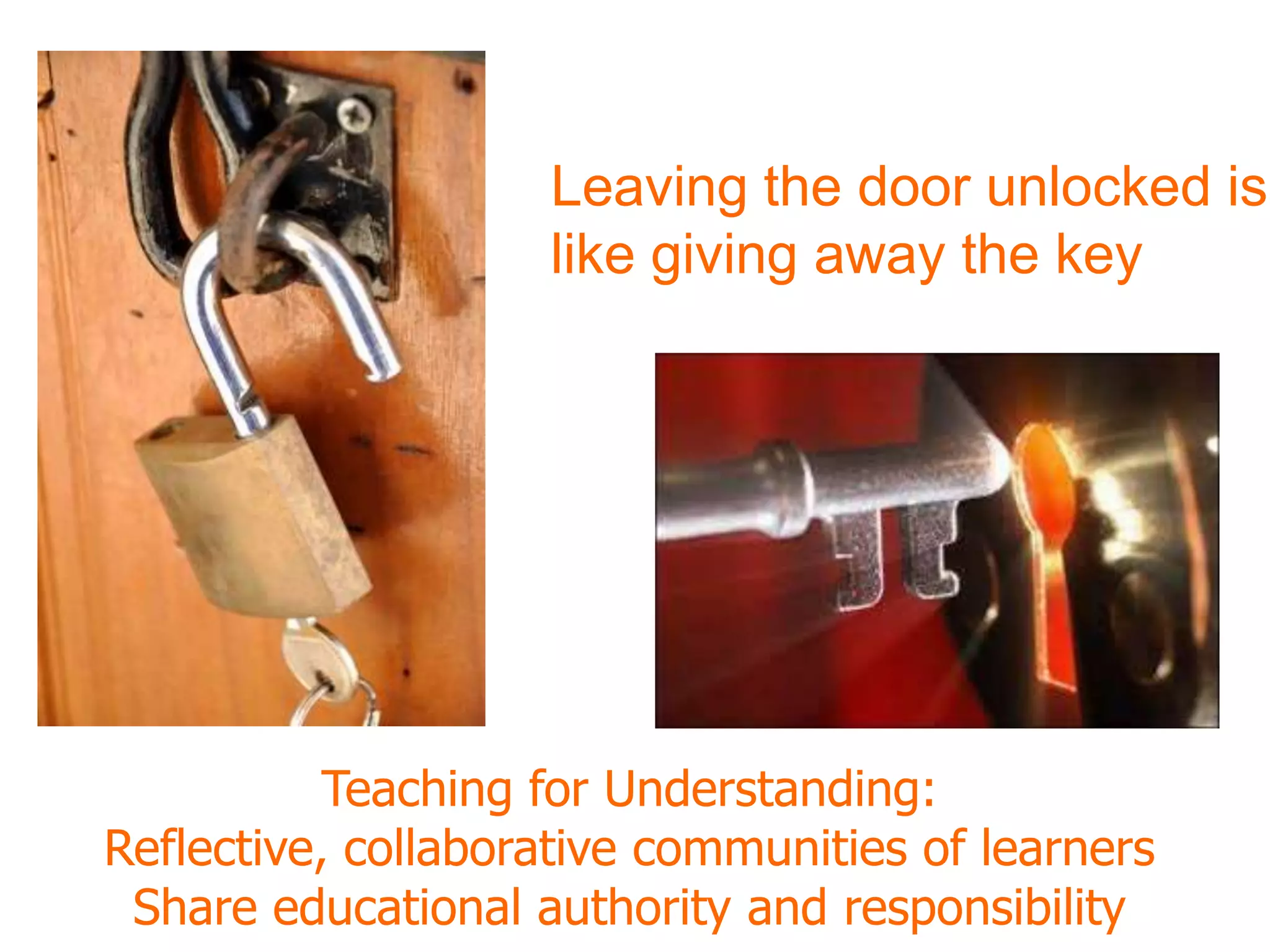
Leaving the door unlocked is
like giving away the key
Teaching for Understanding:
Reflective, collaborative communities of learners
Share educational authority and responsibility
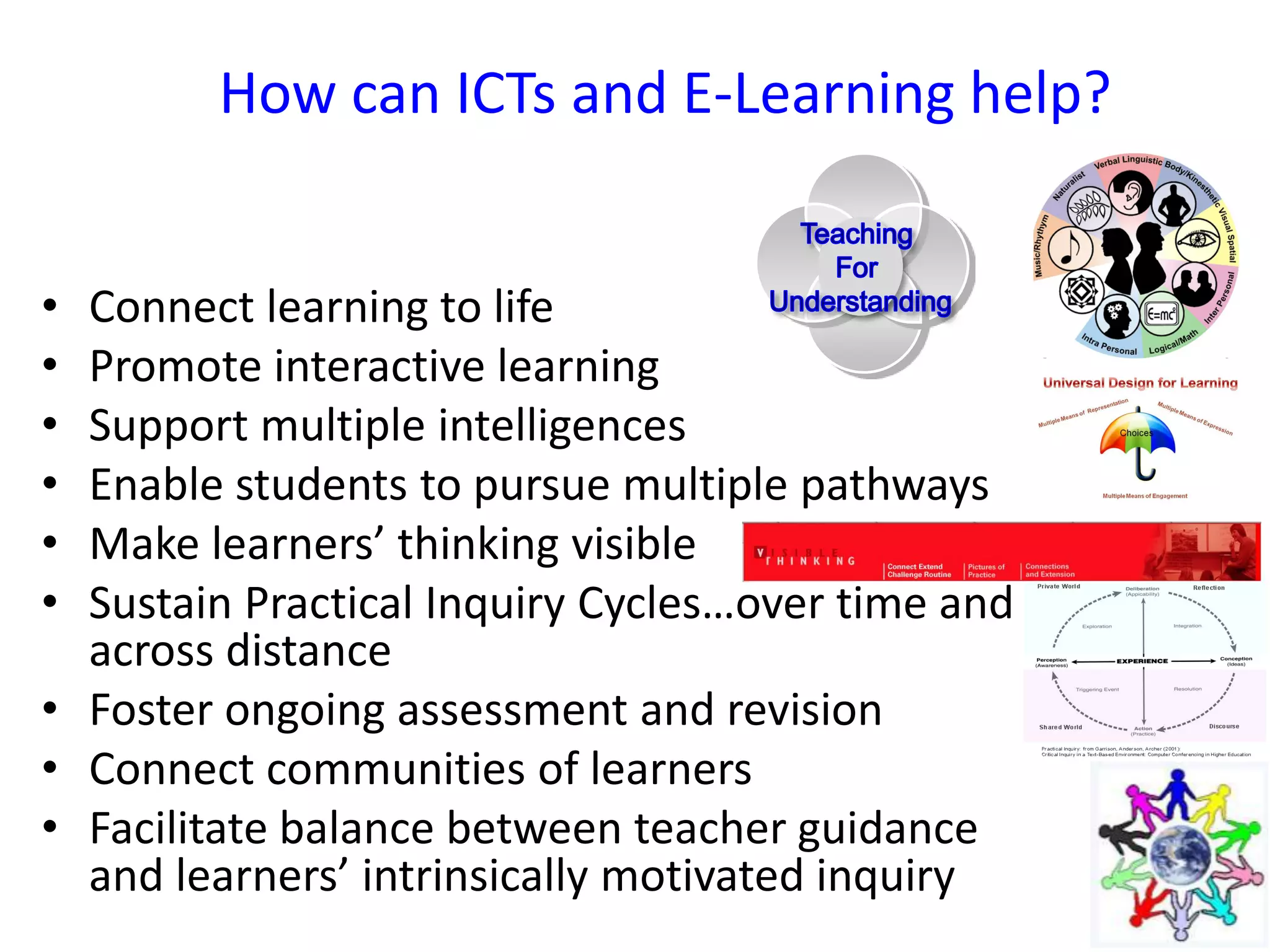
How can ICTs and E-Learning help?
• Connect learning to life
• Promote interactive learning
• Support multiple intelligences
• Enable students to pursue multiple pathways
• Make learners’ thinking visible
• Sustain Practical Inquiry Cycles…over time and
across distance
• Foster ongoing assessment and revision
• Connect communities of learners
• Facilitate balance between teacher guidance
and learners’ intrinsically motivated inquiry

Stone Wiske. Teaching for Understanding: the role of ICT and e-Learning

  • 1.
    E-Learning around theWorld elearning-seminar .uoc.edu 7 June 2013 Teaching for Understanding: the role of ICT and E-learning
  • 2.
  • 3.
    Reconsider Understanding • Howdo you know you understand it? Understanding is a capability to apply your knowledge flexibly and effectively in various situations Understanding is demonstrated and developed through performances of understanding Think of something you understand well: • How did you develop this understanding?
  • 4.
    Teaching for UnderstandingFramework: based on collaborative research conducted at the Harvard Graduate School of Education Generative Topics Build the curriculum around important and accessible topics that interest learners and teachers Understanding Goals Define explicit goals for learners’ understanding and make goals public early and often Performances of Understanding On-going Assessment Provide multiple, varied opportunities for learners to perform in ways that develop and demonstrate their understanding Assess learners’ work frequently using public criteria that align with learning goals and suggest ways to improve Support reflective, collaborative learning communities of teachers and learners Generative Topics Performances of Understanding Ongoing Assessment Understanding Goals
  • 5.
    Too often assessmentdoes not support understanding Not helpful feedback
  • 6.
    How is teachingfor understanding different from traditional instruction? • Knowledge is a product • Teaching is transmission • Learning is reception • Students absorb and repeat • Exams test knowledge acquisition • Schools are organized to support instruction, not learning for understanding Traditional instruction:
  • 7.
    How is teachingfor understanding different from traditional instruction? • Understanding is a process • Teaching is cultivation • Learning is constructing • Students think, apply, create, critique • Exams assess/promote expertise • Learning communities share authority and responsibility among members • Schools are communities of inquiry Treaching for Understanding:
  • 8.
    Teaching for Understanding: EngageMultiple Intelligences
  • 9.
    Teaching for Understanding: OfferStudents some Choices
  • 10.
    Teaching for Understanding: SupportPractical Inquiry Cycles
  • 11.
  • 12.
    Leaving the doorunlocked is like giving away the key Teaching for Understanding: Reflective, collaborative communities of learners Share educational authority and responsibility
  • 13.
    How can ICTsand E-Learning help? • Connect learning to life • Promote interactive learning • Support multiple intelligences • Enable students to pursue multiple pathways • Make learners’ thinking visible • Sustain Practical Inquiry Cycles…over time and across distance • Foster ongoing assessment and revision • Connect communities of learners • Facilitate balance between teacher guidance and learners’ intrinsically motivated inquiry