STRUCTURE OF
CHLOROPHYLL,CHLOROPLAST
&
PHOTOSYSTEM 1 AND 2
SUBMITTED BY
SHEFI VARGHESE
1ST M.Sc FTQA
MRC,MUNNAR
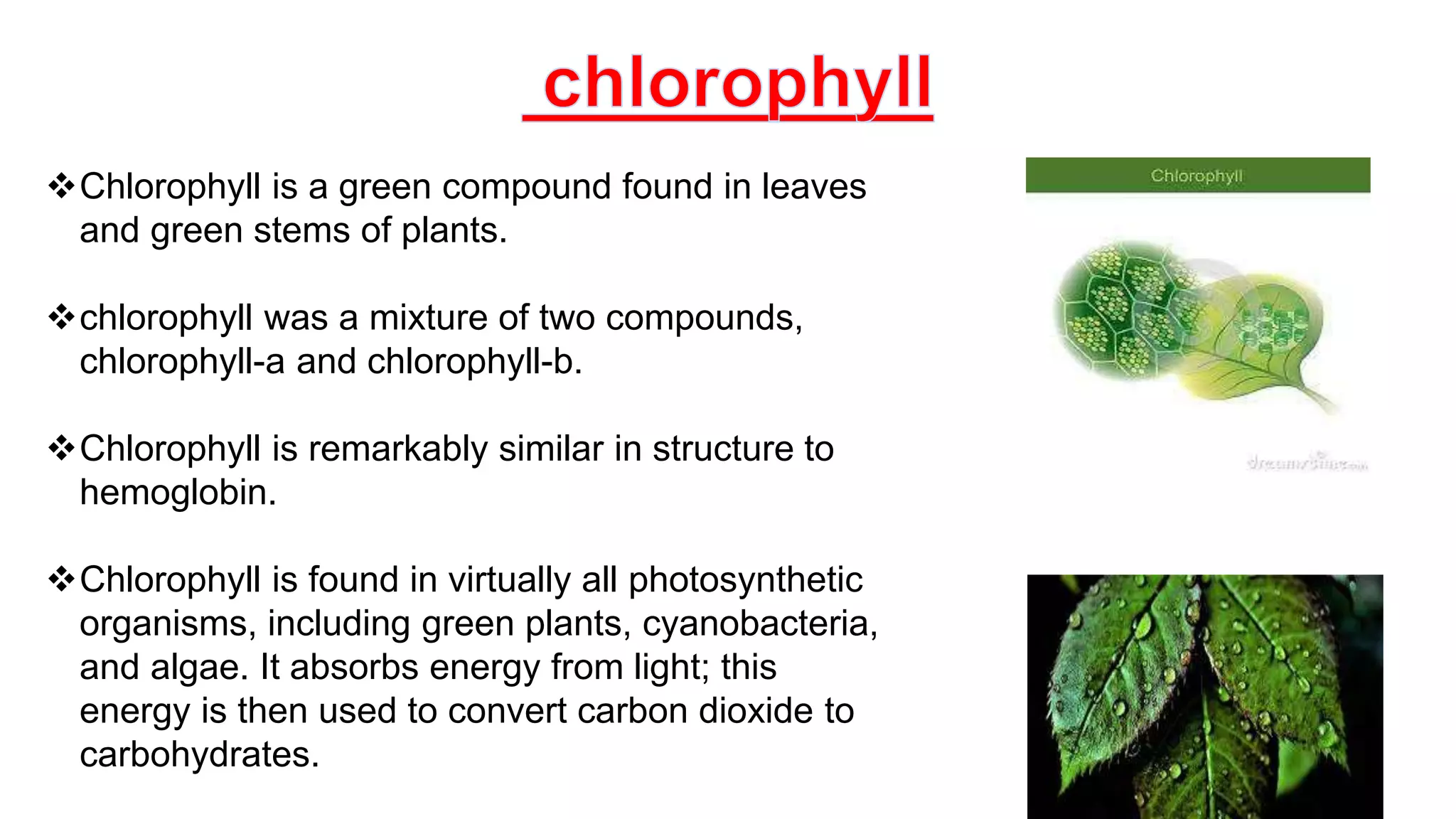
Chlorophyll is a green compound found in leaves
and green stems of plants.
chlorophyll was a mixture of two compounds,
chlorophyll-a and chlorophyll-b.
Chlorophyll is remarkably similar in structure to
hemoglobin.
Chlorophyll is found in virtually all photosynthetic
organisms, including green plants, cyanobacteria,
and algae. It absorbs energy from light; this
energy is then used to convert carbon dioxide to
carbohydrates.
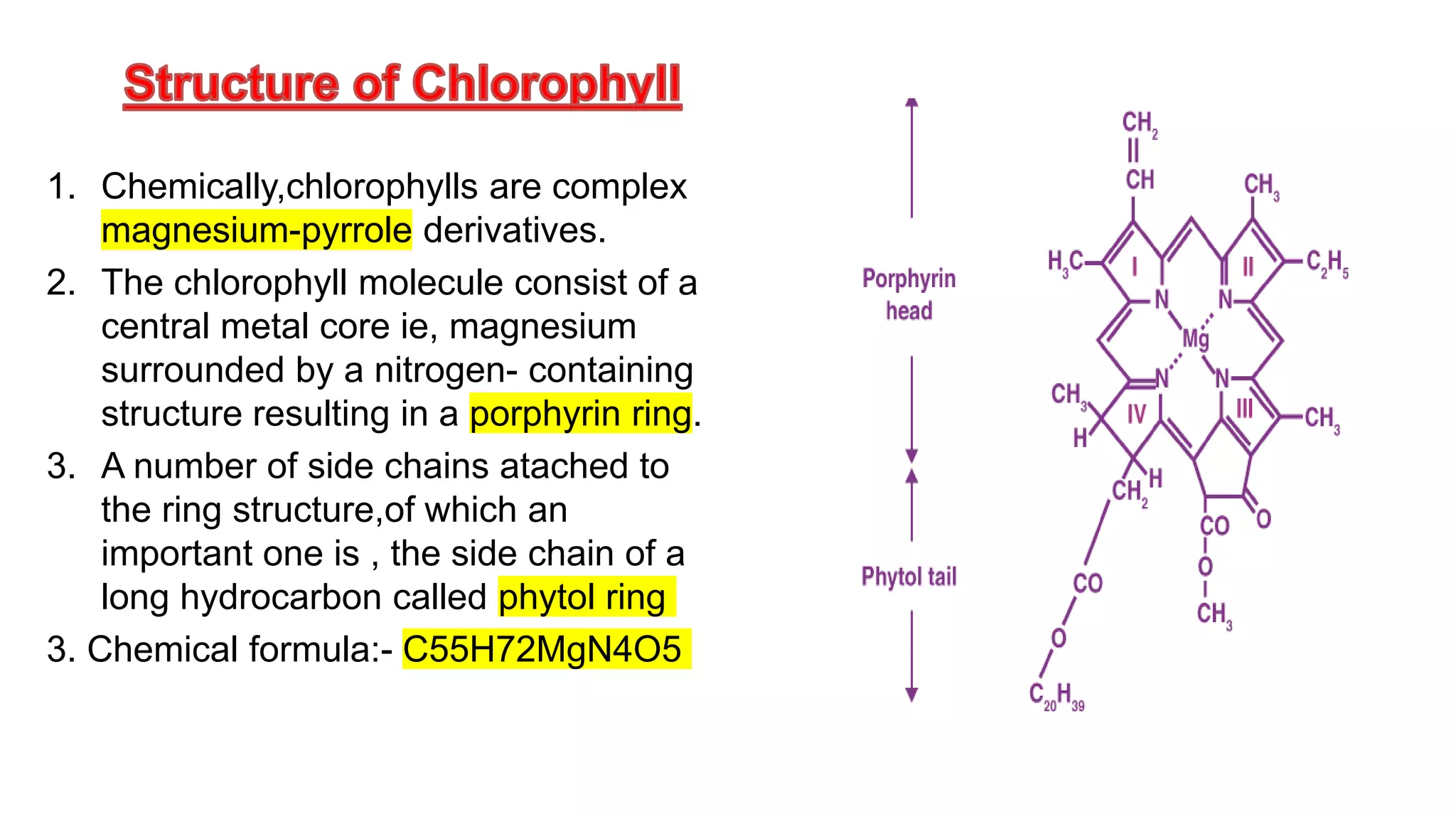
1. Chemically,chlorophylls are complex
magnesium-pyrrole derivatives.
2. The chlorophyll molecule consist of a
central metal core ie, magnesium
surrounded by a nitrogen- containing
structure resulting in a porphyrin ring.
3. A number of side chains atached to
the ring structure,of which an
important one is , the side chain of a
long hydrocarbon called phytol ring
3. Chemical formula:- C55H72MgN4O5
Main site of photosynthesis in plants.
Chiefly occur in the mesophyll of cells.
Food producers of plants.
Chloroplast is found in all higher plants.
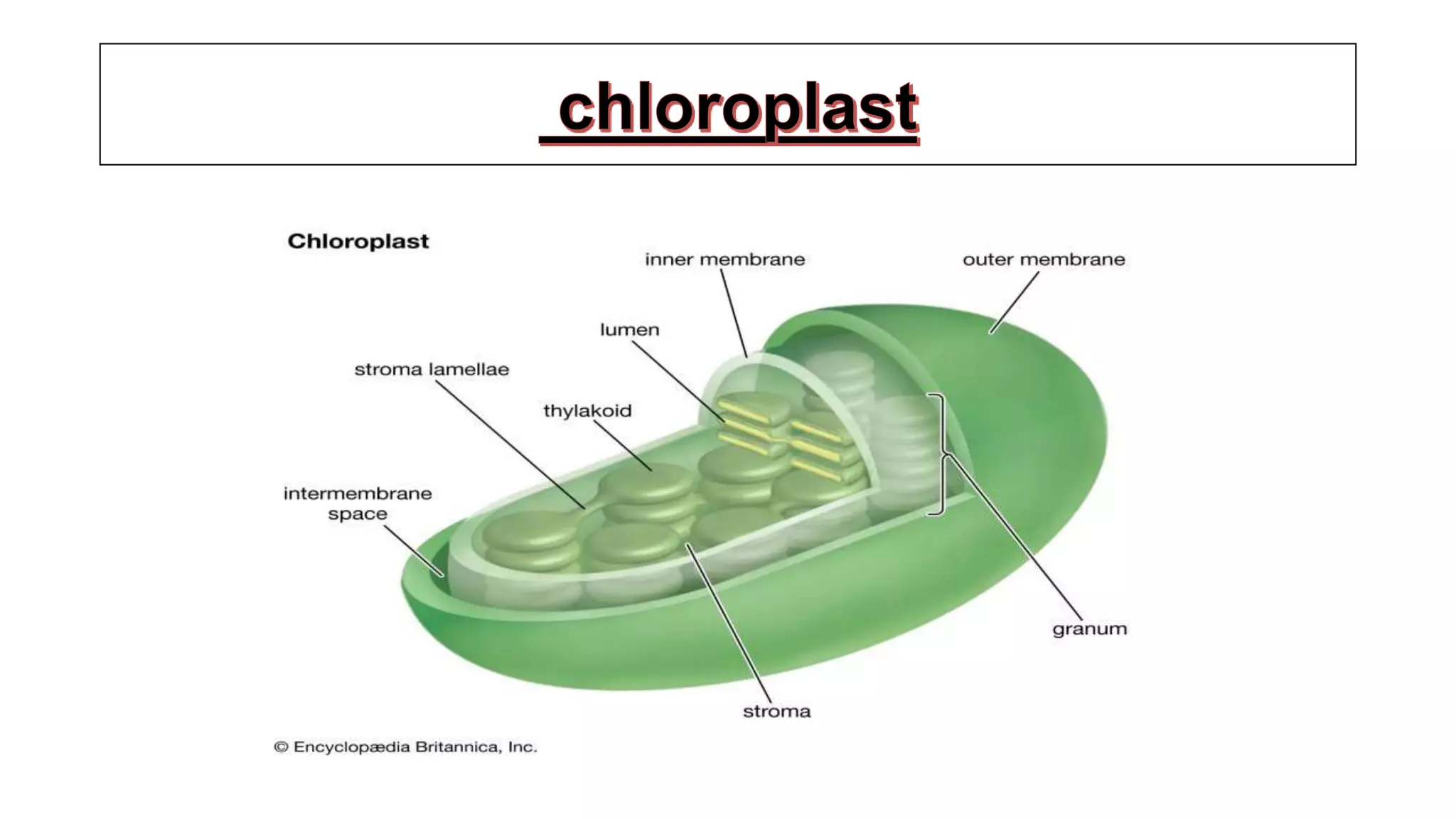
They are double membrane organelle with the presence
of outer,inner and intermembrane space.
2 distinct regions are present:- Grana and Stroma
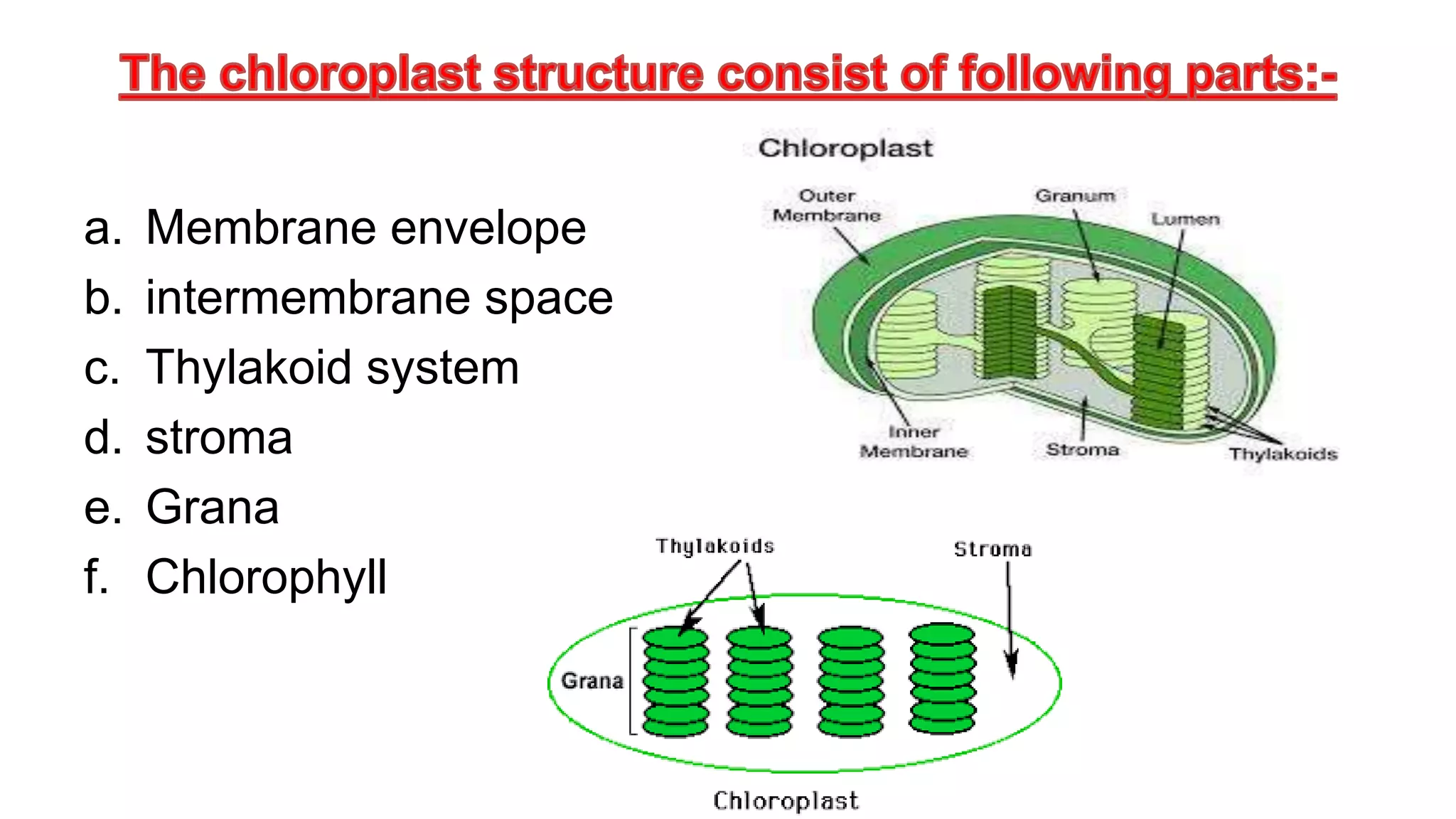
a. Membrane envelope
b. intermembrane space
c. Thylakoid system
d. stroma
e. Grana
f. Chlorophyll
• The light absorbing photosynthetic pigments are arranged on the
thylakoid membranes of chloroplast in two interacting
complexes,called pigment systems or photosystems.
• There are 2 types :- Photosystem 1(mainly present in unstacked
membrane)and Photosystem 2(mainly in stacked membranes).
• Each photosystem consist of many thousand photosynthetic units
called quantasomes
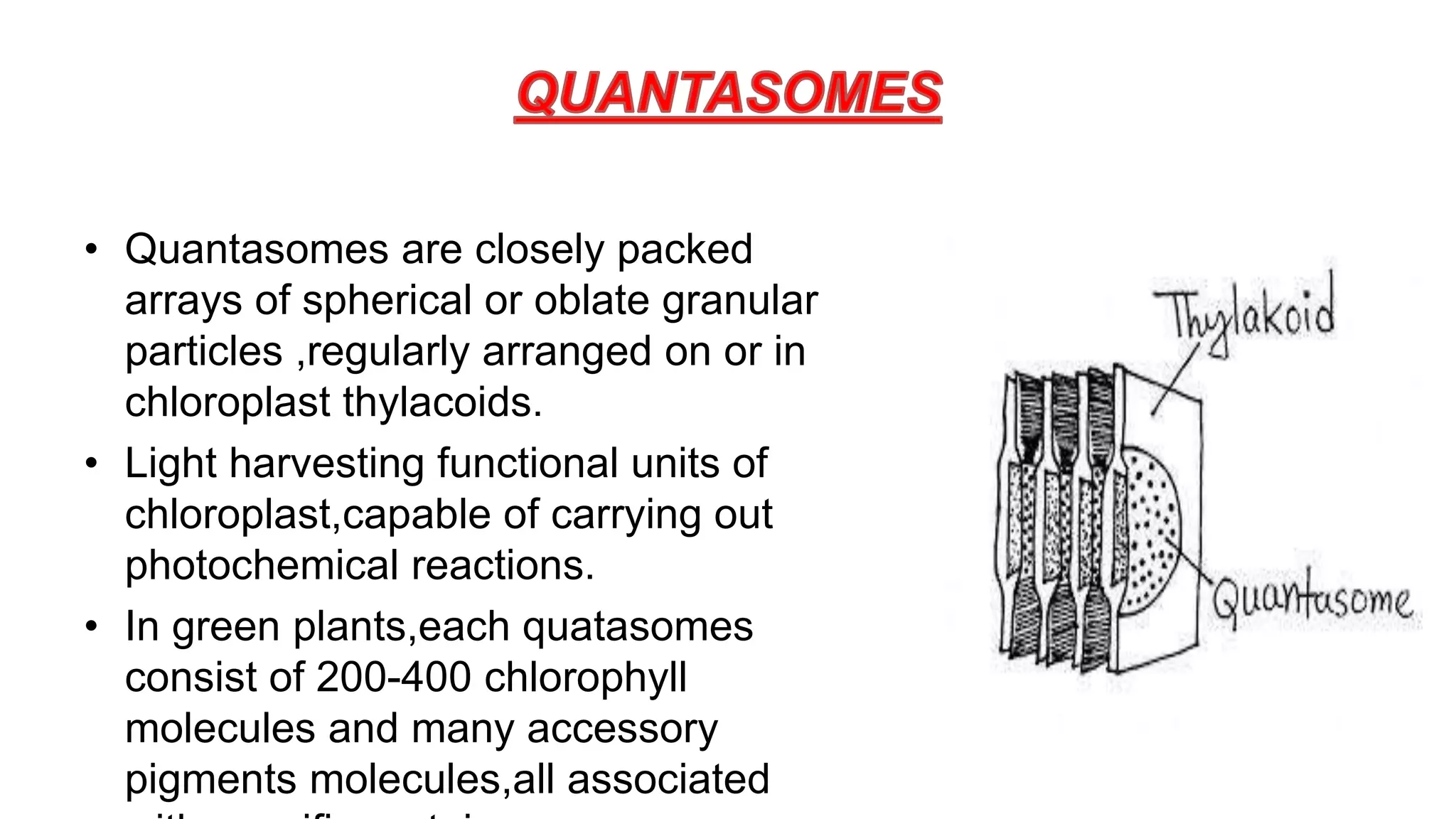
• Quantasomes are closely packed
arrays of spherical or oblate granular
particles ,regularly arranged on or in
chloroplast thylacoids.
• Light harvesting functional units of
chloroplast,capable of carrying out
photochemical reactions.
• In green plants,each quatasomes
consist of 200-400 chlorophyll
molecules and many accessory
pigments molecules,all associated
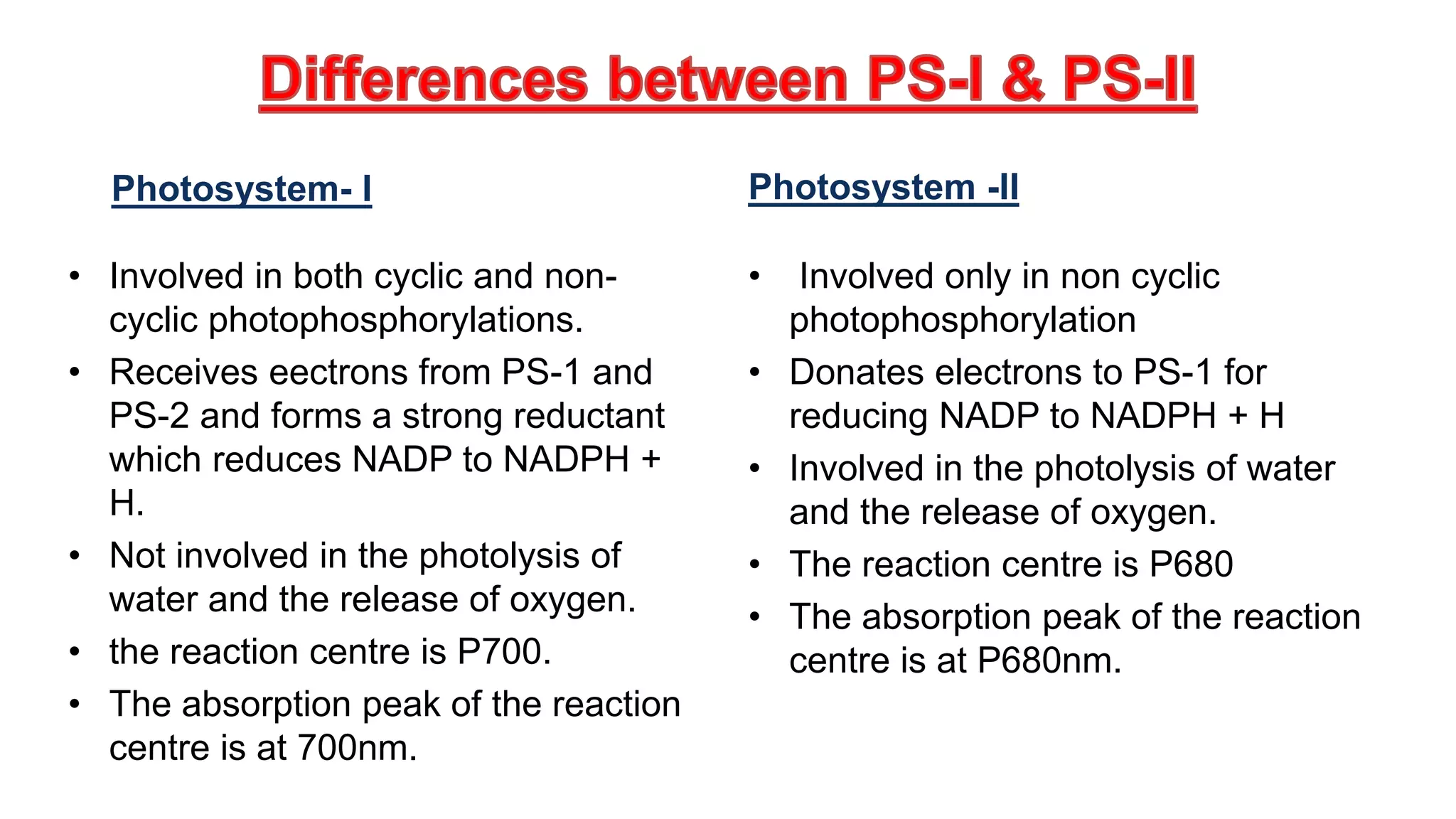
Photosystem- I
• Involved in both cyclic and non-
cyclic photophosphorylations.
• Receives eectrons from PS-1 and
PS-2 and forms a strong reductant
which reduces NADP to NADPH +
H.
• Not involved in the photolysis of
water and the release of oxygen.
• the reaction centre is P700.
• The absorption peak of the reaction
centre is at 700nm.
Photosystem -II
• Involved only in non cyclic
photophosphorylation
• Donates electrons to PS-1 for
reducing NADP to NADPH + H
• Involved in the photolysis of water
and the release of oxygen.
• The reaction centre is P680
• The absorption peak of the reaction
centre is at P680nm.
reference
• Britannica, T. Editors of Encyclopaedia (2022, August 31).
chlorophyll. Encyclopedia Britannica.
https://www.britannica.com/science/chlorophyll
STRUCTURE OF CHLOROPHYLL

STRUCTURE OF CHLOROPHYLL

  • 1.
    STRUCTURE OF CHLOROPHYLL,CHLOROPLAST & PHOTOSYSTEM 1AND 2 SUBMITTED BY SHEFI VARGHESE 1ST M.Sc FTQA MRC,MUNNAR
  • 2.
    Chlorophyll is agreen compound found in leaves and green stems of plants. chlorophyll was a mixture of two compounds, chlorophyll-a and chlorophyll-b. Chlorophyll is remarkably similar in structure to hemoglobin. Chlorophyll is found in virtually all photosynthetic organisms, including green plants, cyanobacteria, and algae. It absorbs energy from light; this energy is then used to convert carbon dioxide to carbohydrates.
  • 3.
    1. Chemically,chlorophylls arecomplex magnesium-pyrrole derivatives. 2. The chlorophyll molecule consist of a central metal core ie, magnesium surrounded by a nitrogen- containing structure resulting in a porphyrin ring. 3. A number of side chains atached to the ring structure,of which an important one is , the side chain of a long hydrocarbon called phytol ring 3. Chemical formula:- C55H72MgN4O5
  • 5.
    Main site ofphotosynthesis in plants. Chiefly occur in the mesophyll of cells. Food producers of plants. Chloroplast is found in all higher plants. They are double membrane organelle with the presence of outer,inner and intermembrane space. 2 distinct regions are present:- Grana and Stroma
  • 6.
    a. Membrane envelope b.intermembrane space c. Thylakoid system d. stroma e. Grana f. Chlorophyll
  • 7.
    • The lightabsorbing photosynthetic pigments are arranged on the thylakoid membranes of chloroplast in two interacting complexes,called pigment systems or photosystems. • There are 2 types :- Photosystem 1(mainly present in unstacked membrane)and Photosystem 2(mainly in stacked membranes). • Each photosystem consist of many thousand photosynthetic units called quantasomes
  • 8.
    • Quantasomes areclosely packed arrays of spherical or oblate granular particles ,regularly arranged on or in chloroplast thylacoids. • Light harvesting functional units of chloroplast,capable of carrying out photochemical reactions. • In green plants,each quatasomes consist of 200-400 chlorophyll molecules and many accessory pigments molecules,all associated
  • 9.
    Photosystem- I • Involvedin both cyclic and non- cyclic photophosphorylations. • Receives eectrons from PS-1 and PS-2 and forms a strong reductant which reduces NADP to NADPH + H. • Not involved in the photolysis of water and the release of oxygen. • the reaction centre is P700. • The absorption peak of the reaction centre is at 700nm. Photosystem -II • Involved only in non cyclic photophosphorylation • Donates electrons to PS-1 for reducing NADP to NADPH + H • Involved in the photolysis of water and the release of oxygen. • The reaction centre is P680 • The absorption peak of the reaction centre is at P680nm.
  • 10.
    reference • Britannica, T.Editors of Encyclopaedia (2022, August 31). chlorophyll. Encyclopedia Britannica. https://www.britannica.com/science/chlorophyll