CHLOROPLAST 
AND 
CHLOROPHYLLS
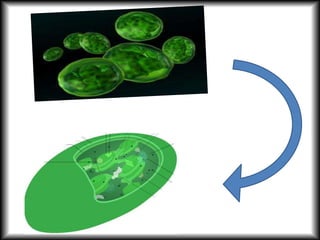
CHLOROPLAST
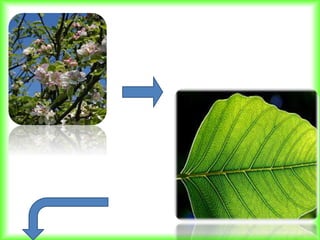
INTO THE INTERIOR OF 
THE LEAF
o Leaves are the kitchen of the biosphere. 
o Food is prepared in chloroplasts using sunlight. 
o A pigment called chlorophyll present in the 
chloroplast helps to absorb sunlight. 
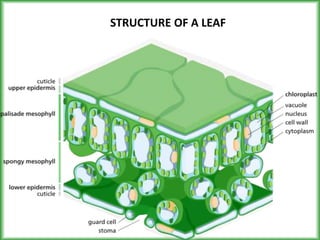
o Chloroplasts occurs chiefly in the mesophyll cells 
of leaves. 
o The shape of chloroplasts may vary with 
organism.
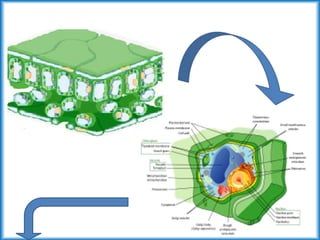
STRUCTURE OF A LEAF
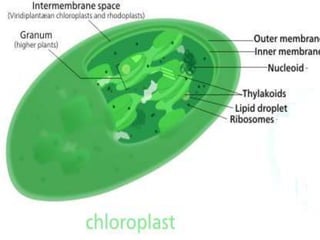
stroma 
grana 
Chloroplast 
DNA 
Ribosome 
Stroma lamella 
External membrane 
Periplastidal space 
Internal membrane 
Granal thylacoids 
Thylacoid membrane 
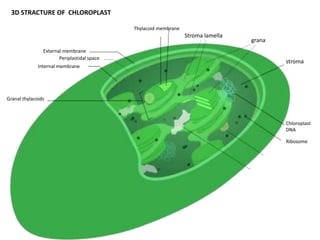
3D STRACTURE OF CHLOROPLAST
Structure of chloroplast 
• Chloroplast is a green double membrane bound 
organelle. 
• Chloroplasts occurs chiefly in the mesophyll 
cells of leaves. 
• The shape of chloroplasts may vary with 
organism these are may lens shaped, oval, 
spherical, discoid etc. 
• It is double walled and fluid filled bag, having a 
gelatinous matrix, called stroma.
• It consist a lamellar membrane system, 
ribosomes, double-stranded circular DNA 
molecules, mRNA, tRNA, starch grains, lipid 
globules (plastoglobuli), enzymes, proteins, 
etc. 
• A number of organized flattened membranous 
sacs called thylacoids are present in stroma. 
• Thylacoid membranes are store houses of 
photosynthetic pigments.
• The thylacoid system consists of some cylindrical 
discs called grana (singular- granum). 
• Each granum is a stock of several flattened sacs 
called granal lamellae or granal thylacoid. 
• A few unstacked thylacoids may also be present 
they are called stromal thylacoid or stromal 
lamellae. 
• Stromal lamellae are flate membranous tubules 
connecting the thylacoids of different grana.
• The membrane of the thylacoids enclose a 
space called lumen. 
• The stroma of the chloroplast contain 
enzymes required for the synthesis of 
carbohydrates and proteins. 
• Stroma is the metabolic centre concern with 
the fixation of CO2, and the synthesis of 
nucleic acid, sugars, fatty acids etc.
CHLOROPHYLL
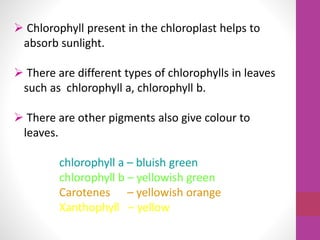
 Chlorophyll present in the chloroplast helps to 
absorb sunlight. 
 There are different types of chlorophylls in leaves 
such as chlorophyll a, chlorophyll b. 
 There are other pigments also give colour to 
leaves. 
chlorophyll a – bluish green 
chlorophyll b – yellowish green 
Carotenes – yellowish orange 
Xanthophyll – yellow
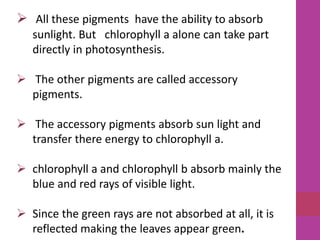
 All these pigments have the ability to absorb 
sunlight. But chlorophyll a alone can take part 
directly in photosynthesis. 
 The other pigments are called accessory 
pigments. 
 The accessory pigments absorb sun light and 
transfer there energy to chlorophyll a. 
 chlorophyll a and chlorophyll b absorb mainly the 
blue and red rays of visible light. 
 Since the green rays are not absorbed at all, it is 
reflected making the leaves appear green.
Other photosynthetic pigments are, 
• Chlorophyll c in brown algae, diatoms, 
dinoflagellates. 
• Chlorophyll d in some red algae. 
• Bacteriochlorophyll in purple and green bacteria. 
• Chlorobium chlorophyll (bacterioviridin) in 
green bacteria.
• Phycoerythrin in red algae and cyanobacteria 
• Phycocyanin in red algae and cyanobacteria 
• Bacteriorhodopsin in halobacteria.
CHLOROPLAST AND CHLOROPHYLL

CHLOROPLAST AND CHLOROPHYLL

  • 1.
  • 2.
  • 3.
    INTO THE INTERIOROF THE LEAF
  • 7.
    o Leaves arethe kitchen of the biosphere. o Food is prepared in chloroplasts using sunlight. o A pigment called chlorophyll present in the chloroplast helps to absorb sunlight. o Chloroplasts occurs chiefly in the mesophyll cells of leaves. o The shape of chloroplasts may vary with organism.
  • 8.
  • 9.
    stroma grana Chloroplast DNA Ribosome Stroma lamella External membrane Periplastidal space Internal membrane Granal thylacoids Thylacoid membrane 3D STRACTURE OF CHLOROPLAST
  • 10.
    Structure of chloroplast • Chloroplast is a green double membrane bound organelle. • Chloroplasts occurs chiefly in the mesophyll cells of leaves. • The shape of chloroplasts may vary with organism these are may lens shaped, oval, spherical, discoid etc. • It is double walled and fluid filled bag, having a gelatinous matrix, called stroma.
  • 11.
    • It consista lamellar membrane system, ribosomes, double-stranded circular DNA molecules, mRNA, tRNA, starch grains, lipid globules (plastoglobuli), enzymes, proteins, etc. • A number of organized flattened membranous sacs called thylacoids are present in stroma. • Thylacoid membranes are store houses of photosynthetic pigments.
  • 12.
    • The thylacoidsystem consists of some cylindrical discs called grana (singular- granum). • Each granum is a stock of several flattened sacs called granal lamellae or granal thylacoid. • A few unstacked thylacoids may also be present they are called stromal thylacoid or stromal lamellae. • Stromal lamellae are flate membranous tubules connecting the thylacoids of different grana.
  • 13.
    • The membraneof the thylacoids enclose a space called lumen. • The stroma of the chloroplast contain enzymes required for the synthesis of carbohydrates and proteins. • Stroma is the metabolic centre concern with the fixation of CO2, and the synthesis of nucleic acid, sugars, fatty acids etc.
  • 15.
  • 16.
     Chlorophyll presentin the chloroplast helps to absorb sunlight.  There are different types of chlorophylls in leaves such as chlorophyll a, chlorophyll b.  There are other pigments also give colour to leaves. chlorophyll a – bluish green chlorophyll b – yellowish green Carotenes – yellowish orange Xanthophyll – yellow
  • 17.
     All thesepigments have the ability to absorb sunlight. But chlorophyll a alone can take part directly in photosynthesis.  The other pigments are called accessory pigments.  The accessory pigments absorb sun light and transfer there energy to chlorophyll a.  chlorophyll a and chlorophyll b absorb mainly the blue and red rays of visible light.  Since the green rays are not absorbed at all, it is reflected making the leaves appear green.
  • 18.
    Other photosynthetic pigmentsare, • Chlorophyll c in brown algae, diatoms, dinoflagellates. • Chlorophyll d in some red algae. • Bacteriochlorophyll in purple and green bacteria. • Chlorobium chlorophyll (bacterioviridin) in green bacteria.
  • 19.
    • Phycoerythrin inred algae and cyanobacteria • Phycocyanin in red algae and cyanobacteria • Bacteriorhodopsin in halobacteria.