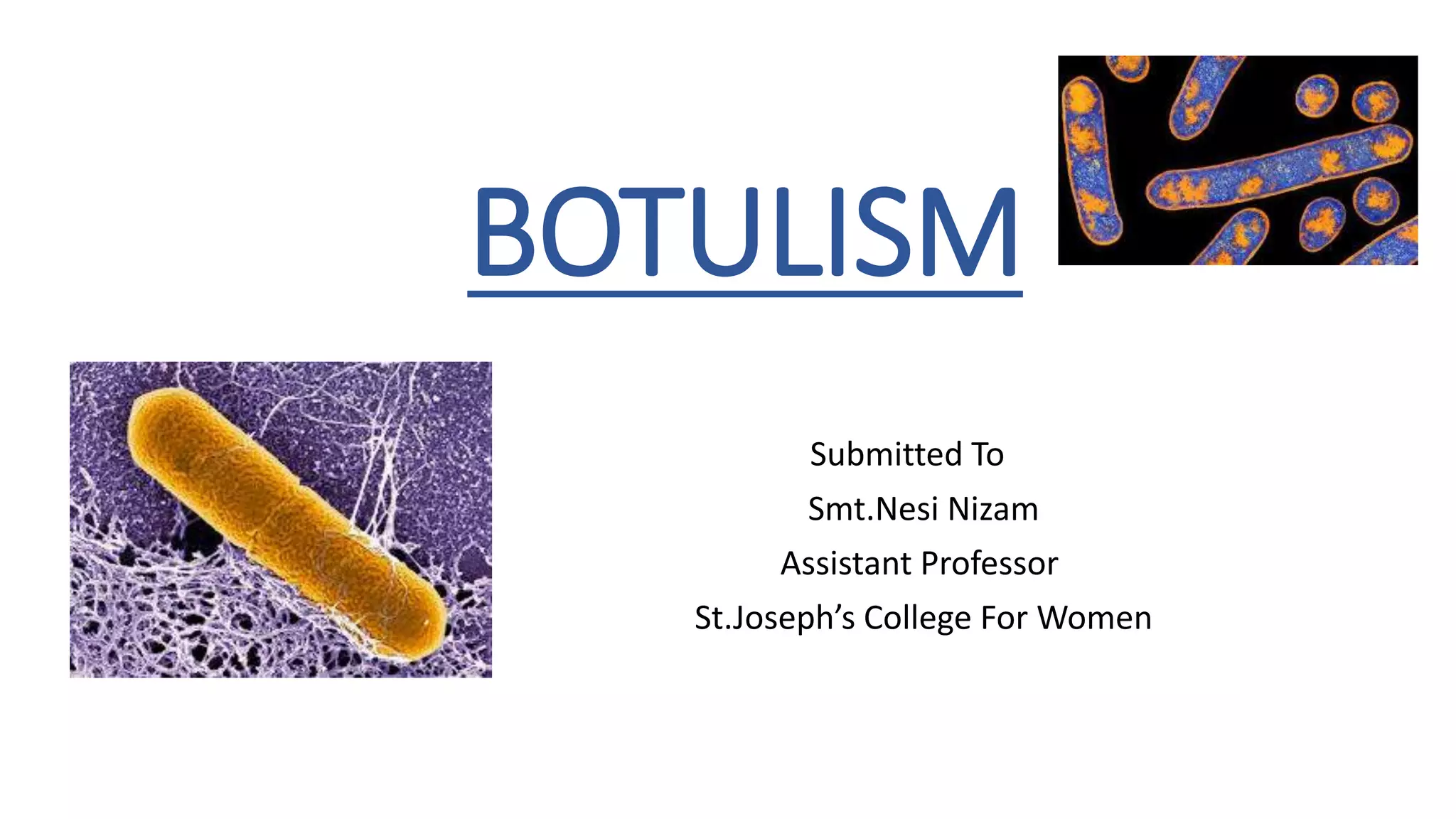
BOTULISM
Submitted To
Smt.Nesi Nizam
Assistant Professor
St.Joseph’s College For Women
What is ‘Clostridium Botulism’…..?
1. A rare poisoning caused by toxins produced by Clostridium botulinum
bacteria.
2. Botulism can be fatal and requires emergency medical care. It can
occur in infants, be spread in food or infect a wound.
3. Symptoms include difficulty swallowing or speaking, facial weakness
and paralysis.
4. Extremely rare
5. Fewer than 5 thousand cases per year (India)
TYPES ……
Three common forms of botulism are:
1. Foodborne botulism. The harmful bacteria thrive and produce the
toxin in environments with little oxygen, such as in canned food.
Person to person transmission doesn’t occur.
2)Wound botulism. It is a rare but serious illness that happens when a
germ called Clostridium botulinum gets into a wound and makes a
toxin. This toxin attacks body's nerves, which can make it hard to
breathe and can cause muscle weakness and even death.
3)Infant botulism. This most common form of botulism begins after
Clostridium botulinum bacterial spores grow in a baby's intestinal tract.
It typically occurs in babies between the ages of 2 months and 8
months.
Symptoms……..
Foodborne botulism
Signs and symptoms of foodborne botulism typically begin between 12 and 36 hours
after the toxin gets into your body. But, depending on how much toxin was
consumed, the start of symptoms may range from a few hours to a few days. Signs
and symptoms of foodborne botulism include:
I. Difficulty swallowing or speaking
II. Dry mouth
III. Facial weakness on both sides of the face
IV. Blurred or double vision
V. Drooping eyelids
VI. Trouble breathing
VII. Nausea, vomiting and abdominal cramps
VIII. Paralysis
Wound botulism
Signs and symptoms of wound botulism appear about 10 days after the toxin
has entered the body. Wound botulism signs and symptoms include:
I. Difficulty swallowing or speaking
II. Facial weakness on both sides of the face
III. Blurred or double vision
IV. Drooping eyelids
V. Trouble breathing
VI. Paralysis
VII. The wound may or may not appear red and swollen.
Infant botulism
If infant botulism is related to food, such as honey, problems generally begin within
18 to 36 hours after the toxin enters the baby's body.
Signs and symptoms include:
I. Constipation, which is often the first sign
II. Floppy movements due to muscle weakness and trouble controlling the head
III. Weak cry
IV. Irritability
V. Drooling
VI. Drooping eyelids
VII. Tiredness
VIII. Difficulty sucking or feeding
IX. Paralysis
•Prevention
1) Use proper canning techniques
2) Be sure to use proper techniques when canning foods at home to ensure
that any botulism germs in the food are destroyed:
3) Pressure-cook these foods at 250 F (121 C) for 20 to 100 minutes,
depending on the food.
4) Consider boiling these foods for 10 minutes before serving them.
5) Prepare and store food safely
6) Don't eat preserved food if its container is bulging or if the food smells
spoiled. However, taste and smell won't always give away the presence of
C. botulinum. Some strains don't make food smell bad or taste unusual.
Treatment…..
For cases of foodborne botulism, doctors sometimes clear out the
digestive system by inducing vomiting and giving medications to induce
bowel movements. If you have botulism in a wound, a doctor may need
to remove infected tissue surgically.
Antitoxin
• If diagnosed early with foodborne or wound botulism, injected
antitoxin reduces the risk of complications. The antitoxin attaches itself
to toxin that's still circulating in your bloodstream and keeps it from
harming your nerves.
• The antitoxin cannot, however, reverse the damage that's been done.
Fortunately, nerves do regenerate. Many people recover fully, but it
may take months and extended rehabilitation therapy.
• A different type of antitoxin, known as botulism immune globulin, is
used to treat infants.
Antibiotics
• Antibiotics are recommended for the treatment of wound botulism.
However, these medications are not advised for other types of botulism
because they can speed up the release of toxins.
Breathing assistance
• If having trouble breathing, you'll probably need a mechanical
ventilator for as long as several weeks as the effects of the toxin
gradually lessen. The ventilator forces air into your lungs through a
tube inserted in your airway through your nose or mouth.
.
THANKYOU

BOTULISM

  • 1.
    BOTULISM Submitted To Smt.Nesi Nizam AssistantProfessor St.Joseph’s College For Women
  • 2.
    What is ‘ClostridiumBotulism’…..?
  • 3.
    1. A rarepoisoning caused by toxins produced by Clostridium botulinum bacteria. 2. Botulism can be fatal and requires emergency medical care. It can occur in infants, be spread in food or infect a wound. 3. Symptoms include difficulty swallowing or speaking, facial weakness and paralysis. 4. Extremely rare 5. Fewer than 5 thousand cases per year (India)
  • 4.
    TYPES …… Three commonforms of botulism are: 1. Foodborne botulism. The harmful bacteria thrive and produce the toxin in environments with little oxygen, such as in canned food. Person to person transmission doesn’t occur.
  • 5.
    2)Wound botulism. Itis a rare but serious illness that happens when a germ called Clostridium botulinum gets into a wound and makes a toxin. This toxin attacks body's nerves, which can make it hard to breathe and can cause muscle weakness and even death.
  • 6.
    3)Infant botulism. Thismost common form of botulism begins after Clostridium botulinum bacterial spores grow in a baby's intestinal tract. It typically occurs in babies between the ages of 2 months and 8 months.
  • 7.
    Symptoms…….. Foodborne botulism Signs andsymptoms of foodborne botulism typically begin between 12 and 36 hours after the toxin gets into your body. But, depending on how much toxin was consumed, the start of symptoms may range from a few hours to a few days. Signs and symptoms of foodborne botulism include: I. Difficulty swallowing or speaking II. Dry mouth III. Facial weakness on both sides of the face IV. Blurred or double vision V. Drooping eyelids VI. Trouble breathing VII. Nausea, vomiting and abdominal cramps VIII. Paralysis
  • 8.
    Wound botulism Signs andsymptoms of wound botulism appear about 10 days after the toxin has entered the body. Wound botulism signs and symptoms include: I. Difficulty swallowing or speaking II. Facial weakness on both sides of the face III. Blurred or double vision IV. Drooping eyelids V. Trouble breathing VI. Paralysis VII. The wound may or may not appear red and swollen.
  • 9.
    Infant botulism If infantbotulism is related to food, such as honey, problems generally begin within 18 to 36 hours after the toxin enters the baby's body. Signs and symptoms include: I. Constipation, which is often the first sign II. Floppy movements due to muscle weakness and trouble controlling the head III. Weak cry IV. Irritability V. Drooling VI. Drooping eyelids VII. Tiredness VIII. Difficulty sucking or feeding IX. Paralysis
  • 10.
    •Prevention 1) Use propercanning techniques 2) Be sure to use proper techniques when canning foods at home to ensure that any botulism germs in the food are destroyed: 3) Pressure-cook these foods at 250 F (121 C) for 20 to 100 minutes, depending on the food. 4) Consider boiling these foods for 10 minutes before serving them. 5) Prepare and store food safely 6) Don't eat preserved food if its container is bulging or if the food smells spoiled. However, taste and smell won't always give away the presence of C. botulinum. Some strains don't make food smell bad or taste unusual.
  • 11.
    Treatment….. For cases offoodborne botulism, doctors sometimes clear out the digestive system by inducing vomiting and giving medications to induce bowel movements. If you have botulism in a wound, a doctor may need to remove infected tissue surgically.
  • 12.
    Antitoxin • If diagnosedearly with foodborne or wound botulism, injected antitoxin reduces the risk of complications. The antitoxin attaches itself to toxin that's still circulating in your bloodstream and keeps it from harming your nerves. • The antitoxin cannot, however, reverse the damage that's been done. Fortunately, nerves do regenerate. Many people recover fully, but it may take months and extended rehabilitation therapy. • A different type of antitoxin, known as botulism immune globulin, is used to treat infants.
  • 13.
    Antibiotics • Antibiotics arerecommended for the treatment of wound botulism. However, these medications are not advised for other types of botulism because they can speed up the release of toxins. Breathing assistance • If having trouble breathing, you'll probably need a mechanical ventilator for as long as several weeks as the effects of the toxin gradually lessen. The ventilator forces air into your lungs through a tube inserted in your airway through your nose or mouth. .
  • 14.