Fight Or Flight Response
ABHISHEK GUDDU
14111003
"On some instances it can be a matter of
life or death."
So what does fight or flight Response
mean?
Cannon Theory (1915)
The Fight-or-Flight response is a physiological reaction that
occurs in response to a perceived harmful event, attack or threat
to survival. It was first described by Walter Bradford Cannon.
In other words…..
It is a defense mechanism that is
important for survival, to protect
oneself from harm.
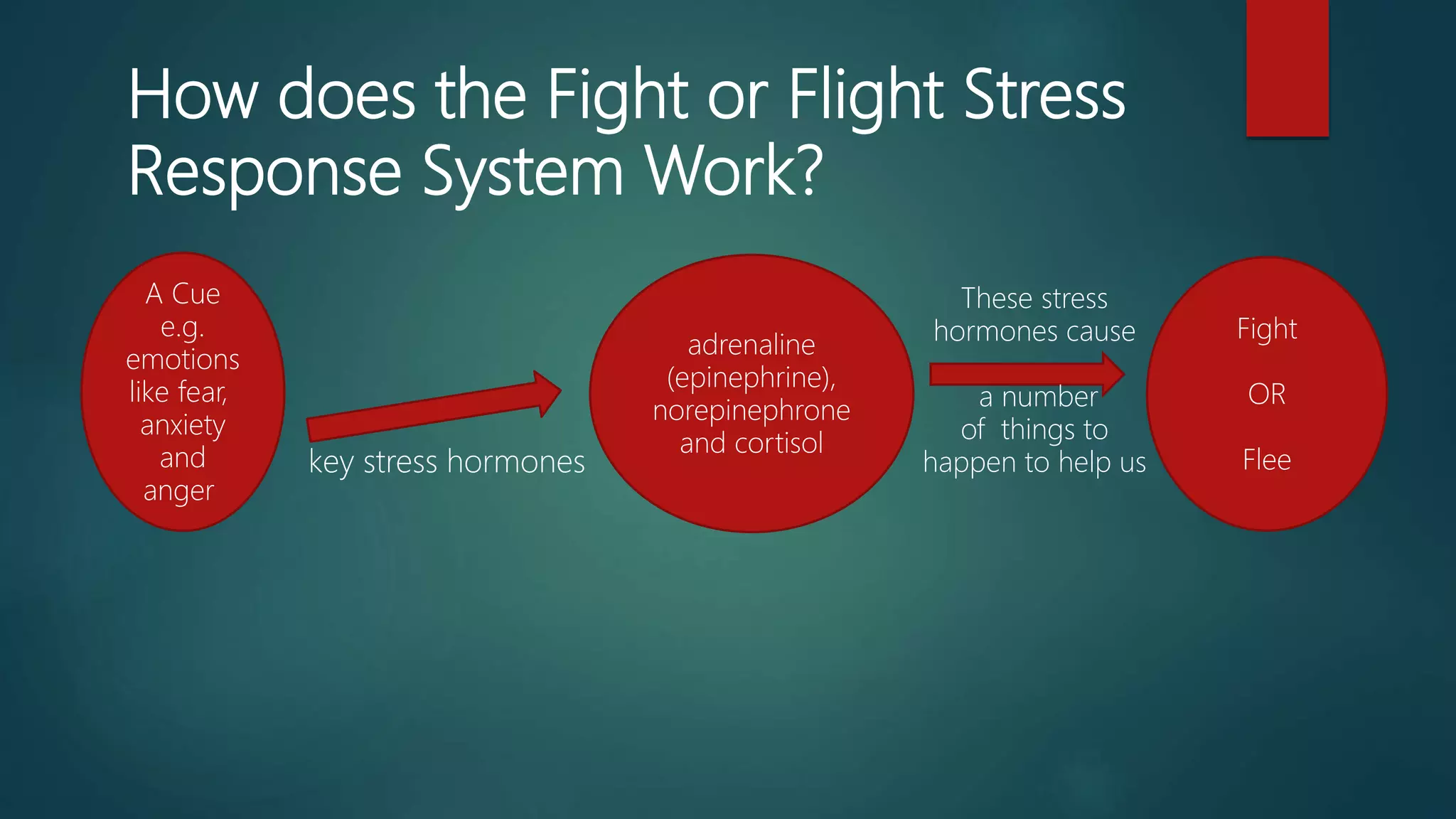
How does the Fight or Flight Stress
Response System Work?
triggers the
key stress hormones
A Cue
e.g.
emotions
like fear,
anxiety
and
anger
adrenaline
(epinephrine),
norepinephrone
and cortisol
Fight
OR
Flee
These stress
hormones cause
a number
of things to
happen to help us
How does this happen?
Autonomic Nervous
System
Maintains
homeostasis and the
functions of organs
This is very important to
regulate heart rate, blood
pressure and other
involuntary controls.
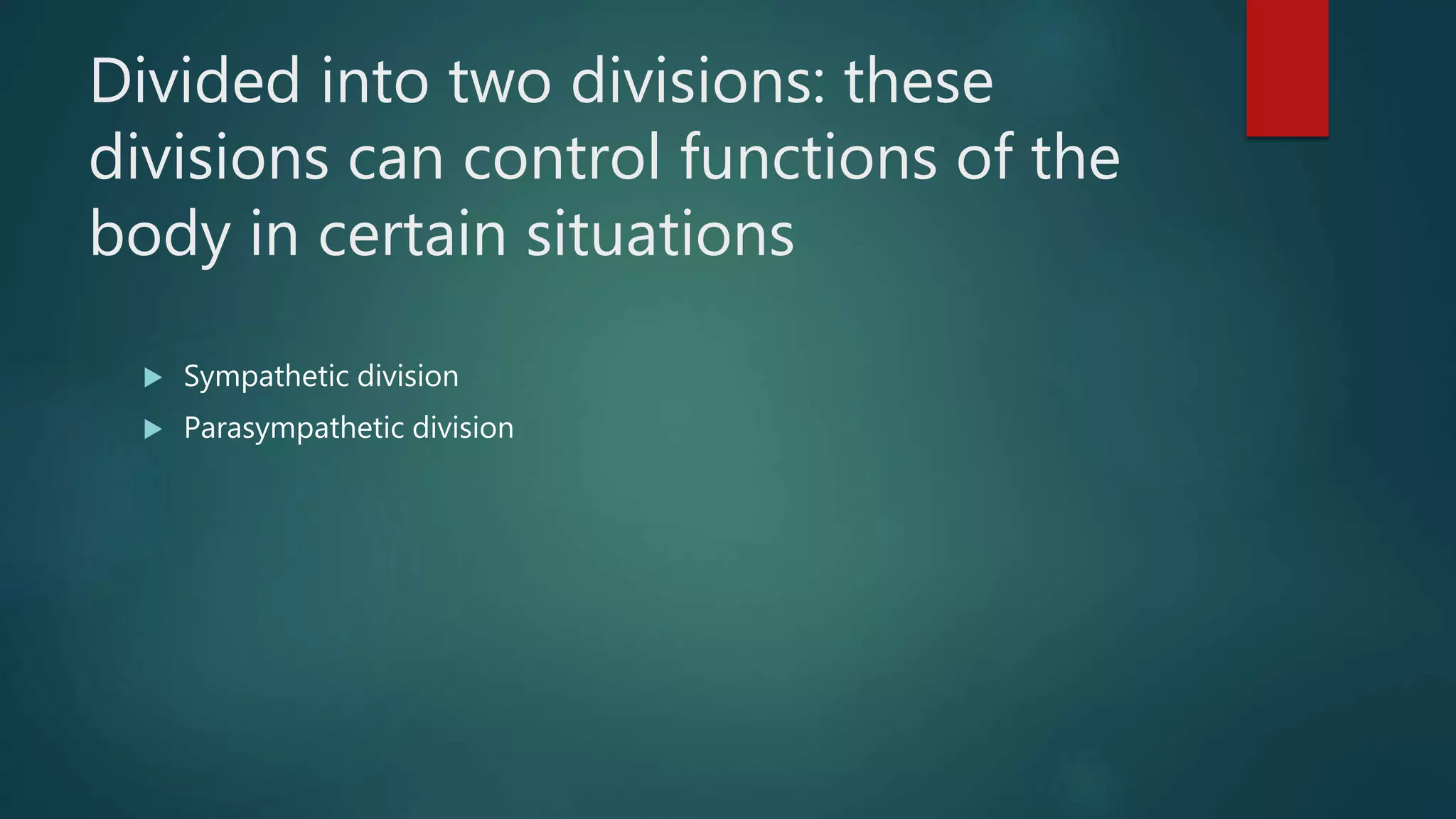
Divided into two divisions: these
divisions can control functions of the
body in certain situations
 Sympathetic division
 Parasympathetic division
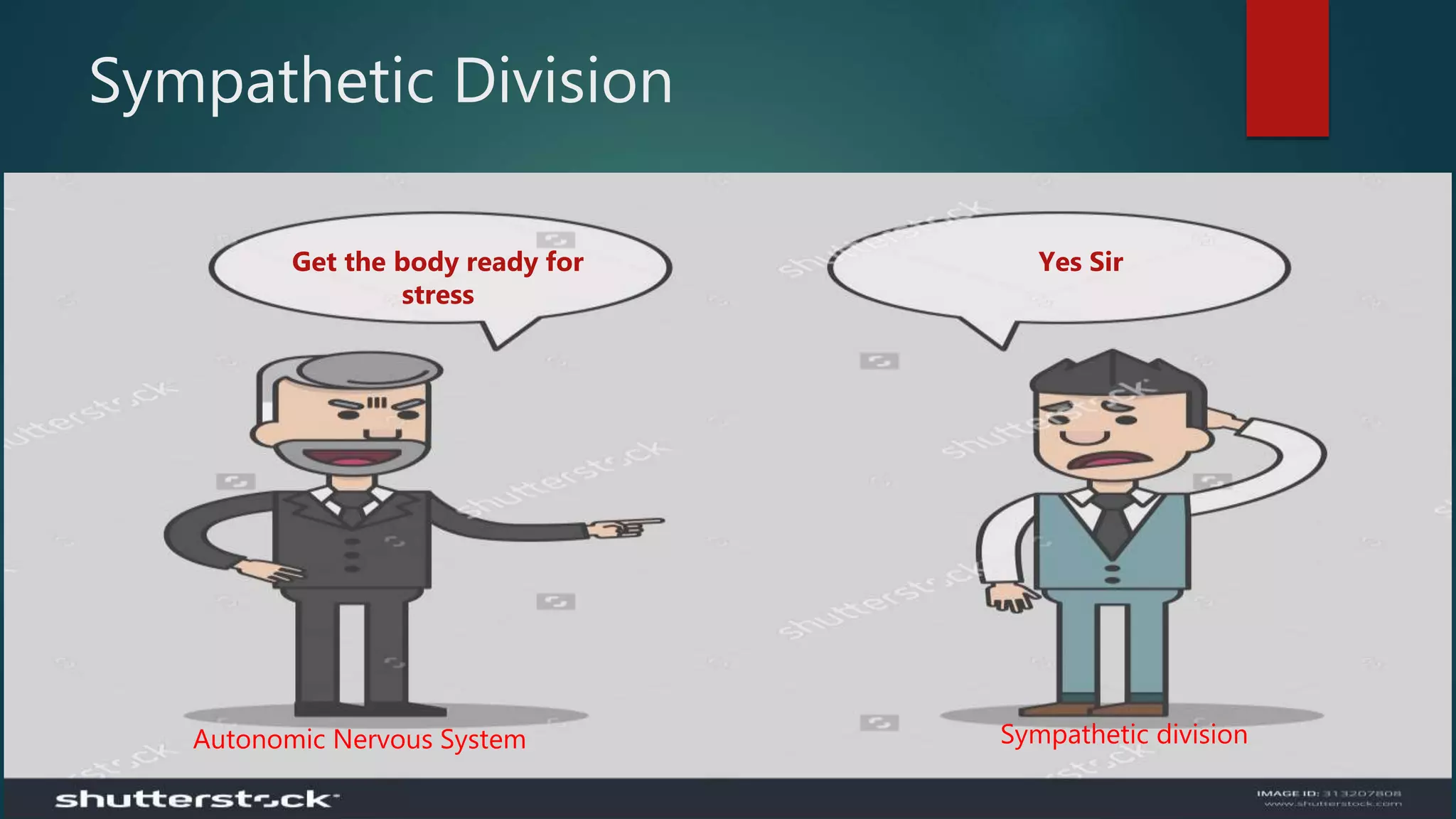
Sympathetic Division
Yes SirGet the body ready for
stress
Autonomic Nervous System Sympathetic division
 Increases the heart rate
 Increases the respiration rate
 Shunts blood away from digestive
tract.
 Dilates pupils
 Constricts blood vessels in various
parts of the body.
 Dilates blood vessels for muscles
 Burns more fats and glucose
 Inhibits the lacrimal
gland (responsible
for tear production) and salivation
 Mobilizes immune system with
increased activation
"Ready to scan for the enemy"
What shall I do?
Function of physiological changes
 to give the body increased strength and speed in anticipation of fighting or
running. Some of the specific physiological changes and their functions
include:-
 Increased blood flow to the muscles activated by diverting blood flow from
other parts of the body.
 Increased blood pressure, heart rate, blood sugars, and fats in order to supply
the body with extra energy.
 The blood clotting function of the body speeds up in order to prevent
excessive blood loss in the event of an injury sustained during the
response.
 Increased muscle tension in order to provide the body with extra speed and
strength.
 Pupil dilates so that more amount of light can enter for better vision.
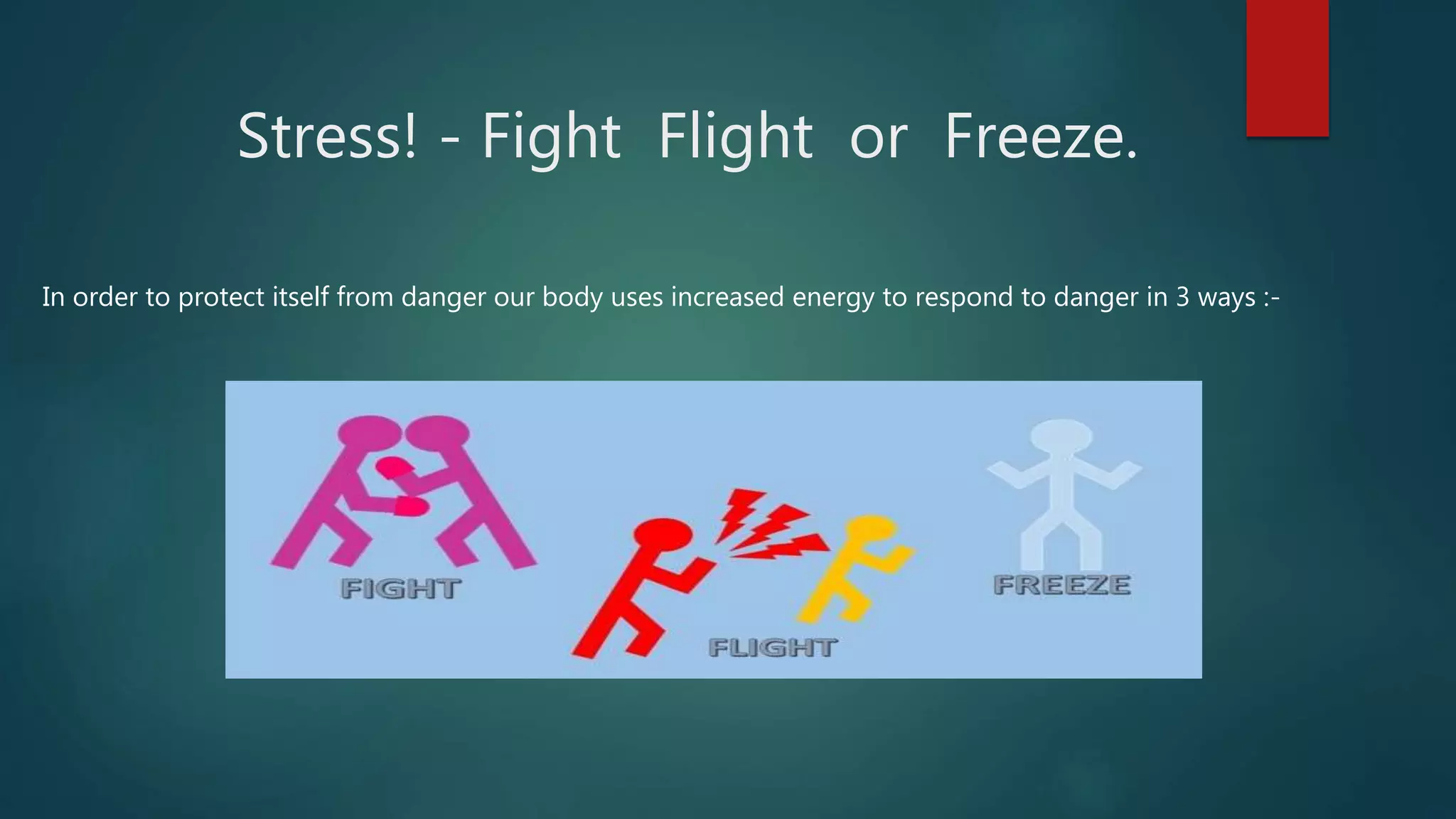
Stress! - Fight Flight or Freeze.
In order to protect itself from danger our body uses increased energy to respond to danger in 3 ways :-
After Stress
Parasympathetic Division
Autonomic Nervous System Parasympathetic Division
Restore the body to
normal condition
Sure Sir
 Slows down the heart rate as well as
respiration rate
 Constricts pupils
 Reactivates digestion
 Increases salivation
 Adrenaline level goes down.It releases
our mind to think again in a normal
manner. It releases our feelings to be
flexible again.
Okay... I got it... I have to bring things to
normal condition,I guess.
I should probably...
If in prolonged sympathetic stage......
 Harmful effects to the body
 Symptoms - high amount of stress, uneasiness around
Public, improper functioning of organs etc.
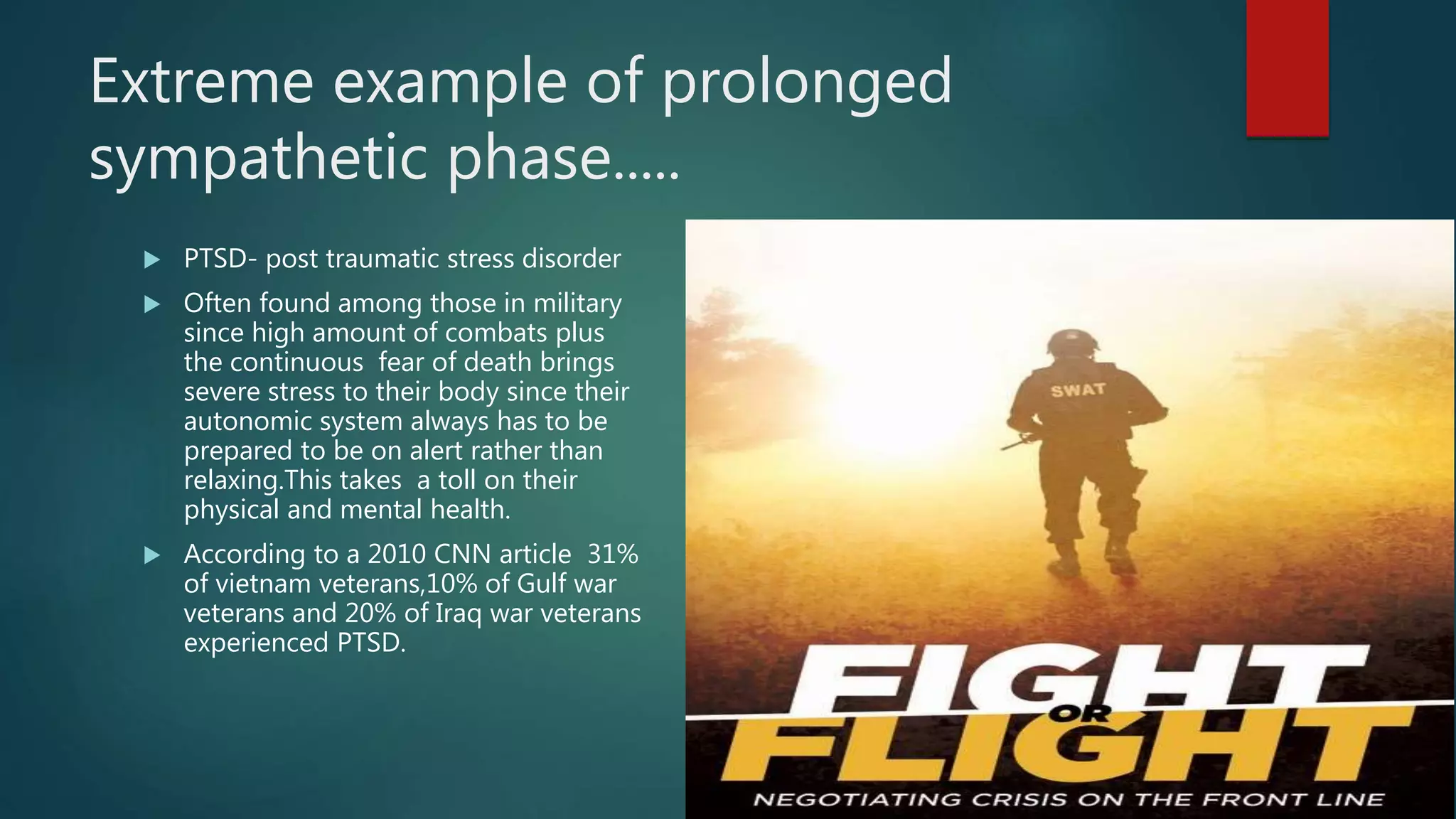
Extreme example of prolonged
sympathetic phase.....
 PTSD- post traumatic stress disorder
 Often found among those in military
since high amount of combats plus
the continuous fear of death brings
severe stress to their body since their
autonomic system always has to be
prepared to be on alert rather than
relaxing.This takes a toll on their
physical and mental health.
 According to a 2010 CNN article 31%
of vietnam veterans,10% of Gulf war
veterans and 20% of Iraq war veterans
experienced PTSD.
Is it ok to have stress?
 Stress is a normal part of everyday life, without it we would be very much in
trouble in surviving
 The fight or flight response is the first responder of a threat, giving the
necessary reaction to deal with the problem quick and efficiently.
Think of it as a wake up call or an alarm that
your life may be in trouble!!!
To leave you with something funny....
References
 https://www.nottingham.ac.uk/counselling/documents/podacst-fight-or-
flight-response.pdf
 https://en.wikipedia.org/wiki/Fight-or-flight_response
 http://www.enotes.com/homework-help/what-an-example-fight-flight-
situation-could-you-325530
 http://www.thebestbrainpossible.com/fight-flight-or-freeze/
Thank you

Fight or Flight Response

  • 1.
    Fight Or FlightResponse ABHISHEK GUDDU 14111003
  • 2.
    "On some instancesit can be a matter of life or death."
  • 5.
    So what doesfight or flight Response mean?
  • 6.
    Cannon Theory (1915) TheFight-or-Flight response is a physiological reaction that occurs in response to a perceived harmful event, attack or threat to survival. It was first described by Walter Bradford Cannon.
  • 7.
    In other words….. Itis a defense mechanism that is important for survival, to protect oneself from harm.
  • 8.
    How does theFight or Flight Stress Response System Work? triggers the key stress hormones A Cue e.g. emotions like fear, anxiety and anger adrenaline (epinephrine), norepinephrone and cortisol Fight OR Flee These stress hormones cause a number of things to happen to help us
  • 10.
    How does thishappen? Autonomic Nervous System Maintains homeostasis and the functions of organs This is very important to regulate heart rate, blood pressure and other involuntary controls.
  • 11.
    Divided into twodivisions: these divisions can control functions of the body in certain situations  Sympathetic division  Parasympathetic division
  • 12.
    Sympathetic Division Yes SirGetthe body ready for stress Autonomic Nervous System Sympathetic division
  • 13.
     Increases theheart rate  Increases the respiration rate  Shunts blood away from digestive tract.  Dilates pupils  Constricts blood vessels in various parts of the body.  Dilates blood vessels for muscles  Burns more fats and glucose  Inhibits the lacrimal gland (responsible for tear production) and salivation  Mobilizes immune system with increased activation "Ready to scan for the enemy" What shall I do?
  • 14.
    Function of physiologicalchanges  to give the body increased strength and speed in anticipation of fighting or running. Some of the specific physiological changes and their functions include:-  Increased blood flow to the muscles activated by diverting blood flow from other parts of the body.  Increased blood pressure, heart rate, blood sugars, and fats in order to supply the body with extra energy.  The blood clotting function of the body speeds up in order to prevent excessive blood loss in the event of an injury sustained during the response.  Increased muscle tension in order to provide the body with extra speed and strength.  Pupil dilates so that more amount of light can enter for better vision.
  • 15.
    Stress! - FightFlight or Freeze. In order to protect itself from danger our body uses increased energy to respond to danger in 3 ways :-
  • 16.
  • 17.
    Parasympathetic Division Autonomic NervousSystem Parasympathetic Division Restore the body to normal condition Sure Sir
  • 18.
     Slows downthe heart rate as well as respiration rate  Constricts pupils  Reactivates digestion  Increases salivation  Adrenaline level goes down.It releases our mind to think again in a normal manner. It releases our feelings to be flexible again. Okay... I got it... I have to bring things to normal condition,I guess. I should probably...
  • 19.
    If in prolongedsympathetic stage......  Harmful effects to the body  Symptoms - high amount of stress, uneasiness around Public, improper functioning of organs etc.
  • 20.
    Extreme example ofprolonged sympathetic phase.....  PTSD- post traumatic stress disorder  Often found among those in military since high amount of combats plus the continuous fear of death brings severe stress to their body since their autonomic system always has to be prepared to be on alert rather than relaxing.This takes a toll on their physical and mental health.  According to a 2010 CNN article 31% of vietnam veterans,10% of Gulf war veterans and 20% of Iraq war veterans experienced PTSD.
  • 21.
    Is it okto have stress?  Stress is a normal part of everyday life, without it we would be very much in trouble in surviving  The fight or flight response is the first responder of a threat, giving the necessary reaction to deal with the problem quick and efficiently. Think of it as a wake up call or an alarm that your life may be in trouble!!!
  • 22.
    To leave youwith something funny....
  • 23.
    References  https://www.nottingham.ac.uk/counselling/documents/podacst-fight-or- flight-response.pdf  https://en.wikipedia.org/wiki/Fight-or-flight_response http://www.enotes.com/homework-help/what-an-example-fight-flight- situation-could-you-325530  http://www.thebestbrainpossible.com/fight-flight-or-freeze/
  • 24.

Editor's Notes

  • #7 also activated at times of stress as body perceives stress as a threat.