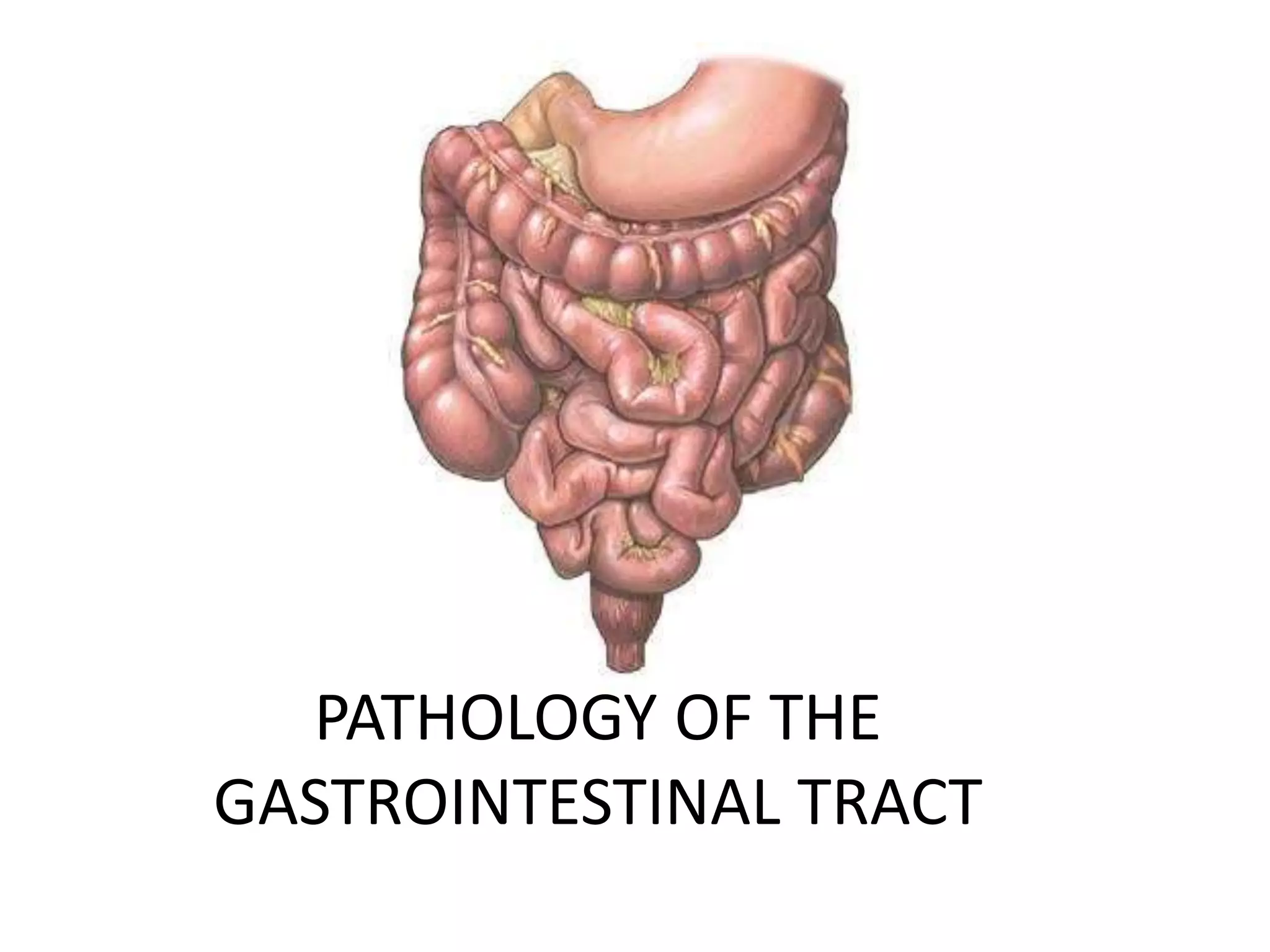
PATHOLOGY OF THE
GASTROINTESTINAL TRACT
OBJECTIVES
• At the end of the session, you should know
about
• Peptic ulcer – Gross and microscopic features
• Carcinoma stomach – Gross and microscopic
features
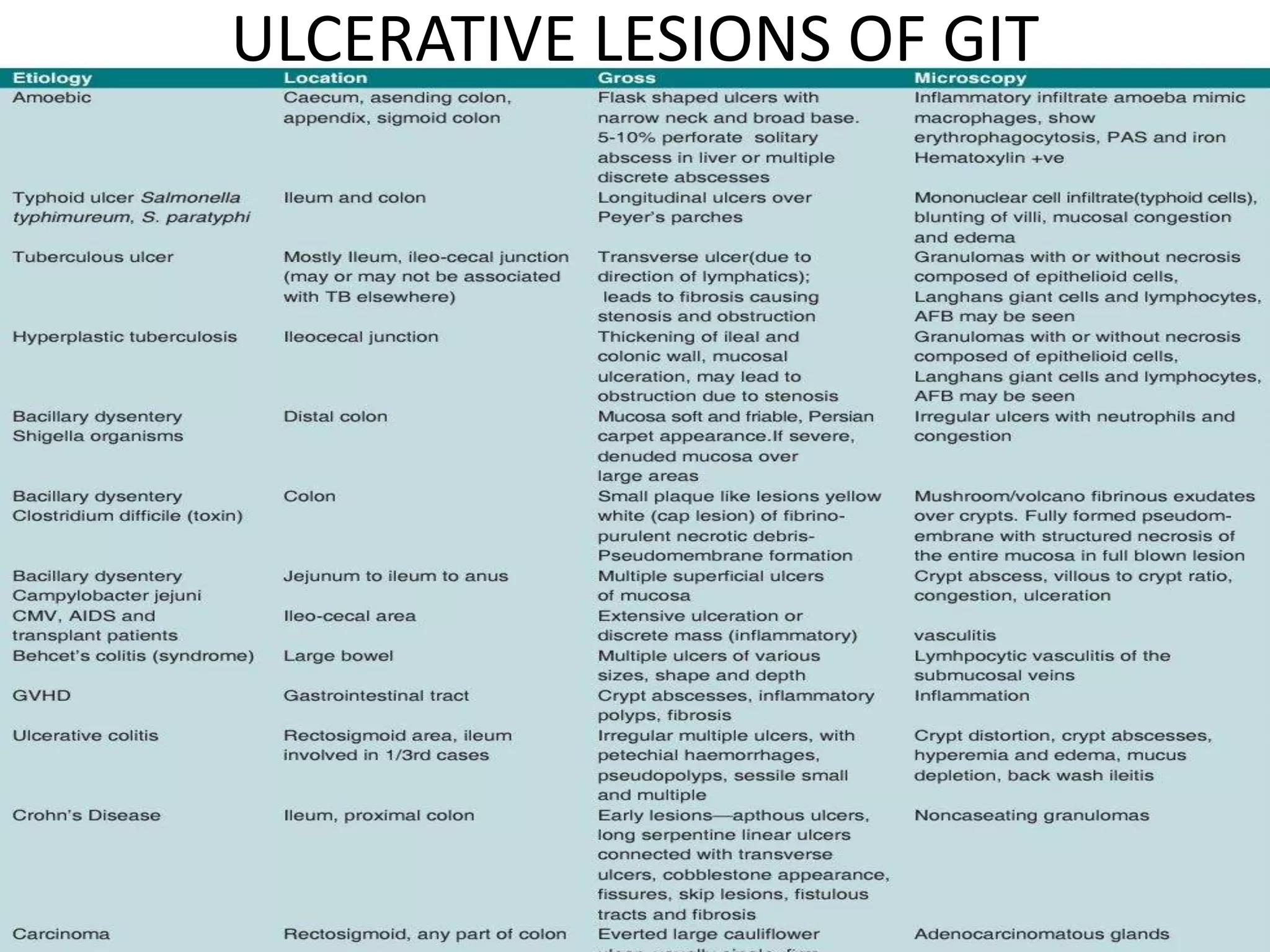
• Ulcerative lesions of intestine
• Carcinoma colon – Gross and microscopic
features
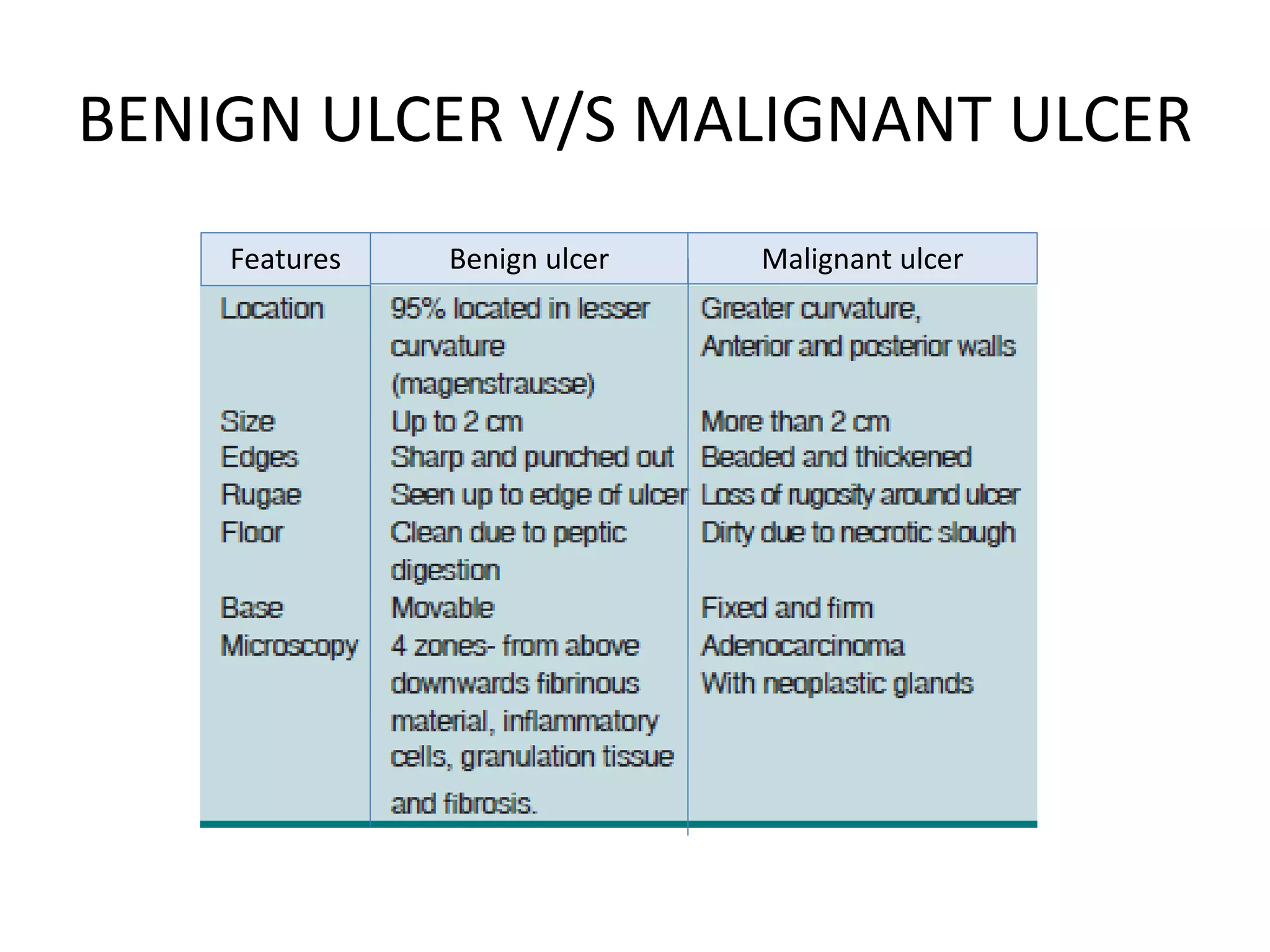
BENIGN ULCER V/S MALIGNANT ULCER
Benign ulcer Malignant ulcerFeatures
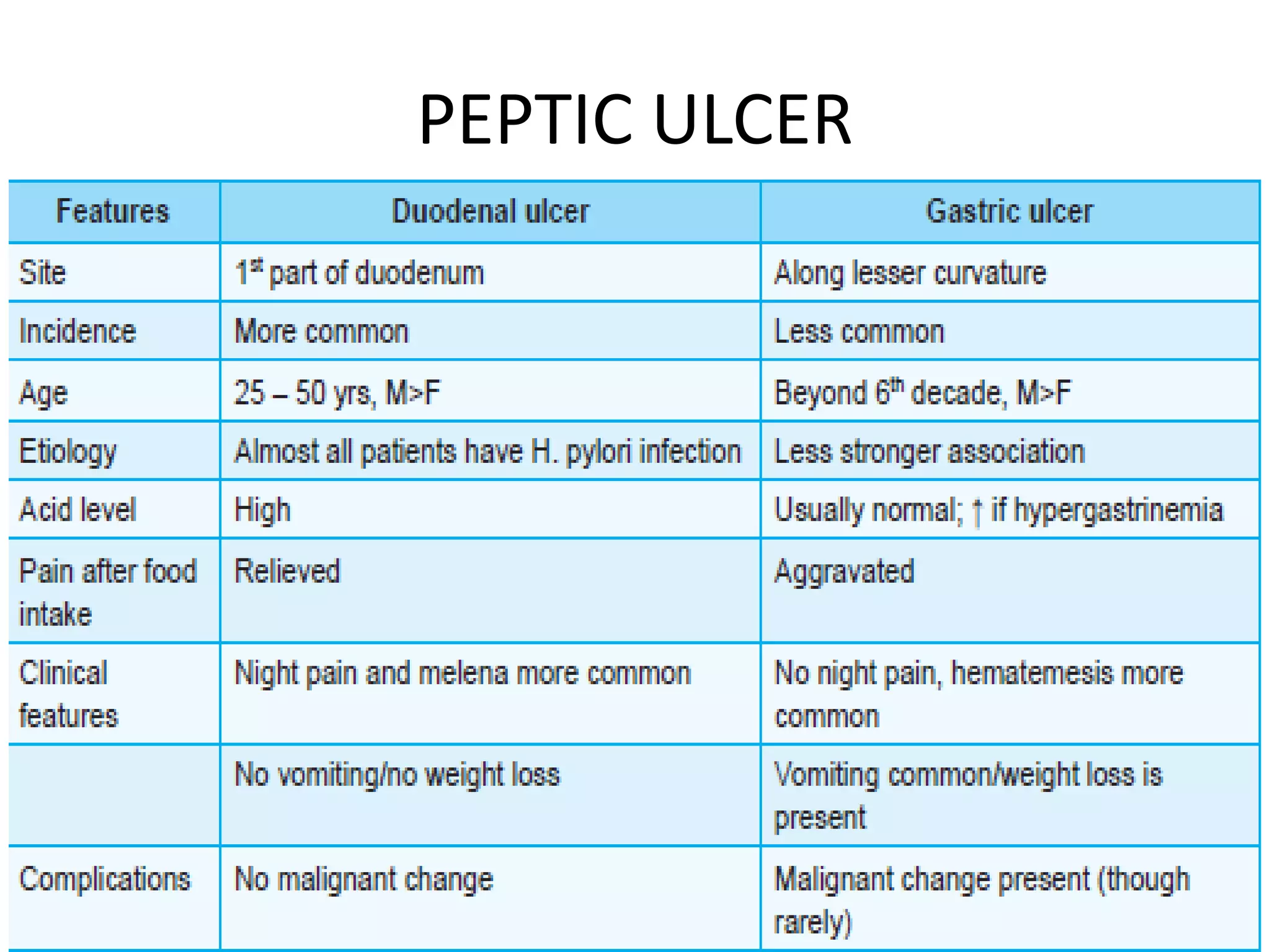
PEPTIC ULCER
PEPTIC ULCER
GROSS FEATURES
• Gastric ulcers are found
predominantly along the lesser
curvature in the region of pyloric
antrum, more commonly on the
posterior wall.
• Duodenal ulcers are commonly
found in first part of the
duodenum, more commonly on
the anterior wall.
• Peptic ulcers of either gastric or
duodenal mucosa are small (1-2.5
cm in diameter), round to oval
and punched out.
• The mucosal folds converge
towards the ulcer.
Benign chronic gastric ulcer
•Partial gastrectomy specimen is
identified by thick muscular wall and
irregular mucosal folds.
•The luminal surface shows a punched out
round to oval ulcer, about 1 cm in
diameter (arrow) penetrating into
muscularis layer.
PEPTIC ULCER
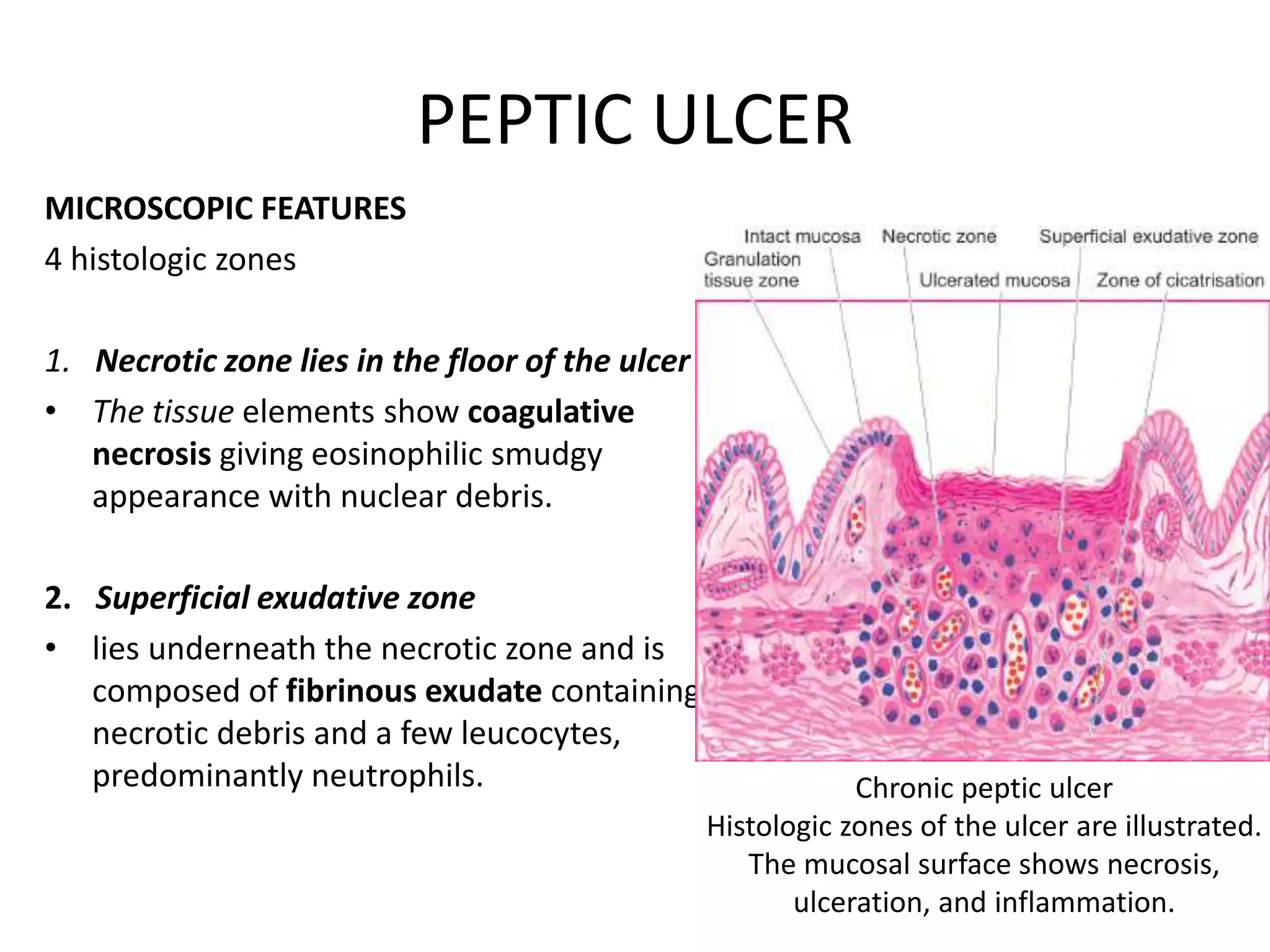
MICROSCOPIC FEATURES
4 histologic zones
1. Necrotic zone lies in the floor of the ulcer
• The tissue elements show coagulative
necrosis giving eosinophilic smudgy
appearance with nuclear debris.
2. Superficial exudative zone
• lies underneath the necrotic zone and is
composed of fibrinous exudate containing
necrotic debris and a few leucocytes,
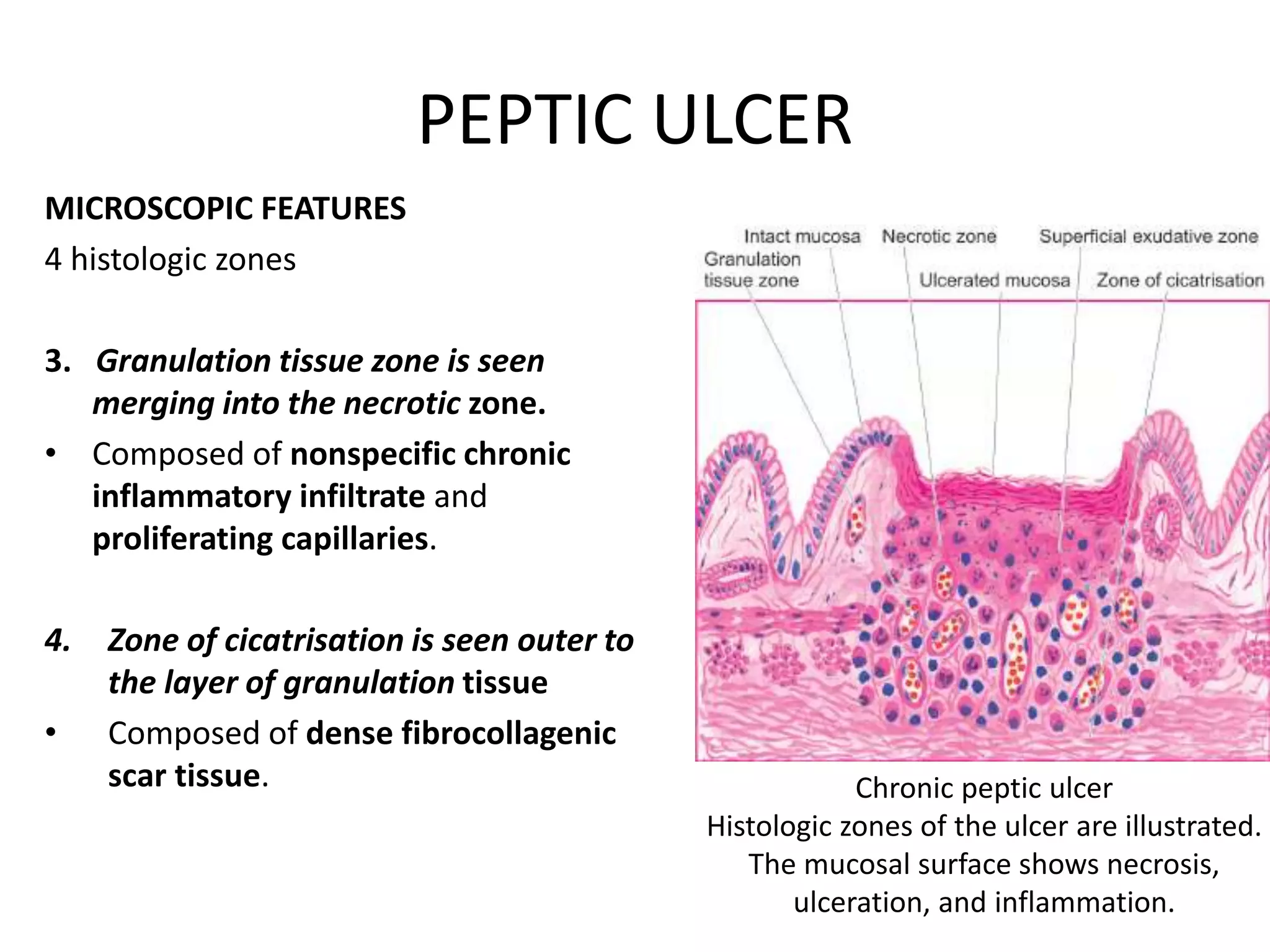
predominantly neutrophils. Chronic peptic ulcer
Histologic zones of the ulcer are illustrated.
The mucosal surface shows necrosis,
ulceration, and inflammation.
PEPTIC ULCER
MICROSCOPIC FEATURES
4 histologic zones
3. Granulation tissue zone is seen
merging into the necrotic zone.
• Composed of nonspecific chronic
inflammatory infiltrate and
proliferating capillaries.
4. Zone of cicatrisation is seen outer to
the layer of granulation tissue
• Composed of dense fibrocollagenic
scar tissue. Chronic peptic ulcer
Histologic zones of the ulcer are illustrated.
The mucosal surface shows necrosis,
ulceration, and inflammation.
CARCINOMA STOMACH
GROSS FEATURES
• Most common pattern is flat,
infiltrating and ulcerative growth
with irregular necrotic base and
raised margin.
• Other gross patterns include
– fungating (polypoid)
– scirrhous (linitis plastica)
– colloid (mucoid)
– ulcer cancer.
Ulcerative carcinoma stomach.
The luminal surface of the stomach in the
region of the pyloric canal shows an elevated
irregular growth with ulcerated surface and
raised margins (arrow).
CARCINOMA STOMACH
MICROSCOPIC FEATURES
• Tubular and acinar pattern of
growth is seen infiltrating the
stomach wall.
• The tumour invades into the wall
of stomach for variable
• depth.
• The tumour cells show varying
degree of anaplasia but is more
often poorly-differentiated with
high degree of anaplasia
ULCERATIVE LESIONS OF GIT
Cushing ulcer
• seen in esophagus, stomach
or the duodenum.
• associated with intracranial
disease or head injury.
• caused by gastric acid
hypersecretion due to vagal
nuclei stimulation.
Curling ulcer
• seen in proximal
duodenum.
• associated with burns or
trauma.
• Caused due to reduced
blood supply and systemic
acidosis in burns or trauma.
CARCINOMA COLON
GROSS FEATURES
The right-sided growth, tends to be fungating,
large, cauliflower-like, soft and friable mass
projecting into the lumen.
The left-sided growth has napkin-ring
configuration it encircles the bowel wall
circumferentially with increased fibrous tissue
forming annular ring with central mucosal
ulceration.
CARCINOMA COLON
MICROSCOPIC FEATURES
The tumour has infiltrating glandular pattern in
the colonic wall with varying grades of
differentiation of tumour cells.
About 10% cases show mucin-secreting colloid
carcinoma with pools of mucin

Pathologies of the gastrointestinal tract

  • 1.
  • 2.
    OBJECTIVES • At theend of the session, you should know about • Peptic ulcer – Gross and microscopic features • Carcinoma stomach – Gross and microscopic features • Ulcerative lesions of intestine • Carcinoma colon – Gross and microscopic features
  • 3.
    BENIGN ULCER V/SMALIGNANT ULCER Benign ulcer Malignant ulcerFeatures
  • 4.
  • 5.
    PEPTIC ULCER GROSS FEATURES •Gastric ulcers are found predominantly along the lesser curvature in the region of pyloric antrum, more commonly on the posterior wall. • Duodenal ulcers are commonly found in first part of the duodenum, more commonly on the anterior wall. • Peptic ulcers of either gastric or duodenal mucosa are small (1-2.5 cm in diameter), round to oval and punched out. • The mucosal folds converge towards the ulcer. Benign chronic gastric ulcer •Partial gastrectomy specimen is identified by thick muscular wall and irregular mucosal folds. •The luminal surface shows a punched out round to oval ulcer, about 1 cm in diameter (arrow) penetrating into muscularis layer.
  • 6.
    PEPTIC ULCER MICROSCOPIC FEATURES 4histologic zones 1. Necrotic zone lies in the floor of the ulcer • The tissue elements show coagulative necrosis giving eosinophilic smudgy appearance with nuclear debris. 2. Superficial exudative zone • lies underneath the necrotic zone and is composed of fibrinous exudate containing necrotic debris and a few leucocytes, predominantly neutrophils. Chronic peptic ulcer Histologic zones of the ulcer are illustrated. The mucosal surface shows necrosis, ulceration, and inflammation.
  • 7.
    PEPTIC ULCER MICROSCOPIC FEATURES 4histologic zones 3. Granulation tissue zone is seen merging into the necrotic zone. • Composed of nonspecific chronic inflammatory infiltrate and proliferating capillaries. 4. Zone of cicatrisation is seen outer to the layer of granulation tissue • Composed of dense fibrocollagenic scar tissue. Chronic peptic ulcer Histologic zones of the ulcer are illustrated. The mucosal surface shows necrosis, ulceration, and inflammation.
  • 8.
    CARCINOMA STOMACH GROSS FEATURES •Most common pattern is flat, infiltrating and ulcerative growth with irregular necrotic base and raised margin. • Other gross patterns include – fungating (polypoid) – scirrhous (linitis plastica) – colloid (mucoid) – ulcer cancer. Ulcerative carcinoma stomach. The luminal surface of the stomach in the region of the pyloric canal shows an elevated irregular growth with ulcerated surface and raised margins (arrow).
  • 9.
    CARCINOMA STOMACH MICROSCOPIC FEATURES •Tubular and acinar pattern of growth is seen infiltrating the stomach wall. • The tumour invades into the wall of stomach for variable • depth. • The tumour cells show varying degree of anaplasia but is more often poorly-differentiated with high degree of anaplasia
  • 10.
  • 11.
    ULCERATIVE LESIONS OFGIT Cushing ulcer • seen in esophagus, stomach or the duodenum. • associated with intracranial disease or head injury. • caused by gastric acid hypersecretion due to vagal nuclei stimulation. Curling ulcer • seen in proximal duodenum. • associated with burns or trauma. • Caused due to reduced blood supply and systemic acidosis in burns or trauma.
  • 12.
    CARCINOMA COLON GROSS FEATURES Theright-sided growth, tends to be fungating, large, cauliflower-like, soft and friable mass projecting into the lumen. The left-sided growth has napkin-ring configuration it encircles the bowel wall circumferentially with increased fibrous tissue forming annular ring with central mucosal ulceration.
  • 13.
    CARCINOMA COLON MICROSCOPIC FEATURES Thetumour has infiltrating glandular pattern in the colonic wall with varying grades of differentiation of tumour cells. About 10% cases show mucin-secreting colloid carcinoma with pools of mucin