Downloaded 13 times
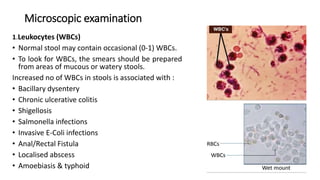
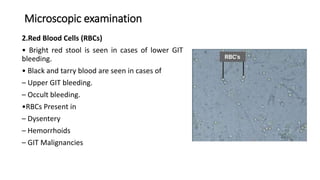
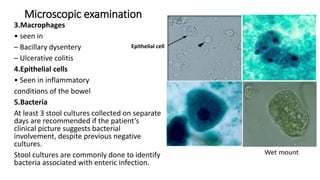


![Stool Electrolytes: Sodium, Chloride, Potassium & Osmolality
Stool electrolyte tests are used to assess electrolyte imbalance in patients with diarrhea.
Stool electrolytes must be evaluated along with the serum and urine electrolytes as well as
clinical findings in the patient.
Stool osmolality is used in conjunction with blood serum osmolality to calculate the osmotic gap
and to diagnose intestinal disaccharide deficiency
Fecal Osmotic Gap :
Fecal osmotic gap is calculated from concentration of electrolytes in stool water by the formula
290-2([Na+] + [K+])
(290 is the assumed plasma osmolality).
• In osmotic diarrhea, osmotic gap >150 mOsm/kg.
• In secretory diarrhea, osmotic gap < 50 mOsm/kg](https://image.slidesharecdn.com/routinestooleexaminatin1111-230209183834-0dcaa05e/85/ROUTINE-STOOLE-EXAMINATIN-41-320.jpg)
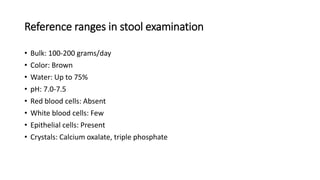
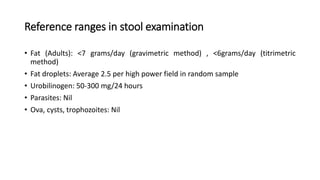


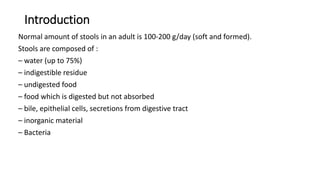
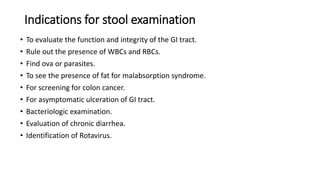
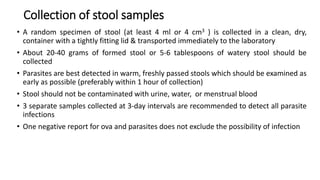
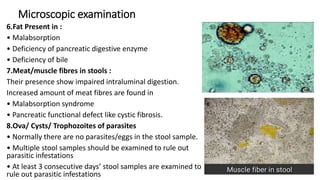
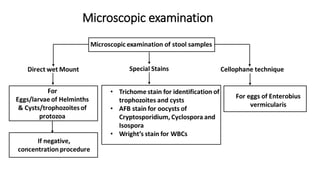
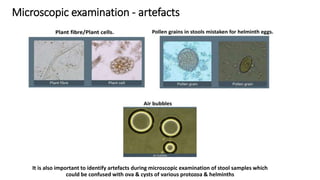
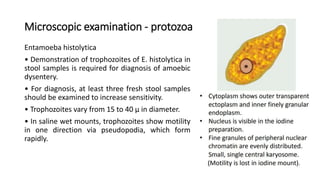
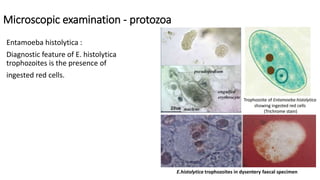
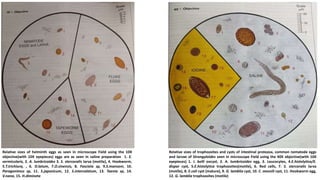
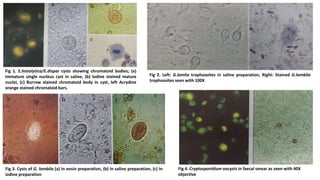
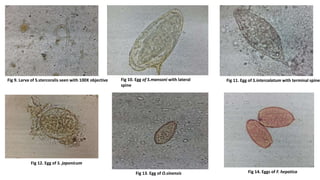
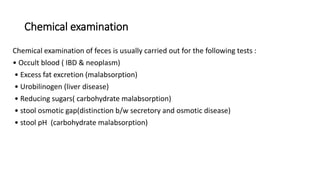
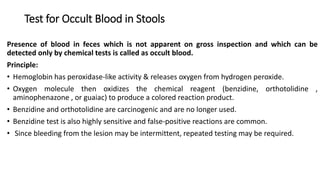
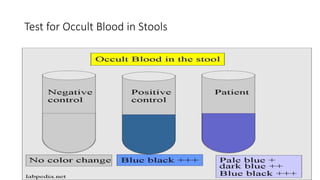
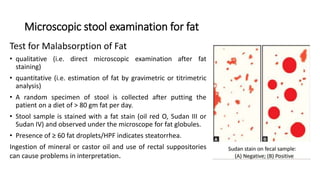
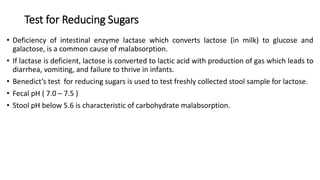
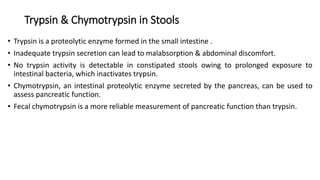
Routine stool examination provides important information about gastrointestinal health and disease. A stool sample is examined macroscopically for characteristics like color, consistency, and presence of blood or mucus. Microscopic examination looks for items like white blood cells, red blood cells, parasites, fat, and bacteria. Chemical tests can detect occult blood, excess fat, sugars, and other markers. Proper collection and preservation of stool samples is important for accurate examination and detection of parasites. Both wet mount microscopy and concentration techniques may be used depending on the suspected condition. Stool examination aids in diagnosis of gastrointestinal infections, inflammation, malignancy, and malabsorption disorders.


