PRESENTED BY –
DR. SHEETAL KAPSE
2nd YEAR, P.G. STUDENT
MODERATORS -
DR. SUNIL DUTT C.
DR. M. SATISH
DR. DEEPAK THAKUR
DR. MANISH PANDIT
1. Introduction
2. History
3. Physiological action
4. Biosynthesis
5. Classification
6. Pharmacokinetics
7. Preparations & Dosages
8. Indications/uses
9. Important uses in oral & maxillofacial surgery
10. Adverse effects
11. Contraindications
12. Conclusion
13. References
 Hormone (hormaein = to stir up).
 Hormone is a substance of intense biological activity
that is produced by specific cells in the body and is
transported through the circulation to act on is target
cells.
 Hormones regulate body function to bring about a
programmed pattern of life events and maintain
homeostasis in the face of markedly variable external
or internal environment.
1. Protein hormone
2. Steroids hormone
3. Derivatives of amino acids (tyrosine)
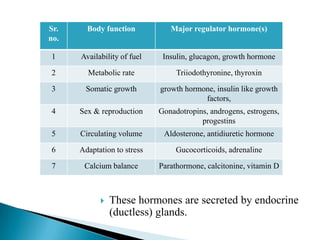
 These hormones are secreted by endocrine
(ductless) glands.
Sr.
no.
Body function Major regulator hormone(s)
1 Availability of fuel Insulin, glucagon, growth hormone
2 Metabolic rate Triiodothyronine, thyroxin
3 Somatic growth growth hormone, insulin like growth
factors,
4 Sex & reproduction Gonadotropins, androgens, estrogens,
progestins
5 Circulating volume Aldosterone, antidiuretic hormone
6 Adaptation to stress Gucocorticoids, adrenaline
7 Calcium balance Parathormone, calcitonine, vitamin D
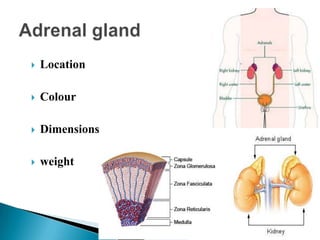
 Location
 Colour
 Dimensions
 weight
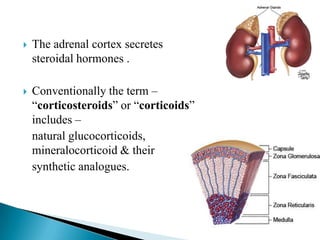
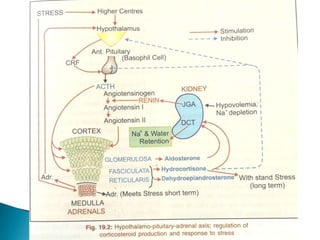
 The adrenal cortex secretes
steroidal hormones .
 Conventionally the term –
―corticosteroids‖ or ―corticoids‖
includes –
natural glucocorticoids,
mineralocorticoid & their
synthetic analogues.
 In human important corticosteroids are –
1. Mineralocorticoids - Aldosterone
2. Glucocorticoids – Hydrocortisone (cortisol)
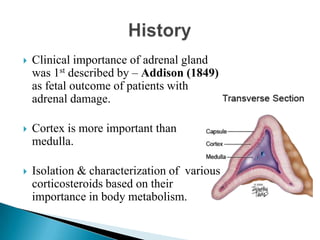
 Clinical importance of adrenal gland
was 1st described by – Addison (1849)
as fetal outcome of patients with
adrenal damage.
 Cortex is more important than
medulla.
 Isolation & characterization of various
corticosteroids based on their
importance in body metabolism.
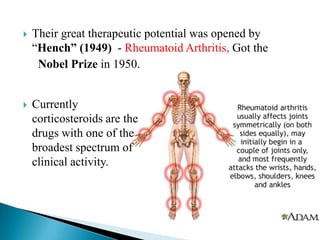
 Their great therapeutic potential was opened by
―Hench” (1949) - Rheumatoid Arthritis, Got the
Nobel Prize in 1950.
 Currently
corticosteroids are the
drugs with one of the
broadest spectrum of
clinical activity.
 Diverse effects include –
1. Carbohydrate, lipid & protein metabolism.
2. Preservation of normal function of Cardiovascular system,
immune system, nervous system, kidney, skeletal muscle.
3. Prepare the body to withstand with all kinds of noxious
stimuli & stress.
 Some permissive actions are also present –
- They don’t themselves produce their effect but Their
presence facilitates other hormones to exert that action.
Example – corticosteroids don’t have direct effect on BP
but pressure action of Adr is blunted in their
absence.
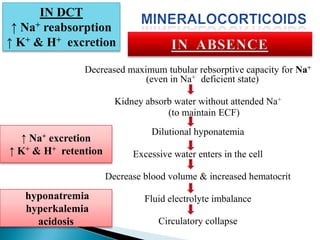
Decreased maximum tubular rebsorptive capacity for Na+
(even in Na+ deficient state)
Kidney absorb water without attended Na+
(to maintain ECF)
Dilutional hyponatemia
Excessive water enters in the cell
Decrease blood volume & increased hematocrit
Fluid electrolyte imbalance
Circulatory collapse
IN DCT
↑ Na+ reabsorption
↑ K+ & H+ excretion
↑ Na+ excretion
↑ K+ & H+ retention
hyponatremia
hyperkalemia
acidosis
Gene mediate increased transcription of AIP
(Aldosterone induced protein) which is responsible for
maintaining the gradients of ions across the membrane.
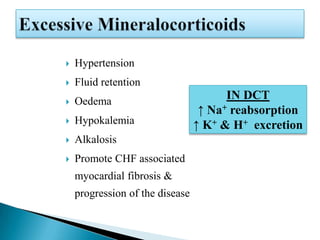
 Hypertension
 Fluid retention
 Oedema
 Hypokalemia
 Alkalosis
 Promote CHF associated
myocardial fibrosis &
progression of the disease
IN DCT
↑ Na+ reabsorption
↑ K+ & H+ excretion
1. Carbohydrate & protein metabolism
2. Fat metabolism
3. Calcium metabolism
4. Water excretion
5. Cardiovascular system
6. Skeletal muscles
7. Central nervous system
8. Stomach
9. Lymphoid tissue & blood cells
10. Inflammatory responses
11. Immunological & allergic responses
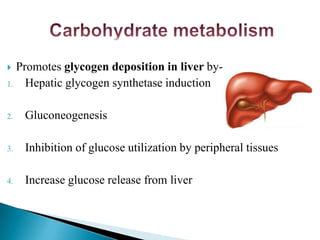
 Promotes glycogen deposition in liver by-
1. Hepatic glycogen synthetase induction
2. Gluconeogenesis
3. Inhibition of glucose utilization by peripheral tissues
4. Increase glucose release from liver
 Protein breakdown.
 Mobilization of amino acid from peripheral tissue
(used in gluconeogenesis, formation of plasma
proteins, excessive urea production & nitrogen
imbalance).
 Muscle wasting, thinning of skin, lympholysis, loss of
osteoid from bone.
 Permissive action.
 Promote : lipolysis
 Ketogenic effect
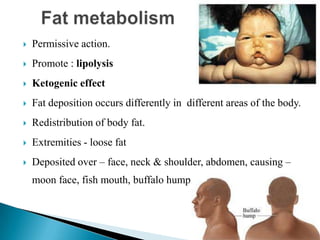
 Fat deposition occurs differently in different areas of the body.
 Redistribution of body fat.
 Extremities - loose fat
 Deposited over – face, neck & shoulder, abdomen, causing –
moon face, fish mouth, buffalo hump.
 Inhibit intestinal absorption & decreases renal
excretion of Ca++
 Loss of osteoid negative calcium balance
 Hypercalcemia.
 Spongy bone.
 Independent of Na+ transport
 Water retention – in adrenal insufficiency.
 Enhances secretory activity of renal tubules.
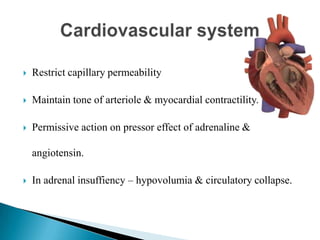
 Restrict capillary permeability
 Maintain tone of arteriole & myocardial contractility.
 Permissive action on pressor effect of adrenaline &
angiotensin.
 In adrenal insuffiency – hypovolumia & circulatory collapse.
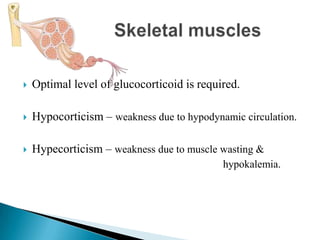
 Optimal level of glucocorticoid is required.
 Hypocorticism – weakness due to hypodynamic circulation.
 Hypecorticism – weakness due to muscle wasting &
hypokalemia.
 Mild euphoria
 Increased motor activity, insomnia, anxiety or
depression.
 Maintains the level of sensory perception & neuronal
excitability.
 High doses lower the seizure threshold.
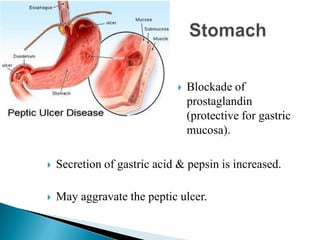
 Blockade of
prostaglandin
(protective for gastric
mucosa).
 Secretion of gastric acid & pepsin is increased.
 May aggravate the peptic ulcer.
 Increases the rate of destruction.
( T cells are more sensitive than B cells)
 Treatment in malignancy of lymphatic tissues –
lymphomas
 ↓ in lymphocytes, eosinophils & basophils (due to their
sequestration in tissues)
 ↑ in neutrophils, RBCs & platelets in circulation.
 Blood count come back to normal level after 24 hours.
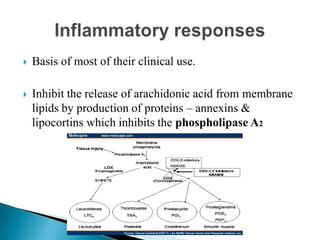
 Basis of most of their clinical use.
 Inhibit the release of arachidonic acid from membrane
lipids by production of proteins – annexins &
lipocortins which inhibits the phospholipase A2
 ↓ production of IL& TNF-α – chemotaxis is interfered.
 Complement function is interfered.
 Adhesion & localization of leukocytes are interfered.
 Inhibit Ig E mediated histamine release – no antigen-
antibody reaction.
 ↓ production of collagenase – prevention of tissue
destruction.
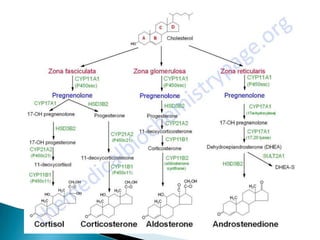
 Corticosteroids are 21 carbon compounds.
 Synthesized in adrenal cortical cells from cholesterol.
 Steroidogenesis takes place under the influence of
ACTH, which makes the cholesterol available for
conversion into Pregnenolone.
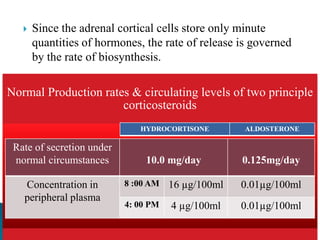
 Since the adrenal cortical cells store only minute
quantities of hormones, the rate of release is governed
by the rate of biosynthesis.
Normal Production rates & circulating levels of two principle
corticosteroids
Rate of secretion under
normal circumstances 10.0 mg/day 0.125mg/day
Concentration in
peripheral plasma
8 :00 AM 16 µg/100ml 0.01µg/100ml
4: 00 PM 4 µg/100ml 0.01µg/100ml
HYDROCORTISONE ALDOSTERONE
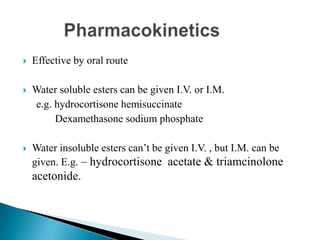
 Effective by oral route
 Water soluble esters can be given I.V. or I.M.
e.g. hydrocortisone hemisuccinate
Dexamethasone sodium phosphate
 Water insoluble esters can’t be given I.V. , but I.M. can be
given. E.g. – hydrocortisone acetate & triamcinolone
acetonide.
 Hydrocortisone undergoes high 1st pass metabolism.
 Oral bioavailability of synthetic corticoids are high.
 Hydrocortisone is 90% bound to specific corticosteroid
binding globulin (protein) - Transcortin as well as to
the albumin.
 Transcortin concentration increases in pregnancy & by
oral contraceptives – but hypercorticism doesn’t occur.
 Metabolizes primarily in liver.
 Excreted in urine(75 %) and in bile & feces (25%) .
 t1/2 = 1.5 hour, but biological t1/2 is longer because of action
through intracellular receptors & regulation of protein
synthesis.
 Synthetic derivatives are more resistance to metabolism, so are
longer acting.
 Phenobarbitone & phenytoin induce metabolism of
hydrocortisone, prednisolone & Dexamethasone.
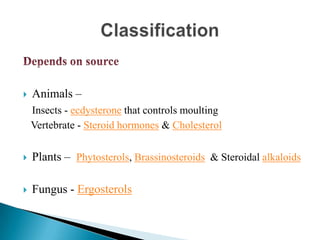
 Animals –
Insects - ecdysterone that controls moulting
Vertebrate - Steroid hormones & Cholesterol
 Plants – Phytosterols, Brassinosteroids & Steroidal alkaloids
 Fungus - Ergosterols
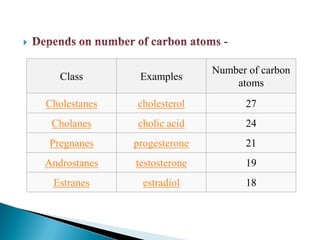
 -
Class Examples
Number of carbon
atoms
Cholestanes cholesterol 27
Cholanes cholic acid 24
Pregnanes progesterone 21
Androstanes testosterone 19
Estranes estradiol 18
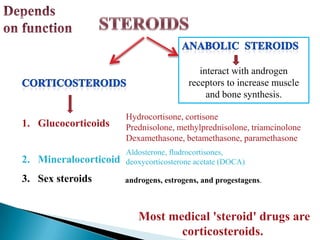
interact with androgen
receptors to increase muscle
and bone synthesis.
1. Glucocorticoids
2. Mineralocorticoid
3. Sex steroids
Most medical 'steroid' drugs are
corticosteroids.
Hydrocortisone, cortisone
Prednisolone, methylprednisolone, triamcinolone
Dexamethasone, betamethasone, paramethasone
Aldosterone, fludrocortisones,
deoxycorticosterone acetate (DOCA)
androgens, estrogens, and progestagens.
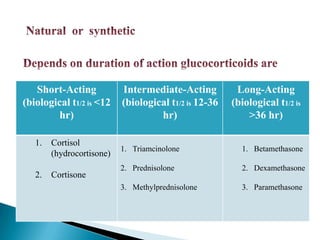
Short-Acting
(biological t1/2 is <12
hr)
Intermediate-Acting
(biological t1/2 is 12-36
hr)
Long-Acting
(biological t1/2 is
>36 hr)
1. Cortisol
(hydrocortisone)
2. Cortisone
1. Triamcinolone
2. Prednisolone
3. Methylprednisolone
1. Betamethasone
2. Dexamethasone
3. Paramethasone
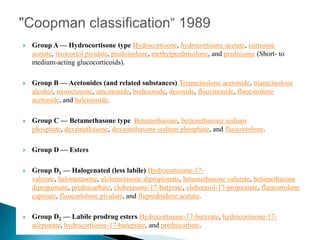
 Group A — Hydrocortisone type Hydrocortisone, hydrocortisone acetate, cortisone
acetate, tixocortol pivalate, prednisolone, methylprednisolone, and prednisone (Short- to
medium-acting glucocorticoids).
 Group B — Acetonides (and related substances) Triamcinolone acetonide, triamcinolone
alcohol, mometasone, amcinonide, budesonide, desonide, fluocinonide, fluocinolone
acetonide, and halcinonide.
 Group C — Betamethasone type Betamethasone, betamethasone sodium
phosphate, dexamethasone, dexamethasone sodium phosphate, and fluocortolone.
 Group D — Esters
 Group D1 — Halogenated (less labile) Hydrocortisone-17-
valerate, halometasone, alclometasone dipropionate, betamethasone valerate, betamethasone
dipropionate, prednicarbate, clobetasone-17-butyrate, clobetasol-17-propionate, fluocortolone
caproate, fluocortolone pivalate, and fluprednidene acetate.
 Group D2 — Labile prodrug esters Hydrocortisone-17-butyrate, hydrocortisone-17-
aceponate, hydrocortisone-17-buteprate, and prednicarbate.
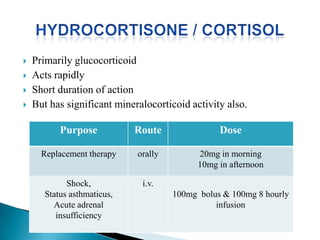
 Primarily glucocorticoid
 Acts rapidly
 Short duration of action
 But has significant mineralocorticoid activity also.
Purpose Route Dose
Replacement therapy orally 20mg in morning
10mg in afternoon
Shock,
Status asthmaticus,
Acute adrenal
insufficiency
i.v.
100mg bolus & 100mg 8 hourly
infusion
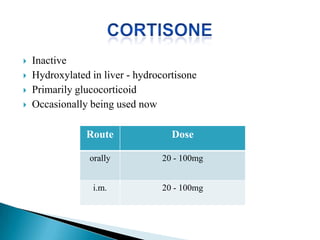
 Inactive
 Hydroxylated in liver - hydrocortisone
 Primarily glucocorticoid
 Occasionally being used now
Route Dose
orally 20 - 100mg
i.m. 20 - 100mg
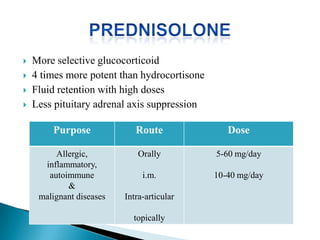
 More selective glucocorticoid
 4 times more potent than hydrocortisone
 Fluid retention with high doses
 Less pituitary adrenal axis suppression
Purpose Route Dose
Allergic,
inflammatory,
autoimmune
&
malignant diseases
Orally
i.m.
Intra-articular
topically
5-60 mg/day
10-40 mg/day
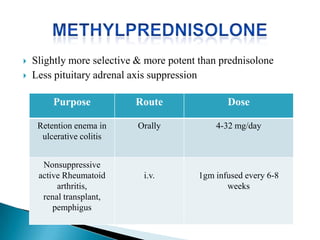
 Slightly more selective & more potent than prednisolone
 Less pituitary adrenal axis suppression
Purpose Route Dose
Retention enema in
ulcerative colitis
Orally 4-32 mg/day
Nonsuppressive
active Rheumatoid
arthritis,
renal transplant,
pemphigus
i.v. 1gm infused every 6-8
weeks
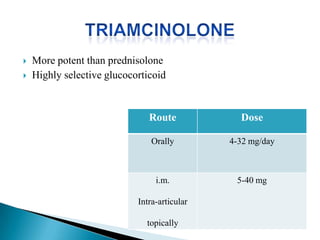
 More potent than prednisolone
 Highly selective glucocorticoid
Route Dose
Orally 4-32 mg/day
i.m.
Intra-articular
topically
5-40 mg
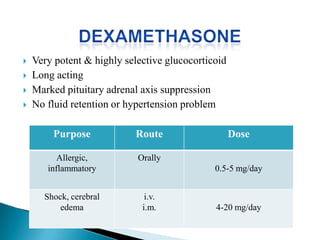
 Very potent & highly selective glucocorticoid
 Long acting
 Marked pituitary adrenal axis suppression
 No fluid retention or hypertension problem
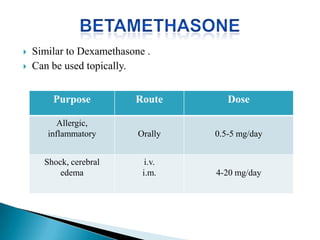
Purpose Route Dose
Allergic,
inflammatory
Orally
0.5-5 mg/day
Shock, cerebral
edema
i.v.
i.m. 4-20 mg/day
 Similar to Dexamethasone .
 Can be used topically.
Purpose Route Dose
Allergic,
inflammatory Orally 0.5-5 mg/day
Shock, cerebral
edema
i.v.
i.m. 4-20 mg/day
 Dexamethasone & Betamethasone are
preferred in cerebral edema & other states in
which fluid retention must be avoided.
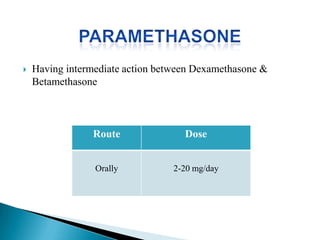
 Having intermediate action between Dexamethasone &
Betamethasone
Route Dose
Orally 2-20 mg/day
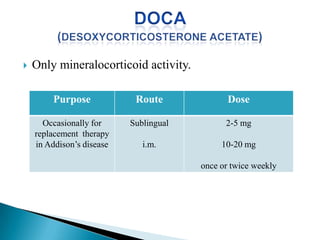
 Only mineralocorticoid activity.
Purpose Route Dose
Occasionally for
replacement therapy
in Addison’s disease
Sublingual
i.m.
2-5 mg
10-20 mg
once or twice weekly
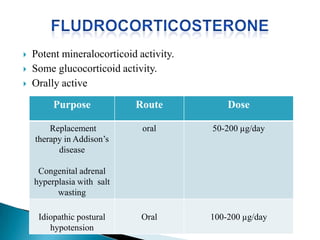
 Potent mineralocorticoid activity.
 Some glucocorticoid activity.
 Orally active
Purpose Route Dose
Replacement
therapy in Addison’s
disease
Congenital adrenal
hyperplasia with salt
wasting
oral 50-200 µg/day
Idiopathic postural
hypotension
Oral 100-200 µg/day
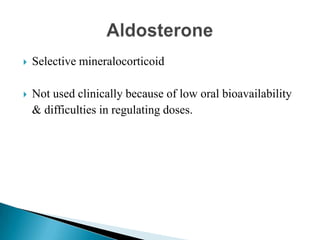
 Selective mineralocorticoid
 Not used clinically because of low oral bioavailability
& difficulties in regulating doses.
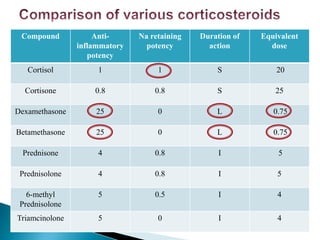
Compound Anti-
inflammatory
potency
Na retaining
potency
Duration of
action
Equivalent
dose
Cortisol 1 1 S 20
Cortisone 0.8 0.8 S 25
Dexamethasone 25 0 L 0.75
Betamethasone 25 0 L 0.75
Prednisone 4 0.8 I 5
Prednisolone 4 0.8 I 5
6-methyl
Prednisolone
5 0.5 I 4
Triamcinolone 5 0 I 4
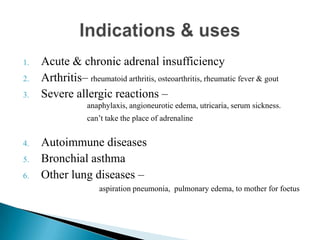
1. Acute & chronic adrenal insufficiency
2. Arthritis– rheumatoid arthritis, osteoarthritis, rheumatic fever & gout
3. Severe allergic reactions –
4. Autoimmune diseases
5. Bronchial asthma
6. Other lung diseases –
anaphylaxis, angioneurotic edema, utricaria, serum sickness.
can’t take the place of adrenaline
aspiration pneumonia, pulmonary edema, to mother for foetus
7. Infective diseases –
8. Eye diseases –
9. Skin diseases –
10. Intestinal diseases -
Severe form of tuberculosis, severe lepra reactions, certain form of
bacterial meningitis, pneumonia with hypoxia in AIDS patients.
Allergic conjunctivitis, iritis, iridocyclitis, keratitis.
Contraindicated in herpes simplex keratitis & ocular injuries.
Eczematous diseases, pemphigus vulgaris, exfoliative dermatitis,
Steven’s Johnson's syndrome & other severe afflictions.
Ulcerative colitis, Chron’s disease, chronic inflammatory bowel disease .
11. Cerebral edema
12. Malignancies
13. Organ transplantation & skin allograft
14. Shock
15. To test adrenal-pituitary axis function
 The use of topical and systemic steroids in an attempt
to manage apthus stomatitis is based on the resumption
that the aphthae are the result of a infectious
inflammatory process.
 Corticosteroids may act directly on T lymphocytes or
alter the response of effect or cells to precipitants of
immunopathogenesis (Vincent 1992).
 Hydrocortisone hemisuccinate (as pellets of 2. 5 mg)
and triamcinolone acetonide (in an adhesive paste
containing 0. 1% of the steroid).
 There is little risk of adrenal suppression provided that
the recommended dose (four times daily) is adhered to
(Field 2003).
 High potency topical steroid preparation such as
fluocinonide, betamethasone or clobetasol placed
directly on the lesions shortens healing time and
reduces the size of lesion.
 The gel can be carefully applied directly to the lesion
after meals and at bedtime 2-3 times a day or mixed
with an adhesive such as orabase prior to application.
 Larger lesions can be treated by placing a gauge sponge
containing the topical steroid on the ulcer and leaving it in
place for 15-30 min to allow for longer contact of the
medication.
 Ulcerations located in the areas that make them difficult to
see or reach can be controlled by
1. topical dexamethasone elixir, 0. 5 mg / 5 ml held over the
area or applied with a saturated gauge pad to the ulcers,
four times per day for 15 min (Lo Muzio 2001)
2. Betamethasone sodium phosphate rinse (dissolve 0. 5 mg
in 5 ml of water and rinse for 2–3 min),
3. Steroid aerosol (e. g. beclometasone diproprionate, 100
lg/puff) ,
4. high-potency topical corticosteroid, such as clobetasol 0.
05% in orabase or fluocinonide 0. 05% in orabase (Natah
2004).
 Major apthus ulcers often require systemic treatment
as an initial approach. Therapy with prednisone
40 mg/day for one week is usually adequate to control
the presenting outbreak.
 Systemic prednisone therapy should be started at
1. 0 mg/kg a day as a single dose in patients with
severe RAS and should be tapered after 1-2 weeks.
 Injectable steroids, e.g. methylprednisolone, may be
useful in treating painful ulcerations and their
combined use with topical steroids has been
recommended .
 Although advocated by some authors , systemic
steroid therapy is indicated only rarely.
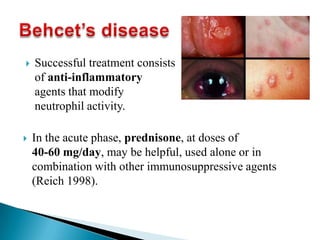
 In the acute phase, prednisone, at doses of
40-60 mg/day, may be helpful, used alone or in
combination with other immunosuppressive agents
(Reich 1998).
 Successful treatment consists
of anti-inflammatory
agents that modify
neutrophil activity.
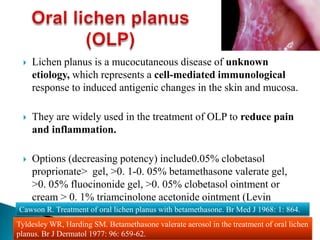
 Lichen planus is a mucocutaneous disease of unknown
etiology, which represents a cell-mediated immunological
response to induced antigenic changes in the skin and mucosa.
 They are widely used in the treatment of OLP to reduce pain
and inflammation.
 Options (decreasing potency) include0.05% clobetasol
proprionate> gel, >0. 1-0. 05% betamethasone valerate gel,
>0. 05% fluocinonide gel, >0. 05% clobetasol ointment or
cream > 0. 1% triamcinolone acetonide ointment (Levin
2002).Cawson R. Treatment of oral lichen planus with betamethasone. Br Med J 1968: 1: 864.
Tyldesley WR, Harding SM. Betamethasone valerate aerosol in the treatment of oral lichen
planus. Br J Dermatol 1977: 96: 659-62.
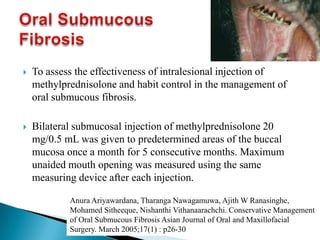
 To assess the effectiveness of intralesional injection of
methylprednisolone and habit control in the management of
oral submucous fibrosis.
 Bilateral submucosal injection of methylprednisolone 20
mg/0.5 mL was given to predetermined areas of the buccal
mucosa once a month for 5 consecutive months. Maximum
unaided mouth opening was measured using the same
measuring device after each injection.
Anura Ariyawardana, Tharanga Nawagamuwa, Ajith W Ranasinghe,
Mohamed Sitheeque, Nishanthi Vithanaarachchi. Conservative Management
of Oral Submucous Fibrosis Asian Journal of Oral and Maxillofacial
Surgery. March 2005;17(1) : p26-30
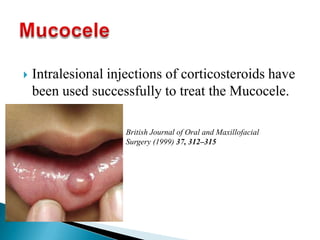
 Intralesional injections of corticosteroids have
been used successfully to treat the Mucocele.
British Journal of Oral and Maxillofacial
Surgery (1999) 37, 312–315
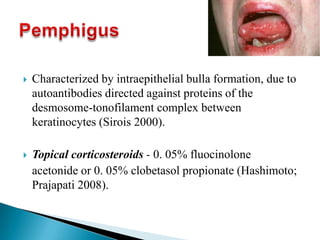
 Characterized by intraepithelial bulla formation, due to
autoantibodies directed against proteins of the
desmosome-tonofilament complex between
keratinocytes (Sirois 2000).
 Topical corticosteroids - 0. 05% fluocinolone
acetonide or 0. 05% clobetasol propionate (Hashimoto;
Prajapati 2008).
 Systemic corticosteroid therapy -
 The starting dose is high; a total oral dose of 100–200 mg
Prednisone is administered daily until subsidence of
clinical signs. This dose can gradually be decreased to a
maintenance level of 40 to 50 mg daily.
 Intralesional corticosteroid therapy
 accelerates the scarring process of a lesion or is used to
treat persistent lesions.
 gives inconsistent results,
 involves sublesional injection given every 7 to 15 days
 treatment is stopped after 3 injections if there is no
improvement.
 A daily 0. 5–2 mg/kg is recommended (Fellner; Toth 2001).
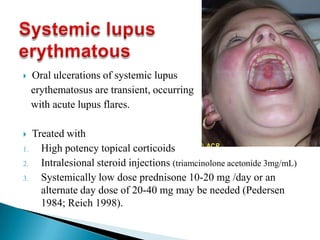
 Oral ulcerations of systemic lupus
erythematosus are transient, occurring
with acute lupus flares.
 Treated with
1. High potency topical corticoids
2. Intralesional steroid injections (triamcinolone acetonide 3mg/mL)
3. Systemically low dose prednisone 10-20 mg /day or an
alternate day dose of 20-40 mg may be needed (Pedersen
1984; Reich 1998).
 Studies have shown the benefit of high-dose
corticosteroids for acute Bell palsy (Sullivan
2007; Engström 2008).
1. N Julian Holland, Graeme M Weiner. Recent developments in Bell’s palsy. BMJ 2004;329:553–7.
2. Grogan PM, Gronseth GS. Practice parameter: steroids, acyclovir, and surgery for Bell’s palsy (an
evidence-based review): report of the Quality Standards Subcommittee of the American Academy of
Neurology. Neurology 2001;56:830-6.
 Taverner in 1954 was the first to design a controlled
treatment trial of steroids.
 Attempts to treat Bell’s palsy with steroids changed in the
1970s. After the initial publication of Adour et al. several
series of treatments with prednisone for Bell’s palsy were
designed, but almost all of them were of unsatisfactory
quality (Adour 1972).
 Immunocompetent patients without specific contraindications
are prescribed prednisone at 1 mg/kg/day (maximum 80 mg)
for the first week, which is tapered over the second week.
 Around a fifth of patients will progress from partial palsy, so
these patients should also be treated (Ramsey 2000).
1. Ramsey MJ, DerSimonian R, Holtel MR, Burgess LP. Corticosteroid treatment
for idiopathic facial nerve paralysis: a meta-analysis. Laryngoscope
2000;110:335-41.
2. Williamson IG, Whelan TR. The clinical problem of Bell’s palsy: is treatment
with steroids effective? Br J Gen Pract 1996;46:743-7.
3. Shafshak TS, Essa AY, Bakey FA. The possible contributing factors for the
success of steroid therapy in Bell’s palsy: a clinical and electrophysiological
study. J Laryngol Otol 1994;108:940-3.
 Caused by the reactivation of a previous Varicella zoster virus
(VZV) infection.
 Acyclovir at 800 mg orally 5 times/day for 7-10 days and
Prednisone at 1 mg/kg/day orally for 5 days followed by a
taper (Murakami 1997).
C Sweeney, D Gilden. Ramsay Hunt syndrome. J Neurol
Neurosurg Psychiatry. 2001 August; 71(2): 149–154.
 Prednisone 40 mg daily for 10 days,
 Gradually tailed off over the following 3 weeks
 Reduces the occurrence of post herpetic neuralgia.
 Steroids should not be given alone (without antiviral therapy) ,
owing to concern about the promotion of viral replication (Van
Wijck 2006).
 Intrathecal administration of methylprednisolone – decrease
the duration of neuralgia and the pain (Kotani 2000).
 Temporomandibular joint (TMJ) disorders are the main cause
of chronic facial pain and a major cause of disability (Horten
1953).
 Intra-articular injection of steroids - often diluted with a
local anesthetic prior to injection into the TMJ (Kopp 1981;
Alstergren 1996).
 Triamcinolone acetonide : 2 to 40 mg, depending upon the
size of the joint injected (Hollander 1951; Silbermann1978).
& 10 mg (Gray 1994).
 TMJ arthritis, a single intra-articular injection of
corticosteroid (methylprednisolone) diluted with lidocaine
significantly reduced joint pain and other symptoms for 4-6
weeks.
 The pharmacologic effect - 3-4 weeks. No adverse events
were reported (Alstergren 1996).
 The use of steroid injections for the treatment of
temperomandibular joint capsulitis following arthroscopy.
A prospective outcome assessment A. Khan, A. Sidebottom.
Queens Medical Centre, Nottingham University Hospitals, UK
 Patients with TMJ related pain and restriction associated
with post arthroscopy TMJ capsulitis and who have failed to
respond to routine conservative measures may be submitted
to intracapsular steroid injections, which has been
associated with significant therapeutic improvement in 74% or
more patients.
 The patient had been treated with increasing doses of
prednisolone up to 60 mg/day. The anterior open bite had
begun after prednisolone medication.
 Magnetic resonance imaging scans disclosed internal and
erosive damage to the condyles without disk displacement,
but showed no sign of adaptive changes or functional
remodeling.
T. Hata, M. Hosoda, Y. Hamada, K. Kobayashi: Steroid-induced
damage to the condyles in treatment of idiopathic thrombocytopenia.
Int. J. Oral Maxillofac. Surg. 2009; 38: 193–195.
 Oral prednisone the vast majority of patients respond to a
dose of 1 mg/kg/d, or between 40 and 60 mg/day (Salvarani
2002; Weyand 2003).
 The dose of prednisone is lowered after 2–4 weeks, and slowly
tapered over 9–12 months (Chan 2001).
 Higher doses of 80 to 100 mg/day - patients with visual or
neurological symptoms of GCA.
 IV pulse methylprednisolone has been proposed as an
induction therapy, particularly in cases where vision is at risk
(Rahman; Rahman 2005).
 Effects of corticosteroids for prevention of pain and edema
associated with oral surgery.
 The most commonly - Dexamethasone (oral), dexamethasone
sodium phosphate, dexamethasone acetate, and
methylprednisolone acetate and methyl prednisolone sodium
succinate.
 Dexamethasone has a longer duration of action than
methylprednisolone and is considered more potent (Alexander
2000).
 Dexamethasone 4mg given submucosally is an effective
way of minimising swelling, trismus, and pain after removal
of impacted lower third molars, and is comparable with the
intramuscular route.
 Methylprednisolone is usually administered via the
intramuscular or intravenous ,though the possibility of topical
(intra-alveolar) application has been described, with a
reduction in morbidity and possible side effects.
Omer Waleed Majid ∗, Waseem Khalid Mahmood. Effect of
submucosal and intramuscular dexamethasone on postoperative
sequelae after third molar surgery: comparative study. British Journal
of Oral and Maxillofacial Surgery 49 (2011) 647–652
 The study group received 40 mg of methylprednisolone
injected into the masseter muscle via the intrabuccal
approach, immediately after suturing of the surgical wound.
 The control group received no intramuscular corticoid.
 Evaluations were made of postoperative pain, trismus and
swelling.
 The results obtained show that 40 mg of methylprednisolone
injected into the masseter muscle in the immediate
postoperative period reduces swelling, trismus and pain.
E. Vegas-Bustamante, J. Mico´-Llorens, J. Gargallo-Albiol, M. Satorres-Nieto, L.
Berini-Ayte´s, C. Gay-Escoda: Efficacy of methylprednisolone injected into the
masseter muscle following the surgical extraction of impacted lower third molars.
Int. J. Oral Maxillofac. Surg. 2008; 37: 260–263.
 Glucocorticoids are given to patients to relieve postoperative
pain, swelling, trismus, and nausea and vomiting after a
wide variety of surgical procedures including orthognathic
surgery.
 Glucocorticoids reduce PONV by depleting 5-HT3 in neural
tissue and prevent its release in the gut, and they have a
synergistic action with 5-HT3 antagonists.
Soudeh Chegini , Daljit K. Dhariwal. Review of evidence for the
use of steroids in orthognathic Surgery. British Journal of Oral
and Maxillofacial Surgery 50 (2012) 97–101
 Disadvantages - Allergic reaction, Skin changes, Increased
serum glucose, Adrenal suppression, Disturbance of wound
healing, Impaired immunity, Increased cardiovascular risk,
Increased morbidity in pre-existing peptic ulcer disease,
Glaucoma, Psychiatric disturbance.
 Regimens used currently may be reduced if combined with
cold-press and drains, and they benefit from a cumulative
effect with NSAIDs and synergistic antiemetics.
Soudeh Chegini , Daljit K. Dhariwal. Review of evidence for the
use of steroids in orthognathic Surgery. British Journal of Oral
and Maxillofacial Surgery 50 (2012) 97–101
 Upper airway obstruction (UAO) is a well known
complication of cleft palate repair.
 Local steroid injection of the tongue base during cleft palate
surgery reduced the incidence and severity of post-palatoplasty
UAO.
M. Abdel-Aziz, A. Ahmed, N. Naguib, M. I. Abdel-Khalik: The
effect of steroid injection of the tongue base on reducing
postoperative airway obstruction in cleft palate repair. Int. J. Oral
Maxillofac. Surg. 2012; 41: 612–615.
 Case series with a minimum of 5 patients with enlarging,
problematic cutaneous hemangiomas treated with systemic
corticosteroids.
 Patients were given a mean prednisone equivalent daily dose
of 2.9 mg/kg 2.7-3.1 mg/kg) for a mean of 1.8 months.
 Systemic corticosteroid treatment seems to be effective for
problematic cutaneous hemangiomas of infancy.
Bennett ML, Fleischer AB Jr, Chamlin SL, Frieden IJ. Oral corticosteroid use is
effective for cutaneous hemangiomas: an evidence-based evaluation. Arch
ermatol. 2001 Sep;137(9):1208-13.
 Systemic corticosteroids are efficacious in stopping
the proliferation of hemangiomas. The oral
corticosteroids offered more clinical and biological
benefit than the pulse steroids with higher risk of
adverse effects.
Pope E, Krafchik BR, Macarthur C, Stempak D, Stephens D,
Weinstein M, Ho N, Baruchel S. Oral versus high-dose pulse
corticosteroids for problematic infantile hemangiomas: a
randomized, controlled trial. Pediatrics. 2007 Jun; 119(6):e1239-
47. Epub 2007 May 7
 Glucocorticoid receptor expression in the multinucleated
giant cells was higher in patients with a good response. It
can be postulated that immunohistochemical staining for
glucocorticoid receptors may provide a tool for selecting the
therapeutic strategy.
 An H-score greater than 48 for glucocorticoid receptors in
multinucleated giant cells predicted a good response in this
study.
R. L. M. Nogueira, M. H. G. Faria, R. L. V. Osterne, R. B. Cavalcante,
R. A. Ribeiro, S. H. B. Rabenhorst: Glucocorticoid and calcitonin
receptor expression in central giant cell lesions: implications for
therapy. Int. J. Oral Maxillofac. Surg. 2012; 41: 994–1000.
C. Kermer, W. Millesi, L M. Watzke: Local injection of corticosteroids for central
giant cell granulorna, A case report. Int. J. Oral Maxillofac. Surg. 1994; 23." 366
368.
 Intralesional injection of 20 mg/ml triamcinolone
hexacetonide diluted in an anesthetic solution of 2%
lidocaine/ epinephrine 1:200,000 in the proportion 1:1; 1.0
ml of the solution was infiltrated for every 1 cm3 of area of
the lesion.
 The advantages of this therapy are its less-invasive nature, the
probable lower cost to the patient, lower risk and the ability to
treat the lesion surgically in the future, if necessary.
R. L. M. Nogueira, R. C. Teixeira, R. B. Cavalcante, R. A. Ribeiro, S.
H. B. Rabenhosrt: Intralesional injection of triamcinolone hexacetonide
as an alternative treatment for central giant-cell granuloma in 21 cases.
Int. J.OralMaxillofac. Surg. 2010; 39: 1204– 1210.
 Three patients (female, 28 months; male, 9 years; male, 15 years)
with LLCH of the mandible were treated in an one stage procedure
with intralesional injection of 40 and 80 mg methylprednisolone
succinate, respectively, as the primary form of treatment.
 Patients were seen for clinical and radiological evolution 1, 3, 6, 9
and 12 months after treatment, and yearly thereafter.
 The lesions showed clinically and radiologically complete
remission approximately 6 months after treatment.
 There were no complications nor morbidity of the treatment.
Th. F. Putters, J. G. A. M. de Visscher, A. van Veen, F. K. L. Spijkervet:Intralesional infiltration of
corticosteroids in the treatment of localised langerhans’ cell histiocytosis of the mandible Report of
known cases and three new cases. Int. J. Oral Maxillofac. Surg. 2005; 34: 571–575.
 Hydrocortisone i.v. initially.
 If improvement within 24 hours – changed to an oral formulation.
 The dose can be decreased by one third to one half the dose daily
until a maintenance dose of 20 mg in the morning and 10 mg in
the afternoon or at night is attained.
 Some patients may need only a dose of 20 mg/day total (i.e., 20
mg every morning, or 15 mg in the morning and 5 mg in the
afternoon or at night).
 They have a delayed onset of 4 to 6 hours.
 Are unlikely to be helpful in the treatment of acute anaphylaxis.
 Play a role in preventing rebound anaphylaxis; (Review
anaphylaxis in the emergency department 2008) (Ring 2002;
Greenberger 2007).
 prednisone 1 mg/kg up to 50 mg orally,
 hydrocortisone 1. 5- 3 mg/kg IV particularly in patients with
airway involvement and bronchospasm, based empirically on their
important role in asthma (Soar 2008).
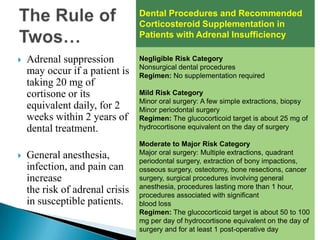
 Adrenal suppression
may occur if a patient is
taking 20 mg of
cortisone or its
equivalent daily, for 2
weeks within 2 years of
dental treatment.
 General anesthesia,
infection, and pain can
increase
the risk of adrenal crisis
in susceptible patients.
Dental Procedures and Recommended
Corticosteroid Supplementation in
Patients with Adrenal Insufficiency
Negligible Risk Category
Nonsurgical dental procedures
Regimen: No supplementation required
Mild Risk Category
Minor oral surgery: A few simple extractions, biopsy
Minor periodontal surgery
Regimen: The glucocorticoid target is about 25 mg of
hydrocortisone equivalent on the day of surgery
Moderate to Major Risk Category
Major oral surgery: Multiple extractions, quadrant
periodontal surgery, extraction of bony impactions,
osseous surgery, osteotomy, bone resections, cancer
surgery, surgical procedures involving general
anesthesia, procedures lasting more than 1 hour,
procedures associated with significant
blood loss
Regimen: The glucocorticoid target is about 50 to 100
mg per day of hydrocortisone equivalent on the day of
surgery and for at least 1 post-operative day
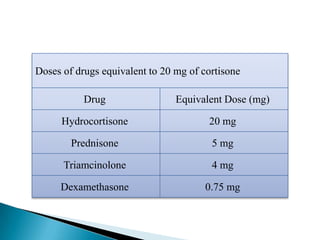
Doses of drugs equivalent to 20 mg of cortisone
Drug Equivalent Dose (mg)
Hydrocortisone 20 mg
Prednisone 5 mg
Triamcinolone 4 mg
Dexamethasone 0.75 mg