GUIDED BY
DR KEERTHI R
PROFESSOR
ORAL AND
MAXILLOFACIAL
SURGERY
PRESENTED BY
VISHNU V GOPAL
POST GRADUATE
STUDENT
OMFS
 According to the National Institute of General
Medical Sciences, the term "steroid" is a chemical
name for any substance that has a characteristic
chemical structure consisting of multiple chemical
rings of connected atoms. Some common
examples of steroids are:
►Vitamin D
►cholestrol
►estrogen
►cortisone
 INTRODUCTION
 HISTORY
 ANATOMY AND PHYSIOLOGY OF ADRENAL GLAD
 BIOSYNTHESIS
 CLASSIFICATION
 PHARMACOKINETICS
 PREPARATION AND DOSAGES
 INDICATIONS
 USES IN OMFS
 ADVERSE EFFECTS
 CONTRAINDICATIONS
 CONCLUSION
 The adrenal gland is the source of a diverse group
of hormones essential for metabolic control,
regulation of water and electrolyte balance, and
regulation of body’s response to stress.
 Using cholesterol as a substrate, the adrenal cortex
produces a large number of substances collectively
known as corticosteroids.
 These have glucocorticoid, mineralocorticoid, and
weakly androgenic activities.
 Conventionally the term corticosteroid, or corticoid
include both natural gluco and mineralocorticoid and
their synthetic analogues
 By the middle of 19th century it was
demonstrated that adrenal glands were
essential for life
 Later, it was appreciated that the cortex was
more important than the medulla
 A number of steroidal active principles were
isolated and their structures were elucidated by
Kendall and his coworkers in the 1930s.
However, the gate to their great therapeutic
potential was opened by Hench (1949) who
obtained striking improvement in rheumatoid
arthritis by using cortisone.
The Nobel prize was awarded the very next
year to Kendall and Hench.
Currently, corticosteroids are drugs with one of
the broadest spectrum of clinical utility
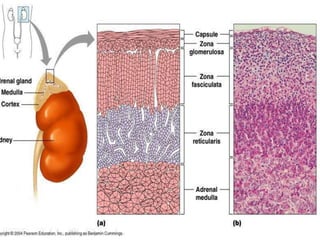
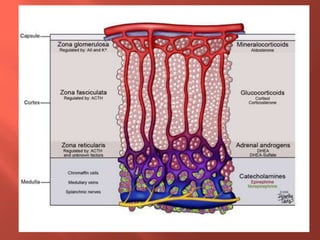
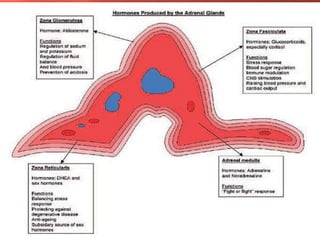
 An inner medulla, is a source
of catecholamine – adrenaline
and nor-adrenaline
 Chromaffin cell is the principal
cell type
 Medulla is richly innervated by
sympathetic fibres and is
considered as extension of
sympathetic nervous system
 Medulla develops from
ectoderm (neural crest)
An outer cortex, which
secretes several classes of
steroid hormones including
Glucocorticoids and
Mineralocorticoids
Three different concentric
zones of cells that differ in
major steroid hormones they
secrete
Cortex develops from
mesoderm
• The two adrenal glands are located immediately anterior to the kidneys,
encased in a connective tissue capsule and usually partially buried in an island
of fat. Their combined weight is about .01-.02% of total body weight in both
males and females.
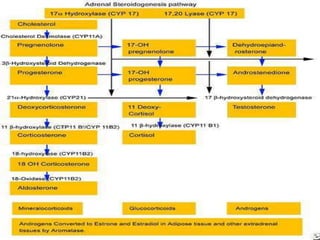
 Adrenal cortex makes and secretes over 30 different steroid
hormones(collectively called corticosteroids).Corticoids are 21
carbon compounds having a cyclopentanoperhydro-
phenanthene(steroid) nucleus. Since adrenal cortical cells store
only minute quantity of hormone ,rate of release is governed by
the rate of biosynthesis.
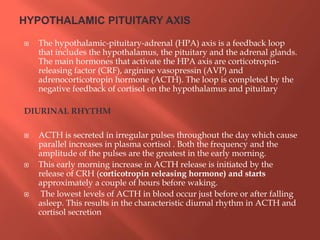
 The hypothalamic-pituitary-adrenal (HPA) axis is a feedback loop
that includes the hypothalamus, the pituitary and the adrenal glands.
The main hormones that activate the HPA axis are corticotropin-
releasing factor (CRF), arginine vasopressin (AVP) and
adrenocorticotropin hormone (ACTH). The loop is completed by the
negative feedback of cortisol on the hypothalamus and pituitary
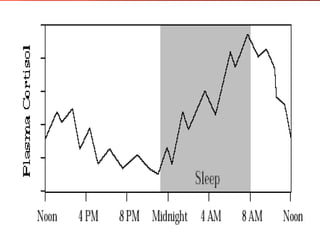
DIURINAL RHYTHM
 ACTH is secreted in irregular pulses throughout the day which cause
parallel increases in plasma cortisol . Both the frequency and the
amplitude of the pulses are the greatest in the early morning.
 This early morning increase in ACTH release is initiated by the
release of CRH (corticotropin releasing hormone) and starts
approximately a couple of hours before waking.
 The lowest levels of ACTH in blood occur just before or after falling
asleep. This results in the characteristic diurnal rhythm in ACTH and
cortisol secretion
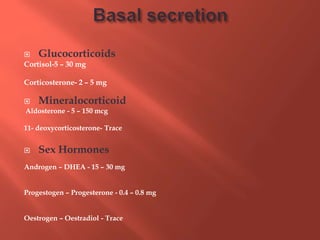
 Glucocorticoids
Cortisol-5 – 30 mg
Corticosterone- 2 – 5 mg
 Mineralocorticoid
Aldosterone - 5 – 150 mcg
11- deoxycorticosterone- Trace
 Sex Hormones
Androgen – DHEA - 15 – 30 mg
Progestogen – Progesterone - 0.4 – 0.8 mg
Oestrogen – Oestradiol - Trace
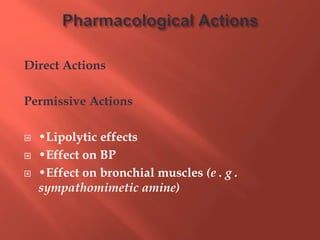
Direct Actions
Permissive Actions
 •Lipolytic effects
 •Effect on BP
 •Effect on bronchial muscles (e . g .
sympathomimetic amine)
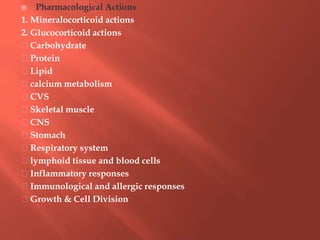
 Pharmacological Actions
1. Mineralocorticoid actions
2. Glucocorticoid actions
Carbohydrate
Protein
Lipid
calcium metabolism
CVS
Skeletal muscle
CNS
Stomach
Respiratory system
lymphoid tissue and blood cells
Inflammatory responses
Immunological and allergic responses
Growth & Cell Division
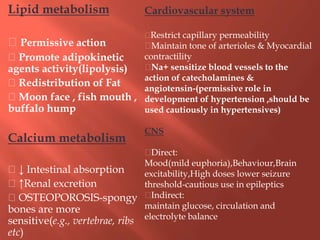
Lipid metabolism
Permissive action
Promote adipokinetic
agents activity(lipolysis)
Redistribution of Fat
Moon face , fish mouth ,
buffalo hump
Calcium metabolism
↓ Intestinal absorption
↑Renal excretion
OSTEOPOROSIS-spongy
bones are more
sensitive(e.g., vertebrae, ribs
etc)
Cardiovascular system
Restrict capillary permeability
Maintain tone of arterioles & Myocardial
contractility
Na+ sensitize blood vessels to the
action of catecholamines &
angiotensin-(permissive role in
development of hypertension ,should be
used cautiously in hypertensives)
CNS
Direct:
Mood(mild euphoria),Behaviour,Brain
excitability,High doses lower seizure
threshold-cautious use in epileptics
Indirect:
maintain glucose, circulation and
electrolyte balance
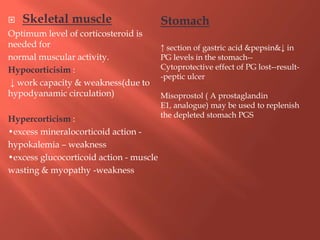
 Skeletal muscle
Optimum level of corticosteroid is
needed for
normal muscular activity.
Hypocorticisim :
↓ work capacity & weakness(due to
hypodyanamic circulation)
Hypercorticism :
•excess mineralocorticoid action -
hypokalemia – weakness
•excess glucocorticoid action - muscle
wasting & myopathy -weakness
Stomach
↑ section of gastric acid &pepsin&↓ in
PG levels in the stomach--
Cytoprotective effect of PG lost--result-
-peptic ulcer
Misoprostol ( A prostaglandin
E1, analogue) may be used to replenish
the depleted stomach PGS
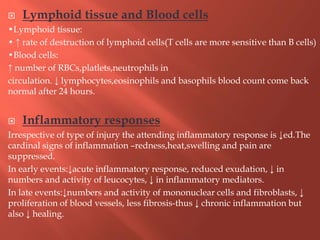
 Lymphoid tissue and Blood cells
•Lymphoid tissue:
• ↑ rate of destruction of lymphoid cells(T cells are more sensitive than B cells)
•Blood cells:
↑ number of RBCs,platlets,neutrophils in
circulation. ↓ lymphocytes,eosinophils and basophils blood count come back
normal after 24 hours.
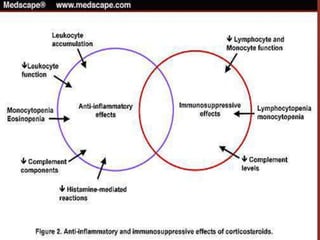
 Inflammatory responses
Irrespective of type of injury the attending inflammatory response is ↓ed.The
cardinal signs of inflammation –redness,heat,swelling and pain are
suppressed.
In early events:↓acute inflammatory response, reduced exudation, ↓ in
numbers and activity of leucocytes, ↓ in inflammatory mediators.
In late events:↓numbers and activity of mononuclear cells and fibroblasts, ↓
proliferation of blood vessels, less fibrosis-thus ↓ chronic inflammation but
also ↓ healing.
Growth & Cell division
Delays the process of healing and scar formation.
Retards the growth of children.
 Respiratory system
•Most potent and most effective anti-inflammatory
•Effects not seen immediately (delay 6 or more hrs)
•Inhaled corticosteroids are used for long term control in bronchial asthma.
 Effects on stress
 ACTH and cortisol secretion are increased by stressful stimuli including
surgery , trauma, pain, apprehension, infection, hypoglycaemia and
haemorrhage. The increase in cortisol production is necessary for
survival, and stresses that are normally tolerated can become fatal in
adrenal insufficiency Rapid deterioration resulting in organ damage and
shock/coma/death can occur, especially in children
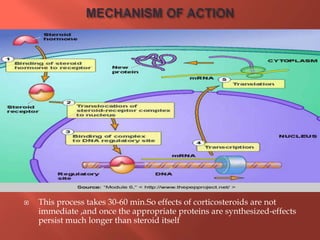
 This process takes 30-60 min.So effects of corticosteroids are not
immediate ,and once the appropriate proteins are synthesized-effects
persist much longer than steroid itself
 Glucocorticoids
Short acting
Intermediate acting
Long acting
Mineralocorticoids
Inhalant steroids
Topical steroids
SYNTHETIC STEROIDS have largely replaced the
natural compounds in therapeutic use ,because they
are potent,longer acting,more selective,for
glucu/mineralo action and have high oral activity.
►Corticosteroids are generally grouped into four classes, based on
chemical structure.
►Allergic reactions to one member of a class typically indicate an
intolerance of all members of the class.
 "Coopman classification“
 Given after S. Coopman who gave the classification in 1989
CLASSSIFICATION OF STEROIDS
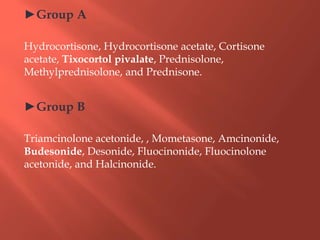
►Group A
Hydrocortisone, Hydrocortisone acetate, Cortisone
acetate, Tixocortol pivalate, Prednisolone,
Methylprednisolone, and Prednisone.
►Group B
Triamcinolone acetonide, , Mometasone, Amcinonide,
Budesonide, Desonide, Fluocinonide, Fluocinolone
acetonide, and Halcinonide.
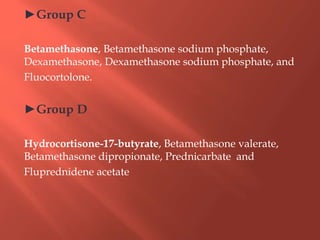
►Group C
Betamethasone, Betamethasone sodium phosphate,
Dexamethasone, Dexamethasone sodium phosphate, and
Fluocortolone.
►Group D
Hydrocortisone-17-butyrate, Betamethasone valerate,
Betamethasone dipropionate, Prednicarbate and
Fluprednidene acetate
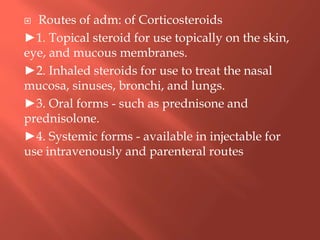
 Routes of adm: of Corticosteroids
►1. Topical steroid for use topically on the skin,
eye, and mucous membranes.
►2. Inhaled steroids for use to treat the nasal
mucosa, sinuses, bronchi, and lungs.
►3. Oral forms - such as prednisone and
prednisolone.
►4. Systemic forms - available in injectable for
use intravenously and parenteral routes
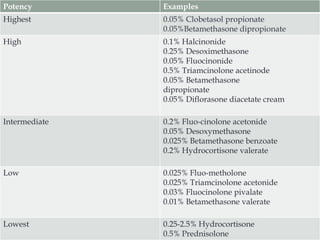
Potency Examples
Highest 0.05% Clobetasol propionate
0.05%Betamethasone dipropionate
High 0.1% Halcinonide
0.25% Desoximethasone
0.05% Fluocinonide
0.5% Triamcinolone acetinode
0.05% Betamethasone
dipropionate
0.05% Diflorasone diacetate cream
Intermediate 0.2% Fluo-cinolone acetonide
0.05% Desoxymethasone
0.025% Betamethasone benzoate
0.2% Hydrocortisone valerate
Low 0.025% Fluo-metholone
0.025% Triamcinolone acetonide
0.03% Fluocinolone pivalate
0.01% Betamethasone valerate
Lowest 0.25-2.5% Hydrocortisone
0.5% Prednisolone
Agent Antiinflammatory Topical
Equivalent
oral dose
(mg)
Forms
Available
Hydrocortisone 1 1 20 O,I,T
Cortisone 0.8 0 25 O
Prednisolone 5 4 5 O,I
Triamcinolone 5 5 4 O,I,T
Flu-
prednisolone
15 7 1.5 O
Betamethasone 25-40 10 .6 O,I,T
Dexamethasone 30 10 .75 O,I,T
Injectable:
Betamethasone Dexamethasone
Prednisolone Methylprednisolone
Hydrocortisone Triamcinolone
Oral:
Betamethasone Fludricortisone
Prednisolone Prednisone
Methylprednisolone
Topical:
Betamethasone Clobetasol
Flucinolone Mometasone
Inhalation:
Beclomethasone Budesonide
Flunisolode
Triamcinolone
Kenacort,
Tricort,
kenalog,
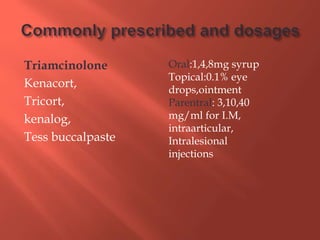
Tess buccalpaste
Oral:1,4,8mg syrup
Topical:0.1% eye
drops,ointment
Parentral: 3,10,40
mg/ml for I.M,
intraarticular,
Intralesional
injections
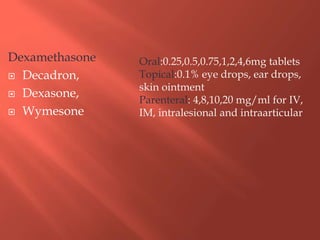
Dexamethasone
 Decadron,
 Dexasone,
 Wymesone
Oral:0.25,0.5,0.75,1,2,4,6mg tablets
Topical:0.1% eye drops, ear drops,
skin ointment
Parenteral: 4,8,10,20 mg/ml for IV,
IM, intralesional and intraarticular
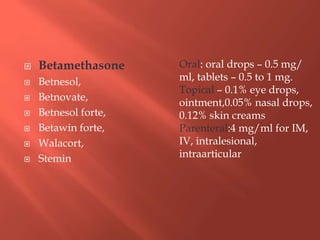
 Betamethasone
 Betnesol,
 Betnovate,
 Betnesol forte,
 Betawin forte,
 Walacort,
 Stemin
Oral: oral drops – 0.5 mg/
ml, tablets – 0.5 to 1 mg.
Topical – 0.1% eye drops,
ointment,0.05% nasal drops,
0.12% skin creams
Parenteral:4 mg/ml for IM,
IV, intralesional,
intraarticular
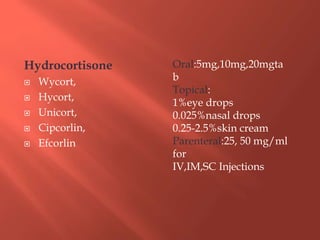
Hydrocortisone
 Wycort,
 Hycort,
 Unicort,
 Cipcorlin,
 Efcorlin
Oral:5mg,10mg,20mgta
b
Topical:
1%eye drops
0.025%nasal drops
0.25-2.5%skin cream
Parenteral:25, 50 mg/ml
for
IV,IM,SC Injections
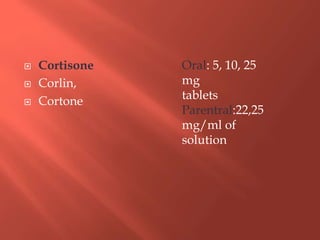
 Cortisone
 Corlin,
 Cortone
Oral: 5, 10, 25
mg
tablets
Parentral:22,25
mg/ml of
solution
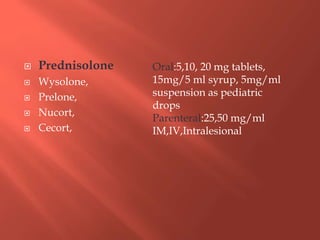
 Prednisolone
 Wysolone,
 Prelone,
 Nucort,
 Cecort,
Oral:5,10, 20 mg tablets,
15mg/5 ml syrup, 5mg/ml
suspension as pediatric
drops
Parenteral:25,50 mg/ml
IM,IV,Intralesional
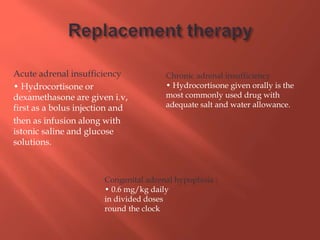
Acute adrenal insufficiency
• Hydrocortisone or
dexamethasone are given i.v,
first as a bolus injection and
then as infusion along with
istonic saline and glucose
solutions.
Chronic adrenal insufficiency
• Hydrocortisone given orally is the
most commonly used drug with
adequate salt and water allowance.
Congenital adrenal hypoplasia :
• 0.6 mg/kg daily
in divided doses
round the clock
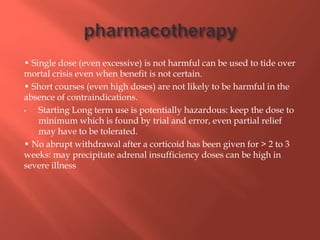
• Single dose (even excessive) is not harmful can be used to tide over
mortal crisis even when benefit is not certain.
• Short courses (even high doses) are not likely to be harmful in the
absence of contraindications.
• Starting Long term use is potentially hazardous: keep the dose to
minimum which is found by trial and error, even partial relief
may have to be tolerated.
• No abrupt withdrawal after a corticoid has been given for > 2 to 3
weeks: may precipitate adrenal insufficiency doses can be high in
severe illness
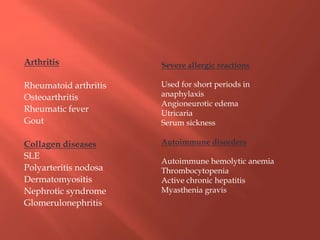
Arthritis
Rheumatoid arthritis
Osteoarthritis
Rheumatic fever
Gout
Collagen diseases
SLE
Polyarteritis nodosa
Dermatomyositis
Nephrotic syndrome
Glomerulonephritis
Severe allergic reactions
Used for short periods in
anaphylaxis
Angioneurotic edema
Utricaria
Serum sickness
Autoimmune disorders
Autoimmune hemolytic anemia
Thrombocytopenia
Active chronic hepatitis
Myasthenia gravis
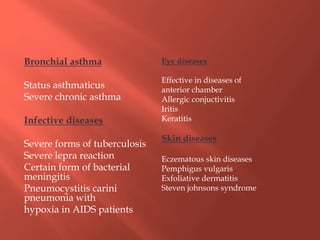
Bronchial asthma
Status asthmaticus
Severe chronic asthma
Infective diseases
Severe forms of tuberculosis
Severe lepra reaction
Certain form of bacterial
meningitis
Pneumocystitis carini
pneumonia with
hypoxia in AIDS patients
Eye diseases
Effective in diseases of
anterior chamber
Allergic conjuctivitis
Iritis
Keratitis
Skin diseases
Eczematous skin diseases
Pemphigus vulgaris
Exfoliative dermatitis
Steven johnsons syndrome
Intestinal diseases
Ulcerative colitis
Chron’s disease
Others
Cerebral edema
Malignancies
Organ transplantation
and skin allograft
Shock
To test the adrenal
pituitary axis
 Steroids are used in :
 Impactions
 Extractions
To control post operative pain and swelling
 In maxillofacial trauma
 In malignancies and other disorders
 Prevention of postoperative pain, edema,
trismus after 3rd molar surgery.
 Prevention of postoperative edema after
orthognathic, and reconstructive surgery after
trauma.
 Prevention of alveolar osteitis.
 Other than this steroids are used in many other
conditions which are encountered as an oral
and maxillofacial surgeon.
 Abducent nerve palsy from trauma or edema
systemic steroids are used for treatment.
 Orbital apex syndrome is treated by
corticosteroids and decompression.
 Steroids are also used in treatment of
traumatic superior orbital fissure syndrome.
 Used In traumatic facial nerve palsy in
temporal bone fractures.
 Steroids eye drops are used to reduce swelling
and pain in eye after transconjuctival approach
For orbital floor repair etc.
Steroids in maxillofacial trauma
 Ulcerative,Vesiculoerosive diseases
 Erosive lichenplannus , RAS
 Benign lesions
• Eg: CGCG
 Salivary gland disorders
• Eg: Mucocele
 TMJ Disorders
• Eg: Osteoarthritis
• Rheumatiid arthritis
 Neuralgia Treatment
• Eg. Post herpatic neuralgia
 Miscellanous
• OSMF
Steroids used in other conditions
Ulcerative Vesiculoerosive diseases
Immunologically mediated diseases that affect the oral mucosa present with
inflammation and loss of epithelial integrity, through cellular and/or
humoral immunity-mediated attack on epithelial connective tissue targets.
The main clinical features are ulceration and reddening, with pain that can
be severe and debilitating.
Corticosteroids play a central role in the treatment of vesiculoerosive
lesions. However, the frequency and severity of the adverse effects
associated with the use of systemic corticosteroids have led to the
increased use of topical corticosteroids (TCs).
 Short course of Topical Corticosteroids accelerate remission
without adverse effects in conditions like :
Recurrent aphthous stomatitis (RAS), some cases of erythema
multiforme (EM), and Drug-induced ulceration.
 Topical Corticosteroids must be used for longer, less predictable
periods in conditions like :
Severe RAS, Erosive oral lichen planus (OLP), specific forms of EM,
and mucous membrane pemphigoid (MMP)
 In very severe cases of ulcerations the treatment can be started by
short courses of systemic corticosteroids followed by
maintainance regimen of topical steroids or can be started
simultaneously.
 When a TC is prescribed, and especially when a prolonged course
is predicted, the basic rule is that a TC of a potency appropriate to
the severity of the clinical symptoms should be used, at the lowest
possible concentration and frequency, with maintaining the
effectiveness of the treatment.
 It should always be taken into account that these drugs do not
cure the disease but rather control or relieve the symptoms.
Factors that influence the effectiveness of Topical Corticosteroids:
 The intrinsic potency of the drug which can be significantly
increased by the halogenation of the steroid; esterification, which
makes the drug more lipophilic and gives it greater Penetrability
which is explained in article by (Regezi and Sciubba, 1999).
 The contact time between the drug and lesion and the vehicle used
to apply it.
 Concentration which can increase its clinical effectiveness,
although no additional advantage is obtained beyond certain
limits.
 Patients prescribed TC in an adherent vehicle should be instructed
to Apply a small amount to the target area after meals, and Not to
eat or drink for at least 30 min. It is best not to rub the TC in,
because this can produce irritation.
 Systemic steroids for ulcerative
vesiculobullous diseases:
 major aphthae or severe multiple minor aphthae
• Prednisone therapy should be started at 1.0 mg/kg/day in patients
with severe RAU and should be tapered after 1 to 2 weeks.
 Pemphigus Vulgaris
• Mainstay 1-2mg/kg/day Initial dose of treatment – 0.5 mg/kg/day
to 3 mg/kg/day Dose that achieves clinical control is maintained for
2-3 weeks and then gradually tapered.
 Erythema multiforme : minor : treted by steroid 20-40mg /day for
4-6 days
major: 60mg/day slowly tapered to 10/mg
day for 6 weeks
 Cicatrical phemphigoid
Prednisolone 20-60mg/day to stop new bullae formation , then
tapered by 20% every 2-3 week until it resches dose of 10mg and the
dose is maintained on alternate days and reduced by 5mg every 2
weeks and the stopped .
 Bullous pemphigoid
Clobetasol propionate 20 -40 mg/day is more effective for the
treatment.
 Lichen planus
Prednisolone 1mg/kg/d for <7 Days Tapered to 10-20mg per day for
2 weeks.
 Lupus erythematosus
Predisolone – 20 - 30 mg/day for 2- 6 weeks Tapered gradually.
 CGCG
Intralesional injection of triamcinolone can be given in a
dose of 1 to 2 mg/kg/day (maximum of 60 mg). The
treatment interval at 4 to 6 weeks.
 Hemangioma
Prednisone at a dose of 20-30 mg/d can be given for 2
weeksto 4 months ( Fost and Esterly)Intralesional
triamcinolone acetonide (4 mg/mL) (Hawkins et al)
 Mucocele
0.05% clobetasol propionate 3 times a day for 4
weeks in a mucosal adhesive base. Intralesional
injections have also been tried with success.
 Post herpetic neuralgia
 To reduce incidence of post herpetic neuralgia:
 Prednisolone 20 to 30 mg/day for 7 – 10 days
 tapered to 10 mg/day for 1 week
 (Treatment of oral diseases, George Lascaris)
 Rheumatoid arthritis
Intraarticular injection – 10 to 40 mg/ml
 Osteoarthritis
Intraarticular injection – 20 mg/ml(2 injections 14
days apart)
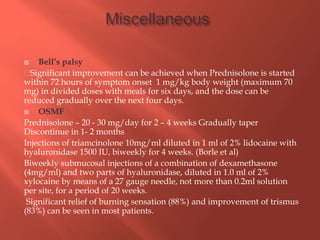
 Bell’s palsy
Significant improvement can be achieved when Prednisolone is started
within 72 hours of symptom onset 1 mg/kg body weight (maximum 70
mg) in divided doses with meals for six days, and the dose can be
reduced gradually over the next four days.
 OSMF
Prednisolone – 20 - 30 mg/day for 2 – 4 weeks Gradually taper
Discontinue in 1- 2 months
Injections of triamcinolone 10mg/ml diluted in 1 ml of 2% lidocaine with
hyaluronidase 1500 IU, biweekly for 4 weeks. (Borle et al)
Biweekly submucosal injections of a combination of dexamethasone
(4mg/ml) and two parts of hyaluronidase, diluted in 1.0 ml of 2%
xylocaine by means of a 27 gauge needle, not more than 0.2ml solution
per site, for a period of 20 weeks.
Significant relief of burning sensation (88%) and improvement of trismus
(83%) can be seen in most patients.
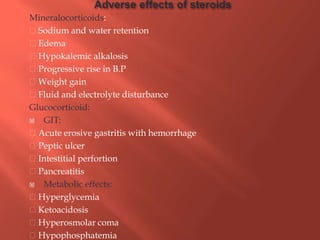
Mineralocorticoids:
Sodium and water retention
Edema
Hypokalemic alkalosis
Progressive rise in B.P
Weight gain
Fluid and electrolyte disturbance
Glucocorticoid:
 GIT:
Acute erosive gastritis with hemorrhage
Peptic ulcer
Intestitial perfortion
Pancreatitis
 Metabolic effects:
Hyperglycemia
Ketoacidosis
Hyperosmolar coma
Hypophosphatemia
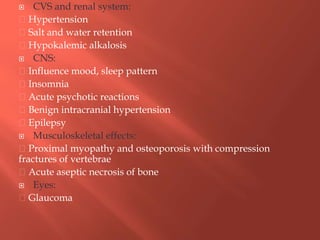
 CVS and renal system:
Hypertension
Salt and water retention
Hypokalemic alkalosis
 CNS:
Influence mood, sleep pattern
Insomnia
Acute psychotic reactions
Benign intracranial hypertension
Epilepsy
 Musculoskeletal effects:
Proximal myopathy and osteoporosis with compression
fractures of vertebrae
Acute aseptic necrosis of bone
 Eyes:
Glaucoma
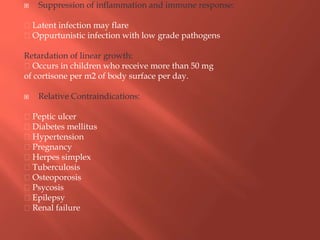
 Suppression of inflammation and immune response:
Latent infection may flare
Oppurtunistic infection with low grade pathogens
Retardation of linear growth:
Occurs in children who receive more than 50 mg
of cortisone per m2 of body surface per day.
 Relative Contraindications:
Peptic ulcer
Diabetes mellitus
Hypertension
Pregnancy
Herpes simplex
Tuberculosis
Osteoporosis
Psycosis
Epilepsy
Renal failure
 Rule of 2
Adrenocortical suppression should be
suspected if a patient has received
Glucocorticoid therapy through two of the
following methods
In a dose of 20 mg or more of cortisone or
its equivalent Via oral or parenteral route or a
continuous period of 2 weeks or longer Within 6
months -2 years of therapy
 Barely three years later after the discovery of steroids ,
Fraser and co-workers reported the death of a34-year-old
man after routine orthopaedic surgery due to shock, adrenal
insufficiency, and circulatory collapse. The patient had been
on corticosteroids for rheumatoid arthritis, but the treatment
had been stopped prior to surgery.
 Surgery-activation of HPA axis
Surgery is one of the most potent stressors that can cause
activation of the HPA axis. The degree of activation depends on
the type and duration of surgery and anesthesia, with many
other variables, including analgesics, antihypertensive
medications, infections, and age. The maximum stimulation of
the HPA axis is occur during reversal of anesthesia and in the
immediate postoperative period.
 Significant hypotension
Significant hypotension which cannot be explained
by acute blood loss, myocardial infarction, anesthesia, drugs, or
electrolyte imbalance should suggest the possibility of an acute
adrenal insufficiency. This is especially true if the blood
pressure does not respond promptly to blood transfusions or
vasopressors.
It is suggested that an increase in capillary resistance and
potentiation of the effect of vasoconstrictors on blood vessels
may be factors in the blood pressure response to adrenal
corticosteroids
Lack of increase in cortisol production during stress
would cause the host to succumb to it. On the other hand,
too much cortisol would be detrimental, causing increased
tissue breakdown, poor wound healing, and
immunosuppression.
Given this background, it is clear that any patient who
has inadequate cortisol production in response to surgical
stress will fare poorly in such a situation. This patient will
need to be recognized, and his acute steroid requirement
will have to be estimated and supplemented
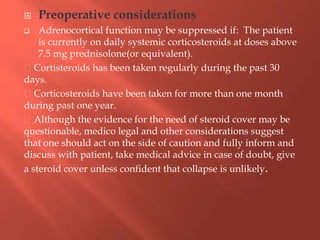
 Preoperative considerations
 Adrenocortical function may be suppressed if: The patient
is currently on daily systemic corticosteroids at doses above
7.5 mg prednisolone(or equivalent).
Cortisteroids has been taken regularly during the past 30
days.
Corticosteroids have been taken for more than one month
during past one year.
Although the evidence for the need of steroid cover may be
questionable, medico legal and other considerations suggest
that one should act on the side of caution and fully inform and
discuss with patient, take medical advice in case of doubt, give
a steroid cover unless confident that collapse is unlikely.
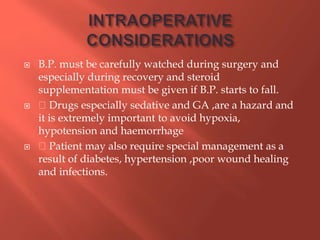
 B.P. must be carefully watched during surgery and
especially during recovery and steroid
supplementation must be given if B.P. starts to fall.
 Drugs especially sedative and GA ,are a hazard and
it is extremely important to avoid hypoxia,
hypotension and haemorrhage
 Patient may also require special management as a
result of diabetes, hypertension ,poor wound healing
and infections.
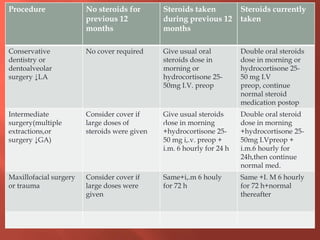
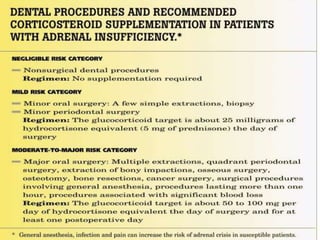
Procedure No steroids for
previous 12
months
Steroids taken
during previous 12
months
Steroids currently
taken
Conservative
dentistry or
dentoalveolar
surgery ↓LA
No cover required Give usual oral
steroids dose in
morning or
hydrocortisone 25-
50mg I.V. preop
Double oral steroids
dose in morning or
hydrocortisone 25-
50 mg I.V
preop, continue
normal steroid
medication postop
Intermediate
surgery(multiple
extractions,or
surgery ↓GA)
Consider cover if
large doses of
steroids were given
Give usual steroids
dose in morning
+hydrocortisone 25-
50 mg i,.v. preop +
i.m. 6 hourly for 24 h
Double oral steroid
dose in morning
+hydrocortisone 25-
50mg I.Vpreop +
i.m.6 hourly for
24h,then continue
normal med.
Maxillofacial surgery
or trauma
Consider cover if
large doses were
given
Same+i,.m 6 houly
for 72 h
Same +I. M 6 hourly
for 72 h+normal
thereafter
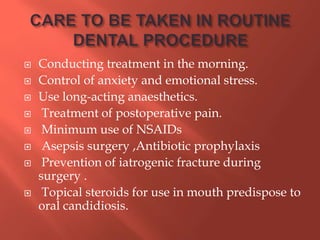
 Conducting treatment in the morning.
 Control of anxiety and emotional stress.
 Use long-acting anaesthetics.
 Treatment of postoperative pain.
 Minimum use of NSAIDs
 Asepsis surgery ,Antibiotic prophylaxis
 Prevention of iatrogenic fracture during
surgery .
 Topical steroids for use in mouth predispose to
oral candidiosis.
 Hyperactivity can cause:
Cushings syndrome
Hyperaldosteronism
Adreno genital syndrome
 Due to hyper secretion of glucocorticoids
particularly cortisol.
 Due to pituitary origin its cushings disease.
 Due to adrenal origin its cushings syndrome.
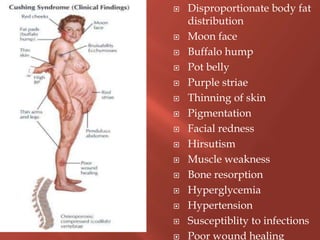
 Disproportionate body fat
distribution
 Moon face
 Buffalo hump
 Pot belly
 Purple striae
 Thinning of skin
 Pigmentation
 Facial redness
 Hirsutism
 Muscle weakness
 Bone resorption
 Hyperglycemia
 Hypertension
 Susceptiblity to infections
 Poor wound healing
 Can be due to adrenal cause (primary)
 Can be due to extra adrenal cause ( secondary)
 Increase in ECF volume and blood volume
 Hypertension
 Severe depletion of potassium
 Muscle weakness
 Metabolic alkalosis
 Addison's disease
 Adrenal crisis
 Chronic adrenal hyperplasia
 Addison’s disease
Failure of adrenal cortex to secrete all the
corticosteroids
Primary : due to adrenal cause
Secondary : failure of anterior pituitary to secrete
ACTH.
Tertiary: failure of hypothalamus to secrete CRF.
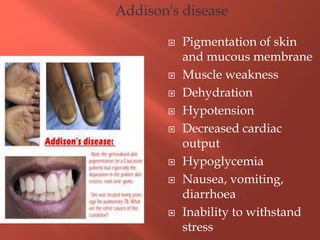
 Pigmentation of skin
and mucous membrane
 Muscle weakness
 Dehydration
 Hypotension
 Decreased cardiac
output
 Hypoglycemia
 Nausea, vomiting,
diarrhoea
 Inability to withstand
stress
Addison's disease
 Adrenal crisis
Common symptom of Addison's disease
characterized by sudden collapse associated with
an increase in need for large quantities of
glucocorticoids. Fatal if not treated in time
Causes
Exposure to even mild stress Hypoglycaemia due
to fasting surgical operation Sudden withdrawal
of glucocorticoid treatment
 Congenital adrenal hyperplasia
Congenital disorder characterized by increase in
size of adrenal cortex.
Even though the size of the gland increases the
cortisol secretion decreases.
Congenital enzymes necessary for synthesis of
cortisol, particularly 21- hydroxylase. cortisol, particularly 21-
hydroxylase.
 In boys:
Precocious body growth, causing stocky
appearance called infant Hercules
Precocious sexual development with enlarged
penis even at age of 4 years.
 In girls:
Produces Masculinization
Female child born with external genitalia of male
type.
• Corticosteroids play an important role in control of
pain & inflammation associated with numerous
disease states of oral cavity.
• Currently corticosteroids are drugs with one of the
broadest spectrum of clinical utility.
• But it should never be used as a substitute to other
treatments.
• Lets keep it mind that these drugs do not cure the
disease but rather control or relieve the symptoms.
• It should be used cautiously as it is two edged
sword.
1 steroids in omfs by vishnu

1 steroids in omfs by vishnu

  • 2.
    GUIDED BY DR KEERTHIR PROFESSOR ORAL AND MAXILLOFACIAL SURGERY PRESENTED BY VISHNU V GOPAL POST GRADUATE STUDENT OMFS
  • 3.
     According tothe National Institute of General Medical Sciences, the term "steroid" is a chemical name for any substance that has a characteristic chemical structure consisting of multiple chemical rings of connected atoms. Some common examples of steroids are: ►Vitamin D ►cholestrol ►estrogen ►cortisone
  • 4.
     INTRODUCTION  HISTORY ANATOMY AND PHYSIOLOGY OF ADRENAL GLAD  BIOSYNTHESIS  CLASSIFICATION  PHARMACOKINETICS  PREPARATION AND DOSAGES  INDICATIONS  USES IN OMFS  ADVERSE EFFECTS  CONTRAINDICATIONS  CONCLUSION
  • 5.
     The adrenalgland is the source of a diverse group of hormones essential for metabolic control, regulation of water and electrolyte balance, and regulation of body’s response to stress.  Using cholesterol as a substrate, the adrenal cortex produces a large number of substances collectively known as corticosteroids.  These have glucocorticoid, mineralocorticoid, and weakly androgenic activities.  Conventionally the term corticosteroid, or corticoid include both natural gluco and mineralocorticoid and their synthetic analogues
  • 6.
     By themiddle of 19th century it was demonstrated that adrenal glands were essential for life  Later, it was appreciated that the cortex was more important than the medulla  A number of steroidal active principles were isolated and their structures were elucidated by Kendall and his coworkers in the 1930s.
  • 7.
    However, the gateto their great therapeutic potential was opened by Hench (1949) who obtained striking improvement in rheumatoid arthritis by using cortisone. The Nobel prize was awarded the very next year to Kendall and Hench. Currently, corticosteroids are drugs with one of the broadest spectrum of clinical utility
  • 8.
     An innermedulla, is a source of catecholamine – adrenaline and nor-adrenaline  Chromaffin cell is the principal cell type  Medulla is richly innervated by sympathetic fibres and is considered as extension of sympathetic nervous system  Medulla develops from ectoderm (neural crest) An outer cortex, which secretes several classes of steroid hormones including Glucocorticoids and Mineralocorticoids Three different concentric zones of cells that differ in major steroid hormones they secrete Cortex develops from mesoderm • The two adrenal glands are located immediately anterior to the kidneys, encased in a connective tissue capsule and usually partially buried in an island of fat. Their combined weight is about .01-.02% of total body weight in both males and females.
  • 12.
     Adrenal cortexmakes and secretes over 30 different steroid hormones(collectively called corticosteroids).Corticoids are 21 carbon compounds having a cyclopentanoperhydro- phenanthene(steroid) nucleus. Since adrenal cortical cells store only minute quantity of hormone ,rate of release is governed by the rate of biosynthesis.
  • 14.
     The hypothalamic-pituitary-adrenal(HPA) axis is a feedback loop that includes the hypothalamus, the pituitary and the adrenal glands. The main hormones that activate the HPA axis are corticotropin- releasing factor (CRF), arginine vasopressin (AVP) and adrenocorticotropin hormone (ACTH). The loop is completed by the negative feedback of cortisol on the hypothalamus and pituitary DIURINAL RHYTHM  ACTH is secreted in irregular pulses throughout the day which cause parallel increases in plasma cortisol . Both the frequency and the amplitude of the pulses are the greatest in the early morning.  This early morning increase in ACTH release is initiated by the release of CRH (corticotropin releasing hormone) and starts approximately a couple of hours before waking.  The lowest levels of ACTH in blood occur just before or after falling asleep. This results in the characteristic diurnal rhythm in ACTH and cortisol secretion
  • 16.
     Glucocorticoids Cortisol-5 –30 mg Corticosterone- 2 – 5 mg  Mineralocorticoid Aldosterone - 5 – 150 mcg 11- deoxycorticosterone- Trace  Sex Hormones Androgen – DHEA - 15 – 30 mg Progestogen – Progesterone - 0.4 – 0.8 mg Oestrogen – Oestradiol - Trace
  • 17.
    Direct Actions Permissive Actions •Lipolytic effects  •Effect on BP  •Effect on bronchial muscles (e . g . sympathomimetic amine)
  • 18.
     Pharmacological Actions 1.Mineralocorticoid actions 2. Glucocorticoid actions Carbohydrate Protein Lipid calcium metabolism CVS Skeletal muscle CNS Stomach Respiratory system lymphoid tissue and blood cells Inflammatory responses Immunological and allergic responses Growth & Cell Division
  • 22.
    Lipid metabolism Permissive action Promoteadipokinetic agents activity(lipolysis) Redistribution of Fat Moon face , fish mouth , buffalo hump Calcium metabolism ↓ Intestinal absorption ↑Renal excretion OSTEOPOROSIS-spongy bones are more sensitive(e.g., vertebrae, ribs etc) Cardiovascular system Restrict capillary permeability Maintain tone of arterioles & Myocardial contractility Na+ sensitize blood vessels to the action of catecholamines & angiotensin-(permissive role in development of hypertension ,should be used cautiously in hypertensives) CNS Direct: Mood(mild euphoria),Behaviour,Brain excitability,High doses lower seizure threshold-cautious use in epileptics Indirect: maintain glucose, circulation and electrolyte balance
  • 23.
     Skeletal muscle Optimumlevel of corticosteroid is needed for normal muscular activity. Hypocorticisim : ↓ work capacity & weakness(due to hypodyanamic circulation) Hypercorticism : •excess mineralocorticoid action - hypokalemia – weakness •excess glucocorticoid action - muscle wasting & myopathy -weakness Stomach ↑ section of gastric acid &pepsin&↓ in PG levels in the stomach-- Cytoprotective effect of PG lost--result- -peptic ulcer Misoprostol ( A prostaglandin E1, analogue) may be used to replenish the depleted stomach PGS
  • 24.
     Lymphoid tissueand Blood cells •Lymphoid tissue: • ↑ rate of destruction of lymphoid cells(T cells are more sensitive than B cells) •Blood cells: ↑ number of RBCs,platlets,neutrophils in circulation. ↓ lymphocytes,eosinophils and basophils blood count come back normal after 24 hours.  Inflammatory responses Irrespective of type of injury the attending inflammatory response is ↓ed.The cardinal signs of inflammation –redness,heat,swelling and pain are suppressed. In early events:↓acute inflammatory response, reduced exudation, ↓ in numbers and activity of leucocytes, ↓ in inflammatory mediators. In late events:↓numbers and activity of mononuclear cells and fibroblasts, ↓ proliferation of blood vessels, less fibrosis-thus ↓ chronic inflammation but also ↓ healing.
  • 26.
    Growth & Celldivision Delays the process of healing and scar formation. Retards the growth of children.  Respiratory system •Most potent and most effective anti-inflammatory •Effects not seen immediately (delay 6 or more hrs) •Inhaled corticosteroids are used for long term control in bronchial asthma.  Effects on stress  ACTH and cortisol secretion are increased by stressful stimuli including surgery , trauma, pain, apprehension, infection, hypoglycaemia and haemorrhage. The increase in cortisol production is necessary for survival, and stresses that are normally tolerated can become fatal in adrenal insufficiency Rapid deterioration resulting in organ damage and shock/coma/death can occur, especially in children
  • 27.
     This processtakes 30-60 min.So effects of corticosteroids are not immediate ,and once the appropriate proteins are synthesized-effects persist much longer than steroid itself
  • 28.
     Glucocorticoids Short acting Intermediateacting Long acting Mineralocorticoids Inhalant steroids Topical steroids SYNTHETIC STEROIDS have largely replaced the natural compounds in therapeutic use ,because they are potent,longer acting,more selective,for glucu/mineralo action and have high oral activity.
  • 29.
    ►Corticosteroids are generallygrouped into four classes, based on chemical structure. ►Allergic reactions to one member of a class typically indicate an intolerance of all members of the class.  "Coopman classification“  Given after S. Coopman who gave the classification in 1989 CLASSSIFICATION OF STEROIDS
  • 30.
    ►Group A Hydrocortisone, Hydrocortisoneacetate, Cortisone acetate, Tixocortol pivalate, Prednisolone, Methylprednisolone, and Prednisone. ►Group B Triamcinolone acetonide, , Mometasone, Amcinonide, Budesonide, Desonide, Fluocinonide, Fluocinolone acetonide, and Halcinonide.
  • 31.
    ►Group C Betamethasone, Betamethasonesodium phosphate, Dexamethasone, Dexamethasone sodium phosphate, and Fluocortolone. ►Group D Hydrocortisone-17-butyrate, Betamethasone valerate, Betamethasone dipropionate, Prednicarbate and Fluprednidene acetate
  • 32.
     Routes ofadm: of Corticosteroids ►1. Topical steroid for use topically on the skin, eye, and mucous membranes. ►2. Inhaled steroids for use to treat the nasal mucosa, sinuses, bronchi, and lungs. ►3. Oral forms - such as prednisone and prednisolone. ►4. Systemic forms - available in injectable for use intravenously and parenteral routes
  • 33.
    Potency Examples Highest 0.05%Clobetasol propionate 0.05%Betamethasone dipropionate High 0.1% Halcinonide 0.25% Desoximethasone 0.05% Fluocinonide 0.5% Triamcinolone acetinode 0.05% Betamethasone dipropionate 0.05% Diflorasone diacetate cream Intermediate 0.2% Fluo-cinolone acetonide 0.05% Desoxymethasone 0.025% Betamethasone benzoate 0.2% Hydrocortisone valerate Low 0.025% Fluo-metholone 0.025% Triamcinolone acetonide 0.03% Fluocinolone pivalate 0.01% Betamethasone valerate Lowest 0.25-2.5% Hydrocortisone 0.5% Prednisolone
  • 34.
    Agent Antiinflammatory Topical Equivalent oraldose (mg) Forms Available Hydrocortisone 1 1 20 O,I,T Cortisone 0.8 0 25 O Prednisolone 5 4 5 O,I Triamcinolone 5 5 4 O,I,T Flu- prednisolone 15 7 1.5 O Betamethasone 25-40 10 .6 O,I,T Dexamethasone 30 10 .75 O,I,T
  • 35.
    Injectable: Betamethasone Dexamethasone Prednisolone Methylprednisolone HydrocortisoneTriamcinolone Oral: Betamethasone Fludricortisone Prednisolone Prednisone Methylprednisolone Topical: Betamethasone Clobetasol Flucinolone Mometasone Inhalation: Beclomethasone Budesonide Flunisolode
  • 36.
    Triamcinolone Kenacort, Tricort, kenalog, Tess buccalpaste Oral:1,4,8mg syrup Topical:0.1%eye drops,ointment Parentral: 3,10,40 mg/ml for I.M, intraarticular, Intralesional injections
  • 37.
    Dexamethasone  Decadron,  Dexasone, Wymesone Oral:0.25,0.5,0.75,1,2,4,6mg tablets Topical:0.1% eye drops, ear drops, skin ointment Parenteral: 4,8,10,20 mg/ml for IV, IM, intralesional and intraarticular
  • 38.
     Betamethasone  Betnesol, Betnovate,  Betnesol forte,  Betawin forte,  Walacort,  Stemin Oral: oral drops – 0.5 mg/ ml, tablets – 0.5 to 1 mg. Topical – 0.1% eye drops, ointment,0.05% nasal drops, 0.12% skin creams Parenteral:4 mg/ml for IM, IV, intralesional, intraarticular
  • 39.
    Hydrocortisone  Wycort,  Hycort, Unicort,  Cipcorlin,  Efcorlin Oral:5mg,10mg,20mgta b Topical: 1%eye drops 0.025%nasal drops 0.25-2.5%skin cream Parenteral:25, 50 mg/ml for IV,IM,SC Injections
  • 40.
     Cortisone  Corlin, Cortone Oral: 5, 10, 25 mg tablets Parentral:22,25 mg/ml of solution
  • 41.
     Prednisolone  Wysolone, Prelone,  Nucort,  Cecort, Oral:5,10, 20 mg tablets, 15mg/5 ml syrup, 5mg/ml suspension as pediatric drops Parenteral:25,50 mg/ml IM,IV,Intralesional
  • 43.
    Acute adrenal insufficiency •Hydrocortisone or dexamethasone are given i.v, first as a bolus injection and then as infusion along with istonic saline and glucose solutions. Chronic adrenal insufficiency • Hydrocortisone given orally is the most commonly used drug with adequate salt and water allowance. Congenital adrenal hypoplasia : • 0.6 mg/kg daily in divided doses round the clock
  • 44.
    • Single dose(even excessive) is not harmful can be used to tide over mortal crisis even when benefit is not certain. • Short courses (even high doses) are not likely to be harmful in the absence of contraindications. • Starting Long term use is potentially hazardous: keep the dose to minimum which is found by trial and error, even partial relief may have to be tolerated. • No abrupt withdrawal after a corticoid has been given for > 2 to 3 weeks: may precipitate adrenal insufficiency doses can be high in severe illness
  • 45.
    Arthritis Rheumatoid arthritis Osteoarthritis Rheumatic fever Gout Collagendiseases SLE Polyarteritis nodosa Dermatomyositis Nephrotic syndrome Glomerulonephritis Severe allergic reactions Used for short periods in anaphylaxis Angioneurotic edema Utricaria Serum sickness Autoimmune disorders Autoimmune hemolytic anemia Thrombocytopenia Active chronic hepatitis Myasthenia gravis
  • 46.
    Bronchial asthma Status asthmaticus Severechronic asthma Infective diseases Severe forms of tuberculosis Severe lepra reaction Certain form of bacterial meningitis Pneumocystitis carini pneumonia with hypoxia in AIDS patients Eye diseases Effective in diseases of anterior chamber Allergic conjuctivitis Iritis Keratitis Skin diseases Eczematous skin diseases Pemphigus vulgaris Exfoliative dermatitis Steven johnsons syndrome
  • 47.
    Intestinal diseases Ulcerative colitis Chron’sdisease Others Cerebral edema Malignancies Organ transplantation and skin allograft Shock To test the adrenal pituitary axis
  • 49.
     Steroids areused in :  Impactions  Extractions To control post operative pain and swelling  In maxillofacial trauma  In malignancies and other disorders
  • 50.
     Prevention ofpostoperative pain, edema, trismus after 3rd molar surgery.  Prevention of postoperative edema after orthognathic, and reconstructive surgery after trauma.  Prevention of alveolar osteitis.  Other than this steroids are used in many other conditions which are encountered as an oral and maxillofacial surgeon.
  • 51.
     Abducent nervepalsy from trauma or edema systemic steroids are used for treatment.  Orbital apex syndrome is treated by corticosteroids and decompression.  Steroids are also used in treatment of traumatic superior orbital fissure syndrome.  Used In traumatic facial nerve palsy in temporal bone fractures.  Steroids eye drops are used to reduce swelling and pain in eye after transconjuctival approach For orbital floor repair etc. Steroids in maxillofacial trauma
  • 52.
     Ulcerative,Vesiculoerosive diseases Erosive lichenplannus , RAS  Benign lesions • Eg: CGCG  Salivary gland disorders • Eg: Mucocele  TMJ Disorders • Eg: Osteoarthritis • Rheumatiid arthritis  Neuralgia Treatment • Eg. Post herpatic neuralgia  Miscellanous • OSMF Steroids used in other conditions
  • 53.
    Ulcerative Vesiculoerosive diseases Immunologicallymediated diseases that affect the oral mucosa present with inflammation and loss of epithelial integrity, through cellular and/or humoral immunity-mediated attack on epithelial connective tissue targets. The main clinical features are ulceration and reddening, with pain that can be severe and debilitating. Corticosteroids play a central role in the treatment of vesiculoerosive lesions. However, the frequency and severity of the adverse effects associated with the use of systemic corticosteroids have led to the increased use of topical corticosteroids (TCs).
  • 54.
     Short courseof Topical Corticosteroids accelerate remission without adverse effects in conditions like : Recurrent aphthous stomatitis (RAS), some cases of erythema multiforme (EM), and Drug-induced ulceration.  Topical Corticosteroids must be used for longer, less predictable periods in conditions like : Severe RAS, Erosive oral lichen planus (OLP), specific forms of EM, and mucous membrane pemphigoid (MMP)  In very severe cases of ulcerations the treatment can be started by short courses of systemic corticosteroids followed by maintainance regimen of topical steroids or can be started simultaneously.
  • 55.
     When aTC is prescribed, and especially when a prolonged course is predicted, the basic rule is that a TC of a potency appropriate to the severity of the clinical symptoms should be used, at the lowest possible concentration and frequency, with maintaining the effectiveness of the treatment.  It should always be taken into account that these drugs do not cure the disease but rather control or relieve the symptoms.
  • 56.
    Factors that influencethe effectiveness of Topical Corticosteroids:  The intrinsic potency of the drug which can be significantly increased by the halogenation of the steroid; esterification, which makes the drug more lipophilic and gives it greater Penetrability which is explained in article by (Regezi and Sciubba, 1999).  The contact time between the drug and lesion and the vehicle used to apply it.  Concentration which can increase its clinical effectiveness, although no additional advantage is obtained beyond certain limits.  Patients prescribed TC in an adherent vehicle should be instructed to Apply a small amount to the target area after meals, and Not to eat or drink for at least 30 min. It is best not to rub the TC in, because this can produce irritation.
  • 57.
     Systemic steroidsfor ulcerative vesiculobullous diseases:  major aphthae or severe multiple minor aphthae • Prednisone therapy should be started at 1.0 mg/kg/day in patients with severe RAU and should be tapered after 1 to 2 weeks.  Pemphigus Vulgaris • Mainstay 1-2mg/kg/day Initial dose of treatment – 0.5 mg/kg/day to 3 mg/kg/day Dose that achieves clinical control is maintained for 2-3 weeks and then gradually tapered.  Erythema multiforme : minor : treted by steroid 20-40mg /day for 4-6 days major: 60mg/day slowly tapered to 10/mg day for 6 weeks
  • 58.
     Cicatrical phemphigoid Prednisolone20-60mg/day to stop new bullae formation , then tapered by 20% every 2-3 week until it resches dose of 10mg and the dose is maintained on alternate days and reduced by 5mg every 2 weeks and the stopped .  Bullous pemphigoid Clobetasol propionate 20 -40 mg/day is more effective for the treatment.  Lichen planus Prednisolone 1mg/kg/d for <7 Days Tapered to 10-20mg per day for 2 weeks.  Lupus erythematosus Predisolone – 20 - 30 mg/day for 2- 6 weeks Tapered gradually.
  • 59.
     CGCG Intralesional injectionof triamcinolone can be given in a dose of 1 to 2 mg/kg/day (maximum of 60 mg). The treatment interval at 4 to 6 weeks.  Hemangioma Prednisone at a dose of 20-30 mg/d can be given for 2 weeksto 4 months ( Fost and Esterly)Intralesional triamcinolone acetonide (4 mg/mL) (Hawkins et al)
  • 60.
     Mucocele 0.05% clobetasolpropionate 3 times a day for 4 weeks in a mucosal adhesive base. Intralesional injections have also been tried with success.
  • 61.
     Post herpeticneuralgia  To reduce incidence of post herpetic neuralgia:  Prednisolone 20 to 30 mg/day for 7 – 10 days  tapered to 10 mg/day for 1 week  (Treatment of oral diseases, George Lascaris)
  • 62.
     Rheumatoid arthritis Intraarticularinjection – 10 to 40 mg/ml  Osteoarthritis Intraarticular injection – 20 mg/ml(2 injections 14 days apart)
  • 63.
     Bell’s palsy Significantimprovement can be achieved when Prednisolone is started within 72 hours of symptom onset 1 mg/kg body weight (maximum 70 mg) in divided doses with meals for six days, and the dose can be reduced gradually over the next four days.  OSMF Prednisolone – 20 - 30 mg/day for 2 – 4 weeks Gradually taper Discontinue in 1- 2 months Injections of triamcinolone 10mg/ml diluted in 1 ml of 2% lidocaine with hyaluronidase 1500 IU, biweekly for 4 weeks. (Borle et al) Biweekly submucosal injections of a combination of dexamethasone (4mg/ml) and two parts of hyaluronidase, diluted in 1.0 ml of 2% xylocaine by means of a 27 gauge needle, not more than 0.2ml solution per site, for a period of 20 weeks. Significant relief of burning sensation (88%) and improvement of trismus (83%) can be seen in most patients.
  • 64.
    Mineralocorticoids: Sodium and waterretention Edema Hypokalemic alkalosis Progressive rise in B.P Weight gain Fluid and electrolyte disturbance Glucocorticoid:  GIT: Acute erosive gastritis with hemorrhage Peptic ulcer Intestitial perfortion Pancreatitis  Metabolic effects: Hyperglycemia Ketoacidosis Hyperosmolar coma Hypophosphatemia
  • 65.
     CVS andrenal system: Hypertension Salt and water retention Hypokalemic alkalosis  CNS: Influence mood, sleep pattern Insomnia Acute psychotic reactions Benign intracranial hypertension Epilepsy  Musculoskeletal effects: Proximal myopathy and osteoporosis with compression fractures of vertebrae Acute aseptic necrosis of bone  Eyes: Glaucoma
  • 66.
     Suppression ofinflammation and immune response: Latent infection may flare Oppurtunistic infection with low grade pathogens Retardation of linear growth: Occurs in children who receive more than 50 mg of cortisone per m2 of body surface per day.  Relative Contraindications: Peptic ulcer Diabetes mellitus Hypertension Pregnancy Herpes simplex Tuberculosis Osteoporosis Psycosis Epilepsy Renal failure
  • 67.
     Rule of2 Adrenocortical suppression should be suspected if a patient has received Glucocorticoid therapy through two of the following methods In a dose of 20 mg or more of cortisone or its equivalent Via oral or parenteral route or a continuous period of 2 weeks or longer Within 6 months -2 years of therapy
  • 68.
     Barely threeyears later after the discovery of steroids , Fraser and co-workers reported the death of a34-year-old man after routine orthopaedic surgery due to shock, adrenal insufficiency, and circulatory collapse. The patient had been on corticosteroids for rheumatoid arthritis, but the treatment had been stopped prior to surgery.  Surgery-activation of HPA axis Surgery is one of the most potent stressors that can cause activation of the HPA axis. The degree of activation depends on the type and duration of surgery and anesthesia, with many other variables, including analgesics, antihypertensive medications, infections, and age. The maximum stimulation of the HPA axis is occur during reversal of anesthesia and in the immediate postoperative period.
  • 69.
     Significant hypotension Significanthypotension which cannot be explained by acute blood loss, myocardial infarction, anesthesia, drugs, or electrolyte imbalance should suggest the possibility of an acute adrenal insufficiency. This is especially true if the blood pressure does not respond promptly to blood transfusions or vasopressors. It is suggested that an increase in capillary resistance and potentiation of the effect of vasoconstrictors on blood vessels may be factors in the blood pressure response to adrenal corticosteroids
  • 70.
    Lack of increasein cortisol production during stress would cause the host to succumb to it. On the other hand, too much cortisol would be detrimental, causing increased tissue breakdown, poor wound healing, and immunosuppression. Given this background, it is clear that any patient who has inadequate cortisol production in response to surgical stress will fare poorly in such a situation. This patient will need to be recognized, and his acute steroid requirement will have to be estimated and supplemented
  • 71.
     Preoperative considerations Adrenocortical function may be suppressed if: The patient is currently on daily systemic corticosteroids at doses above 7.5 mg prednisolone(or equivalent). Cortisteroids has been taken regularly during the past 30 days. Corticosteroids have been taken for more than one month during past one year. Although the evidence for the need of steroid cover may be questionable, medico legal and other considerations suggest that one should act on the side of caution and fully inform and discuss with patient, take medical advice in case of doubt, give a steroid cover unless confident that collapse is unlikely.
  • 72.
     B.P. mustbe carefully watched during surgery and especially during recovery and steroid supplementation must be given if B.P. starts to fall.  Drugs especially sedative and GA ,are a hazard and it is extremely important to avoid hypoxia, hypotension and haemorrhage  Patient may also require special management as a result of diabetes, hypertension ,poor wound healing and infections.
  • 73.
    Procedure No steroidsfor previous 12 months Steroids taken during previous 12 months Steroids currently taken Conservative dentistry or dentoalveolar surgery ↓LA No cover required Give usual oral steroids dose in morning or hydrocortisone 25- 50mg I.V. preop Double oral steroids dose in morning or hydrocortisone 25- 50 mg I.V preop, continue normal steroid medication postop Intermediate surgery(multiple extractions,or surgery ↓GA) Consider cover if large doses of steroids were given Give usual steroids dose in morning +hydrocortisone 25- 50 mg i,.v. preop + i.m. 6 hourly for 24 h Double oral steroid dose in morning +hydrocortisone 25- 50mg I.Vpreop + i.m.6 hourly for 24h,then continue normal med. Maxillofacial surgery or trauma Consider cover if large doses were given Same+i,.m 6 houly for 72 h Same +I. M 6 hourly for 72 h+normal thereafter
  • 74.
     Conducting treatmentin the morning.  Control of anxiety and emotional stress.  Use long-acting anaesthetics.  Treatment of postoperative pain.  Minimum use of NSAIDs  Asepsis surgery ,Antibiotic prophylaxis  Prevention of iatrogenic fracture during surgery .  Topical steroids for use in mouth predispose to oral candidiosis.
  • 76.
     Hyperactivity cancause: Cushings syndrome Hyperaldosteronism Adreno genital syndrome
  • 77.
     Due tohyper secretion of glucocorticoids particularly cortisol.  Due to pituitary origin its cushings disease.  Due to adrenal origin its cushings syndrome.
  • 78.
     Disproportionate bodyfat distribution  Moon face  Buffalo hump  Pot belly  Purple striae  Thinning of skin  Pigmentation  Facial redness  Hirsutism  Muscle weakness  Bone resorption  Hyperglycemia  Hypertension  Susceptiblity to infections  Poor wound healing
  • 79.
     Can bedue to adrenal cause (primary)  Can be due to extra adrenal cause ( secondary)  Increase in ECF volume and blood volume  Hypertension  Severe depletion of potassium  Muscle weakness  Metabolic alkalosis
  • 80.
     Addison's disease Adrenal crisis  Chronic adrenal hyperplasia  Addison’s disease Failure of adrenal cortex to secrete all the corticosteroids Primary : due to adrenal cause Secondary : failure of anterior pituitary to secrete ACTH. Tertiary: failure of hypothalamus to secrete CRF.
  • 81.
     Pigmentation ofskin and mucous membrane  Muscle weakness  Dehydration  Hypotension  Decreased cardiac output  Hypoglycemia  Nausea, vomiting, diarrhoea  Inability to withstand stress Addison's disease
  • 82.
     Adrenal crisis Commonsymptom of Addison's disease characterized by sudden collapse associated with an increase in need for large quantities of glucocorticoids. Fatal if not treated in time Causes Exposure to even mild stress Hypoglycaemia due to fasting surgical operation Sudden withdrawal of glucocorticoid treatment
  • 83.
     Congenital adrenalhyperplasia Congenital disorder characterized by increase in size of adrenal cortex. Even though the size of the gland increases the cortisol secretion decreases. Congenital enzymes necessary for synthesis of cortisol, particularly 21- hydroxylase. cortisol, particularly 21- hydroxylase.  In boys: Precocious body growth, causing stocky appearance called infant Hercules Precocious sexual development with enlarged penis even at age of 4 years.  In girls: Produces Masculinization Female child born with external genitalia of male type.
  • 84.
    • Corticosteroids playan important role in control of pain & inflammation associated with numerous disease states of oral cavity. • Currently corticosteroids are drugs with one of the broadest spectrum of clinical utility. • But it should never be used as a substitute to other treatments. • Lets keep it mind that these drugs do not cure the disease but rather control or relieve the symptoms. • It should be used cautiously as it is two edged sword.

Editor's Notes

  • #57 Orabase (Stoy, 1966), Cyanoacrylate (Jasmin et al., 1993), Bioadhesive patches made of cellulose derivatives (Mahdi et al., 1996), Gels (Regezi and Sciubba, 1999), and Denture adhesive paste (Lo Muzio et al., 2001).