KS HariSHanKar
–
 Emergency drugs &
equipment must be
available in every dental
office
 Life-saving
 Secondary role to basic life
support in overall
management
It is a collection of drugs & equipments highly
effective in managing life-threatening situations
Should be as simple to use as possible
Should be intended to use for adult or pediatric
patients
They are presented in 4 levels or modules based
on level of training & experience of the doctor
Drugs in each module
i. Injectables
ii.Non-injectables
Endotracheal
Intravenous
Sublingual or intra lingual
Intramuscular
i. Vastus-lateralis
ii.Mid-deltoid
iii.Gluteal region
1) Cleanse the area of needle insertion
2) Grab the muscle & pull it away from the bone
3) Holding the syringe like a dart, quickly insert the
needle into the muscle mass to a depth of
approximately 1 inch
4) Aspirate to ensure nonvascular penetration
5) Quickly administer the drugs
6) Remove the syringe, placing a dry gauze under
pressure at the injection site for a minimum of 1-2
minutes
7) Rubbing the area may increase vascularity &
speed the rate of drug absorption
1) Place the tourniquet above the antecubital fossa
2) If possible have the patient open & close the fist
to help distend the veins
3) When the patient cannot open & close his/her fist
(unconscious) – place arm below the level of
patient’s heart to help distend the veins
4) Cleanse & then dry the area in which the
venipuncture is to be placed
5) Use an indwelling catheter , scalp-vein needle or
syringe with the bevel of the needle facing up held
at about 30 – 45 angle to the vein to be entered
6) Advance the needle into the vein until a return of
blood is noted
7) Remove the tourniquet & either start the IV
infusion or administer the desired drug
8) Secure the needle with a tape to maintain venous
access
 MODULE ONE- Basic emergency kit (critical
drugs &
equipment)
 MODULE TWO – non critical drugs & equipment
 MODULE THREE – advanced cardiac life support
 MODULE FOUR – antidotal drugs
Injectable drugs
1. Epinephrine
2. Anti-histamine
Non-injectable drugs
1. Oxygen
2. Vasodialators
Emergency equipment
1. Oxygen delivery system
2. Suction & suction tips
3. Tourniquets
4. syringes
Secondary Injectable drugs
1.Anticonvulsaunt
2.Analgesics
3.Vasopressor
4.Antihypoglycemics
5.Corticosteroids
6.Antihypertensive
7.anticholinergic
Non-injectable drugs
1.Respiratory stimulant
2.Antihypoglycemic
3.bronchodilators
Emergency equipment
1.Device for cricothyrotomy
2.Artificial airways
3.Laryngoscope & endotracheal tubes
1. Epinephrine
2. Oxygen
3. Lidocaine
4. Atropine
5. Dopamine
6. Morphine sulfate
7. Verapamil
 Narcotic antagonists
 Benzodiazepines
 Antiemergence delerium drug
 Vasodilator
 Most important emergency drug
 Drug of choice in acute allergic reactions
DESIRABLE PROPERTIES
 Rapid onset of action
 Potent bronchial smooth muscle dilator
 Histamine blocking properties
 Vasopressor action
 Cardiac effects(increased cardiac output)
Therapeutic indications
 1:1000 concentration in
- Anaphylaxis
- Acute ashmatic attack
 1:10000 concentration
- Cardiac arrest
SIDE EFFECTS
 Tachydysrhythmias
- Supraventricular
- Ventricular
PRECAUTIONS
 In pregnancy
-decreases placental blood flow
-premature labour
NO CONTRA INDICATIONS
AVAILABILITY
 Preloaded syringes
- 1:1000 intramuscular and subcutaneous
-1:10000 intravenous
1ml ampules
DOSE
Adult dose
 0.3 -0.5 ml intramuscular and subcutaneous
Pediatric dose
 0.15mg
In Emergency kits
- 1 preloaded syringe(1 ml of 1:1000 epinephrine)
- 3 or 4 ampules(1:1000 epinephrine)
 Drug class - Histamine blockers
 Proprietary - Chlor- Trimeton
 Alternative drug -Diphenhydramine
 Histamine blockers
 Drug of choice
- delayed allergic response
- definitive management of acute allergy
MODE OF ACTION
 Competitive antagonists of histamine
 Prevent histamine’s access to receptor site
 Blocking response of effector to histamine
THERAPEUTIC INDICATIONS
 Delayed onset allergic reactions
 As local anesthetics in allergic patient
 Definitive management of acute allergic
reactions
 Side Effects
- CNS Depression
-Decreased Blood Pressure
-Thickening of bronchial secretions
 Contraindications
 AVAILABILITY
- 1ml and 2ml ampules(10mg|ml)
-1ml pre loaded syringes
 DIPHENHYDRAMINE
-10&30ml multidose vials(10mgml)
-1ml ampules(50mgml)
-1ml pre-loaded syringes
 IN EMERGENCY KITS
 -Three or Four 1ml ampules
Chlorpheniramine(10mg/ml)
or
Diphenhydramine(50mglml)
1)OXYGEN
2)VASODILATOR
3)BRONCHODILATOR
4)ANTIHYPOGLYCEMIC
5)ASPIRIN
 DRUG CLASS -NONE
 ALTERNATIVE DRUG-NONE
 PROPRIETARY -NONE
 Most useful drug in emergency kit
 THERAPEUTIC INDICATIONS
 Emergency situations where respiratory
distress is evident
SIDE EFFECTS-NONE
CONTRAINDICATIONS-HYPERVENTILATION
 AVAILABILITY
 Compressed gas cylinder
IN EMERGENCY KIT
ONE E CYLINDER
 DRUG CLASS-VASODILATOR
 ALTERNATIVE DRUG-AMYL NITRITE
 PROPRIETARY-NITROLINGUALSPRAY
-NITROSTAT TABLETS
 THERAPEUTIC INDICATIONS
- CHEST PAIN IN
In acute myocardial infarction
Angina pectoris
- Acute hypertensive episodes
 Side Effects
 -Transient pulsating headache
 -Facial flushing
 -Degree of hypotension
 CONTRAINDICATIONS
 -In hypotensive patients
 AVAILABILITY
 -0.3,0.4,0.6mg doses of sublingual tablets
 -0.4,0.8mg/dose translingual spray
 -0.3ml doses of amyl nitrate yellow
vaporoles
 IN EMERGENCY KIT
-One bottle of metered trans lingual
nitroglycerine spray
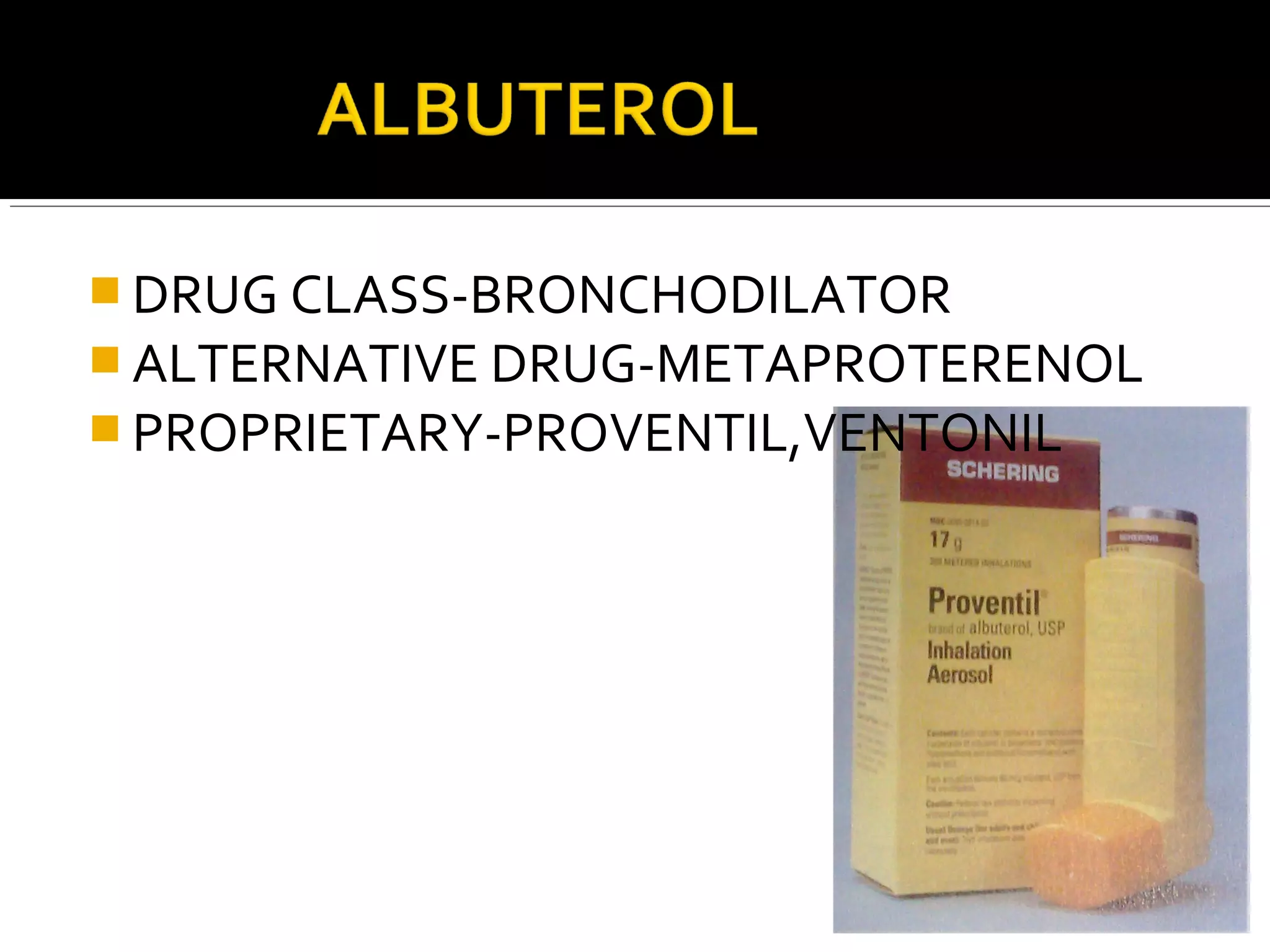
 DRUG CLASS-BRONCHODILATOR
 ALTERNATIVE DRUG-METAPROTERENOL
 PROPRIETARY-PROVENTIL,VENTONIL
 Drug of choice in asthmatic & allergic
patients
 Mode of action: bronchial smooth muscle
relaxation
 Therapeutic indication: bronchospasms,
acute asthmatic & allergic reactions
 Contraindications : pre-existing
tachydysrhythmias
 AVAILABILITY:
 - Albuterol inhalers ( Ventolin, Proventil )
 - Metaproterenol inhalers (Alupent)
 - Epinephrine mistometers (Medihaler-
Epi,
Primatine Mist)
 - Isoproterenol mistometers (Medihaler-
Iso)
 DRUG CLASS-ANTIHYPOGLYCEMICS
 DRUG OF CHOICE – ORANGE JUICE
 ALTERNATIVE DRUG-SOFT DRINKS
(NONDIET)
 PROPRIETARY-NONE
 Drug of choice in patients with hypoglycemic
reactions in Diabetes mellitus & non-diabetic
patients with hypoglycemia
 Therapeutic indications: management of
unconscious hypoglycemic state
 Contraindications : patients without active
gag reflex, or unable to drink without
assistance
 Side effects: none
 AVAILABILITY:
 - Glucola
 - Gluco-stat
 - Insta-glucose
 - nondiet cola beverages
 - fruit juices
 - granulated sugar
 - tubes of decorative icing
 DRUG CLASS-ANTI-PLATELET
 ALTERNATIVE DRUG-NONE
 PROPRIETARY-NONE
 Drug of choice in suspected myocardial infarction
 Mode of action:
- irreversibly acetylates the platelet cycloxygense
- removes all cycloxygenase activity for the
lifespan of platelet
- stops production of proaggregatory thromboxane
A2
- non platelet effects: diminishes formation of
prostacyclines
 Therapeutic indications: suspected myocardial
infarction
unstable angina
 Contraindications & side effects :life-threatening
haemorrhage (bleeding peptic ulcer), history of aspirin
 AVAILABILITY:
 -65, 81, 162 , 325 mg tablets
 In emergency kit
 3-4 baby chewable aspirin- 162 mg
 Oxygen delivery system
 Automated external defibrillator
 Syringes
 Suction & suction tips
 Tourniquets
 Magill intubation forceps
TECHNIQUE PERCENTAGE O2 DELIVERED
MOUTH-TO-MOUTH 16
MOUTH-TO-MASK 16
BAG-VALVE MASK 21
BAG VALVE
MASK+SUPPLEMENTAL O2
>21 - <100
POSITIVE PRESSURE OXYGEN 100
POSITIVE PRESSURE
 Adaptable to the E-cylinder
 Delivers oxygen under positive pressure
 Examples: Positive pressure or demand valve
- Reservoir bag
 The devices should be fitted with a clear face mask
 Efficient delivery of 100% oxygen
 Permit the rescuer to inspect the victim’s mouth for
the presence of foreign matter like vomitus, blood,
saliva, water
 Should be available in child, small adult & large adult
sizes
 Portable
 Self-inflating
 Source of positive pressure oxygen or
ambient air or enriched oxygen
(>21%, <100%)
 Attached to oxygen delivery tube
 Rescuer should be able to maintain an air-tight seal
 Should have patent airway with one hand while
using the other hand to activate the device &
ventilate the victim
 Clear, full-faced mask
 Rescuer applies exhaled air ventilation ( 16%
oxygen) to ventilate the victim
 Exhalation occur through one way valve located on
the side of the mask
 Also available with supplemental oxygen port
permitting the attachment of the mask to an
oxygen tube & deliver enriched oxygen ventilation
 It enables the rescuer to provide mouth to mask
ventilation
 Advantage: prevention of transmission of disease,
 IN PEDIATRIC PATIENTS
 Simply invert the mask, holding the narrow
nose side of the mask in the cleft of the chin
& the wider chin side on the bridge of the
child’s nose
 IN EMERGENCY KIT
 One portable oxygen cylinder (E-cylinder)
with positive pressure mask
 One portable, self-inflating, bag-valve-mask
device
 One pocket mask for each staff member
 Sizes: child, small adult, large adult
 Advanced training for safe &effective use
 Sophisticated,simple,battery operated
,computerised device,reliable &easy to use.
 Use-to recognise cardiac dysrrythmias-
ventricular fibrillation&pulseless ventricular
tachycardia.
 In emergency kit:one automated external
defibrillator
 Plastic , disposable syringes with 18 or 21
gauge needles
 2 ml syringes – emergency drug delivery
 In emergency kit: 2-4 2 ml disposable
syringes
 In emergency kit: 2 plastic evacuators or
tonsil suction tips
 To administer IV drugs
 For bloodless phlebotomy in acute pulmonary
oedema
 In emergency kit: 3 tourniquets & a
sphygmomanometer
 To place endotracheal tube
during nasal intubation
 It is a blunt ended scissor with
a right angled bend which
permits the forceps to grasp
objects deep in the
hypopharynx
 In emergency kit: one pediatric
size Magill intubation forceps
Secondary injectable drugs
1.Anticonvulsants
2.Analgesics
3.Vasopressors
4.Antihypoglycemics
5.Corticosteroids
6.Antihypertensive
7.Anticholinergic
 DRUG OF CHOICE: Midazolam
 PROPRIETARY: Versed
 DRUG CLASS: Benzodiazepine
 ALTERNATIVE DRUG: Diazepam
 DRUG OF CHOICE: Morphine sulphate
 PROPRIETARY: none
 DRUG CLASS: Opioid agonist
 ALTERNATIVE DRUG: Meperidine; nitrous oxide &
oxygen (N2O-O2)
 THERAPEUTIC INDICATIONS: Pain & anxiety in
ischemic chest pain
 SIDE EFFECTS: potent CNS & respiratory depressants
 CONTRAINDICATIONS: injury & multiple trauma
 AVAILABILITY: 8,10, 15 mg/ml in 2 ml ampules & 20 ml vials
morphine sulfate,
50, 100 mg/ ml Meperidine in 1 ml ampule & 20, 30 ml
vials
 In emergency kit: 10 mg/ml morphine sulfate (2, 2ml
ampules)
50 mg/ml Meperidine (2, 2ml ampules)
 DRUG OF CHOICE: Phenylephrine
 PROPRIETARY: Many
 DRUG CLASS: Vasopressor
 ALTERNATIVE DRUG: none
 THERAPEUTIC INDICATIONS:
1.manage hypotension
2.Syncopal reactions
3.Drug-overdose reactions
4.Post-seizure states
5.Acute adrenal insufficiency
6.allergy
 PRECAUTIONS: hyperthyroidism, bradycardia,
partial heart block, myocardial disease, severe
atherosclerosis
 CONTRAINDICATIONS: parenteral
administration is contraindiacted in patients
with high BP, or ventricular tachycardia
 AVAILABILITY: 10 mg/ml in 1 ml ampules
 IN EMERGENCY KIT: 10 mg/ml 2 – 3, 1 ml
ampules
 DRUG OF CHOICE: Dextrose, 50 % solution
 PROPRIETARY: none
 DRUG CLASS: Antihypoglycemics
 ALTERNATIVE DRUG: Glucagon
 THERAPEUTIC INDICATIONS: treatment of hypoglycemia,
diagnostic aid in unconsciousness or seizures of unknown
origin
 SIDE EFFECTS: 50% dextrose solution administered IV –
tissue necrosis if extravascular infiltration occurs
 CONTRAINDICATIONS: IV or IM glucagon in starvation or
chronic hypoglycemia
 AVAILABILITY: 50 % dextrose in 30 ml glass
 Glucagon in 1mg of dry powder with 1 ml of diluents
 IN EMERGENCY KIT: 50% dextrose 1-2 vials (IV) or 1mg/ml
glucagon (IV or IM)
 DRUG OF CHOICE: Hydrocortisone sodium
succinate
 PROPRIETARY: Solu-Cortef
 DRUG CLASS: Adrenal glucocorticosteroid
 ALTERNATIVE DRUG: none
 THERAPEUTIC INDICATIONS: definitive
management of acute allergy, in acute
adrenal insufficiency
 PRECAUTIONS: peptic ulcer, pre-existing
infection, hyperglycemia
 AVAILABILITY: Hydrocortisone sodium
succinate 50 mg/ml, (2ml vials)
 IN EMERGENCY KIT: 1, 2ml vial
 DRUG OF CHOICE: Esmolol
 PROPRIETARY: Brevibloc
 DRUG CLASS: β-Adrenergic blocker
 ALTERNATIVE DRUG: Propanolol
 THERAPEUTIC INDICATIONS: acute hypertensive episodes,
as antidysrhythmic agent in PSVT, intra-operative & post-
operative tachycardia
 CONTRAINDICATIONS: sinus bradycardia, heart block
greater than 1st
degree, cardiogenic shock, overt heart
failure
 AVAILABILITY: 2.5 g in 10 ml ampule which is diluted to a 10
mg/ml concentration prior to infusion
 IN EMERGENCY KIT: 2 ampules (100 mg/ml) with diluents
 DRUG OF CHOICE: Atropine
 PROPRIETARY: none
 DRUG CLASS: Anticholinergic
 ALTERNATIVE DRUG: none
 THERAPEUTIC INDICATIONS:bradycardia,
hemodynamically significant bradydysrhythmias
 SIDE EFFECTS: hot, dry skin, headache, blurred near-
sightedness , dry mouth throat, disorientation &
hallucinations
 CONTRAINDICATIONS: glaucoma, prostatic hypertrophy
 AVAILABILITY:0.5 mg/ml in 1 ml vials 7 1 mg/ml in 10 ml
pre-loaded syringes
 IN EMERGENCY KIT: 2 or 3 ampules of 0.5 mg/ml (IM) or 2,
1o ml syringes (IV)
1. Respiratory stimulant
2. Antihypertensives
 DRUG OF CHOICE: Aromatic ammonia
 PROPRIETARY: none
 DRUG CLASS: Respiratory stimulant
 ALTERNATIVE DRUG: none
THERAPEUTIC INDICATIONS:to treat
respiratory depression not induced by opioid
analgesics ,vasodepressor syncope
SIDE EFFECTS:irritating effects on mucous
membrane of upper respiratory tract
precipitates bronchospasm
CONTRAINDICATIONS: chronic obstructive
pulmonary disease or asthma
Availability :silver grey vaporoles containing 0
.3ml of ammonia
IN EMERGENCY KIT: one or two boxes of
vaporoles
 DRUG OF CHOICE: Nifedipine
 PROPRIETARY: Procardia
 DRUG CLASS: Calcium channel blocker
 ALTERNATIVE DRUG: Nitroglycerin
 THERAPEUTIC INDICATIONS:hypertension,acute
anginal pain
 SIDE EFFECTS:excessive hypotension
 CONTRAINDICATIONS: in patients receiving β-blockers,
patients undergoing anasthesia with high doses of
fentanyl
 AVAILABILITY:10mg or20 mg capsules
 IN EMERGENCY KIT: one bottle of 10mg capsules
1. Scalpel or cricothyrotomy needle
2. Artificial airway
3. Laryngoscope & endotracheal tubes
4. Laryngeal mask airway
 Indicated when all other noninvasive
procedure fail to secure a patent airway
 In emergency kit: 1 scalpel with a disposable
blade
1 cricothyrotomy device
 Plastic or rubber oropharyngeal or nasopharyngeal
airways used
 Used to assist in maintenance of patent airway in
unconscious patient
 Act by lifting the base of the tongue off the posterior
pharyngeal wall
 In patients who are not deeply unconscious – gagging,
regurgitation, vomiting
 Available in variety of sizes: child, small adult & large
adult
 In emergency kit: 1 set of each adult & pediatric
nasopharyngeal airways
 These are advanced airway devices
 Endotracheal intubation uses a laryngoscope
to visualize the trachea & an endotracheal
tube
 Advantages: isolation of the airway
preventing aspiration
 Facilitation of ventilation & oxygenation
 For the easy administration of emergency
drugs
 In emergency kits: 1 laryngoscope & a set of
 Laryngeal mask airway maintains airway
during anaesthesia
 The airway is a tube & a small mask with an
inflatable circumferential cuff intended for
placement in victim’s posterior pharynx
which seals the base of the tongue &
laryngeal opening
 Very high success rate; low complication rate
 Essential ACLS drugs include:
 Epinephrine
 Oxygen
 Lidocaine
 Atropine
 Dopamine
 Morphine sulfate
 Verpamil
CATEGORY GENERIC
NAME
PROPRIETARY
NAME
ALTERNATIVE QUANTITY AVAILABILTY
Cardiac arrest Epinephrine Adrenaline - 3×10 ml
syringe
1:10,000
concentration
Oxygen Oxygen - - 1E
cylinder
Antidysrhythmic Lidocaine Xylocaine Procainamide 1× 5ml
ampule
100 mg
Symptomatic
bradycardia
Atropine Atropine Isoproternol 2×10ml
syringe
1 mg/10 ml
Symptomatic
hypotension
Dopamine Intropin Dobutamine 2×5 ml
ampules
80 mg/ml
Analgesic Morphine Morphine Meperidine 2×2 ml
ampules
10 mg /ml
PSVT Verapamil Isoptin - 1×4 ml
ampules
2.5 mg/ml
 Drug class: catecholamine
 Alternative drug: none
 Proprietary name: Ana-guard, Epi-pen,
Twinject,
 DRUG CLASS: Endogenous catecholamine
 ALTERNATIVE DRUG : none
 PROPRIETARY: Adrenaline
 ACTIONS: Maintains coronary artery blood flow while CPR
in progress- life saving in cardiac arrest
 THERAPEUTIC INDICATIONS: Cardiac arrest including
ventricular fibrillation,
pulseless ventricular tachycardia,
asystole, pulseless electrical activity
 SIDE EFFECTS: exacerbate ventricular ectopy in patients
receiving Digitalis
 AVAILABILITY: 1:10,000 conc in pre-loaded 10 ml syringes
 In emergency kit: 2 - 3 pre-loaded syringes
 Essential in cardiac resuscitation &
emergency cardiac care
 Prevents hypoxia
 Side effect: toxicity on long term
administration
 AVAILABILITY: 1 E-cylinder
DRUG CLASS: local anesthetic, anti-dysrhythmic
ALTERNATIVE DRUG: Procainamide
PROPRIETARY: Xylocaine
THERAPEUTIC INDICATIONS:
i. Primary anti-dysrhythmic drug
ii.In premature ventricular contraction ( coupled,
multi-focal
iii.Ventricular tachycardia
iv.Ventricular fibrillation
SIDE EFFECTS: myocardial, circulatory & CNS
depression
• Overdose:Drowsiness, paraesthesia, muscle
twitching
• Severe overdose: Tonic clonic seizures
CONTRAINDICATION: Depressed hepatic function
AVAILABILITY:
- as IV injection in 5 ml pre-filled
syringes(50/100mg)
- 5 ml ampules of 100 mg
IN EMERGENCY KIT: 1 -100 mg pre-loaded syringe
1 - 5 ml ampule
 DRUG CLASS: Parasympatholytic
 ALTERNATIVE DRUG: Isoprotrenol
 PROPRIETARY: Atropine
 THERAPEUTIC INDICATION:
i. haemodynamically significant
bradydysrhythmias
ii.Asystole refractory to epinephrine
ISOPROTRENOL
 Synthetic sympathomimetic amine
 Increases cardiac output
 Increases myocardial oxygen consumption
 DRUG CLASS: Sympathomimetic amine
 ALTERNATIVE DRUG: Dobutamine
 PROPRIETARY: Intropin
 THERAPEUTIC INDICATION: haemodynamically
significant hypotension in absence of
hypovolemia
 MODE OF ACTION: Large doses stimulates both α
& β
adrenergic receptors
• Small doses dialates mesentric, renal & cerebral
arteries
SIDE EFFECTS
i. Exacerbate supraventricular or ventricular
dysrhythmias
ii.Exacerbates myocardial ischemia
CONTRAINDICATIONS:In patients receiving
monoamine oxidase
inhibitors
(Isocarboxazid, pargyline, tranyl-cypromine,
phenelzine)
AVAILABILITY: 200, 400 & 800 mg in 5 ml ampules
 DRUG CLASS: Opioid agonist
 ALTERNATIVE DRUG: Meperidine
 PROPRIETARY: Morphine
 THERAPEUTIC INDICATIONS:Pain & anxiety in
ischemic chest pain
 SIDE EFFECTS: potent CNS & respiratory
depressants
 CONTRAINDICATIONS: injury & multiple trauma
 AVAILABILITY: 10 mg/ml morphine sulfate,
50 mg/ ml Meperidine
DRUG CLASS: Calcium channel blockers
ALTERNATIVE DRUG: none
PROPRIETARY: Isoptin
THERAPEUTIC INDICATIONS:Paroxysmal
supraventricular
tachycardia
SIDE EFFECTS: transient decrease in arterial
pressure,
severe hypotension, ventricular
fibrillation
CONTRAINDICATIONS: ventricular tachycardia
AVAILABILITY: 2.5 mg/ml in 2 ml & 4 ml ampules
 OPIOID ANTAGONISTS
 BENZODIAZEPENES
 ANTIEMERGENCE DELIRIUM DRUG
 VASODILATOR
CATEGORY GENERIC
NAME
PROPRIETARY
NAME
ALTERNATIVE QUANTITY AVAILABILTY
Narcotic
antagonist
NALOXONE NARCAN NALBUPHINE 2×1 ml
ampules
0.4 mg/ml
Benzodiazepine
antagonist
FLUMAZENIL MAZICON - 1×10 ml
vial
0.1 mg/ml
Antiemergence
delirium
PHYSOSTIGMINE ANTILIRIUM - 2×2 ml
ampules
1 mg/ml
vasodilator PROCAINE NOVOCAIN - 2×2ml
ampules
10mg/ml
 DRUG CLASS: Thebaine derivative
 ALTERNATIVE DRUG: Nalbuphine
 PROPRIETARY: Narcan
 THERAPEUTIC INDICATIONS:Opioid induced
depression including respiratory
depression
 SIDE EFFECTS: respiratory depression recurs when
administered parenterally
 CONTRAINDICATIONS: use with extreme care in
physical
dependance
 AVAILABILITY: 0.4 mg/ml in 1 ml ampules & 10 ml vials
 PEDIATRIC ADMINISTRATION: 0.02 ml in 2 ml
 DRUG CLASS: Benzodiazepine antagonist
 ALTERNATIVE DRUG: None
 PROPRIETARY: Romazicon
 MODE OF ACTION:
o Rapid reversal of sedation
o Increased alertness
o Decreased amnesic effect in geriatric population
 THERAPEUTIC INDICATIONS:
o Reverse the clinical actions of parenterally administered
Benzodiazepenes
 SIDE EFFECTS & CONTRAINDICATIONS:
o Rebound anxiety
 AVAILABILITY: 0.1 mg/ml in 5 ml ampules & 10 ml vials
 IN EMERGENCY KIT: 1 - 10 ml vial
 DRUG CLASS: Cholinesterase inhibitor
 ALTERNATIVE DRUG: None
 PROPRIETARY: Antilirium
 THERAPEUTIC INDICATIONS:Reverse emergence delirium
 Emergence delirium:
i. loss of contact with reality due to drugs like Scopolamine,benzodiazepenes,
diazepam, midazolam.
ii. Patient makes unintelligible sounds, increased muscular movement
 MODE OF ACTION: reversible cholinesterase inhibitor, can cross BBB
SIDE EFFECTS
i. Increased salivation
ii. Possible emesis
iii.Involuntary urination & defecation
iv.Bradycardia & hypersalivation
CONTRAINDICATIONS:
i. Asthma
ii. Diabetes
iii.Cardiovascular diseases
iv.Mechanical obstruction of gastrointestinal genito-urinary
tract
 AVAILABILITY: 1 mg/ml in 2 ml ampules
 IN EMERGENCY KIT: 2-3 ampules
 DRUG CLASS: Local anesthetic
 ALTERNATIVE DRUG: None
 THERAPEUTIC INDICATIONS:
i. Vasospasm & compromised circulation following intra-arterial
administration of a drug
ii. Management of pain & vascular compromise following
extravascular administration of irritating drugs
 SIDE EFFECTS & CONTRAINDICATIONS:History of local
anesthetic allergy
 AVAILABILITY: 1% (10 mg/ml) solution in 2 & 6 ml ampules
 IN EMERGENCY KIT: 2 - 2ml ampules
 Should not be complicated
 Only those drugs and equipment which
doctor is familiar should be included
 Should be stored in plastic box with several
compartments
 Labels should be applied in each
compartment containing generic and
proprietary names and dosage and expiry
dates
Emergency drugs used in dental office

Emergency drugs used in dental office

  • 1.
  • 2.
     Emergency drugs& equipment must be available in every dental office  Life-saving  Secondary role to basic life support in overall management
  • 3.
    It is acollection of drugs & equipments highly effective in managing life-threatening situations Should be as simple to use as possible Should be intended to use for adult or pediatric patients They are presented in 4 levels or modules based on level of training & experience of the doctor Drugs in each module i. Injectables ii.Non-injectables
  • 4.
    Endotracheal Intravenous Sublingual or intralingual Intramuscular i. Vastus-lateralis ii.Mid-deltoid iii.Gluteal region
  • 5.
    1) Cleanse thearea of needle insertion 2) Grab the muscle & pull it away from the bone 3) Holding the syringe like a dart, quickly insert the needle into the muscle mass to a depth of approximately 1 inch 4) Aspirate to ensure nonvascular penetration 5) Quickly administer the drugs 6) Remove the syringe, placing a dry gauze under pressure at the injection site for a minimum of 1-2 minutes 7) Rubbing the area may increase vascularity & speed the rate of drug absorption
  • 7.
    1) Place thetourniquet above the antecubital fossa 2) If possible have the patient open & close the fist to help distend the veins 3) When the patient cannot open & close his/her fist (unconscious) – place arm below the level of patient’s heart to help distend the veins 4) Cleanse & then dry the area in which the venipuncture is to be placed
  • 8.
    5) Use anindwelling catheter , scalp-vein needle or syringe with the bevel of the needle facing up held at about 30 – 45 angle to the vein to be entered 6) Advance the needle into the vein until a return of blood is noted 7) Remove the tourniquet & either start the IV infusion or administer the desired drug 8) Secure the needle with a tape to maintain venous access
  • 12.
     MODULE ONE-Basic emergency kit (critical drugs & equipment)  MODULE TWO – non critical drugs & equipment  MODULE THREE – advanced cardiac life support  MODULE FOUR – antidotal drugs
  • 13.
    Injectable drugs 1. Epinephrine 2.Anti-histamine Non-injectable drugs 1. Oxygen 2. Vasodialators Emergency equipment 1. Oxygen delivery system 2. Suction & suction tips 3. Tourniquets 4. syringes
  • 14.
  • 15.
    Non-injectable drugs 1.Respiratory stimulant 2.Antihypoglycemic 3.bronchodilators Emergencyequipment 1.Device for cricothyrotomy 2.Artificial airways 3.Laryngoscope & endotracheal tubes
  • 16.
    1. Epinephrine 2. Oxygen 3.Lidocaine 4. Atropine 5. Dopamine 6. Morphine sulfate 7. Verapamil
  • 17.
     Narcotic antagonists Benzodiazepines  Antiemergence delerium drug  Vasodilator
  • 19.
     Most importantemergency drug  Drug of choice in acute allergic reactions DESIRABLE PROPERTIES  Rapid onset of action  Potent bronchial smooth muscle dilator  Histamine blocking properties  Vasopressor action  Cardiac effects(increased cardiac output)
  • 20.
    Therapeutic indications  1:1000concentration in - Anaphylaxis - Acute ashmatic attack  1:10000 concentration - Cardiac arrest
  • 21.
    SIDE EFFECTS  Tachydysrhythmias -Supraventricular - Ventricular PRECAUTIONS  In pregnancy -decreases placental blood flow -premature labour NO CONTRA INDICATIONS
  • 22.
    AVAILABILITY  Preloaded syringes -1:1000 intramuscular and subcutaneous -1:10000 intravenous 1ml ampules DOSE Adult dose  0.3 -0.5 ml intramuscular and subcutaneous Pediatric dose  0.15mg
  • 23.
    In Emergency kits -1 preloaded syringe(1 ml of 1:1000 epinephrine) - 3 or 4 ampules(1:1000 epinephrine)
  • 24.
     Drug class- Histamine blockers  Proprietary - Chlor- Trimeton  Alternative drug -Diphenhydramine  Histamine blockers  Drug of choice - delayed allergic response - definitive management of acute allergy MODE OF ACTION  Competitive antagonists of histamine  Prevent histamine’s access to receptor site  Blocking response of effector to histamine
  • 25.
    THERAPEUTIC INDICATIONS  Delayedonset allergic reactions  As local anesthetics in allergic patient  Definitive management of acute allergic reactions  Side Effects - CNS Depression -Decreased Blood Pressure -Thickening of bronchial secretions  Contraindications
  • 26.
     AVAILABILITY - 1mland 2ml ampules(10mg|ml) -1ml pre loaded syringes  DIPHENHYDRAMINE -10&30ml multidose vials(10mgml) -1ml ampules(50mgml) -1ml pre-loaded syringes  IN EMERGENCY KITS  -Three or Four 1ml ampules Chlorpheniramine(10mg/ml) or Diphenhydramine(50mglml)
  • 27.
  • 28.
     DRUG CLASS-NONE  ALTERNATIVE DRUG-NONE  PROPRIETARY -NONE
  • 29.
     Most usefuldrug in emergency kit  THERAPEUTIC INDICATIONS  Emergency situations where respiratory distress is evident SIDE EFFECTS-NONE CONTRAINDICATIONS-HYPERVENTILATION
  • 30.
     AVAILABILITY  Compressedgas cylinder IN EMERGENCY KIT ONE E CYLINDER
  • 31.
     DRUG CLASS-VASODILATOR ALTERNATIVE DRUG-AMYL NITRITE  PROPRIETARY-NITROLINGUALSPRAY -NITROSTAT TABLETS
  • 32.
     THERAPEUTIC INDICATIONS -CHEST PAIN IN In acute myocardial infarction Angina pectoris - Acute hypertensive episodes
  • 33.
     Side Effects -Transient pulsating headache  -Facial flushing  -Degree of hypotension  CONTRAINDICATIONS  -In hypotensive patients
  • 34.
     AVAILABILITY  -0.3,0.4,0.6mgdoses of sublingual tablets  -0.4,0.8mg/dose translingual spray  -0.3ml doses of amyl nitrate yellow vaporoles  IN EMERGENCY KIT -One bottle of metered trans lingual nitroglycerine spray
  • 35.
     DRUG CLASS-BRONCHODILATOR ALTERNATIVE DRUG-METAPROTERENOL  PROPRIETARY-PROVENTIL,VENTONIL
  • 36.
     Drug ofchoice in asthmatic & allergic patients  Mode of action: bronchial smooth muscle relaxation  Therapeutic indication: bronchospasms, acute asthmatic & allergic reactions  Contraindications : pre-existing tachydysrhythmias
  • 37.
     AVAILABILITY:  -Albuterol inhalers ( Ventolin, Proventil )  - Metaproterenol inhalers (Alupent)  - Epinephrine mistometers (Medihaler- Epi, Primatine Mist)  - Isoproterenol mistometers (Medihaler- Iso)
  • 38.
     DRUG CLASS-ANTIHYPOGLYCEMICS DRUG OF CHOICE – ORANGE JUICE  ALTERNATIVE DRUG-SOFT DRINKS (NONDIET)  PROPRIETARY-NONE
  • 39.
     Drug ofchoice in patients with hypoglycemic reactions in Diabetes mellitus & non-diabetic patients with hypoglycemia  Therapeutic indications: management of unconscious hypoglycemic state  Contraindications : patients without active gag reflex, or unable to drink without assistance  Side effects: none
  • 40.
     AVAILABILITY:  -Glucola  - Gluco-stat  - Insta-glucose  - nondiet cola beverages  - fruit juices  - granulated sugar  - tubes of decorative icing
  • 41.
     DRUG CLASS-ANTI-PLATELET ALTERNATIVE DRUG-NONE  PROPRIETARY-NONE
  • 42.
     Drug ofchoice in suspected myocardial infarction  Mode of action: - irreversibly acetylates the platelet cycloxygense - removes all cycloxygenase activity for the lifespan of platelet - stops production of proaggregatory thromboxane A2 - non platelet effects: diminishes formation of prostacyclines  Therapeutic indications: suspected myocardial infarction unstable angina  Contraindications & side effects :life-threatening haemorrhage (bleeding peptic ulcer), history of aspirin
  • 43.
     AVAILABILITY:  -65,81, 162 , 325 mg tablets  In emergency kit  3-4 baby chewable aspirin- 162 mg
  • 44.
     Oxygen deliverysystem  Automated external defibrillator  Syringes  Suction & suction tips  Tourniquets  Magill intubation forceps
  • 45.
    TECHNIQUE PERCENTAGE O2DELIVERED MOUTH-TO-MOUTH 16 MOUTH-TO-MASK 16 BAG-VALVE MASK 21 BAG VALVE MASK+SUPPLEMENTAL O2 >21 - <100 POSITIVE PRESSURE OXYGEN 100
  • 46.
    POSITIVE PRESSURE  Adaptableto the E-cylinder  Delivers oxygen under positive pressure  Examples: Positive pressure or demand valve - Reservoir bag  The devices should be fitted with a clear face mask  Efficient delivery of 100% oxygen  Permit the rescuer to inspect the victim’s mouth for the presence of foreign matter like vomitus, blood, saliva, water  Should be available in child, small adult & large adult sizes
  • 47.
     Portable  Self-inflating Source of positive pressure oxygen or ambient air or enriched oxygen (>21%, <100%)  Attached to oxygen delivery tube  Rescuer should be able to maintain an air-tight seal  Should have patent airway with one hand while using the other hand to activate the device & ventilate the victim
  • 48.
     Clear, full-facedmask  Rescuer applies exhaled air ventilation ( 16% oxygen) to ventilate the victim  Exhalation occur through one way valve located on the side of the mask  Also available with supplemental oxygen port permitting the attachment of the mask to an oxygen tube & deliver enriched oxygen ventilation  It enables the rescuer to provide mouth to mask ventilation  Advantage: prevention of transmission of disease,
  • 49.
     IN PEDIATRICPATIENTS  Simply invert the mask, holding the narrow nose side of the mask in the cleft of the chin & the wider chin side on the bridge of the child’s nose
  • 50.
     IN EMERGENCYKIT  One portable oxygen cylinder (E-cylinder) with positive pressure mask  One portable, self-inflating, bag-valve-mask device  One pocket mask for each staff member  Sizes: child, small adult, large adult  Advanced training for safe &effective use
  • 51.
     Sophisticated,simple,battery operated ,computeriseddevice,reliable &easy to use.  Use-to recognise cardiac dysrrythmias- ventricular fibrillation&pulseless ventricular tachycardia.  In emergency kit:one automated external defibrillator
  • 52.
     Plastic ,disposable syringes with 18 or 21 gauge needles  2 ml syringes – emergency drug delivery  In emergency kit: 2-4 2 ml disposable syringes
  • 53.
     In emergencykit: 2 plastic evacuators or tonsil suction tips
  • 54.
     To administerIV drugs  For bloodless phlebotomy in acute pulmonary oedema  In emergency kit: 3 tourniquets & a sphygmomanometer
  • 55.
     To placeendotracheal tube during nasal intubation  It is a blunt ended scissor with a right angled bend which permits the forceps to grasp objects deep in the hypopharynx  In emergency kit: one pediatric size Magill intubation forceps
  • 57.
  • 58.
     DRUG OFCHOICE: Midazolam  PROPRIETARY: Versed  DRUG CLASS: Benzodiazepine  ALTERNATIVE DRUG: Diazepam
  • 59.
     DRUG OFCHOICE: Morphine sulphate  PROPRIETARY: none  DRUG CLASS: Opioid agonist  ALTERNATIVE DRUG: Meperidine; nitrous oxide & oxygen (N2O-O2)  THERAPEUTIC INDICATIONS: Pain & anxiety in ischemic chest pain  SIDE EFFECTS: potent CNS & respiratory depressants  CONTRAINDICATIONS: injury & multiple trauma  AVAILABILITY: 8,10, 15 mg/ml in 2 ml ampules & 20 ml vials morphine sulfate, 50, 100 mg/ ml Meperidine in 1 ml ampule & 20, 30 ml vials  In emergency kit: 10 mg/ml morphine sulfate (2, 2ml ampules) 50 mg/ml Meperidine (2, 2ml ampules)
  • 60.
     DRUG OFCHOICE: Phenylephrine  PROPRIETARY: Many  DRUG CLASS: Vasopressor  ALTERNATIVE DRUG: none  THERAPEUTIC INDICATIONS: 1.manage hypotension 2.Syncopal reactions 3.Drug-overdose reactions 4.Post-seizure states 5.Acute adrenal insufficiency 6.allergy
  • 61.
     PRECAUTIONS: hyperthyroidism,bradycardia, partial heart block, myocardial disease, severe atherosclerosis  CONTRAINDICATIONS: parenteral administration is contraindiacted in patients with high BP, or ventricular tachycardia  AVAILABILITY: 10 mg/ml in 1 ml ampules  IN EMERGENCY KIT: 10 mg/ml 2 – 3, 1 ml ampules
  • 62.
     DRUG OFCHOICE: Dextrose, 50 % solution  PROPRIETARY: none  DRUG CLASS: Antihypoglycemics  ALTERNATIVE DRUG: Glucagon  THERAPEUTIC INDICATIONS: treatment of hypoglycemia, diagnostic aid in unconsciousness or seizures of unknown origin  SIDE EFFECTS: 50% dextrose solution administered IV – tissue necrosis if extravascular infiltration occurs  CONTRAINDICATIONS: IV or IM glucagon in starvation or chronic hypoglycemia  AVAILABILITY: 50 % dextrose in 30 ml glass  Glucagon in 1mg of dry powder with 1 ml of diluents  IN EMERGENCY KIT: 50% dextrose 1-2 vials (IV) or 1mg/ml glucagon (IV or IM)
  • 63.
     DRUG OFCHOICE: Hydrocortisone sodium succinate  PROPRIETARY: Solu-Cortef  DRUG CLASS: Adrenal glucocorticosteroid  ALTERNATIVE DRUG: none
  • 64.
     THERAPEUTIC INDICATIONS:definitive management of acute allergy, in acute adrenal insufficiency  PRECAUTIONS: peptic ulcer, pre-existing infection, hyperglycemia  AVAILABILITY: Hydrocortisone sodium succinate 50 mg/ml, (2ml vials)  IN EMERGENCY KIT: 1, 2ml vial
  • 65.
     DRUG OFCHOICE: Esmolol  PROPRIETARY: Brevibloc  DRUG CLASS: β-Adrenergic blocker  ALTERNATIVE DRUG: Propanolol  THERAPEUTIC INDICATIONS: acute hypertensive episodes, as antidysrhythmic agent in PSVT, intra-operative & post- operative tachycardia  CONTRAINDICATIONS: sinus bradycardia, heart block greater than 1st degree, cardiogenic shock, overt heart failure  AVAILABILITY: 2.5 g in 10 ml ampule which is diluted to a 10 mg/ml concentration prior to infusion  IN EMERGENCY KIT: 2 ampules (100 mg/ml) with diluents
  • 66.
     DRUG OFCHOICE: Atropine  PROPRIETARY: none  DRUG CLASS: Anticholinergic  ALTERNATIVE DRUG: none  THERAPEUTIC INDICATIONS:bradycardia, hemodynamically significant bradydysrhythmias  SIDE EFFECTS: hot, dry skin, headache, blurred near- sightedness , dry mouth throat, disorientation & hallucinations  CONTRAINDICATIONS: glaucoma, prostatic hypertrophy  AVAILABILITY:0.5 mg/ml in 1 ml vials 7 1 mg/ml in 10 ml pre-loaded syringes  IN EMERGENCY KIT: 2 or 3 ampules of 0.5 mg/ml (IM) or 2, 1o ml syringes (IV)
  • 67.
    1. Respiratory stimulant 2.Antihypertensives
  • 68.
     DRUG OFCHOICE: Aromatic ammonia  PROPRIETARY: none  DRUG CLASS: Respiratory stimulant  ALTERNATIVE DRUG: none
  • 69.
    THERAPEUTIC INDICATIONS:to treat respiratorydepression not induced by opioid analgesics ,vasodepressor syncope SIDE EFFECTS:irritating effects on mucous membrane of upper respiratory tract precipitates bronchospasm CONTRAINDICATIONS: chronic obstructive pulmonary disease or asthma Availability :silver grey vaporoles containing 0 .3ml of ammonia IN EMERGENCY KIT: one or two boxes of vaporoles
  • 70.
     DRUG OFCHOICE: Nifedipine  PROPRIETARY: Procardia  DRUG CLASS: Calcium channel blocker  ALTERNATIVE DRUG: Nitroglycerin  THERAPEUTIC INDICATIONS:hypertension,acute anginal pain  SIDE EFFECTS:excessive hypotension  CONTRAINDICATIONS: in patients receiving β-blockers, patients undergoing anasthesia with high doses of fentanyl  AVAILABILITY:10mg or20 mg capsules  IN EMERGENCY KIT: one bottle of 10mg capsules
  • 71.
    1. Scalpel orcricothyrotomy needle 2. Artificial airway 3. Laryngoscope & endotracheal tubes 4. Laryngeal mask airway
  • 72.
     Indicated whenall other noninvasive procedure fail to secure a patent airway  In emergency kit: 1 scalpel with a disposable blade 1 cricothyrotomy device
  • 73.
     Plastic orrubber oropharyngeal or nasopharyngeal airways used  Used to assist in maintenance of patent airway in unconscious patient  Act by lifting the base of the tongue off the posterior pharyngeal wall  In patients who are not deeply unconscious – gagging, regurgitation, vomiting  Available in variety of sizes: child, small adult & large adult  In emergency kit: 1 set of each adult & pediatric nasopharyngeal airways
  • 75.
     These areadvanced airway devices  Endotracheal intubation uses a laryngoscope to visualize the trachea & an endotracheal tube  Advantages: isolation of the airway preventing aspiration  Facilitation of ventilation & oxygenation  For the easy administration of emergency drugs  In emergency kits: 1 laryngoscope & a set of
  • 76.
     Laryngeal maskairway maintains airway during anaesthesia  The airway is a tube & a small mask with an inflatable circumferential cuff intended for placement in victim’s posterior pharynx which seals the base of the tongue & laryngeal opening  Very high success rate; low complication rate
  • 77.
     Essential ACLSdrugs include:  Epinephrine  Oxygen  Lidocaine  Atropine  Dopamine  Morphine sulfate  Verpamil
  • 78.
    CATEGORY GENERIC NAME PROPRIETARY NAME ALTERNATIVE QUANTITYAVAILABILTY Cardiac arrest Epinephrine Adrenaline - 3×10 ml syringe 1:10,000 concentration Oxygen Oxygen - - 1E cylinder Antidysrhythmic Lidocaine Xylocaine Procainamide 1× 5ml ampule 100 mg Symptomatic bradycardia Atropine Atropine Isoproternol 2×10ml syringe 1 mg/10 ml Symptomatic hypotension Dopamine Intropin Dobutamine 2×5 ml ampules 80 mg/ml Analgesic Morphine Morphine Meperidine 2×2 ml ampules 10 mg /ml PSVT Verapamil Isoptin - 1×4 ml ampules 2.5 mg/ml
  • 79.
     Drug class:catecholamine  Alternative drug: none  Proprietary name: Ana-guard, Epi-pen, Twinject,
  • 80.
     DRUG CLASS:Endogenous catecholamine  ALTERNATIVE DRUG : none  PROPRIETARY: Adrenaline  ACTIONS: Maintains coronary artery blood flow while CPR in progress- life saving in cardiac arrest  THERAPEUTIC INDICATIONS: Cardiac arrest including ventricular fibrillation, pulseless ventricular tachycardia, asystole, pulseless electrical activity  SIDE EFFECTS: exacerbate ventricular ectopy in patients receiving Digitalis  AVAILABILITY: 1:10,000 conc in pre-loaded 10 ml syringes  In emergency kit: 2 - 3 pre-loaded syringes
  • 81.
     Essential incardiac resuscitation & emergency cardiac care  Prevents hypoxia  Side effect: toxicity on long term administration  AVAILABILITY: 1 E-cylinder
  • 82.
    DRUG CLASS: localanesthetic, anti-dysrhythmic ALTERNATIVE DRUG: Procainamide PROPRIETARY: Xylocaine THERAPEUTIC INDICATIONS: i. Primary anti-dysrhythmic drug ii.In premature ventricular contraction ( coupled, multi-focal iii.Ventricular tachycardia iv.Ventricular fibrillation
  • 83.
    SIDE EFFECTS: myocardial,circulatory & CNS depression • Overdose:Drowsiness, paraesthesia, muscle twitching • Severe overdose: Tonic clonic seizures CONTRAINDICATION: Depressed hepatic function AVAILABILITY: - as IV injection in 5 ml pre-filled syringes(50/100mg) - 5 ml ampules of 100 mg IN EMERGENCY KIT: 1 -100 mg pre-loaded syringe 1 - 5 ml ampule
  • 84.
     DRUG CLASS:Parasympatholytic  ALTERNATIVE DRUG: Isoprotrenol  PROPRIETARY: Atropine  THERAPEUTIC INDICATION: i. haemodynamically significant bradydysrhythmias ii.Asystole refractory to epinephrine ISOPROTRENOL  Synthetic sympathomimetic amine  Increases cardiac output  Increases myocardial oxygen consumption
  • 85.
     DRUG CLASS:Sympathomimetic amine  ALTERNATIVE DRUG: Dobutamine  PROPRIETARY: Intropin  THERAPEUTIC INDICATION: haemodynamically significant hypotension in absence of hypovolemia  MODE OF ACTION: Large doses stimulates both α & β adrenergic receptors • Small doses dialates mesentric, renal & cerebral arteries
  • 86.
    SIDE EFFECTS i. Exacerbatesupraventricular or ventricular dysrhythmias ii.Exacerbates myocardial ischemia CONTRAINDICATIONS:In patients receiving monoamine oxidase inhibitors (Isocarboxazid, pargyline, tranyl-cypromine, phenelzine) AVAILABILITY: 200, 400 & 800 mg in 5 ml ampules
  • 87.
     DRUG CLASS:Opioid agonist  ALTERNATIVE DRUG: Meperidine  PROPRIETARY: Morphine  THERAPEUTIC INDICATIONS:Pain & anxiety in ischemic chest pain  SIDE EFFECTS: potent CNS & respiratory depressants  CONTRAINDICATIONS: injury & multiple trauma  AVAILABILITY: 10 mg/ml morphine sulfate, 50 mg/ ml Meperidine
  • 88.
    DRUG CLASS: Calciumchannel blockers ALTERNATIVE DRUG: none PROPRIETARY: Isoptin THERAPEUTIC INDICATIONS:Paroxysmal supraventricular tachycardia SIDE EFFECTS: transient decrease in arterial pressure, severe hypotension, ventricular fibrillation CONTRAINDICATIONS: ventricular tachycardia AVAILABILITY: 2.5 mg/ml in 2 ml & 4 ml ampules
  • 89.
     OPIOID ANTAGONISTS BENZODIAZEPENES  ANTIEMERGENCE DELIRIUM DRUG  VASODILATOR
  • 90.
    CATEGORY GENERIC NAME PROPRIETARY NAME ALTERNATIVE QUANTITYAVAILABILTY Narcotic antagonist NALOXONE NARCAN NALBUPHINE 2×1 ml ampules 0.4 mg/ml Benzodiazepine antagonist FLUMAZENIL MAZICON - 1×10 ml vial 0.1 mg/ml Antiemergence delirium PHYSOSTIGMINE ANTILIRIUM - 2×2 ml ampules 1 mg/ml vasodilator PROCAINE NOVOCAIN - 2×2ml ampules 10mg/ml
  • 91.
     DRUG CLASS:Thebaine derivative  ALTERNATIVE DRUG: Nalbuphine  PROPRIETARY: Narcan  THERAPEUTIC INDICATIONS:Opioid induced depression including respiratory depression  SIDE EFFECTS: respiratory depression recurs when administered parenterally  CONTRAINDICATIONS: use with extreme care in physical dependance  AVAILABILITY: 0.4 mg/ml in 1 ml ampules & 10 ml vials  PEDIATRIC ADMINISTRATION: 0.02 ml in 2 ml
  • 92.
     DRUG CLASS:Benzodiazepine antagonist  ALTERNATIVE DRUG: None  PROPRIETARY: Romazicon  MODE OF ACTION: o Rapid reversal of sedation o Increased alertness o Decreased amnesic effect in geriatric population  THERAPEUTIC INDICATIONS: o Reverse the clinical actions of parenterally administered Benzodiazepenes  SIDE EFFECTS & CONTRAINDICATIONS: o Rebound anxiety  AVAILABILITY: 0.1 mg/ml in 5 ml ampules & 10 ml vials  IN EMERGENCY KIT: 1 - 10 ml vial
  • 93.
     DRUG CLASS:Cholinesterase inhibitor  ALTERNATIVE DRUG: None  PROPRIETARY: Antilirium  THERAPEUTIC INDICATIONS:Reverse emergence delirium  Emergence delirium: i. loss of contact with reality due to drugs like Scopolamine,benzodiazepenes, diazepam, midazolam. ii. Patient makes unintelligible sounds, increased muscular movement  MODE OF ACTION: reversible cholinesterase inhibitor, can cross BBB
  • 94.
    SIDE EFFECTS i. Increasedsalivation ii. Possible emesis iii.Involuntary urination & defecation iv.Bradycardia & hypersalivation CONTRAINDICATIONS: i. Asthma ii. Diabetes iii.Cardiovascular diseases iv.Mechanical obstruction of gastrointestinal genito-urinary tract  AVAILABILITY: 1 mg/ml in 2 ml ampules  IN EMERGENCY KIT: 2-3 ampules
  • 95.
     DRUG CLASS:Local anesthetic  ALTERNATIVE DRUG: None  THERAPEUTIC INDICATIONS: i. Vasospasm & compromised circulation following intra-arterial administration of a drug ii. Management of pain & vascular compromise following extravascular administration of irritating drugs  SIDE EFFECTS & CONTRAINDICATIONS:History of local anesthetic allergy  AVAILABILITY: 1% (10 mg/ml) solution in 2 & 6 ml ampules  IN EMERGENCY KIT: 2 - 2ml ampules
  • 96.
     Should notbe complicated  Only those drugs and equipment which doctor is familiar should be included  Should be stored in plastic box with several compartments  Labels should be applied in each compartment containing generic and proprietary names and dosage and expiry dates