SEX HORMONE
DEFNITION
• Sex hormones are steroid hormone
• Affects the growth & function of the reproductive organs or the
development of secondary sex characteristics.
• Produced especially by
• Ovaries,
• Testes
• Adrenal cortex
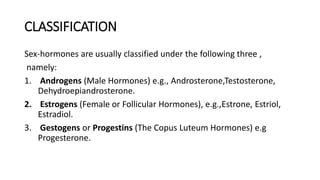
CLASSIFICATION
Sex-hormones are usually classified under the following three ,
namely:
1. Androgens (Male Hormones) e.g., Androsterone,Testosterone,
Dehydroepiandrosterone.
2. Estrogens (Female or Follicular Hormones), e.g.,Estrone, Estriol,
Estradiol.
3. Gestogens or Progestins (The Copus Luteum Hormones) e.g
Progesterone.
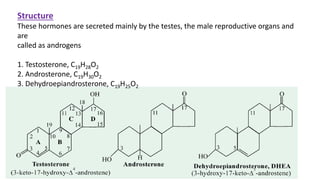
Structure
These hormones are secreted mainly by the testes, the male reproductive organs and
are
called as androgens
1. Testosterone, C19H28O2
2. Androsterone, C19H30O2
3. Dehydroepiandrosterone, C19H25O2
•Testosterone
• primary male sex hormone & anabolic steroid.
• Androsterone was first isolated by Adolf Butenandt et al in 1931 from male
urine
• Testosterone is most potent of all these and dehydroepiandrosterone is least
active.’
• The relative potency ratio of these three forms is 20 : 7 : 1.
• Testosterone has a tendency to rise during late summer and early fall to peak
in September.
• In male humans, testosterone plays a key role in the development of male
reproductive tissues such as testes and prostate promoting secondary sexual
characteristics such as increased muscle and bone mass, and the growth of
body hair.
• Its IUPAC name is 17β-Hydroxyandrost-4-en-3-one
Mechanism of Action
• Testosterone antagonizes the androgen receptor to induce gene expression that
causes the growth and development of masculine sex organs and secondary
sexual characteristics.
Structure activity relationship
• It must contain the andostane skeleton for its biological activity.
• Introduction of double bond at C1 position increases the anabolic activity.
Example:methandrostenolone is more active than methyl testosterone.
• Replacement of carbon atom at C2 position by oxygen (e.g. oxandrolone)
gives the oral anabolic activity.
• Presence of Oxygen at C3 and C17 are not essential for the androgenic
activity.
• Presence of hydroxy group at C17 position has no androgenic or anabolic
activity.
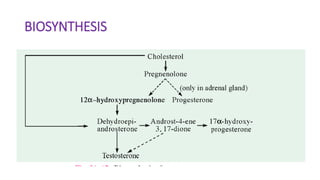
BIOSYNTHESIS
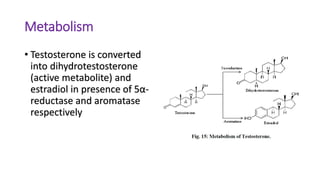
Metabolism
• Testosterone is converted
into dihydrotestosterone
(active metabolite) and
estradiol in presence of 5α-
reductase and aromatase
respectively
Adverse effect
• Common side effects of testosterone include acne, swelling, and breast
enlargement in men. Serious side
• effects may include liver toxicity, heart disease, and behavioral changes.
Uses
• Testosterone is used primarily to treat symptoms of sexual dysfunction
in men. Its potential benefits include
• improved libido, increased bone mass, and increased sense of well-
being
OVARIAN HORMONES
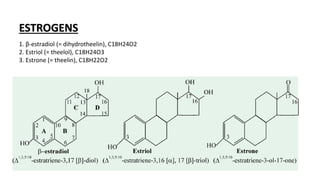
1. β-estradiol (= dihydrotheelin), C18H24O2
2. Estriol (= theelol), C18H24O3
3. Estrone (= theelin), C18H22O2
ESTROGENS
• Estrone is the 1st known member of the sex hormones.
• Isolated from the urine of pregnants.
• Estrogen in the female is produced in the ovaries by the theca interna and the
granulosa cells of the follicles.
• Estrogens include the natural hormones as well as semi-synthetic and synthetic
agents
• All these are characterized by the absence of a CH3 group at C10 and by the
aromatic ringA, making the OH group phenolic in character.
• B-estradiol is the most potent estrogens.
• Estrone is less potent and estriol is least active.
• Estrogen production is highest when a woman is young & slows down with age.
Biosynthesis
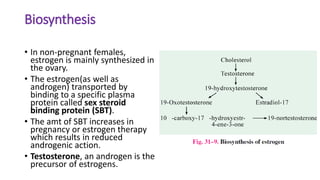
• In non-pregnant females,
estrogen is mainly synthesized in
the ovary.
• The estrogen(as well as
androgen) transported by
binding to a specific plasma
protein called sex steroid
binding protein (SBT).
• The amt of SBT increases in
pregnancy or estrogen therapy
which results in reduced
androgenic action.
• Testosterone, an androgen is the
precursor of estrogens.
METABOLISM
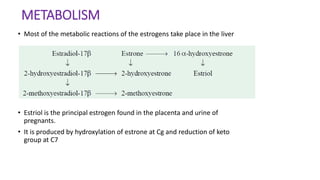
• Most of the metabolic reactions of the estrogens take place in the liver
• Estriol is the principal estrogen found in the placenta and urine of
pregnants.
• It is produced by hydroxylation of estrone at Cg and reduction of keto
group at C7
FUNCTIONS
• Effects on uterus
• Effects on fallopian tubes
• Effects on vagina
• Effect on the breast
• Effects on 2° sexual characteristics
• Effects on bones
• Effects on protein & fat metabolism
• Effects on electrolyte balance
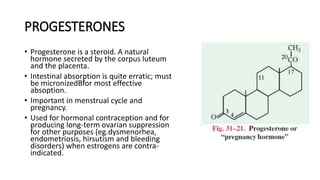
PROGESTERONES
• Progesterone is a steroid. A natural
hormone secreted by the corpus luteum
and the placenta.
• Intestinal absorption is quite erratic; must
be micronizedBfor most effective
absoption.
• Important in menstrual cycle and
pregnancy.
• Used for hormonal contraception and for
producing long-term ovarian suppression
for other purposes (eg.dysmenorhea,
endometriosis, hirsutism and bleeding
disorders) when estrogens are contra-
indicated.
• Mechanism of action
• Progesterone converts the endometrium to its secretory stage to
prepare the uterus for implantation. At the
• same time progesterone affects the vaginal epithelium and cervical
mucus, making it thick and impenetrable
• to sperm.
•Structure activity relationship
• Steroidal skeleton is essential for activity.
• Saturation of ring-A decreases the activity.
• Removal of the keto function removes androgenic activity.
• Substitution at 17α with ethynyl, methyl, ethyl group reduce the
activity.
•Metabolism
• The metabolism of progesterone is rapid and extensive and occurs
mainly in the liver. The enzyme 5α
• reductase is responsible for transforming testosterone into the more
potent androgen 5α-dihydrotestosterone
•Adverse effect
• The commonly reported side effects of progesterone include
abdominal cramps, depression, dizziness, and headache. Other side
effects include anxiety, cough, diarrhea, fatigue, musculoskeletal pain,
nausea,bloating, and irritability.
Uses
• Progesterone is used in combination with estrogens mainly in
hormone therapy for menopausal symptoms
• and low sex hormone levels in women. It is also used in women to
support pregnancy and fertility and to
• treat gynecological disorders.
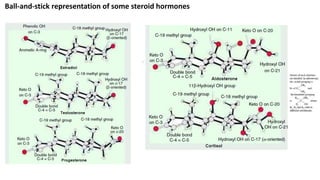
Ball-and-stick representation of some steroid hormones

SEX HORMONE.pptx

  • 1.
  • 2.
    DEFNITION • Sex hormonesare steroid hormone • Affects the growth & function of the reproductive organs or the development of secondary sex characteristics. • Produced especially by • Ovaries, • Testes • Adrenal cortex
  • 3.
    CLASSIFICATION Sex-hormones are usuallyclassified under the following three , namely: 1. Androgens (Male Hormones) e.g., Androsterone,Testosterone, Dehydroepiandrosterone. 2. Estrogens (Female or Follicular Hormones), e.g.,Estrone, Estriol, Estradiol. 3. Gestogens or Progestins (The Copus Luteum Hormones) e.g Progesterone.
  • 5.
    Structure These hormones aresecreted mainly by the testes, the male reproductive organs and are called as androgens 1. Testosterone, C19H28O2 2. Androsterone, C19H30O2 3. Dehydroepiandrosterone, C19H25O2
  • 6.
    •Testosterone • primary malesex hormone & anabolic steroid. • Androsterone was first isolated by Adolf Butenandt et al in 1931 from male urine • Testosterone is most potent of all these and dehydroepiandrosterone is least active.’ • The relative potency ratio of these three forms is 20 : 7 : 1. • Testosterone has a tendency to rise during late summer and early fall to peak in September. • In male humans, testosterone plays a key role in the development of male reproductive tissues such as testes and prostate promoting secondary sexual characteristics such as increased muscle and bone mass, and the growth of body hair. • Its IUPAC name is 17β-Hydroxyandrost-4-en-3-one
  • 7.
    Mechanism of Action •Testosterone antagonizes the androgen receptor to induce gene expression that causes the growth and development of masculine sex organs and secondary sexual characteristics. Structure activity relationship • It must contain the andostane skeleton for its biological activity. • Introduction of double bond at C1 position increases the anabolic activity. Example:methandrostenolone is more active than methyl testosterone. • Replacement of carbon atom at C2 position by oxygen (e.g. oxandrolone) gives the oral anabolic activity. • Presence of Oxygen at C3 and C17 are not essential for the androgenic activity. • Presence of hydroxy group at C17 position has no androgenic or anabolic activity.
  • 8.
  • 9.
    Metabolism • Testosterone isconverted into dihydrotestosterone (active metabolite) and estradiol in presence of 5α- reductase and aromatase respectively
  • 10.
    Adverse effect • Commonside effects of testosterone include acne, swelling, and breast enlargement in men. Serious side • effects may include liver toxicity, heart disease, and behavioral changes. Uses • Testosterone is used primarily to treat symptoms of sexual dysfunction in men. Its potential benefits include • improved libido, increased bone mass, and increased sense of well- being
  • 11.
  • 12.
    1. β-estradiol (=dihydrotheelin), C18H24O2 2. Estriol (= theelol), C18H24O3 3. Estrone (= theelin), C18H22O2 ESTROGENS
  • 13.
    • Estrone isthe 1st known member of the sex hormones. • Isolated from the urine of pregnants. • Estrogen in the female is produced in the ovaries by the theca interna and the granulosa cells of the follicles. • Estrogens include the natural hormones as well as semi-synthetic and synthetic agents • All these are characterized by the absence of a CH3 group at C10 and by the aromatic ringA, making the OH group phenolic in character. • B-estradiol is the most potent estrogens. • Estrone is less potent and estriol is least active. • Estrogen production is highest when a woman is young & slows down with age.
  • 14.
    Biosynthesis • In non-pregnantfemales, estrogen is mainly synthesized in the ovary. • The estrogen(as well as androgen) transported by binding to a specific plasma protein called sex steroid binding protein (SBT). • The amt of SBT increases in pregnancy or estrogen therapy which results in reduced androgenic action. • Testosterone, an androgen is the precursor of estrogens.
  • 15.
    METABOLISM • Most ofthe metabolic reactions of the estrogens take place in the liver • Estriol is the principal estrogen found in the placenta and urine of pregnants. • It is produced by hydroxylation of estrone at Cg and reduction of keto group at C7
  • 16.
    FUNCTIONS • Effects onuterus • Effects on fallopian tubes • Effects on vagina • Effect on the breast • Effects on 2° sexual characteristics • Effects on bones • Effects on protein & fat metabolism • Effects on electrolyte balance
  • 17.
    PROGESTERONES • Progesterone isa steroid. A natural hormone secreted by the corpus luteum and the placenta. • Intestinal absorption is quite erratic; must be micronizedBfor most effective absoption. • Important in menstrual cycle and pregnancy. • Used for hormonal contraception and for producing long-term ovarian suppression for other purposes (eg.dysmenorhea, endometriosis, hirsutism and bleeding disorders) when estrogens are contra- indicated.
  • 18.
    • Mechanism ofaction • Progesterone converts the endometrium to its secretory stage to prepare the uterus for implantation. At the • same time progesterone affects the vaginal epithelium and cervical mucus, making it thick and impenetrable • to sperm.
  • 19.
    •Structure activity relationship •Steroidal skeleton is essential for activity. • Saturation of ring-A decreases the activity. • Removal of the keto function removes androgenic activity. • Substitution at 17α with ethynyl, methyl, ethyl group reduce the activity. •Metabolism • The metabolism of progesterone is rapid and extensive and occurs mainly in the liver. The enzyme 5α • reductase is responsible for transforming testosterone into the more potent androgen 5α-dihydrotestosterone
  • 20.
    •Adverse effect • Thecommonly reported side effects of progesterone include abdominal cramps, depression, dizziness, and headache. Other side effects include anxiety, cough, diarrhea, fatigue, musculoskeletal pain, nausea,bloating, and irritability. Uses • Progesterone is used in combination with estrogens mainly in hormone therapy for menopausal symptoms • and low sex hormone levels in women. It is also used in women to support pregnancy and fertility and to • treat gynecological disorders.
  • 21.
    Ball-and-stick representation ofsome steroid hormones