
The Potential for Production of Fuels from Giant Miscanthus via Pyrolysis Philip Steele Professor and SERC  Bio-oil Thrust Leader Sustainable Energy Research Center Mississippi State University
Acknowledgements This research is based upon work funded through the Sustainable Energy Research Center at Mississippi State University and is supported by the Department of Energy under Award Number  DE-FG3606GO86025 .
MSU bio-oil objectives: Develop more effective pyrolysis reactors to produce high-quality bio-oils at optimum yield  Upgrade bio-oils to commercial liquid fuels Commercialize technologies by demonstration projects and industrial relationships
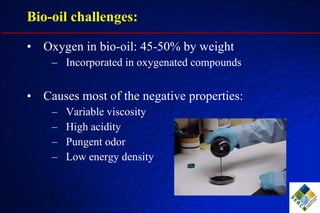
Oxygen in bio-oil: 45-50% by weight Incorporated in oxygenated compounds Causes most of the negative properties: Variable viscosity High acidity Pungent odor Low energy density Bio-oil challenges:
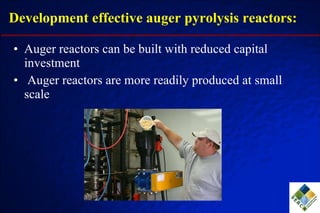
Development effective auger pyrolysis reactors: Auger reactors can be built with reduced capital investment Auger reactors are more readily produced at small scale
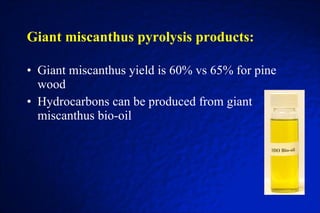
Giant miscanthus pyrolysis products: Giant miscanthus yield is 60% vs 65% for pine wood Hydrocarbons can be produced from giant miscanthus bio-oil
The MSU auger reactor design is under MOU to an industrial partner: Prototype 10 ton/day reactor built to MSU design is producing bio-oil at 67% yield All benchmarks have been met and licensing should be completed during September 2010 Construction of a 50-ton per day pyrolysis facility planned for 2012
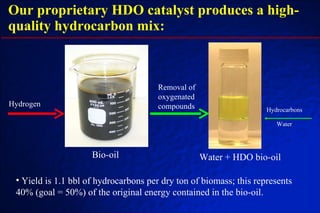
Our proprietary HDO catalyst produces a high-quality hydrocarbon mix: Hydrogen Removal of  oxygenated compounds Water + HDO bio-oil Water Hydrocarbons Bio-oil Yield is 1.1 bbl of hydrocarbons per dry ton of biomass; this represents 40% (goal = 50%) of the original energy contained in the bio-oil.
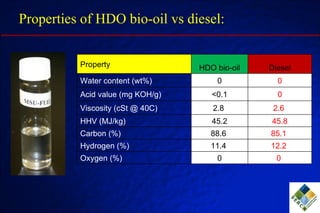
Properties of HDO bio-oil vs diesel: Property HDO bio-oil Diesel Water content (wt%) 0 0 Acid value (mg KOH/g) <0.1 0 Viscosity (cSt @ 40C) 2.8  2.6  HHV (MJ/kg) 45.2 45.8 Carbon (%) 88.6  85.1  Hydrogen (%) 11.4  12.2  Oxygen (%) 0 0 
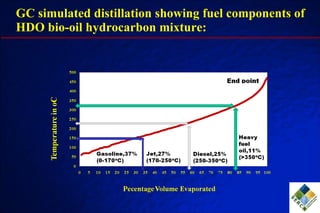
GC simulated distillation showing fuel components of HDO bio-oil hydrocarbon mixture:
Upgrading bio-oil : Lignocellulosic Boiler Fuel (LBF)
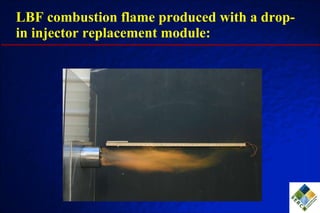
LBF combustion flame produced with a drop-in injector replacement module:
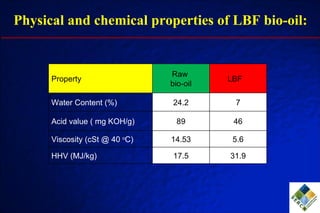
Physical and chemical properties of LBF bio-oil: Property Raw  bio-oil LBF  Water Content (%) 24.2 7 Acid value ( mg KOH/g) 89 46 Viscosity (cSt @ 40  o C) 14.53 5.6 HHV (MJ/kg) 17.5 31.9
Upgraded bio-oil : Anhydrosugars to ethanol or hydrogen
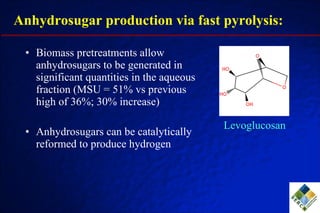
Anhydrosugar production via fast pyrolysis: Biomass pretreatments allow anhydrosugars to be generated in  significant quantities in the aqueous fraction (MSU = 51% vs previous high of 36%; 30% increase)  Anhydrosugars can be catalytically reformed to produce hydrogen Levoglucosan
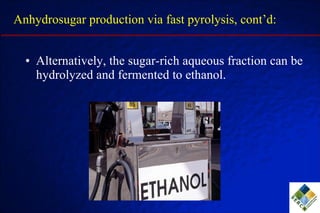
Alternatively, the sugar-rich aqueous fraction can be hydrolyzed and fermented to ethanol. Anhydrosugar production via fast pyrolysis, cont’d:
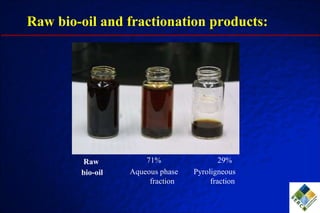
Raw  bio-oil Raw bio-oil and fractionation products: 71% Aqueous phase fraction 29% Pyroligneous fraction
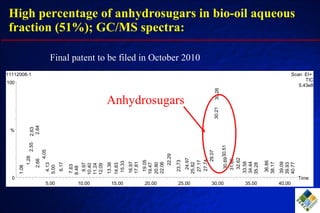
High percentage of anhydrosugars in bio-oil aqueous fraction (51%); GC/MS spectra: Anhydrosugars Final patent to be filed in October 2010
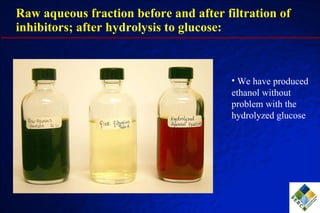
Raw aqueous fraction before and after filtration of inhibitors; after hydrolysis to glucose: We have produced ethanol without  problem with the  hydrolyzed glucose
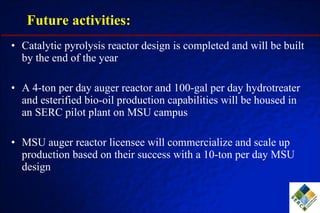
Future activities: Catalytic pyrolysis reactor design is completed and will be built by the end of the year A 4-ton per day auger reactor and 100-gal per day hydrotreater and esterified bio-oil production capabilities will be housed in an SERC pilot plant on MSU campus MSU auger reactor licensee will commercialize and scale up production based on their success with a 10-ton per day MSU design
Future activities, cont’d: Aqueous fraction sugars will be produced from giant miscanthus bio-oil
Philip Steele Professor and SERC  Bio-oil Thrust Leader Sustainable Energy Research Center Mississippi State University   The Potential for Production of Fuels from Giant Miscanthus via Pyrolysis

Steele repreve 1 13-11

  • 1.
    The Potential forProduction of Fuels from Giant Miscanthus via Pyrolysis Philip Steele Professor and SERC Bio-oil Thrust Leader Sustainable Energy Research Center Mississippi State University
  • 2.
    Acknowledgements This researchis based upon work funded through the Sustainable Energy Research Center at Mississippi State University and is supported by the Department of Energy under Award Number DE-FG3606GO86025 .
  • 3.
    MSU bio-oil objectives:Develop more effective pyrolysis reactors to produce high-quality bio-oils at optimum yield Upgrade bio-oils to commercial liquid fuels Commercialize technologies by demonstration projects and industrial relationships
  • 4.
    Oxygen in bio-oil:45-50% by weight Incorporated in oxygenated compounds Causes most of the negative properties: Variable viscosity High acidity Pungent odor Low energy density Bio-oil challenges:
  • 5.
    Development effective augerpyrolysis reactors: Auger reactors can be built with reduced capital investment Auger reactors are more readily produced at small scale
  • 6.
    Giant miscanthus pyrolysisproducts: Giant miscanthus yield is 60% vs 65% for pine wood Hydrocarbons can be produced from giant miscanthus bio-oil
  • 7.
    The MSU augerreactor design is under MOU to an industrial partner: Prototype 10 ton/day reactor built to MSU design is producing bio-oil at 67% yield All benchmarks have been met and licensing should be completed during September 2010 Construction of a 50-ton per day pyrolysis facility planned for 2012
  • 8.
    Our proprietary HDOcatalyst produces a high-quality hydrocarbon mix: Hydrogen Removal of oxygenated compounds Water + HDO bio-oil Water Hydrocarbons Bio-oil Yield is 1.1 bbl of hydrocarbons per dry ton of biomass; this represents 40% (goal = 50%) of the original energy contained in the bio-oil.
  • 9.
    Properties of HDObio-oil vs diesel: Property HDO bio-oil Diesel Water content (wt%) 0 0 Acid value (mg KOH/g) <0.1 0 Viscosity (cSt @ 40C) 2.8  2.6  HHV (MJ/kg) 45.2 45.8 Carbon (%) 88.6  85.1  Hydrogen (%) 11.4  12.2  Oxygen (%) 0 0 
  • 10.
    GC simulated distillationshowing fuel components of HDO bio-oil hydrocarbon mixture:
  • 11.
    Upgrading bio-oil :Lignocellulosic Boiler Fuel (LBF)
  • 12.
    LBF combustion flameproduced with a drop-in injector replacement module:
  • 13.
    Physical and chemicalproperties of LBF bio-oil: Property Raw bio-oil LBF Water Content (%) 24.2 7 Acid value ( mg KOH/g) 89 46 Viscosity (cSt @ 40 o C) 14.53 5.6 HHV (MJ/kg) 17.5 31.9
  • 14.
    Upgraded bio-oil :Anhydrosugars to ethanol or hydrogen
  • 15.
    Anhydrosugar production viafast pyrolysis: Biomass pretreatments allow anhydrosugars to be generated in significant quantities in the aqueous fraction (MSU = 51% vs previous high of 36%; 30% increase) Anhydrosugars can be catalytically reformed to produce hydrogen Levoglucosan
  • 16.
    Alternatively, the sugar-richaqueous fraction can be hydrolyzed and fermented to ethanol. Anhydrosugar production via fast pyrolysis, cont’d:
  • 17.
    Raw bio-oilRaw bio-oil and fractionation products: 71% Aqueous phase fraction 29% Pyroligneous fraction
  • 18.
    High percentage ofanhydrosugars in bio-oil aqueous fraction (51%); GC/MS spectra: Anhydrosugars Final patent to be filed in October 2010
  • 19.
    Raw aqueous fractionbefore and after filtration of inhibitors; after hydrolysis to glucose: We have produced ethanol without problem with the hydrolyzed glucose
  • 20.
    Future activities: Catalyticpyrolysis reactor design is completed and will be built by the end of the year A 4-ton per day auger reactor and 100-gal per day hydrotreater and esterified bio-oil production capabilities will be housed in an SERC pilot plant on MSU campus MSU auger reactor licensee will commercialize and scale up production based on their success with a 10-ton per day MSU design
  • 21.
    Future activities, cont’d:Aqueous fraction sugars will be produced from giant miscanthus bio-oil
  • 22.
    Philip Steele Professorand SERC Bio-oil Thrust Leader Sustainable Energy Research Center Mississippi State University The Potential for Production of Fuels from Giant Miscanthus via Pyrolysis