Prepared By,
Akhil S
Electrical & Electronics Engg.
MACE
Introduction
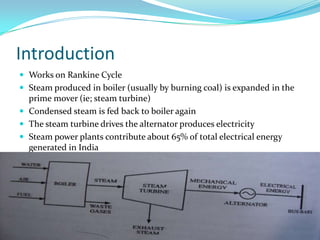
 Works on Rankine Cycle
 Steam produced in boiler (usually by burning coal) is expanded in the
prime mover (ie; steam turbine)
 Condensed steam is fed back to boiler again
 The steam turbine drives the alternator produces electricity
 Steam power plants contribute about 65% of total electrical energy
generated in India
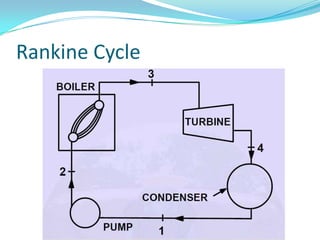
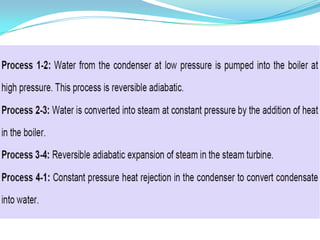
Rankine Cycle
Layout of Steam Power Plant
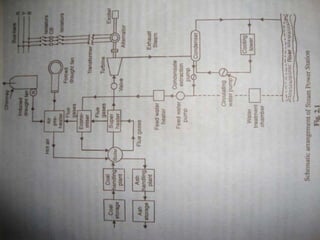
The schematic arrangement of a modern steam power
station can be divided into the following stages:
 Coal and ash handling plant
 Steam generating plant
 Steam turbine
 Alternator
 Feed water
 Cooling arrangement
Coal and Ash handling plant
 Coal is transported to power station by rail or road and
stored in coal storage plant and then pulverised
 Pulverised coal is fed to fed to the boiler by belt
conveyers
 Coal gets burned in the boiler and ash produced is
removed to the ash handling plant and then delivered
to ash storage plant for disposal
 A 100MW station operating at 50% LF may burn about
20000tons of coal per month and produce 3000 tons of
ash
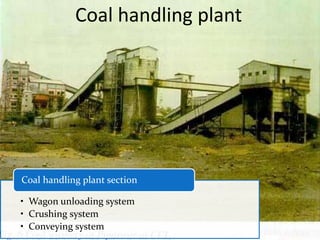
Coal handling plant
• Wagon unloading system
• Crushing system
• Conveying system
Coal handling plant section
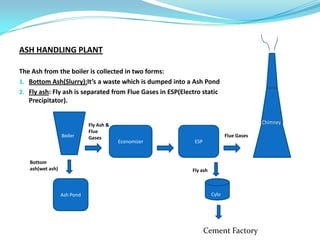
ASH HANDLING PLANT
The Ash from the boiler is collected in two forms:
1. Bottom Ash(Slurry):It’s a waste which is dumped into a Ash Pond
2. Fly ash: Fly ash is separated from Flue Gases in ESP(Electro static
Precipitator).
Fly Ash &
Flue
Gases
Economizer ESP
Bottom
ash(wet ash)
Ash Pond
Boiler
Cylo
Chimney
Fly ash
Flue Gases
Cement Factory
Steam generating plant
The steam generating plant consists of a boiler for the
production of steam and other auxiliary equipment for
the utilization of flue gases
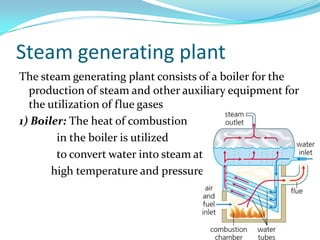
1) Boiler: The heat of combustion
in the boiler is utilized
to convert water into steam at
high temperature and pressure
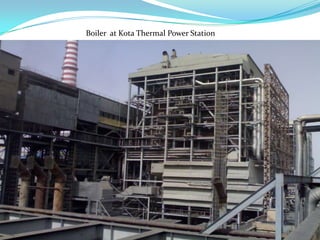
Boiler at Kota Thermal Power Station
Steam generating plant
2) Superheater: The steam produced in boiler is wet
and is passed through a superheater where it is dried
and superheated. Increases efficiency
Steam generating plant
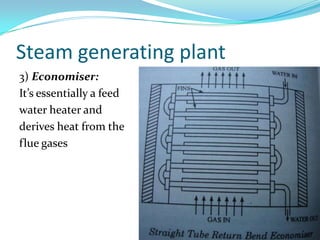
3) Economiser:
It’s essentially a feed
water heater and
derives heat from the
flue gases
Steam generating plant
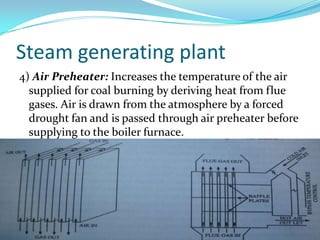
4) Air Preheater: Increases the temperature of the air
supplied for coal burning by deriving heat from flue
gases. Air is drawn from the atmosphere by a forced
drought fan and is passed through air preheater before
supplying to the boiler furnace.
Steam Turbine
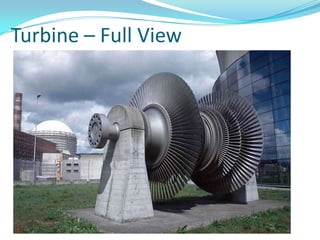
 Dry and superheated steam from superheater is fed to
the steam turbine.
 The heat energy of steam when passing over the blades
of turbine is converted into mechanical energy.
 After giving energy to the turbine, the steam is
exhausted to the condenser which condenses the
exhausted steam by means of cold water circulation
Turbine – Full View
Alternator
 Steam turbine is coupled to an alternator which
converts the mechanical energy to electrical energy
 The electrical output of the alternator is delivered to
the bus bars through transformer, circuit breakers and
isolators.
Feed Water
 The condensate from the condenser is used as feed
water to the boiler.
 The water that may be lost in the cycle is made up
from the external source
 The feed water on its way to boiler gets heated up by
water heaters and economiser.
 This helps to improve the overall efficiency of the plant
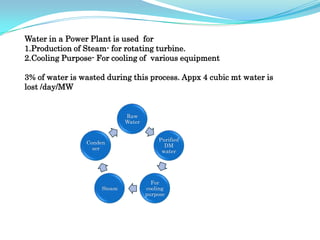
Raw
Water
Purified
DM
water
For
cooling
purpose
Steam
Conden
ser
Water in a Power Plant is used for
1.Production of Steam- for rotating turbine.
2.Cooling Purpose- For cooling of various equipment
3% of water is wasted during this process. Appx 4 cubic mt water is
lost /day/MW
Cooling Arrangement
 Condenser condenses the steam exhausted from the
turbine
 Water is drawn from natural sources like
river, lake, canals…
 Circulating water takes up the heat and itself gets
heated up
 This hot water can be discharged away or used again
by using a cooling tower
Reference
 Principles of Power System- V.K. Mehta
 A Course in Power Systems- J.B. Gupta
Steam power plants

Steam power plants

  • 1.
    Prepared By, Akhil S Electrical& Electronics Engg. MACE
  • 2.
    Introduction  Works onRankine Cycle  Steam produced in boiler (usually by burning coal) is expanded in the prime mover (ie; steam turbine)  Condensed steam is fed back to boiler again  The steam turbine drives the alternator produces electricity  Steam power plants contribute about 65% of total electrical energy generated in India
  • 3.
  • 7.
    Layout of SteamPower Plant The schematic arrangement of a modern steam power station can be divided into the following stages:  Coal and ash handling plant  Steam generating plant  Steam turbine  Alternator  Feed water  Cooling arrangement
  • 8.
    Coal and Ashhandling plant  Coal is transported to power station by rail or road and stored in coal storage plant and then pulverised  Pulverised coal is fed to fed to the boiler by belt conveyers  Coal gets burned in the boiler and ash produced is removed to the ash handling plant and then delivered to ash storage plant for disposal  A 100MW station operating at 50% LF may burn about 20000tons of coal per month and produce 3000 tons of ash
  • 9.
    Coal handling plant •Wagon unloading system • Crushing system • Conveying system Coal handling plant section
  • 10.
    ASH HANDLING PLANT TheAsh from the boiler is collected in two forms: 1. Bottom Ash(Slurry):It’s a waste which is dumped into a Ash Pond 2. Fly ash: Fly ash is separated from Flue Gases in ESP(Electro static Precipitator). Fly Ash & Flue Gases Economizer ESP Bottom ash(wet ash) Ash Pond Boiler Cylo Chimney Fly ash Flue Gases Cement Factory
  • 11.
    Steam generating plant Thesteam generating plant consists of a boiler for the production of steam and other auxiliary equipment for the utilization of flue gases 1) Boiler: The heat of combustion in the boiler is utilized to convert water into steam at high temperature and pressure
  • 12.
    Boiler at KotaThermal Power Station
  • 13.
    Steam generating plant 2)Superheater: The steam produced in boiler is wet and is passed through a superheater where it is dried and superheated. Increases efficiency
  • 14.
    Steam generating plant 3)Economiser: It’s essentially a feed water heater and derives heat from the flue gases
  • 15.
    Steam generating plant 4)Air Preheater: Increases the temperature of the air supplied for coal burning by deriving heat from flue gases. Air is drawn from the atmosphere by a forced drought fan and is passed through air preheater before supplying to the boiler furnace.
  • 16.
    Steam Turbine  Dryand superheated steam from superheater is fed to the steam turbine.  The heat energy of steam when passing over the blades of turbine is converted into mechanical energy.  After giving energy to the turbine, the steam is exhausted to the condenser which condenses the exhausted steam by means of cold water circulation
  • 17.
  • 18.
    Alternator  Steam turbineis coupled to an alternator which converts the mechanical energy to electrical energy  The electrical output of the alternator is delivered to the bus bars through transformer, circuit breakers and isolators.
  • 19.
    Feed Water  Thecondensate from the condenser is used as feed water to the boiler.  The water that may be lost in the cycle is made up from the external source  The feed water on its way to boiler gets heated up by water heaters and economiser.  This helps to improve the overall efficiency of the plant
  • 20.
    Raw Water Purified DM water For cooling purpose Steam Conden ser Water in aPower Plant is used for 1.Production of Steam- for rotating turbine. 2.Cooling Purpose- For cooling of various equipment 3% of water is wasted during this process. Appx 4 cubic mt water is lost /day/MW
  • 21.
    Cooling Arrangement  Condensercondenses the steam exhausted from the turbine  Water is drawn from natural sources like river, lake, canals…  Circulating water takes up the heat and itself gets heated up  This hot water can be discharged away or used again by using a cooling tower
  • 22.
    Reference  Principles ofPower System- V.K. Mehta  A Course in Power Systems- J.B. Gupta