STEAM POWER
PLANTS
SELECTION OF SITE FOR
STEAM POWER PLANT
 Availability of land
 Availability of sufficient amount of good boiler feed
water and cooling water
 Availability of fuel.
 Necessity for future expansion.
 Availability of other power other power services
 Away from urban areas
 Initial cost of plant
 Magnitude and nature of load to be handled
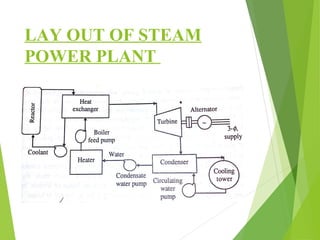
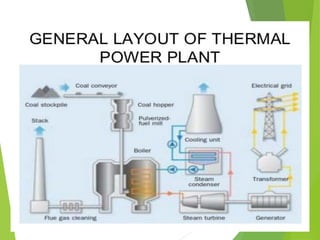
LAY OUT OF STEAM
POWER PLANT
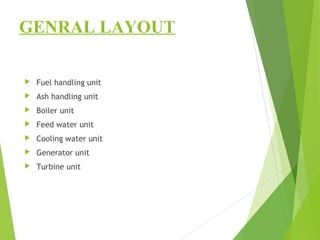
GENRAL LAYOUT
 Fuel handling unit
 Ash handling unit
 Boiler unit
 Feed water unit
 Cooling water unit
 Generator unit
 Turbine unit
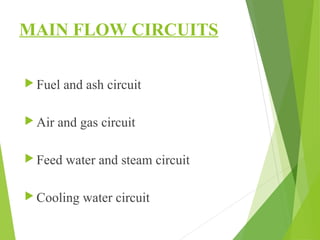
MAIN FLOW CIRCUITS
 Fuel and ash circuit
 Air and gas circuit
 Feed water and steam circuit
 Cooling water circuit
FUEL AND ASH CIRCUIT
Fuel stored is fed to boiler through
conveyer belt.
Coal – particular size for complete
burning.
Coal is passed through crushers , sizers
and magnetic separators before feeding
AIR AND GAS CIRCUIT
Air is required for complete combustion of the
fuel – supplied through Forced draught(FD) and
Induced draught(ID) fans.
Air which is fed to the boiler, is passed through
preheater – to extract energy of flue gases from
boiler.
Flue gas consist of several gases and ash – passed
through precipitator and finally go to atmosphere
via chimney .
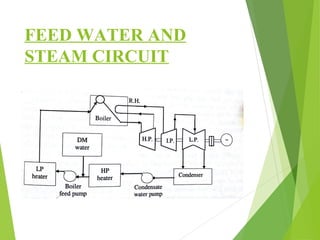
FEED WATER AND
STEAM CIRCUIT
 Most power plants are condensing type – steam is
converted to water by condenser.
 For safety of turbine water is demineralized – better
economic operation
 Adding make up water in feed water system compensate
leakages.
 The boiler feed pump (BFP) feeds water to boiler drum –
heated to form steam.
 Wet steam heated in super heater passed to turbine and
runs it
FEED WATER AND
STEAM CIRCUIT
 Stages of prime mover depending on size of power plant
1. High Pressure Turbine HP
2. Intermediate Pressure Turbine IP
3. Low Pressure turbine LP
FEED WATER AND
STEAM CIRCUIT
COOLING WATER CIRCUIT
 To condensate the steam in condenser
and maintaining low pressure in it,
large quantity of cooling water is
required.
 After passing it through condenser, it
is fed back to river or pondage.
 Cooling tower or cooling ponds are
used in case of shortage.
 Drawback- Excessive water loss
PARTS OF STEAM
POWER PLANT
Boiler- Water tube boiler
Coal Mills
Boiler feed pump- high
capacity IM
Air preheater- extract heat
from flue gases
Draught system- supply air to
PARTS OF STEAM
POWER PLANT
Superheaters and Reheaters
Turbines
Condenser
Cooling tower
Alternators- high speed
synchronous generators
COOLING OF ALTERNATOR
Important due to damage of
insulation at high temperature.
Closed circuit cooling widely
used in modern alternators
(Hydrogen as cooling
medium).
ADVANTAGES OF HYDROGEN
COOLING
 More heat transfer and thermal
conductivity is 7 times more than air.
 Low ventilation losses
 Life of insulation is more as no
oxidation of insulating material .
 Fire hazards minimized
 Less noise
 Size of frame reduced
DISADVANTAGES OF
HYDROGEN COOLING
Chances of formation of
explosive mixture.
Expensive than air
Special oil seals required
Problem of ensuring complete
tightness of hydrogen

Steam Power Plants

  • 1.
  • 2.
    SELECTION OF SITEFOR STEAM POWER PLANT  Availability of land  Availability of sufficient amount of good boiler feed water and cooling water  Availability of fuel.  Necessity for future expansion.  Availability of other power other power services  Away from urban areas  Initial cost of plant  Magnitude and nature of load to be handled
  • 3.
    LAY OUT OFSTEAM POWER PLANT
  • 5.
    GENRAL LAYOUT  Fuelhandling unit  Ash handling unit  Boiler unit  Feed water unit  Cooling water unit  Generator unit  Turbine unit
  • 6.
    MAIN FLOW CIRCUITS Fuel and ash circuit  Air and gas circuit  Feed water and steam circuit  Cooling water circuit
  • 7.
    FUEL AND ASHCIRCUIT Fuel stored is fed to boiler through conveyer belt. Coal – particular size for complete burning. Coal is passed through crushers , sizers and magnetic separators before feeding
  • 8.
    AIR AND GASCIRCUIT Air is required for complete combustion of the fuel – supplied through Forced draught(FD) and Induced draught(ID) fans. Air which is fed to the boiler, is passed through preheater – to extract energy of flue gases from boiler. Flue gas consist of several gases and ash – passed through precipitator and finally go to atmosphere via chimney .
  • 9.
    FEED WATER AND STEAMCIRCUIT  Most power plants are condensing type – steam is converted to water by condenser.  For safety of turbine water is demineralized – better economic operation  Adding make up water in feed water system compensate leakages.  The boiler feed pump (BFP) feeds water to boiler drum – heated to form steam.  Wet steam heated in super heater passed to turbine and runs it
  • 10.
    FEED WATER AND STEAMCIRCUIT  Stages of prime mover depending on size of power plant 1. High Pressure Turbine HP 2. Intermediate Pressure Turbine IP 3. Low Pressure turbine LP
  • 11.
  • 12.
    COOLING WATER CIRCUIT To condensate the steam in condenser and maintaining low pressure in it, large quantity of cooling water is required.  After passing it through condenser, it is fed back to river or pondage.  Cooling tower or cooling ponds are used in case of shortage.  Drawback- Excessive water loss
  • 13.
    PARTS OF STEAM POWERPLANT Boiler- Water tube boiler Coal Mills Boiler feed pump- high capacity IM Air preheater- extract heat from flue gases Draught system- supply air to
  • 14.
    PARTS OF STEAM POWERPLANT Superheaters and Reheaters Turbines Condenser Cooling tower Alternators- high speed synchronous generators
  • 15.
    COOLING OF ALTERNATOR Importantdue to damage of insulation at high temperature. Closed circuit cooling widely used in modern alternators (Hydrogen as cooling medium).
  • 16.
    ADVANTAGES OF HYDROGEN COOLING More heat transfer and thermal conductivity is 7 times more than air.  Low ventilation losses  Life of insulation is more as no oxidation of insulating material .  Fire hazards minimized  Less noise  Size of frame reduced
  • 17.
    DISADVANTAGES OF HYDROGEN COOLING Chancesof formation of explosive mixture. Expensive than air Special oil seals required Problem of ensuring complete tightness of hydrogen