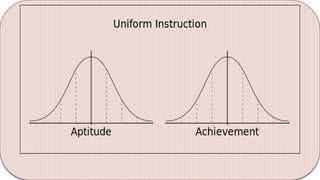
Stages of Teaching & Learning
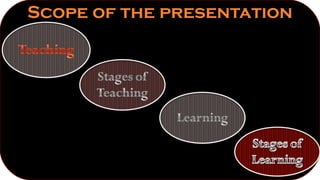
Scope of the presentation
Teaching:
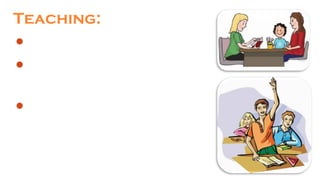
A process of interacting
Stands for pedagogy, training and
nurturing
The process of engaging students in
activities that will enable them to
acquire the knowledge, skills, as well
as meaningful values and attitudes
Teaching:
An aggregate of organized strategies and activities aimed at
remind learning
Overall cluster of activities associated with a teacher, and
including explaining, questioning, demonstrating and
motivating.
Teaching:
Is both science and art;
SCIENCE as it is based on psychological research
that identifies “cause and effect relationship”
between teaching and learning;
ART, as it shows how those relationships are
implemented in successful and artistic teaching.
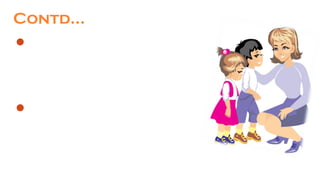
Contd…
“Teaching is an activity which
designed and performed in
student’s behavior”
Teaching is the inspiration,
guidance and encouragement of
learning.
Characteristics Teaching:
Carefully planned
Suggestive
Kindly and sympathetic
Inspirational
According to Individual differences
Cooperative
Based on the experiences
Progressive
Generate the self confidence
Give the own pace of learning
Evaluation of knowledge
Full form of Teaching:
T-
E-
A-
C-
H-
I-
N-
G-
Full form of Teaching:
T- Tactful
E- Effective for life
A-Achievement with affection
C- Character building, make a creative
H-Honesty building
I-Intellectual creation
N-Nation builder
G- Genius
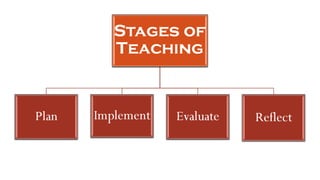
Planning:
Formulation of the objectives
Decision making about the subject content
Sequencing of content for presentation
Decision about strategies of teaching
Distribution of teaching strategies
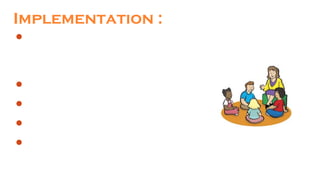
Implementation :
In this stage, all those activities which a teacher carries over right from
entering the classroom till the presentation of the content are included
under this phases. in this stage....
sizing up of the class
diagnosis of learner
action and reaction (Achievement)
selection of stimuli, presentation of stimuli, reinforcement,
deployment of strategies.
Evaluation :
In this stage, of teaching sums up, the teacher now checks
whether the presentation of content takes the form of success
and effectiveness.....
for behaviour modification
Selection of assessment techniques
modification/adaptation of teaching strategies
Reflaction:
Think
Talk
Read
Ask
Teaching
learning:
Learning is the acquisition of habits, knowledge
and attitude.
Learning is any change in behaviour resulting
from behaviour.
The process of acquiring new knowledge and
new responses is the process of learning
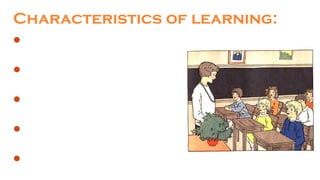
Characteristics of learning:
Learning is growth and adjustment
Learning is organization of experience
Learning is purposeful
Learning is active
Learning is product of environment
Full form of learning:
L-
E-
A-
R-
N-
I-
N-
G-
Full form of learning:
L-Lifestyle
E-Exercise
A-Attitude
R-Responsible
N-Nutrition
I-Intellectual creation
N-Nation builder
G- Genius
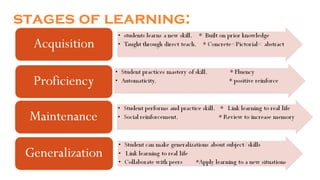
stages of learning:
Mastery
Teachers who know how to achieve
student success employ effective
practices. These teachers know how to
manage their classroom, teach for
mastery, and have high expectations for
their students.
Conclusion:
Effective teachers are able to affect or make an impact on
their students. A teacher’s role is to open the door to
learning.
To make an impact on your students, you need to use
effective teaching practices. Students learn only when the
teacher has an appreciable effect on a student’s life.
References:
 Principles of Education and Teaching, Sahitya Prakashan Agra: p. 169–183.
 Gupta S.P. (2002): Advance Educational Psychology, Sharda Pustak Bhavna
Allahabad: p. 279-281.
 https://www.slideshare.net/bravoram/behavioral-theories-of-learning
 https://www.slideshare.net/the3wolves/reach-for-the-stars-handout
 https://www.youtube.com/results?
search_query=How+to+handle+a+class+for+new+teachers
 https://www.youtube.com/watch?v=QW7S_R9vEkc
stages of teaching

stages of teaching

stages of teaching

  • 1.
  • 2.
    Scope of thepresentation
  • 3.
    Teaching: A process ofinteracting Stands for pedagogy, training and nurturing The process of engaging students in activities that will enable them to acquire the knowledge, skills, as well as meaningful values and attitudes
  • 4.
    Teaching: An aggregate oforganized strategies and activities aimed at remind learning Overall cluster of activities associated with a teacher, and including explaining, questioning, demonstrating and motivating.
  • 5.
    Teaching: Is both scienceand art; SCIENCE as it is based on psychological research that identifies “cause and effect relationship” between teaching and learning; ART, as it shows how those relationships are implemented in successful and artistic teaching.
  • 6.
    Contd… “Teaching is anactivity which designed and performed in student’s behavior” Teaching is the inspiration, guidance and encouragement of learning.
  • 9.
    Characteristics Teaching: Carefully planned Suggestive Kindlyand sympathetic Inspirational According to Individual differences Cooperative Based on the experiences Progressive Generate the self confidence Give the own pace of learning Evaluation of knowledge
  • 10.
    Full form ofTeaching: T- E- A- C- H- I- N- G-
  • 11.
    Full form ofTeaching: T- Tactful E- Effective for life A-Achievement with affection C- Character building, make a creative H-Honesty building I-Intellectual creation N-Nation builder G- Genius
  • 13.
    Planning: Formulation of theobjectives Decision making about the subject content Sequencing of content for presentation Decision about strategies of teaching Distribution of teaching strategies
  • 14.
    Implementation : In thisstage, all those activities which a teacher carries over right from entering the classroom till the presentation of the content are included under this phases. in this stage.... sizing up of the class diagnosis of learner action and reaction (Achievement) selection of stimuli, presentation of stimuli, reinforcement, deployment of strategies.
  • 15.
    Evaluation : In thisstage, of teaching sums up, the teacher now checks whether the presentation of content takes the form of success and effectiveness..... for behaviour modification Selection of assessment techniques modification/adaptation of teaching strategies
  • 16.
  • 18.
  • 19.
    learning: Learning is theacquisition of habits, knowledge and attitude. Learning is any change in behaviour resulting from behaviour. The process of acquiring new knowledge and new responses is the process of learning
  • 20.
    Characteristics of learning: Learningis growth and adjustment Learning is organization of experience Learning is purposeful Learning is active Learning is product of environment
  • 22.
    Full form oflearning: L- E- A- R- N- I- N- G-
  • 23.
    Full form oflearning: L-Lifestyle E-Exercise A-Attitude R-Responsible N-Nutrition I-Intellectual creation N-Nation builder G- Genius
  • 24.
  • 27.
    Mastery Teachers who knowhow to achieve student success employ effective practices. These teachers know how to manage their classroom, teach for mastery, and have high expectations for their students.
  • 29.
    Conclusion: Effective teachers areable to affect or make an impact on their students. A teacher’s role is to open the door to learning. To make an impact on your students, you need to use effective teaching practices. Students learn only when the teacher has an appreciable effect on a student’s life.
  • 30.
    References:  Principles ofEducation and Teaching, Sahitya Prakashan Agra: p. 169–183.  Gupta S.P. (2002): Advance Educational Psychology, Sharda Pustak Bhavna Allahabad: p. 279-281.  https://www.slideshare.net/bravoram/behavioral-theories-of-learning  https://www.slideshare.net/the3wolves/reach-for-the-stars-handout  https://www.youtube.com/results? search_query=How+to+handle+a+class+for+new+teachers  https://www.youtube.com/watch?v=QW7S_R9vEkc