SPIRAL MODEL of SDLC
HELLO!
We are,
Animesh Chakraborty
Abdullah Al Omar
Albub Yusuf
2
Overview
3
1. Definition.
2. Conceptual view.
3. Brief History.
4. Phases.
5. Structure.
6. Application.
7. Pros & Cons.
8. Reference.
What is model ?
4
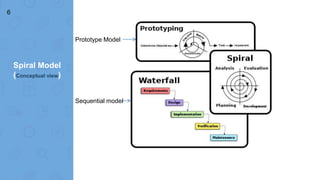
“Spiral model is a combination of sequential
and prototype model. This model is best
used for large projects which involves
continuous enhancements.”
5
Spiral Model
(Conceptual view)
6
Prototype Model
Sequential model
Spiral Model
(Brief History)
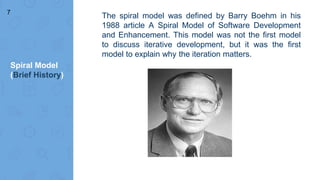
The spiral model was defined by Barry Boehm in his
1988 article A Spiral Model of Software Development
and Enhancement. This model was not the first model
to discuss iterative development, but it was the first
model to explain why the iteration matters.
7
PHASES of SPIRAL MODEL
8
Spiral Model
(Phases)
▸Planning
▸Risk Analysis
▸Engineering
▸Evaluation
9
Phases
(Planning)
Planning:
In this phase Software analyst communicate with
the clients and the necessary requirements such
as Business Requirements and System
Requirements are gathered.
10
Phases
(Risk Analysis)
Risk Analysis:
In this phase analyst assume all the possible
risks that could be occurred during future
development and alternative solutions are
proposed to overcome future risk.
11
Phases
(Engineering)
Engineering:
In this phase all the necessary coding is done for
develop the software also testing done in this phase.
12
Phases
(Evaluation)
Evaluation:
In this phase customer/clients evalute the
developed software or the system. After
evaluation if customer wishes for more
features to add in the software then the
process of itaration is continued.
13
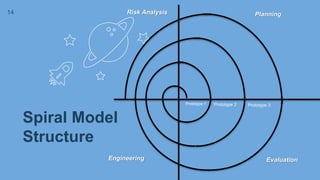
Spiral Model
Structure
14 PlanningRisk Analysis
Engineering Evaluation
Prototype 1 Prototype 2 Prototype 3
APPLICATION
15
Spiral Model
(Application)
16
1. When risk evaluation is important for a project.
2. For medium to high-risk projects.
3. Long-term project commitment because of potential changes to
economic priorities as the requirements change with time.
4. Customer is not sure of their requirements which is usually the
case.
5. Requirements are complex and need evaluation to get clarity.
6. New product line which should be released in phases to get enough
customer feedback.
7. Significant changes are expected in the product during the
development cycle.
PROS & CONS
17
Spiral Model
(Pros & Cons)
18
This method is consistent with approaches that have multiple software
builds and releases and allows for making an orderly transition to a
maintenance activity. Another positive aspect is that the spiral model
forces early user involvement in the system development effort.
On the other side, it takes very strict management to complete such
products and there is a risk of running the spiral in indefinite loop. So the
discipline of change and the extent of taking change requests is very
important to develop and deploy the product successfully
Spiral Model
(Pros)
19
1. Changing requirements can be accommodated.
2. Allows for extensive use of prototypes
3. Requirements can be captured more accurately.
4. Users see the system early.
5. Development can be divided into smaller parts and more risky parts
can be developed earlier which helps better risk management.
Spiral Model
(Cons)
20
1. Management is more complex.
2. End of project may not be known early.
3. Not suitable for small or low risk projects and could be expensive for
small projects.
4. Process is complex.
5. Spiral may go indefinitely.
6. Large number of intermediate stages requires excessive
documentation.
21
THANKS!
Any questions?
You can find us at
▸omar.kryptos@gmail.com
▸albubyusuf@gmail.com
▸animeshc567@gmail.com
References
▸[1] www.tutorialspoint.com, 'SDLC - Spiral Model', 2015. [Online]. Available:
http://www.tutorialspoint.com/sdlc/sdlc_spiral_model.htm. [Accessed: 08- Nov-
2015].
▸[2] Softwaretestinghelp.com, 'Spiral Model - What is SDLC Spiral Model?',
2015. [Online]. Available: http://www.softwaretestinghelp.com/spiral-model-
what-is-sdlc-spiral-model/. [Accessed: 08- Nov- 2015].
▸[3] Istqbexamcertification.com, 'What is Spiral model- advantages,
disadvantages and when to use it?', 2015. [Online]. Available:
http://istqbexamcertification.com/what-is-spiral-model-advantages-
disadvantages-and-when-to-use-it/. [Accessed: 08- Nov- 2015].
▸[4] Onestoptesting.com, 'Spiral Model | History | The Spiral Model |
Applications', 2015. [Online]. Available: http://www.onestoptesting.com/sdlc-
models/spiral-model.asp. [Accessed: 08- Nov- 2015].
22

Spiral model of SDLC

  • 1.
  • 2.
  • 3.
    Overview 3 1. Definition. 2. Conceptualview. 3. Brief History. 4. Phases. 5. Structure. 6. Application. 7. Pros & Cons. 8. Reference.
  • 4.
  • 5.
    “Spiral model isa combination of sequential and prototype model. This model is best used for large projects which involves continuous enhancements.” 5
  • 6.
  • 7.
    Spiral Model (Brief History) Thespiral model was defined by Barry Boehm in his 1988 article A Spiral Model of Software Development and Enhancement. This model was not the first model to discuss iterative development, but it was the first model to explain why the iteration matters. 7
  • 8.
  • 9.
  • 10.
    Phases (Planning) Planning: In this phaseSoftware analyst communicate with the clients and the necessary requirements such as Business Requirements and System Requirements are gathered. 10
  • 11.
    Phases (Risk Analysis) Risk Analysis: Inthis phase analyst assume all the possible risks that could be occurred during future development and alternative solutions are proposed to overcome future risk. 11
  • 12.
    Phases (Engineering) Engineering: In this phaseall the necessary coding is done for develop the software also testing done in this phase. 12
  • 13.
    Phases (Evaluation) Evaluation: In this phasecustomer/clients evalute the developed software or the system. After evaluation if customer wishes for more features to add in the software then the process of itaration is continued. 13
  • 14.
    Spiral Model Structure 14 PlanningRiskAnalysis Engineering Evaluation Prototype 1 Prototype 2 Prototype 3
  • 15.
  • 16.
    Spiral Model (Application) 16 1. Whenrisk evaluation is important for a project. 2. For medium to high-risk projects. 3. Long-term project commitment because of potential changes to economic priorities as the requirements change with time. 4. Customer is not sure of their requirements which is usually the case. 5. Requirements are complex and need evaluation to get clarity. 6. New product line which should be released in phases to get enough customer feedback. 7. Significant changes are expected in the product during the development cycle.
  • 17.
  • 18.
    Spiral Model (Pros &Cons) 18 This method is consistent with approaches that have multiple software builds and releases and allows for making an orderly transition to a maintenance activity. Another positive aspect is that the spiral model forces early user involvement in the system development effort. On the other side, it takes very strict management to complete such products and there is a risk of running the spiral in indefinite loop. So the discipline of change and the extent of taking change requests is very important to develop and deploy the product successfully
  • 19.
    Spiral Model (Pros) 19 1. Changingrequirements can be accommodated. 2. Allows for extensive use of prototypes 3. Requirements can be captured more accurately. 4. Users see the system early. 5. Development can be divided into smaller parts and more risky parts can be developed earlier which helps better risk management.
  • 20.
    Spiral Model (Cons) 20 1. Managementis more complex. 2. End of project may not be known early. 3. Not suitable for small or low risk projects and could be expensive for small projects. 4. Process is complex. 5. Spiral may go indefinitely. 6. Large number of intermediate stages requires excessive documentation.
  • 21.
    21 THANKS! Any questions? You canfind us at ▸omar.kryptos@gmail.com ▸albubyusuf@gmail.com ▸animeshc567@gmail.com
  • 22.
    References ▸[1] www.tutorialspoint.com, 'SDLC- Spiral Model', 2015. [Online]. Available: http://www.tutorialspoint.com/sdlc/sdlc_spiral_model.htm. [Accessed: 08- Nov- 2015]. ▸[2] Softwaretestinghelp.com, 'Spiral Model - What is SDLC Spiral Model?', 2015. [Online]. Available: http://www.softwaretestinghelp.com/spiral-model- what-is-sdlc-spiral-model/. [Accessed: 08- Nov- 2015]. ▸[3] Istqbexamcertification.com, 'What is Spiral model- advantages, disadvantages and when to use it?', 2015. [Online]. Available: http://istqbexamcertification.com/what-is-spiral-model-advantages- disadvantages-and-when-to-use-it/. [Accessed: 08- Nov- 2015]. ▸[4] Onestoptesting.com, 'Spiral Model | History | The Spiral Model | Applications', 2015. [Online]. Available: http://www.onestoptesting.com/sdlc- models/spiral-model.asp. [Accessed: 08- Nov- 2015]. 22