Prepared by :
Anish Cheriyan, Director, Huawei
Best of Scrum and Lean Startup
for product development
Prepared By Anish Cheriyan, Director, Huawei Technologies
Topics
• Introduction
• Perspective on Product Development
• Some Anti Pattern
• Lean Startup and Scrum Applied
• New Product Development
• Feature or Enhancement
• Experience Sharing
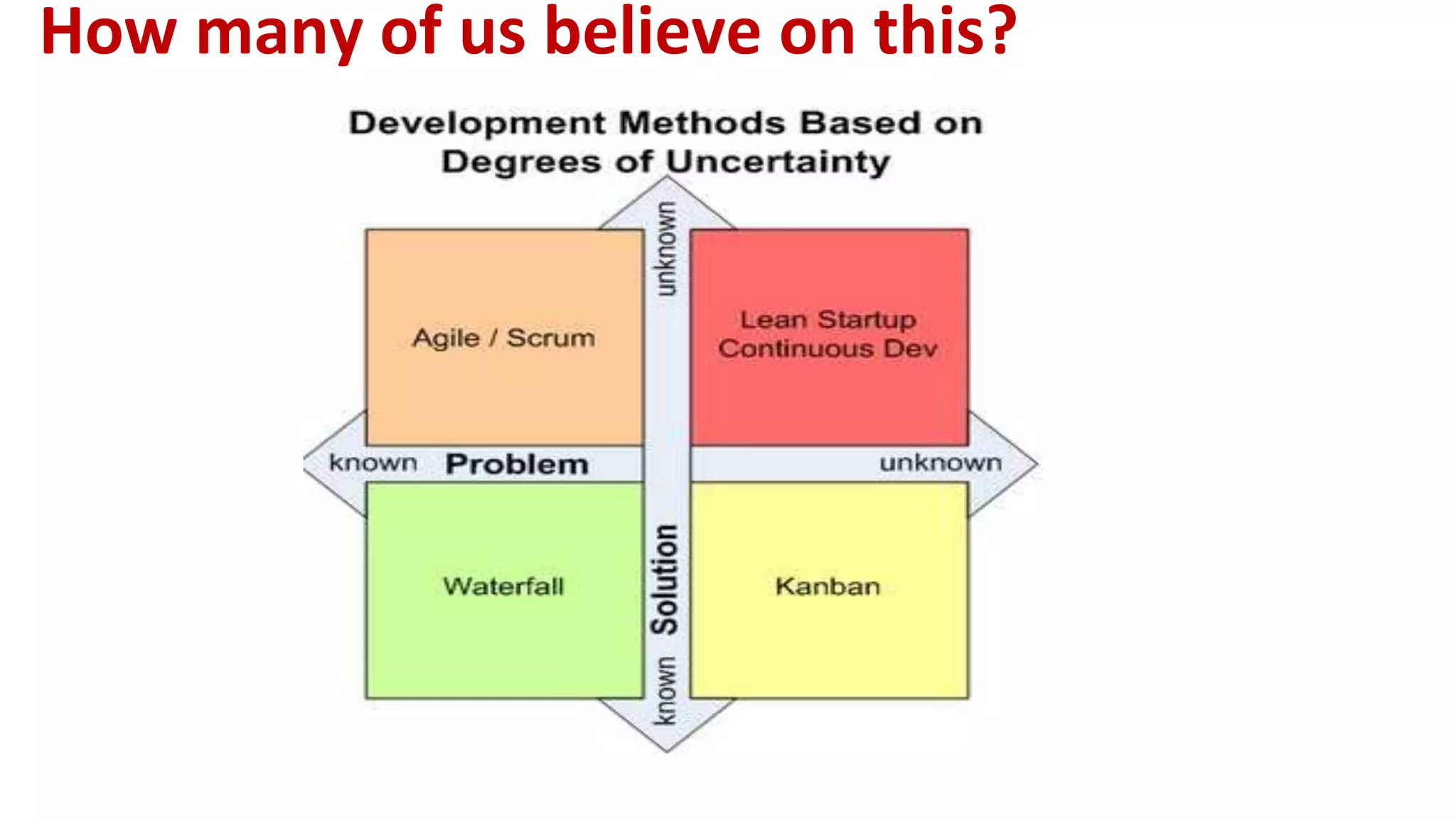
How many of us believe on this?
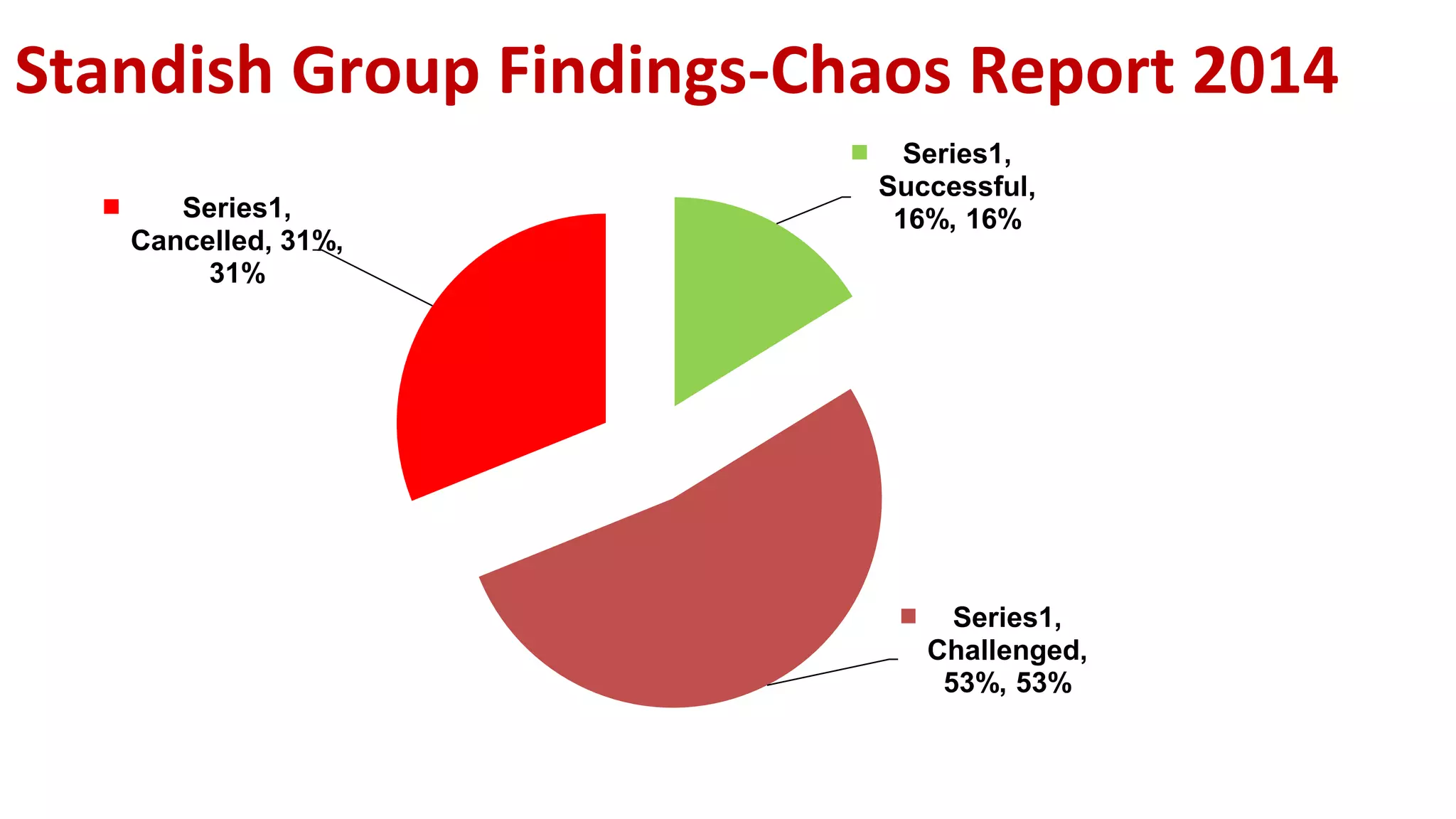
Standish Group Findings-Chaos Report 2014
Series1,
Successful,
16%, 16%
Series1,
Challenged,
53%, 53%
Series1,
Cancelled, 31%,
31%
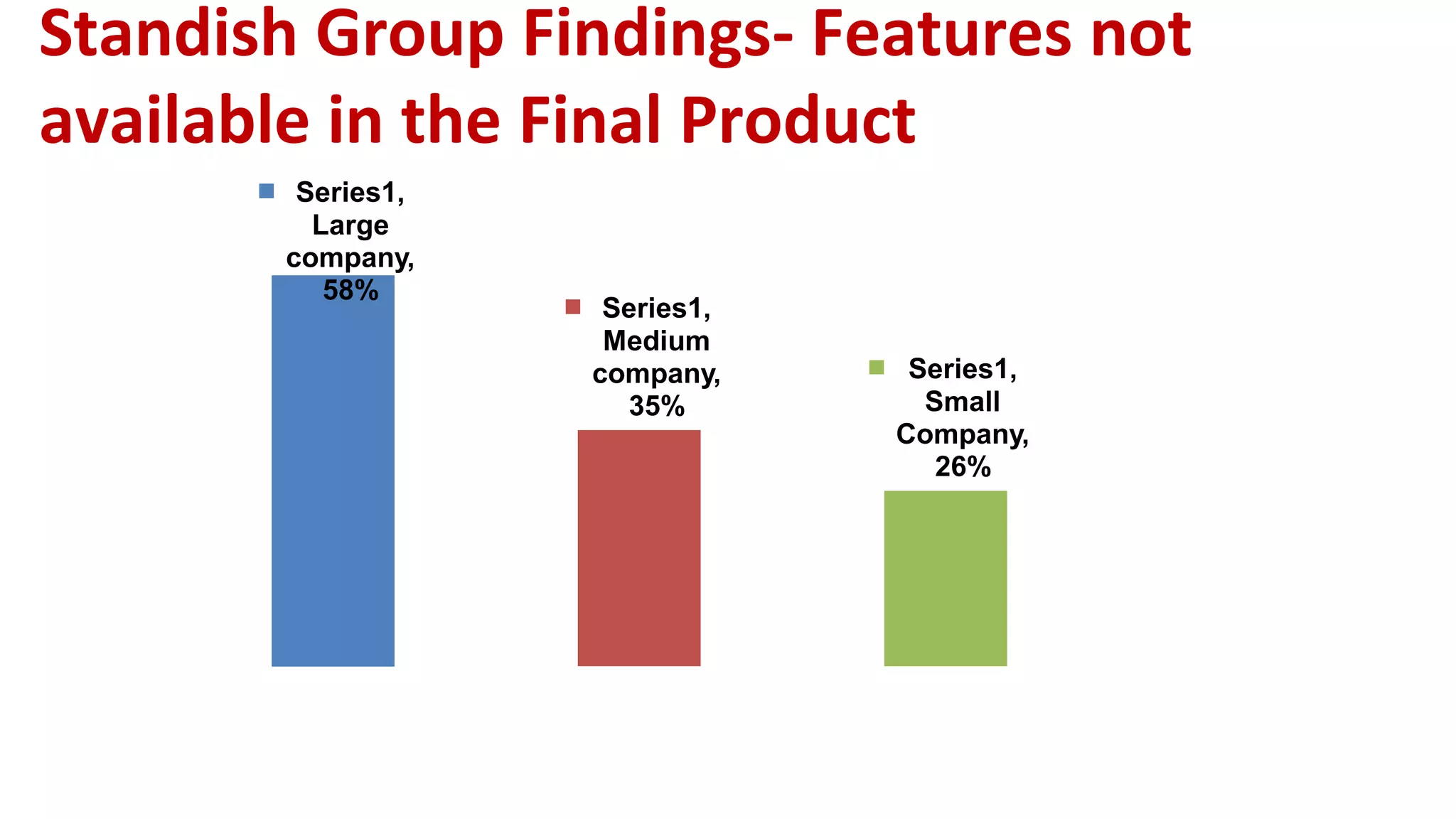
Standish Group Findings- Features not
available in the Final Product
Series1,
Large
company,
58%
Series1,
Medium
company,
35%
Series1,
Small
Company,
26%
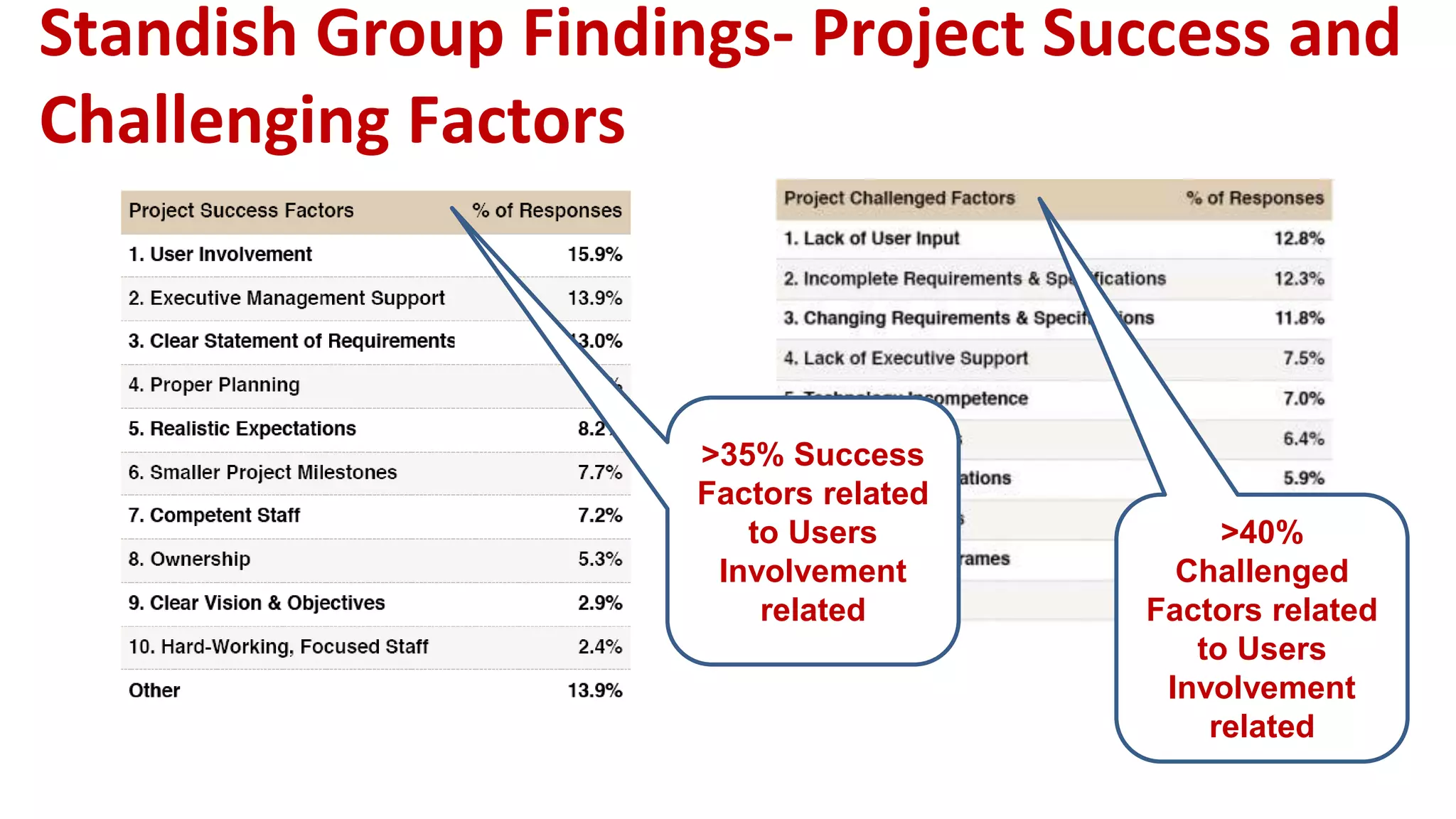
Standish Group Findings- Project Success and
Challenging Factors
>35% Success
Factors related
to Users
Involvement
related
>40%
Challenged
Factors related
to Users
Involvement
related
So How do we
Develop Our
Products or Features?
How do we develop our product
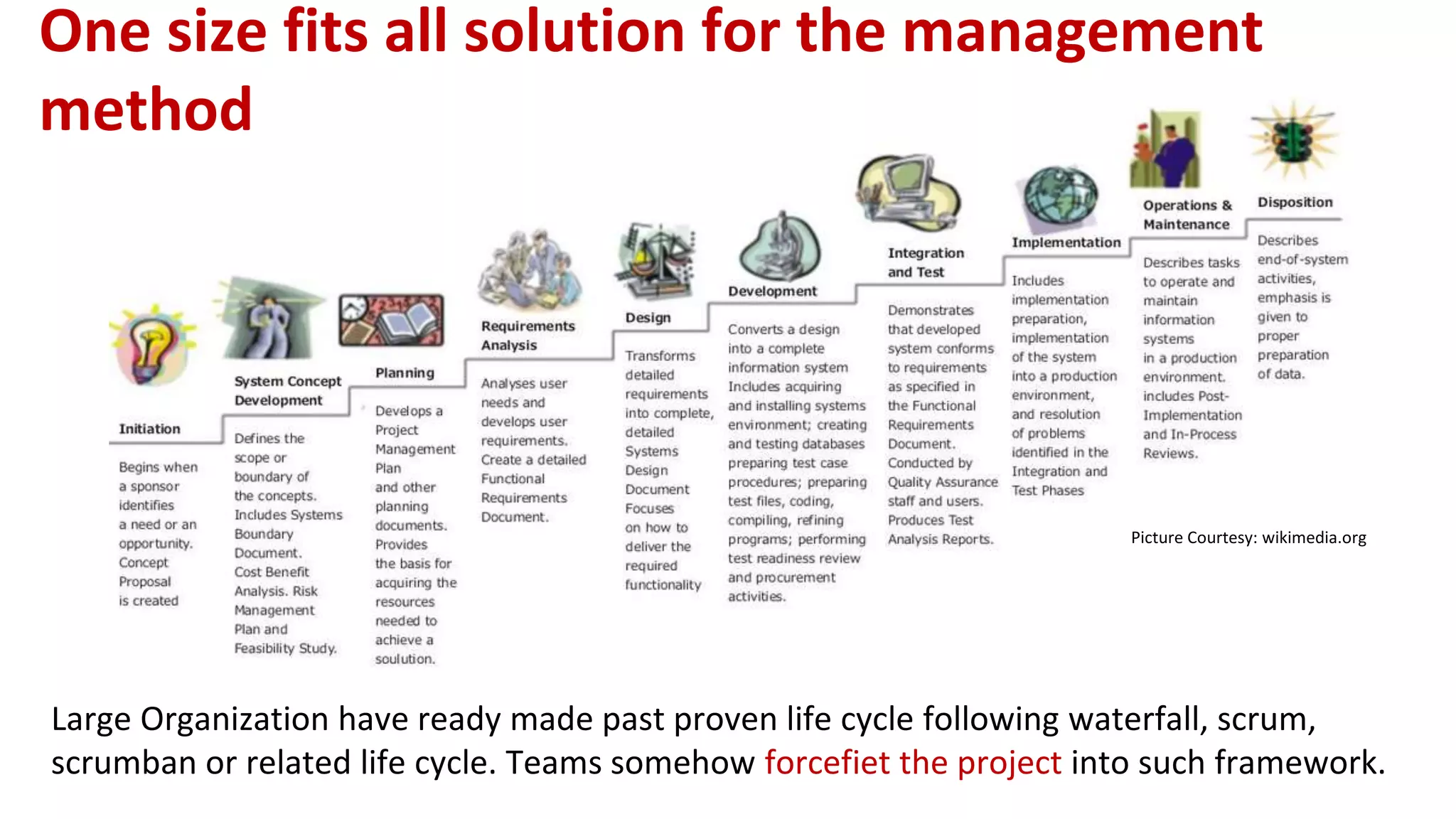
One size fits all solution for the management
method
Picture Courtesy: wikimedia.org
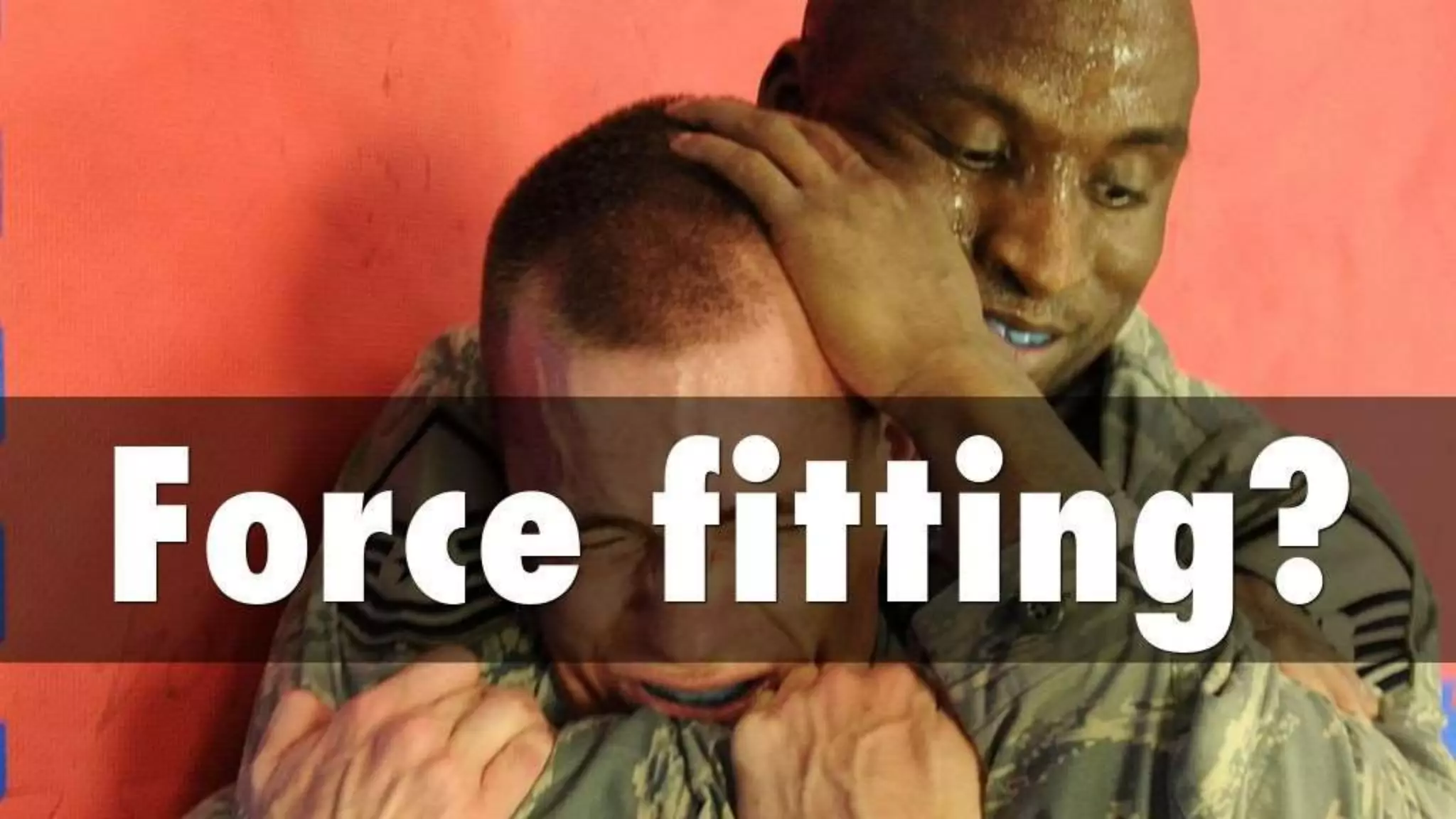
Large Organization have ready made past proven life cycle following waterfall, scrum,
scrumban or related life cycle. Teams somehow forcefiet the project into such framework.
Photo by mouseshadows - Creative Commons Attribution-NonCommercial License https://www.flickr.com/photos/7339492@N04 Created with Haiku Deck
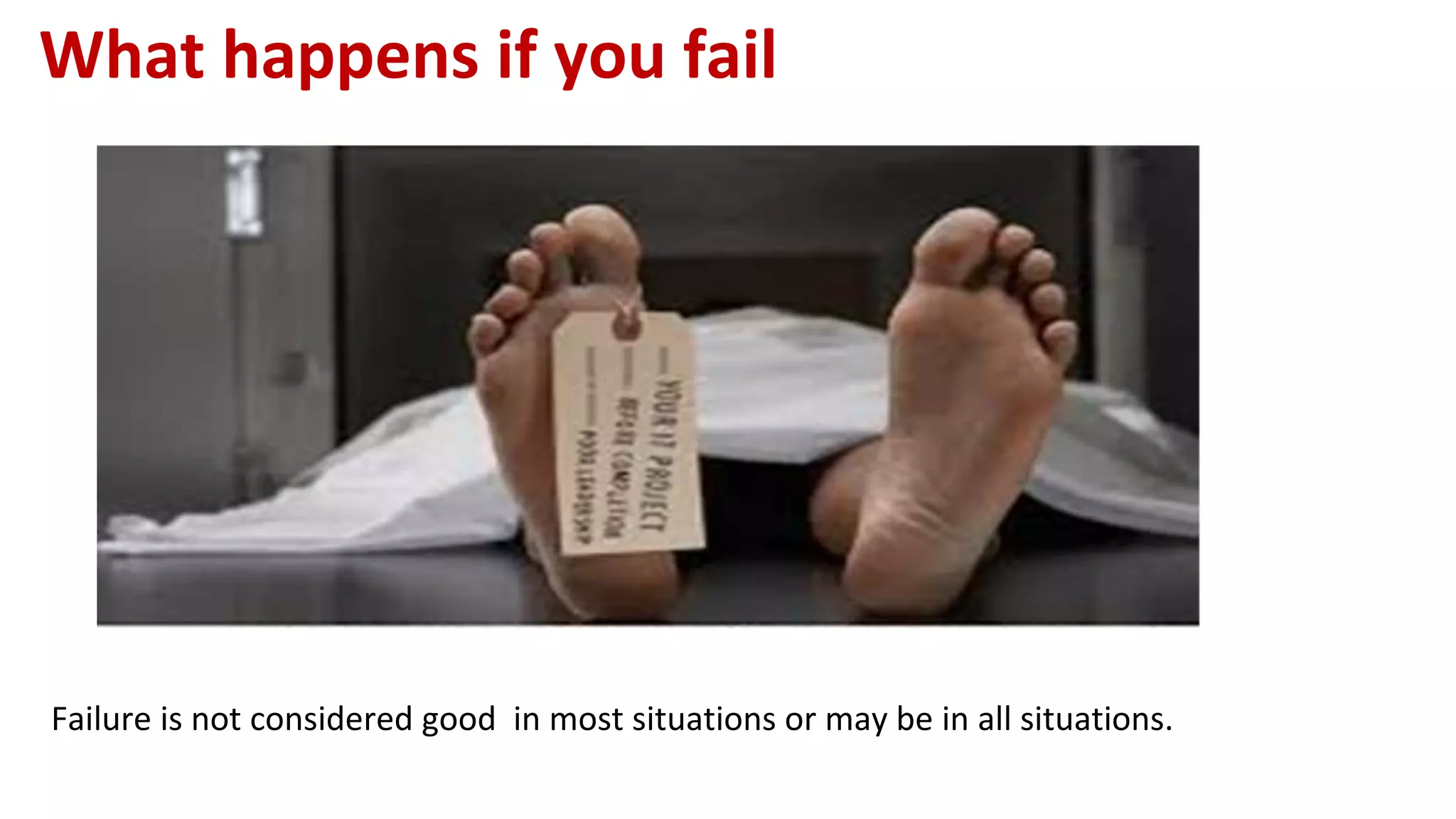
What happens if you fail
Failure is not considered good in most situations or may be in all situations.
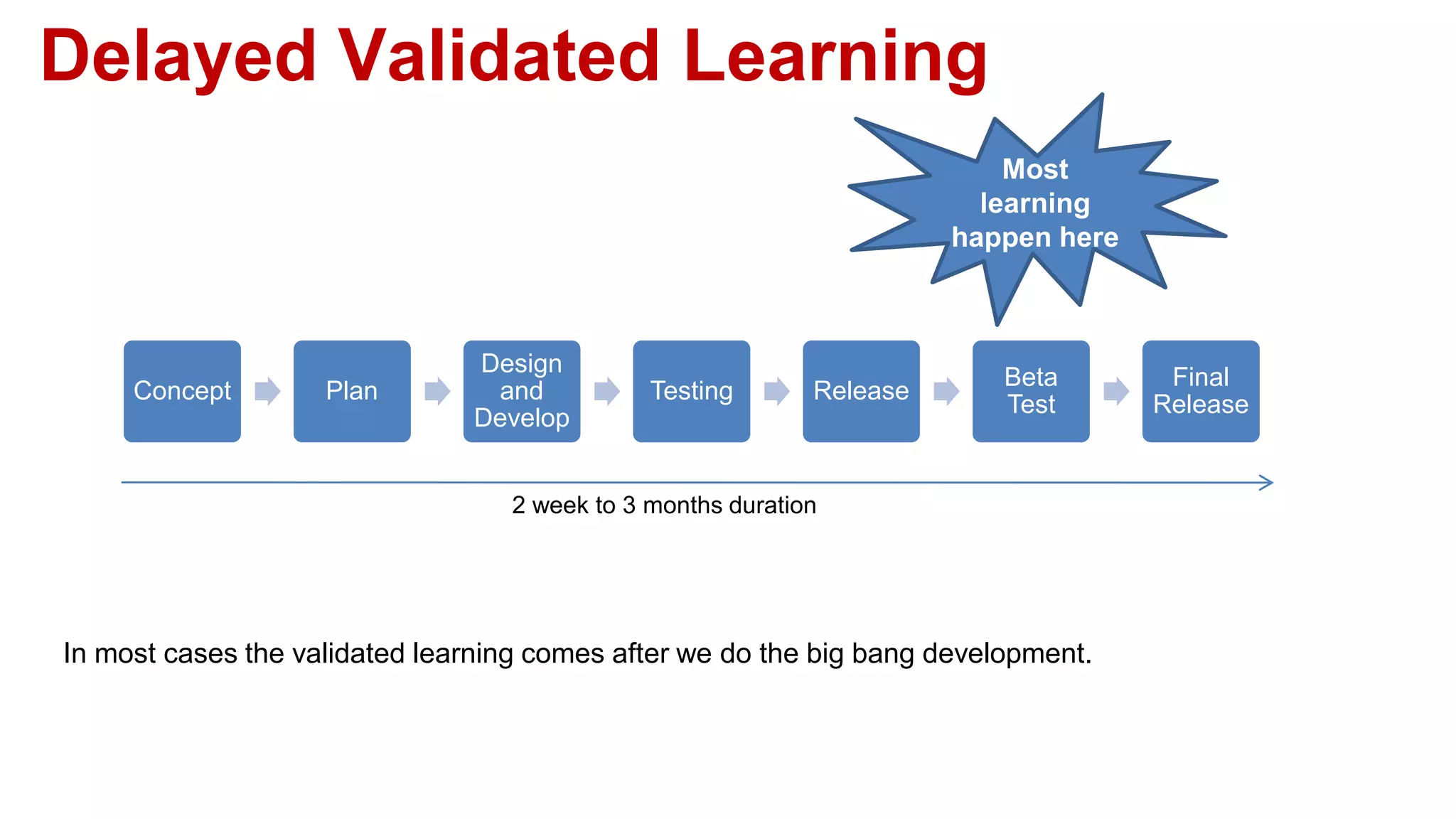
Delayed Validated Learning
In most cases the validated learning comes after we do the big bang development.
Concept Plan
Design
and
Develop
Testing Release
Beta
Test
Final
Release
Most
learning
happen here
2 week to 3 months duration
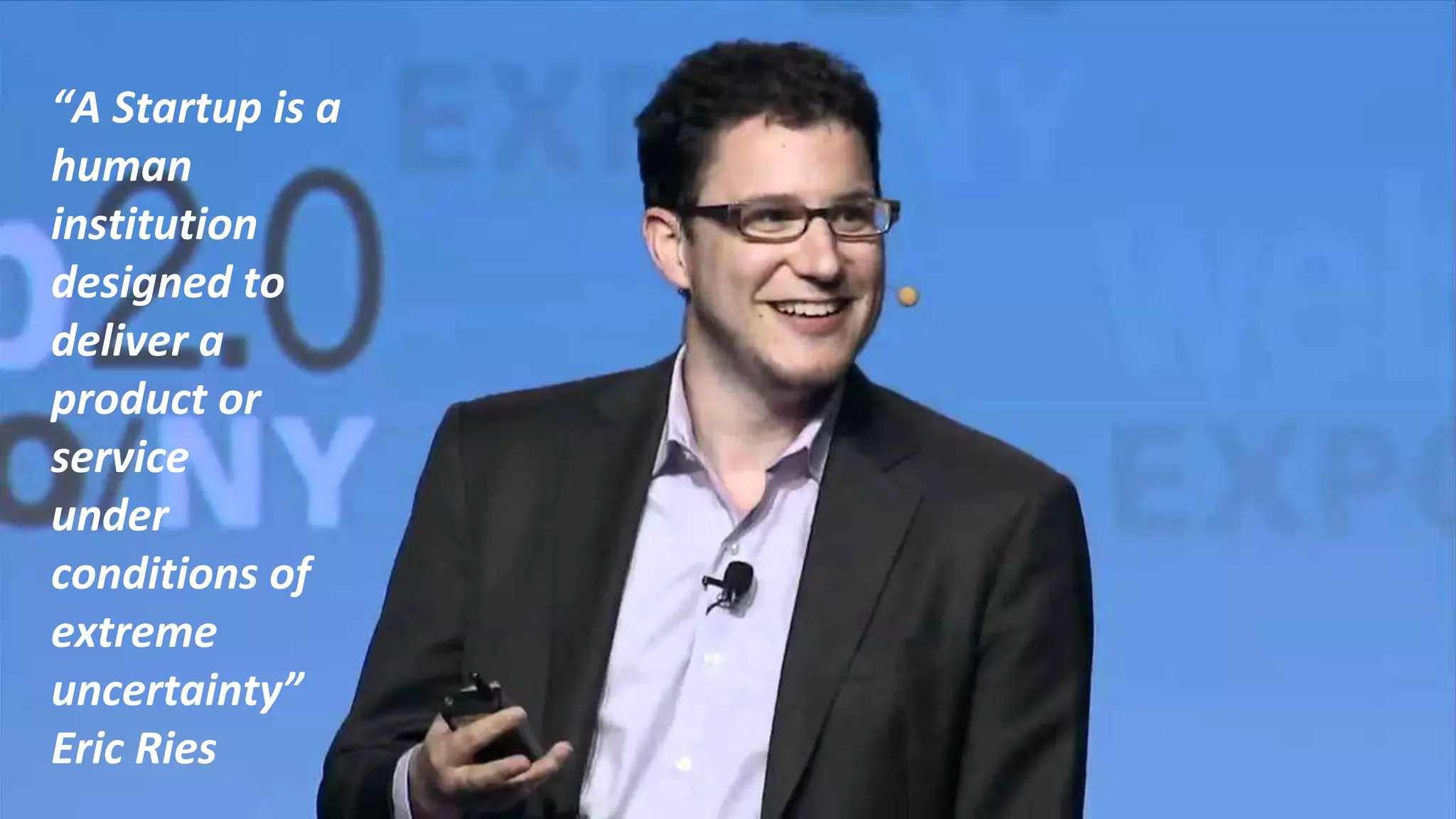
“A Startup is a
human
institution
designed to
deliver a
product or
service
under
conditions of
extreme
uncertainty”
Eric Ries
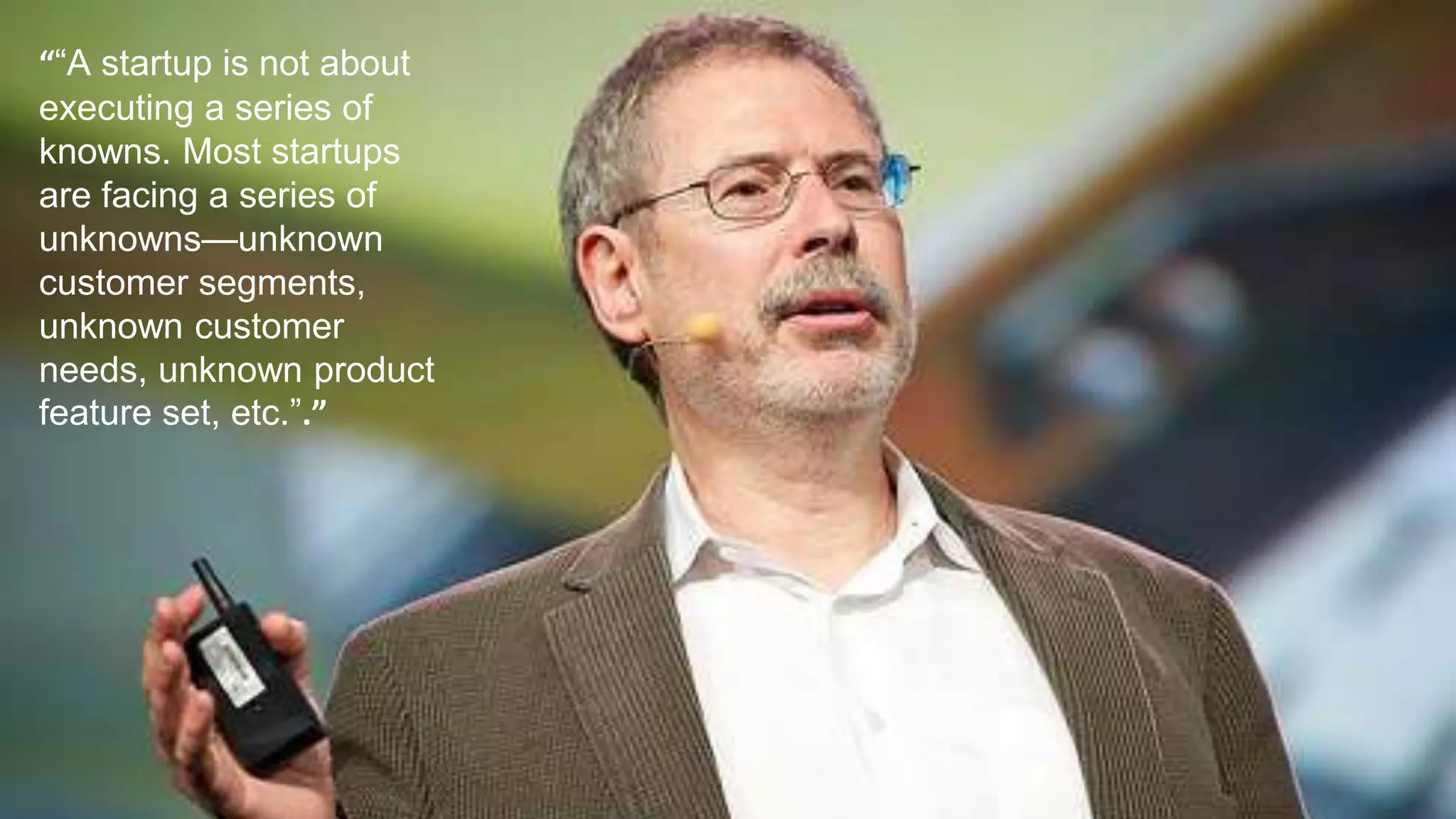
““A startup is not about
executing a series of
knowns. Most startups
are facing a series of
unknowns—unknown
customer segments,
unknown customer
needs, unknown product
feature set, etc.”.”
Minimum viable product (MVP) is the
product with the highest return on
investment versus risk. The term was
coined and defined by Frank Robinson,
and popularized by Steve Blank, and Eric
Ries
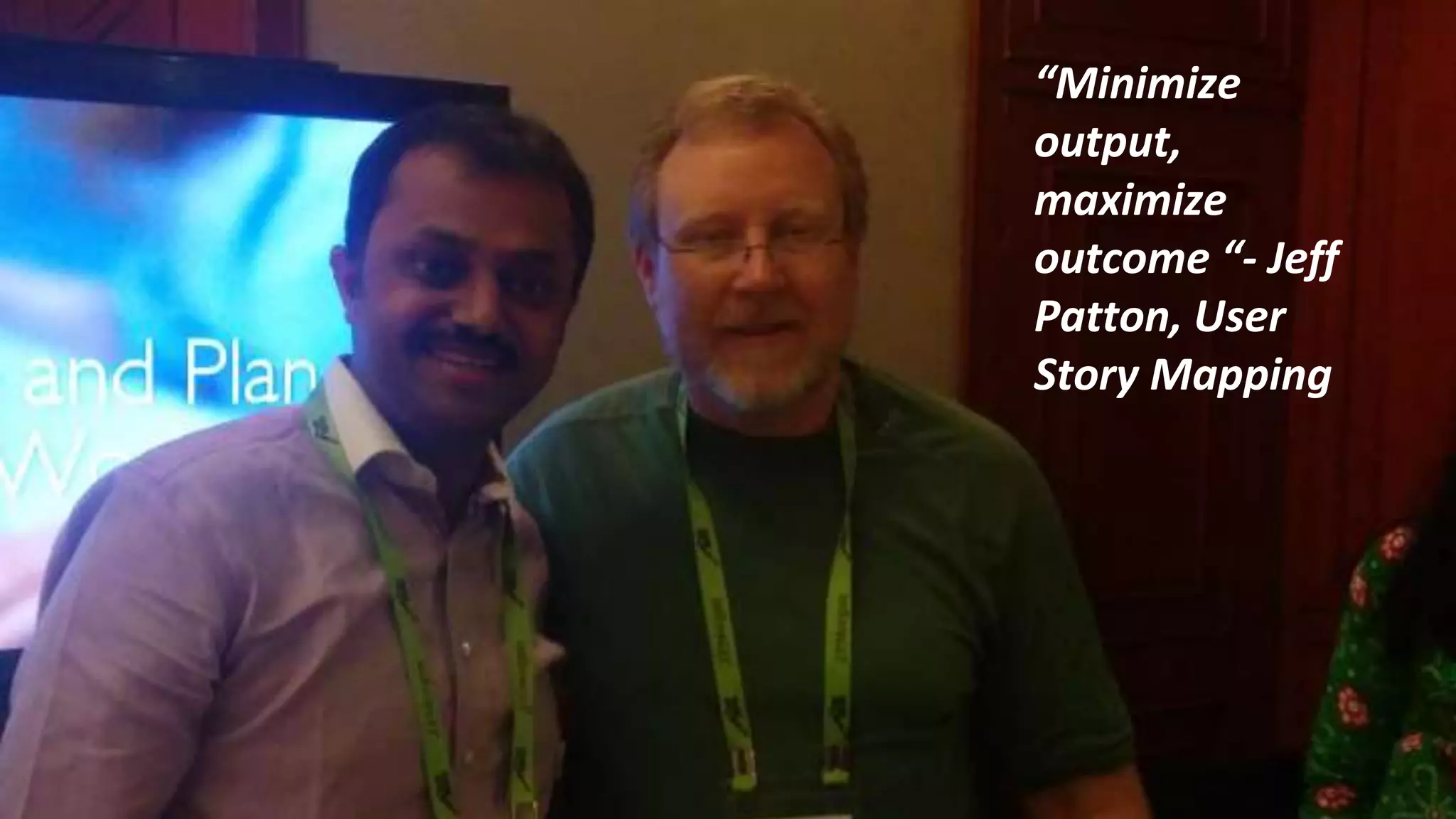
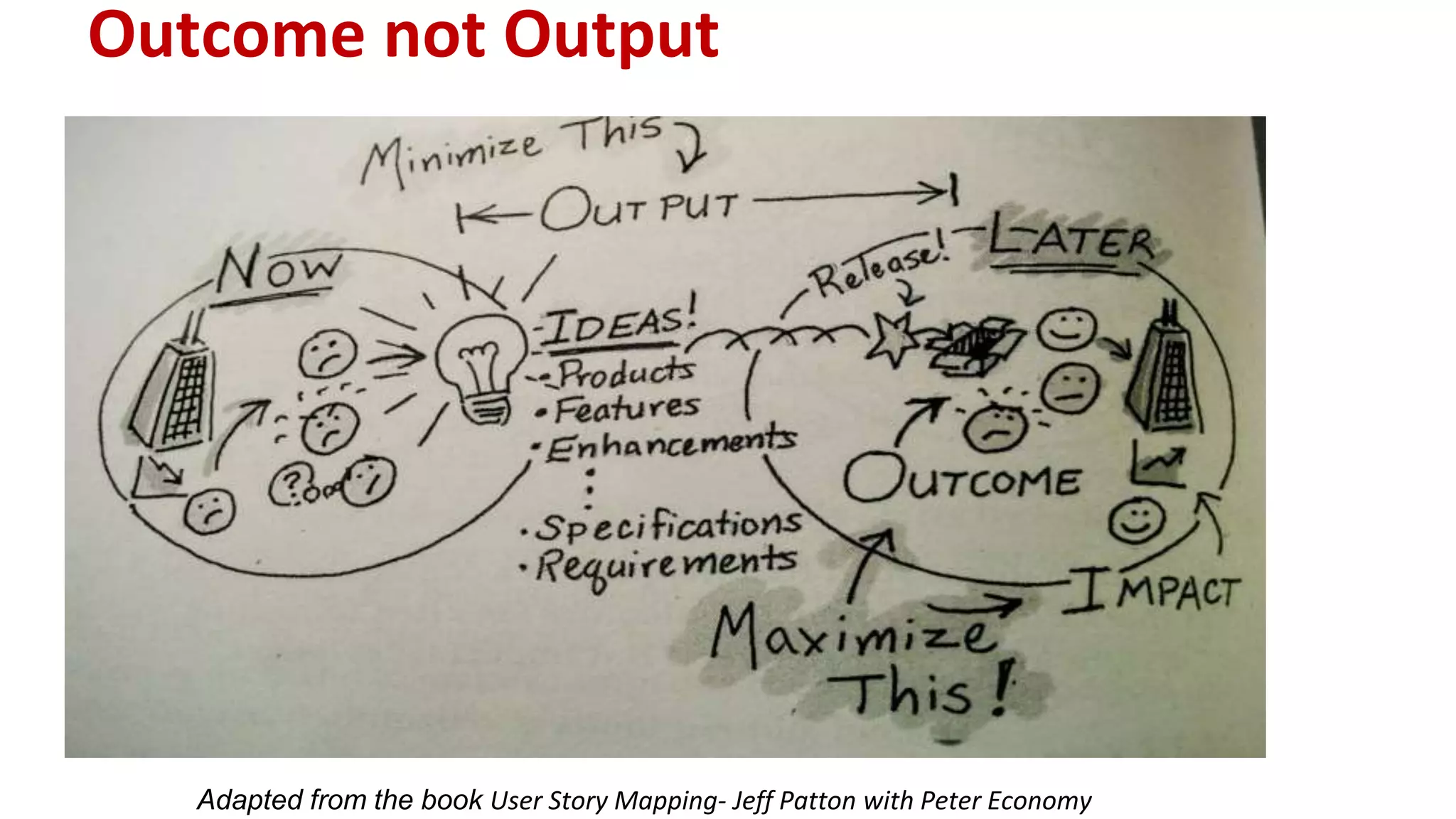
“Minimize
output,
maximize
outcome “- Jeff
Patton, User
Story Mapping
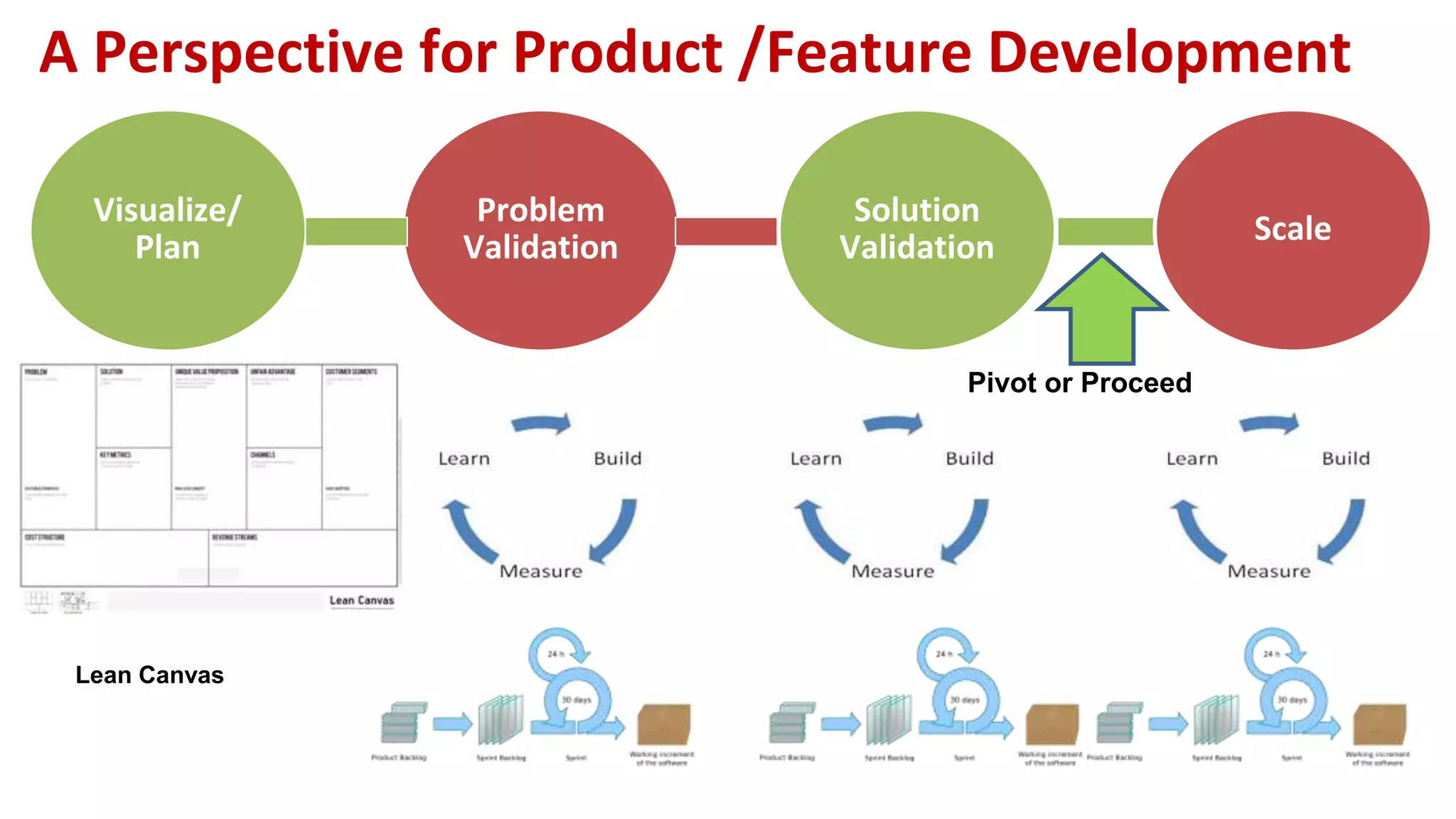
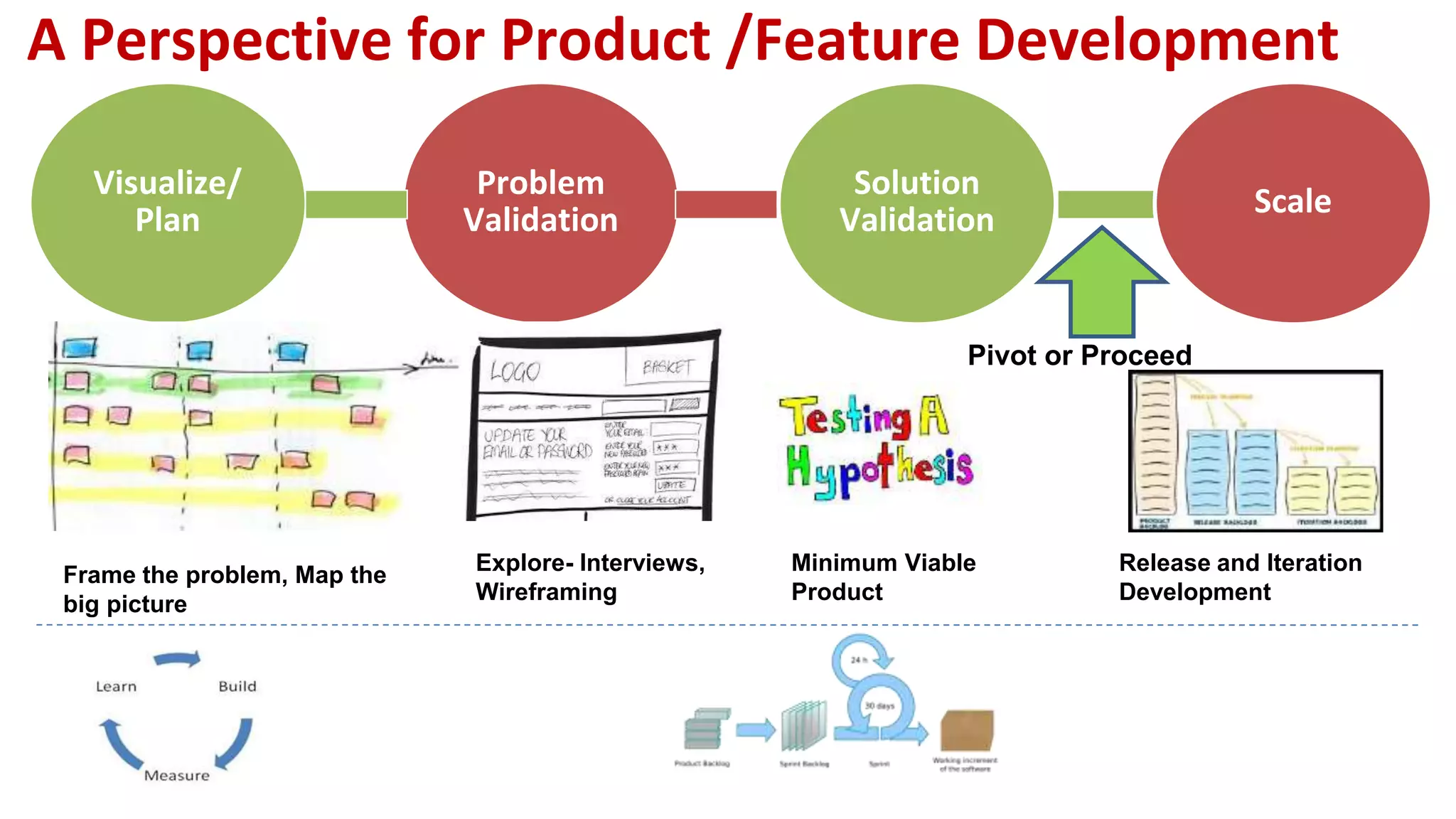
A Perspective for Product /Feature Development
Problem
Validation
Solution
Validation
Scale
Visualize/
Plan
Pivot or Proceed
Lean Canvas
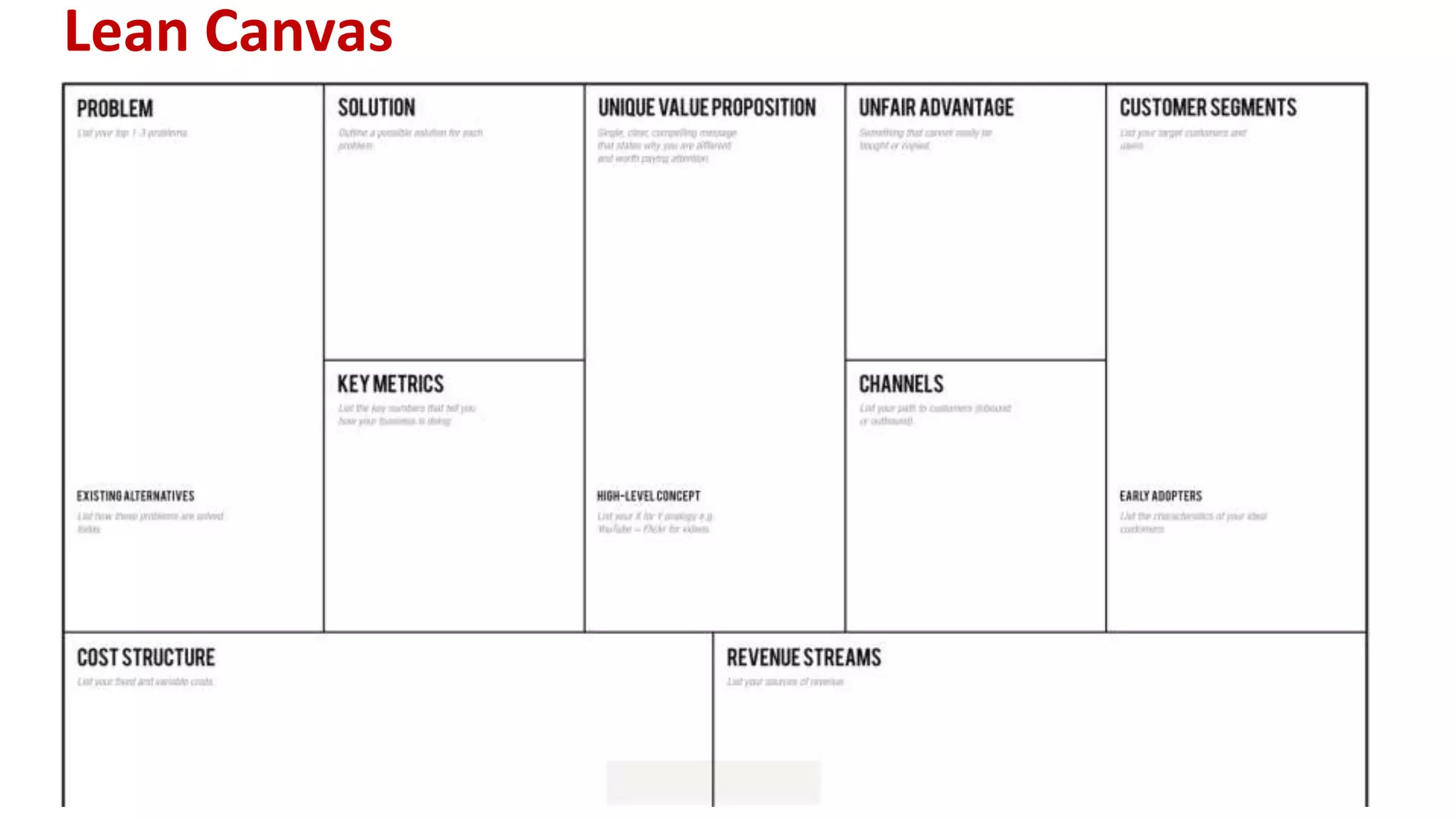
Lean Canvas
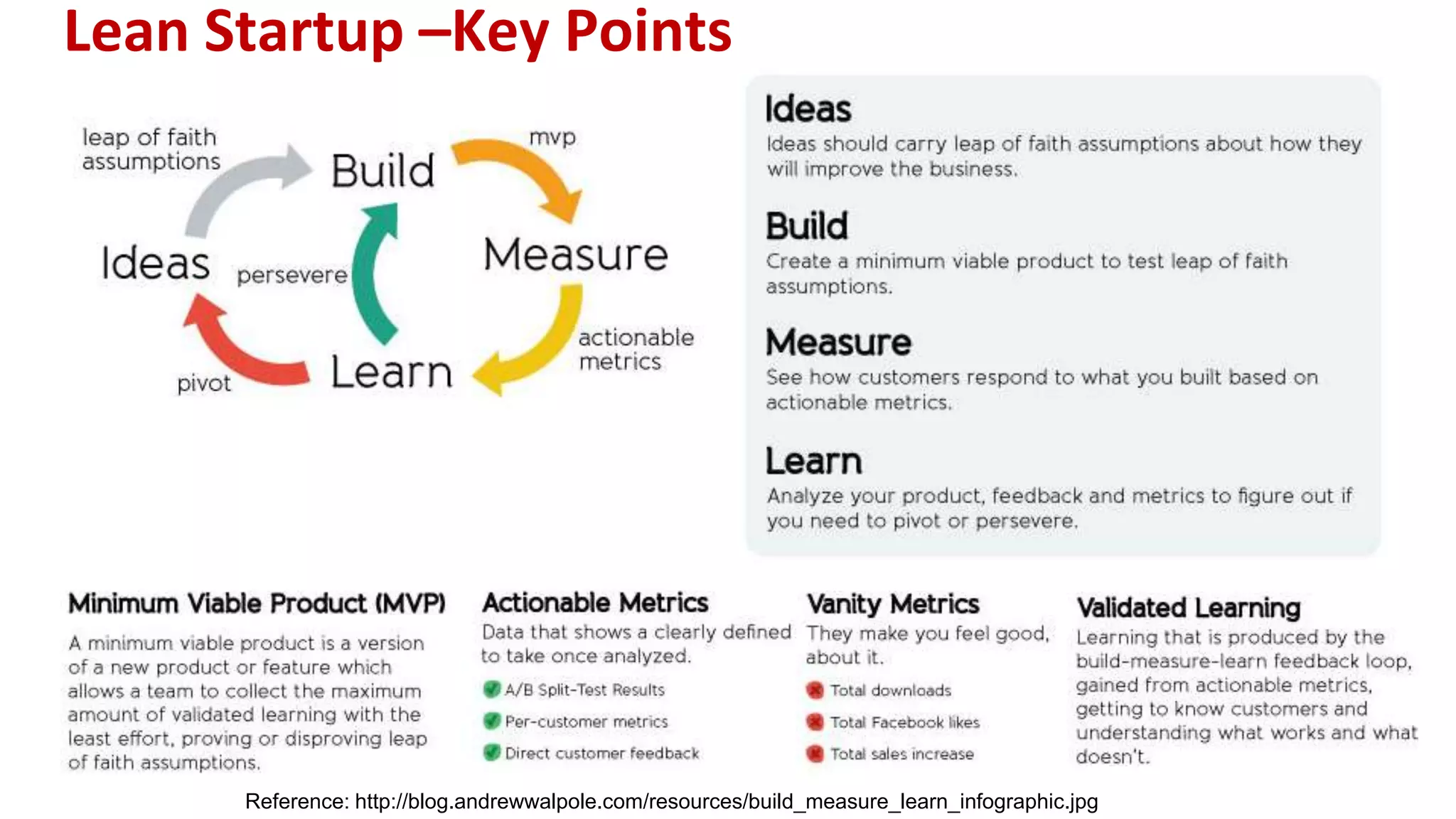
Lean Startup –Key Points
Reference: http://blog.andrewwalpole.com/resources/build_measure_learn_infographic.jpg
Background of the Business Problem
• Embedded Development.
• Customer was not clear about the
problem.
• Not clear about what feature is
required.
Our Myths
• “We who build the product know
better than the customer”
• “Customer don’t have time to talk to
us”
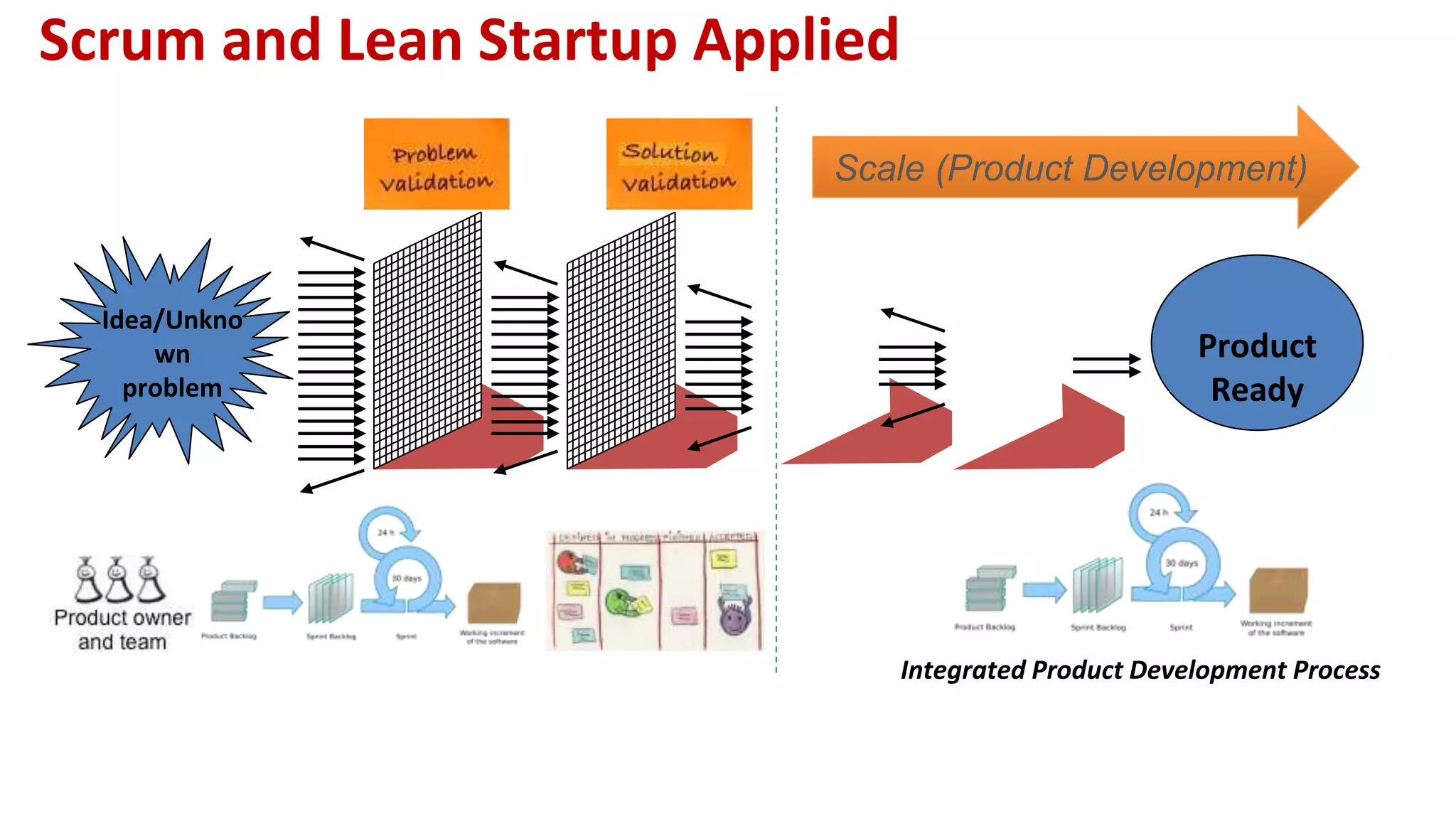
Scrum and Lean Startup Applied
Idea/Unkno
wn
problem
Product
Ready
Scale (Product Development)
Integrated Product Development Process
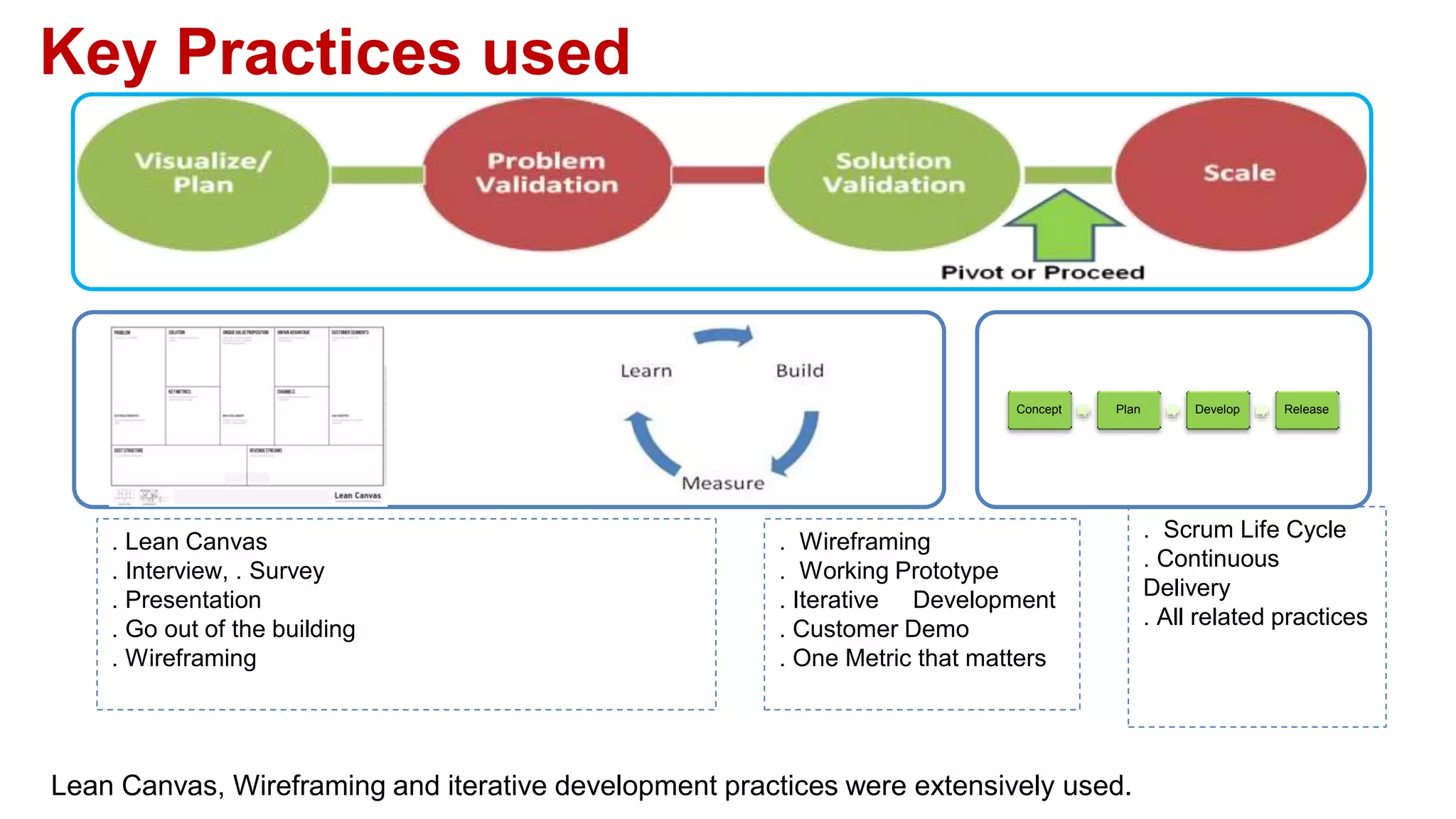
Key Practices used
. Lean Canvas
. Interview, . Survey
. Presentation
. Go out of the building
. Wireframing
. Wireframing
. Working Prototype
. Iterative Development
. Customer Demo
. One Metric that matters
Concept Plan Develop Release
. Scrum Life Cycle
. Continuous
Delivery
. All related practices
Lean Canvas, Wireframing and iterative development practices were extensively used.
A Perspective for Product /Feature Development
Problem
Validation
Solution
Validation
Scale
Visualize/
Plan
Pivot or Proceed
Frame the problem, Map the
big picture
Explore- Interviews,
Wireframing
Minimum Viable
Product
Release and Iteration
Development
Outcome not Output
Adapted from the book User Story Mapping- Jeff Patton with Peter Economy
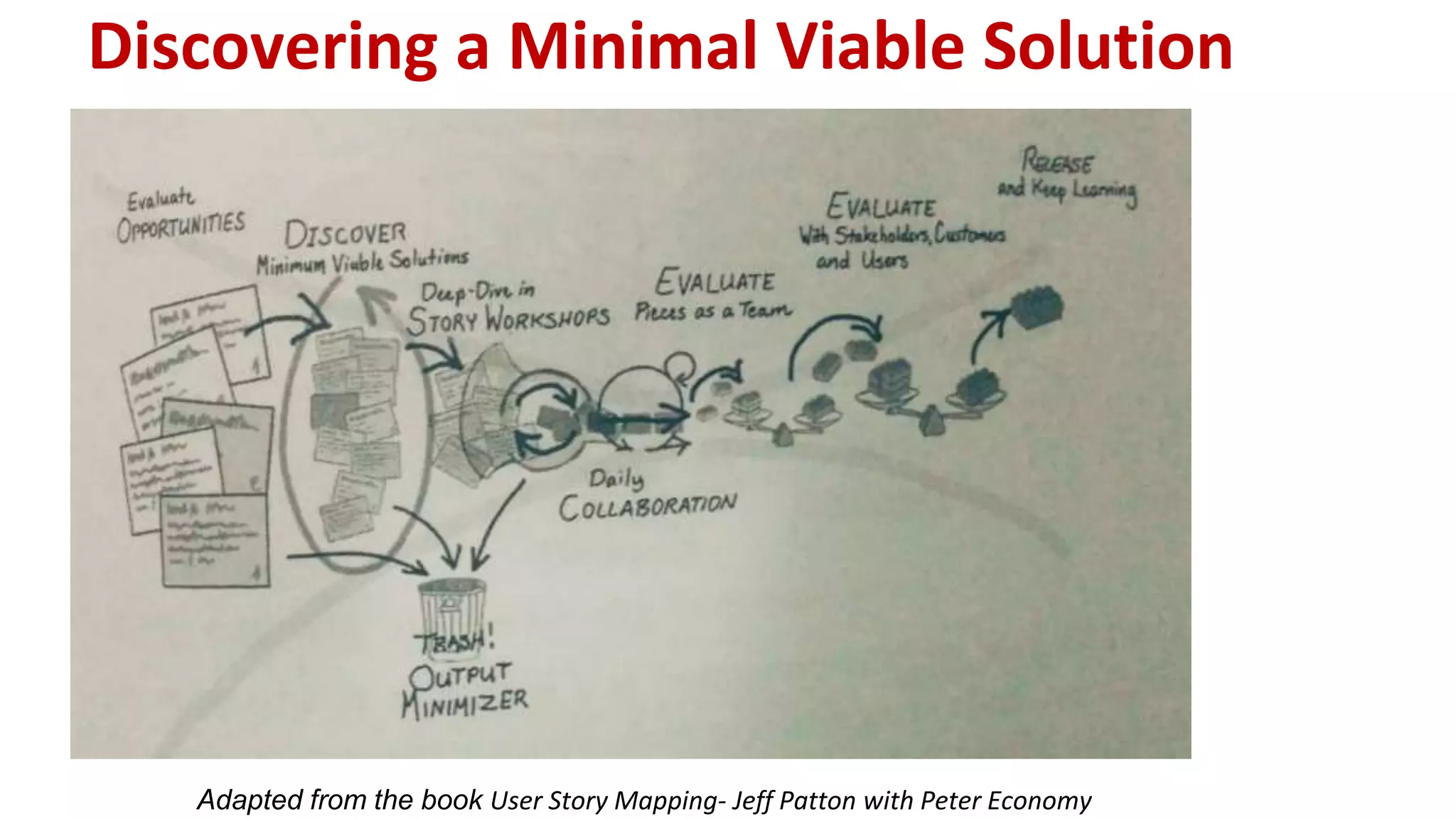
Discovering a Minimal Viable Solution
Adapted from the book User Story Mapping- Jeff Patton with Peter Economy
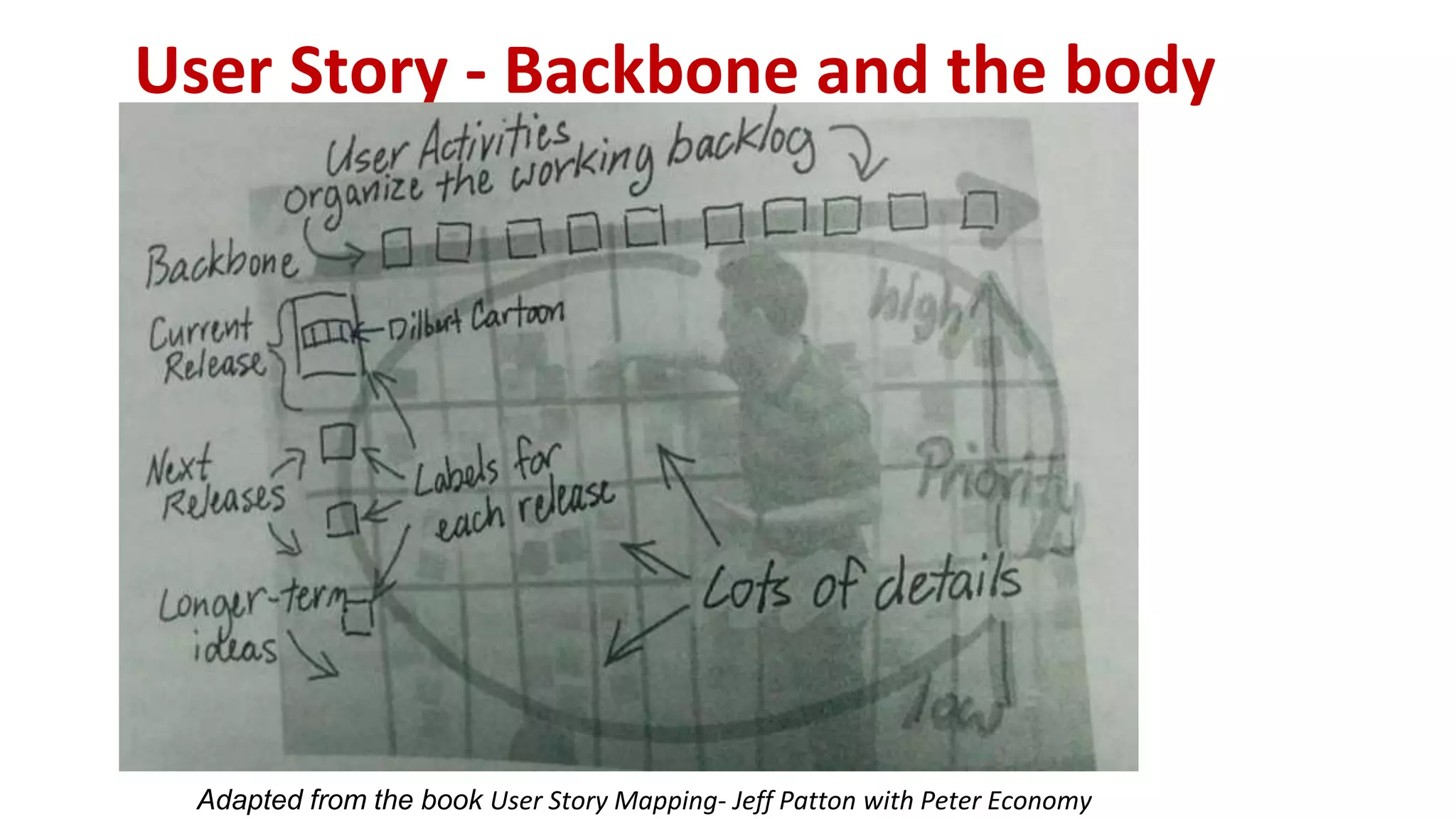
User Story - Backbone and the body
Adapted from the book User Story Mapping- Jeff Patton with Peter Economy
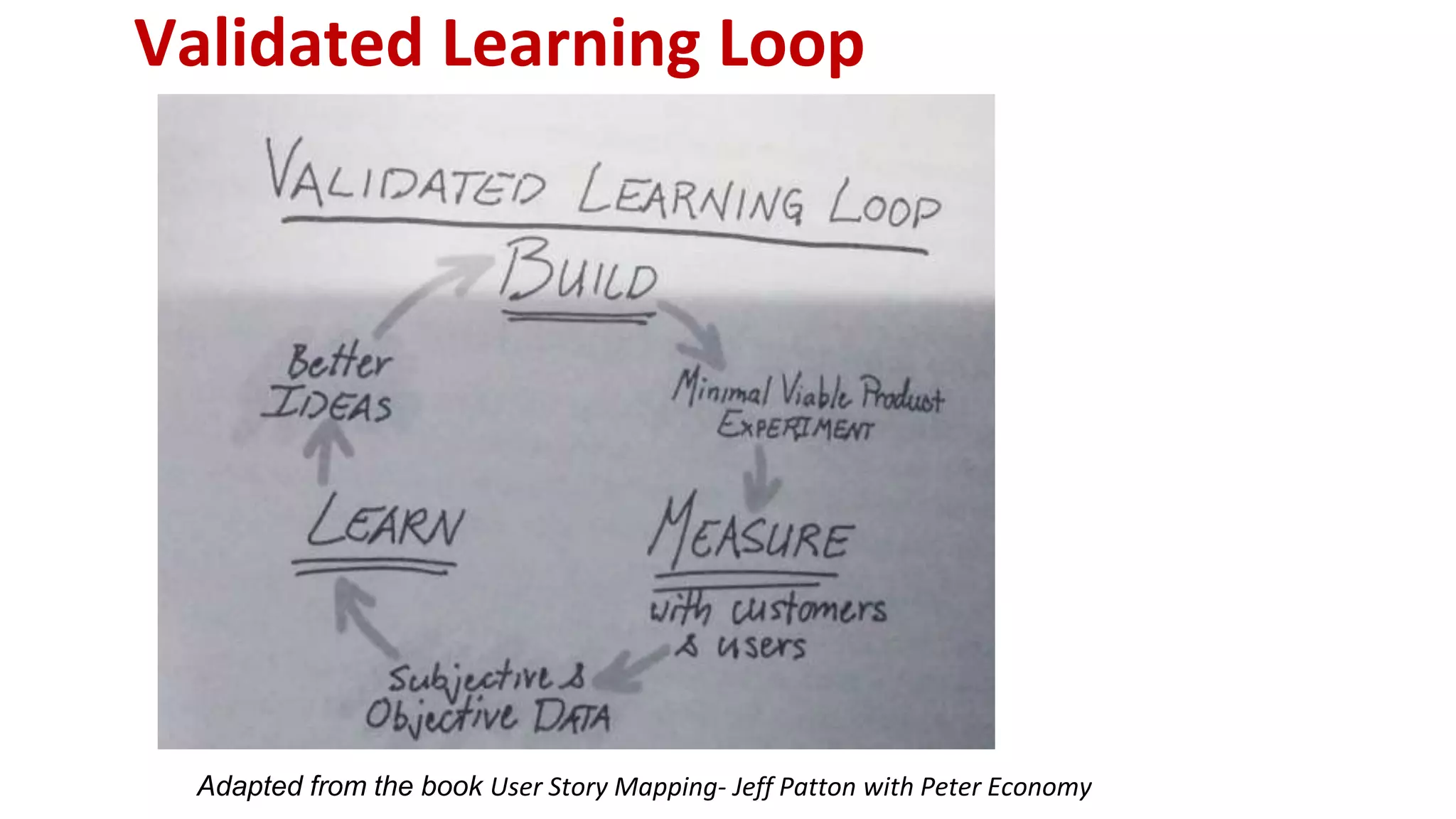
Validated Learning Loop
Adapted from the book User Story Mapping- Jeff Patton with Peter Economy
Key Results
• We have been able to finalize around 15 key
features of the product using Lean Startup and
Scrum approach.
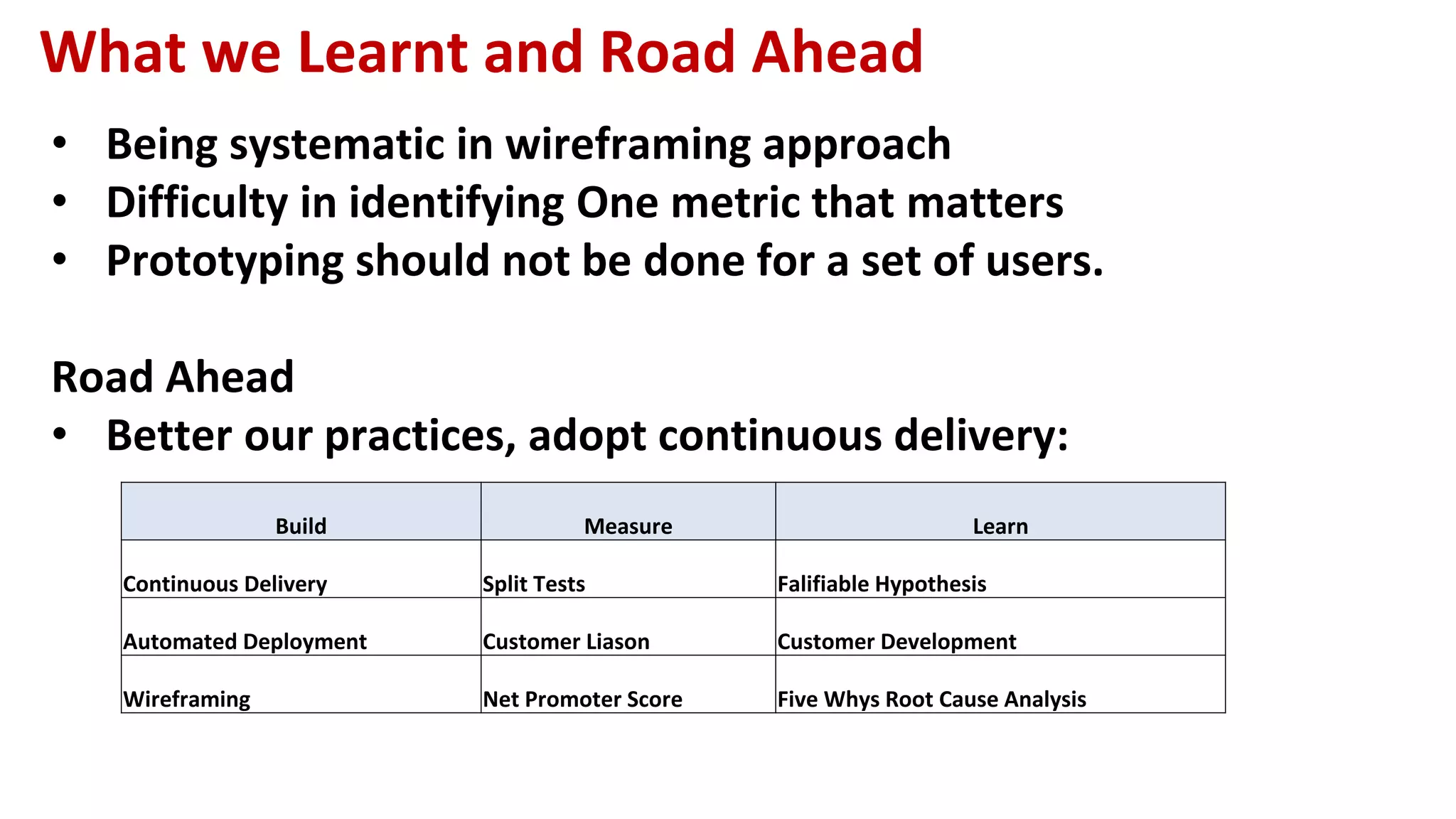
What we Learnt and Road Ahead
• Being systematic in wireframing approach
• Difficulty in identifying One metric that matters
• Prototyping should not be done for a set of users.
Road Ahead
• Better our practices, adopt continuous delivery:
Build Measure Learn
Continuous Delivery Split Tests Falifiable Hypothesis
Automated Deployment Customer Liason Customer Development
Wireframing Net Promoter Score Five Whys Root Cause Analysis
Conclusion
• Whether we are entrepreneur or intrapreneur, we
need to focus on the customer development
constantly.
• Don’t jump into features or solution without
validating the problem.
• Remember to take the hypothesis driven approach-
Always.
References
• User Story Mapping- Jeff Patton with Peter Economy
• The Lean Startup- Eric Ries
• The Startup Owners Manual- Steve Blank
• Running Lean- Ash Maurya
• http://theleanstartup.com/
• www.leanstack.com
• http://steveblank.com/
Thank You
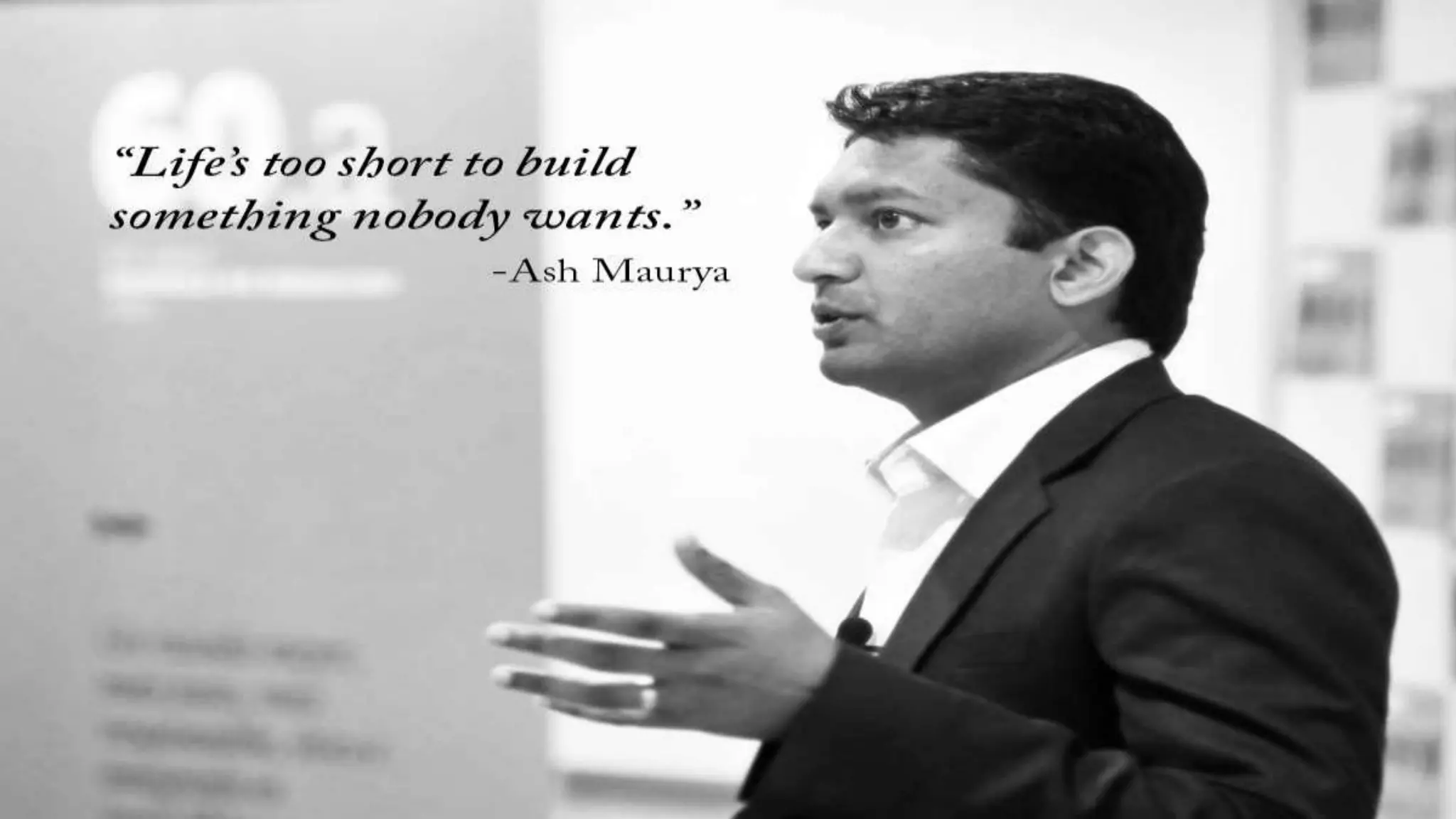
“Life is too short to build something
which nobody wants”
Speaker Name: Anish Cheriyan
Email ID: anishcheriyan@huawei.com, @anishcheriyan, www.anishcheriyan.com
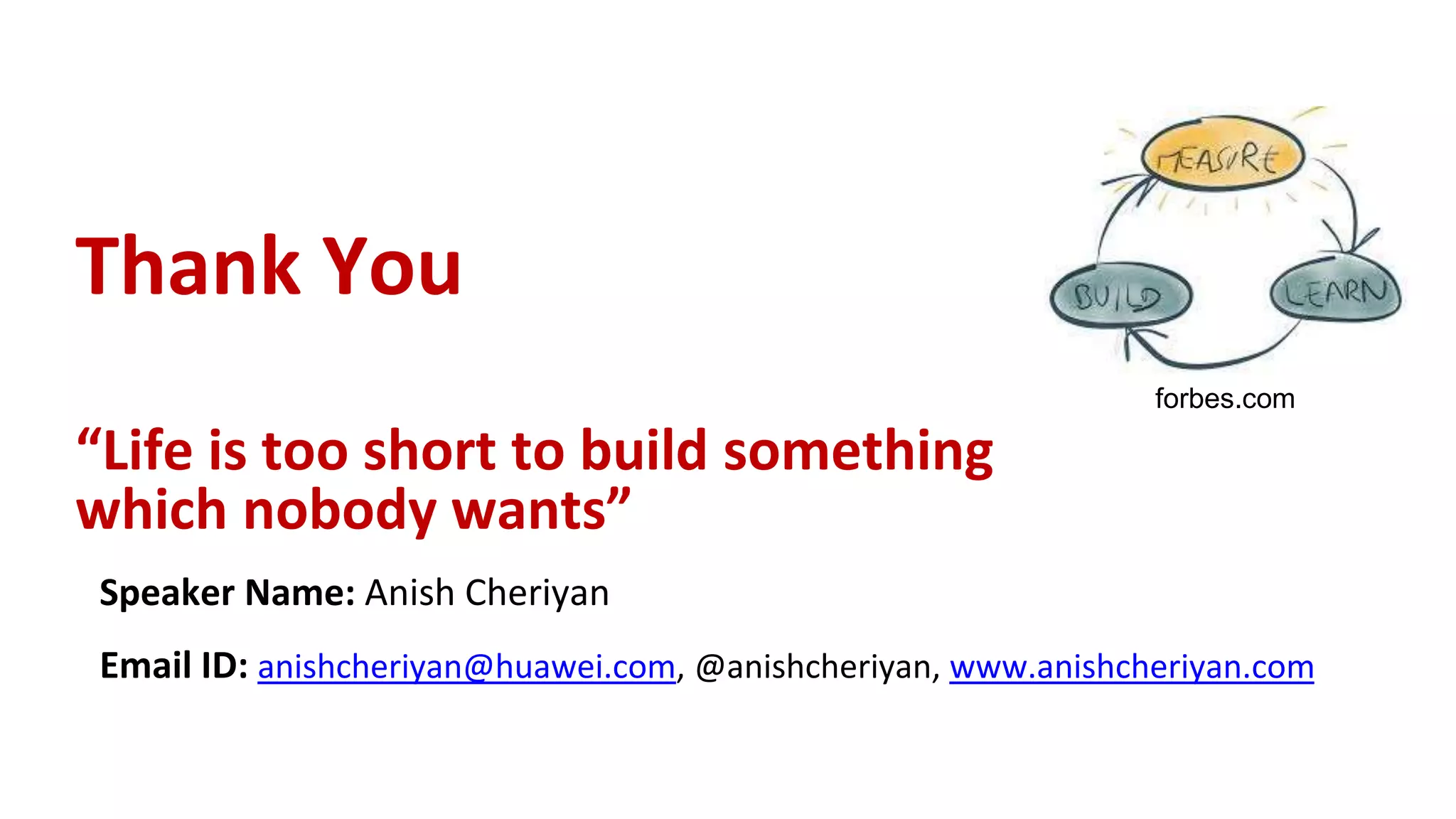
forbes.com

Best of Lean Startup and Scrum for product development and enhancement

  • 1.
    Prepared by : AnishCheriyan, Director, Huawei Best of Scrum and Lean Startup for product development Prepared By Anish Cheriyan, Director, Huawei Technologies
  • 2.
    Topics • Introduction • Perspectiveon Product Development • Some Anti Pattern • Lean Startup and Scrum Applied • New Product Development • Feature or Enhancement • Experience Sharing
  • 3.
    How many ofus believe on this?
  • 4.
    Standish Group Findings-ChaosReport 2014 Series1, Successful, 16%, 16% Series1, Challenged, 53%, 53% Series1, Cancelled, 31%, 31%
  • 5.
    Standish Group Findings-Features not available in the Final Product Series1, Large company, 58% Series1, Medium company, 35% Series1, Small Company, 26%
  • 6.
    Standish Group Findings-Project Success and Challenging Factors >35% Success Factors related to Users Involvement related >40% Challenged Factors related to Users Involvement related
  • 7.
    So How dowe Develop Our Products or Features?
  • 8.
    How do wedevelop our product
  • 9.
    One size fitsall solution for the management method Picture Courtesy: wikimedia.org Large Organization have ready made past proven life cycle following waterfall, scrum, scrumban or related life cycle. Teams somehow forcefiet the project into such framework.
  • 10.
    Photo by mouseshadows- Creative Commons Attribution-NonCommercial License https://www.flickr.com/photos/7339492@N04 Created with Haiku Deck
  • 11.
    What happens ifyou fail Failure is not considered good in most situations or may be in all situations.
  • 12.
    Delayed Validated Learning Inmost cases the validated learning comes after we do the big bang development. Concept Plan Design and Develop Testing Release Beta Test Final Release Most learning happen here 2 week to 3 months duration
  • 13.
    “A Startup isa human institution designed to deliver a product or service under conditions of extreme uncertainty” Eric Ries
  • 15.
    ““A startup isnot about executing a series of knowns. Most startups are facing a series of unknowns—unknown customer segments, unknown customer needs, unknown product feature set, etc.”.”
  • 16.
    Minimum viable product(MVP) is the product with the highest return on investment versus risk. The term was coined and defined by Frank Robinson, and popularized by Steve Blank, and Eric Ries
  • 17.
  • 18.
    A Perspective forProduct /Feature Development Problem Validation Solution Validation Scale Visualize/ Plan Pivot or Proceed Lean Canvas
  • 19.
  • 20.
    Lean Startup –KeyPoints Reference: http://blog.andrewwalpole.com/resources/build_measure_learn_infographic.jpg
  • 21.
    Background of theBusiness Problem • Embedded Development. • Customer was not clear about the problem. • Not clear about what feature is required.
  • 22.
    Our Myths • “Wewho build the product know better than the customer” • “Customer don’t have time to talk to us”
  • 23.
    Scrum and LeanStartup Applied Idea/Unkno wn problem Product Ready Scale (Product Development) Integrated Product Development Process
  • 24.
    Key Practices used .Lean Canvas . Interview, . Survey . Presentation . Go out of the building . Wireframing . Wireframing . Working Prototype . Iterative Development . Customer Demo . One Metric that matters Concept Plan Develop Release . Scrum Life Cycle . Continuous Delivery . All related practices Lean Canvas, Wireframing and iterative development practices were extensively used.
  • 25.
    A Perspective forProduct /Feature Development Problem Validation Solution Validation Scale Visualize/ Plan Pivot or Proceed Frame the problem, Map the big picture Explore- Interviews, Wireframing Minimum Viable Product Release and Iteration Development
  • 26.
    Outcome not Output Adaptedfrom the book User Story Mapping- Jeff Patton with Peter Economy
  • 27.
    Discovering a MinimalViable Solution Adapted from the book User Story Mapping- Jeff Patton with Peter Economy
  • 28.
    User Story -Backbone and the body Adapted from the book User Story Mapping- Jeff Patton with Peter Economy
  • 29.
    Validated Learning Loop Adaptedfrom the book User Story Mapping- Jeff Patton with Peter Economy
  • 30.
    Key Results • Wehave been able to finalize around 15 key features of the product using Lean Startup and Scrum approach.
  • 31.
    What we Learntand Road Ahead • Being systematic in wireframing approach • Difficulty in identifying One metric that matters • Prototyping should not be done for a set of users. Road Ahead • Better our practices, adopt continuous delivery: Build Measure Learn Continuous Delivery Split Tests Falifiable Hypothesis Automated Deployment Customer Liason Customer Development Wireframing Net Promoter Score Five Whys Root Cause Analysis
  • 32.
    Conclusion • Whether weare entrepreneur or intrapreneur, we need to focus on the customer development constantly. • Don’t jump into features or solution without validating the problem. • Remember to take the hypothesis driven approach- Always.
  • 33.
    References • User StoryMapping- Jeff Patton with Peter Economy • The Lean Startup- Eric Ries • The Startup Owners Manual- Steve Blank • Running Lean- Ash Maurya • http://theleanstartup.com/ • www.leanstack.com • http://steveblank.com/
  • 34.
    Thank You “Life istoo short to build something which nobody wants” Speaker Name: Anish Cheriyan Email ID: anishcheriyan@huawei.com, @anishcheriyan, www.anishcheriyan.com forbes.com