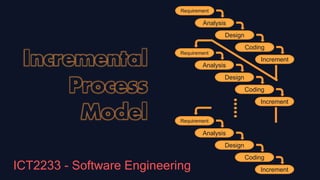
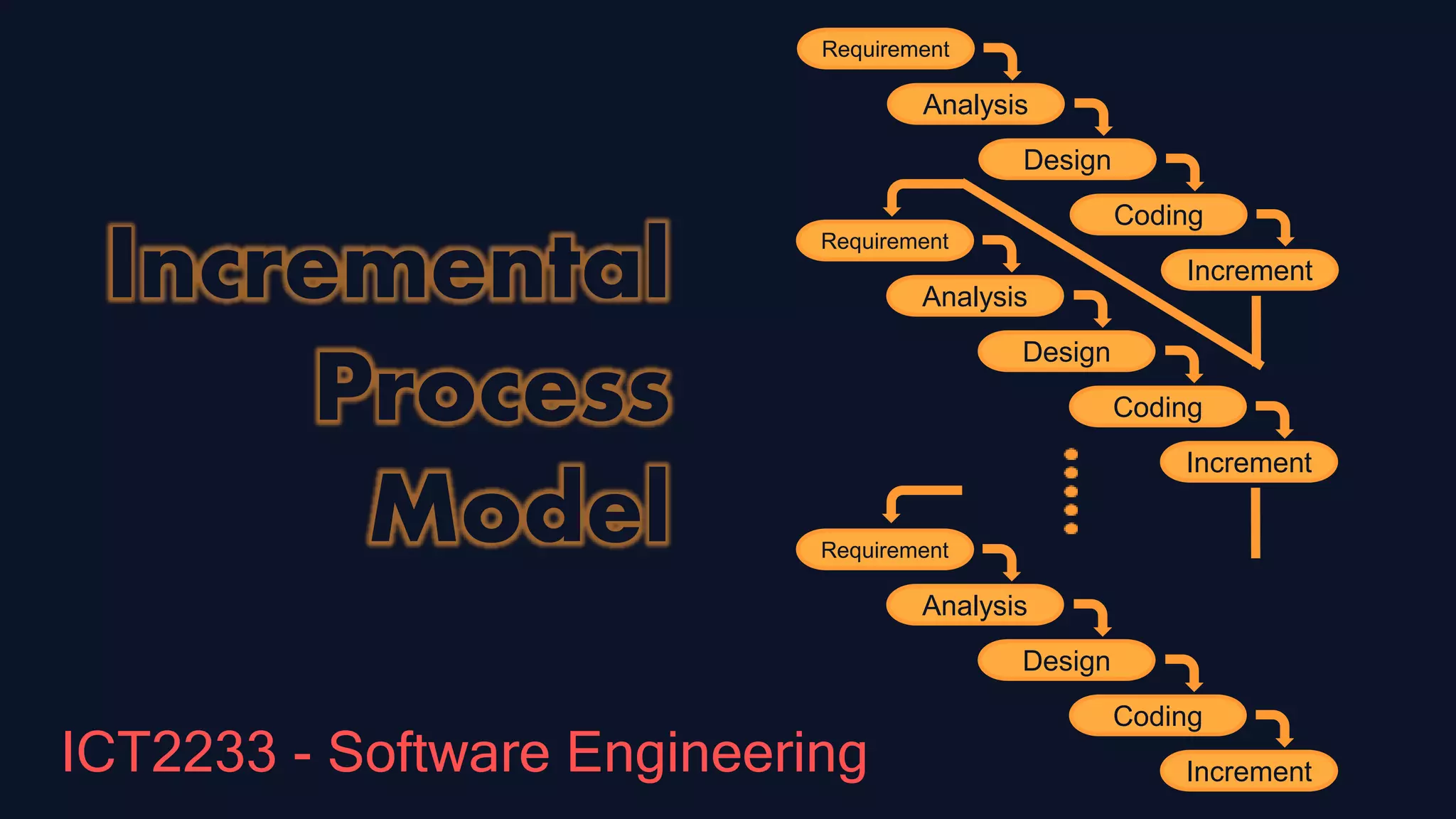
Incremental
Process
Model
ICT2233 - Software Engineering
Requirement
Analysis
Increment
Design
Coding
Requirement
Analysis
Increment
Design
Coding
Requirement
Analysis
Increment
Design
Coding
Group members
o TG/2017/233 – Madushan Sandaruwan
o TG/2017/244 – Shashani Dhanujika
o TG/2017/258 – Dulmini Sandunika
o TG/2017/277 - Priyanka
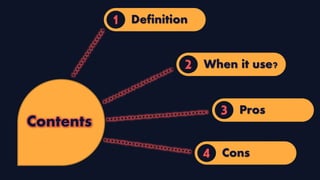
Definition1
When it use?2
Cons4
Pros3
Contents
Definition
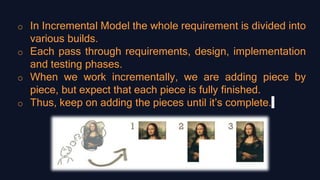
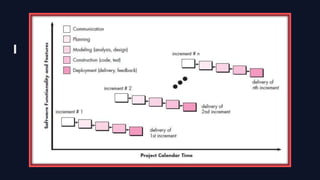
o In Incremental Model the whole requirement is divided into
various builds.
o Each pass through requirements, design, implementation
and testing phases.
o When we work incrementally, we are adding piece by
piece, but expect that each piece is fully finished.
o Thus, keep on adding the pieces until it’s complete.
When it use?
 Requirements of the complete system are clearly defined
and understood.
 Major requirements must be defined; however, some
details can evolve with time.
 There is a need to get a product to the market early.
 A new technology is being used.
 Resources with needed skill set are not available.
 There are some high-risk features and goals.
Pros
 Generates working software quickly and early during the
software life cycle.
 More flexible.
 Easier to test and debug during a smaller iteration.
 Customer can response to each bolt.
 Lowest initial delivery cost.
 Easy to manage risk.
Cons
 Needs to good planning and design.
 Needs a clear and complete definition of the whole system
before it can be broken down and build incrementally.
 Total cost is higher than a waterfall.
 Difficult to break the system into part.
Questions?
Thank you!

Incremental process model

  • 1.
    Incremental Process Model ICT2233 - SoftwareEngineering Requirement Analysis Increment Design Coding Requirement Analysis Increment Design Coding Requirement Analysis Increment Design Coding
  • 2.
    Group members o TG/2017/233– Madushan Sandaruwan o TG/2017/244 – Shashani Dhanujika o TG/2017/258 – Dulmini Sandunika o TG/2017/277 - Priyanka
  • 3.
  • 4.
  • 5.
    o In IncrementalModel the whole requirement is divided into various builds. o Each pass through requirements, design, implementation and testing phases. o When we work incrementally, we are adding piece by piece, but expect that each piece is fully finished. o Thus, keep on adding the pieces until it’s complete.
  • 7.
  • 8.
     Requirements ofthe complete system are clearly defined and understood.  Major requirements must be defined; however, some details can evolve with time.  There is a need to get a product to the market early.  A new technology is being used.  Resources with needed skill set are not available.  There are some high-risk features and goals.
  • 9.
  • 10.
     Generates workingsoftware quickly and early during the software life cycle.  More flexible.  Easier to test and debug during a smaller iteration.  Customer can response to each bolt.  Lowest initial delivery cost.  Easy to manage risk.
  • 11.
  • 12.
     Needs togood planning and design.  Needs a clear and complete definition of the whole system before it can be broken down and build incrementally.  Total cost is higher than a waterfall.  Difficult to break the system into part.
  • 13.
  • 14.