 PPT on Prototyping Model by -
Krishna Bangwal
Prototyping modelPrototyping model
 The prototyping model requires that before carrying out the
development of the actual software , a working prototype of the
system should be built.
 A prototype is a toy implementation of the system.
 A prototype usually turns out to be a very crude version of the actual
system , possibly exhibiting limited functional capabilities , low
reliability , and inefficient performance as compared to the actual
software.
 In many instances the client only has a general view of what is
expected from the software product. In such a scenario where there
is an absence of detailed information regarding the input to the
system, the processing needs and the output requirements, the
prototyping model may be employed.
Design
Implement
Test
Maintain
Requirements
gathering
Quick design
Build prototype
Refine requirements
incorporating
Customer suggestion
Customer evaluation
Of prototype
Acceptance
By customer
Prototype
development
Iterative
development
Steps of Prototyping ModelSteps of Prototyping Model
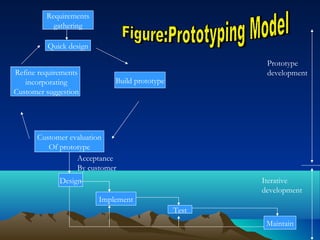
1) Requirements Gathering and Analysis:
A prototyping model begins with requirements analysis , and
the requirements of the system are defined in detail. The user is
interviewed in order to know the requirements of the system.
1) Quick Design:
When requirements are know , a preliminary design or
quick design for the system is created . It is not a detailed design ,
however , and includes the important aspects of the system,
which gives an idea of the system to the user.
1) Build Prototype :
Information gathering from quick design is modified to form a
prototype . It represents a ’rough’ design of the required system.
1) Assessment or user evaluation:
Next , the proposed system is presented to the
user for consideration as part of the development
process.
1) Prototype Refinement:
Once the user evaluates the prototype, it is
refined according to the requirements .When the user
is satisfied with the developed prototype , a final
system is developed based on the final prototype.
1) Engineer Product:
The final system is thoroughly evaluated and
tested followed by routine maintenance on a continuing
basis to prevent large-scale failures and to minimize
downtime .
Advantages of PrototypingAdvantages of Prototyping
ModelModel
 Provides a working model to the user early in the
process , enabling early assessment and
increasing user confidence.
 The developer gains experience and insight by
developing a prototype , thereby resulting in
better implementation of requirements.
 Helps in reducing risks associated with the
project.
 The prototyping model serves to clarify
requirements , which are not clear , hence
reducing ambiguity and improving
communication between the developer
and the user.
 There is a great involvement of users in
software development . Hence , the
requirement of the users are met to the
greatest extent.
Disadvantages of PrototypingDisadvantages of Prototyping
ModelModel
 If the user is not satisfied with the developed
prototype, then a new prototype is developed .
This process goes on until a perfect prototype
evolves . Thus , this model is time consuming
and expensive.
 The developer loses focus of the real purpose of
prototype and compromises on the quality of the
product . For example , he may apply some of
the inefficient algorithms or inappropriate
programming languages used in developing the
prototype .
 Prototyping can lead to false expectations.
It often creates a situation where the user
belives that the development of the
system is finished when it is not.
 The primary goal of prototyping is rapid
development. Thus , the design of the
system may suffer as it is built in a series
of layers without considering integration of
all the other components.
Please like my page onPlease like my page on
facebookfacebook
https://www.facebook.com/zippyvacation

Prototype model

  • 2.
     PPT onPrototyping Model by - Krishna Bangwal
  • 3.
    Prototyping modelPrototyping model The prototyping model requires that before carrying out the development of the actual software , a working prototype of the system should be built.  A prototype is a toy implementation of the system.  A prototype usually turns out to be a very crude version of the actual system , possibly exhibiting limited functional capabilities , low reliability , and inefficient performance as compared to the actual software.  In many instances the client only has a general view of what is expected from the software product. In such a scenario where there is an absence of detailed information regarding the input to the system, the processing needs and the output requirements, the prototyping model may be employed.
  • 4.
    Design Implement Test Maintain Requirements gathering Quick design Build prototype Refinerequirements incorporating Customer suggestion Customer evaluation Of prototype Acceptance By customer Prototype development Iterative development
  • 5.
    Steps of PrototypingModelSteps of Prototyping Model 1) Requirements Gathering and Analysis: A prototyping model begins with requirements analysis , and the requirements of the system are defined in detail. The user is interviewed in order to know the requirements of the system. 1) Quick Design: When requirements are know , a preliminary design or quick design for the system is created . It is not a detailed design , however , and includes the important aspects of the system, which gives an idea of the system to the user. 1) Build Prototype : Information gathering from quick design is modified to form a prototype . It represents a ’rough’ design of the required system.
  • 6.
    1) Assessment oruser evaluation: Next , the proposed system is presented to the user for consideration as part of the development process. 1) Prototype Refinement: Once the user evaluates the prototype, it is refined according to the requirements .When the user is satisfied with the developed prototype , a final system is developed based on the final prototype. 1) Engineer Product: The final system is thoroughly evaluated and tested followed by routine maintenance on a continuing basis to prevent large-scale failures and to minimize downtime .
  • 7.
    Advantages of PrototypingAdvantagesof Prototyping ModelModel  Provides a working model to the user early in the process , enabling early assessment and increasing user confidence.  The developer gains experience and insight by developing a prototype , thereby resulting in better implementation of requirements.  Helps in reducing risks associated with the project.
  • 8.
     The prototypingmodel serves to clarify requirements , which are not clear , hence reducing ambiguity and improving communication between the developer and the user.  There is a great involvement of users in software development . Hence , the requirement of the users are met to the greatest extent.
  • 9.
    Disadvantages of PrototypingDisadvantagesof Prototyping ModelModel  If the user is not satisfied with the developed prototype, then a new prototype is developed . This process goes on until a perfect prototype evolves . Thus , this model is time consuming and expensive.  The developer loses focus of the real purpose of prototype and compromises on the quality of the product . For example , he may apply some of the inefficient algorithms or inappropriate programming languages used in developing the prototype .
  • 10.
     Prototyping canlead to false expectations. It often creates a situation where the user belives that the development of the system is finished when it is not.  The primary goal of prototyping is rapid development. Thus , the design of the system may suffer as it is built in a series of layers without considering integration of all the other components.
  • 11.
    Please like mypage onPlease like my page on facebookfacebook https://www.facebook.com/zippyvacation

Editor's Notes